Cecilia, Cecily

Gender: Feminine
Origin: Latin
Meaning “blind”
Eng (seh-SEE-lee-yuh); Lat (kay-KEE-lyah); Italian (chay-CHEEL-yah).

This four syllable, melodic name has been in usage throughout the Western World since the early Middle Ages. Thanks to the cult of Saint Cecilia, an early Christian martyr, considered to be the patron saint of music and musicians.

Geoffrey Chaucer made the saint a subject of his writings and refers to the name as meaning “lily of heaven”; “the way for the blind”; “contemplation of heaven and an active life”; “as if lacking in blindness”; “a heaven for people to gaze upon.”

However, these were only epithets used by the early English writer describing the wondrous attributes and virtues of the saint, and should not be confused for its real meaning.

The name is a feminine form of the Latin Caecilius which comes from the word caecus meaning blind.

The name was introduced into England after the Norman conquest in the form of Cecily (SES-ih-LEE). The name was very popular in England until the Protestant Reformation where it fell out of usage.

Its Latin counterpart of Cecilia was not introduced into the English speaking world until the 18th-century, afterwards, its early English form of Cecily became quite popular during Victorian England.

As of 2010, its Danish form of Cecilie was the 30th most popular female name in Denmark. Her rankings in other countries are as follows:

  • # 39 (Silje, Denmark, 2010)
  • # 65 (Silje, Norway, 2010)
  • # 277 (Cecilia, United States, 2010)
  • # 385 (Cécile, France, 2009)
  • # 486 (Cecilia, France, 2009)
  • # 741 (Cecelia, United States, 2010)

There is the masculine English form of Cecil. Other forms of the name include:

  • Aziliz (Breton)
  • Cicilia (Corsican)
  • Cecilija (Croatian)
  • Cila (Croatian)
  • Cecílie (Czech: tset-TSEEL-yeh)
  • Cecilie (Danish/Norwegian)
  • Cille (Danish)
  • Sille (Danish)
  • Cecile/Ceciel (Dutch)
  • Cecilia (Dutch/Finnish/German/Italian/Romanian/Spanish/Swedish)
  • Cilla (Dutch/Swedish)
  • Cecelia (English)
  • Säsil (Estonian)
  • Sesilia (Faroese)
  • Selja/Silja (Finnish)
  • Cécile (French)
  • Silke (Frisian/German: ZIL-kə)
  • Síle (Gaelic)
  • Kek’ik’ilia კიკილია (Georgia)
  • Cäcilia/Caecilia (German: tsay-TSEEL-yah or tsay-TSEE-lee-yah)
  • Cäcilie (German: tsay-TSEEL-yə or tsay-TSEE-lee-yə)
  • Zilla (German: originally a diminutive form sometimes used as an independent given name, another diminutive is Zilly)
  • Kekilia (Greek Modern)
  • Sissiilia/Sissii (Greenlandic)
  • Kikilia (Hawaiian)
  • Cecília (Hungarian/Portuguese/Slovak)
  • Cili (Hungarian/Slovene)
  • Szöszill (Hungarian)
  • Seselía, Sesilía, Sesselía, Sessilía (Icelandic)
  • Sisilia (Indonesian)
  • Sheila (Irish)
  • Caecilia (Latin)
  • Cecilė/Cilė(Lithuanian)
  • Cissolt (Manx: SIS-solt)
  • Sidsel (Norwegian/Danish)
  • Silje (Norwegian/Danish)
  • Sissel (Norwegian/Danish)
  • Cilgia (Romansch)
  • Tsetsiliya (Russian)
  • Sìleas (Scottish)
  • Cecília (Slovakian)
  • Šejla (Slovakian)
  • Cecilija (Slovenian)
  • Cilika (Slovenian)
  • Cilka (Slovenian)
  • Sisel (Yiddish)
  • Zisel (Yiddish)

Male forms include

  • Cecil (English)
  • Cecilio (Italian/Spanish)
  • Caecilius (Latin)
  • Cecilijus (Lithuanian)
  • Cecilián (Slovakian)

Czech diminutive forms are: Cecilka, Celia, Cilia, Cilka and Cilinka.

English diminutive forms are: Cece, Celia and Sissy.

The designated name-day is November 22nd.

Anna, Anne

Gender: Feminine
Origin: Biblical Hebrew
Meaning: “grace.”
(ANN; AHN). (ANN-uh; AHN-nah). (HANN-uh; HAHN-nah)

Anne is possibly one of the quintessential classic English and French female names. Prior to the 18th-century, it seems that every other girl born in England was either named Anne, Jane or Mary. There were several British and French queens who bore this simplistic moniker, including the ill fated Anne Boleyn, the mother of Elizabeth I. The history of Anne is rather long and complicated.

It was foremost popularized through the cult of St. Anne, a legendary figure who was said to be the mother of the Virgin Mary and the grandmother of Christ.

In Brittany, the name became especially popular because it happened to coincide with the name of an ancient Celtic goddess, her cult being replaced by St. Anne’s. In fact, it was borne by one Breton Princess, Anne of Brittany.

The name was introduced into Britain by the French-Normans after the invasion in 1066. Previously, there had been a minor Saxon king named Anna, but in this case the name is related to the Saxon arn (eagle). Anna and Anne are still occasionally used as male given names in Friesland.

Other than the apocryphal saint, the name Anne can be traced directly back to the Bible. In the New Testament, it is the name of a prophetess who predicts the Crucifixion of Christ.

Anna (Αννα), is the Greek translation of the early Hebrew Channah חַנָּה, usually transliterated as Hannah, meaning “grace.”

Hannah is borne in the Old Testament by the faithful mother of the prophet, Samuel.

Hannah has always been popular among Jewish families, but was virtually unheard of among non-Jews before the Reformation, except in some cases where it may have been used as a diminutive form of Johanna, spelled Hanna.

It was the Byzantines who had introduced the Anna form to the world, making it popular throughout Eastern and Southern Europe. It was a very popular name among the Byzantine royal family and it was borne by the majestic Anna of Byzantium.

Anna may be the more melodic form of the bunch, but Anne’s minimalistic qualities are charming. Short, to the point, no frills. It’s not a bad name, though it does lack some spice, which is why parents are probably more attracted to its more exotic alternatives. In fact, Anne only comes in at # 608 in the top 1000 female names of the United States. It is safe to say, however, that she is very much loved in the middle name spot.

Anna is currently one of the most popular female names in Europe and abroad. Her rankings are as follows:

  • # 1 (Austria, 2010)
  • # 1 (Estonia, 2011)
  • # 2 (Hungary, 2010)
  • # 3 (Ana, Georgia, 2010)
  • # 3 (Iceland, 2010)
  • # 4 (Ana, Croatia, 2010)
  • # 4 (Czech Republic, 2010)
  • # 4 (Germany, 2011)
  • # 4 (Ukraine, 2010)
  • # 5 (Faroe Islands, 2010)
  • # 5 (Ana, Portugal, 2010)
  • # 6 (Armenia, 2010)
  • # 6 (Ane, Greenland, 2002-2003)
  • # 6 (Ana, Romania, 2009)
  • # 6 (Ana, Serbia, 2010)
  • # 7 (Latvia, 2011)
  • # 7 (Russia, 2011)
  • # 8 (German-speaking Switzerland, 2010)
  • # 9 (Denmark, 2011)
  • # 10 (Netherlands, 2010)
  • # 10 (Northern Ireland, 2010)
  • # 10 (Norway, 2010)
  • # 11 (Italy, 2010)
  • # 12 (Ireland, 2010)
  • # 14 (Poland, 2010)
  • # 16 (Catalonia, 2010)
  • # 26 (Canada, B.C., 2010)
  • # 28 (Italian-speaking Switzerland, 2010)
  • # 28 (United States, 2010)
  • # 29 (Scotland, 2010)
  • # 40 (France, 2009)
  • # 46 (French-speaking Switzerland, 2010)
  • # 53 (Belgium, 2009)
  • # 63 (England/Wales, 2010)
  • # 71 (Australia, 2010)
  • # 81 (Sweden, 2010)
  • # 83 (Spain, 2010)
Other forms of the name include:
  • Anneen (Afrikaans/Low German)
  • Anna Анна (Afrikaans/Albanian/Armenian/Breton/Bulgarian/Catalan/Corsican/Czech/Dutch/English/Estonian/Faroese/Finnish/French/Frisian/German/Greek/Hungarian/Icelandic/Italian/Latvian/Limburgish/Maltese/Polish/Russian/Ukrainian/Scandinavian/Slovak)
  • Anne (Basque/Dutch/English/French/Scandinavian)
  • Gánna Га́нна (Belarusian)
  • Annaig (Breton)
  • Annick (Breton)
  • Maina (Breton)
  • Mannaig (Breton)
  • Mannick (Breton)
  • Naig (Breton)
  • Ana Ана ანა (Bulgarian/Croatian/Galician/Georgian/Lombard/Macedonian/Portuguese/Romanian/Samogaitian/Serbian/Slovene/Spanish/Venetian)
  • Jana (Croatian/Ladino)
  • Aneta (Czech/Polish/Samogaitian/Slovak)
  • Aina (Catalan)
  • Anica (Croatian/Serbian/Slovene)
  • Ane (Danish)
  • Anika (Danish)
  • Anneke (Dutch)
  • Anneken (Dutch)
  • Annika (Dutch/Finnish/German/Latvian/Scandinavian)
  • Anka (Dutch/Frisian/German)
  • An(n)ke (Dutch/Frisian)
  • Anouk (Dutch/French)
  • Ans (Dutch)
  • Enneke (Dutch)
  • Enneken (Dutch)
  • Anita (English/German/Polish/Spanish)
  • Annette (English/French/German)
  • Anissa (English)
  • Annelle/Annella (Estonian)
  • Anete (Estonian/Latvian)
  • Anett (Estonian)
  • Anu (Estonian)
  • Anni (Finnish)
  • Annikki (Finnish)
  • Anniina (Finnish)
  • Annukka (Finnish)
  • Niina (Finnish)
  • Anaïs (French/Provençal)
  • Annouche (French)
  • Ninette (French)
  • Ninon (French)
  • Ninouk (French)
  • Anje (Frisian)
  • Ankea (Frisian)
  • Antje (Frisian)
  • Antjen (Frisian)
  • Anute (Fruilian)
  • Anano (Georgian)
  • Annchen (German)
  • Annel (German)
  • Annele (German/Latvian)
  • Anneli(e) (German/Finnish/Swedish)
  • Annet (German)
  • Anina (German)
  • Anja (German/Slovene)
  • Anouschka (German/Italian/Russian)
  • Annaki (Greek)
  • Annoula (Greek)
  • Noula (Greek)
  • Anikó (Hungarian)
  • Annuska (Hungarian)
  • Panni (Hungarian)
  • Áine (Irish)
  • Ánna (Irish)
  • Annarella (Italian)
  • Annella (Italian)
  • Annetta (Italian)
  • Annettina (Italian)
  • Nona (Italian/Romansch)
  • Ance (Latvian)
  • Annija (Latvian)
  • Anninya (Latvian)
  • Ona (Lithuanian)
  • Annamma (Malayalam)
  • Annam (Malayalam)
  • Onnee (Manx)
  • Âone (Norman)
  • Aenna/Aenne (Old High German)
  • Annehe (Old High German)
  • Änna/Änne (Old High German)
  • Neta (Piedmontese)
  • Noto (Piedmontese)
  • Anke (Plattdeutsch)
  • Anneke(n) (Plattdeutsch)
  • Analia (Romansch/Spanish)
  • Annina (Romansch)
  • Annotta (Romansch)
  • Anca (Romanian)
  • Anicuta (Romanian)
  • Anėta (Samogaitian)
  • Anėkė (Samogaitian)
  • Annag (Scottish)
  • Ghianna (Sicilian)
  • Janna (Sicilian)
  • Nanna (Sicilian)
  • Anniken (Swedish)
  • Ann (Welsh)
  • Nan (Welsh)
  • Nanno (Welsh)
  • Nanw (Welsh)
  • Aana (Wolof)
As for the Hannah forms

Hanna without an H is the prefered form on Continental Europe, usually pronounced (HAHN-nah) and in French like Anna. Hanna and Hanne (HAHN-neh) are also used as diminutive forms of Johanna/Johanne in the Netherlands, Sweden, Norway, Denmark and Germany. There is the Hungarian Hajna pronounced (HOY-no). The Czech/Slovak form of Hana nickname Hanka. There are the Yiddish forms of Heyna, Hayna, Hejna (all pronounced like HAY-nah) including the diminutive forms of HenaHende, Hendel and Henye.  The Polish diminutive form of Hania, which might make an interesting alternative to Anya or Hannah. Hannah, Hanna and Henna are all used in the Middle East.

Of course, how could we ever forget the popular diminutive forms of Annie and Nan.

Levin

Gender: Masculine
Origin: Frisian
Meaning: “dear friend.”
(LEV-een)

The name is a Frisian form of the Old High German, Liobwin, which is composed of the elements, liob (love; dear) and win (friend).

The name was extremely common in 19th-century Germany and was used by German-Jews as a cognate of Levi.

It has recently come into vogue again. It is currently the 8th most popular male name in German-speaking Switzerland, (2010). His rankings in other countries are as follows:

  • # 87 (Germany, 2011)

Benedict, Benedikt

Gender: Masculine
Origin: Latin
Meaning: “blessed.”

The name comes directly from the Late Latin name Benedictus meaning “blessed.” The name was borne by a 6th-centuy Italian monk and saint who credited for being the founder of the Order of the Benedictines.

The name was very common throughout Medieval Europe, being borne by 16 popes, it was fairly popular in England, in the form of Bennett.

The name was also commonly used among German-Jews, being used as a cognate of the Hebrew male name Baruch בָּרוּךְ (blessed).

In the United States, the name became taboo to use due to its associations with Benedict Arnold (1741-1801) a famous American deserter and traitor to the British.

The name recently skyrocketed in Germany after the succession of the German born Pope Benedict XVI. It is currently the 93rd most popular male name in Germany, (2011). It is especially popular in Bavaria.

His rankings in other countries are as follows:

  • # 1 (Bence, Hungary, 2010)
  • # 32 (Benedek, Hungary, 2010)
  • # 294 (Benoît, France, 2009)

Other forms of the name include:

  • Benedikti (Albanian)
  • Benedet (Aragonese)
  • Benedictu (Asturian)
  • Benedita (Basque)
  • Beñat (Basque)
  • Benead (Breton)
  • Benet (Catalan)
  • Benedettu (Corsican/Maltese/Sardinian)
  • Benedikt Венедикт (Croatian/Czech/German/Icelandic/Norwegian/Russian/Serbian/Scandinavian/Ukrainian)
  • Ben(d)t (Danish/Norwegian)
  • Benedictus (Dutch/Late Latin)
  • Benedict (English/German/Romanian/Scandinavian)
  • Bennett (English)
  • Pentti (Finnish)
  • Bénédict (French)
  • Benoît (French)
  • Beinidict (Gaelic)
  • Bieito (Galician)
  • Benedikhti ბენედიქტე (Georgian)
  • Bendix (German/Norwegian)
  • Bennet (German)
  • Benz (German)
  • Venediktos Βενέδικτος (Greek)
  • Bence (Hungarian)
  • Benedek (Hungarian)
  • Benett (Hungarian)
  • Benedetto (Italian)
  • Benito (Italian/Spanish)
  • Bettino (Italian)
  • Bendiks (Latvian)
  • Benediktas (Lithuanian)
  • Bendik (Norwegian)
  • Benedix (Plattdeutsch)
  • Benedykt (Polish)
  • Benedito (Portuguese)
  • Bento (Portuguese)
  • Benezet (Provençal)
  • Banadet (Romansch)
  • Banadegt (Romansch)
  • Bandet (Romansch)
  • Benedegt (Romansch)
  • Binidittu (Sicilian)
  • Beňadik (Slovak)
  • Bengt (Swedish)
  • Bened (Welsh)
  • Benesh (Yiddish)

Feminine forms include:

  • Benedetta (Corsican/Maltese/Italian/Sardinian)
  • Benedikta (Czech/German)
  • Benedikte (Danish/Norwegian)
  • Bénédicte (French)
  • Benoîte (French)
  • Benita (Italian/Spanish)
  • Bettina (Italian)
  • Benedicta (Latin/Romansch)
  • Benedykta (Polish)
  • Benedita (Portuguese)
  • Bengta (Swedish)

Tobias

Gender: Masculine
Origin: Hebrew
Meaning: “Yahweh is good.”
Eng (toh-BYE-us)

The name is a Greek form of the Hebrew male name, Toviyyah טוֹבִיָּה, which appears in the Old Testament as the name of an Ammonite. It is borne by several other minor characters in the Old Testament. In earlier versions of the New Testament, it is the name of Tobit in the Book of Tobit.

The name gained popularity in England after the Reformation and is often shortened to Toby. It is currently the 2nd most popular male name in Austria and his rankings in other countries are as follows:

  • # 11 (Norway, 2010)
  • # 20 (Denmark, 2010)
  • # 95 (Netherlands, 2010)
  • # 519 (United States, 2010)

Other forms of the name include:

  • Tobias (Dutch/English/German/Scandinavian)
  • Tobiáš (Czech)
  • Topias (Finnish)
  • Topi (Finnish)
  • Tobie (French)
  • Tuvya טוּבִיָה (Hebrew)
  • Tóbiás (Hungarian)
  • Tobia (Italian)
  • Tobasz (Polish)
  • Tobiasz (Polish)
  • Tobijasz (Polish)
  • Tovija Товия (Russian)
  • Tovij Товий (Russian) 
  • Tevye (Yiddish)

Hadassah

Gender: Feminine
Origin: Hebrew הֲדַסָּה
Meaning: “myrtle”
Eng (huh-DAH-sah)

The name is found in the Book of Esther as the birth name of the heroine. It is sometimes argued by scholars that Esther is a reconstruction of an ancient Median name that was derived from the word astra (myrtle). Hence it is theorized that Esther may have been derived from a Median cognate of the Hebrew Hadassah.

The name has always been very popular among Jews, but has rarely ever been used in the Christian world.

The name was sometimes given to girls born around the Purim festivities.

Currently, Hadassa is the 95th most popular female name in Brazil, (2011) while Hadassah is the 841st most popular in the United States, (2010).

Other forms of the name include:

  • Hadassa (German/Italian/Portuguese/Spanish)
  • Dassah (Hebrew)
  • Ħadassa (Maltese)
  • Hadasa (Polish/Slovak)
  • Gadassa Гадасса (Russian)
  • Hode (Yiddish)
  • Hodel (Yiddish)
  • Iddessa (Zazaki)
A popular Russian diminutive is Dasha.
It is also the name of the Women’s Zionist Organization of America.

Ezekiel

Gender: Masculine
Origin: Hebrew יְחֶזְקֵאל 
Meaning: “God strengthens.”

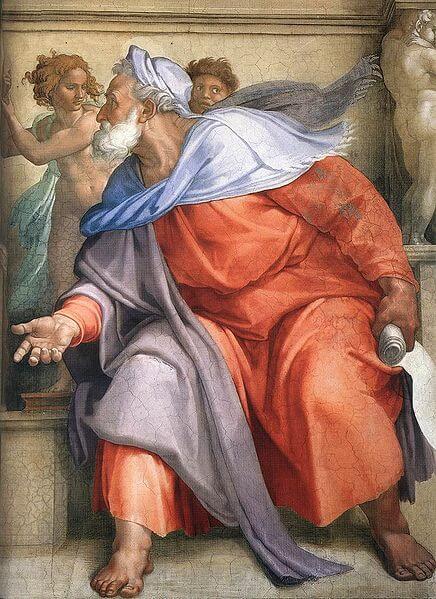
The name is found in the Old Testament as the name of the author of the Book of Ezekiel, a major prophet in Christian, Jewish and Islamic tradition. In the English-speaking world, the name did not become popular until after the Protestant Reformation.

It is currently the 213th most popular male name in the United States, (2010).

Other forms of the name include:

  • Jezjekiil Езекііль (Belarusian)
  • Ezechiel (Czech/German/Polish/Romanian)
  • Ezechiël (Dutch)
  • Hesekiel (Finnish/Swedish)
  • Ézéchiel (French)
  • Ezekieli ეზეკიელი (Georgian)
  • Yechezkel: יְחֶזְקֵאל (Hebrew)
  • Ezechiele (Italian)
  • Ezechielis (Lithuanian)
  • Esekiel (Norwegian)
  • Ezequiel (Portuguese/Spanish)
  • Iezekiíl’ Иезекии́ль (Russian)
  • Jezekiel Језекиљ (Serbian)
  • Ezekiel (Slovene)
  • Yezekiyíl Єзекії́ль (Ukrainian)
  • Eseciel (Welsh)
  • Haskel (Yiddish)
Source

Israel

Gender: Masculine
Origin: Hebrew: יִשְׂרָאֵל
Meaning: “wrestles with God.”

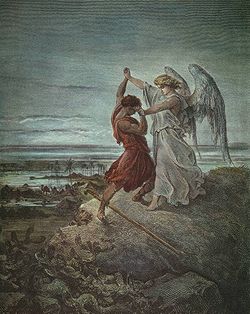
The name is found in the Old Testament (Genesis 32:28 and 35:10) as the name given to the Patriarch Jacob after he had wrestled with an angel. Jacob’s descendants came to be known as the Israelites later forming the Kingdom of Israel. This is where the modern day country gets its name.

The name is very popular among Orthodox Jews but hasn’t seemed to have caught on in other circles. It is currently the 220th most popular male name in the United States, (2010).

Other forms of the name include:

  • Yisrael ይስራኤል (Amharic)
  • Yisra’el יִשְׂרָאֵל (Hebrew)
  • Izrael (Polish)
  • Izrail Изра́илإِسْرَائِيل‎ (Russian/Arabic)
  • Iser (Yiddish)
  • Issur (Yiddish)
  • Sroel (Yiddish)
Source

Dulce

Gender: Feminine
Origin: Spanish/Portuguese
Meaning: “sweet; candy.”
DOOL-the (Spanish), DOOL-se (Latin American Spanish)

The name comes directly from the Spanish and Portuguese word for “sweet; candy” and has been used in the Iberian peninsula since the early Middle Ages. It was borne by Douce I of Provence (1090-1129), Douce II of Provenece (b.1166) Dulce of Barcelona (1160-1198) and Dulce I of Léon (b.1195).

Currently it is the 409th most popular female name in the United States, (2010).

It was commonly bestowed among Jews and Christians. Other forms of the name include:

  • Dulcía (Aragonese)
  • Dulze (Basque)
  • Esti (Basque)
  • Estinñe (Basque)
  • Dolça (Catalan/Ladino/Occitanian/Provençal)
  • Dowse (English: archaic)
  • Duce (English: archaic)
  • Dulcie (English)
  • Dulcinea (English/Spanish)
  • Douce (French: archaic)
  • Aldonza/Aldonça (Galician)
  • Dolce (Italian: archaic. DOLE-chay)
  • Zusa (Yiddish. A direct translation of Dolça, this was used among Spanish-Jews who had been expelled from Spain and had settled in Germany and Poland introducing it to Yiddish-speakers, thus creating a Yiddish cognate. A masculine cognate is Zusman)
Source