Meaning: “sun & moon; affection of the moon; kindness of the moon.”
Gender: Female
The name is composed of the Persian elements mehr / mihr / meher (مِهر) — a Persian word meaning “sun,” “affection,” “kindness,” or “love” (and often with connotations tied to the ancient Iranian / Zoroastrian deity Mithra) and māh (ماه), meaning “moon” or “month.”
The name entered wider use through Ottoman royal history, where Mihrimah Sultan (1522–1578) — the daughter of Sultan Suleiman the Magnificent and Hürrem Sultan — became one of the most powerful and educated women of her time.
A modern Persian form is Mehrmah.
An Urdu form is Meharmah and another Turkish form is Mihrümah.
The name comes directly from the Farsi word نیلوفر (niloufar), meaning, “morning glory; water lily; nenuphar.”
It ultimately derives from Middle Persian nīlōpār, from Sanskrit nīlotpala (नीलोत्पल) meaning blue lotus (nīla “blue” + utpala “lotus”). Through Persian, it spread widely into other languages of the Islamic and Silk Road world. The Greek-Latin loan nénuphar comes from this same root, appearing in medieval botanical and poetic texts to denote the water lily (Nymphaea).
Niloufar has been used as a feminine given name in Iran, Afghanistan, Tajikistan, Azerbaijan, and Turkey (where it appears as Nilüfer).
Notable bearers include:
Niloufar Bayani, Iranian conservationist and scholar.
Nilüfer Yumlu (known simply as Nilüfer), celebrated Turkish pop singer.
Princess Niloufer of Hyderabad (1916–1989), Ottoman princess renowned for her beauty and philanthropy.
The name is derived from the Arabic root م-ت-ز (m-t-z), meaning “to be distinguished, eminent, or excellent.” As an adjective, Mumtaz literally means “distinguished,” “excellent,” “outstanding,” or “exalted.”
It is often used as a word of exclamation in the same way “that’s cool” or “that’s great” is used in English.
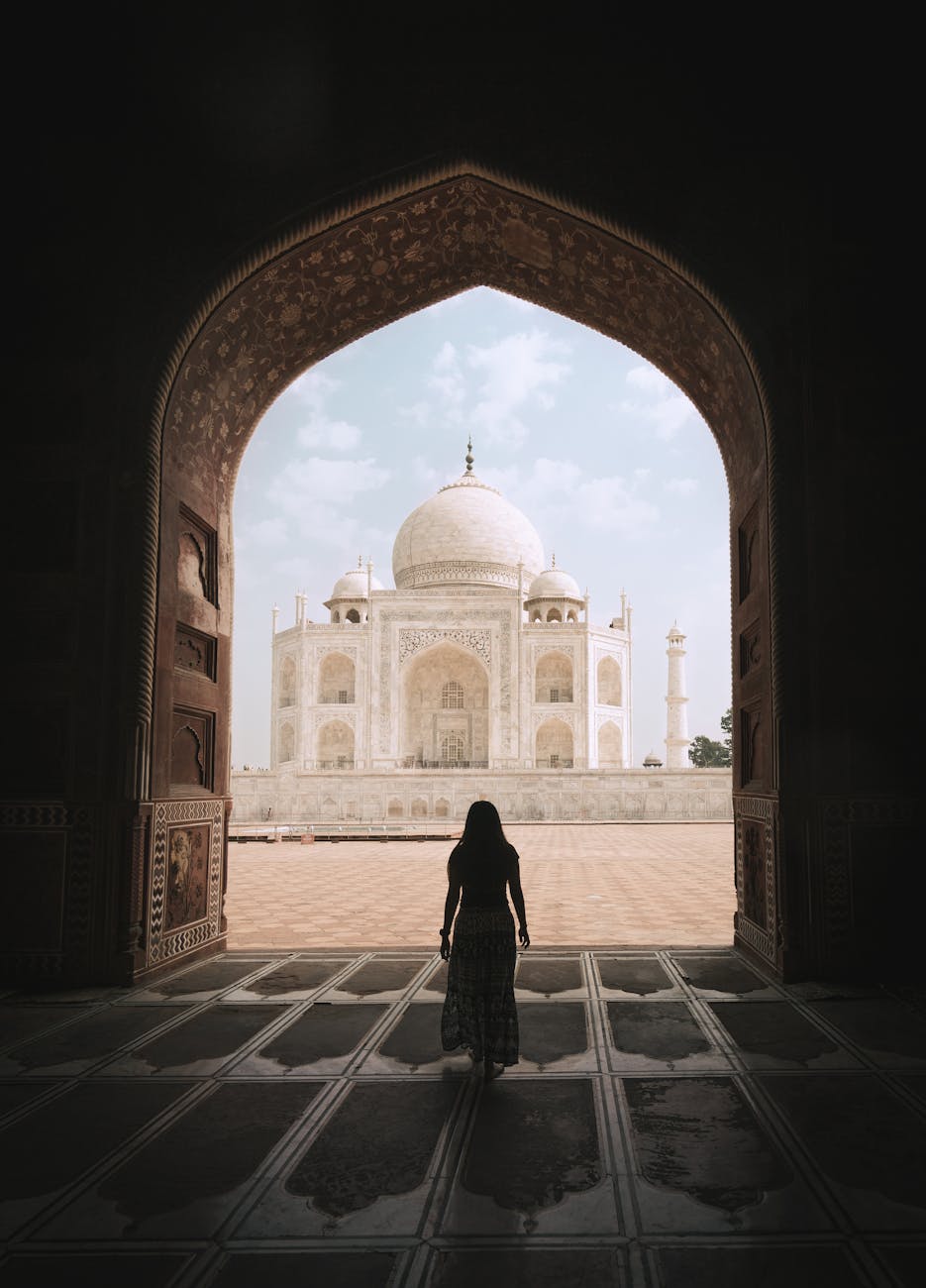
It is also used as a given-name. In the Arabic-speaking world, it is a masculine name but in Southeast Asia, it is unisex. A notable female bearer was Mumtaz Mahal (1593–1631), the beloved wife of Mughal Emperor Shah Jahan, for whom the Taj Mahal was built. Her real name was Arjumand Banu Begum, but she was titled Mumtaz Mahal, meaning “Distinguished One of the Palace.”
Mümtaz is the Turkish form, it is mostly masculine but is occasionally used on females.
The name is from the Persian word, مهتاب (mahtab), meaning “moonlight.” It is a poetic female name that has spread throughout the Persianate world. It is occasionally used on males in Southeast Asia.
Notable Bearers
Mahtab Singh (1782-1813), was the first wife of Ranjit Singh, founder of the Sikh Empire.
Mehtab Kadın (1830-1888) (Turkish form), was the name of the consort of Sultan Abdulmejid I of the Ottoman Empire.
Mahtob Mahmoody (b. 1979): Iranian-American author and daughter of Betty Mahmoody, whose story inspired Not Without My Daughter (1991), starring Sally Field.
Its Turkish form of Mehtap was among the top 100 girls’ Turkish names between 1980-1993, and peaked at # 58 in 1983.
Derived from the ancient Greek male name Πτολεμαῖος (Ptolemaios), which in turn comes from πτόλεμος (ptólemos), meaning “war” or “battle.”
The word ptólemos is an older Aeolic dialectal form of πόλεμος (pólemos), the standard Classical Greek word for “war,” sharing the same root with the English word, “polemic.”
Ptolemy I Soter (367–283 BCE) was a general of Alexander the Great and later became Pharaoh of Egypt, founding the Ptolemaic Dynasty (323–30 BCE). This dynasty ruled Egypt for nearly three centuries and ended with Cleopatra VII, the most famous bearer of the family’s legacy.
Claudius Ptolemaeus (Ptolemy) (2nd century CE) was the famed Greek astronomer, mathematician, and geographer of Alexandria, whose Almagest shaped Western astronomy for over a millennium.
According to the Book of 1 Maccabees (135/4 BC), Ptolemy of Jericho betrayed his father-in-law, Simon the High Priest, by murdering him and his two sons while they slept as guests under his roof. This act of treachery is used in Dante Alighieri’s The Inferno, in which the ninth circle of Hell is called Ptolomea after him, a frozen realm reserved for those who betray their guests.
Ptolomy is also the name of an early Christian saint.
In the English-speaking world, Ptolomy has been used on and off since the 18th-century. It appeared in the U.K’s top 500 boys’ names in 2004, ranking in at #906.
A modern bearer is American author, Ptolemy Tompkins. Celebrity couple Gretchen Mol and Tod Williams bestowed this on their son in 2007.
Common English short forms include: Tollie, Tolly, and Tal.
Rostam is an ancient Persian name that likely descends from Old Persian or Sogdian roots. Its meaning is debated, but the most popular theory is that it derives from *rautas-taxma “strong like a river.”
The name is immortalized in Ferdowsi’s 10th-century Persian epic, the Shahnameh, where Rostam is the towering national hero described as:
a mighty warrior of the kingdom of Zabul.
tamer of the legendary horse Rakhsh.
defender of Iran against its enemies
and the tragic father of Sohrab in one of the most famous father-son duels in world literature.
Because of this epic, Rostam is to Persian culture what Hercules is to the Greek tradition.
Rostam has been a popular masculine name across Iran, Afghanistan, Tajikistan, and Central Asia for over a thousand years. It also appears as Rustam in many languages of the region—Azerbaijani, Uzbek, Pashto, and even in parts of the Caucasus and South Asia.
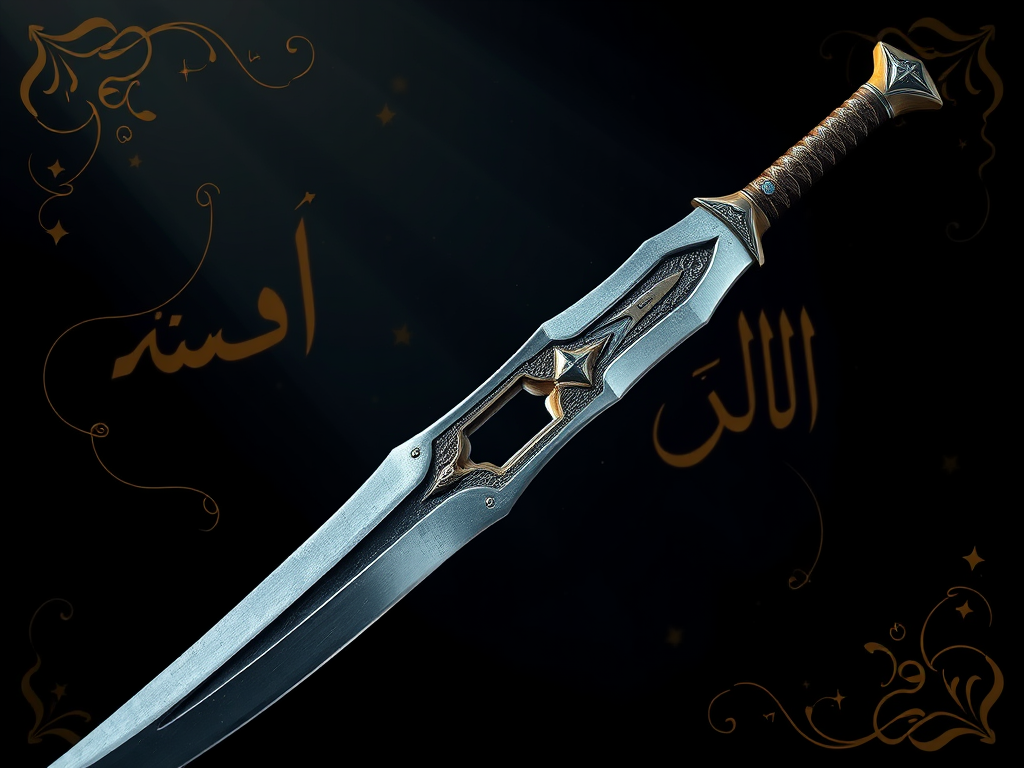
In Islamic tradition it specifically refers to a sword with a split or notched blade—the legendary weapon given by the Prophet Muhammad to his cousin and son-in-law ʿAlī ibn Abī Ṭālib.
It possibly comes from classical Arabic compound dhū / dhu (ذو) (possessor of; one who has), and fiqār / fiqar (فقار) (spine; vertebrae). Other sources suggest the second element may relate to the stars of Orion’s belt.
The phrase literally means “the one with the notches” or “owner of the notched spine.”