Both names come from the Arabic root ṣ-d-q (ص د ق), which carries the sense of truth, sincerity, honesty, faithfulness.
Siddīq (masculine) literally means “truthful, sincere, completely trustworthy.”
Siddīqa (feminine) is the direct feminine form.
In Islamic tradition the title al-Ṣiddīq was famously given to Abu Bakr, the first caliph and closest companion of the Prophet Muhammad, highlighting his absolute honesty and faith. The feminine al-Ṣiddīqa is used honorifically for Mary (Maryam) in the Qur’an (5:75) and also for Fāṭimah, the daughter of the Prophet, in later Islamic literature.
Origin: Armenian, Azeri, Kazakh, Kurdish, Mongolian, Persian, Turkmen
Meaning: “Caspian red deer; roe deer.”
Armenian: Մարալ
Mongolian/Kazakh: Марал
Persian: مرال
Gender: Female
The name is ultimately derived from the Persian word مرال (maral), used to describe the Caspian red deer. Its usage has spread throughout the Persianate world and Central Asia.
Meral is the Turkish form. Between 1980-1990, Meral was among the Top 100 most popular Turkish girls’ names, peaking at #41 in 1982.
Both names come from the Arabic root s-b-ḥ (س ب ح), which conveys the ideas of glorifying, praising, swimming in or moving through the divine.
Subḥān (سُبْحَان) literally means “glory,” “exaltedness,” or “praise”—as in the Qurʾānic phrase Subḥān Allāh (“Glory be to God”).
The feminine form of Subḥāna / Subhana (سُبْحَانَة) carries the same meaning.
Subhan is a well-established male Muslim name across the Arabic-speaking world, South Asia, and other Islamic cultures.
Subhan has appeared in the U.K’s Top 1000 Most Popular Male Names between 1996-2024. It peaked at #384 in 2011. As of 2024, it was the 898th most popular male name.
Its Azeri form of Sübhan is currently the 55th most popular male name in Azerbaijan.
Subhana is used as a female name, though less widely, in many of the same regions.
The name ultimately comes from Greek Νεῖλος (Neílos), the ancient Greek name of the River Nile.
In Ancient Egyptian, the river was called jtr-w (Iteru, “Great River”). The Greek form Neílos may reflect a Semitic root n-h-r, meaning “river,” which is also the source of Hebrew nahar and related words.
In Greek mythology, Neilos was personified as the river-god of the Nile, one of the Potamoi (river deities).
The Latinized form Nilus became a well-known monastic name and is borne by several Christian saints, including St. Nilus the Syrian, a disciple of St. John Chrysostom, and St. Nilus of Sinai.
Nil is the Slavic form used for males. In Turkey, the same name arose independently as a female given name of the same etymology.
In Italian, it may also be used as a short form ofDanilo.
An Italian feminine form is Nila.
Nile is an English name that was often used in reference to the surname. It may make an interesting modern adaptation for parents looking for a cool but modern saints name.
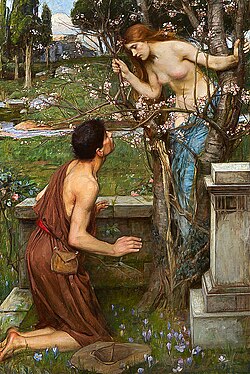
The name appears in Greek mythology. It is connected to a woman who killed herself when her love for Demophon was not returned. She was transformed into an almond or hazelnut tree, depending on the legend. It comes directly from the Greek word, Φυλλίς, meaning, “leaves, foliage,” which shares a root with the words chlorophyll and phyllotaxis. Its Turkish form of Filiz comes from the same root but the meaning slightly changes to “sprout; root.”
It also appears as the name of a minor river god of Bithynia.
It came into widespread use in England in the 16th-century and later spread to the rest of the Anglosphere.
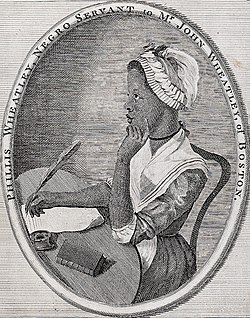
Early Puritan records occasionally include Phyllis/Phillis, reflecting classical learning even among settlers. Phillis Wheatley (1753-1784), the first published African-American female poet, is a striking historical bearer.
An 18th-century English short form was Lissie or Lissy.
It frequently appears in Elizabethan and Restoration poetry and drama. Poets such as Ben Jonson and Andrew Marvell used “Phyllis” as a stock name for a beloved in pastoral verse. Later modernists like Ezra Pound continued this tradition. This usage helped keep it familiar to English speakers for centuries.
It marked its presence in baroque operas (e.g., Handel’s Acis and Galatea includes a character named Phyllis) and in folk songs of the British Isles.
Victorian painters of the Pre-Raphaelite school sometimes chose the Phyllis and Demophon story for mythological canvases.
In the United States, it appeared in the Top 100 Female Names between 1915-1958, peaking at #24 in 1929. In the U.K., it came in at #14 in 1914, #4 in New Zealand in 1911, and #29 in 1922 in Canada.
Its Turkish offshoot of Filiz appeared in the Turkish Top 100 between 1980-1996, peaking at #11 between 1980-1982.
Today, the name is considered dated in the English-speaking world.
Phillyda, pronounced /ˈfɪl.ɪ.də/ in English is an alternate form.
The name comes directly from the Turkish word for “soil; land; country.” It is traditionally a male given-name but has been occasionally given to females more recently.
As of 2024, Toprak ranked in at the 93rd most popular male name in Turkey.
Sabih صبيح is a masculine Arabic name which comes directly from the Arabic word, صَبيح (ṣabīḥ), meaning, “comely; beautiful; handsome; graceful.” It is ultimately derived from the Arabic root word, صبح (ṣabuḥa) “to be beautiful; to be radiant; to beam.”
Sabiha صبيحة is its feminine form. It’s feminine form was borne by Sabiha Sultan (1894-1971) an Ottoman princess, the third and last daughter of Sultan Mehmed VI; the first Turkish female sculptor, Sabiha Bengütaş (1904-1992); and Turkish combat pilot, Sabiha Gökçen (1913-2001).