Elvira

  • Origin: Visigothic
  • Meaning: Uncertain
  • Usage: Albanian, Bashkir, Bosnian, Catalan, Croatian, Dutch, Estonian, Finnish, Galician, German, Hungarian, Italian, Latvian, Portuguese, Provençal, Romanian, Romansch, Russian, Scandinavian, Slovene, Tatar
  • Transcription: Эльвира (Russian)
  • Gender: Female
  • Eng (el-VY-rah); Sp (el-VEE-rah; el-BEE-rah)

A 19th-century gem and late 20th-century vampiric monikor, the name is of uncertain meaning but has its origins in Medieval Spain. It is likely of Visigothic origins, possibly derived from Gailawera or Geloyra, which stem from gails (happy) or (spear); and wers (friendly, agreeable, true).

It should be noted that Elvira (Latin: Iliberri or Iliberis) was an ancient Iberian and later Roman city located near present-day Granada, in Andalusia, southern Spain. However, in this case, it is likely derived from an Iberian source, meaning “new town.”

It was a popular female name among the royal family of Castille & León, producing two queens who bore this name, Elvira of Castile, Queen of León (965–1017) and Elvira of Castile, Queen of Sicily (c. 1100–1135).

It was later used in Mozart’s 1787 opera Don Giovanni (libretto by Lorenzo Da Ponte), in which Donna Elvira is one of Don Giovanni’s former lovers. This likely popularized the name outside of the Iberian peninsula.

By the turn of the 20th-century, Elvira was not unknown in the United States, though never overly popular, it peaked at #254 in 1914, but fell out the Top 1000 by 1981, the same year Elvira, Mistress of the Dark came on the scene.

The real Halloween link began in 1981, when actress Cassandra Peterson created the camp-horror TV hostess Elvira, Mistress of the Dark for a Los Angeles late-night show (Movie Macabre).

Dressed in a plunging black gown with a beehive of jet hair, Elvira presented old horror movies with sardonic humor — blending Gothic sex appeal, irony, and B-movie kitsch.

The character became a pop-culture icon: Halloween TV specials, films, pinball machines, comic books, and even perfume lines immortalized her as the Queen of Halloween.

Outside the United States, this name does not have such associations. In Sweden, it has been among the top 100 girls’ since 1998 and peaked at #25 in 2014. As of 2024, it came in at #40.

It’s a popular name in the Balkans, even spinning off a male form of Elvir (Bosnian and Albanian).

Other forms include:

  • Elbire (Basque)
  • Elvíra (Czech/Slovakian)
  • Elviira (Estonian, Finnish)
  • Elvire (French)
  • Elwira (Polish, also an alternate Swedish spelling, Sorbian)
  • Elvīra (Latvian)
  • Elvyra (Lithuanian)

Obscure Lithuanian male forms are the Lithuanian, Elvyras; the Polish, Elwir(o), and the Italian Elviro.

Name days: August 25 (Austria), July 16 (Croatia), February 10 (Hungary), January 25 (Spain), March 1 (Sweden), November 21 (Slovakia), August 13 (Latvia).

Sources

Apollinaris, Apollinaire

  • Origin: Greek Ἀπολλινάρις
  • Meaning: “of Apollo.”
  • Gender: Masculine

The name is from the classical Greek, related to Apollo. It was borne by several early Christian saints. The most notable being St. Apollinaris of Ravenna, a Syrian Christian missionary to Ravenna who was martyred there and thereafter became the city’s patron saint.

The French form Apollinaire is linked to the Franco-Polish poet, Guillaume Apollinaire. He lived from 1880 to 1918. He was born Wilhelm Albert Włodzimierz Apolinary Kostrowicki.

Apolinary was common in Poland during the late 19th-century and early 20th-centuries, it is now obsolete. Diminutives include: Apolinek, Apollinek, Apolin, Apollin, Polin, Polinary, Polinarek, Polinaruś, Poli, and Polik.

In Italy, Apollinare was mainly used in the Romagna region due to it being the name of their patrion saint, but it has since fallen out of use.

Apollinaire sporadically appeared in the French Top 1000 between 1900 and 1926 and peaked at #403 in 1923. In 2024, 5 babies were given this name.

Neither its masculine form nor its feminine form had much usage in the English-speaking world. It was mostly used in families of Greek or Eastern European background during the late 19th-century.

Designated name-days include July 20th, July 23rd, and September 12th

Other forms include

  • Abolinarius أبونيناريوس (Arab Christian)
  • Apolighnar Ապողլինար (Armenian)
  • Apolinar Ապոլինար (Armenian, Spanish)
  • Apolinaris ܐܦܘܠܝܢܪܝܣ (Assyrian)
  • Apoliñari (Basque)
  • Apalinariy Апалінарый (Belarusian)
  • Appolinariy Апполінарій (Bulgarian, Ukrainian, Rusyn, Russian)
  • Apol·linar, Apol·linari (Catalan)
  • Apollinaris Ⲁⲡⲟⲗⲗⲓⲛⲁⲣⲓⲥ (Coptic, Dutch, English, German, Greek, Scandinavian)
  • Apollinari (Corsican, Sardinian)
  • Apolinár (Czech, Slovak)
  • Apollinaire (French)
  • Apolinario (Galician, Spanish)
  • Apo’linar აპოლინარ (Georgian)
  • Apollinarios Ἀπολλινάριος (Greek)
  • Apollinár (Hungarian)
  • Apollinare (Italian)
  • Apolenaris (Late Latin)
  • Apolinārs (Latvian)
  • Apolinaras (Lithuanian)
  • Apollinarju (Maltese)
  • Apolinary (Polish)
  • Apolinário (Portuguese)
  • Apolinàri (Provençal)
  • Pulinéra (Romagnol)
  • Apollinari (Romansh)
  • Apolinariu (Romanian)
  • Apolinarije (Serbo-Croatian, Slovenian)
  • Apołinare (Venetian)

Its feminine form is Apollinaria, which is also borne by an early Christian saint.

Other feminine forms include:

  • Abolinarya أبوليناريا (Arab Christian)
  • Apoghlinaria Ապողլինարիա (Armenian)
  • Apolinaria Ապոլինարիա, აპოლინარია (Armenian, Galician, Georgian, Polish, Romanian, Spanish)
  • Apolinaryja, Apolinariya,ܐܦܘܠܝܢܪܝܐ, Аполлинария (Assyrian, Bulgarian, Russian, Rusyn, Ukrainian)
  • Apalinariya, Apalinaryja, Апалінарія (Belarusian)
  • Apollinaria Ⲁⲡⲟⲗⲗⲓⲛⲁⲣⲓⲁ, Ἀπολλιναρία (Coptic, Corsican, German, Greek, Lithuanian, Romansh, Sardinian)
  • Apolinária (Czech, Portuguese, Sardinian, Slovak)
  • Apollinarie (French)
  • Apollinária (Hungarian)
  • Apolinārija (Latvian)
  • Apollinarja (Maltese)
  • Apolinària (Provençal)
  • Apolinarija (Serbo-Croatian, Slovenian)

A traditional feminine diminutive form in Russian is Polina. Polish diminutives include: Apollinka, Apollina, Apolinka, Apolla, Apola, Pola, Polka, Polcia, Polina, and Polinka. Modern Greek diminutives include: Nαρία (Naría), Πόλλα (Pólla), or Λίνα (Lina). Potential English short forms would include: Apple, Pollie, Polly, and Narey, or Narie.

Sources

Zenobia

Zenobia is composed of the Greek elements, Zeus (Zeus) and bios (life). It was notably borne by a 1st-century Armenian queen of Georgian descent and later a 3rd-Century Queen of Palmyra who tried to expand into Roman territory but was defeated by Emperor Aurelian.

Zenobia of Palmyra’s name might have been a Hellenized form of her birth name, Bat-Zabbai, which is from the Aramaic meaning “daughter of Zabbai.” Zabbai itself is an Aramaic male name. It seems to be a theophoric name, meaning “gift of–.” The latter part refers to an unknown deity. It may have actually been an Aramaic form of the Hebrew female name, Bathsheba.

Speculation has also linked it with the Arabic female name Zaynab, which can either mean “father’s beauty” or be from the name of a type of flowering tree.

It was borne by the 3rd-century martyrs, Ss. Zenobia and Zenobius, two early Christians who were siblings and beheaded under Emperor Diocletian. Their feast and name-day is October 30.

In the English-speaking world, it is first recorded in Cornwall and Devon, England in the 16th-century. Early English forms of Synibie, Sinobie, Senobie, Cenobie, and Cenoby (Sen-e-bee; SIN-e-bee), would make interesting revivals in the spirit of Sydney and Willoughby. A common English diminutive was Nobby.

Zenobia appeared in the U.S. Top 1000 Most Popular Female names between 1881-1925, peaking at #669 in 1909.

Zenobia is no stranger to English literature, it is the name of a character in Nathaniel Hawthorn’s The Blithedale Romance (1852); Edith Wharton’s Ethan Frome (1911); and is even used by Anne Rice in her the eighth book of her vampire series, Blood and Gold (2001).

Zenobia “Nobby” Hawthorne appears as a character in the P.G. Wodehouse series, Jeeves.

Tina Fey used this as the middle name of daughter, Alice Zenobia.

Other forms include

  • Zenobia Զենոբիա ზენობია ܙܢܘܒܝܐ Armenian, Assyrian, Coptic, Czech, Danish, Galician, Georgian, German, Greek, Italian, Polish, Portuguese, Provencal, Romanian, Swedish, Spanish)
  • Zanubya ܙܢܘܒܝܐ (Assyrian)
  • Zinovia Зіновія Зиновия Ζηνοβία Зіновія (Belarusian, Modern Greek, Romanian, Russian, Ukrainian)
  • Zinovija Зиновия (Bulgarian, Serbian)
  • Cenobia (Catalan, English, Spanish, Swedish)
  • Anobia Ⲁⲛⲟⲃⲓⲁ (Coptic); Zanubiyah زنوبيا (Modern Arabic/Coptic)
  • Zenobie (English, archaic)
  • Senobia, Senobie, Sinobia (English)
  • Synibie, Sinobie, Cenobie, Cenoby (English)
  • Senopia (Finnish)
  • Zénobie, Zénobine (French)
  • Zenovia Ζηνοβία(Greek, modern, Romanian)
  • Zenóbia (Hungarian)
  • Zanobia (Italian, archaic)

Diminutives

  • Zinooba, Nubya (Assyrian)
  • Nobby, Zeena, Zina (English)
  • Pia, Piiu, Piu, Seno, Senu (Finnish)
  • Zena, Zenna (Hungarian)
  • Zenka, Zenobijka, Zenia, Zeba, Zebia, Zebka, Zeniulka, Zenusia, Zeniusia, Zeneczka (Polish)
  • Zina Зина (Russian)

Masculine forms include

  • Zenob Զենոբ (Armenian)
  • Zinovi Զինովի (Armenian)
  • Zenobio ܙܢܘܒܝܐ (Assyrian, Italian, Spanish)
  • Kenoba (Basque)
  • Zinovij Зиновий (Bulgarian, Serbian)
  • Cenobio, Zenobi (Catalan)
  • Zenóbe (French)
  • Zenobios Ζηνόβιος (Greek, classical)
  • Zinovios Ζηνόβιος (Greek, modern)
  • Zenóbiosz (Hungarian)
  • Zanobi (Italian, archaic)
  • Zenobiusz, Zenobi (Polish)
  • Zenovie (Romanian)
  • Zinoviy Зиновий Зіновій (Russian, Ukrainian)

Sources

Perpetua

  • Origin: Late Latin
  • Gender: Female
  • Meaning: “perpetual.”
  • Eng pron (per-PET-choo-ah)

The name is derived from the Latin perpetuus, meaning “continous; perpetual.” It was borne by a 3rd-century Christian matyr and saint, the companion of St. Felicity and it was also the name of the sister of St. Augustine of Hippo.

Perpetua and its various forms have been in sporadic use throughout the Catholic world. In Italy, it became synonymous with a priest’s housekeeper. This is due to the eponymous character in Alessandro Manzoni’s 19th-century novel, “The Betrothed.

It experienced sporadic use in England in the 1920s after the release of the now lost 1922 film, Perpetua also known as Love’s Boomerang.

It has recently appeared in English literature as the name of minor characters in Bridget Jones’s Diary (Helen Fielding), and in the Harry Potter series (J.K. Rowling).

It was borne by Scottish landscape painter, Perpetua Pope (1916-2013).

It is the name of Cape Perpetua Oregon which was named for St. Perpetua as well as a typeface.

It’s designated name-day is February 1, March 6th and March 7th.

Forms & Usages

  • Perpetua (Basque, Croatian, Dutch, Galician, German, Italian, Latvian, Lithuanian, Polish, Provençal, Romanian, Spanish)
  • Perpètua (Catalan)
  • Perpétue, Perpétué, Perpetue (French)
  • Perpétua (Hungarian, Portuguese)
  • Perpetuya Перпетуя (Russian)

English short forms include: Perp, Perpie, Perpy, and Petty.

Masculine forms include

  • Perpeta (Basque)
  • Perpetu (Catalan)
  • Perpet (French, Polish)
  • Perpetuo (Italian, Spanish)
  • Perpète (French)
  • Perpetuus (Late Latin)
  • Perpetuüs (German)

Sources

Nora, Nour

1024px-Dawn._Buryatia,_Russia


This multicultural name has recently experienced a revival. In European countries, the name stems from any name ending in the -nora element, such as Honora & Eleanora. In Arabic, Nora is a variant transliteration of Nurah, which is a strictly feminine version of the unisex Arabic name, Nur (light). Nur is used as one of the 99 attributes of Allah, al-Nur (the light).

The name was used by Henrik Ibsen for his main character in his play, A Doll’s House (1878).

Outside of East Asia, there isn’t a counry where Nora is unhead of or is not in use. Nora has been in out of the U.S. Top 100 since 1880! She currently ranks in as the 30th Most Popular Female Name in the United States. Her rankings in other countries are as follows:

  • #2 (Norway, 2018)
  • #10 (Netherlands, 2018)
  • #11 (Hungary, 2018)
  • #14 (Switzerland, 2018)
  • #15 (Denmark, 2018)
  • #20 (Belgium, 2018)
  • #23 (Austria, 2018)
  • #26 (Catalonia, Spain, 2018)
  • #28 (Sweden, 2018)
  • #38 (Canada, BC, 2018)
  • #47 (Spain, 2018)
  • #64 (Norah, Netherlands, 2018)
  • #79 (Bosnia & Herzegovina, 2018)
  • #84 (Norah, Canada, BC, 2018)
  • #85 (Italy, 2018)
  • #119 (France, 2018)
  • #140 (Norah, United States, 2018)
  • #184 (Norah, France, 2018)
  • #197 (England & Wales, 2018)
  • #283 (Norah, England & Wales, 2018)

Its Dutch version of Noor also ranks high in several popularity charts. This name is also used by Muslim families as a variation of Nur. Her rankings in other countries are as follows:

  • #10 (Netherlands, 2018)
  • #25 (Belgium, 2018)
  • #279 (England & Wales, 2018)
  • #311 (France, 2018)

Noortje is another Dutch version which currently ranks in as the 203rd Most Popular Female Name in the Netherlands.

Other forms of its European version include:

  • Nora Нора Νόρα (Bulgarian, Greek)
  • Noera (Dutch)
  • Noor (Dutch)
  • Noortje (Dutch)
  • Norah (Dutch, English, French)
  • Nonie (English)
  • Noreen (English, Irish)
  • Noora (Estonian, Finnish)
  • Nóra Но́ра (Faroese, Hungarian, Irish, Russian)
  • Nuura (Finnish, Scandinavian)
  • Nóirín (Gaelic)
  • Norina (Italian, Provençal, Romansch)
  • Norá (Sami)
  • Norea (Scandinavian)
  • Norena (Scandinavian)
  • Noria (Scandinavian)
  • Norita (Spanish, Scandinavian)

The Arabic Nur is traditionally a unisex name which is popularly used in many Islamic countries. Its Maghrebi form of Nour currently ranks in the following popularity charts for girls:

  • #40 (Belgium, 2018)
  • #48 (Catalonia, Spain, 2018)
  • #48 (France, 2018)
  • #76 (Spain, 2018)
  • #137 (Italy, 2018)
  • #197 (Netherlands, 2018)

Nur is currently the 87th Most Popular Female Name in Bosnia & Herzegovina (2018).

Other forms of the Arabic version include:

  • Noora, Nura (Arabic, strictly feminine)
  • Noura (Maghrebi Arabic, strictly feminine)
  • Núria (Catalan)
  • Nor (Malay, unisex)
  • Nuru (Swahili, strictly feminine)

Sources

Andrew

Gender: Masculine
Origin: Greek
Meaning: “of man, belonging to man.”

The name is derived from the Greek Ανδρεασ (Andreas), which is derived from the Greek word, ανδροσ (andros), a genitive form of the word, ανηρ (aner), meaning, “man.” Hence, it would rougly translate to mean “belonging to man” or “of man.”

It was popularized by one of the twelve Apostles, who is now considered a popular Christian saint. It is suggested that Andreas was a nickname given to him, or possibly just a direct Greek translation of a Hebrew name that had a similar meaning, now lost to history.

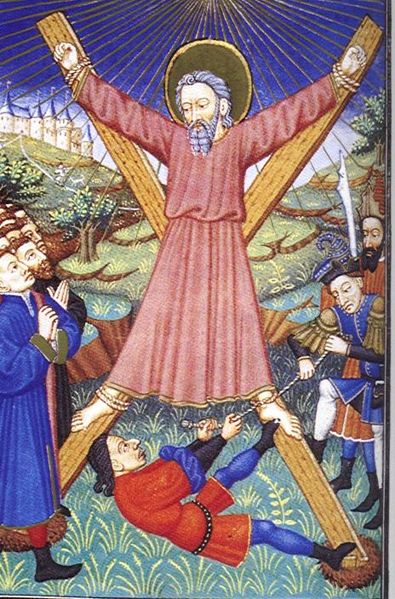
Saint Andrew is considered the patron saint of Scotland, Russia, Greece and Romania. According to legend, he was martyred around the Black sea on an X shaped cross. His designated name-day is November 30.

The name has remained a staple in the U.S. top 100. As of 2011, he was the 16th most popular male name. His rankings and his various incarnations in other countries are as follows:

  • # 1 (Andrei, Romania, 2009)
  • # 3 (Andrea, Italy, 2010)
  • # 3 (Andrea, Italian-speaking, Switzerland, 2010)
  • # 6 (Andreas, Estonia, 2011)
  • # 8 (Andria, Georgia, 2011)
  • # 8 (Andrej, Serbia, 2011)
  • # 9 (Andrey, Russia BabyCenter, 2011)
  • # 10 (Ondřej, Czech Republic, 2011)
  • # 10 (Andre/Andrew/Andrea/Andrei, Malta, 2011)
  • # 12 (Andreas, Norway, 2011)
  • # 25 (András, Hungary, 2011)
  • # 28 (Andreas, Denmark, 2011)
  • # 35 (Scotland, 2010)
  • # 38 (Canada, BC, 2010)
  • # 39 (Andrej, Croatia, 2009)
  • # 41 (Andraž, Slovenia, 2010)
  • # 46 (Andreas, Austria, 2010)
  • # 57 (Andrija, Croatia, 2009)
  • # 58 (Ireland, 2010)
  • # 61 (Andres, Spain, 2010)
  • # 68 (Australia, NSW, 2011)
  • # 70 (Northern Ireland, 2010)
  • # 92 (Andrej, Slovenia, 2010)
  • # 98 (Andro, Croatia, 2009)
  • # 98 (Anders, Norway, 2011)
  • # 176 (Andres, United States, 2011)
  • # 241 (André, United States, 2011)
  • # 244 (Andrea, France, 2010)
  • # 388 (Andreas, France, 2010)
  • # 950 (Anders, United States, 2011)

Other forms are as follows (listed alphabetically by linguistic origin).

  • Andrees/Andries (Afrikaans/Old Dutch)
  • Andrea (Albanian/Italian)
  • Ndreu (Albanian)
  • Andreyas (Amharic)
  • Andraws/Andraous اندراوس (Arabic/Coptic/Lebanese/Syriac)
  • Andreas (Armenian/Czech/Estonian/German/Greek/Hungarian/Slovak/Scandinavian)
  • Andresu (Asturian)
  • Ander (Basque)
  • Anderl (Baverian)
  • Andrièu (Bearnais/Occitanian/Provencal)
  • Andrivet (Bearnais)
  • Andrej Андрэй (Belarusian)
  • Andreo/Andrev (Breton)
  • Andrei/Andrey Андрей (Bulgarian/Old Church Slavonic/Romanian/Russian/)
  • Andrejko (Bulgarian)
  • Andreu (Catalan/Aragonese)
  • Andria ანდრია (Corsican/Georgian/Sardinian)
  • Andrej (Croatian/Czech/Slovak/Slovene)
  • Andrija (Croatian/Serbian)
  • Andro/Jandre (Croatian)
  • Ondřej (Czech)
  • Anders (Danish/Norwegian/Swedish)
  • Dres/Dreves/Drevs (Danish)
  • Andries/Adrees (Dutch)
  • Andres (Estonian)
  • Ando/Andre/Andro/Andrus/Andu/Andi/Anti (Estonian)
  • Andras/Andrias (Faroese)
  • Andriou (Fijian)
  • Antero/Tero (Finnish)
  • Antti (Finnish)
  • Andris/Driess (Frisian)
  • André (French/Galician/Ladino/Portuguese)
  • Dria (Genevoese: Dialectical Italian form)
  • Anda (German: dialectical form, Northern Austria)
  • Anekelea (Hawaiian)
  • Andor/András/Endre (Hungarian)
  • Andris (Hungarian/Latvian)
  • Andrés (Icelandic/Spanish)
  • Aindréas/Aindriú (Irish)
  • Andrejs (Latvian)
  • Andriejus/Andrius (Lithuanian)
  • Andrija/Indri (Maltese)
  • Anaru (Maori)
  • Dreesi (Old Swiss German: Basel dialect)
  • Andrzej/Jędrzej (Polish: latter is a very old form)
  • Drewes (Plattdeutsch)
  • Andrea/Andreia/Andri/Andrin/Andriu (Romansch)
  • Ándá/Ándaras/Ándde/Ánde (Saami)
  • Aindrea/Aindreas/Anndra (Scottish)
  • Ondrej (Slovak)
  • Andraž (Slovene)
  • Handrij (Sorbian)
  • Andalea (Swahili)
  • Andriy Андрiй (Ukrainian)
  • Andras (Welsh)

Belorusian diminutives are: Andros, Andruk and Andrus. Czech masculine diminutive forms are Andy, Ondra, Ondrášek, Ondrejko, Ondrík, Ondřejek and Ondříček. French diminutive forms are: Dédé, Ti-Dré, Andi, DéaAndy. A German diminutive form is Andy/Andi and English are Andi, Andie, Andy, Dre and Drew. A Hungarian diminutive is Bandi and Polish diminutive forms are Andrzejek, Jędrek and Jędruś. Scotch diminutive form is Dand.

Note: Andrea is a common feminine form in most European countries outside of Italy and Albania, particularly in Germany and the Anglo-phone world. Whether this is a borrowing from the Italian and was changed, or a coincidental evolution, is unknown. What is known is that Andrea has been used in England as a feminine form since the 17th-century.

Feminine forms are (listed alphabetically by linguistic origin)

  • Andere (Basque)
  • Andrea (Basque/Breton/English/German/Spanish)
  • Andriva/Andriveta (Bearnais/Occitanian)
  • Andersine (Danish)
  • Andrine (Danish/Norwegian)
  • Drine (Danish)
  • Dreesje (Dutch)
  • Andrée (French)
  • Aanasi/Aanarsi/Aanta/Aantariarsi (Greenlandic)
  • Andreina (Italian)
  • Andzeja/Ondzeja (Polish: obscure)
  • Andréia (Portuguese: Brazilian)
  • Andreia (Portuguese: European)
  • Andriano (Provencal)
  • Andreea (Romanian)
  • Andrina (Romansch)
  • Andrijana (Serbo-Croatian)
  • Andreja (Slovene)
  • Andrietta/Andriette (Swedish/Danish: very rare)

Czech diminutive forms are: Adrejka, Andruška, Andra, Rea. English diminutive forms are Andi, Andy, Annie and Drea.

Gabriel, Gabriella

Origin: Hebrew גַבְרִיאֵל  Γαβριηλ
Meaning: “strong man of God.”
Eng (GABE-ree-el); (gah-bree-EL-ah); Fre (gah-bree-EL); Germ (GAHP-ree-el); Pol (GAHP-ryel)

The name is derived from the Biblical Hebrew, גַבְרִיאֵל (Gavri-el) meaning, “strong man of God.”

In Judeo-Christian religions, it is the name of a powerful archangel, who is often viewed as a messenger of God. He appears several times in the Old and New Testaments.

Among Christians, one of his most important messages was relayed to the Virgin Mary that she would be the mother of Jesus. Islamic tradition also believes the same, and in Islam, it was the angel Gabriel who revealed the Qu’ran, (through God), to Mohammed.

In Mormon theology, Gabriel is believed to be the embodiment of Noah in the afterlife.

Gabriel is a fairly common name among Christians, Jews and Muslims, making him an extremely cross-cultural portable name.

Currently, in the United States, his popularity has been rising. He is the 24th most popular male name, (2011). In other countries, his rankings in all his various forms are as follows:

  • # 2 (Gabriel(e), Liechtenstein, 2010)
  • # 3 (Brazil, 2011)
  • # 4 (Romania, 2009)
  • # 6 (Gabriele, Italy, 2009)
  • # 7 (France, 2010)
  • # 9 (Quebec, Canada, 2011)
  • # 19 (Croatia, 2009)
  • # 26 (Belgium, 2008)
  • # 28 (Canada, BC, 2010)
  • # 28 (Mexico, 2010)
  • # 29 (Austria, 2010)
  • # 35 (Spain, 2010)
  • # 40 (Poland, 2009)
  • # 47 (Sweden, 2011)
  • # 48 (Norway, 2011)
  • # 52 (Catalonia, 2010)
  • # 78 (England/Wales, 2010)
  • # 95 (Australia, NSW, 2011)
  • # 124 (Scotland, 2010)
  • # 189 (Djibril, France, 2010)
  • # 313 (Jibril, France, 2010)

Other forms of the name include:

  • Jibrail/Jibrīl جبرائيل ጂብሪል (Arabic/Ethiopian)
  • Gabriel გაბრიელი ገብርኤል
    (Armenian/Catalan/Coptic/Czech/Danish/English/Ethiopian/Finnish/French/Georgian/German/Norwegian/Polish/Portuguese/Romanian/Romansch/Spanish/Swedish)
  • Gavrik (Armenian)
  • Cəbrayıl/Cibril (Azeri)
  • Gawryil Гаўрыіл (Belarusian)
  • Džibril/Džebrail (Bosnian)
  • Gavrail Гавраил (Bulgarian)
  • Zheberejil Жәбірейіл (Central Asian)
  • Gabrijel (Croatian/Maltese/Serbian)
  • Gabriël (Dutch)
  • Gaabriel (Estonian)
  • Gabrel (Ethiopian)
  • Kaapo/Kaapro (Finnish)
  • Gabriél Γαβριήλ (Greek)
  • Gavril Γαβριηλ (Greek)
  • Gavriel גַּבְרִיאֵל (Hebrew)
  • Gábriel (Hungarian)
  • Gábor (Hungarian)
  • Gabríel (Icelandic)
  • Jibril (Indonesian)
  • Gaibriéil (Irish-Gaelic)
  • Gabo/Gabbo (Italian)
  • Gabriele (Italian: more common form)
  • Gabriellino (Italian)
  • Gabriello (Italian)
  • Gabrio (Italian)
  • Cibrayîl (Kurdish)
  • Gabrielus (Latin)
  • Gabriels (Latvian)
  • Gabrielius (Lithuanian)
  • Jibrail (Malaysian)
  • Gavriilu Гаврїилъ (Old Church Slavonic)
  • Khabbriele (Puglian)
  • Gabin (Provençal)
  • Gavril Гавриил (Romanian/Russian)
  • Crabiele/Gabilele/Gabriello (Sardinian)
  • Cabbrieli (Sicilian)
  • Gabri’el ܠܒܪܝܐܝܠ (Syrian)
  • Gebrael (Syrian)
  • Cebrâîl (Turkish)
  • Gavrel גַאבְֿרֶעל (Yiddish)

English short form is Gabe.

Its feminine form of Gabriella/Gabriela is also rising in popularity. Currently, Gabriella is the 34th most popular female name in the United States, (2011). Her rankings in other countries are as follows:

  • # 3 (Gabriela, Bulgaria, 2009)
  • # 5 (Gabrielė, Lithuania, 2011)
  • # 5 (Gabrielle, Philippines, 2011)
  • # 7 (Gabriela, Columbia, 2011)
  • # 8 (Gabriela, Romania, 2009)
  • # 9 (Gabriela, Puerto Rico, 2011)
  • # 10 (Gabriela, Brazil, 2010)
  • # 13 (Gabriela, Poland, Warsaw, 2010)
  • # 19 (Gabriela, Poland, 2009)
  • # 28 (Gabrijela, Croatia, 2009)
  • # 30 (Gabriela, Mexico, 2010)
  • # 30 (Gabrielly, Brazil, 2010)
  • # 36 (Gabriela, Croatia, 2009)
  • # 38 (Gabriela, Chile, 2010)
  • # 64 (Australia, NSW, 2011)
  • # 64 (Gabriela, Spain, 2010)
  • # 67 (Gabrielle, France, 2010)
  • # 72 (Canada, BC, 2010)
  • # 94 (Gabrielle, Canada, BC, 2010)
  • # 119 (Gabrielle, United States, 2011)
  • # 466 (France, 2010)

Other feminine forms include:

  • Gebre’elwa ገብርኤሏ (Amharic/Ethiopian)
  • Gabriela (Bulgarian/Croatian/Czech/German/Polish/Portuguese/Romanian/Scandinavian/Slovak/Spanish)
  • Brielle (Cajun: abbreviated form of Gabrielle)
  • Gabrijela (Croatian/Serbian)
  • Gabriëlle (Dutch)
  • Briella/Briela (English)
  • Gabrielle (French/English)
  • Gabria (Italian)
  • Gabrielina (Italian)
  • Gabriella (Italian/English/Hungarian/Scandinavian: more common form in Italy)
  • Gabrielė (Lithuanian)
  • Gavriila Гавриила (Russian)

Czech diminutives are: Gába, Gabika, Gábina, Gabrina and Gabby.

A Polish diminutive is Gabrysia (gah-BRIH-shah).

English short forms are: Gabby and Ella.

Designated name-days are: February 10/27 (Poland), February 19 (Sweden), March 24 (Czech/Finland/Poland/Slovakia/Sweden), September 29 (France/Germany), December 12 (Hungary)

Eulalia, Eulalie

Gender: Feminine
Origin: Greek Ευλαλια
Meaning: “to talk well.”
Eng (yoo-LAY-lee-uh; yoo-LAY-lee); Fre (eu-lah-LEE); Cat (oo-LOW-lee-ah); Sp (oo-LAH-lee-ah)

The name is composed of the Greek elements, eu ευ (good) and laleo λαλεω (talk).

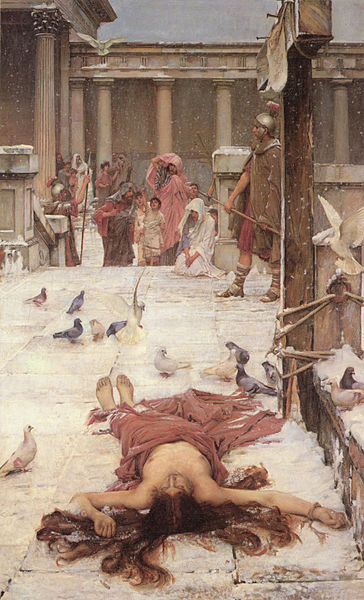
The name was borne by two different early Spanish saints, both of whom are believed to be one and the same person. St. Eulalia of Mérida was a 3rd-century teenage Roman girl who refused to give up her faith, she was subsequently tortured and crucified, legend has it that when she was cut down from her cross, a layer of snow fell to cover her nakedness. The story was the subject of the famous painting by John William Waterhouse, (above).

In the English-speaking world, especially in the United States, Eulalia and her other forms appeared in the U.S. top 1000 from the 19th-century till the 1930s. She never ranked high, the highest only being # 365 in 1893. Her French form of Eulalie also experienced some usage but fell out of the top 1000 by 1900. The highest Eulalie ever ranked in the United States was at # 687 in 1893. Eulalie’s introduction into the United States may have had something to do with Edgar Allan Poe’s 1845 poem, Eulalie.

Eulalie is one of Poe’s less Gothic works, it recounts how a widower once again finds happiness in a girl named Eulalie.

Two famous American bearers were Silent film actress, Eulalie Jensen (1884-1952), and  Eulalie Spence (1894-1981) an African-American play-write of West Indian extraction.

Further up in North America, the name was borne by French-Canadian Blessed and religious foundress, Eulalie Durocher, aka, Soeur Marie Rose Durocher, who is credited for finding the Order of the Holy Name of Jesus and Mary (1811-1849).

In French naming history, Eulalie appears in a famous folktale, Jean, the Soldier, and Eulalie, the Devil’s Daughter.

Notable French bearers are numerous, but one of the most famous has to be an early female journalist by the name of Eulalie de Senancour (1791-1896).

In the United States, Eula was probably the most common form. She consistently remained within  the U.S. top 1000 between 1880 and 1960. The highest she ever ranked was at # 122 in 1908.

As of 2009, its French form of Eulalie was the 472nd most popular female name in France.

Other forms of the name include:

  • Olaria (Aragonese)
  • Olarieta (Aragonese)
  • Olalia (Asturian)
  • Olaya (Asturian)
  • Santolaya (Asturian: literally means, Saint Eulalia, used in reference to St. Eulalia very much in the same way Santiago and Santana)
  • Eulàlia (Catalan)
  • Eulalia (Dutch/English/German/Italian/Latin/Polish/Spanish)
  • Eula (English)
  • Eulalie (English/French)
  • Lalia (English)
  • Aulaire (French: archaic)
  • Evlalia (Greek)
  • Eulália (Hungarian/Portuguese/Slovak)
  • Aulazia (Occitanian/Provençal)
  • Olalla (Spanish)
Eulalia is also the name of a type of grass.
A common French and English short form is Lalie.

Eleanor

Gender: Feminine
Origin: Occitanian
Meaning: “the other Aenor”
Eng (EL-e-NOR)

The name is derived from the Latin Alia Aenor, which literally means, the “other Aenor”, according to most historical sources, the most notable bearer, Eleanor of Aquitaine, was named for her mother Aenor and as a way to distinguish her from her mother, she was dubbed Alia Aenor.

The meaning of Aenor is uncertain, but may be connected to the Latin verb ienire, meaning “to heal.”

The name was borne by Eleanor of Aquitaine, known in Old French as Aliénor d’Aquitaine, (1122-1204), the daughter of William X, Duke of Aquitaine, she grew up to be one of the most powerful people in medieval Western Europe and became Queen Consort of both France and England.

Her popularity throughout France, Spain, Italy, Portugal and England. It was also borne by two other queens, Eleanor of Provence and Eleanor of Castile, the former was canonized a saint.

Eleanor has produced several other common offshoots, such as Lenore, the name of the departed love in Edgar Allan Poe’s poem, The Raven (1845); Elnora and Nora.

In modern American history, it was borne by First Lady and humanitarian, Eleanor Roosevelt (1884-1962).

It is currently the name of the crown princess Infanta of Spain, Leonor.

Currently, Eleanor is the 61st most popular female name in England/Wales, (2010). She is currently the 165th most popular female name in the United States, (2010). Her rankings in other countries are as follows:

  • # 2 (Leonor, Portugal, 2010)
  • # 125 (Eléonore, France, 2009)

Common English diminutives include: Ella, Ellie, Nell, Nellie and Nora.

Other forms include:

  • Eleanora (Breton/Norwegian
  • Elionor (Catalan)
  • Eleonora Елеонор (Belarusian/Czech/Danish/Dutch/Faroese/Icelandic/Italian/Polish/Swedish)
  • Elenora (Danish)
  • Eleanor (English/Estonian/Romanian)
  • Elnora (English)
  • Lenora (English)
  • Leonora (English/German/Italian/Portuguese/Spanish)
  • Lenore (English/German)
  • Nell (English: originally a diminutive form, now used as an independent given name)
  • Nellie (English: originally a diminutive form, now used as an independent given name)
  • Nora (English/Italian: originally a diminutive form, now used as an independent given name)
  • Eleonoora (Finnish)
  • Noora (Finnish)
  • Éléonore (French)
  • Eleonore (German)
  • Eleōnora Ελεωνόρα (Greek: Modern)
  • Eleonóra (Hungarian/Slovak)
  • Lenóra (Hungarian)
  • Elenóra (Icelandic)
  • Nóra (Irish-Gaelic)
  • Nóirín/Noreen (Irish-Gaelic)
  • Elianora/Elinora (Italian)
  • Noretta (Italian)
  • Norina (Italian)
  • Alienora (Late Latin)
  • Léionore (Norman)
  • Ellinor/Elinor (Norwegian/Swedish)
  • Alienòr (Occitanian)
  • Leonor (Portuguese/Spanish)
  • Aliénor (Provençal)
  • Alenora Альенора (Russian)
  • Eilidh (Scots-Gaelic: originally a diminutive form, now very popular as an independent given name)
  • Eilionoir (Scots-Gaelic)
  • Elna (Swedish: contracted form).

The designated name-day is February 22.

German diminutives are: Lola, Lorle, Lore, Nora and Nordel.

A Dutch diminutive is Noortje.

Hungarian diminutives include: Ella, Leonorka, Lóra, Lórácska, Lóri, Nelli, Nóra, Norcsi, Nóri and Nórici.

Sources

  1. http://www.askoxford.com/firstnames/eleanor?view=uk
  2. http://www.behindthename.com/php/find.php?name=eleanor
  3. Alison Weir, Eleanor of Aquitaine: A Life, Ballantine Books, 2001
  4. Kálmán BélaA nevek világa
  5. Marion MeadeEleanor of Aquitaine: a biography, Hawthorn Books, 1977
  6. Régine PernoudEleanor of Aquitaine, Coward-McCann, 1968

George

Gender: Masculine
Origin: Greek Γεωργιος
Meaning: “farmer.”
Eng (JORJ)

The name is an English and Romanian form of the Greek, Georgios Γεωργιος, which is derived from the Greek γεωργος (georgos) meaning, “farmer; earth worker.”

The name was borne by a 4th-century Christian saint and martyr, a Roman soldier of Greek ancestry who refused to sacrifice to pagan gods as demanded by the Roman Emperor at the time. He was popularized in the Western Christian Church after the Crusades, when soldiers brought the story back to Western Europe. The saints’ story was embellished and his story appears in the Golden Legend.

The most famous legend was that during the saint’s life, he managed to rescue a maiden who was about to be sacrificed to a dragon by slaying it with his lance. This legend has been the subject of art for centuries.

Though revered as the patron saint of England, the name itself did not catch on in until the 18th-century, following the accession of George I of England. The name has been borne by several kings throughout Europe. It was also borne by the first president of the United States, George Washington.

In Medieval times, English troops would chant “by George“, as a invocation to the saint to protect them in battle.

Between 1880 and 1937, George remained in the U.S. top 10. As of 2010, he only ranked in as the 164th most popular male name. His rankings in other countries are as follows:

  • # 1 (Georgi, Bulgaria, 2007)
  • # 1 (Georgios, Greece, 2010)
  • # 2 (Giorgi, Georgia, 2011)
  • # 5 (Yegor, Belarus, 2011)
  • # 9 (England/Wales, 2010)
  • # 12 (Yegor, Russia, 2011)
  • # 16 (Jorge, Spain, 2010)
  • # 19 (Jiří, Czech Republic, 2010)
  • # 20 (Romania, 2009)
  • # 22 (Jordi, Catalonia, 2010)
  • # 27 (Jure, Slovenia, 2010)
  • # 42 (Jorge, Chile, 2010)
  • # 53 (Juraj, Croatia, 2010)
  • # 69 (Jure, Croatia, 2010)
  • # 73 (Australia, NSW, 2010)
  • # 75 (Jurij, Slovenia, 2010)
  • # 76 (Jørgen, Norway, 2010)
  • # 78 (Jorge, Mexico, 2010)
  • # 80 (Joris, Netherlands, 2010)
  • # 82 (Jordi, Spain, 2010)
  • # 84 (Jurica, Croatia, 2010)
  • # 100 (Scotland, 2010)
  • # 168 (Jorge, United States, 2010)
  • # 233 (Joris, France, 2009)
  • # 420 (Jordi, Netherlands, 2010)

Other forms of the name include:

  • Gjergj (Albanian)
  • Jorgo (Albanian)
  • Giorgis ጊዮርጊስ (Amharic)
  • Jurj(us)  جرج  جرجس (Arabic)
  • George  جورج (Arabic/English/Romanian)
  • Khodor  خضر (Arabic)
  • Chorche (Aragonese)
  • Gev(or) Գեվ Գեվոր (Armenian)
  • Gevorg Գեվորգ (Armenian)
  • Kevork Գեւորգ (Armenian)
  • Xurde (Asturian)
  • Gorka (Basque)
  • Jury Юры (Belarusian)
  • Yegor Егор (Belarusian/Russian)
  • Jord (Breton)
  • Jorj (Breton)
  • Georgi Георги (Bulgarian)
  • Jordi (Catalan)
  • Juraj (Croatian/Slovak/Slovene)
  • Jurica (Croatian)
  • Jure (Croatian/Slovene)
  • Jiří (Czech)
  • Jørgen (Danish/Norwegian)
  • Joris (Dutch/Frisian)
  • Sjors (Dutch)
  • Georg (Faroese/Estonian/German/Icelandic/Romansch/Scandinavian)
  • Jurjen (Frisian)
  • Jüri (Estonian/Volapuk)
  • Jørundur (Faroese)
  • Jokora (Finnish)
  • Jori (Finnish)
  • Jyr(k)i (Finnish)
  • Yrjänä (Finnish)
  • Yrjö (Finnish)
  • Georges (French)
  • Xurxo (Galician)
  • Giorgi გიორგი (Georgian/Monegasque)
  • Jörgen (German/Swedish)
  • Jörg (German/Swedish)
  • Jürgen (German)
  • Jürg (German)
  • Georgios Γεώργιος (Greek)
  • Joorut (Greenlandic)
  • Juulut (Greenlandic)
  • Keoki (Hawaiian)
  • György (Hungarian)
  • Seoirse (Irish-Gaelic)
  • Giorgio (Italian/Venetian)
  • Georgius (Latin)
  • Jur(g)is (Latvian)
  • Jurgis (Lithuanian)
  • Gjoko  Ѓок (Macedonian)
  • Gjorgje Ѓорѓе (Macedonian)
  • Gjorgji  Ѓорѓи (Macedonian)
  • Gheevargees ഗീവര്‍ഗീസ് (  (Malayalam)
  • Gheevarugees ഗീവറുഗീസ് ( (Malayalam)
  • Varghees വര്‍ഗീസ്‌ (Malayalam)
  • Verghese വെര്‍ഗീസ് (Malayalam)
  • Varughese വറുഗീസ് (Malayalam)
  • Ġorġ (Maltese)
  • Jore (Norman)
  • Jørn (Norwegian)
  • Ørjan (Norwegian)
  • Jordi (Occitanian/Provençal)
  • Jerzy (Polish)
  • Jorge (Portuguese/Spanish)
  • Gheorghe (Romanian)
  • Georgy Георгий (Russian/Ukrainian)
  • Yuri Юрий (Russian)
  • Deòrsa (Scottish)
  • Seòrsa (Scottish)
  • Đorđe Ђорђе (Serbian)
  • Đorđo Ђорђо (Serbian)
  • Đurađ Ђурађ(Serbian)
  • Jurij (Slovene)
  • Göran (Swedish)
  • Örjan (Swedish)
  • Gewarges ܓܝܘܪܓܣ(Syriac)
  • Gorges ܓܪܓܣ (Syriac)
  • Yorgo (Turkish)
  • Heorhiy Георгій (Ukrainian)
  • Yur Юр (Ukrainian)
  • Sior (Welsh)
In ancient Greece, Georgos may have also been used as an epithet for Zeus.
As for its feminine forms, I shall save that for a separate post 🙂