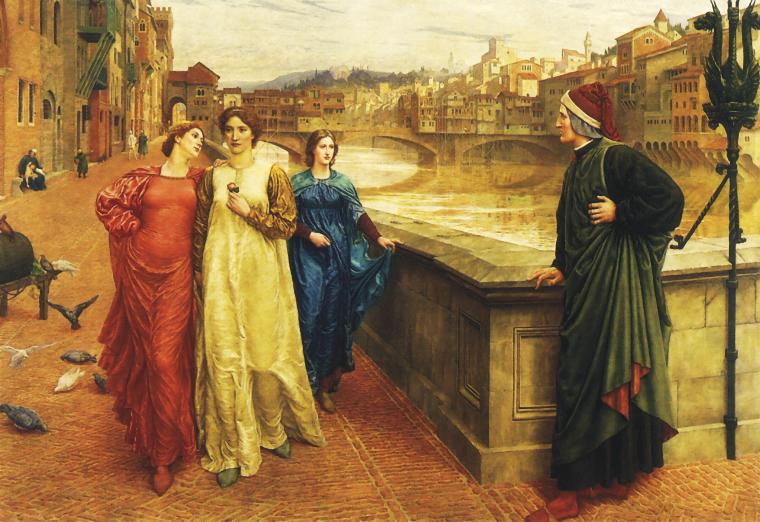
Chiara, Clara, Clare, Claire

Gender: Feminine
Origin: Latin
Meaning: “clear; see through”

    Chiara (kee-AH-rah), (KYAH-rah), has been in usage in Italy since the early Middle Ages. Chiara is also the Italian feminine adjective for the word, chiaro meaning, “clear” or “bright.”

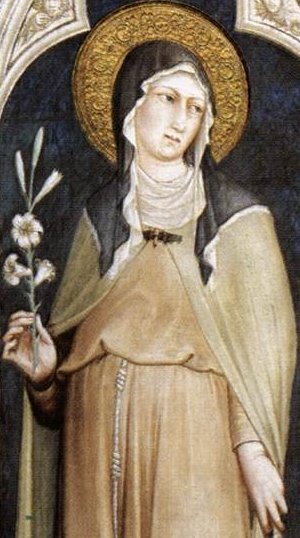
    It was borne by Saint Chiara d’Assisi. (1194-1253). She was a companion of St. Francis of Assisi, both of whom believed in self-mortification and helping the poor. Chiara decided to start an order, known as the Poor Clares, while Francis went off to start his own order known as the Franciscans.

    Chiara is still a very popular first name in Italy. In 2006, she was the 5th most popular female name.

    The French form of Claire, also came into usage during the early Middle Ages. No doubt due to the cult of the male St. Clair of Dauphine, the patron saint of tailors.

    The name came to England via the Normans in the form of Clare, and the male Latin form of Clarus was borne by a British saint of Rochester, a Benedictine monk. Both forms of Clare and Clara were very popular prior to the Reformation in England and both names were revived during the 19th century.

    In recent years, for whatever reason, the French spelling of Claire has often times been the preferred choice among American parents. In 2008, Claire came in at # 62 in the U.S  Top 1,00o Female Names, while its elder English counterpart of Clare came in at # 679. In fact, even the Latinate version of Clara is far more prevalent than Clare, coming in at # 206.

    Clara/Klara is a popular choice throughout Northern and Central Europe.

    Other forms of the name include:

    • Clarice (English/French/Italian)
    • Clarissa (English)
    • Klára (Hungarian/Czech)
    • Claritia (Latin)
    • Claritta (Romansch)
    • Bistra/Jasna (Serbo-Croatian/Slovene: both literally mean “light; clear” and are used as indigenous cognates)
    • Clarisa (Spanish)
    • Clarita (Spanish: initially a diminutive form, commonly used as an independent given name)

    Diminutive forms are the French, Clairette, the Italian, Chiaretta, Chiarina and Claretta.

    There is the masculine Latin form of Clarus and the French masculine form of Clair.

    Olivia

    Gender: Feminine
    Origin: Latin
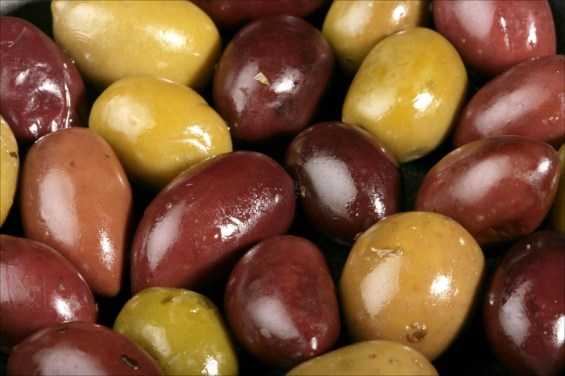
    Meaning “olive”
    (o-LIV-ee-ah)

    The name is often believed to have been an invention of William Shakspeare for his play Twelfth Night, however, the name was borne by a 9th century Sicilian saint. She is considered one of the patron saints of Palermo, and legend has it that she was kidnapped by Muslim invaders and taken into slavery to Tunisia. Her captors were so impressed with her sincerity, virtue and beauty that they permitted her to remain a Christian and to live as a hermitess in a cave.

    She was known for performing miracles among the local Tunisians, and many had converted to Christianity as a result. She was imprisoned and tortured and then burnt at the stake. Legend pertains that when they lit the fires at the stake, the flames would not touch her and she was decapitated instead. For whatever reason, she is also considered the patron saint of music.

    The name was then possibly introduced into the English speaking world through William Shakespeare in 1599 for one of his characters in the play Twelfth Night. Since then, the name has been in usage in the English speaking world. In the States, the name has been in the top 1,000 since 1880. The name has gradually climbed its way up to the top 10 the last 20 years. In 1989, Olivia came in at # 179 the following year of 1990 saw it jump all the way up to # 72, by 2001 it reached position # 1o and as of last year, 2008, it has made itself a niche at # 6. In Poland, it is at # 5 as the most popular female name, spellt Oliwia. The name is in the top in Canada and the United Kingdom.

    The name is used in virtually every European country.

    Other forms include:

    • Olivija (Croatian/Serbian/Slovene)
    • Olivie (Czech: ah-LEEV-yeh)
    • Oliva (English/Italian)
    • Olive (English)
    • Olivie/Olivia (French)
    • Olivette (French: obscure)
    • Olívia (Hungarian/Portuguese/Slovak)
    • Olivana/Oliviana (Italian: obscure)
    • Oliveira/Oliviera (Italian)
    • Olivetta (Italian: obscure)
    • Oliwia (Polish: o-LEEV-yah)

    Nicknames include: Ollie, Liv, and Livy. A German nickname is Livchen.

    A very rare Polish masculine form is Oliwjusz.

    Aušra, Aušrinė

    Gender: Female
    Origin: Lithuanina
    Meaning “dawn”
    (OWSH-rah)

    The name comes directly from the Lithuanian word for dawn.

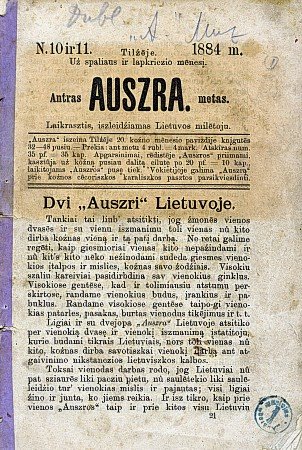
    It was the name of the first ever Lithuanian language newspaper and the first national newspaper for Lithuania.

    The first issue was published in 1883. It was a significant event in modern Lithuanian history and marked the rebirth of Lithuanian nationalism which eventually resulted in Lithuania’s independence. The name most likely caught on as a first name after this event.

    In Poland, the name is rendered as Auszra.

    ausrine-160x215Similary, there is also the ancient Lithuanian female name, Aušrinė (owsh-REE-nay).

    In Lithuanian mythology, she was a goddess who personified the planet, Venus, (the morning star).

    Some scholars contend that she was a goddess of beauty, youth and health and was revered as the Queen of the Stars.

    It is believed that she was the daughter of the goddess Saulė (the sun), and Perkunas, (the god of the sky and lightning).

    She was the sister of Jupiter, Mars, Mercury and Saturn.

    Legends hold that when the moon divorced the sun, he fell madly in love with Ausrine.

    He kidnapped her and in revenge, her father Perkunas, struck the oak god Azuolas with lightning, making him bleed upon Aušrinė’s lily white gown, rendering her impure.

    As a result, the moon was no longer interested in marrying Aušrinė.

    Both names designated name-day is April 27.

    (Upper left, first issue of the Lithuanian language newspaper, Ausra.)

    Masculine forms include: Aušris, Aušrinis, Aušrys, and Aušrius.

    Another feminine form is Aušrė and Aušrelė.

    Translations

    These are potential translations of the name in other languages:

    • Aushra, Oshrelle, Ozra (English)
    • Auchra, Auchrèle, Auchrine, Auchrée (French)
    • Auszra, Auszryna (Polish)
    • Auschra, Auschrele, Auschrine (German)

    Calques

    Calques are names that are directly translated into the target language, the following are Calques of the above name

    • Fajr, Sahar (Arabic)
    • Alba (Catalan, Italian, Spanish)
    • Dawn (English)
    • Aube, Aurore (French)
    • Shachar (Hebrew)
    • Eos (Greek)
    • Hajnal (Hungarian)
    • Aurora (Latin)
    • Ausma (Latvian)
    • Liwen (Mapuche)
    • Zora (Old Church Slavonic)
    • Jutrzenka (Polish)
    • Usha, Ushas (Sanskrit)
    • Gwawr (Welsh)

    Sources

    Amerigo

    Origin: Italian
    Gender: Male
    Meaning “home ruler.”
    (ah-MARE-ee-go)

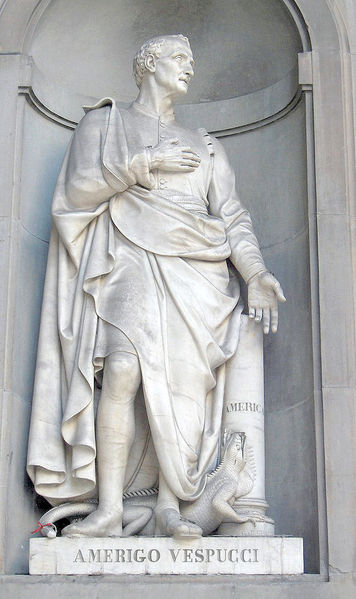
    Amerigo is an obscure Italian male name made famous by Amerigo Vespucci, an Italian explorer, navigator and cartographer.

    The continents of South and North America get their names from him. America being a feminized latinate version of Amerigo.

    Amerigo itself comes from the Germanic elements haim meaning “home” and rich meaning “power, ruler; authority.”

    Other forms of the name include:

    • Emerika (Basque)
    • Amèric/Emeric (Catalan)
    • Emmerik (Dutch)
    • Americ/Amery (English)
    • Emery (English: currently the 744th most popular male name in the United States-2008)
    • Aimeric/Aymeric/Émeric (French)
    • Aymeri/Aimery (French)
    • Emmerich (German)
    • Imre/Imrus (Hungarian)
    • Almerigo/Almerico (Italian)
    • Americo (Italian: modern form)
    • Emerico (Italian)
    • Merico/Merigo (Italian)
    • Americus (Latin)
    • Emerikas (Lithuanian)
    • Ajmeryk (P0lish)
    • Amalaryk/Amalryk (Polish)
    • Embryk/Emeryk (Polish)
    • Emmeric (Romanian)
    • Imrich (Slovak/Czech)
    • Américo (Spanish/Portuguese)
    • Emerico (Spanish)
    • Emerik (Swedish/Croatian)

    A feminine form is the Spanish, América, currently borne by Ugly Betty star, America Ferrer.

    Other feminine forms are:

    • Ameriga/Almeriga (Italian)

    Aubrey

    Gender: Masculine
    Origin: English
    (AW-bree)

    The name is a Norman French form of the Germanic, Alberich and was very common in Medieval England.

    The name Alberich itself is derived from two Germanic elements, alb meaning “elf” and rich meaning “power, authority or rule” hence the name means either “elf power” or “elf ruler.”

    Alberich appears in Germanic mythology as the name of a malevolent elf king. The same character appears in the Nibelungenlied.

    The name was borne by a 12th-century English saint. He was known for founding the Cistercian order of monks.

    It was also borne by Alberich Zwyssig a Cistercian monk, (born Johann Josef Maria Zwyssig also known as Father Alberich or Father Aleberik), he is credited for composing the Swiss Psalm or the present day, Swiss national anthem (1841).

    In recent years, in the United States, the name has been used as a female name. In 2007, the name came in at # 42 for girls. The name was last seen for males in 2002, coming in at # 937. In England, the name is still used as a masculine name.

    A more feminine alternative, is the flower name, Aubrieta.

    Other forms include:

    • Auberon (English)
    • Albéric (Flemmish)
    • Aubéron (French)
    • Aubery/Aubry (French)
    • Obéron (French)
    • Elberich/Olberich (German)
    • Alberico (Italian)
    • Albericus (Latin)
    • Alberichas (Lithuanian)
    • Alberyk (Polish)
    • Alberik (Russian)

    (Pictured at right, Alberich of the Nibelungenlied by Arthur Rackhum).

    Blaise

    Gender: Male
    Origin: Latin
    Meaning “stammerer”
    Eng (BLAZE); Fre (BLEZ)

    The name is derived from the Roman name Blasius which is derived from the Latin blaesus meaning “stammerer.”

    The name was borne by a popular early Christian martyr of Armenia. He was a bishop who was beaten to death by hot irons. In the Middle Ages, the saint’s feast day of February 3rd was designated for the blessing of the throat. It was popularly believed that the saint was responsible for curing illness of the throat. The name is also borne by French philosopher, Blaise Pascal.

    Other forms of the name include:

    • Barsegh (Armenian)
    • Blaž (Bosnian/Croatian/Serbian/Slovenian)
    • Blaes/Bleas (Breton)
    • Blazey (Cornish)
    • Biasgiu (Corsican)
    • Vlaho (Croatian)
    • Blażej (Czech)
    • Brais (Galician)
    • Vlasios/Vlasis (Greek Modern)
    • Balázs (Hungarian: buh-LAHS)
    • Biagio (Italian: diminutive form is Biagino which is occasionally used as an independent name)
    • Blasius (Latin/German)
    • Blażiejus/Blażys (Lithuanian)
    • Błażej(Polish: bWOn-ZHAY; ˈbwaʐɛj ).
    • Bras (Portuguese)
    • Blesi (Romansch)
    • Vlasi (Russian)
    • Blas (Spanish)

    Feminine forms include:

    • Biagia (Italian: diminutive form is Biagina)
    • Blasia (Late Latin and Italian: Blasiola is a diminutive form)

    Rachel

    Gender: Female
    Origin: Hebrew
    Meaning “ewe”
    (RAY-chel); (RAH-huhl)

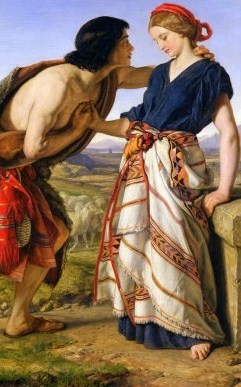
    The name is derived from the Hebrew רחל meaning “ewe”, which idiomatically, references purity. In the Bible, it was the name of the second and most favored wife of Jacob. She was the daughter of Laban, the sister of Leah and the mother of Joseph. Jacob labored for Laban for seven years in exchange for the hand of Rachel. After the seven years were up, he was duped into marrying Leah. Rachel later married Jacob and is considered a Jewish matriarch. It is said in Jewish lore that the willows of the brook represent Rachel.

    The name has been popular in Britain since the Reformation and is currently ranked in at # 38 of the US top 100 girls names.

    Rachel is used in German and French speaking countries and in the Netherlands, in French, it is pronounced hrah-SHEL, and in German, RAH-hel).

    Other forms include:
    • Rahel راحيل (Arabic)
    • Raquel (Catalan/Portuguese/Spanish: rah-KEL)
    • Ráchel (Czech: diminutive form is Ráchelka and Cheli)
    • Rakel (Danish/Estonian/Norwegian/Swedish)
    • Rachael/Rachel (English)
    • Raili (Estonian: pronounced sort of like Riley)
    • Rakul (Faroese)
    • Raakel (Finnish)
    • Rahel (German)
    • Ráhel (Hungarian)
    • Rákhel/Rákis (Hungarian)
    • Ráichéal (Irish)
    • Rachele (Italian: rah-KAY-lay)
    • Rachelina (Italian, rah-kay-LEE-nah)
    • Rachelė (Lithuanian: rah-HEL-ay)
    • Rahel (Malayalam)
    • Rachela (Polish: rah-HEH-lah, very unusual in Poland and was once common among Polish Jews).
    • Rahela (Romanian)
    • Rahil/Rakhil/Rakhila (Russian: prevalent among Jewish communities in Russia)
    • Ruchel (Yiddish)

    Rachelino is an Italian masculine form.

    Agnes

    Gender: Female
    Origin: Greek and Latin
    Meaning: “lamb; pure, chaste, holy.”
    (AG-nes)

      The name is of debated origin and meaning. It may be derived from the Greek hagno meaning “pure; chaste; holy.”

      Likewise, it may be derived from the Latin word for “lamb.” Since the lamb later became associated with purity and chastity, the  two above origins and meanings have become interchangeable.

      The name was borne in Greek mythology by an Oceanid nymph, who was said to have raised the god Zeus.

      On Mt. Lyceaus in Arcadia, there was a well sacred to her. When the region was suffering from drought, she prayed and fasted for several days. Afterward, she touched the surface of the well with a branch of an oak tree, inducing a huge rain storm.

      The name was borne in Christian legend by an early virgin martyr who refused to comply with the wishes of a local suitor who later denounced her as a Christian. The local prefect forced her to go through several public humiliations before beheading her.

      It was also borne by a medieval Czech princess, who was later canonized by the Catholic church as a saint. Known as St. Agnes of Bohemia, she is a minor subject in the popular English Christmas carol, Good St. Wenceslaus, and is still revered as a local heroine in her native homeland. Another saintly namesake is  Agnes of Assisi.

      The name was quite popular throughout Europe in the Middle Ages, due to its strong Christian connotations, the word agnes in Latin was also used in reference to Christ’s sacrifice, as in agnes dei, lamb of God.

      The name was prevalent in England before the Reformation, and fell somewhat out of favor, until it was revived in the late 19th-century.

      In recent years, the name has experienced a surge in popularity in a few European countries.

      In Sweden she was the 16th most popular female name of 2007.

      In Hungary, she was the 75th most popular female name of 2005.

      Other forms of the name include:

      • Agnesa/Agnesë (Albanian: the birth name of Mother Theresa of Calcutta)
      • Inas (Arabic)
      • Oanez (Breton: diminutive form of Agnes pronouned WAH-nes).
      • Agnesza Агнеса (Bulgarian)
      • Agnès (Catalan/French: pronounced like ang-YES in French).
      • Gnese (Corsican)
      • Agneza (Croatian)
      • Anežka (Czech)
      • Agnete/Agnethe (Danish)
      • Nancy (English: originally an English pet form, the name has been used as an independent name for quite awhile, its popularity spiked in the 1940s and 50s and is currently considered dated. Another nickname used as an independent form is Nan.
      • Aune (Finnish: pronounced AU-ne the first part is pronounced like how without the H)
      • Iines (Finnish)
      • Agenete/Agnet (Frisian: other forms include Anjes, Anjesse, Anyesse, Anjet and Anjette.
      • Inessa/Nessa (German)
      • Neeske (German/Frisian: initially a diminutive form, used as an independent given name)
      • Hagne (Greek: pronounced AHG-nay)
      • Agnea (Icelandic: pronounced ahg-NAY-ah).
      • Agnéis (Irish-Gaelic)
      • Agnese (Italian/Latvian: pronounced in Italian like ang-YAY-say. It could also be Latvian pronounced (ahg-NEH-seh).
      • Agnesina (Italian: obscure form)
      • Ines (Italian: a borrowing from the Spanish)
      • Ágnes (Hungarian: pronounced like AHG-nesh). Diminutive form is Ági.
      • Baranka (Hungarian: a literal translation)
      • Agnė (Lithuanian: pronounced AHG-nay).
      • Annis/Annice (Medieval English forms: both are pronounced the same ANN-nis)
      • Agnieszka (Polish: pronounced ahg-NYESH-kah, the name is extremely popular in Poland. Medieval diminutive forms include Jagienka, Jagnusia and Jagna. An older form which has fallen out of usage is the Medieval Jagnieszka. Modern diminutive forms include Aga, Agunia and Agusia.
      • Inês (Portuguese)
      • Agneza (Romanian)
      • Neisa/Nesa/Nescha/Nesina (Romansch: credit goes to Capucine)
      • Agnessa (Russianpronounced on-YEZ-ah).
      • Senga (Scottish: an anagram of Agnes, the name is also said to be from the Gaelic seang meaning “slender.”
      • Agnija Агнија (Serbian)
      • Neza (Slovene: originally a Slovenian diminutive form, it is now used as an independent given name, pronounced NEH-zhah).
      • Hańža (Sorbian)
      • Inés (Spanish/Galician: pronounced like ee-NES, the name has become prevalent in other countries, it is used in Slovenia, Croatia, Latvia, Finland and Estonia, only in Finland and Estonia it is spelled Iines pronounced the same way as in Spanish. A French borrowing is spelled Inès.)
      • Agneta/Agnetha/Agnita/Agna (Swedish/Norwegian: pronounced ung-YEH-tah, ung-NEE-tah and ANG-nah, these forms are considered dated in Sweden being replaced by the trendier Agnes. It is borne by Agnetha Fältskog of ABBA fame )
      • Nesta (Welsh)

      Nicknames include: Aggie, Nessa, Ness and Nessie

      An obscure Italian male form is Agnesio.

      Coincidentally, Agni is an Old Norse male name, also found as Ahni and Hogne. Snorre Sturlasson wrote about a legendary King of Sweden named Agni. He is known for defeating the Finnish chief Frosti and taking his daughter Skjalf hostage, who he later married and had children with. The name is believed to be derived from the Nordic agh meaning “spear point” or may possibly be derived from the word agi meaning “fear; dread.” It seems to have fallen out of usage. Maybe a you would be brave enough to use it on your own son ;).
      Beatrice, Beatrix

      Gender: Feminine
      Origin: Latin
      Meaning: “blessed; traveller, voyager.”
      Eng (BEE-uh-TRISS); (BEE-uh-TRICKS)

      The name is of somewhat debated meaning, some sources list it as a derivative of the Latin word beatus meaning “blessed” while other sources claim that it is a feminine form of the Latin name, Viator which means, “traveller” or “voyager.”

      The famous Italian poet, Dante Aligheri, author of the Inferno, and other works, used Beatrice Portinari, (a local noblewoman whom the author was in love with), as a recurrent theme in his writings. The name has been consistently popular in Italy since the Middle Ages, she was especially popular in the rest of Europe during the Middle Ages as well, but has gone in and out of fashion since, depending on the country. It was particularly popular in England before the Reformation, where it experienced a revival in the 19th-century. Peter Rabbit author, Beatrix Potter, bore the name (1866-1943).T he name is also borne by several early Christian saints, and it is currently borne by Queen Beatrix of the Netherlands.

      Beatrix has not ranked in the U.S. top 1000 since 1883! As of 2005, however, Beatrix was the 88th most popular female name in Hungary. Her counterpart of Beatrice faired much better in the U.S. statistics, though not anywhere near the top 100, Beatrice at least ranks in at # 833 (2008). In 2006, Beatriz was the 59th most popular female name in Spain.

      Other forms of the name include:
      • Batirtze (Basque)
      • Beatriu (Catalan)
      • Beatrijs (Dutch)
      • Beatrix (Dutch/English/German)
      • Béatrice/Béatrix (French: bay-ah-TREES/bay-ah-TREEKS)
      • Beke/Beeke (Frisian: diminutive forms are Bekje. Pronounced BEH-ke)
      • Beatrisa (German)
      • Beatríke Βεατρίκη (Greek: Modern)
      • Beatricse/Beatrisz/Beatrix (Hungarian: a Hungarian diminutive is Trixi)
      • Beatrice (Italian/English/Romanian/Swedish: in Italian, pronounced, bay-ah-TREE-chay. Bice is a common diminutive form, though in recent years, it is considered dated, and the diminutive form of Bea has taken its place instead)
      • Bicetta/Cettina (Italian: originally diminutive forms, now used as independent given names, though, very obscure)
      • Beatrise (Latvian)
      • Beatričė (Lithuanian)
      • Beatriċi (Maltese: the pronunciation is somewhat similar to the Italian)
      • Beatrycze (Polish: beh-ah-TRIH-cheh)
      • Beatryks (Polish: beh-ah-TRIKS)
      • Beatris (Provencal)
      • Beatrisa Беатриса (Russian)
      • Beatrìci (Sardinian)
      • Beitris (Scottish)
      • Beatrica (Slovene: beh-ah-TREET-sah)
      • Beatriz (Spanish/Portuguese: Spanish Iberian: bey-ah-TREETH, Spanish Latin American: bey-ah-TREES; Portuguese Iberian: bee-ah-TREEZH)
      • Beatrixe (Swiss-German)
      • Betrys (Welsh)

      The names, Beata and Viatrix, have also been linked with Beatrice.

      Common English diminutives are Bea, Bee, Trixie and Trissie. A Portuguese short form is Bia.

      Name-days are: January 17 (Lithuania), February 13 (France), July 29 (Lithuania/Poland), December 2 (Sweden).

      Oźwiena

      Gender: Female
      Origin: Old Slavonic
      (oshe-VYEH-nah).

      The name is borne in Slavic mythology by a minor goddess who was similar to the Greek, Echo.

      Her role in the pantheon was connected to human communication and the divulgation of discourse and action. She was seen as the goddess of gossip, who was unable to keep secrets or private conversation. If she disliked someone, she would distort the meaning of their words.

      She was also the goddess of fame and glory, the one responsible for retelling the deeds of fallen heroes.

      The name is not in usage in any of the Slavonic countries. The above form is Polish. Other forms are:

      • Ozvěna (Czech)
      • Ozvena (Slovakian)