Narcissus

Gender: Male
Origin: Greek
Meaning: “sleep; numbness.”
(nar-SIS-sus)

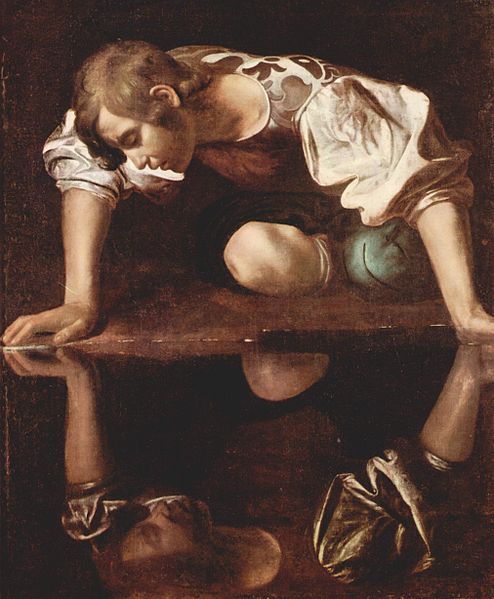
The name is found in Greek mythology as that of the name of a young boy who thought himself so beautiful that he could not stop staring at his own reflection, until he eventually died.

The name is also borne by several early Greek saints. The word “narcissim,” is derived from the story of Narcissus.

  • Narcís (Catalan)
  • Narcis (Croatian/Romanian/Serbian/Slovak/Slovene)
  • Narcissus (English/Latin/Dutch)
  • Narcisse (French)
  • Narziss (German/Lexbergerish)
  • Narkissos Ναρκισσος (Greek)
  • Narkisszosz (Hungarian)
  • Narciso (Italian/Spanish/Portuguese)
  • Narcisio (Italian)
  • Narcizas (Lithuanian)
  • Narcyz (Polish)

Feminine forms are:

  • Nergiz (Azeri: also the Azeri word for daffodil)
  • Narcisa (Italian/Spanish/Portuguese)
  • Narcissa (Latin)
  • Narges نرگس (Persian: also the modern Farsi word for daffodil)
  • Nergis (Turkish: also the modern Turkish word for daffodil)

Daphne

Gender: Female
Origin: Greek
Meaning: “laurel.”
(DAF-nee).

    In Greek mythology, the name is borne by a nymph who transformed herself into a laurel tree rather than be overtaken by the sexual advances of the god, Apollo.

    In Greek religion,  the laurel became sacred to the god Apollo and the leaves were used to crown the victors of the Pythian Games.

    Daphne was the subject of Ovid’s Metamorphoses, which elaborated on the myth by claiming that Apollo’s lust was caused by an arrow shot by Eros. A quote from Ovid describing the transformation of Daphne, goes as follows:

    “a heavy numbness seized her limbs, thin bark closed over her breast, her hair turned into leaves, her arms into branches, her feet so swift a moment ago stuck fast in slow-growing roots, her face lost in the canopy. Only her shining beauty was left

    The virginity of Daphne was the subject of the Hellenistic poet, Parthenius, in the Erotica Pathemata. Throughout the centuries, Daphne, the nymph, has been the subject of artists. Other variations of the name include:

    • Dafna Дафне (Croatian/Serbian)
    • Dafné (Czech/Slovak: very rare)
    • Daphne (English/German/Dutch)
    • Daphné (French)
    • Daphne/Daphni Δὰφνη (Greek)
    • Daphnis (Greek: Ancient)
    • Dafne (Italian/Polish/Portuguese/Spanish/Turkish)
    • Dafnė (Lithuanian)
    • Dafni (Turkish)

    The name is borne by Daphne du Maurier (1907-1989) a famous British author and playwrite best known for such works as Rebecca and The Birds. Other notable Daphne’s include Daphne Blake of Scooby-Doo and Daphne Moon on the popular sitcom Frasier. It is also borne by actress Daphne Zuniga.

    The designated name-day in France is October 5.

    Penelope

    Gender: Feminine
    Origin: Greek
    Eng (pen-NEL-uh-PEE)

    The name is of uncertain origins, many scholars believe that the name is pre-Hellenistic and is related to an ancient word, penelops (πηνελοψ), which means “duck,” others argue that the name is Greek compound name composed of the elements, pene (πηνη) meaning “threads.”  Many scholars feel that the latter is the most appropriate since it was the name of Odysseus wife who kept her suitors at bay by pretending to weave.

    The name appears in Greek mythology as the name of a wood nymph who was speculated to be the mother of the god Pan.

    The name is occasionally used in German, Italian,

    Other forms of the name include:

    • Penèlope (Catalan)
    • Penelopa (Croatian/Polish/Romanian/Serbian: Pela, Pelka and Pelcia are the Polish diminutives)
    • Pénélope (French)
    • Penelópē Πηνελόπεια/Πηνελόπη (Greek)
    • Pénelopé (Hungarian)
    • Penelopė (Lithuanian)
    • Penelopeia (Norwegian/Danish/Swedish)
    • Penélope (Spanish/Portuguese)

    The name is currenly borne by Spanish actress Penelope Cruz.

    Possible English nickname options, include, Penny, Poppy, Lola, and Nell.

    Sophia, Sophie, Sofia

    Gender: Female
    Origin: Greek
    Meaning: “wisdom.”
    (so-FEE-yuh); (so-FYE-uh)

    A long time Greek classic, the name suddenly appeared in the U.S top 100 circa 2000, and budged itself into the # 6 spot in 2007.

    Sophia comes directly from the Greek, and was often used as a personification for Wisdom in philosophical, Christian, Jewish and Gnostic texts.

    In Christian lore, Saint Sophia was the mother of three Christian martyrs, Hope (Elpida), Faith (Pisti) and Charity (Agapi). She supposedly died from grief after the death of her daughters, and is now one of the most revered saints of the Eastern Christian churches, making the name a longstanding classic throughout Eastern Europe and modern Greece.

    Sophia is the Greek spelling, which seems to be the most worn form in the Western World. However, Sofia is the variation often used in continental Europe.

    Sophia was not introduced into the English-speaking world until the 18-century, when it was introduced into the British Family Tree by the German Hanovers, from whose line the names Sophie and Sophia often appear.

    In English, the pronunciation of so-FEE-yah, and so-FYE-uh are interchangeable. The former is more of a modern import, and the most popular. The latter is the older English pronunciation of the name, which is seldom heard in the States but is occasionally heard in Britain.

    Other forms the name include:
    • Zofiya (Amharic/Ethiopian)
    • Soffi/Soffiya (Armenian)
    • Sachveja/Sofiya (Belorusian: Zosja is a diminutive form)
    • Sofija София (Bulgarian)
    • Sofia (Catalan/Finnish/German/Italian/Norwegian/Occitanian/Portuguese/Romanian/Slovak/Swedish: in 2007, this was the 59th most popular female name in Norway and the 44th most popular in Sweden)
    • Sònia (Catalan)
    • Sofija (Croatian/Serbian)
    • Sofie (Czech: SOFE-yeh)
    • Soňa (Czech/Slovak: a translation of the Russian diminutive form, Sonya)
    • Žofia/Žofie (Czech/Slovak: ZHOFE-yah, and ZHOFE-yeh. Diminutive forms are: Žofka and Žofa.)
    • Såffi (Danish: an old Danish form of Sophia)
    • Sofie (Danish/Dutch/German/Norwegian/Swedish: so-FEE Scand; zo-FEE German. In 2008, she was the 35th most popular female name in the Netherlands, and in 2007, she was the 10th most popular female name in Norway and the 85th most popular in Sweden)
    • Fie (Dutch: originally a diminutive form, now used as an independent given name, FEE-e)
    • Soovi (Estonian)
    • Sohvi (Finnish)
    • Sophie (French/English/German/Dutch. In 2008, this was the 74th most popular female name in the United States, the 12th most popular in Canada, the 7th most popular in England and Wales and the most popular female name in the Netherlands and Scotland. In 2007, it was the 8th most popular female name in Australia)
    • Sonja (German/Estonian/Finnish/Polish/Scandinavian/Serbian/Slovene/Sorbian: a translation of the Russian diminutive form, Sonya).
    • Sonje (German: ZONE-yeh)
    • Sophia Σοφία (Greek Modern/English/Estonian/Italian)
    • Suffi/Suffia (Greenlandic)
    • Szonja (Hungarian)
    • Zsófia (Hungarian: ZHOH-fee-aw. In 2005, this was the 5th most popular female name in Hungary. A common diminutive form is Zsófika)
    • Soffía (Icelandic)
    • Sonia (Italian/Romanian)
    • Sofija/Sofja (Latvian)
    • Sofija/Zofija/Zopija (Lithuanian)
    • Sofija/Sofijana (Macedonian: Sofa is a diminutive form)
    • Sofija (Maltese)
    • Sophi (Persian)
    • Sofi (Plattdeutsch)
    • Zofia (Polish: diminutive forms are: Sonka, Zochna, Zocha, Zofka, Zońka, Zosia, Zośka, Zosieńka, and Zosia (ZOH-shah)
    • Sónia (Portuguese-European)
    • Sônia (Portuguese-Brazilian)
    • Sofiya/Sofya София (Russian/Ukrainian: Russian diminutives include Sonya, which is used as an independent given name in other European countries, but seldom in Russia)
    • Zofija (Slovene)
    • Sofía (Spanish/Galician/Faroese, in 2006, she was the 17th most popular female name in Spain and the 5th most popular in Chile. Spanish diminutives include Chofa, Fifi, SoficitaSofí and Sofita)
    • Sofya (Turkish)
    • Tzofiya (Yiddish)
    Masculine forms include Sofko (Bulgarian), Sofus/Sophus (Danish/Norwegian/Swedish) and Sofio (Italian).

    The designated name-days are: May 15 (Austria/Germany), May 25 (France), September 17 (Greece), September 30 (Lithuania/Spain),
    Tiburtius

    Gender: Male
    Origin: Latin
    Meaning: “from the Tibur”

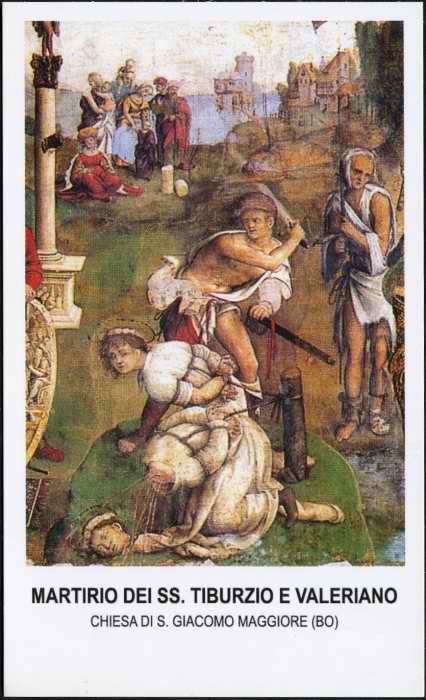
    Derived from the Roman cognomen, Tiburtius, meaning “from Tibur.” Tibur is the old Latin name for Tivoli Italy. This was the name of a very late 3rd-century saint who was martyred under Diocletian. Nicknames include Tib, Tibby and Burt.

    Other forms include  include:

    • Tibor (Czech/Slovak/Hungarian)
    • Tiburt (English)
    • Tiburce (French)
    • Tiborc (Hungarian)
    • Tiburzio (Italian)
    • Tiburcy (Polish)
    • Tiburcio (Spanish/Portuguese)

    Plautius, Plautia

    Origin: Latin
    Meaning: derived from the Latin word plaustrum meaning “wagon” or “cart.”
    Pronunciation: (Plow-shus); PLOW-see-oos)

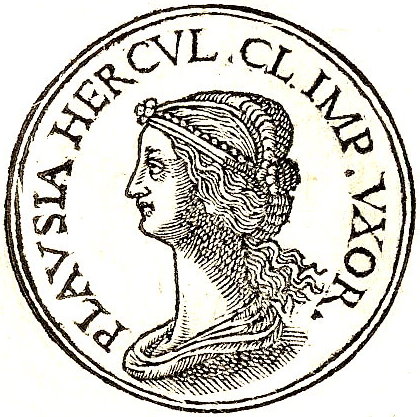
    Plautius was a common Roman praenomen. It was borne by the consul Aulus Plautius and the first wife of Emperor Claudius, Plautia Urganilla.

    Plautilla is a dimuntive form of the feminine Plautia.

    Other forms include:

    • Plauzio (Italian)
    • Plaucjusz (Polish)
    • Plaucio (Spanish)

    Feminine forms

    • Plauzia (Italian)
    • Plaucja (Polish)
    • Plaucia (Spanish)

    Sebastian

    Gender: Masculine
    Origin: Latin
    Meaning “from Sebastus.”

    The name Sebastian is the English form of the Latin, Sebastianus. It means “from Sebastus.”

    Sebastus was a town in Armenia. The town of Sebastus was named for the emperor Augustus, “sebastos” being the direct Greek translation of Augustus, which is Latin and means “venerable.”

    In the States, the name has had a recent surge of popularity, it is currently the 74th most popular male name. Its rankings in other countries are as follows:

    • # 59 (Australia, 2008)
    • # 7 (Austria, 2008)
    • # 5 (Chile, 2006)
    • # 7 (Denmark, 2008)
    • # 77 (England/Wales, 2008)
    • # 43 (Germany, 2009)
    • # 312 (the Netherlands, 2008)
    • # 12 (Norway)
    • # 32 (Poland, Warsaw, 2009)
    • # 44 (Sweden, 2008)

    Other forms of the name include:

    • نايتسبس Cpectayan (Arabic: used primarily among Arab Christians)
    • Sɛbasadian Սեբաստյան (Armenian)
    • Wast/Wastl/Wastel (Bavarian)
    • Sebastijan (Bosnian/Croatian)
    • Sebastià (Catalan)
    • Bas (Dutch: originally a diminutive, now used as an independent given name)
    • Bastiaan (Dutch/Low Saxon)
    • Sebastiaan (Dutch)
    • Sebastian (English/German/Polish/Romanian/Scandinavian)
    • Seppo (Finnish)
    • Sébastien/Bastien (French)
    • Sebast’ian სებასტიან (Georgian)
    • Bastian (German: contraction of Sebastian.
    • Sebestyén/Szebastián (Hungarian)
    • Sebastiano/Bastiano (Italian)
    • Sebastianus (Latin)
    • Sebastians (Latvian)
    • Sebastijonas (Lithuanian)
    • Sebastjan Себастијан (Macedonian/Serbian)
    • Bastjan (Maltese)
    • Sebastião/Bastião (Portuguese)
    • Sebaščan (Prekmurian)
    • Sevastian Севастьян (Russian/Ukrainian)
    • Bustianu/Serbestianu (Sardinian)
    • Vastianu (Sicilian)
    • Šebastián/Sebastián (Slovak)
    • Boštjan (Slovene)
    • Sebastijan/Sebastjan (Slovene)
    • Bošćij (Sorbian)
    • Sebastián (Spanish)
    • Baschdl (Swabian)
    • Bastián (Venetian)

    German diminutives include: Basti, Baschti, Baschi/Baschy (Swiss-German), Sabba, Sebbe, Sebbo, Sepp, Seppi, Seibi and Selbi.

    Basto is an Italian diminutive form.

    Hungarian diminutives are Sebő and Sebők.

    Polish diminutives are Sebek

    Feminine forms include:

    • Bastienne/Sébastienne (French)
    • Sebastiane (German)
    • Bastiana/Bastianina/Sebastiana (Italian)
    • Vastiana (Sicilian)
    • Sebastiána (Slovakian)
    • Sebastiana (Spanish/Polish)

    Diocletian, Diocles

    Gender: Masculine
    Origin: Greek
    Meaning “glory of Zeus.”
    Διοκλης

    It is no surprise that Diocletian’s name should bare a meaning revering one of the gods of Ancient Greece, as it is said that Diocletian was a pious man who adhered to the old ways of the empire. The name itself is a latinized form of the Greek name, Diocles.

    In Greek mythology, Diocles was one of the first priests to the goddess Demeter, and he is also credited to be one of the first to learn the Elysian Mysteries.

    Due to Emperor Diocletian’s cruel persecution of Christians, his name never caught on after the fall of the Roman Empire, but other forms historically exist. These include: (Please keep in mind that all these forms are very rare and are barely ever used in their home countries outside a history book)

    • Diokleciani (Albanian)
    • Diokleziano (Basque)
    • Dioclecià (Catalan)
    • Dioklecijan (Croatian/Serbian/Slovene)
    • Dioclétien (French)
    • Diocleziano (Italian)
    • Diokletian (Dutch/German/Scandinavian)
    • Diocletianus (Latin)
    • Diokletiāns (Latvian)
    • Diokletian (Norwegian)
    • Dioklecjan (Polish)
    • Diocleţian (Romanian)
    • Dioclezzianu (Sicilian)
    • Dioklecián (Slovakian)
    • Diocleciano (Spanish/Galician/Portuguese)

    Prisca, Priscilla

    Gender: Feminine
    Origin: Latin
    Meaning: “ancient”

    The name is a feminine form of the Latin, Priscus, a Roman family name, meaning “ancient.”

    It was borne by the wife of Emperor Diocletian, who was rumored to be a Christian.

    It was also the name of a woman mentioned in one of the epistles of Paul.

    Legend has it that this was the name of one of the very few Christian martyrs actually to be killed within the renowned coliseum of Rome(pictured left).

    In recent culture, it is borne by the former wife of Elvis Presley and mother of Lisa Marie Presley.

    The name caught on in the English speaking world around the 17th-century, when it became popular among Puritans. It appears in English literature in Edmund Spencer’s The Faerie Queen (1596)

    Its designated name-day is January 18.

    The more common form of this name, Priscilla, is actually an old Latin diminutive form of Prisca. Due to the Epistles of Paul, the diminutive form became more popular.

    Prisca is used in Dutch, Italian, German and Spanish.

    Other forms of both names include:

    • Prisque (French)
    • Priska (German)
    • Piroska (Hungarian: Piri is the diminutive)
    • Pryska (Polish)

    Other forms of Priscilla include:

    • Priscille (French)
    • Priszilla (German)
    • Priscila (Spanish)

    Masculine forms are Priscus and Priscillus.

    Traditionally, common English nicknames were Prill, Priss, Prissy and Scilla.

    Irene, Irena, Eirene

    Gender: Feminine
    Origin: Greek
    Meaning: “peace.”
    Eng (i-REEN); Eng archaic (i-REE-nee)
    Ειρηνη

    The name is derived from the Greek eirene, (i-RAY-nee), meaning “peace.”

    The Ancient Greeks personified the idea of peace in form of a goddess by the name of Eirene. She was considered a Horai.

    The name was also borne by a Byzantine Empress.

    The name has always been popular among Eastern Christians and its usage did not become popular in the English speaking world till about the 19th-century, no doubt, due to the popular folk song, Good Night Irena.

    A more elaborate form of this name is the Latin Aerenia, pronounced (ay-RAY-nee-uh).

    Irene is also used in Catalan, Dutch, Estonia, German, Finnish, Italian, Latvian, Norwegian, Portuguese, Spanish and Swedish.

    Irene is currently the 636th most popular female name in the United States. In Spain, she ranked in at # 6 for 2006.

    Other forms include:

    • Erja (Finnish: AIR-yah)
    • Irène (French: ee-HREN)
    • Irenée
    • Irén (Hungarian)
    • Irena/Irina/Irinea (Italian)
    • Irena (Polish/Czech/Croatian/Dutch/Lithuanian/Serbian/Slovak: Polish diminutive forms are Renia, and Irenka. Ena is the Croatian diminutive)
    • Iria (Portuguese/Galician)
    • Irina (Romanian/Slovene)
    • Arina Арина (Russian)
    • Irina Ирина (Russian/Bulgarian/Macedonian: Russian diminutive forms are Arisha and Irinushka)
    • Iryna Ірина (Ukrainian)

    Italian masculine forms are Ireno, Irenio and Ireneo.

    The designated name-days are: April 3 (Germany); April 5 (Estonia/Finland/France), April 15 (Sweden), May 5 (Greece) and May 15 (Latvia).