Romuald

Gender: Masculine
Origin: German
Meaning: “to reign with glory.”
(ROM-wald)

The name is derived from the Old Germanic elements, hrom, meaning, “fame” or “glory” and valdan, meaning, “to reign.”

The name was borne by a 10th-century, Italian saint from Ravenna. He was born into nobility and was rather cavalier in his youth. After participating in a dual in which he killed a man. He felt so guilty about his actions that he decided to repent of his sins by living in a Benedictine monastery for 40 days, after which, he decided to stay on, and eventually became the abbott.

He went on to found several other monasteries and eventually found the austere monastery of Camaldolo Tuscany.

His feast is held on June 19th.

The name used in Poland, where it has a feminine counterpart of Romualda. Its Italian and Spanish form is Romualdo. There is also a latinate form of Romualdus.

Didier, Desiderius

Gender: Masculine
Origin: French
Meaning: “longing; desire.”
(DEE-dyay)

The name is an old French form of Desiderius, which is from the Latin desiderium, meaning, “longing; desire.”

The name was borne by a 6th century French Bishop, who later resigned his seat and lived a life of poverty as a hermit. He founded a monastery in Vosges and his feast day is celebrated on June 19th.

Popular French nicknames include Die and Didi.

Other forms include:

  • Dider (Breton)
  • Dezsér (Hungarian)
  • Dezsider (Hungarian)
  • Dezső (Hungarian)
  • Dero/Derio (Italian)
  • Derino (Italian)
  • Desiderio (Italian)
  • Desio (Italian)
  • Desiderius (Latin/Dutch/German)
  • Dezydery (Polish)
  • Desidério (Portuguese)
  • Dezideriu (Romanian)
  • Dezider (Slovene)

Feminine forms include:

  • Didière (French)
  • Desideria (Italian/Spanish)
  • Desidera (Italian)
  • Dera/Derina (Italian)
  • Desia (Italian)
  • Dezyderia (Polish)
  • Desidéria (Portuguese)

The name Desirée is related but has a slightly different etymology, hence, I shall have a separate entry.

Vratislav

Gender: Masculine
Origin: Czech/Slovak
Meaning: “return of the famous” or “return of glory.”
(VRAH-tee-SLAHV)

The name is composed of the Slavonic elements, votiti, meaning, “return” and slav, meaning, “fame; glory.”

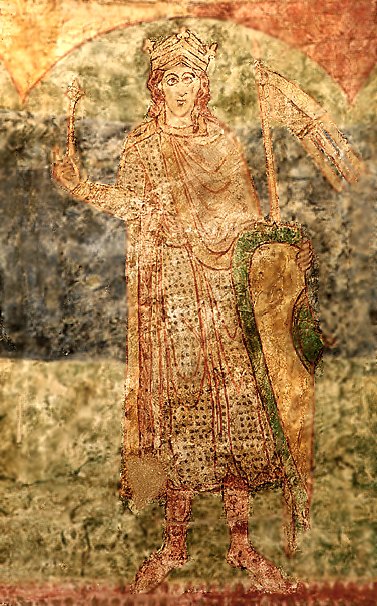
The name was borne by Vratislav I, Duke of Bohemia (d 921). It was also borne by Vratislav II (1061-92); and the city of Wrocław in Poland was named after Vratislav I.

The name is rather unusual in Slovakia and the Czech Republic these days.

The names feast day is usually held on June 18th. Nicknames include Vratko and Vrato.

Other forms of the name include:

  • Wrocisław/Wrocsław/Wrosław (Polish)

Zephyr

Gender: Masculine
Origin: Greek
Meaning: “west wind.”
Ζεφυρος
(ZEF-er)

The name is derived from the Greek Zephyros (Ζεφυρος), meaning, “the west wind.”

In Greek mythology, the name is borne by one of the four wind gods, known as the Anemoi.

Zephyr was the god of the west wind; harbinger of gentle breezes and warm air that comes with late spring and early summer. He was the husband of Chloris (greenery) and the father of Carpos (fruit).

Another form is Zephyrinus, which was borne by a 3rd-century martyr and also borne by a Pope.

His Roman counterpart is Favonius.

Other forms include:

  • Zefirinus (Afrikaans)
  • Zèfir/Zeferí (Catalan)
  • Zeperino (Cebuano)
  • Zefirin (Croatian)
  • Zefyrinus (Czech/Danish/Dutch)
  • Zefyr (Danish/German/Norwegian/Polish/Swedish)
  • Zéphyr/Zéphyrin (French)
  • Zephyros Ζεφυρος (Greek)
  • Tzafrir צַפְרִיר (Hebrew)
  • Zephürosz (Hungarian: very obscure)
  • Zefiro (Italian)
  • Zephyrus/Zephyrinus (Latin)
  • Zefyras/Zefyrinas (Lithuanian)
  • Zefiryn (Polish)
  • Zéfiro/Zeferino (Portuguese)
  • Zefirin (Romanian)
  • Céfiro/Ceferino (Spanish/Galician)

Nicknames include Zef.

Feminine forms are

  • Zéphyrine (French)
  • Zeferina (Italian)
  • Zeferyna (Polish)

Bianca, Blanca, Blanche, Branca

Gender: Feminine
Meaning: “white”
Italian (BYAHN-kah) Eng (bee-AHN-kuh); Sp (BLAHN-kah); Fre (BLOWnSH) Eng (BLANCH).

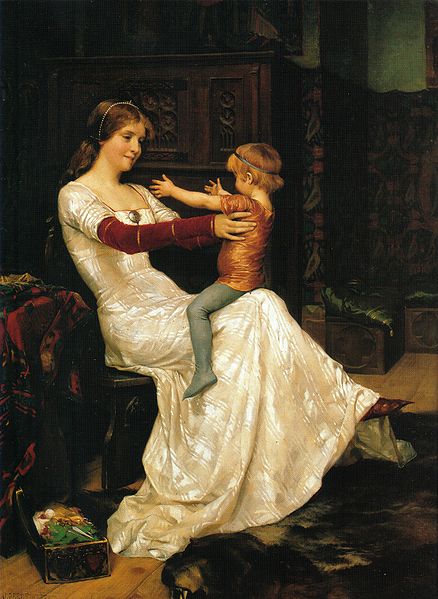
The etymology of the four above names are virtually the same. The original source is the Spanish, Blanca, which was first recorded in the 12th century, as the name of a Spanish princess, the daughter of King Garcia Ramirez of Navarre.

The name comes directly from the Spanish word for “white.”

It is uncertain how it caught on as a name, however, its meaning might have been synonymous with beauty at the time.

Others believe that it may be a direct translation of the Arabic name Elvira, brought to Spain via the Moors and later latinized as Blanca.

It has also been conjectured that it may have started off as a name given to blonde girls.

The name rapidly spread among Western European royalty due to intermarriages and ancestry. It was introduced to the English speaking world after the Norman Conquest of England.

The name was translated as Blanche in French, Bianca in Italian and Branca in Portuguese.

It was borne by Blanche of Champagne (1226-1283); Blanche of Artois (1248-1302); Blanche I of Navarre 1385-1444) and Blanca of Navarre (1420-1464).

Bianca became an exceedingly popular name among the Italian nobility, where it is still very popular till this day.

Blanca and Bianca have spread to Germany and particularly the Czech Republic, Poland, Hungary, Slovakia and Slovenia, where they are often rendered phonetically, as Blanka and Bianka.

Currently, Bianca ranked in as the 204th most popular female name in the United States, in Australia, she was the 76th most popular female (2007), and the 9th most popular female name in Romania, (2008). In 2009, Bianka was the 78th most popular female name in Warsaw Poland.

Blanche has not ranked in the U.S. top 1000 since 1964, when it ranked in as the 911th most popular female names, the highest it has ranked in U.S. naming history was at # 51 in 1886. Perhaps its time for a revival?

As for Blanca, she recently fell out of the U.S. top 1000, she was last seen in 2007, where she came in as the 960th most popular female name. In Spain, in 2006, she was the 45th most popular female name. In 2009, Blanka was the 31st most popular female name in Warsaw, Poland.

Other forms of the names include:

  • Zuria (Basque: a direct translation)
  • Blanca (Catalan)
  • Bijanka (Croatian/Serbian: phonetic spellings)
  • Branca (Galician)
  • Bianchina (Italian: originally a diminutive form, occasionally used as an independent given name)

Common Italian compound forms include: Biancaurora, (literally meaning “white dawn”), Biancaluisa, Biancamaria and Biancarosa, (literally meaning “white rose.”).

Italian masculine forms include: Biancardo, Bianchino and Bianco.

Medard

Gender: Masculine
Origin: French
Eng; (meh-DARD; MED-erd); Fre (may-DAR); Slovakian/Slovene (MEH-dard).

The name is an ald Frankish name composed of the Germanic elements madal meaning “gathering place”and hard meaning “firm; strong.”

The name is rather old fashioned in French speaking countries but is occassionally used in Belgium and the French speaking areas of Canada. It is also used in Slovakia and Slovenia.

The name was borne by a 6th-century French saint, Médard of Noyon. He was Frankish noble, the son of Nédard and Protage and the brother of Saint Gilard, Bishop of Rouen.

Medard himself eventually became a bishop and was beloved by his parishioners. He was the Bishop of Vermand but later moved his see to Noyon due to a war which was waging in his district.

Each year, in Rosieres France, on his feast day of June 8th, a tradition is attributed to him. A girl who is voted the most exemplary in the town is invited to participate in a ceremony in which 12 boys and 12 girls escort her down the Church aisle where she is crowned with roses and awarded a scholarship for her educational pursuits.

One legend attributed to the saint is that, one day, as a young boy, his father left him out in the rain by mistake. An eagle appeared, hovered over him, and sheltered him from the rain. Legend holds that if it rains on June 8th (his feast day), the next 40 years will be wet. However, if the June 8th weather is good, so will the weather be the next 40 years.

St. Medard is the patron saint of good weather and against thunderstorms.

Other forms of the name include:

  • Méard (French)
  • Médard (French)
  • Machtard (German: archaic form)
  • Medard/Medardus (German/Czech/Polish)
  • Medárd (Hungarian)
  • Dardo (Italian)
  • Metardo (Italian)
  • Medardo (Spanish/Italian)

A feminine version is the Italian Medarda.

Margaret, Margarita, Marguerite, Margherita

Gender: Feminine
Origin: Greek
Meaning: ‘pearl’
Eng: (MAR-gret); Fre: (mar-GUR-eet); It/Sp (mar-gay-REE-tah).

The name is derived from the Greek word μαργαρίτης, (margarites), meaning, “pearl.” It is believed that the Greek word itself is derived from the Persian word Marg, Marq or Marka meaning bird, possibly due to the resemblance of the pearl to birds’ eggs.

The name was popularized in late antiquity due to the cult of St. Margaret of Antioch.

Legend has it that she was the daughter of a powerful Antiochian priest. Due to her Christianity, she was disowned by her father and lived as a shepherdess in the hills of Turkey. A nobleman went to her father and asked for her hand in marriage. Her father consented and sent the suitor to the Turkish hills to find Margaret. There, the suitor begged her to turn away from her religion and to marry him. When Margaret said no, the nobleman had her tortured. One legend has it, that while being tortured, she had a vision of Satan appearing to her in the form of a dragon and swallowing her whole. The beast regurgitated her back up due to the golden cross she was wearing. She was finally beheaded. Her death is set around 304 A.D. and her feast is usually held around the middle of July.

In Medieval England, Margaret’s cult became especially popular. She was considered protector of pregnant women, possibly due to her incident with the dragon. She is considered to be one of the Holy Helpers who appeared to Joan of Arc.

In the English speaking world, she has been in usage since the Middle Ages, also producing the English offshoot of Margery or Marjorie, which was popular in the early Middle Ages and was revived in the 18th-century. The last time Marjorie was seen in the U.S. top 1000 was in 1994, coming in as the # 991st most popular female name. The highest she ever ranked in U.S. naming history was between 1921 and 1924 when she came in as the 16th most popular female name.

In United States naming history, she peaked 7 years in a row coming in at as the 3rd most popular female name between 1905 and 1911. Currently, she comes in as the 180th most popular female name, and other forms have outranked her.

For instance, the Welsh form of Megan, is currently the 100th most popular female name in the United States, but in previous years, she has ranked even higher, in 1985, she was the 10th most popular female name. In other countries, Megan’s rankings are as follows:

  • # 47 (Canada, B.C., 2008)
  • # 15 (England/Wales, 2008)
  • # 30 (Ireland, 2007)
  • # 170 (the Netherlands, 2008)
  • # 31 (Scotland, 2008)

In addition to her, there are several other saints who bear this name. Throughout history the name has been borne by several English and French Monarchs.

Other forms of the name include:

  • Margarid (Armenian)
  • Maharyta/Maharèta (Belarusian)
  • Marc’harid (Breton)
  • Mégane (Breton)
  • Margarita Маргарита (Bulgarian/Late Latin/Lithuanian/Russian/Spanish)
  • Margrethe (Danish/Norwegian)
  • Margretje (Danish)
  • Merete/Meret (Danish)
  • Merit/Merrit (Danish)
  • Mette (Danish/Norwegian)
  • Margreet/Margriet (Dutch/Limburgish)
  • Margaretja (Dutch)
  • Margalida (Catalan)
  • Markéta (Czech/Slovak)
  • Markit (Czech: obscure form)
  • Muchlina (Czech: obscure form)
  • Margaret (English)
  • Margo (English)
  • Marga (Estonian/Catalan)
  • Maret/Mareta (Estonian)
  • Maarit (Finnish)
  • Margareeta/Margareetta (Finnish)
  • Margariita/Margariitta (Finnish)
  • Marjatta (Finnish)
  • Marketta (Finnish)
  • Margaux/Margot (French)
  • Maguy (French: medieval diminutive form occasionally used as an independent given name. mah-GEE)
  • Marguerite (French: also the French word for daisy)
  • Margarida (Galician/Portuguese: also coincides with the Galician and Portuguese word for daisy)
  • Margalita (Georgian)
  • Margareta (German/Dutch/Finnish/Romanian/Scandinavian/Slovene)
  • Margarete/Margret (German)
  • Margaretha (German/Dutch)
  • Margarethe (German/Danish)
  • Margrit (German)
  • Margott (German)
  • Meta (German/Scandinavian: originally a diminutive form, now used exclusively as an independent given name)
  • Margarita Μαργαρίτα (Greek: Modern)
  • Margalit (Hebrew: also the modern Hebrew word for pearl)
  • Margaréta (Hungarian)
  • Margita (Hungarian/Slovakian)
  • Margit (Hungarian/Scandinavian)
  • Margrét (Icelandic)
  • Mairéad (Irish-Gaelic)
  • Pegeen (Irish-Gaelic: Gaelicization of the English diminutive Peggy, used as an independent given name)
  • Margherita (Italian: also the Italian word for cheese pizza and the daisy)
  • Malgozata (Lithuanian)
  • Margaid (Manx)
  • Margrete (Norwegian)
  • Marit (Norwegian/Swedish)
  • Magalòna (Occitanian)
  • Małgorzata (Polish)
  • Magali (Provençal)
  • Marghareta (Romanian)
  • Marghita (Romanian)
  • Maighread (Scotch-Gaelic)
  • Maisie (Scotch-Gaelic: originally a diminutive form of Maighread and Margaret, the name has a long history of usage as an independent given name. Pronounced like (MAY-zee), rhymes with Daisy).
  • Chmarietta (Slovene)
  • Marjeta (Slovene)
  • Merit (Swedish)
  • Makalesi (Tongan)
  • Marged (Welsh)
  • Mared (Welsh)
  • Megan (Welsh)
  • Mererid (Welsh)

There is also the Germanic off spring of Greta and all her various forms, once used as a diminutive form, Greta and all her variations have a long history of being used as independent given names.

In the United States, Greta is currently the 694th most popular female name, her German sister of Gretchen currently ranks in as the 945th most popular female name.

  • Greta (Danish/German/English/Plattdeutsch/Norwegian/Romansch/Swedish)
  • Grete (Danish/German/Plattdeutsch)
  • Grethe (Danish/Norwegian)
  • Greet/Griet (Dutch/Limburgish)
  • Greetje (Dutch)
  • Gretje/Grietje (Frisian)
  • Gretta (English)
  • Gretchen (German/English)
  • Gretel/Gretl (German)
  • Gréta (Hungarian/Icelandic)
  • Ghita (Italian)
  • Grieta (Latvian)
  • Greetke (Plattdeutsch)
  • Greth (Plattdeutsch)
  • Gretje (Plattdeutsch)
  • Gretjen (Plattdeutsch)
  • Grettina (Romansch)

Another diminutive offspring that has a history as an independent name is Rita, which originated as a Spanish and Italian contracted form and is now used in English, German, Hungarian, Portuguese, and the Scandinavian languages, Reeta/Reetta are Finnish forms.

There is the Italian masculine form of Margherito.

Common English diminutives are Daisy, Madge, Mae,  Maggie, Mamie, Marge, Margie, Mayme, Meg, Meggie, Midge, Peg, Peggy, and Jorie (for Marjory).

Czech diminutives are: Gita, Gitka and Gituška, Polish diminutives are Gosia, Gośka, Małgorzatka, Małgosia and Małgośka.

A Hungarian diminutive is Manci, a Spanish pet form is Tita and a Manx diminutive is Paaie.

A Swiss-German dialectical diminutive is Gretli.

Juno, June, Junia

Gender: Feminine
Origin: Latin
Meaning: uncertain
Eng (JOO-no); Lat (YOO-no); (JOON); Eng (joo-NEE-uh; JOON-yah); Lat (yoo-NEE-ah).

The name Juno is an ancient one; possibly going all the way back to the period of the Etruscans.

The origin and etymology is strongly contended and not quite certain. Some sources believe that it may be derived from the Etruscan name Uni which possibly means “alone; one; unit.” Others argue that it is derived from the Indo-European element Yeu, referring to youth and vitality.

In Ancient Rome, Juno was the supreme goddess. She was considered the protectress and counselor of the State. She was revered as a queen and known under the title of Juno Regina (Juno, the Queen).

Under the title of Juno Moneta, she was revered as the patroness of all things financial and econonimical.

The month of June gets its name from her, and as the patroness of women, marriage and fertility, the idea that June is the best time to marry comes from ancient Roman tradition, when young women chose to marry on the month in hopes that Juno would be more favorable in dispensing luck upon their marriage.

Juno was actually a goddess of many faces and incarnations. She was also revered as a counterpart to the Greek goddess Athene Pallas, as well as a counterpart to Hera. She was seen as the patroness of children and childbirth under the title of Lucina.

In Popular Culture, the name has recently sparked a small revival and interest thanks in part, to the 2007 independent film Juno (Ellen Page), in which it is mentioned in the movie that the character was named for the goddess, though the name has still yet to have even made it to the top 1000 names in the United States.

There is also the form of Junia, which was more often used on real people in ancient Rome rather than Juno itself. The name was ususually used in honour of the goddess and it appears in the New Testement as the name of a Roman matron.

There is also the masculine version of Junius or Iunius. Junilla was an ancient Latin diminutive form which might appeal to some modern parents.

The month name of June itself first became popular in the 19th-century. Another name to consider is the more unusual Cornish form of Metheven (METH-eh-VEN).

Other forms of the name include:

  • Junona (Croatian/Czech/Lithuanian/Polish/Serbian/Slovene)
  • Junon (French)
  • Júnía (Icelandic)
  • Giunia (Italian)
  • Giunone (Italian: joo-NOH-nay)
  • Ġunone (Maltese: joo-NOH-nay)
  • Iuno (Latin/Romanian: YOO-no)
  • Giununi (Sicilian)
  • Juni (Norwegian/Swedish)

Wanda

Gender: Feminine
Origin: Polish
Pol (VAHN-dah); Eng (WAHN-duh).

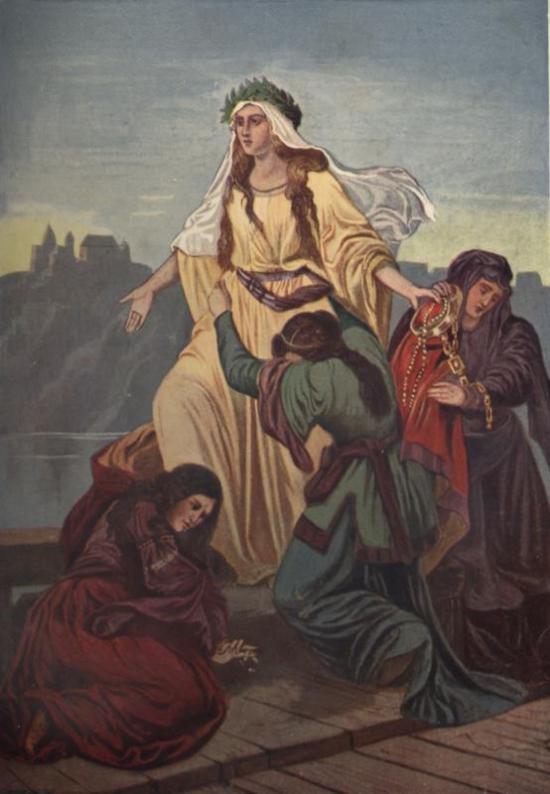
The name first appeared in a legend presented by Polish historian, Wincenty Kadlubek (12-13th century). In his version of the legend, Wanda was the daughter of a Polish king Krak, (founder of the city of Krakow), who inherited her father’s throne. An evil German prince wanted to marry her and take over the Polish lands, but the princess repelled him and drove him to suicide. The prince threw himself into the Vistula. Wanda went on to live a happy and long life, remaining a virgin and vowing to be married only to her country. The most famous account, however, is completely different. In the most beloved form of the tale, rather than have her country taken over by the German invaders, Wanda threw herself into the Vistula. In Poland, she is a symbol of the nation, representing the sacrifice and hardship of the nation of Poland throughout its history. She is a symbol of Polish independence and its victory over German imperialism.

Tradition has it that she is buried in one of the seven mounds of Krakow. Till this day, the Wanda Mound (Kopiec Wanda) rests on the outskirts of Krakow, (in what is now known as the suburb of Nowa Huta).

Wanda is probably one of the very few Polish names that became popular in the English speaking world. It was introduced via author Ouida who used it for heroine in the novel Wanda (1888). The name no longer ranks in the U.S. top 1000, but was once a fairly popular name, coming in at # 47 in 1934, the highest the name ever ranked in U.S. naming history.

Many sources list the name as being a derivative of the Ancient Germanic wend, a name for a group of people who lived near and around the Vistula, however, some Lithuanian sources have argued that it is derived from an ancient Baltic element vanduo meaning “water” while many others speculate that its true origins have been lost and that its true introduction into the world was through Kadlubek.

In Poland, a popular nickname option is Wadzia (VAHD-jah). An alternative is the Czech/Slovak, Italian and Lithuanian, Vanda. There is also the elaborated Swedish name Wendela, though it is speculated if she is truly related to Wanda or if  in fact she is a completely different name of Germanic origins. The name has experienced occasional usage in Germany, Spain, Brazil, Hungary and Russia.

Coincidentally, Vanda is the name of species of orchid indigenous to the Indian subcontinent and Indochina. In this case, Vanda is of Sanskrit origins.

Laura

Gender: Feminine
Origin: Latin
Meaning: “laurel.”
Eng (LORE-uh); It/Span (LOW-rah).

The name first came into usage during the 9th century in Spain, due to the cult of Saint Laura of Cordova, (864).

She was a widow who decided to become a nun, but was put in a vat of molten lead and was boiled to death by her Moorish captors.

Laure de Noves, was the object of the poet, Petrarch’s affection (1308-1348). The Italian poet refers to her as Laura in his writings.

Laura, illustrated by her virtues and well-celebrated in my verse, appeared to me for the first time during my youth in 1327, on April 6, in the Church of Saint Claire in Avignon, in the first hour of the day; and in the same city, in the same month, on the same sixth day at the same first hour in the year of 1348, withdrew from life, while I was at Verona, unconscious of my loss…. Her chaste and lovely body was interred on the evening of the same day in the church of the Minorites: her soul, as I believe, returned to heaven, whence it came. (Petrarch)

Laure de Noves was the wife of Hugh de Sade, (the ancestor of the Marquis de Sade in which the name Laure appears often in the Sade family tree), who ultimately dies from the plague. She was the symbol of unrequited love and was transformed into a Beatrice type character after her death in many of Petrarch’s poems.

The name has always been relatively common in the English speaking world. Laura currently comes in at # 215 of the U.S. top 1000. In other countries her rankings are as follows:

  • Australia # 78 (2007)
  • Belgium # 3 (2006)
  • Chile # 43 (2006)
  • France # 26 (2006)
  • Hungary # 12 (2005)
  • Ireland # 32 (2007)
  • the Netherlands # 31 (2008)
  • Scotland # 77 (2007)
  • Slovenia # 36 (2005)
  • Spain # 4 (2007)

Other forms include:

  • Llora (Catalan pronounced YOH-rah)
  • Laure (French, diminutive form Laurette)
  • Lára (Icelandic pronounced LOW-rah)
  • Lavra (Slovenian/Russian)

Diminutive forms of Laura include Laurie, Lori, Lorie and Lauretta (Italian); Laurita (Spanish) and Laurette (French).

Masculine forms are the Italian Lauro and the late Latin Laurus.

The Laura form is used in most Romance speaking countries including Italy, Romania and is used among Portuguese speakers. It is also used throughout Central Europe such as the German speaking countries, Poland, Slovakia, Hungary and the Czech Republic.

The name is borne by former first lady of the United States Laura Bush, children’s author Laura Ingalls Wilder, Laura Esquival author of Like Water for Chocolate. British designer and clothing brand Laura Ashley. Actress Laura Linney.

It is also the name of a river that runs through the Ukraine and Romania and the name of a village in Gliwice County, Poland.

Coincidentally, in Greek Lavra and Laura was a term used in the Eastern Orthodox church to describe a cluster of cells or caves, designed for monastic hermits. In this case, the name is derived from the Greek meaning an “alley” or “passage way.”

(Pictured above: Laure de Noves).