Margaret, Margarita, Marguerite, Margherita

Gender: Feminine
Origin: Greek
Meaning: ‘pearl’
Eng: (MAR-gret); Fre: (mar-GUR-eet); It/Sp (mar-gay-REE-tah).

The name is derived from the Greek word μαργαρίτης, (margarites), meaning, “pearl.” It is believed that the Greek word itself is derived from the Persian word Marg, Marq or Marka meaning bird, possibly due to the resemblance of the pearl to birds’ eggs.

The name was popularized in late antiquity due to the cult of St. Margaret of Antioch.

Legend has it that she was the daughter of a powerful Antiochian priest. Due to her Christianity, she was disowned by her father and lived as a shepherdess in the hills of Turkey. A nobleman went to her father and asked for her hand in marriage. Her father consented and sent the suitor to the Turkish hills to find Margaret. There, the suitor begged her to turn away from her religion and to marry him. When Margaret said no, the nobleman had her tortured. One legend has it, that while being tortured, she had a vision of Satan appearing to her in the form of a dragon and swallowing her whole. The beast regurgitated her back up due to the golden cross she was wearing. She was finally beheaded. Her death is set around 304 A.D. and her feast is usually held around the middle of July.

In Medieval England, Margaret’s cult became especially popular. She was considered protector of pregnant women, possibly due to her incident with the dragon. She is considered to be one of the Holy Helpers who appeared to Joan of Arc.

In the English speaking world, she has been in usage since the Middle Ages, also producing the English offshoot of Margery or Marjorie, which was popular in the early Middle Ages and was revived in the 18th-century. The last time Marjorie was seen in the U.S. top 1000 was in 1994, coming in as the # 991st most popular female name. The highest she ever ranked in U.S. naming history was between 1921 and 1924 when she came in as the 16th most popular female name.

In United States naming history, she peaked 7 years in a row coming in at as the 3rd most popular female name between 1905 and 1911. Currently, she comes in as the 180th most popular female name, and other forms have outranked her.

For instance, the Welsh form of Megan, is currently the 100th most popular female name in the United States, but in previous years, she has ranked even higher, in 1985, she was the 10th most popular female name. In other countries, Megan’s rankings are as follows:

  • # 47 (Canada, B.C., 2008)
  • # 15 (England/Wales, 2008)
  • # 30 (Ireland, 2007)
  • # 170 (the Netherlands, 2008)
  • # 31 (Scotland, 2008)

In addition to her, there are several other saints who bear this name. Throughout history the name has been borne by several English and French Monarchs.

Other forms of the name include:

  • Margarid (Armenian)
  • Maharyta/Maharèta (Belarusian)
  • Marc’harid (Breton)
  • Mégane (Breton)
  • Margarita Маргарита (Bulgarian/Late Latin/Lithuanian/Russian/Spanish)
  • Margrethe (Danish/Norwegian)
  • Margretje (Danish)
  • Merete/Meret (Danish)
  • Merit/Merrit (Danish)
  • Mette (Danish/Norwegian)
  • Margreet/Margriet (Dutch/Limburgish)
  • Margaretja (Dutch)
  • Margalida (Catalan)
  • Markéta (Czech/Slovak)
  • Markit (Czech: obscure form)
  • Muchlina (Czech: obscure form)
  • Margaret (English)
  • Margo (English)
  • Marga (Estonian/Catalan)
  • Maret/Mareta (Estonian)
  • Maarit (Finnish)
  • Margareeta/Margareetta (Finnish)
  • Margariita/Margariitta (Finnish)
  • Marjatta (Finnish)
  • Marketta (Finnish)
  • Margaux/Margot (French)
  • Maguy (French: medieval diminutive form occasionally used as an independent given name. mah-GEE)
  • Marguerite (French: also the French word for daisy)
  • Margarida (Galician/Portuguese: also coincides with the Galician and Portuguese word for daisy)
  • Margalita (Georgian)
  • Margareta (German/Dutch/Finnish/Romanian/Scandinavian/Slovene)
  • Margarete/Margret (German)
  • Margaretha (German/Dutch)
  • Margarethe (German/Danish)
  • Margrit (German)
  • Margott (German)
  • Meta (German/Scandinavian: originally a diminutive form, now used exclusively as an independent given name)
  • Margarita Μαργαρίτα (Greek: Modern)
  • Margalit (Hebrew: also the modern Hebrew word for pearl)
  • Margaréta (Hungarian)
  • Margita (Hungarian/Slovakian)
  • Margit (Hungarian/Scandinavian)
  • Margrét (Icelandic)
  • Mairéad (Irish-Gaelic)
  • Pegeen (Irish-Gaelic: Gaelicization of the English diminutive Peggy, used as an independent given name)
  • Margherita (Italian: also the Italian word for cheese pizza and the daisy)
  • Malgozata (Lithuanian)
  • Margaid (Manx)
  • Margrete (Norwegian)
  • Marit (Norwegian/Swedish)
  • Magalòna (Occitanian)
  • Małgorzata (Polish)
  • Magali (Provençal)
  • Marghareta (Romanian)
  • Marghita (Romanian)
  • Maighread (Scotch-Gaelic)
  • Maisie (Scotch-Gaelic: originally a diminutive form of Maighread and Margaret, the name has a long history of usage as an independent given name. Pronounced like (MAY-zee), rhymes with Daisy).
  • Chmarietta (Slovene)
  • Marjeta (Slovene)
  • Merit (Swedish)
  • Makalesi (Tongan)
  • Marged (Welsh)
  • Mared (Welsh)
  • Megan (Welsh)
  • Mererid (Welsh)

There is also the Germanic off spring of Greta and all her various forms, once used as a diminutive form, Greta and all her variations have a long history of being used as independent given names.

In the United States, Greta is currently the 694th most popular female name, her German sister of Gretchen currently ranks in as the 945th most popular female name.

  • Greta (Danish/German/English/Plattdeutsch/Norwegian/Romansch/Swedish)
  • Grete (Danish/German/Plattdeutsch)
  • Grethe (Danish/Norwegian)
  • Greet/Griet (Dutch/Limburgish)
  • Greetje (Dutch)
  • Gretje/Grietje (Frisian)
  • Gretta (English)
  • Gretchen (German/English)
  • Gretel/Gretl (German)
  • Gréta (Hungarian/Icelandic)
  • Ghita (Italian)
  • Grieta (Latvian)
  • Greetke (Plattdeutsch)
  • Greth (Plattdeutsch)
  • Gretje (Plattdeutsch)
  • Gretjen (Plattdeutsch)
  • Grettina (Romansch)

Another diminutive offspring that has a history as an independent name is Rita, which originated as a Spanish and Italian contracted form and is now used in English, German, Hungarian, Portuguese, and the Scandinavian languages, Reeta/Reetta are Finnish forms.

There is the Italian masculine form of Margherito.

Common English diminutives are Daisy, Madge, Mae,  Maggie, Mamie, Marge, Margie, Mayme, Meg, Meggie, Midge, Peg, Peggy, and Jorie (for Marjory).

Czech diminutives are: Gita, Gitka and Gituška, Polish diminutives are Gosia, Gośka, Małgorzatka, Małgosia and Małgośka.

A Hungarian diminutive is Manci, a Spanish pet form is Tita and a Manx diminutive is Paaie.

A Swiss-German dialectical diminutive is Gretli.
Chiara, Clara, Clare, Claire

Gender: Feminine
Origin: Latin
Meaning: “clear; see through”

    Chiara (kee-AH-rah), (KYAH-rah), has been in usage in Italy since the early Middle Ages. Chiara is also the Italian feminine adjective for the word, chiaro meaning, “clear” or “bright.”

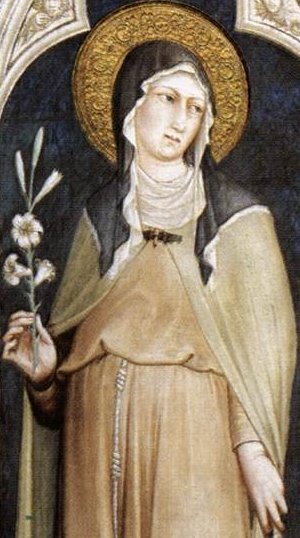
    It was borne by Saint Chiara d’Assisi. (1194-1253). She was a companion of St. Francis of Assisi, both of whom believed in self-mortification and helping the poor. Chiara decided to start an order, known as the Poor Clares, while Francis went off to start his own order known as the Franciscans.

    Chiara is still a very popular first name in Italy. In 2006, she was the 5th most popular female name.

    The French form of Claire, also came into usage during the early Middle Ages. No doubt due to the cult of the male St. Clair of Dauphine, the patron saint of tailors.

    The name came to England via the Normans in the form of Clare, and the male Latin form of Clarus was borne by a British saint of Rochester, a Benedictine monk. Both forms of Clare and Clara were very popular prior to the Reformation in England and both names were revived during the 19th century.

    In recent years, for whatever reason, the French spelling of Claire has often times been the preferred choice among American parents. In 2008, Claire came in at # 62 in the U.S  Top 1,00o Female Names, while its elder English counterpart of Clare came in at # 679. In fact, even the Latinate version of Clara is far more prevalent than Clare, coming in at # 206.

    Clara/Klara is a popular choice throughout Northern and Central Europe.

    Other forms of the name include:

    • Clarice (English/French/Italian)
    • Clarissa (English)
    • Klára (Hungarian/Czech)
    • Claritia (Latin)
    • Claritta (Romansch)
    • Bistra/Jasna (Serbo-Croatian/Slovene: both literally mean “light; clear” and are used as indigenous cognates)
    • Clarisa (Spanish)
    • Clarita (Spanish: initially a diminutive form, commonly used as an independent given name)

    Diminutive forms are the French, Clairette, the Italian, Chiaretta, Chiarina and Claretta.

    There is the masculine Latin form of Clarus and the French masculine form of Clair.

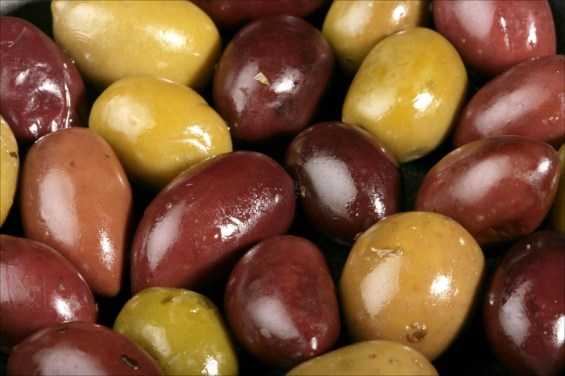
    Olivia

    Gender: Feminine
    Origin: Latin
    Meaning “olive”
    (o-LIV-ee-ah)

    The name is often believed to have been an invention of William Shakspeare for his play Twelfth Night, however, the name was borne by a 9th century Sicilian saint. She is considered one of the patron saints of Palermo, and legend has it that she was kidnapped by Muslim invaders and taken into slavery to Tunisia. Her captors were so impressed with her sincerity, virtue and beauty that they permitted her to remain a Christian and to live as a hermitess in a cave.

    She was known for performing miracles among the local Tunisians, and many had converted to Christianity as a result. She was imprisoned and tortured and then burnt at the stake. Legend pertains that when they lit the fires at the stake, the flames would not touch her and she was decapitated instead. For whatever reason, she is also considered the patron saint of music.

    The name was then possibly introduced into the English speaking world through William Shakespeare in 1599 for one of his characters in the play Twelfth Night. Since then, the name has been in usage in the English speaking world. In the States, the name has been in the top 1,000 since 1880. The name has gradually climbed its way up to the top 10 the last 20 years. In 1989, Olivia came in at # 179 the following year of 1990 saw it jump all the way up to # 72, by 2001 it reached position # 1o and as of last year, 2008, it has made itself a niche at # 6. In Poland, it is at # 5 as the most popular female name, spellt Oliwia. The name is in the top in Canada and the United Kingdom.

    The name is used in virtually every European country.

    Other forms include:

    • Olivija (Croatian/Serbian/Slovene)
    • Olivie (Czech: ah-LEEV-yeh)
    • Oliva (English/Italian)
    • Olive (English)
    • Olivie/Olivia (French)
    • Olivette (French: obscure)
    • Olívia (Hungarian/Portuguese/Slovak)
    • Olivana/Oliviana (Italian: obscure)
    • Oliveira/Oliviera (Italian)
    • Olivetta (Italian: obscure)
    • Oliwia (Polish: o-LEEV-yah)

    Nicknames include: Ollie, Liv, and Livy. A German nickname is Livchen.

    A very rare Polish masculine form is Oliwjusz.

    Boel

    Gender: Female
    Origin: Swedish/Danish/Norwegian
    Meaning: “battle recovery; battle improvement”
    (BOO-ul)

    The name is derived from the Norse Bothild, which is made up of the elements bot which means “recovery; improvement” and hild, which means “battle.” Hence the name could either mean “battle recovery” or “battle improvement.”

    In Sweden, the usage of the name first came to light in the region of Skåne, (on the Danish border), around the 14th century, listed as Boeld. It suddenly became incredibly popular in the middle of the 18th century.

    Today the name is still in usage in Sweden, but is considered rather old fashioned and dated.

    Other forms of the name include:

    • Bodil (Danish/Faroese/Norwegian)
    • Boeld (Danish)
    • Boel (Danish/Swedish)
    • Bolette (Danish)
    • Bodhild (Norwegian)
    • Bol (Norwegian: dialectical form)
    • Bóthildr (Old Norse)

    Its designated name-days are June 17 (Norway) and January 26 (Sweden).

    Rachel

    Gender: Female
    Origin: Hebrew
    Meaning “ewe”
    (RAY-chel); (RAH-huhl)

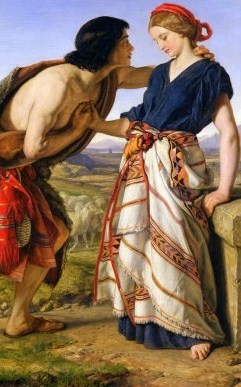
    The name is derived from the Hebrew רחל meaning “ewe”, which idiomatically, references purity. In the Bible, it was the name of the second and most favored wife of Jacob. She was the daughter of Laban, the sister of Leah and the mother of Joseph. Jacob labored for Laban for seven years in exchange for the hand of Rachel. After the seven years were up, he was duped into marrying Leah. Rachel later married Jacob and is considered a Jewish matriarch. It is said in Jewish lore that the willows of the brook represent Rachel.

    The name has been popular in Britain since the Reformation and is currently ranked in at # 38 of the US top 100 girls names.

    Rachel is used in German and French speaking countries and in the Netherlands, in French, it is pronounced hrah-SHEL, and in German, RAH-hel).

    Other forms include:
    • Rahel راحيل (Arabic)
    • Raquel (Catalan/Portuguese/Spanish: rah-KEL)
    • Ráchel (Czech: diminutive form is Ráchelka and Cheli)
    • Rakel (Danish/Estonian/Norwegian/Swedish)
    • Rachael/Rachel (English)
    • Raili (Estonian: pronounced sort of like Riley)
    • Rakul (Faroese)
    • Raakel (Finnish)
    • Rahel (German)
    • Ráhel (Hungarian)
    • Rákhel/Rákis (Hungarian)
    • Ráichéal (Irish)
    • Rachele (Italian: rah-KAY-lay)
    • Rachelina (Italian, rah-kay-LEE-nah)
    • Rachelė (Lithuanian: rah-HEL-ay)
    • Rahel (Malayalam)
    • Rachela (Polish: rah-HEH-lah, very unusual in Poland and was once common among Polish Jews).
    • Rahela (Romanian)
    • Rahil/Rakhil/Rakhila (Russian: prevalent among Jewish communities in Russia)
    • Ruchel (Yiddish)

    Rachelino is an Italian masculine form.

    Agnes

    Gender: Female
    Origin: Greek and Latin
    Meaning: “lamb; pure, chaste, holy.”
    (AG-nes)

      The name is of debated origin and meaning. It may be derived from the Greek hagno meaning “pure; chaste; holy.”

      Likewise, it may be derived from the Latin word for “lamb.” Since the lamb later became associated with purity and chastity, the  two above origins and meanings have become interchangeable.

      The name was borne in Greek mythology by an Oceanid nymph, who was said to have raised the god Zeus.

      On Mt. Lyceaus in Arcadia, there was a well sacred to her. When the region was suffering from drought, she prayed and fasted for several days. Afterward, she touched the surface of the well with a branch of an oak tree, inducing a huge rain storm.

      The name was borne in Christian legend by an early virgin martyr who refused to comply with the wishes of a local suitor who later denounced her as a Christian. The local prefect forced her to go through several public humiliations before beheading her.

      It was also borne by a medieval Czech princess, who was later canonized by the Catholic church as a saint. Known as St. Agnes of Bohemia, she is a minor subject in the popular English Christmas carol, Good St. Wenceslaus, and is still revered as a local heroine in her native homeland. Another saintly namesake is  Agnes of Assisi.

      The name was quite popular throughout Europe in the Middle Ages, due to its strong Christian connotations, the word agnes in Latin was also used in reference to Christ’s sacrifice, as in agnes dei, lamb of God.

      The name was prevalent in England before the Reformation, and fell somewhat out of favor, until it was revived in the late 19th-century.

      In recent years, the name has experienced a surge in popularity in a few European countries.

      In Sweden she was the 16th most popular female name of 2007.

      In Hungary, she was the 75th most popular female name of 2005.

      Other forms of the name include:

      • Agnesa/Agnesë (Albanian: the birth name of Mother Theresa of Calcutta)
      • Inas (Arabic)
      • Oanez (Breton: diminutive form of Agnes pronouned WAH-nes).
      • Agnesza Агнеса (Bulgarian)
      • Agnès (Catalan/French: pronounced like ang-YES in French).
      • Gnese (Corsican)
      • Agneza (Croatian)
      • Anežka (Czech)
      • Agnete/Agnethe (Danish)
      • Nancy (English: originally an English pet form, the name has been used as an independent name for quite awhile, its popularity spiked in the 1940s and 50s and is currently considered dated. Another nickname used as an independent form is Nan.
      • Aune (Finnish: pronounced AU-ne the first part is pronounced like how without the H)
      • Iines (Finnish)
      • Agenete/Agnet (Frisian: other forms include Anjes, Anjesse, Anyesse, Anjet and Anjette.
      • Inessa/Nessa (German)
      • Neeske (German/Frisian: initially a diminutive form, used as an independent given name)
      • Hagne (Greek: pronounced AHG-nay)
      • Agnea (Icelandic: pronounced ahg-NAY-ah).
      • Agnéis (Irish-Gaelic)
      • Agnese (Italian/Latvian: pronounced in Italian like ang-YAY-say. It could also be Latvian pronounced (ahg-NEH-seh).
      • Agnesina (Italian: obscure form)
      • Ines (Italian: a borrowing from the Spanish)
      • Ágnes (Hungarian: pronounced like AHG-nesh). Diminutive form is Ági.
      • Baranka (Hungarian: a literal translation)
      • Agnė (Lithuanian: pronounced AHG-nay).
      • Annis/Annice (Medieval English forms: both are pronounced the same ANN-nis)
      • Agnieszka (Polish: pronounced ahg-NYESH-kah, the name is extremely popular in Poland. Medieval diminutive forms include Jagienka, Jagnusia and Jagna. An older form which has fallen out of usage is the Medieval Jagnieszka. Modern diminutive forms include Aga, Agunia and Agusia.
      • Inês (Portuguese)
      • Agneza (Romanian)
      • Neisa/Nesa/Nescha/Nesina (Romansch: credit goes to Capucine)
      • Agnessa (Russianpronounced on-YEZ-ah).
      • Senga (Scottish: an anagram of Agnes, the name is also said to be from the Gaelic seang meaning “slender.”
      • Agnija Агнија (Serbian)
      • Neza (Slovene: originally a Slovenian diminutive form, it is now used as an independent given name, pronounced NEH-zhah).
      • Hańža (Sorbian)
      • Inés (Spanish/Galician: pronounced like ee-NES, the name has become prevalent in other countries, it is used in Slovenia, Croatia, Latvia, Finland and Estonia, only in Finland and Estonia it is spelled Iines pronounced the same way as in Spanish. A French borrowing is spelled Inès.)
      • Agneta/Agnetha/Agnita/Agna (Swedish/Norwegian: pronounced ung-YEH-tah, ung-NEE-tah and ANG-nah, these forms are considered dated in Sweden being replaced by the trendier Agnes. It is borne by Agnetha Fältskog of ABBA fame )
      • Nesta (Welsh)

      Nicknames include: Aggie, Nessa, Ness and Nessie

      An obscure Italian male form is Agnesio.

      Coincidentally, Agni is an Old Norse male name, also found as Ahni and Hogne. Snorre Sturlasson wrote about a legendary King of Sweden named Agni. He is known for defeating the Finnish chief Frosti and taking his daughter Skjalf hostage, who he later married and had children with. The name is believed to be derived from the Nordic agh meaning “spear point” or may possibly be derived from the word agi meaning “fear; dread.” It seems to have fallen out of usage. Maybe a you would be brave enough to use it on your own son ;).

      Penelope

      Gender: Feminine
      Origin: Greek
      Eng (pen-NEL-uh-PEE)

      The name is of uncertain origins, many scholars believe that the name is pre-Hellenistic and is related to an ancient word, penelops (πηνελοψ), which means “duck,” others argue that the name is Greek compound name composed of the elements, pene (πηνη) meaning “threads.”  Many scholars feel that the latter is the most appropriate since it was the name of Odysseus wife who kept her suitors at bay by pretending to weave.

      The name appears in Greek mythology as the name of a wood nymph who was speculated to be the mother of the god Pan.

      The name is occasionally used in German, Italian,

      Other forms of the name include:

      • Penèlope (Catalan)
      • Penelopa (Croatian/Polish/Romanian/Serbian: Pela, Pelka and Pelcia are the Polish diminutives)
      • Pénélope (French)
      • Penelópē Πηνελόπεια/Πηνελόπη (Greek)
      • Pénelopé (Hungarian)
      • Penelopė (Lithuanian)
      • Penelopeia (Norwegian/Danish/Swedish)
      • Penélope (Spanish/Portuguese)

      The name is currenly borne by Spanish actress Penelope Cruz.

      Possible English nickname options, include, Penny, Poppy, Lola, and Nell.

      Sophia, Sophie, Sofia

      Gender: Female
      Origin: Greek
      Meaning: “wisdom.”
      (so-FEE-yuh); (so-FYE-uh)

      A long time Greek classic, the name suddenly appeared in the U.S top 100 circa 2000, and budged itself into the # 6 spot in 2007.

      Sophia comes directly from the Greek, and was often used as a personification for Wisdom in philosophical, Christian, Jewish and Gnostic texts.

      In Christian lore, Saint Sophia was the mother of three Christian martyrs, Hope (Elpida), Faith (Pisti) and Charity (Agapi). She supposedly died from grief after the death of her daughters, and is now one of the most revered saints of the Eastern Christian churches, making the name a longstanding classic throughout Eastern Europe and modern Greece.

      Sophia is the Greek spelling, which seems to be the most worn form in the Western World. However, Sofia is the variation often used in continental Europe.

      Sophia was not introduced into the English-speaking world until the 18-century, when it was introduced into the British Family Tree by the German Hanovers, from whose line the names Sophie and Sophia often appear.

      In English, the pronunciation of so-FEE-yah, and so-FYE-uh are interchangeable. The former is more of a modern import, and the most popular. The latter is the older English pronunciation of the name, which is seldom heard in the States but is occasionally heard in Britain.

      Other forms the name include:
      • Zofiya (Amharic/Ethiopian)
      • Soffi/Soffiya (Armenian)
      • Sachveja/Sofiya (Belorusian: Zosja is a diminutive form)
      • Sofija София (Bulgarian)
      • Sofia (Catalan/Finnish/German/Italian/Norwegian/Occitanian/Portuguese/Romanian/Slovak/Swedish: in 2007, this was the 59th most popular female name in Norway and the 44th most popular in Sweden)
      • Sònia (Catalan)
      • Sofija (Croatian/Serbian)
      • Sofie (Czech: SOFE-yeh)
      • Soňa (Czech/Slovak: a translation of the Russian diminutive form, Sonya)
      • Žofia/Žofie (Czech/Slovak: ZHOFE-yah, and ZHOFE-yeh. Diminutive forms are: Žofka and Žofa.)
      • Såffi (Danish: an old Danish form of Sophia)
      • Sofie (Danish/Dutch/German/Norwegian/Swedish: so-FEE Scand; zo-FEE German. In 2008, she was the 35th most popular female name in the Netherlands, and in 2007, she was the 10th most popular female name in Norway and the 85th most popular in Sweden)
      • Fie (Dutch: originally a diminutive form, now used as an independent given name, FEE-e)
      • Soovi (Estonian)
      • Sohvi (Finnish)
      • Sophie (French/English/German/Dutch. In 2008, this was the 74th most popular female name in the United States, the 12th most popular in Canada, the 7th most popular in England and Wales and the most popular female name in the Netherlands and Scotland. In 2007, it was the 8th most popular female name in Australia)
      • Sonja (German/Estonian/Finnish/Polish/Scandinavian/Serbian/Slovene/Sorbian: a translation of the Russian diminutive form, Sonya).
      • Sonje (German: ZONE-yeh)
      • Sophia Σοφία (Greek Modern/English/Estonian/Italian)
      • Suffi/Suffia (Greenlandic)
      • Szonja (Hungarian)
      • Zsófia (Hungarian: ZHOH-fee-aw. In 2005, this was the 5th most popular female name in Hungary. A common diminutive form is Zsófika)
      • Soffía (Icelandic)
      • Sonia (Italian/Romanian)
      • Sofija/Sofja (Latvian)
      • Sofija/Zofija/Zopija (Lithuanian)
      • Sofija/Sofijana (Macedonian: Sofa is a diminutive form)
      • Sofija (Maltese)
      • Sophi (Persian)
      • Sofi (Plattdeutsch)
      • Zofia (Polish: diminutive forms are: Sonka, Zochna, Zocha, Zofka, Zońka, Zosia, Zośka, Zosieńka, and Zosia (ZOH-shah)
      • Sónia (Portuguese-European)
      • Sônia (Portuguese-Brazilian)
      • Sofiya/Sofya София (Russian/Ukrainian: Russian diminutives include Sonya, which is used as an independent given name in other European countries, but seldom in Russia)
      • Zofija (Slovene)
      • Sofía (Spanish/Galician/Faroese, in 2006, she was the 17th most popular female name in Spain and the 5th most popular in Chile. Spanish diminutives include Chofa, Fifi, SoficitaSofí and Sofita)
      • Sofya (Turkish)
      • Tzofiya (Yiddish)
      Masculine forms include Sofko (Bulgarian), Sofus/Sophus (Danish/Norwegian/Swedish) and Sofio (Italian).

      The designated name-days are: May 15 (Austria/Germany), May 25 (France), September 17 (Greece), September 30 (Lithuania/Spain),

      Sebastian

      Gender: Masculine
      Origin: Latin
      Meaning “from Sebastus.”

      The name Sebastian is the English form of the Latin, Sebastianus. It means “from Sebastus.”

      Sebastus was a town in Armenia. The town of Sebastus was named for the emperor Augustus, “sebastos” being the direct Greek translation of Augustus, which is Latin and means “venerable.”

      In the States, the name has had a recent surge of popularity, it is currently the 74th most popular male name. Its rankings in other countries are as follows:

      • # 59 (Australia, 2008)
      • # 7 (Austria, 2008)
      • # 5 (Chile, 2006)
      • # 7 (Denmark, 2008)
      • # 77 (England/Wales, 2008)
      • # 43 (Germany, 2009)
      • # 312 (the Netherlands, 2008)
      • # 12 (Norway)
      • # 32 (Poland, Warsaw, 2009)
      • # 44 (Sweden, 2008)

      Other forms of the name include:

      • نايتسبس Cpectayan (Arabic: used primarily among Arab Christians)
      • Sɛbasadian Սեբաստյան (Armenian)
      • Wast/Wastl/Wastel (Bavarian)
      • Sebastijan (Bosnian/Croatian)
      • Sebastià (Catalan)
      • Bas (Dutch: originally a diminutive, now used as an independent given name)
      • Bastiaan (Dutch/Low Saxon)
      • Sebastiaan (Dutch)
      • Sebastian (English/German/Polish/Romanian/Scandinavian)
      • Seppo (Finnish)
      • Sébastien/Bastien (French)
      • Sebast’ian სებასტიან (Georgian)
      • Bastian (German: contraction of Sebastian.
      • Sebestyén/Szebastián (Hungarian)
      • Sebastiano/Bastiano (Italian)
      • Sebastianus (Latin)
      • Sebastians (Latvian)
      • Sebastijonas (Lithuanian)
      • Sebastjan Себастијан (Macedonian/Serbian)
      • Bastjan (Maltese)
      • Sebastião/Bastião (Portuguese)
      • Sebaščan (Prekmurian)
      • Sevastian Севастьян (Russian/Ukrainian)
      • Bustianu/Serbestianu (Sardinian)
      • Vastianu (Sicilian)
      • Šebastián/Sebastián (Slovak)
      • Boštjan (Slovene)
      • Sebastijan/Sebastjan (Slovene)
      • Bošćij (Sorbian)
      • Sebastián (Spanish)
      • Baschdl (Swabian)
      • Bastián (Venetian)

      German diminutives include: Basti, Baschti, Baschi/Baschy (Swiss-German), Sabba, Sebbe, Sebbo, Sepp, Seppi, Seibi and Selbi.

      Basto is an Italian diminutive form.

      Hungarian diminutives are Sebő and Sebők.

      Polish diminutives are Sebek

      Feminine forms include:

      • Bastienne/Sébastienne (French)
      • Sebastiane (German)
      • Bastiana/Bastianina/Sebastiana (Italian)
      • Vastiana (Sicilian)
      • Sebastiána (Slovakian)
      • Sebastiana (Spanish/Polish)