Cecilia, Cecily

Gender: Feminine
Origin: Latin
Meaning “blind”
Eng (seh-SEE-lee-yuh); Lat (kay-KEE-lyah); Italian (chay-CHEEL-yah).

This four syllable, melodic name has been in usage throughout the Western World since the early Middle Ages. Thanks to the cult of Saint Cecilia, an early Christian martyr, considered to be the patron saint of music and musicians.

Geoffrey Chaucer made the saint a subject of his writings and refers to the name as meaning “lily of heaven”; “the way for the blind”; “contemplation of heaven and an active life”; “as if lacking in blindness”; “a heaven for people to gaze upon.”

However, these were only epithets used by the early English writer describing the wondrous attributes and virtues of the saint, and should not be confused for its real meaning.

The name is a feminine form of the Latin Caecilius which comes from the word caecus meaning blind.

The name was introduced into England after the Norman conquest in the form of Cecily (SES-ih-LEE). The name was very popular in England until the Protestant Reformation where it fell out of usage.

Its Latin counterpart of Cecilia was not introduced into the English speaking world until the 18th-century, afterwards, its early English form of Cecily became quite popular during Victorian England.

As of 2010, its Danish form of Cecilie was the 30th most popular female name in Denmark. Her rankings in other countries are as follows:

  • # 39 (Silje, Denmark, 2010)
  • # 65 (Silje, Norway, 2010)
  • # 277 (Cecilia, United States, 2010)
  • # 385 (Cécile, France, 2009)
  • # 486 (Cecilia, France, 2009)
  • # 741 (Cecelia, United States, 2010)

There is the masculine English form of Cecil. Other forms of the name include:

  • Aziliz (Breton)
  • Cicilia (Corsican)
  • Cecilija (Croatian)
  • Cila (Croatian)
  • Cecílie (Czech: tset-TSEEL-yeh)
  • Cecilie (Danish/Norwegian)
  • Cille (Danish)
  • Sille (Danish)
  • Cecile/Ceciel (Dutch)
  • Cecilia (Dutch/Finnish/German/Italian/Romanian/Spanish/Swedish)
  • Cilla (Dutch/Swedish)
  • Cecelia (English)
  • Säsil (Estonian)
  • Sesilia (Faroese)
  • Selja/Silja (Finnish)
  • Cécile (French)
  • Silke (Frisian/German: ZIL-kə)
  • Síle (Gaelic)
  • Kek’ik’ilia კიკილია (Georgia)
  • Cäcilia/Caecilia (German: tsay-TSEEL-yah or tsay-TSEE-lee-yah)
  • Cäcilie (German: tsay-TSEEL-yə or tsay-TSEE-lee-yə)
  • Zilla (German: originally a diminutive form sometimes used as an independent given name, another diminutive is Zilly)
  • Kekilia (Greek Modern)
  • Sissiilia/Sissii (Greenlandic)
  • Kikilia (Hawaiian)
  • Cecília (Hungarian/Portuguese/Slovak)
  • Cili (Hungarian/Slovene)
  • Szöszill (Hungarian)
  • Seselía, Sesilía, Sesselía, Sessilía (Icelandic)
  • Sisilia (Indonesian)
  • Sheila (Irish)
  • Caecilia (Latin)
  • Cecilė/Cilė(Lithuanian)
  • Cissolt (Manx: SIS-solt)
  • Sidsel (Norwegian/Danish)
  • Silje (Norwegian/Danish)
  • Sissel (Norwegian/Danish)
  • Cilgia (Romansch)
  • Tsetsiliya (Russian)
  • Sìleas (Scottish)
  • Cecília (Slovakian)
  • Šejla (Slovakian)
  • Cecilija (Slovenian)
  • Cilika (Slovenian)
  • Cilka (Slovenian)
  • Sisel (Yiddish)
  • Zisel (Yiddish)

Male forms include

  • Cecil (English)
  • Cecilio (Italian/Spanish)
  • Caecilius (Latin)
  • Cecilijus (Lithuanian)
  • Cecilián (Slovakian)

Czech diminutive forms are: Cecilka, Celia, Cilia, Cilka and Cilinka.

English diminutive forms are: Cece, Celia and Sissy.

The designated name-day is November 22nd.

Sabina

Gender: Feminine
Origin: Latin Сабина
Meaning: “Sabine.”
Eng (suh-BEE-nah; suh-BYE-nah).

The name comes from a Roman cognomen, Sabinus, which was usually carried by people of Sabine origins. The Sabines were an ancient Italic people who lived in Central Italy and whose culture was eventually absorbed by the Romans.

The name was borne by an early Christian saint and martyr. It is also the name of a region in Italy which takes its name from the tribe.

It is also the name of a genus of tree, which has probably further popularized the name.

The name could also be from the Arabic, sometimes transliterated as Sabeen, meaning “follower of another religion” and was said to be a name given to the Prophet Mohammed by non-Muslims.

Currently, Sabina is the 13th most popular female name in Kazakhstan, (2010), while Sabine is the 392nd most popular in the Netherlands, (2010).

The name is used throughout Europe and Central Asia.

Other forms include:

  • Sabien (Dutch)
  • Sabine (German/French)
  • Szabina (Hungarian)
  • Sabeena (Indian)
  • Savina (Italian)

Masculine forms include:

  • Sabino (Italian)
  • Savino (Italian)
  • Sabinus (Latin)
  • Sabin (Romanian)

A Czech and Polish diminutive is Sabinka.

Diana

Gender: Feminine
Origin: Latin Диана
Meaning: “sky.”
Eng (di-AHN-nah)

The name is derived from the Latin word, dius which refers to “divinity” but may also be traced to an earlier Indo-European root word deyew* meaning “sky.” It is believed to share the same etymology with the Greek Zeus, the Latin Deus (god), the Vedic Dyaus and the Latin dies (day, day light).

In Roman mythology the name was borne by the virgin goddess of the hunt and of the moon. She was most often associated with wild animals and the woodlands. She was considered the patroness of virgins and women and was one of the triad of maiden goddesses, Diana, Minerva & Vesta.

The name was borne by several early Greek saints and as a result, was always a common name in Southeastern Europe and frequently used among the Christians of the Middle East. It was possibly introduced into the English-speaking world via Sir Walter Scott’s 1817 novel Rob Roy, it may have been further popularized by George Meredith’s Diana of the Crossways (1885).

In modern history, the name was borne by the late Princess of Wales, Diana Spencer (1961-1997).

The name is currently the 190th most popular female name in the United States, (2010). The highest she ranked in the U.S. name charts was in 1946 when she ranked in as the # 42. Its French counterpart of Diane became exceedingly popular in the English-speaking world during the mid-20th-century. She currently does not rank in the U.S. top 1000, but at one time (1951) she was the 15th most popular female name.

Diana’s rankings in other countries are as follows:

  • # 4 (Kazakhstan, 2010)
  • # 83 (Hungary, 2010)
  • # 84 (Spain, 2010)

Other forms of the name include:

  • Dijana Дијана (Bosnian/Croatian/Macedonian/Serbian/Slovene)
  • Diana Диана დიანა (Assyrian/Bulgarian/Coptic/Czech/Dutch/English/Estonian/German/Georgian/Greek/Hungarian/Italian/Kazakh/Latin/Latvian/Lebanese/Lithuanian/Polish/Portuguese/Romanian/Russian/Scandinavian/Spanish/Syrian/Ukrainian)
  • Diane (French/English)
  • Diána (Hungarian)

The designated name-days are: Janury 4 (Czech Republic), January 29 (Sweden), February 23, (Latvia), June 9 (France), July 1 (Slovakia), August 13 (Lithuanian/Poland) September 23 (Estonia).

Sources

  1. http://www.behindthename.com/php/find.php?name=diane
  2. http://www.askoxford.com/firstnames/diana?view=uk

Paul

Gender: Masculine
Origin: Latin
Meaning: “short; small; humble; few.”
Eng (PAWL)

The name is derived from the Latin Roman family name, Paulus, which could translate as meaning, “small, short; humble; few.”

Paul and his various forms has to be one of the most common male names used throughout the Christian world. It has been used equally among Orthodox Christians, Roman Catholics and Protestants.

Its most famous bearer was Paul of Tarsus, whose real name was Saul. St. Paul, as referred to by the Roman Catholic and Eastern Orthodox Churches, is attributed as being the author of much of the New Testament.

The name was borne by several popes, royals and saints thereafter.

Currently, its Germanic form of Paul is the 8th most popular male name in Germany, (2011). His rankings in other countries are as follows:

  • # 13 (Austria, 2010)
  • # 22 (France, 2009)
  • # 41 (Romania, 2009)
  • # 90 (Ireland, 2010)
  • # 130 (Scotland, 2010)
  • # 178 (United States, 2010)
  • # 485 (Netherlands, 2010)
His foreign equivalents rankings are as follows:
  • # 3 (Pablo, Spain, 2010)
  • # 4 (Páll, Faroe Island, 2010)
  • # 4 (Pau, Catalonia, 2010)
  • # 17 (Paweł, Poland, 2010)
  • # 26 (Pablo, Chile, 2010)
  • # 29 (Pavel, Czech Republic, 2010)
  • # 31 (Pablo, Catalonia, 2010)
  • # 44 (Pau, Spain, 2010)
  • # 91 (Pál, Hungary, 2010)
  • # 144 (Pablo, France, 2009)
  • # 202 (Paolo, France, 2009)
  • # 361 (Pablo, United States, 2010)

Other forms of the name include:

  • Pali (Albanian)
  • Paulë (Albanian)
  • Boulos/Bulos بولس (Arabic)
  • Faulus (Aramaic)
  • Boghos Պողոս (Armenian)
  • Poghos Պողոս (Armenian)
  • Paul (Basque/Dutch/English/Estonian/German/French/Romanian/Scandinavian/Silesian)
  • Paweł Павeл (Belarusian/Polish)
  • Polus (Berber)
  • Paol (Breton)
  • Pavel Павел (Bulgarian/Czech/Russian/Slovene)
  • Pavolo (Calabrian)
  • Pavulu (Calabrian)
  • Pau (Catalan/Occitanian)
  • Pawl (Cornish/Welsh)
  • Paulu (Corsican/Sardinian/Sicilian)
  • Pavao (Croatian)
  • Pavle პავლე Павле (Croatian/Georgian/Macedonian/Serbian)
  • Pavo (Croatian)
  • Palle (Danish)
  • Poul (Danish)
  • Pauwel (Dutch)
  • Paavel (Estonian)
  • Paavo (Estonian/Finnish)
  • Páll (Faroese/Icelandic)
  • Paavali (Finnish)
  • Pauli (Finnish)
  • Pol (Flemmish/Romansch)
  • Paale (Frisian)
  • Pals (Frisian)
  • Paulus पौलुस (Frisian/Hindi/Latin)
  • Pay (Frisian)
  • Powles (Frisian)
  • Pouw (Frisian)
  • Pauli (Fruilian)
  • Pódhl (Gaelic)
  • Pól (Gaelic)
  • Paulo (Galician)
  • Pavlos Παυλος (Greek)
  • Pāl पॉल (Hindi)
  • Pál (Hungarian)
  • Pósa (Hungarian)
  • Paolo (Italian/Portuguese)
  • Paolino (Italian/Portuguese)
  • Paulinus (Latin)
  • Pāvils (Latvian)
  • Paulius (Lithuanian)
  • Povilas (Lithuanian)
  • Paol (Lombard)
  • Paulose (Malayalam)
  • Pawl (Maltese)
  • Pawlu (Maltese)
  • Payl (Manx)
  • Paora (Maori)
  • Pål (Norwegian/Swedish)
  • Pavel (Romanian)
  • Paulin (Romansch)
  • Polet (Romansch)
  • Polin (Romansch)
  • Pulegn (Romansch)
  • Pàl (Scots-Gaelic)
  • Pawůł (Silesian)
  • Pavol (Slovak)
  • Pawoł (Sorbian)
  • Pablo (Spanish)
  • Paoro (Tahitian)
  • Pàul (Tuscan)
  • Pavlo Павло (Ukrainian)

For a Reference a Female forms See Paula and Paulina (soon to come)

Titus

Titus (Roman Emperor)Gender: Masculine
Origin: Latin
Meaning: “title of honour.”
Eng (TY-tus)

The name comes from the Roman praenomen which is derived from the Latin, titulus, meaning “title of honour.”

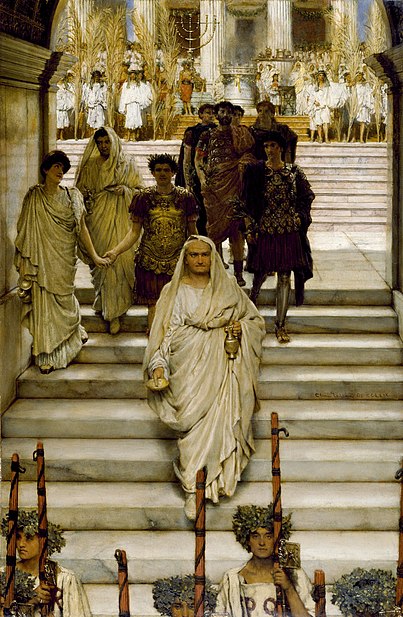
In Ancient History, the name is borne by Titus Flavius Vespasianus, the tenth Roman emperor in the Roman Empire and the second of the Flavian Dynasty.

In the New Testament, the name is borne by a companion of St. Paul who later became the first bishop of Crete and was a recipient of one of Paul’s epistles.

The name was also used by Shakespeare for his tragedy Titus Andronicus (1593).

Currently, Titus is the 253rd most popular male name in Germany, (2011) and the 397th most popular in the United States, (2010).

Other forms of the name include:

  • Tito (Aragonese/Basque/Galician/Italian/Portuguese/Spanish)
  • Titus (Czech/Danish/Dutch/English/French/German/Latin/Norwegian/Swedish)
  • Tiitus (Finnish)
  • Tite (French)
  • Titos Τιτος (Greek Biblical)
  • Titou τιτου (Greek Modern)
  • Titusz (Hungarian)
  • Títus (Icelandic/Slovak)
  • Titas (Lithuanian)
  • Titu Тітъ (Old Church Slavonic)
  • Tytus (Polish)
  • Tit Тит (Romanian/Russian/Croatian/Slovene)

An Italian, Portuguese and Spanish feminine form is Tita.

The designated name-day is January 4th.

Felix

Gender: Masculine
Origin: Latin
Meaning: “happy; lucky.”
Eng (FEE-liks); Germ (FEH-leeks)

Felix is derived from an Old Roman agnomen, (nickname), which describes one who is happy or lucky.

In ancient History, it was bestowed as a descriptive nick name upon the Roman dictator, Lucius Cornelius Sulla, (c.138 B.C.E-78 B.C.E), it was also borne by a few other Roman officials.

The name also makes an appearance in the New Testament.

The name was borne by at least 15 saints and 5 popes, rendering the name extremely popular in Medieval Continental Europe.

The name was also in usage in Medieval England, but seems to have gone out of style after the Protestant Reformation, being revived again in the 19th-century.

Currently, Felix is the 9th most popular male name in Germany (2011), in the United States, however, he only ranked in as the 3331st most popular male name, (2010). The highest he has ever ranked in U.S. naming history was in 1884, coming in as the 137th most popular male name.

In the English speaking world, Felix is usually associated with the Cartoon character, Felix the Cat.

His rankings in other countries are as follows:

  • # 14 (Austria, 2010)
  • # 38 (Denmark, 2010)
  • # 50 (Sweden, 2010)
  • # 83 (Norway, 2010)
  • # 177 (France, 2009)
  • # 201 (the Netherlands, 2010)

A list of all the variations are as follows:

  • Feliu (Catalan)
  • Felix Феликс (Croatian/Czech/Dutch/English/Finnish/German/Romanian/Russian/Scandinavian/Serbian)
  • Feliks (Croatian/Polish/Croatian/Serbian/Slovene)
  • Feeliks (Finnish)
  • Feliksas (Finnish)
  • Félix (French/Hungarian/Portuguese/Slovakian/Spanish)
  • Feliksz (Hungarian)
  • Felice (Italian)
  • Felicetto (Italian)
  • Felicino (Italian)
  • Felicio (Italian)
  • Feluccio (Italian)
  • Felicius (Latin)
  • Szczęsny (Polish:a vernacular form of Felix, this form is archaic and has been replaced in usage by Felix)
  • Felici (Romansch)
  • Srečko (Slovene; Croatian: direct translation, literally meaning “happy, lucky” in Southern Slavic languages)

Another offshoot is the Latin Felician, which literally means “the happy one” or “the lucky one.”

Derivatives are:

  • Felician (English)
  • Félicien (French)
  • Feliciano (Italian/Portuguese/Spanish)
  • Feliziano (Italian)
  • Liciano (Italian)
  • Felicianus (Latin)
  • Felicjan (Polish: fe-LEET-syahn)
  • Felicián (Slovak)

Its feminine form of Felicia has been in usage in England since the Middle Ages, currently, she does not appear in the U.S. top 1000, she was last seen in 2005 coming in as 993rd most popular female name. The highest she ever ranked in U.S. naming history was in 1986 coming in as the 90th most popular female name.

She is currently the 251st most popular female name in the Netherlands (2008) and the 15th most popular in Sweden (2007).

Variations are:

  • Felicia (English/Italian/Romanian: feh-LEE-shah Eng; fay-LEE-chah Italian)
  • Félicie (French: fay-lee-SEE)
  • Félicienne (French)
  • Felicie (German: fe-LEE-tsee-e)
  • Felícia (Hungarian/Portuguese)
  • Felicetta (Italian: obscure)
  • Feliciana (Italian/Latin/Spanish)
  • Felicina (Italian: obscure)
  • Felicja (Polish: Felcia, Felka, Fila and Filka are the diminutives. fe-LEET-syah)
  • Felina (Polish)
  • Feliksa (Polish)
  • Szczęsna (Polish)
  • Srečka (Slovene/Croatian)

The name was borne by German composer, Felix Mendelssohn (1809-1847).

The designated name-days are January 14 (Sweden), February 12 (France), May 30 (Germany), June 9 (Hungary), November 1st (Czech Republic), November 20 (Slovakia).

Valentine

Origin: Latin
Meaning: “strong; vigorous; healthy.”
(Eng masc: val-en-TINE; Fre fem: vah-lown-TEEN)

The name is derived from the Roman family name, Valentinus, which is derived from the Latin, valens, meaning: “strong, vigourous; healthy.”

In the modern world, the name is mostly associated with the holiday, it was borne by several early Christian martyrs, one of whom whose feast day happened to coincide with the ancient Roman festival of Lupercalia.

The anglicized form of Valentine is masculine, while in French, Valentine is feminine. This is a natural evolution, as Valentine is actually the feminine form of the French masculine,Valentin.

Valentine does not rank in the U.S. top 1000, but Valentine and Valentin are fairly common names in French-speaking countries.

Currently, Valentin is the 36th most popular male name in Austria, (2010). His rankings in other countries are as follows:

  • # 12 (Hungary, Bálint, 2010)
  • # 40 (France, Valentin, 2009)
  • # 106 (the Netherlands, Valentijn, 2010)
  • # 792 (United States, Valentin, 2010)

Other forms of the masculine include:

  • Valentini (Albanian)
  • Balendin (Basque)
  • Vàledin Валедин (Bulgarian)
  • Valentin Валентин (Bulgarian/Croatian/Czech/Estonian/French/German/Scandinavian/Slovene/Romanian/Russian)
  • Valentí (Catalan)
  • Valentyn (Czech)
  • Valentijn (Dutch: same pronunciation as in English)
  • Valentine (English)
  • Valjo/Valju (Estonian: has a different etymology but has been traditionally used as a cognate for Valentinus)
  • Balantin (Extramadurian)
  • Bálint (Hungarian)
  • Valente (Italian)
  • Valentiniano (Italian)
  • Valentino (Italian)
  • Valento (Italian)
  • Valenzano (Italian)
  • Valenzo (Italian)
  • Valentinus (Latin)
  • Valentins (Latvian)
  • Valentinas (Lithuanian)
  • Walentyn (Polish)
  • Walenty (Polish)
  • Valentim (Portuguese)
  • Ualan (Scottish)
  • Valintinu (Sicilian)
  • Valentín (Slovak/Spanish)
  • Folant (Welsh)

Valentina is currently the 19th most popular female name in Austria, (2010), her rankings in other countries are as follows:

  • # 28 (Italy, 2009)
  • # 47 (Croatia, 2010)
  • # 61 (Slovenia, 2010)
  • # 71 (France, Valentine, 2009)
  • # 81 (Catelonia, 2009)
  • # 91 (Belgium, Valentine, 2009)
  • # 92 (Spain, 2010)
  • # 97 (Germany, 2011)
  • # 152 (United States, 2010)
  • # 444 (the Netherlands 2010)

Other forms include:

  • Valentina Валентина (Catalan/Croatian/German/Hungarian/Italian/Romanian/Russian/Slovene/Spanish)
  • Valentine (French)
  • Valentína (Icelandic/Slovak)
  • Valenta (Italian)
  • Valenzia (Italian)
  • Walentyna (Polish)
  • Valentyna Валентина (Ukrainian)

The designated name-day is of course, February 14.

Sources

  1. Calendarium Romanum (Libreria Editrice Vatican, 1969), p. 117
  2. http://www.behindthename.com/php/search.php?nmd=n&terms=Valentine
  3. http://www.askoxford.com/firstnames/valentine?view=uk
  4. http://saints.sqpn.com/saint-valentine-of-rome/
  5. http://ocafs.oca.org/FeastSaintsLife.asp?FSID=101926
  6. http://www.newadvent.org/cathen/15254a.htm

Maximus

Gender: Masculine
Origin: Latin
Meaning: “greatest”
Eng (MAKS-sim-mus)

The name comes directly from the Latin word for “greatness” and is found in several Roman designations, such as the Circus Maximus in Rome and was used as a title to denote importance in the case of the Pontifex Maximus (the highest priest in ancient Rome).

The name was most notably borne by Claudius Maximus, a 2nd-century stoic philosopher, and it was also borne by several saints.

In recent years, the name has seemed to experience a surge in popularity. In the English-speaking world, his popularity might be due to the popularity of other Max names and the release of the 2000 Ridley Scott film, Gladiator, in which the hero is named Maximus (as played by Russell Crowe).

In Europe, especially in Belgium and the Netherlands, both the male and feminine forms are very trendy. This may have been due to the marriage of Prince Willem-Alexander of the Netherlands to the Argentine-born Maxima Zorreguieta (b.1971).

Currently, Maximus 233rd most popular male name in the United States, (2010). His rankings in other countries are as follows:

  • # 9 (Belgium, Maxime, 2009)
  • # 19 (France, Maxime, 2009)
  • # 35 (Argentina,Máximo 2009)
  • # 825 (the United States, Máximo 2010)

In French, Maxime is occasionally bestowed upon females, but is far more common among males. It is currently the 444th most popular female name in the Netherlands, (2010).

Other forms of the name include:

  • Màxim (Catalan)
  • Maksimká Максимкá (Chuvash)
  • Maksim Максим (Croatian/Belarusian/Bulgarian/Macedonian/Serbian)
  • Maxim Максим(Czech/Dutch/Hungarian/Kazakh/Romanian/Russian/Slovak/Ukrainian/Uzbek)
  • Maximus (Dutch/English/German)
  • Maxime (French)
  • Maksime მაქსიმე (Georgian)
  • Maximos Μάξιμος (Greek)
  • Miksa (Hungarian)
  • Massimo (Italian)
  • Massimino (Italian)
  • Maksims (Latvian)
  • Méme (Occitanian)
  • Maksym (Polish)
  • Máximo (Portuguese/Spanish)
  • Maximino (Portuguese)
  • Macsen (Welsh)
  • Maxen (Welsh)

Feminine forms include:

  • Massima (Italian)
  • Massimina (Italian)
  • Maxima (Hungarian)
  • Maksyma (Polish)
  • Máxima (Spanish)

Brennus, Breno

Gender: Masculine
Origin: Gaulic
(BREN-nus); (BREH-no)

Brennus is a latinized form of a Gaulic name of uncertain meaning. It is believed to possibly be related to a Celtic title for someone of high standing or perhaps related to the Celtic root bren (raven).

The name was borne by two Gaulic chieftans, one who sacked Rome in the 4th-century and another who invaded Northern Greece during the 2nd-century. The former being the most famous of the two.

Currently, its Portuguese form of Breno is the 47th most popular male name in Brazil, (2010).

Other forms (though obsolete) include:

  • Brenn Бренн (Breton/French/Russian)
  • Bren Брен (Bulgarian/Macedonian/Serbian)
  • Brenno (Italian)
  • Brennus (Latin)
  • Brenus (Latvian)
  • Breno (Portuguese/Spanish)

Breno is also the name of a commune in Lombardy, Italy, which got its name from the Gaulic chief.

Marius, Mario

Gender: Masculine
Origin: Latin
Meaning: debated
Eng (muh-RYE-us)

There are several different theories as to the name’s etymology, it is derived from the Roman gens name of supposed Oscan origin (an extinct language spoken by the ancient Sabines). It has been suggested that the root of the name may actually be from the Latin words mas or maris (male) or it could be from the Latin mare (sea), the plural of which is Maria. It has also been suggested to be related to the name Mars. By Christian times the name was used as a syncretized form of the Biblical Hebrew, Miriam, bestowed as a masculine form. It’s etymology has been assumed to be a masculine form of Mary or Maria since, and was bestowed as such, especially in Southern European countries in the form of Mario.

In France, the name is traditionally used in the region of Provence, where the famous Roman general, Gaius Marius (b. 2nd-century BCE) is still considered a hero for crushing the Teutonic forces near Mount Saint-Victoire.

Currently, Marius is the 22nd most popular name in Norway, (2010). His rankings in other countries are as follows:

  • # 40 (Denmark, 2010)
  • # 83 (France, 2009)

Its Southern European form of Mario is currently the 10th most popular male name in Spain, (2010). His rankings in other countries are as follows:

  • # 41 (Croatia, 2010)
  • # 44 (Catalonia, 2010)
  • # 91 (Chile, 2010)
  • # 207 (United States, 2010)

Other forms of the name include:

  • Marijo (Croatian)
  • Mario (Croatian/Italian/Spanish)
  • Márius (Czech/Slovak)
  • Marius (Dutch/French/German/Romanian/Scandinavian)
  • Marios Μαριος (Greek: modern)
  • Máriusz (Hungarian. MAHR-yoos)
  • Marijus (Lithuanian)
  • Mariusz (Polish. MAR-ee-OOSH)
  • Mário (Portuguese/Hungarian)
  • Marij Ма́риус (Russian)
  • Màriu (Tuscan)