Gaétan


Gender: Masculine
Origin: German/Polish/Italian/French
Meaning: “from Caieta.”
It (guy-TAH-no); Fre (GAH-eh-TAWn); Pol/Germ (KYE-eh-TAHN)

The name is derived from the Latin place name, Caietanus, meaning,  “from Caieta”. Caieta is now known as Gaeta.

In ancient Greece, this was a town where prisoners were taken to be executed. The town probably got its name from the wet nurse of Zeus in Greek myth.

It was borne by a 16th-century Italian saint, which spurred the popularity of the name throughout Europe. It has been in usage in German speaking countries as well as in Poland in the form of Kajetan and Cajetan, the name Kaj was later spun off from this name, now being more popular than its formal form in Sweden and Denmark.

As of 2010, its French form of Gaétan was the 122nd most popular male name in France.

Other forms of the name include:

  • Caitanu (Asturian)
  • Kaitan (Basque)
  • Gaietà (Catalan)
  • Gaitanu (Corsican)
  • Kajetán (Czech/Hungarian/Slovak)
  • Cajetaan (Dutch)
  • Gaétan (French)
  • Gaëtan (French)
  • Gaetano (Galician/Italian)
  • Kayetan (German)
  • Kajetan (German/Polish/Scandinavian)
  • Gaïtános Γαϊτάνος (Greek)
  • Caietanus (Latin)
  • Kajetonas (Lithuanian)
  • Aitano (Neopolitan)
  • Gaitano (Neopolitan)
  • Caetano (Portuguese)
  • Caetan (Romanian)
  • Cajetan (Romansch)
  • Kaetan Каетан (Russian)
  • Gajetànu (Sardinian)
  • Cayetano (Spanish)

Feminine forms are:

  • Gaetana (Italian)
  • Gaétane (French)
  • Gaëtane (French)
  • Kajetana (German/Polish)
  • Kaia (German)
  • Kaja (German/Polish)
  • Caietana (Latin)

Its designated name day is August 7.

Aurelian

Gender: Masculine
Origin: Latin
Meaning: “golden one.”
Eng (aw-RIL-lee-yen) Fre (Pronunciation)

The name is derived from the Latin cognomen, Aurelianus, which means, “golden one.”

The name was borne by a 3rd-century Roman Emperor.

As of 2010, its French form of Aurélien was the 150th most popular male name in France. Other forms of the name include:

  • Aureliani (Albanian)
  • Aurelián (Aragonese/Czech)
  • Awrelijan Аўрэліян (Belarusian)
  • Avrelian Аврелиан (Bulgarian/Russian/Ukrainian)
  • Aurelià (Catalan)
  • Aurelijan Аурелијан (Croatian/Macedonian/Serbian)
  • Aurelian (English/German/Lombard/Polish/Romanian)
  • Aurélien (French)
  • Aureliano (Galician/Italian/Portuguese/Spanish)
  • Avreliane ავრელიანე (Georgian)
  • Aurelianus (Latin)
  • Aureliāns (Latvian)
  • Aurelianas (Lithuanian)
  • Aurilianu (Sicilian)
A feminine form is Aureliana (Italian/Latin/Portuguese/Spanish)

Athenais

Gender: Feminine
Origin: Greek Αθηναις
Meaning: “belonging to Athene.”
Fre (ah-tay-nah-EES)

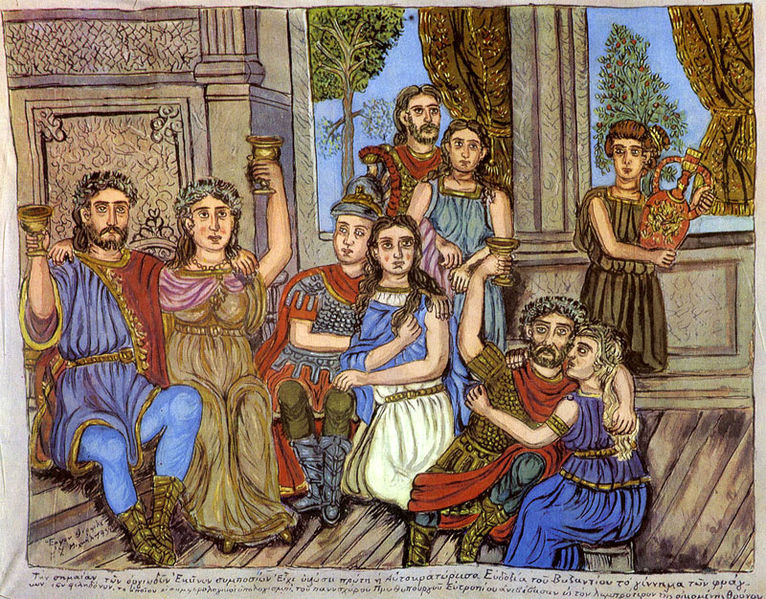
The name was borne by several early Greek personages, Athenais the Seer was a 4th-century Oracle who supposedly revealed the divine origins of Alexander the Great. It was borne by two Cappodocian queens of Greek lineage and a Byzantine consort. Its most notable bearer, however, is probably Françoise-Athénaïs de Rochechouart de Montespan, Marquise of Montespan and the favorite mistress of King Louis XIV of France (1641-1707).

As of 2010, its French form of Athénaïs was the 496th most popular female name in France.


Sidony; Sidonie

Gender: Feminine
Origin: Latin
Meaning: “from Sidon.”
Eng (SIDE-e-NEE; sih-DOH-nee); Fre (SEE-doh-NEE); Germ (Pronunciation)

The name is derived from the Late Latin male name, Sidonius, which means, “from Sidon.” Sidon is the Latin name for what is now Saida, in Lebanon.

Sidony was quite common in Medieval England, its popularity was inspired by the Shroud of Turin, when the meaning of the name was misunderstood to be from the Greek word, sindon (linen). The name fell out of usage by the Renaissance. Sidonie was revived in 18th-century England, and has occasionally been in out of usage in both the UK and the United States.

In fact, the name was fairly prevalent throughout Medieval Europe, being found among royalty and the nobility alike.

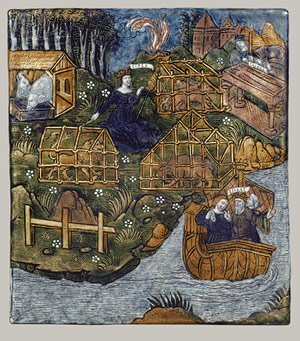
The name is found in the French Medieval Prose, Pontus & Sidonie.

In French, Sidonie is technically a prenom épicène (a gender neutral name), however, it is rarely given to males and has been far more common on females since Medieval times. As of 2009, Sidonie was the 438th most popular female name in France.

Sidonie is also used in German-speaking countries (strictly feminine).

The male form of Sidonius was borne by a 5th-century bishop and saint.

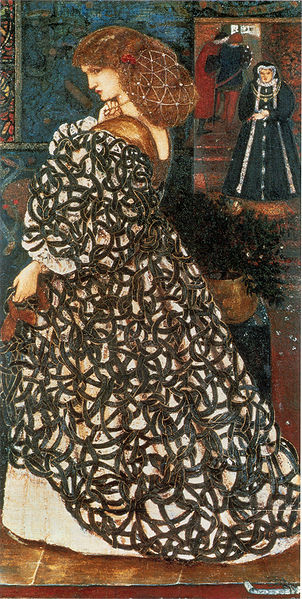
The name was also borne by the legendary Sidonia von Borcke (1548–1620), a Pomeranian noblewoman who was tried and executed for witchcraft, she became the much the subject in English literature and art during the 19th-century.

Other forms of the name include:

  • Sidonija (Croatian/Slovene)
  • Sidonie (Czech/French/German)
  • Zdeňka (Czech)
  • Sidonia (Dutch/Czech/German/Latin/Polish)
  • Sidony (English)
  • Szidónia (Hungarian)
  • Sydonia (Polish/Sorbian)
  • Sidónia (Slovak)

Honorine

Gender: Feminine
Origin: French/Latin
Meaning: “honour.”
(Pronunciation)

The name is derived from the Roman family name, Honorinus, which is derived from the Latin, Honorius, meaning, “honour.”

The name was borne by a legendary Norman saint who is revered as the patron saint of boatmen. Not much else is know about her, just that she is one of Normandy’s oldest saints. She is believed to have been martyred under Diocletian.

Honorine is also the eponymous heroine of Honoré de Balzac’s 1843 novel.

As of 2009, Honorine was the 455th most popular female name in France.

The designated name-day is February 27.

Other forms include:

  • Onorina (Italian)
  • Honorina (Latin)
  • Honoryna (Polish)

Cyprian

Gender: Masculine
Origin: Latin
Meaning: “from Cyprus.”
Eng (SIP-ree-ən)

The name is derived from the Roman family name, Cyprianus, which means, “from Cyprus.”

The name was borne by a 3rd-century Christian theologian, writer, martyr and saint.

As of 2009, its French form of Cyprien was the 272nd most popular male name in France.

Other forms of the name include:

  • Çipriani (Albanian)
  • Cyprian (Albanian/English/German/Polish/Romansch)
  • Sybryan سيبريان (Arabic)
  • Kiprianos Կիպրիանոս (Armenian)
  • Zipriano (Basque)
  • Kiprijan Киприян (Bulgarian)
  • Cebrià (Catalan)
  • Ciprijan (Croatian/Macedonian/Serbian/Slovene)
  • Cyprián (Czech)
  • Cyprianus (Dutch/Latin)
  • Cyprien (French)
  • Ciprian (Fruilian/Romanian)
  • Cibrán (Galician)
  • Kvipriane კვიპრიანე (Georgian)
  • Kyprianόs Κυπριανός (Greek)
  • Cipriano (Italian/Portuguese/Spanish)
  • Kiprijonas (Lithuanian)
  • Kiprián Киприа́н (Russian)
  • Cebrián (Spanish)
  • Kypryan Кипріян (Ukrainian)
Feminine forms include:
  • Cyprienne (French)
  • Cipriana (Italian/Portuguese/Spanish)
  • Cypriana (Latin/Polish)
The name was borne by several other saints, another notable bearer is Polish romantic poet, Cyprian Kamil Norwid (1821-1883).

Virgil

Gender: Masculine
Origin: Latin
Meaning: unknown
Eng (VUR-jəl); Fre (vare-ZHEEL)

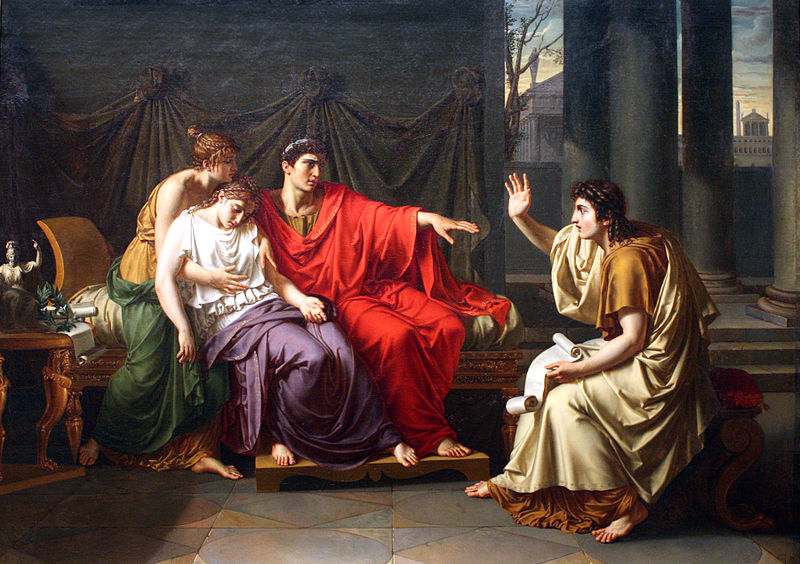
The name was borne by famous Latin poet, Publius Vergilius Maro (70–19 BCE), the author of the Aenead, credited for being one of Rome’s most epic poems.

Dante used Virgil as the guide in his Inferno and part of Purgatorio.

The origins of the name are unclear, Virgil itself is derived from the Latin, Virgilius/Vergilius, a Roman family name of uncertain meaning.

At one time, Virgil was one of the most popular male names in the United States. The highest he ranked was in 1907 coming in as the 93rd most popular male name. As of 2010, Virgil no longer appears in the U.S. top 1000

As of 2009, its French counterpart of Virgile was the 333rd most popular male name in France.

Other forms of the name include:

  • Virgiliu (Albanian/Romanian/Sicilian)
  • Virchilio (Aragonese)
  • Virxiliu (Asturian)
  • Virgili (Catalan/Lombard/Occitanian)
  • Virgilije Вергилиј (Croatian/Macedonian/Serbian/Slovene)
  • Virgilius (Dutch/Latin)
  • Vergil (English/German/Plattdeutsch/Ripoarisch/Scandinavian)
  • Virgil (English/Romanian)
  • Vergíliu (Extramaduran)
  • Virgile (French)
  • Virgjili (Frulian)
  • Feirgil/Veirgil (Gaelic)
  • Virxilio (Galician)
  • Virgill (Icelandic)
  • Virgilio (Italian/Spanish)
  • Vergilius (Latin)
  • Vergīlijs (Latvian)
  • Virgilijus (Lithuanian)
  • Virġilju (Maltese)
  • Bergílio (Mirandese)
  • Wergiliusz (Polish)
  • Virgílio (Portuguese)
  • Vergėlėjos (Samogaitian)
  • Vergílius (Slovak)
  • Fyrsil (Welsh)
The name was also borne by an 8th-century Irish saint and missionary, Virgil of Salzburg.

Eulalia, Eulalie

Gender: Feminine
Origin: Greek Ευλαλια
Meaning: “to talk well.”
Eng (yoo-LAY-lee-uh; yoo-LAY-lee); Fre (eu-lah-LEE); Cat (oo-LOW-lee-ah); Sp (oo-LAH-lee-ah)

The name is composed of the Greek elements, eu ευ (good) and laleo λαλεω (talk).

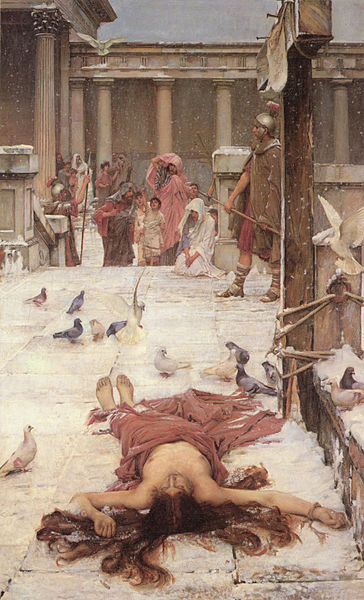
The name was borne by two different early Spanish saints, both of whom are believed to be one and the same person. St. Eulalia of Mérida was a 3rd-century teenage Roman girl who refused to give up her faith, she was subsequently tortured and crucified, legend has it that when she was cut down from her cross, a layer of snow fell to cover her nakedness. The story was the subject of the famous painting by John William Waterhouse, (above).

In the English-speaking world, especially in the United States, Eulalia and her other forms appeared in the U.S. top 1000 from the 19th-century till the 1930s. She never ranked high, the highest only being # 365 in 1893. Her French form of Eulalie also experienced some usage but fell out of the top 1000 by 1900. The highest Eulalie ever ranked in the United States was at # 687 in 1893. Eulalie’s introduction into the United States may have had something to do with Edgar Allan Poe’s 1845 poem, Eulalie.

Eulalie is one of Poe’s less Gothic works, it recounts how a widower once again finds happiness in a girl named Eulalie.

Two famous American bearers were Silent film actress, Eulalie Jensen (1884-1952), and  Eulalie Spence (1894-1981) an African-American play-write of West Indian extraction.

Further up in North America, the name was borne by French-Canadian Blessed and religious foundress, Eulalie Durocher, aka, Soeur Marie Rose Durocher, who is credited for finding the Order of the Holy Name of Jesus and Mary (1811-1849).

In French naming history, Eulalie appears in a famous folktale, Jean, the Soldier, and Eulalie, the Devil’s Daughter.

Notable French bearers are numerous, but one of the most famous has to be an early female journalist by the name of Eulalie de Senancour (1791-1896).

In the United States, Eula was probably the most common form. She consistently remained within  the U.S. top 1000 between 1880 and 1960. The highest she ever ranked was at # 122 in 1908.

As of 2009, its French form of Eulalie was the 472nd most popular female name in France.

Other forms of the name include:

  • Olaria (Aragonese)
  • Olarieta (Aragonese)
  • Olalia (Asturian)
  • Olaya (Asturian)
  • Santolaya (Asturian: literally means, Saint Eulalia, used in reference to St. Eulalia very much in the same way Santiago and Santana)
  • Eulàlia (Catalan)
  • Eulalia (Dutch/English/German/Italian/Latin/Polish/Spanish)
  • Eula (English)
  • Eulalie (English/French)
  • Lalia (English)
  • Aulaire (French: archaic)
  • Evlalia (Greek)
  • Eulália (Hungarian/Portuguese/Slovak)
  • Aulazia (Occitanian/Provençal)
  • Olalla (Spanish)
Eulalia is also the name of a type of grass.
A common French and English short form is Lalie.

Theophilus

Gender: Masculine
Origin: Greek Θεοφιλος
Meaning: “love of God.”
Eng (thee-AHF-ə-ləs); Fre (TAY-o-FEEL); Grk (THAY-oh-FEE-lose)

The name is derived from a theophoric Greek name composed of the elements, theos θεος (god) and philos φιλος (love), hence: “love of God.” It is the Greek cognate to the Latin, Amadeus.

It was a common name in pre-Christian Greece and appears in the New Testament as the name of a person that the Gospel of Luke and the Acts of the Apostles address. It is argued that this was actually a title used to refer to Christian followers in general, others argue that it was indeed the name of one actual person. As to who exactly Theophilus was is shrouded in mystery. Many different Biblical scholars have their own ideas and common theories include that he was either a Roman official, or Theophilus ben Ananus, who was the High Priest at the Temple of Jerusalem during that time, or even the lawyer of St. Paul.

The name was borne by several Byzantine personages, including an Emperor, a famous astrologer and a scientist.

In the English-speaking world, the name was used in Medieval England, it was borne by Theophilus Presbyter (1072-1125), a Benedictine monk a wrote a medieval guide to several medias of art. Theophilus also experienced a vogue among the Puritans of the 17th-century.

As of 2009, its French form of Théophile was the 343rd most popular male name.

Other forms of the name include:

  • Teofil Теофил (Bulgarian/Hungarian/Polish/Russian)
  • Theophilus (Dutch/English/Latin)
  • Théophile (French)
  • Theofil (German)
  • Theophilos (Greek)
  • Teofilo (Italian)
  • Teófilo (Portuguese)
  • Teofilus (Scandinavian)
  • Teófilo (Spanish)
  • Feófil Фео́філ (Russian/Ukrainian)
Feminine forms are Theophila and Teofila.

Vera

Gender: Feminine
Origin: Slavic Вера
Meaning: “faith.”
Eng (VARE-uh; VEER-uh); Rus (VYEH-rah)

The name is most likely a borrowing from the Russian female name, Vera, which comes directly from the Slavic meaning, “faith.” Initially, it was a Russian-Orthodox cognate of the Greek female name, Pistis (Faith), the name of an early Christian saint and martyr.

The name has been used outside of Eastern Europe since at least the 19th-century. It is unclear how the name caught on in the English-speaking world, but by the time of its popularity the name was usually associated with the Latin, verus, (true), verses, the Slavic, (hope).

Its usage in Albania may also be connected with the Albanian word, verë, (Summer).

The name is borne by several famous Russian women, including silent film actress, Vera Kholodnaya (1893-1919) and theatre actress, Vera Komissarzhevskaya (1864-1910); Chemist, Vera Popova (1867-1896).

Other notable bearers include: English writer and feminist, Vera Brittain (1893-1970); Ukrainian-American actress, Vera Farmiga (b.1973); American actress, Vera Miles (b.1929); American fashion designer, Vera Neumann (b.1907) and American fashion designer, Vera Wang (b.1949).

The highest the name ranked in the United States was in 1919 when she came in as the 65th most popular female name; its popularity may have had something to do with Vera Kholodnaya who died the same year, but this is only my personal conjecture.

As of 2010, Vera is the 675th most popular female name in the United States. Her rankings in other countries are as follows:

  • # 13 (Veera, Finland, 2011)
  • # 39 (Sweden, 2010)
  • # 45 (the Netherlands)

Other forms of the name include:

  • Vera Вера (Albanian/Bulgarian/Croatian/Dutch/English/Faroese/German/Hungarian/Icelandic/Italian/Latvian/Lithuanian/Macedonian/Portuguese/Russian/Scandinavian/Serbian/Slovene)
  • Věra (Czech)
  • Veera (Estonian/Finnish)
  • Véra (French)
  • Verina (Italian)
  • Verutė (Lithuanian)
  • Wiara (Polish)
  • Wiera (Polish)
  • Verá (Sami)
  • Viera (Slovak)
  • Wera (Swedish)
  • Vira Віра (Ukrainian)

Diminutive forms include:

  • Verica (Czech/Serbian)
  • Verika (Czech)
  • Verochka (Russian)
  • Verunka (Czech)
  • Verusha (Russian)
  • Vierunka (Czech)
  • Vieruška (Czech)
  • Věrka (Czech)
  • Věruna (Czech)
An obscure Latin masculine form is Verus.