Caesar

Gender: Masculine
Origin: Latin
Meaning: “hairy.”
(SEE-zer)

The name is derived the Latin caesaris (hairy), the earliest record of this name goes back to 300 BC when it was borne as the cognomen of Numerius Julius Caesar. It was later borne by Julius Caesar and his adopted son Julius Caesar Octavianus (later known as Augustus). In the case of Julius Caesar, he may have gotten his name as a comical reference to his bald appearance.

The name subsequently became a title for an emperor throughout Europe and the Middle East.

It has always been common in Southern Europe but never really got much usage in English-speaking countries.

Its Spanish form of César is currently the 76th most popular male name in Mexico, (2010). His rankings in other countries are as follows:

  • #87 (Chile, 2010)
  • #93 (Spain, 2010)
  • #201 (United States, 2010)
  • #307 (France, 2009)

Other forms of the name include:

  • Cèsar (Catalan)
  • Césaire (French)
  • César (French/Spanish)
  • Cézár (Hungarian)
  • Cesare (Italian)
  • Cesareo (Italian/Spanish)
  • Cesarino (Italian)
  • Cesario (Italian)
  • Cēzars (Latvian)
  • Cezaris (Lithuanian)
  • Ċesari (Maltese)
  • Cezary (Polish)
  • Cézar (Portuguese: Brazilian)
  • Cezar (Portuguese/Romanian)
  • Cesari (Sicilian)

Feminine forms include:

  • Cesara (Italian)
  • Cesarea (Italian)
  • Cesaria (Italian)
  • Cesarina (Italian)
  • Cesira (Italian)
  • Cesária (Portuguese)


Odysseus, Ulysses

Gender: Masculine
Origin: Greek
Meaning: debated

The name is found in Homer’s The Odyssey as the name of the protagonist based on a Greek mythological hero who fought in the Trojan war. The same character appears in Roman mythology under the name Ulysses.

Many sources agree that Odysseus may derive from the Greek ὀδύσσομαι (odussomai) meaning, “hated.” Other sources have argued that the name may in fact derive from a non Indo European source of an uncertain etymology.

In American history, the name was borne by the illustrious civil war general and former President Ulysses S. Grant (1822-1885). James Joyce used the Latin version for the title character of his 1922 book, which was loosely based on The Odyssey.

Currently, its Spanish form of Ulises is the 98th most popular male name in Mexico (2010) and the 555th most popular in the United States, (2010).

Other forms of the name include:

  • Odusseus (Afrikaans)
  • Ulis Ўліc (Belarusian)
  • Odisej Одисей (Bulgarian/Croatian/Macedonian/Serbian/Slovene)
  • Odisseu (Catalan)
  • Ulisses (Catalan)
  • Ulysses (English/Latin/Scandinavian)
  • Uthuze (Etruscan)
  • Ulysse (French)
  • Odysseus Οδυσσευ (Greek)
  • Odüsszeusz (Hungarian)
  • Odisseo (Italian)
  • Ulisse (Italian)
  • Odisėjas (Lithuanian)
  • Uliksas (Lithuanian)
  • Ulisses (Occitanian/Portuguese)
  • Odyseusz (Polish)
  • Odisseu (Portuguese)
  • Odiseu (Romanian)
  • Ulise (Romanian)
  • Odissej Одиссей (Russian)
  • Ulissi (Sicilian)
  • Ulikses (Slovene)
  • Odiseo (Spanish)
  • Ulises (Spanish)
  • Odysews (Welsh)
  • Wlysses (Welsh)

An obscure feminine form is Ulyssa.

Sources

  1. http://www.behindthename.com/name/ulysses
  2. http://en.wikipedia.org/wiki/Odysseus
  3. http://www.babycenter.com.mx/pregnancy/nombres/nombres_populares_2010/

Fabrice

Gender: Masculine
Origin: Latin
Meaning: “craftsman.”

A French form of the Latin cognomen Fabricius, it is derived from faber (craftsman, smith). It was borne by Roman general and statesman Gaius Fabricius Luscinus (3rd-century).

Currently, Fabrice is the 433rd most popular male name in Quebec, Canada (2010).

Other forms of the name include:

  • Fabrice (French)
  • Fabricien (French)
  • Fabríciusz (Hungarian)
  • Brizio (Italian)
  • Fabrizio (Italian)
  • Fabricius (Latin)
  • Fabrycy (Polish)
  • Fabricio (Portuguese/Spanish)
  • Fabritziu (Sardinian)
Feminine forms include:
  • Fabricienne (French)
  • Brizia (Italian)
  • Fabrizia (Italian)
  • Fabricia (Portuguese/Spanish)
Source

Virginia

Gender: Feminine
Origin: Latin
Meaning: “virgin”
(ver-JIN-yah)

Virginia is a feminine form of the Roman family name Virginius which is believed to be derived from the Latin virgo meaning “virgin; maiden.”

According to Roman legend, the name was borne by a girl who was killed by her father in order to save her from a corrupt Roman official.

The Commonwealth of Virginia was named by Sir Walter Raleigh in 1584 in part for Queen Elizabeth I of England (known as the Virgin Queen) and also in part an anglicized form of a Native American chief’s name, Wingina. 

The name was borne by Virginia Dare (1587), lauded to be the first ethnically English child to be born in the New World. The name seems to have been very popular in the United States among early settlers, either as a nod to an American birth or in honour of the first English child born in the United States.

Among Catholic immigrants, the name caught on due to its associations with the Virgin Mary.

Currently, Virginia is the 608th most popular female name in the United States, but in 1921, it ranked in as the 6th most popular female name.

Other forms of the name include:

  • Virginië (Afrikaans)
  • Virxinia (Asturian)
  • Virgínia (Catalan)
  • Vijini (Creole)
  • Verginia(Latin: early)
  • Virginie (French/Czech)
  • Firginia (Frisian)
  • Wilikinia (Hawaiian)
  • Virzsini (Hungarian)
  • Verginia(Italian)
  • Virna (Italian)
  • Virginia (Italian/Spanish/Portuguese)
  • Virdžīnija (Latvian)
  • Virdžinija (Lithuanian)
  • Virginn-a (Ligurian)
  • Wirginia (Polish)
  • Verge (Occitanian)
  • Virgínia (Occitanian)
  • Verjhini (Occitanian)
  • Virdžinėjė (Saimogaitian)

A common English short form is Ginny.

Source

  1. http://www.behindthename.com/name/virginia

Eliana

Gender: Feminine
Origin: Italian/Spanish
Meaning: “sun”
(ay-lee-AH-nah)

The name is an Italian and Spanish form of the Latin Aeliana which is a feminine form of the Roman cognomen Aelianus which is derived from the Greek helios meaning “sun.”

The name was borne by an early Christian saint and martyr.

Aelia was a very popular female name during the Byzantine Empire.

Alternately, it could be from the Hebrew meaning “my God has answered.” (אֶלִיעַנָה)

Currently, Eliana is the 169th most popular female name in the United States, (2010).

Other forms of the name include:

  • Elijana (Croatian)
  • Ailiana Αιλιανα (Greek)
  • Aelia (Latin)
  • Aeliana (Latin)
  • Éliane (French)
  • Éliette (French)
  • Eliana (Italian/Spanish/Portuguese)
  • Liana (Italian/Spanish)

Diminutives include:

  • Ellie (English)
  • Éliette (French)
  • Eli (Italian)
  • Lala (Italian)
  • Lali (Italian)
  • Leli (Italian)
  • Lili (Italian)

Masculine forms include:

  • Elian Елиан (Bulgarian/Russian)
  • Elià (Catalan)
  • Elijan (Croatian)
  • Aelian (English)
  • Élien (French)
  • Älianus (German)
  • Ailianos Αιλιανός (Greek)
  • Aelianus (Latin)
  • Aelius (Latin)
  • Eliano (Italian/Spanish)
  • Eliusz (Polish)

Source

  1. http://www.behindthename.com/name/eliana-1

Lawrence

Gender: Masculine
Origin: Latin
Meaning: “from Laurentum.”
Eng (LAW-rents)

The name is derived from the Latin cognomen Laurentius meaning “from Laurentum.” It was popularized by an early Roman deacon, martyr and saint who was roasted alive when he refused to turn over church property to the Roman authorities. According to legend, he is the patron saint of comedians because when he was being roasted he told his torturers “turn me over, I am done on this side.”

It was borne by several other saints.

Lawrence has been a popular given name since Medieval times and it consistently appeared in the U.S. top 100 from 1880-1971. By 1972 it mysteriously and suddenly fell completely out of popularity and it has been so since. It is currently only the 457th most popular male name, (2010).

Other forms include:

  • Nadja/Nadjeh (Arabic: used among Arab Christians)
  • Toufiq  لورنس (Arabic: used among Arab Christians)
  • Loren (Aragonese)
  • Lorient (Aragonese)
  • Lari (Basque)
  • Lawrencij Лаўрэнцій (Belarusian)
  • Laorañs (Breton)
  • Llorenç (Catalan)
  • Larenzu (Corsican)
  • Lovrenco (Croatian)
  • Lovre (Croatian. Currently the 58th most popular name in Croatia, 2010)
  • Lovro (Croatian)
  • Vavřinec (Czech/Slovak: literally from the Czech word for laurel, it has been used as the proper cognate for Lawrence since Christianity was introduced to the area)
  • Laurits/Lauritz (Danish/Estonian/Icelandic/Norwegian)
  • Lasse (Dutch/Norwegian/Swedish. LAHS-se)
  • Laurens (Dutch)
  • Loris (Dutch/French/German/Italian. Currently the 100th most popular male name in France, 2009)
  • Rens (Dutch. Currently the 79th most popular male name in the Netherlands)
  • Larkin (English: a Medieval diminutive form of Lawrence)
  • Lauri (Estonian/Finnish)
  • Lars (Finnish/Norwegian/Swedish. Currently the 14th most popular male name in the Netherlands, the 23rd most popular in Belgium and the 57th most popular in Norway)
  • Lassi (Finnish)
  • Laurent (French)
  • Laurentin (French)
  • Lourens (Frisian)
  • Labhrás (Gaelic) 
  • Loenso (Genovese)
  • Laurenzius (German: archaic)
  • Lenz (German)
  • Lorenz (German)
  • Lavrentios Λαυρεντιος (Greek)
  • Lőrinc (Hungarian)
  • Lárus (Icelandic)
  • Lorenzo (Italian/Spanish. Currently the 5th most popular male name in Italy and 52nd most popular in France (2009). It is also the 187th most popular in the Netherlands and the 322nd most popular in the United States, 2010)
  • Laurentius (Latin)
  • Lau (Limburgish)
  • Lor (Limburgish)
  • Laurynas (Lithuanian)
  • Lawrenz (Maltese)
  • Laurys (Manx)
  • Louothains (Norman)
  • Lavrans (Norwegian)
  • Laurenç (Occitanian)
  • Lleurant (Occitanian)
  • Laurencjusz (Polish)
  • Laurenty (Polish)
  • Wawrzyniec (Polish: literally from the Polish word for laurel, it has been used as the proper cognate for Lawrence since Christianity was introduced to the area)
  • Lourenço (Portuguese)
  • Laurențiu (Romanian)
  • Lavrentie (Romanian)
  • Lurintg (Romansch)
  • Lavrenti Лаврентий ლავრენტი (Russian/Georgian)
  • Larentu (Sardinian)
  • Labhrainn (Scottish)
  • Lovrenc (Slovene)
  • Laurisch (Sorbian)
  • Lorencio (Spanish: Medieval)
  • Lorens (Swedish)
  • Lavrentij Лаврентій (Ukrainian)
  • Lorenso (Venetian)
A common English diminutive is Larry a less common one Laurie
  • Toufiqia (Arabic)
  • Laurendia (Basque)
  • Laurenza (Corsican)
  • Laurenzia (Corsican)
  • Laurentien (Dutch)
  • Renske (Dutch)
  • Laurence (French)
  • Laurentine (French)
  • Lavrentia Λαυρεντία (Greek)
  • Lorentina (Italian)
  • Lorenza (Italian/Spanish)
  • Lorenzina (Italian)
  • Larentia (Latin)
  • Laurentina (Latin)
  • Laurencja (Polish)
  • Laurentyna (Polish)
Source

Sylvia

Gender: Feminine
Origin: Latin
Meaning: “wood; forest.”
(SIL-vee-ah)

The name is a feminine form of Silvius, which is derived from the Latin silva meaning, “wood; forest.”

In Roman legend it was borne by the mother of Romulus and Remus (the founders of Rome), Rhea Silvia. It has been suggested that at one time she have been worshipped as a minor forest diety.

It was also borne by a 6th-century Italian saint credited as being the mother of St. Gregory the Great.

Before the 16th-century, Silvia’s usage was relegated to continental Europe, it gained notoriety in England after being used by Shakespeare in his 1594 play, The Two Gentleman of Verona. 

The spelling of Sylvia has been the standard in the English-speaking world since the 19th-century.

Currently, it is the 554th most popular female name in the United States, (2010). Her rankings in other countries are as follows:

# 61 (Spain, 2010)
# 282 (the Netherlands, 2010)

Other forms of the name include:

Sylviya Сыльвія (Belarusian)
Silviya Силвия (Bulgarian)
Sílvia (Catalan/Portuguese)
Silvija (Croatian/Lithuanian/Slovene)
Lesana (literally meaning “woods; forest” it is sometimes used as a Czech and Slovakian equivalent of Sylvia)
Silvie (Czech)
Silvia (Estonian/Italian/Romanian/Slovak/Spanish)
Sylvia (Finnish/English/German/Scandinavian)
Sylphide (French)
Sylvaine (French)
Sylviane (French)
Sylvie (French)
Szilvia (Hungarian)
Sylvía (Icelandic)
Silva (Italian/Slovene)
Silvestra (Italian)
Silvana (Italian/Hungarian/Slovene)
Silvania (Italian)
Silviana (Italian)
Silvina (Italian)
Silvietta (Italian)
Sylvi (Norwegian)
Sylwia (Polish)
Sil’vija Сильвия(Russian)
Silvena (Slovene)
Silvenka (Slovene)
Silverija (Slovene)
Silvica (Slovene)
Zülfiye (Turkish)
Síl”viya Сі́львія(Ukrainian)

Common diminutives include:

Silva/Silvinka (Czech)
Sylvette (French)
Silviuccia (Italian)
Lyya or Lyka (Russian)
Syl”va or Sylya (Russian)
Ylya (Russian) 

It is the name of a classical French ballet, Sylvia, ou La nymphe de Diane, (1876).

Sylvia is also the name of a species of warbler.

In recent years the name has been borne by American poet, Sylvia Plath (1932-1963), Queen Silvia of Sweden (b.1943)

Masculine forms include:

Silvije (Croatian)
Silvijo (Croatian/Slovene)
Silvio (Croatian/Italian/Portuguese/Spanish)
Sylvain (French)
Silvius (Latin)
Sylwiusz (Polish)
Silviu (Romanian)

Source

  1. http://www.behindthename.com/name/silvia

Celia

Gender: Feminine
Origin: Latin
Meaning: “heaven”
Eng (SEE-lee-uh); It (CHEY-lee-ah); Sp (SEY-lee-ah; THEY-lee-ah)

The name is a feminine form of the Roman family name, Caelius, which is derived from the Latin caelum meaning, “heaven.” Alternately, it has also been suggested to be derived from the Estruscan word celi (September).

The name is found as the name of a character in William Shakespeare’s As You Like It (1599).

In the English-speaking world, it is occassionally used as a short form of Cecilia.

Currently, Celia is the 743rd most popular female name, but she is even trendier in other countries. Her rankings are as follows:

# 35 (France, 2008)
# 36 (Spain, 2010)
#49 (Belgium, 2010)
# 89 (Catalonia, 2010)

Other forms of the name include:

Caelia (Ancient Roman)
Zelia (Basque)
Cèlia (Catalan)
Célia (French/Portuguese)
Célie (French)
Zélie (French)
Silke (German/Plattdeutsch)
Silja (Frisian)

A more unusual Italian and Spanish masculine form is Celio and the Polish Celiusz.

Sources

  1. http://www.behindthename.com/name/celia
  2. http://es.wikipedia.org/wiki/Celia_(nombre)

Faustina

Gender: Feminine
Origin: Latin
Meaning: “lucky.”
Eng (faw-STEE-nah)

The name is a feminine form of the ancient Roman cognomen, Faustinus, which in itself is derived from Faustus, meaning, “lucky.”

The name was a common one among the Nerva-Antonine dynasty, being borne by several women in that family, most notably, Anna Galeria Faustina the Elder (100-140) and her daughter of the same name (125-175).

Other forms of the name include:

Fausta (Italian)
Faustina (Croatian/German/Italian/Lithuanian/Spanish)
Faustyna (Czech/Polish)
Faustine (French)
Fausztina (Hungarian)

Male versions include:

Faust (German)
Faustino (Italian/Portuguese/Spanish)
Fausto (Italian/Portuguese/Spanish)
Faustus (Latin)
Faustinus (Latin)

The male version of, Faust is the subject of a German folklore, in which a man by the name of Dr. Faust makes a deal with the devil. This story was later adapted into literature by Christopher Marlowe and Goethe, and was even adapted into a famous opera.

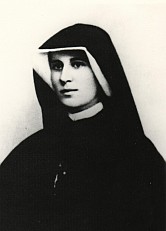
Other notable personages include: Roman noblewoman, Rupilia Faustina (87-138); Faustina, wife of Constantius II (340-366); Faustina Constantia, daughter of Faustina and Constantius II; St. Faustina of Como, a 6th-century Italian saint; Italian Mezzo-Soprano, Faustina Bordoni (1697-1781); Saint Faustina Kowalska, a 20th-century Polish nun and saint (1905-1938).

The designated name-days are: February 15 (Poland); September 23 (France) and October 5 (Poland).

Source

  1. http://www.behindthename.com/php/find.php?name=faustine

Germain, Germaine

Origin: French/Latin
Meaning: “seed”

The names are derived from the Roman cognomen, Germanus, which is derived from the Latin, germen, meaning “seed.” The meaning may have been synonymous with “brother; relative” or “blood relation.”

Germain is the French masculine form while Germaine (jer-MANE) Eng; (zhare-MEHN) Fre, is the feminine form.

St. Germaine Cousin was a 16th-century French saint and shepherdess. She was said to have suffered from a debilitating form of Tuberculosis, which crippled her, and she was also physically abused by her stepmother. She was renowned for her piety.

After her death, several miracles were attributed to the saint, and she has been venerated ever since, being canonized by the Catholic Church in 1867.

In France, the designated name-day is June 15.

Other forms of the name include:

    Germana (Italian/Polish/Portuguese/Spanish)
    Zermena (Latvian)

Another masculine form is the Italian/Spanish/Portuguese, Germano. A Polish masculine form is German.

Sources

  1. http://en.wikipedia.org/wiki/Catholic_Encyclopedia
  2. http://www.behindthename.com/name/germanus