Jacob, James, Jacqueline

Gender: Masculine
Origin: Hebrew
Meaning: debated
Eng: (JAKE-ub); (JAMEZ)

Since it is the beginning of the year, I thought I would start doing the most popular names of 2008.

In the United States, Jacob is currently the most popular male name, coming in at # 1 in 2008.

Actually, Jacob has held on to the number 1 spot, for the last decade, since 1999. The lowest that Jacob has ever ranked in U.S. naming history was back in 1967 ranking in at # 353.

Jacob’s rankings in other countries are as follows:

  • # 21 (Australia, 2007)
  • # 3 (Canada, B.C., 2008)
  • # 20 (England/Wales, 2008)
  • # 94 (Ireland, 2007)
  • # 122 (the Netherlands, 2008)
  • # 89 (Norway, 2007)
  • # 79 (Scotland, 2008)
  • # 29 (Sweden, 2007)

Jacob is a Biblical name of Hebrew origin, borne by an important Jewish patriarch, the meaning of the name is somewhat debated. Though many sources agree that it is derived from the Hebrew ‎עקב (aqabaqav), which means “to seize by the heel”, “to circumvent” or ” to restrain” and may possibly be a word-play of the Hebrew עקבה‎ (iqqebahiqqbah) meaning, “heel,” since in the Bible, Jacob was born holding onto the heel of his twin brother Esau. In Hebrew, the act of holding the heel was associated with deception, so the name has been suggested to take on the meaning of “deception.”

Other sources have suggested it to mean “may God protect”, being a derivative of the Hebrew יַעֲקֹבְאֵל (Ya’aqov’el).

In the Bible, Jacob was the younger twin son of Rebekah and Isaac, by deceiving his elder brother Esau into selling his birthright, Jacob received his father’s blessing before Isaac’s death.

Jacob later became the father of the twelve tribes of Israel.

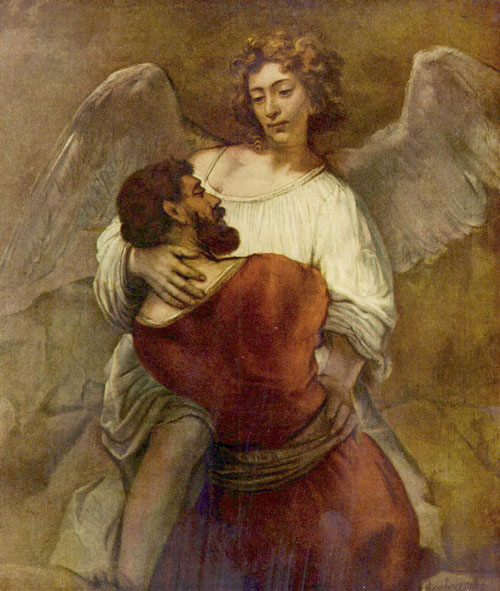
His episode of dreaming of a ladder to heaven is called “Jacob’s Ladder” and his wrestling with the angel, after which God gave Jacob the name of Israel ,meaning, “struggles with God” or “God contended.”

The name later appears in the New Testament by several other characters, one of them being the name of the Apostle James, (also known as Jacob since both names are related).

In English, both Jacob and James are derived from the Biblical Greek, Ιακωβος (Iakobos) later being latinized to Iacomus, (from which James is an anglicized a corruption).

James and Jacob have been used in England interchangeably since the Middle Ages, James became a common name in English and Scottish royalty.

Currently, James is the 17th most popular male name in the United States, the highest he has peaked was between 1940 and 1952, coming in at # 1. The lowest he has peaked was at # 19 in 1999 and then again in 2001.

James has never detracted from the U.S. top 20.

In other countries, his rankings are as follows:

  • # 8 (Australia, 2007)
  • # 10 (Canada, B.C., 2008)
  • # 9 (England/Wales, 2008)
  • # 5 (Ireland, 2007)
  • # 332 (the Netherlands, 2008)
  • # 5 (Scotland, 2008)

The designated name-days for Jacob are December 20 (France), July 25.

Other forms of both names include:

  • Jakob (Afrikaans/Danish/Dutch/German/Norwegian/Slovene/Swedish: 12th most popular male name in Slovenia-2005; 39th most popular in Norway-2007 and the 3o9th most popular in the United States-2008)
  • Japku/Jakup/Jakub/Jakob/Jakov (Albanian)
  • Ya’eqob (Amharic/Ethiopian)
  • يعقوب Yaʿqūb/Yakub (Arabic)
  • Chaime (Aragonese)
  • Ya`iqob/Ukba/Ukva ያዕቆብ (Aramaic)
  • Hagop/Hakob/Jakob Հակոբ/Յակոբ (Armenian)
  • Aqob/Jakobos (Assyrian)
  • Yəqub (Azeri)
  • Jacobe/Jagoba/Jakes/Jakoma/Yaku/Yagoba/Xanti (Basque)
  • Jåggl (Bavarian)
  • Jakub/Jakaŭ/Jakuš (Bielorusian)
  • Jakub (Bosnian/Polish/Slovak/Slovene/Sorbian: common Polish diminutive forms are Kuba and Kubuś)
  • Jacut/Jagu/Jagut/Jak/Jakez/Jakezig/Jakou (Breton)
  • Yakov/Zhekov Жеков (Bulgarian)
  • Iacovo/Iacoviello/Coviello (Calabrian: Southern Italian dialect)
  • Jacob (Catalan/Dutch/English/Lexumburgish/Limburgish/Portuguese)
  • Jaume/Jaumet (Catalan)
  • Jacca/Jago/Jamma/Jammes (Cornish)
  • Giacumu (Corsican)
  • Jakov/Jako Јаков (Croatian/Serbian/Slovene)
  • Jákob (Czech/Hungarian: Kuba and Kubík are the diminutive forms)
  • Jacobus/Jakobus (Dutch/Limburgish: Jacobus is currently the 233rd most popular male name in the Netherlands-2008)
  • Coos/Kobe/Kobus/Jaap (Dutch: initially diminutive forms, used as independent given names)
  • Coby (English: originally a diminutive form, now used as an independent given name. He currently ranks in as the 832nd most popular male name-2008)
  • Jaagup/Jaak/Jakkab/Jakkob/Jakob (Estonian)
  • Jákup (Faroese)
  • Jaakob/Jaakoppi/Jaakko (Finnish: Jaska is the diminutive form)
  • Jacopo (Florentine: Northern Italian dialectical form, Lapo and Puccio are diminutives)
  • Jacques (French)
  • Iaquet/Jaco/Jacot/Jacquot/Jacquet (French: archaic, medieval forms)
  • Jacquemin/Jacqueminot (French: archaic, medieval forms)
  • Jabbo/Coob (Frisian)
  • Jakip (Frisian)
  • Iacun (Fruilian)
  • Sacun (Fruilian: literally meaning “Saint James.”)
  • Xacobe/Xaime (Galician)
  • Iakob იაკობ (Georgian)
  • Iákovos Ιακωβος/Iakóv Ιακώβ/Yángos Γιάγκος (Greek)
  • Iakopa/Iakopo/Kimo (Hawaiian)
  • Akiba/Akiva עֲקִיבָא (Hebrew)
  • Ya’akov יעקב (Hebrew)
  • Akkoobjee (Hindi)
  • Jakab (Hungarian)
  • Yakob/Yakobus (Indonesian)
  • Seamus/Séamus (Irish-Gaelic: SHAY-mus: Séimí and Séimín are diminutive forms. Currently the 748th most popular male name in the United States)
  • Giacobbe (Italian)
  • Giacomo (Italian: more common form)
  • Jacopo (Italian: archaic form)
  • Aqo/Ya’qub (Kurd)
  • Iacobus/Iacomus/Jacobus (Latin)
  • Jēkabs (Latvian)
  • Jaokob (Limburgish)
  • Cobus/Keub/Keube/Kuub/Kuèb (Limburgish: initially diminutive forms, now used as independent given names)
  • Zjaak/Jaco (Limburgish: initially diminutive forms, now used as independent given names)
  • Jokūbas (Lithuanian)
  • Jakov/Jakle/Jako (Macedonian)
  • Chacko/Yakob (Malayalam)
  • Ġakbu (Maltese)
  • Jayms (Manx)
  • Hemi (Maori)
  • Sak (Mohawk)
  • Jacuvo/Jacuviello/Cuviello (Neopolitan: Southern Italian dialect)
  • Gemme/Gemmes/Jacque (Norman)
  • Jacme (Occitanian/Provençal)
  • Jammes/Jaume (Occitanian)
  • Iakovu Іакѡвъ (Old Church Slavonic)
  • Yaghoub (Persian)
  • Giaco (Piedmontese: Northern Italian dialect)
  • Diogo (Portuguese: variation of Tiago)
  • Iago (Portuguese)
  • Jacó (Portuguese)
  • Jácomo (Portuguese)
  • Jaime (Portuguese/Spanish: Jaime is currently the 321st most popular male name in the United States-2008. He is the 97th most popular in Chile-2006 and the 33rd most popular in Spain-2006)
  • Thiago (Portuguese-Brazilian)
  • Tiago (Portuguese-European: a contraction of the Spanish Santiago, which literally means “Saint James”)
  • Köbes (Ripoarisch)
  • Iacob (Romanian)
  • Jacomo (Romanesque: a Northern Italian dialect spoken in the region of Tuscany)
  • Giachem/Giachen/Jachen (Romansch)
  • Giacumin (Romansch)
  • Yakov Иаков/Яков (Russian: Yasha is a diminutive form)
  • Iakopo (Samoan)
  • Hamish (Scottish-Gaelic: an anglicization of Seumas)
  • Jaikie (Scottish-Gaelic)
  • Jamie (Scottish: low lands Scots contraction, currently the 669th most popular male name in the United States; the 17th most popular male name in Scotland-2008; the 51st most popular in England and Wales-2008; 17th most popular in Ireland-2007; the 12st most popular in the Netherlands and the 96th most popular in Australia)
  • Seumas (Scottish-Gaelic)
  • Simidh (Scottish-Gaelic)
  • Jaka (Slovene: this was the 10th most popular male name in Slovenia-2005)
  • Diego (Spanish: a contraction of Santiago. Diego currently ranks in as the 68th most popular male name in the United States-2008. In Belgium he is the 48th-2006; in Chile, the 7th-2006; in France the 78-2006. In the Netherlands he comes in as the 189th most popular male name-2008 and in Spain he is the 10th most popular male name-2006 )
  • Jacobo (Spanish: archaic form: Jaime or Diego are the preferred forms)
  • Santiago (Spanish: literally meaning “Saint James” the name is usually bestowed in honour of St. James the Apostle. Currently, it is the 171st most popular male name in the United States. In Chile, he is the 55th most popular-2006 and in Spain, the 66th most popular-2006)
  • Yago (Spanish: archaic form)
  • Yakubu (Swahili)
  • Köbi (Swiss-German dialectical diminutive form, occasionally used as an independent given name)
  • Yaqub ܝܰܥܩܽܘܒ (Syrian)
  • Yakup (Turkish: Yascha is a diminutive form)
  • Yakiv Яків (Ukrainian)
  • Iago/Siam (Welsh)
  • Coppel/Kapel/Koppel (Yiddish)
  • Yankev/Yankl/Yankel/Yankele (Yiddish)

Older Polish forms include: Jakub, Jakób, Jakob, Jakow, Jekub, Jokob, Jokub and Jakusz.

Less common Polish diminutive forms include: Jakuszek, Jakubek, Jakubko, Kusz, Kuszęt, Kubek, (in modern Polish this means “cup” and has fallen out of usage as a diminutive form of Jacob), and Jaksa.

English diminutives of Jacob include: Jack, Jake, Jay, Cobb, Coby and Cubby. Diminutives for James include: Jack, Jamie, Jay, Jeb, Jem, Jemmy, Jim and Jimmy.

A Danish and Dutch diminutive form is Ib and Jeppe, Sjaak and Sjakie are also Dutch diminutives.

Slovene diminutive forms include: Jak, Jakec, Jaki, Jaša, Žak and Žaki.

Jacob has spawned various feminine forms that are worth noting.

There is the French, Jacqueline, (said like JACK-eh-lin), in English, but pronounced as (ZHAHK-e-LEEN) in French.

The name has a long history of usage in the English speaking world and is also used the German-speaking world and is occasionally used in Spanish-speaking countries.

Jacqueline is currently the 152nd most popular name for females in the United States. The highest she ranked was in 1961 coming in as the 37th most popular female name.

For Americans, a notable bearer is former First Lady and fashion trend-setter, Jacqueline Bouvier Kennedy Onassis.

A common English diminutive form is Jackie.

Other feminine forms include:

  • Jakuba (Czech)
  • Bine (Danish/German)
  • Jacobine/Jakobine (Danish/Norwegian/German/Swedish)
  • Jacoba/Coba (Dutch)
  • Jacobien (Dutch)
  • Jacomina (Dutch)
  • Jacquetta (English)
  • Jacquemine (French: archaic form)
  • Jacquette (French)
  • Jakoba/Jakobe (German)
  • Yaakova (Hebrew)
  • Giachetta (Italian)
  • Giacobba (Italian)
  • Giacometta (Italian)
  • Giacoma/Giacomina (Italian)
  • Jacobella/Jacomella/Jacovella (Italian: obscure/archaic forms)
  • Iacobina (Latin)
  • Jakubina (P0lish)
  • Żaklina (Polish: corruption of the French, Jacqueline)
  • Jacobina (Romansch)
  • Jacobea (Romansch)
  • Jamesina/Jamesine (Scottish)
  • Jakoba/Jakobina (Slovene)
  • Jakica/Jakovica (Slovene: initially a diminutive forms, used as independent given names yah-KEET-sah, yah-koh-VEET-sah)
  • Žaklin/Žaklina (Slovene: corruptions of the French, Jacqueline zhahk-LEEN; zhahk-LEE-nah)
  • Jacquelina (Spanish: corruption of the French, Jacqueline)

Judah/Jude/Judith

Origin: Biblical Hebrew
Meaning: “celebrated; praise.”

Judah is a Greek form of the Hebrew name, Yehuda יְהוּדָה, which is the name of several characters in the Old Testament and at least two figures in the New Testament. In the Old Testament, the original Judah was said to be the fourth son of Leah and Jacob, the progenitor of the Judah tribe, and he is also traditionally believed to be a direct ancestor of Jesus. In Biblical Greek, Judah, Judas and Jude were all interchangeable, since in Greek, Yehudah was translated as Ioudas, but for convenience sake, especially in English, Judas is usually used to refer to the ex Apostle, Judas Iscariot, who is known for his betrayal of Christ, and due to these associations, this form of the name has extremely dubious connotations, especially among Christians. However, Jude is used in reference to another apostle, known as St. Jude Thaddeus, who is a very popular saint among Roman Catholics.

In Jewish circles, Judah is usually used in reference to the tribe, or in reference to Judah, the fourth son of Leah and Jacob. It is sometimes bestowed upon boys born around the festival of Hanukkah, which is used in honour of Judah Maccabeus, who is considered to be one of the greatest warriors in Jewish history. He was the son of Mattathias, a Cohen, and was known for his uprising against the Seleucid Empire in 167 BCE-160 BCE. The Jewish feast and holiday, known as Hanukkah, (Hebrew for “dedication”), commemorates the restoration of the temple in Jerusalem after Judah Maccabeus removed Pagan statuary from the Temple.

The name Jude has increased in popularity the last 10 years, as of 2008, he ranked in as the # 224th most popular male name in the United States.

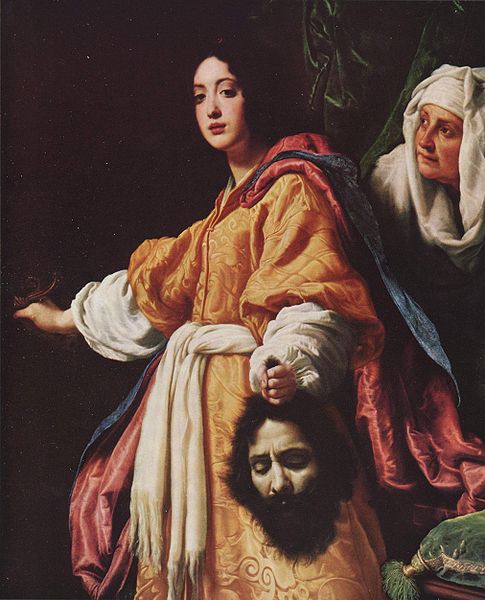
Its feminine form of Judith, Hebrew יְהוּדִית Yehudit, was borne in the Old Testament by a wife of Esau, but is probably most closely associated with the protagonist found in the Book of Judith, which is a deuterocanonical book, included in the Septuagint and in the Roman Catholic and Eastern Orthodox Christian Old Testament of the Bible. The book is rejected by Protestant Christians and Jews since it is mostly apocryphal and believed to be more of a morality tale versus anything based on historical fact, however, though the book is not considered historically accurate by Jews, Judith remained a popular Jewish heroine and symbol. In fact, the name’s popularity among Jews is probably more in association with her than of the wife of Esau. Judith is known for her beheading of the evil, Assyrian invader, Holofernes. She was a popular subject of artists for centuries.

The name experienced some usage in Catholic Europe during the Middle Ages, since Judith was considered as much a heroine among Christians as she was among Jews. The highest Judith ranked in the U.S. popularity charts, was at # 4 in 1940. As of 2008, she ranks in at a measly # 713. In 2006, she was the 6oth most popular female name in Spain.

Other forms of Judah and Jude include:

  • Chudas (Aragonese)
  • Judes (Catalan)
  • Judas (Danish/Dutch/German/Lithuanian/Norwegian/Portuguese/Spanish/Swedish: Portuguese ZHOO-dazh)
  • Jude (English/French)
  • Juudas (Finnish)
  • Juda (German/Czech/Croatian/Slovene)
  • Ioudas Ιουδας (Greek: Modern/Biblical)
  • Yehudah יְהוּדָה (Hebrew)
  • Júdás (Hungarian)
  • Yudas (Indonesian)
  • Iúdás (Irish)
  • Giuda (Italian)
  • Yuda (Kiswahili)
  • Iudas (Late Latin)
  • Juda/Judasz (Polish)
  • Júda (Slovakian)
  • Judá (Spanish/Portuguese: Spanish hoo-DAH, Portuguese zhoo-DAH)
  • Hudas (Tagalog/Filipino)
  • Yudel/Yidel (Yiddish)

Other forms of Judith include:

  • Ioudith Ιουδιθ (Biblical Greek)
  • Iudith (Biblical Latin)
  • Jitka (Czech: originally a diminutive form, now used as an independent given name YEET-kah).
  • Judita (Czech/Romansch/Slovak/Slovene)
  • Júdit (Czech)
  • Judit (Danish/Catalan/Hungarian/Norwegian/Spanish/Swedish)
  • Jytte (Danish)
  • Jutka (Dutch/Hungarian: originally diminutive forms, used as independent given names)
  • Juut (Dutch)
  • Judith (English/Dutch/Icelandic: English nickname is usually Judy)
  • Juudit/Juta (Estonian)
  • Judith/Judithe (French: diminutive is Juju)
  • Xudit (Galician)
  • Juditha (German: Jüdie is a diminutive form)
  • Jutta/Jutte (German/Dutch/Polish: originally a diminutive form, used as an independent given name, now considered dated)
  • Yehudit יְהוּדִית (Hebrew)
  • Yudit (Indonesian)
  • Giuditta (Italian: joo-DEET-tah)
  • Yuditi (Kiswahili)
  • Ita (Polish)
  • Judyta (Polish: yoo-DIH-tah)
  • Judite (Portuguese/Latvian: Portuguese pronunciation: zhoo-DEET, Brazilian Portuguese zhoo-JEE-che )
  • Juditta (Romansch)
  • Yudif/Yudita (Russian)
  • Judetta/Judina (Spanish)
  • Hudes (Yiddish)
  • Yutke (Yiddish)

Other notable bearers of the name include Judah Benjamin (1811-1884), former Attorney General of the Confederacy and the first Jewish American to be seriously considered for the Supreme Court and the first Jewish American to serve as a U.S. Senator. It is also borne by British actor, Jude Law (b.1972).

Notable Judiths include:

Judge Judith Scheindlin (b. 1942) an American judge, TV personality and author, and Judy Jetson of the 1950s cartoon series, The Jetsons.

Designated name-days are: October 28 (France: for Jude), May 5 (France: Judith), December 5th (Czech Republic), December 10 (Estonia, Hungary and Latvia).

Cheshvan

416px-Französischer_Meister_um_1675_001Gender: masculine
Origin: Hebrew
Meaning: 8th month of the Jewish calender which corresponds with October-November in the Gregorian Calender. Possibly meaning “bitter month.”
חֶשְׁוָן
(HESH-vahn; the CH is very gutteral).

Cheshvan is the second month of the civil year and the eight month of the ecclesiastical year, it is an autumn month that corresponds with October and November in the Gregorian calendar and it is usually composed of 29 days. In complete years it is 30 days.

The name of the month is believed to be of Akkadian origins and is composed of the Semitic roots y-r-ḥ which means “moon; month”  and s-m-n the Semitic root for “eight.” Originally the month’s name was Marcheshvan, the first two letters מַר (mar) were interpreted as meaning “bitter” since the month had no holidays or celebrations.

It is traditionally believed that the Great Flood started on Cheshvan. In the Old Testament, before the great Babylonian Exile, the original name of the month was Bul.

Today in Israel, and among Jewish families, the name is used for baby boys born during the month of Cheshvan.

Tidhar

plane-tree-kosGender: Masculine
Origin: Hebrew
Meaning: “plane tree”
תִּדְהָר
(tid-hahr).

In Israel the name is usually used in reference to a passage in the Book of Isaiah. Passage 41:19: “I will plant in the wilderness the cedar, the acacia, the myrtle and  the oil tree; I will place in the desert the cypress, the plane tree and the larch together.”

It is also the name of a Moshav, or Jewish settlement in Israel. The Moshav took its name from the above passage.

Tova, Tove, Tofa

Gender: Feminine
Origin: Old Norse
Meaning: “beautiful Thor.”

The name is derived from the Old Norse Tófa, which is a short form of Þórfríðr which in turn is composed of the elements Thor and fríðr meaning “beautiful.” In 2006, Tove ranked in at # 98 in the Top 100 female names of Sweden. While in 2007, its other form of Tova came in at # 87.

Tova is coincidentally a Hebrew female ( טוֹבָה) name meaning “good”, which is sometimes transliterated as Tovah.

In Sweden, the designated name day for Tove and Tova is September 10, while in Norway it is November 2.

Shayna, Shaina, Szejna

Gender: Feminine
Origin: Yiddish; Aramaic
Meaning: “beautiful,”; “peace.
שֵׁײנָא
(SHAY-nah)

This name has been erroneously listed as a feminine form of Shane or as an Irish name meaning “god’s gracious gift.” However, the name has a much deeper history than Shane and it has been around long before the cowboy.

In fact, the name is a traditional Ashkenazim female name. It has been popular among German, Polish and Russian Jews for centuries. Though a popular Jewish name, the name has no religious significance. Like many European female Jewish names that popped up in the Middle Ages, its a name that is derived from a vernacular word.

Since Yiddish is a Germanic language, the name Shayna is closely related to the modern German word schön “beautiful.” It is not a Hebrew name like other sources on the Internet have suggested, but it may have Aramaic roots as well, as the Aramaic word for peace is also shayna. Since Medieval Jews were fans of double entendres, the name have been used in reference to both sources.

In Medieval Germany, the German Jews adopted the local language, Old High German, and began adding vocabulary from other sources, such as Polish, Aramaic and even French and Spanish. Shayna is derived from Germanic roots, possibly from the feminine Old High German word for “beautiful,” and the name may also be linked with the Aramaic word, shayna meaning “peace.” In fact, Shayna has also been used among Assyrian Christians in recent years, also spawning a masculine variation of Shayno.

Since Yiddish was rendered in Hebrew, its most accurate transliteration should actually be Shaynah. However, since the Ashkenazim Jews were dispersed throughout Western and Central Europe, it has taken on various spellings depending on the native language of the bearer.

In Poland it was rendered as Szejna, in Germany as Schoene, Scheina, Schayna and in English as Shayna, Shana or Shaina.

In modern France, the Shaïna form has suddenly made its way into the French top 1000.

It is safe to say that the name first cropped up in Germany around the 13th century where it is recorded as Schoenlein, Shoinlin and Shonlin (all diminutive forms) in Koblenz Germany (cir. 1264 C.E.).

Schoene, Schoenele (a diminutive form), and Schoenle appear around the 1300s in other parts of Germany.

In 1555 Alsace, there is record of Schoenlen, (most likely a diminutive as well).

The name had official cognates depending on the country of origin.

Among Spanish and Italian Jews, it is Bella/Bela/Belisa

In Russia, all Shaynas were designated as Sofiya/Sophia for their Russian name.

In Hebrew, the official translation is Yaffa.

Many Jewish immigrants to the United States translated the name as Sadie, Jenny, Shirley, Susan or Charlotte.

An interesting and fresher variation that doesn’t have a history as a given name, but certainly would make a lovely option is Shaynkate, which is from the Yiddish word for “beauty.” Technically a masculine Yiddish form would be Shayn, but there is no history of it ever being used as a given name for males among Jews.

The name was not revived by Jewish American families till after the Second World War.

It was borne by famous Journalist Shana Alexander (1925-2005).

It is also borne by the daughter of Van Morrison, Shana Caledonia Morrison (b.1970 pictured upper left).

Since Jewish families often took matriarchal surnames, (that is, surnames based off a of a feminine name versus a masculine name), it has spawned several common Jewish Surnames such as Scheindlin, Schonfeld, and the Polish Szejna. It is currently borne by Polish Minister of the European Parliament Andzej Jan Szejna and TV Personality and Judge Judy Scheindlin.

The name has a very soft and pleasing feminine sound. Unfortunately, it has been mistaken as a trendy name by many name enthusiasts, and its history overlooked. Despite the misconception, the highest Shayna ever ranked in popularity was around 1991 at # 381. It currently comes in at # 978 (2008).

Diminutive forms include Shayndel, Szejnusia, Shaynele, Shaynle and Shaynlin. More modern English diminutives are Shay, Shayne and Shayni.

Abigail

Gender: Feminine
Origin: Biblical/Hebrew
Meaning: “her father’s joy” or “fountain of joy.”
(AB-ih-GALE)

In the Old Testament, the name is borne by the wife of King David and the mother of Amasa. The name sometimes appears in the Bible as Abagal and in, modern Hebrew, the name is rendered as Avigáyil (אֲבִיגַיִל)

Abigail did not become popular in the English speaking world til after the Reformation. It was a very popular choice among Puritans and early Americans. It was borne by the second First Lady of the United States, Abigail Adams (1744-1818), wife of President John Adams. It was also borne by their daughter who was known as Nabby Adams Smith (1765-1813).

In the 16th century, Abigail became a generic term for a servant woman or maid, thanks, in part, to Beaumont and Fletcher’s The Scornful Maid (1616). The name was ironically borne by the lady in waiting to Queen Anne, who was born quite a few years after the name was used to describe a servant woman (b. 1670).

In modern American culture, the name has become extremely popular for newborns. It started rising up the charts in the late 90s making it all the way up to # 4 by 2005. In 2008, it dropped back down to # 8.

Popular English nicknames include Abby, Nabby, & Gail.

Other forms of the name include:

  • Abigaïl (Dutch)
  • Abigaël/Abigaïl (French)
  • Abigaia Αβιγαια (Greek: Biblical)
  • Apikalia (Hawaiian)
  • Abigél (Hungarian)
  • Abigaille (Italian: very rare, pronounced, ah-bee-GUILE-ley)
  • Abigaili (Kiswahili)
  • Abigaíl (Spanish)

Asher

Gender: Male
Origin: Hebrew
Meaning: “happy, blessed.”
Eng (ASH-er); Heb (ah-SHAIR)

The name is found in Genesis as the name of the son of Jacob and Zilpah. He was the founder of the tribe of Asher and had played a role in selling his brother, Joseph, into slavery. Asher had four sons and a daughter and had eventually settled in Canaan.

The name, Asher is believed to come from the Hebrew, Osher meaning “happy,” or “blessing,” though some scholars have argued that the name is actually a male counterpart of the Assyrian, Asherah: said to mean “she who walks on the sea.” Others suggest that it could be a cognate of the Assyrian, male name, Ashur.

Both Asherah and Ashur are related and were the names of an ancient Sumerian god and goddess, both of which I will go further into in another installment of Asherah in the near future.

The name has always been popular among Jewish families. Ash is usually the prefered nickname. Due to the popularity of other Ash names such as Ashton, the name is increasing in popularity in the United States, currently he comes in at # 206 in the U.S. top 1000 and seems to be rising.

Other forms include the

  • Aser (Biblical Greek/Latin/French/Spanish)
  • Asyer (Indonesian)
  • Anschell/ Anshel (Yiddish: diminutive forms)

Sophia, Sophie, Sofia

Gender: Female
Origin: Greek
Meaning: “wisdom.”
(so-FEE-yuh); (so-FYE-uh)

A long time Greek classic, the name suddenly appeared in the U.S top 100 circa 2000, and budged itself into the # 6 spot in 2007.

Sophia comes directly from the Greek, and was often used as a personification for Wisdom in philosophical, Christian, Jewish and Gnostic texts.

In Christian lore, Saint Sophia was the mother of three Christian martyrs, Hope (Elpida), Faith (Pisti) and Charity (Agapi). She supposedly died from grief after the death of her daughters, and is now one of the most revered saints of the Eastern Christian churches, making the name a longstanding classic throughout Eastern Europe and modern Greece.

Sophia is the Greek spelling, which seems to be the most worn form in the Western World. However, Sofia is the variation often used in continental Europe.

Sophia was not introduced into the English-speaking world until the 18-century, when it was introduced into the British Family Tree by the German Hanovers, from whose line the names Sophie and Sophia often appear.

In English, the pronunciation of so-FEE-yah, and so-FYE-uh are interchangeable. The former is more of a modern import, and the most popular. The latter is the older English pronunciation of the name, which is seldom heard in the States but is occasionally heard in Britain.

Other forms the name include:
  • Zofiya (Amharic/Ethiopian)
  • Soffi/Soffiya (Armenian)
  • Sachveja/Sofiya (Belorusian: Zosja is a diminutive form)
  • Sofija София (Bulgarian)
  • Sofia (Catalan/Finnish/German/Italian/Norwegian/Occitanian/Portuguese/Romanian/Slovak/Swedish: in 2007, this was the 59th most popular female name in Norway and the 44th most popular in Sweden)
  • Sònia (Catalan)
  • Sofija (Croatian/Serbian)
  • Sofie (Czech: SOFE-yeh)
  • Soňa (Czech/Slovak: a translation of the Russian diminutive form, Sonya)
  • Žofia/Žofie (Czech/Slovak: ZHOFE-yah, and ZHOFE-yeh. Diminutive forms are: Žofka and Žofa.)
  • Såffi (Danish: an old Danish form of Sophia)
  • Sofie (Danish/Dutch/German/Norwegian/Swedish: so-FEE Scand; zo-FEE German. In 2008, she was the 35th most popular female name in the Netherlands, and in 2007, she was the 10th most popular female name in Norway and the 85th most popular in Sweden)
  • Fie (Dutch: originally a diminutive form, now used as an independent given name, FEE-e)
  • Soovi (Estonian)
  • Sohvi (Finnish)
  • Sophie (French/English/German/Dutch. In 2008, this was the 74th most popular female name in the United States, the 12th most popular in Canada, the 7th most popular in England and Wales and the most popular female name in the Netherlands and Scotland. In 2007, it was the 8th most popular female name in Australia)
  • Sonja (German/Estonian/Finnish/Polish/Scandinavian/Serbian/Slovene/Sorbian: a translation of the Russian diminutive form, Sonya).
  • Sonje (German: ZONE-yeh)
  • Sophia Σοφία (Greek Modern/English/Estonian/Italian)
  • Suffi/Suffia (Greenlandic)
  • Szonja (Hungarian)
  • Zsófia (Hungarian: ZHOH-fee-aw. In 2005, this was the 5th most popular female name in Hungary. A common diminutive form is Zsófika)
  • Soffía (Icelandic)
  • Sonia (Italian/Romanian)
  • Sofija/Sofja (Latvian)
  • Sofija/Zofija/Zopija (Lithuanian)
  • Sofija/Sofijana (Macedonian: Sofa is a diminutive form)
  • Sofija (Maltese)
  • Sophi (Persian)
  • Sofi (Plattdeutsch)
  • Zofia (Polish: diminutive forms are: Sonka, Zochna, Zocha, Zofka, Zońka, Zosia, Zośka, Zosieńka, and Zosia (ZOH-shah)
  • Sónia (Portuguese-European)
  • Sônia (Portuguese-Brazilian)
  • Sofiya/Sofya София (Russian/Ukrainian: Russian diminutives include Sonya, which is used as an independent given name in other European countries, but seldom in Russia)
  • Zofija (Slovene)
  • Sofía (Spanish/Galician/Faroese, in 2006, she was the 17th most popular female name in Spain and the 5th most popular in Chile. Spanish diminutives include Chofa, Fifi, SoficitaSofí and Sofita)
  • Sofya (Turkish)
  • Tzofiya (Yiddish)
Masculine forms include Sofko (Bulgarian), Sofus/Sophus (Danish/Norwegian/Swedish) and Sofio (Italian).

The designated name-days are: May 15 (Austria/Germany), May 25 (France), September 17 (Greece), September 30 (Lithuania/Spain),