Phyllis, Phillyda

  • Origin: Greek Φυλλίς
  • Meaning: “leaves; foliage.”
  • Gender: Female

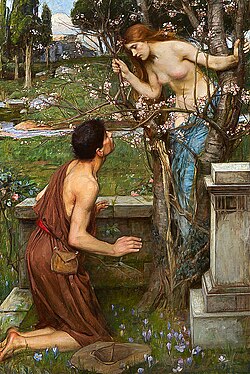
The name appears in Greek mythology. It is connected to a woman who killed herself when her love for Demophon was not returned. She was transformed into an almond or hazelnut tree, depending on the legend. It comes directly from the Greek word, Φυλλίς, meaning, “leaves, foliage,” which shares a root with the words chlorophyll and phyllotaxis. Its Turkish form of Filiz comes from the same root but the meaning slightly changes to “sprout; root.”

It also appears as the name of a minor river god of Bithynia.

It came into widespread use in England in the 16th-century and later spread to the rest of the Anglosphere.
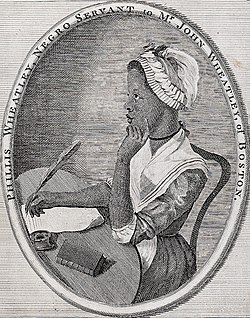
Early Puritan records occasionally include Phyllis/Phillis, reflecting classical learning even among settlers. Phillis Wheatley (1753-1784), the first published African-American female poet, is a striking historical bearer.

An 18th-century English short form was Lissie or Lissy.

It frequently appears in Elizabethan and Restoration poetry and drama. Poets such as Ben Jonson and Andrew Marvell used “Phyllis” as a stock name for a beloved in pastoral verse. Later modernists like Ezra Pound continued this tradition. This usage helped keep it familiar to English speakers for centuries.

It marked its presence in baroque operas (e.g., Handel’s Acis and Galatea includes a character named Phyllis) and in folk songs of the British Isles.

Victorian painters of the Pre-Raphaelite school sometimes chose the Phyllis and Demophon story for mythological canvases.

In the United States, it appeared in the Top 100 Female Names between 1915-1958, peaking at #24 in 1929. In the U.K., it came in at #14 in 1914, #4 in New Zealand in 1911, and #29 in 1922 in Canada.

Its Turkish offshoot of Filiz appeared in the Turkish Top 100 between 1980-1996, peaking at #11 between 1980-1982.

Today, the name is considered dated in the English-speaking world.

Phillyda, pronounced /ˈfɪl.ɪ.də/ in English is an alternate form.

Other forms include:

  • Filida Филлида (Bulgarian, Russian, Serbo-Croatian)
  • Fílide, Fil·lis (Catalan)
  • Fyl(l)is (Czech, Polish, Slovak)
  • Phyllis (Dutch, English, German, Classical Greek, Scandinavian)
  • Phillida (English)
  • Phillis (English)
  • Phyllis, Phyllide (French)
  • Fýllis (Greek – Modern)
  • Fillide, Filide (Italian)
  • Phillidis (Latin)
  • Filis, Filija (Latvian, Lithuanian)
  • Fílide, Fílis (Portuguese)
    • Fílide, Filis (Spanish)
    • Filiz (Turkish)
    • Fillida Філліда (Ukrainian)

Sources

Apollinaris, Apollinaire

  • Origin: Greek Ἀπολλινάρις
  • Meaning: “of Apollo.”
  • Gender: Masculine

The name is from the classical Greek, related to Apollo. It was borne by several early Christian saints. The most notable being St. Apollinaris of Ravenna, a Syrian Christian missionary to Ravenna who was martyred there and thereafter became the city’s patron saint.

The French form Apollinaire is linked to the Franco-Polish poet, Guillaume Apollinaire. He lived from 1880 to 1918. He was born Wilhelm Albert Włodzimierz Apolinary Kostrowicki.

Apolinary was common in Poland during the late 19th-century and early 20th-centuries, it is now obsolete. Diminutives include: Apolinek, Apollinek, Apolin, Apollin, Polin, Polinary, Polinarek, Polinaruś, Poli, and Polik.

In Italy, Apollinare was mainly used in the Romagna region due to it being the name of their patrion saint, but it has since fallen out of use.

Apollinaire sporadically appeared in the French Top 1000 between 1900 and 1926 and peaked at #403 in 1923. In 2024, 5 babies were given this name.

Neither its masculine form nor its feminine form had much usage in the English-speaking world. It was mostly used in families of Greek or Eastern European background during the late 19th-century.

Designated name-days include July 20th, July 23rd, and September 12th

Other forms include

  • Abolinarius أبونيناريوس (Arab Christian)
  • Apolighnar Ապողլինար (Armenian)
  • Apolinar Ապոլինար (Armenian, Spanish)
  • Apolinaris ܐܦܘܠܝܢܪܝܣ (Assyrian)
  • Apoliñari (Basque)
  • Apalinariy Апалінарый (Belarusian)
  • Appolinariy Апполінарій (Bulgarian, Ukrainian, Rusyn, Russian)
  • Apol·linar, Apol·linari (Catalan)
  • Apollinaris Ⲁⲡⲟⲗⲗⲓⲛⲁⲣⲓⲥ (Coptic, Dutch, English, German, Greek, Scandinavian)
  • Apollinari (Corsican, Sardinian)
  • Apolinár (Czech, Slovak)
  • Apollinaire (French)
  • Apolinario (Galician, Spanish)
  • Apo’linar აპოლინარ (Georgian)
  • Apollinarios Ἀπολλινάριος (Greek)
  • Apollinár (Hungarian)
  • Apollinare (Italian)
  • Apolenaris (Late Latin)
  • Apolinārs (Latvian)
  • Apolinaras (Lithuanian)
  • Apollinarju (Maltese)
  • Apolinary (Polish)
  • Apolinário (Portuguese)
  • Apolinàri (Provençal)
  • Pulinéra (Romagnol)
  • Apollinari (Romansh)
  • Apolinariu (Romanian)
  • Apolinarije (Serbo-Croatian, Slovenian)
  • Apołinare (Venetian)

Its feminine form is Apollinaria, which is also borne by an early Christian saint.

Other feminine forms include:

  • Abolinarya أبوليناريا (Arab Christian)
  • Apoghlinaria Ապողլինարիա (Armenian)
  • Apolinaria Ապոլինարիա, აპოლინარია (Armenian, Galician, Georgian, Polish, Romanian, Spanish)
  • Apolinaryja, Apolinariya,ܐܦܘܠܝܢܪܝܐ, Аполлинария (Assyrian, Bulgarian, Russian, Rusyn, Ukrainian)
  • Apalinariya, Apalinaryja, Апалінарія (Belarusian)
  • Apollinaria Ⲁⲡⲟⲗⲗⲓⲛⲁⲣⲓⲁ, Ἀπολλιναρία (Coptic, Corsican, German, Greek, Lithuanian, Romansh, Sardinian)
  • Apolinária (Czech, Portuguese, Sardinian, Slovak)
  • Apollinarie (French)
  • Apollinária (Hungarian)
  • Apolinārija (Latvian)
  • Apollinarja (Maltese)
  • Apolinària (Provençal)
  • Apolinarija (Serbo-Croatian, Slovenian)

A traditional feminine diminutive form in Russian is Polina. Polish diminutives include: Apollinka, Apollina, Apolinka, Apolla, Apola, Pola, Polka, Polcia, Polina, and Polinka. Modern Greek diminutives include: Nαρία (Naría), Πόλλα (Pólla), or Λίνα (Lina). Potential English short forms would include: Apple, Pollie, Polly, and Narey, or Narie.

Sources

Poemen

  • Origin: Greek Ποιμήν
  • Meaning: “shepherd.”
  • Gender: Male

The name comes from the Greek Ποιμήν (poimen) meaning, “shepherd.”

In Greek Mythology, the earlier form of Poemenius is known as the name of a satyr. He led the god Dionysos’ satyr troops in a war against India.

It was borne by a 4th-century desert father and Christian saint, known in the Coptic Church as Abba Poemen.

Other forms include:

  • Bayman بیمن (Arabic Egyptian, used by Copts)
  • Pimen Пимен Пимен (Bulgarian, Polish, Russian, Serbian)
  • Poimen ⲡⲓⲙⲏⲛ Ποιμήν (Coptic, German, Greek)
  • Poemen Поемен (English, French, Latin, Ukrainian)
  • P’imen პიმენ (Georgian)
  • Poimén (Hungarian)
  • Pimeno (Italian, Spanish)
  • Pimenus, Poemenius (Latin)
  • Pojmen (Polish)

In Poland, the designated name-day is September 9th

Sources

Zenobia

Zenobia is composed of the Greek elements, Zeus (Zeus) and bios (life). It was notably borne by a 1st-century Armenian queen of Georgian descent and later a 3rd-Century Queen of Palmyra who tried to expand into Roman territory but was defeated by Emperor Aurelian.

Zenobia of Palmyra’s name might have been a Hellenized form of her birth name, Bat-Zabbai, which is from the Aramaic meaning “daughter of Zabbai.” Zabbai itself is an Aramaic male name. It seems to be a theophoric name, meaning “gift of–.” The latter part refers to an unknown deity. It may have actually been an Aramaic form of the Hebrew female name, Bathsheba.

Speculation has also linked it with the Arabic female name Zaynab, which can either mean “father’s beauty” or be from the name of a type of flowering tree.

It was borne by the 3rd-century martyrs, Ss. Zenobia and Zenobius, two early Christians who were siblings and beheaded under Emperor Diocletian. Their feast and name-day is October 30.

In the English-speaking world, it is first recorded in Cornwall and Devon, England in the 16th-century. Early English forms of Synibie, Sinobie, Senobie, Cenobie, and Cenoby (Sen-e-bee; SIN-e-bee), would make interesting revivals in the spirit of Sydney and Willoughby. A common English diminutive was Nobby.

Zenobia appeared in the U.S. Top 1000 Most Popular Female names between 1881-1925, peaking at #669 in 1909.

Zenobia is no stranger to English literature, it is the name of a character in Nathaniel Hawthorn’s The Blithedale Romance (1852); Edith Wharton’s Ethan Frome (1911); and is even used by Anne Rice in her the eighth book of her vampire series, Blood and Gold (2001).

Zenobia “Nobby” Hawthorne appears as a character in the P.G. Wodehouse series, Jeeves.

Tina Fey used this as the middle name of daughter, Alice Zenobia.

Other forms include

  • Zenobia Զենոբիա ზენობია ܙܢܘܒܝܐ Armenian, Assyrian, Coptic, Czech, Danish, Galician, Georgian, German, Greek, Italian, Polish, Portuguese, Provencal, Romanian, Swedish, Spanish)
  • Zanubya ܙܢܘܒܝܐ (Assyrian)
  • Zinovia Зіновія Зиновия Ζηνοβία Зіновія (Belarusian, Modern Greek, Romanian, Russian, Ukrainian)
  • Zinovija Зиновия (Bulgarian, Serbian)
  • Cenobia (Catalan, English, Spanish, Swedish)
  • Anobia Ⲁⲛⲟⲃⲓⲁ (Coptic); Zanubiyah زنوبيا (Modern Arabic/Coptic)
  • Zenobie (English, archaic)
  • Senobia, Senobie, Sinobia (English)
  • Synibie, Sinobie, Cenobie, Cenoby (English)
  • Senopia (Finnish)
  • Zénobie, Zénobine (French)
  • Zenovia Ζηνοβία(Greek, modern, Romanian)
  • Zenóbia (Hungarian)
  • Zanobia (Italian, archaic)

Diminutives

  • Zinooba, Nubya (Assyrian)
  • Nobby, Zeena, Zina (English)
  • Pia, Piiu, Piu, Seno, Senu (Finnish)
  • Zena, Zenna (Hungarian)
  • Zenka, Zenobijka, Zenia, Zeba, Zebia, Zebka, Zeniulka, Zenusia, Zeniusia, Zeneczka (Polish)
  • Zina Зина (Russian)

Masculine forms include

  • Zenob Զենոբ (Armenian)
  • Zinovi Զինովի (Armenian)
  • Zenobio ܙܢܘܒܝܐ (Assyrian, Italian, Spanish)
  • Kenoba (Basque)
  • Zinovij Зиновий (Bulgarian, Serbian)
  • Cenobio, Zenobi (Catalan)
  • Zenóbe (French)
  • Zenobios Ζηνόβιος (Greek, classical)
  • Zinovios Ζηνόβιος (Greek, modern)
  • Zenóbiosz (Hungarian)
  • Zanobi (Italian, archaic)
  • Zenobiusz, Zenobi (Polish)
  • Zenovie (Romanian)
  • Zinoviy Зиновий Зіновій (Russian, Ukrainian)

Sources

Ianthe

Photo by James Wheeler on Pexels.com
  • Origin: Greek Ἰάνθη
  • Meaning: “violet flower.”
  • Gender: feminine
  • Eng pron: (i-AN-thee); Grk pron: (ee-AHN-thay)

The name comes directly from the Greek ἴον (ion) meaning “violet” and ἄνθος (anthos). It is borne in Greek mythology by an Oceanid nymph who was responsible for violet flowers and purple tinged clouds. It is also the name of Cretan woman in Greek mythology who marries Iphis after she is turned into a man by Aphrodite.

It was in vogue in 19th-century England, being the nickname for Lady Charlotte Harley, by Lord Byron to whom the poem, Childe Harold’s Pilgrimage is dedicated. It was also used by Percey Bysshe Shelley’s poem, Queen Mab, in which it is the name of a character. Shelley later named his daughter Ianthe. It is also the name of a character in John William Polidori’s 1819 short story, The Vampyre. It was the pen-name of American writer and poet, Emma Catherine Embury (1806-1863).

In recent literature, it is the name of a character in the Court of Thorns and Roses series by Sarah J. Maas.

Other forms/Usages

  • Ianthé (French)
  • Janthe (German, Late Latin)
  • Ianta Ианта (Russian)

Sources

Theodosia, Theodosius

Photo by Juliano Astc on Pexels.com
  • Origin: Greek
  • Meaning: “giving to God.”

Both come from the Greek, θεός (theos) meaning “god” and δόσις (dosis) meaning “giving.” Both the male and female form were borne by several Christian saints and Medieval rulers. In the English-speaking world, a notable bearer was Theodosia Alston Burr (1783-1813), the daughter of Aaron Burr and an American socialite who mysteriously disappeared in a ship-wreck. Her fate has been a source of speculation for two centuries, but she most likely died in the wreck. She is also the subject of the Broadway opera song from Hamilton, My Theodosia.

It’s female version has experienced usage in the English-speaking world since the 15th-century. It has spun off several diminutive off-shoots, which later became independent names, such as Docie/Dosey, Doshie, Dosha, Docia and Theda.

Theodosia appeared in the U.S. Top 1000 Most Popular Female Names between 1880-1895, it peaked at number #547 in 1880. It’s offshoot of Doshie appeared in the U.S. Top 1000 between 1880-1905 and peaked at #640 in 1884 whereas Doshia peaked at #582 in 1881 and Docia at #317 in 1880.

Theda (THEE-dah) was the name of silent film actress, Theda Bara (born Theodosia Burr Goodman, 1885-1955). Theda appeared in the U.S. Top 1000 between 1880-1948 and peaked at #350 in 1916. Theda Bara may have helped sustain the usage of the name in the United States, but it seems to have been common enough long before she graced the silver screen.

In the 1988 movie For Keeps, starring Molly Ringwald, a teen couple are faced with an unexpected pregnancy, in which they name their daughter Theodosia, short form Thea, it is a last minute decision decided by the father who gets the name from his deceased grandmother of the same name.

It is the name of the main character of the R. L. LaFevers 2007 children’s novel, Theodosia and the Serpents of Chaos, which spun off a tv series.

Its pronunciation in the English-speaking world fluctuates depending on the region and personal preference, from THEE-oh-DOH-see-uh, to THEE-oh-DOH-shuh and THEE-oh-DOH-zhuh, the sky’s the limits.

Its masculine form has always been prevalent in eastern Christian countries but did not pick up the same momentum in the English-speaking world as its feminine counterpart did.

Female forms

  • Tayodosiya ታዮዶሲዮስ (Amharic)
  • Thudusya ثيودوسيا (Arabic, used by Arab Christians)
  • T’eodosia Թեոդոսիա (Armenian)
  • Teodosija ТеодосиЯ (Bulgarian, Latvian, Lithuanian)
  • Teodosia თეოდოსია (Catalan, Corsican, Georgian, Italian, Portuguese, Romanian, Sardinian, Sicilian, Spanish)
  • Theodosia Θεοδοσια ⲑⲉⲟⲇⲟⲥⲓⲁ.(Coptic, English, German, Greek, Latin, Nordic, Romansch)
  • Teodozija Теодосија (Croatian, Macedonian, Serbian, Slovene)
  • Docia, Dosha, Doshia (English)
  • Docie, Docey (English)
  • Dosia (English, Polish)
  • Theda (English)
  • Théodosie (French)
  • Teodózia (Hungarian)
  • Teodosja (Maltese)
  • Teodozja (Polish)
  • Teodósia (Portuguese)
  • Feodosija Феодосия (Russian, Ukrainian)
  • Teudosia (Sicilian)

Male Forms

  • Teodosi (Albanian, Catalan)
  • Tayodosiyos ታዮዶሲዮስ (Amharic)
  • Thudusyus ثيودوسيوس (Arabic, used by Arab Christians)
  • T’eodosios Թեոդոսիոս (Armenian)
  • Teodosij Теодосий (Bulgarian)
  • Theodosios Θεοδόσιος ⲑⲉⲟⲇⲟⲥⲓⲟⲥ (Coptic, Greek)
  • Teodosiu (Corsican, Romanian, Sardinian)
  • Teodozije Теодосије (Croatian, Macedonian, Serbian, Slovene)
  • Theodosius (English, German, Latin, Nordic)
  • Théodose (French)
  • Theodósziosz (Hungarian)
  • Teodosio (Italian, Spanish)
  • Teodosijs (Latvian)
  • Teodosijus (Lithuanian)
  • Teodosju (Maltese)
  • Teodozy, Teodozjusz (Polish)
  • Teodósio (Portuguese)
  • Theodosi (Romansch)
  • Teodosie (Romanian)
  • Feodosij Феодосий (Russian, Ukrainian)
  • Teudosiu (Sicilian)
  • Teodóz (Slovak)

Sources

Potamiana, Butamina

Photo by Ismael Abdal Naby studio on Pexels.com
  • Origin: Egyptian/Coptic ⲡⲟⲧⲁⲙⲓⲁⲛⲁ
  • Gender: feminine
  • Meaning: “from the lake; from the sea.”

Potamiana is a latinized form of the Demotic Tꜣ-pꜣ-ym, ultimately derived from the Coptic Tapiam ⲧⲁⲡⲓⲁⲙ meaning “of the sea; of the lake.” It later evolved into the Greek Taphomis Ταπιωμις, and further hellenized as Potamiana.

Butamina and Butamiyana بُوطَامِيانَا‎ are it’s Arabized forms.

The name was borne by a 3rd-century AD Egyptian saint who was martyred for her Christianity.

Her feast day is June 28th.

Other forms of the name include:

  • Butamina بوتاميانا, Butamiyana بوتاميانا (Arabic)
  • Pwtmyana ܦܘܛܡܝܢܐ (Aramaic)
  • Potamiana Ποταμιανή Потамиана (Croatian, Czech, English, German, Greek, Polish, Portuguese, Romanian, Russian, Spanish)
  • Potamienne, Potamène, Potamine (French)
  • Potamiaina, Potamiöna (German)
  • Potamaena, Potamiaena (Late Latin)
  • Potamiena (Italian, Spanish)
  • Potamina (Italian)
  • Potamijana Потамијана (Serbian)
  • Potamiyana Потаміана (Ukrainian)

Sources

Nectar, Nectaire, Nectarius, Nectaria

  • Origin: Greek
  • Meaning: “nectar.”

Nectar is the English form of the Greek Nektarios Νεκτάριος, which is derived from νέκταρ (nektar), meaning “nectar, the drink of the gods. Nectar is not a name that has ever been in common use in the English-speaking world, but since it is the name of several Eastern and Western Christian saints, the proper English male translation of the name would be Nectar; or it would have appeared thus in the calendar.

It was borne by St. Nectaire of Auvergne, a 4th-century Christian missionary to the Gauls in what is now the Massif Central region of France. According to Gregory of Tours, he was sent by Pope Fabian, along with his brothers, where he transformed a temple that was dedicated to Apollo on Mont Cornadore into a cathedral that still stands, and was subsequently beheaded by the local Gaulic chieftain. The commune of Saint-Nectaire in the Puy-de-Dôme department of France gets its name from him, as does the cheese of the same name; or the latter technically comes from the Marshal of Senneterre, which is a linguistic corruption of Saint-Nectaire.

Male forms include:

  • Nektarij, Nektary Нектарий (Bulgarian, Russian, Ukrainian)
  • Nectari (Catalan)
  • Nektarious (Coptic)
  • Nectarije (Croatian-Serbian)
  • Nectar (English)
  • Nectaire (French)
  • Nektari ნეკტარი (Georgian)
  • Nektarios Νεκτάριος (Greek)
  • Nettario (Italian)
  • Nectareus, Nectarius (Late Latin)
  • Nektārijs (Latvian)
  • Nektariusz (Polish)
  • Nectário (Portuguese)
  • Nectarie (Romanian)
  • Nectario (Spanish)

Feminine forms include

  • Nektaria, Nektarija Νεκταρία Nექთარიჯა Нектария (Coptic, Bulgarian, Georgian, Greek, Polish, Russian, Serbo-Croatian, Ukrainian)
  • Nectarie (French)
  • Nettaria (Italian)
  • Nectaria (Latin, Romanian, Spanish)
  • Nectária (Portuguese)

A modern male Greek diminutive form is Nektary and the Russian diminutive form for both the male and female form is Nechka.

Sources

Phaedra

  • Origin: Greek Φαίδρα
  • Meaning: “bright.”
  • Gender: feminine
  • Pronunciation: Eng (FAY-drah, FYE-drah, FEED-rah)

The name comes directly from the Greek word φαιδρός meaning, “bright.”

It is borne in Greek mythology by the sister of Ariadne and the wife of Theseus. There are several versions of her tragic tale, one is that Aphrodite drove Phaedra to fall madly in love with the latter’s step-son, Hippolytus who rejects Phaedra, and in retaliation, Phaedra claims that Hippolytus attempted to rape her. Theseus who was granted 3 wishes by Poseidon wishes his own’s son death by having Poseidon summon 3 bulls from the sea who subsequently dragged Hippolytus to death. In another version of the tale, Phaedra falls in love with Hippolytus of her own free-will but he rejects her, and the story follows the same sequence of events as above.

The story was retold by Ovid and Senece the Younger and later became the popular subject of plays throughout Europe.

In England and France, the name became more widespread after its use in Jean Racine’s 1677 play, Phèdre and later Algernon Charles Swinborn’s1866 play, Phaedra. Friedrich Schiller also wrote a play and recently it was the subject of the opera written by German playwrite, Hans Werner Henze.

It is also another name for the plant, Bernardia, as well as the name of a genus of butterfly and an asteroid.

In France, Phèdre is a unisex name as it is a translation of both Phaedra & Phaedrus.

Phaedra appeared in the Top 100 Most Popular Female Names in Belgium, ranking in at #87 in 1997.

A masculine form is Phaedrus and Phaidros.

Forms and use include:

  • Fedra Федра (Catalan, Corsican, Italian, Lithuanian, Norwegian, Polish, Portuguese, Russian, Slovene, Spanish, Ukrainian)
  • Faidra (Czech, Finnish, Hungarian, Slovakian, Swedish)
  • Fædra (Danish)
  • Phaedra (Dutch, English, Latin)
  • Phèdre (French)
  • Phaidra Φαίδρα (German, Greek)
  • Phädra (German)

Sources

Spyridon, Spyridoula

Spyridon is a Byzantine Greek male name which comes directly from the Greek word σπυρίδιον (spyridion), meaning “basket.” Other sources suggest it is a hellenised form of the Latin Spiritus (spirit). It was popularized by a 4th-century Greek saint who played a key role in the Council of Nicaea. He is revered as the patron saint of Corfu and of potters.

His feast day is December 12.

Spiro & Spyros are its short forms, while Spyridoula is the femininine form.

Spiro was borne by the 39th vice president of the United States, Spiro Agnew (1918-1996).

It was borne by Spyridon Louis, the first modern Olympic Gold medalist in the 1896 Summer Olympics.

Forms and usage include:

  • Spiridoni, Spiridhoni (Albanian)
  • Asbiridun اسبيريدون (Arabic)
  • Spiridon Спиридон (Assyrian, Bulgarian, Croatian, German, Lebanese-Arabic, Romanian, Serbian)
  • Espiridió, Espiridó (Catalan)
  • Spyridon Σπυρίδων (Coptic, French, Greek)
  • Špiro (Croatian)
  • Spi’ridon სპირიდონ (Georgian)
  • Spiridione, Spiridone (Italian)
  • Spirydon (Polish)
  • Espiridão (Portuguese)
  • Spiridón (Russian)
  • Espiridón, Espiridión (Spanish)
  • Spyrydon Спиридон (Ukrainian)

Italian feminine forms include: Spiridiona & Spiridona.

Sources