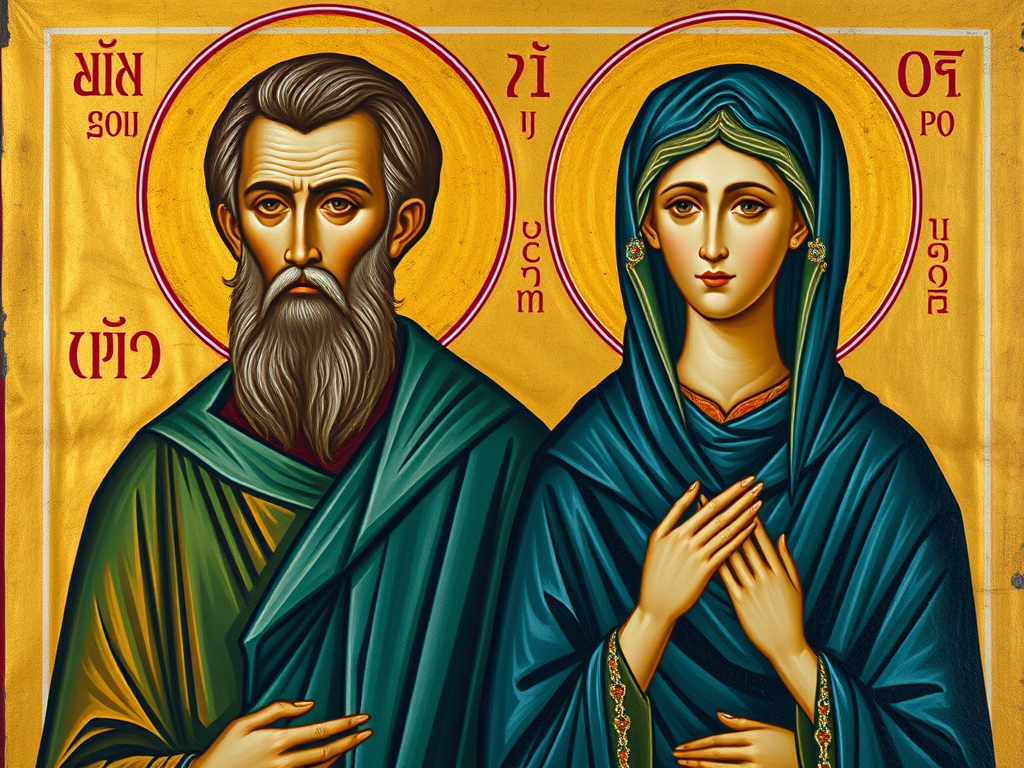
Daila, Daile

  • Origin: Latvian, Lithuanian, Estonian
  • Meaning: “beauty, grace, artistic refinement.”
  • Lithuanian form: Dailė
  • Gender: Female
  • Pron: DYE-lah; DYE-leh

Derived from the Latvian poetic word daile, meaning, “beauty, grace, or artistic refinement.”
The noun daile itself was standardized by linguist and writer Atis Kronvalds in 1868, who likely modeled it on Lithuanian dailė (“art, artistic creation”). Both words share the Baltic root dail-, conveying ideas of beauty, craftsmanship, and aesthetic harmony.

As a personal name, Daila and its variant Daile first appeared in Latvian name calendars in the late 19th century, but did not come into regular use until the 1920s, during the national revival when many symbolic native words were adopted as given names.

Regional and Linguistic Variants

  • Daile – an older or alternative Latvian form, also used in Estonia.
  • Dailė – Lithuanian form (still occasionally used).
  • Dailīte – rare Latvian diminutive (dye-LEE-teh).
  • Dailis – masculine form used in both Latvian and Lithuanian (DYE-lis).
  • Dailonis – rarer Latvian masculine variant (DYE-loh-nis).

The designated name-day for Daila is February 4th (Latvia); and December 3 for Daile (Latvia).

Sources

Chariton, Charitina, Charitinë

  • Origin: Greek Χαρίτων
  • Meaning: “grace; kindness.”

Chariton is an ancient Greek masculine name derived from χάρις (charis), meaning “grace, kindness, favor.”

The name was borne by Saint Chariton the Confessor (4th century), a revered Christian monk and founder of several monasteries in the Judaean Desert. His feast day is observed in the Eastern Orthodox Church on September 28.


Chariton also appears in classical Greek literature as a personal name. It was the name of a 1st-century Greek writer.

International Variations

  • Khariton خاريتون, Խարիտոն, ⲭⲁⲣⲓⲧⲟⲛ, Харитон (Arabic, Armenian, Bulgarian, Coptic, Russian)
  • Hariton ܚܪܝܛܘܢ, Харитина (Assyrian, Bulgarian, Estonian, Macedonian, Romanian, Serbian)
  • Charitón (Czech)
  • Chariton (English, German, French, Polish)
  • Caritón (Galician, Spanish)
  • Kharit’on ხარიტონ (Georgian)
  • Karíton (Icelandic)
  • Caritone (Italian)
  • Charitonas (Lithuanian)
  • Caritão (Portuguese)
  • Kharyton Xaryton (Ukrainian).

Charitine, Charitina

The feminine form of Charitine (Χαριτίνη) is the feminine counterpart, and it was latinized as Charitina. An English pronuncitation would be KARE-e-TEE-nee (Grk), and KARE-e-TEE-nah or KARE-e-TIE-nuh).

Saint Charitine of Rome (also known as Charitina, 4th century) is a virgin martyr honored in the Eastern Orthodox Church and Catholic Churches. The feast day and designated name-day is October 8th.

Charitina was later borne by a Medieval Russian Orthodox saint of Lithuania. Very little is known of her hagiography other than her being an indigenous Lithuanian woman who was born pagan but later converted to Christianity.

Female International Variations

  • Haritina خاريتينا / حاريتينا (Arabic, mainly used among Arab-speaking Christians)
  • Kharitine არიტონ, ხარიტინე (Armenian, Georgian)
  • Haritini, Haritina ܚܪܝܛܝܢ (Assyrian)
  • Harycina Харыціна (Belarusian)
  • Haritina Харитина (Bulgarian, Macedonian, Serbian, Romanian)
  • Charitinë (English, Greek – Classical)
  • Charitine (French, SHAH-HHREE-TEEN)
  • Charitini, Haritini (Greek – Modern)
  • Charitina Харитина (Latin, Lithuanian, Russian)
  • Charytyna (Polish)
  • Kharytyna Харитина (Ukrainian)

Sources

Lavanya

  • Origin: Sanskrit/Hindi लावण्य
  • Telugu: లావణ్యా
  • Tamil: லாவண்யா
  • Meaning: “grace; beauty; charm; loveliness.”
  • Gender: feminine
  • Pronunciation: (LAH-vun-yah)

The name comes directly from the Sanskrit word meaning, “grace; beauty; charm; loveliness.”

Sources

Anna, Anne

Gender: Feminine
Origin: Biblical Hebrew
Meaning: “grace.”
(ANN; AHN). (ANN-uh; AHN-nah). (HANN-uh; HAHN-nah)

Anne is possibly one of the quintessential classic English and French female names. Prior to the 18th-century, it seems that every other girl born in England was either named Anne, Jane or Mary. There were several British and French queens who bore this simplistic moniker, including the ill fated Anne Boleyn, the mother of Elizabeth I. The history of Anne is rather long and complicated.

It was foremost popularized through the cult of St. Anne, a legendary figure who was said to be the mother of the Virgin Mary and the grandmother of Christ.

In Brittany, the name became especially popular because it happened to coincide with the name of an ancient Celtic goddess, her cult being replaced by St. Anne’s. In fact, it was borne by one Breton Princess, Anne of Brittany.

The name was introduced into Britain by the French-Normans after the invasion in 1066. Previously, there had been a minor Saxon king named Anna, but in this case the name is related to the Saxon arn (eagle). Anna and Anne are still occasionally used as male given names in Friesland.

Other than the apocryphal saint, the name Anne can be traced directly back to the Bible. In the New Testament, it is the name of a prophetess who predicts the Crucifixion of Christ.

Anna (Αννα), is the Greek translation of the early Hebrew Channah חַנָּה, usually transliterated as Hannah, meaning “grace.”

Hannah is borne in the Old Testament by the faithful mother of the prophet, Samuel.

Hannah has always been popular among Jewish families, but was virtually unheard of among non-Jews before the Reformation, except in some cases where it may have been used as a diminutive form of Johanna, spelled Hanna.

It was the Byzantines who had introduced the Anna form to the world, making it popular throughout Eastern and Southern Europe. It was a very popular name among the Byzantine royal family and it was borne by the majestic Anna of Byzantium.

Anna may be the more melodic form of the bunch, but Anne’s minimalistic qualities are charming. Short, to the point, no frills. It’s not a bad name, though it does lack some spice, which is why parents are probably more attracted to its more exotic alternatives. In fact, Anne only comes in at # 608 in the top 1000 female names of the United States. It is safe to say, however, that she is very much loved in the middle name spot.

Anna is currently one of the most popular female names in Europe and abroad. Her rankings are as follows:

  • # 1 (Austria, 2010)
  • # 1 (Estonia, 2011)
  • # 2 (Hungary, 2010)
  • # 3 (Ana, Georgia, 2010)
  • # 3 (Iceland, 2010)
  • # 4 (Ana, Croatia, 2010)
  • # 4 (Czech Republic, 2010)
  • # 4 (Germany, 2011)
  • # 4 (Ukraine, 2010)
  • # 5 (Faroe Islands, 2010)
  • # 5 (Ana, Portugal, 2010)
  • # 6 (Armenia, 2010)
  • # 6 (Ane, Greenland, 2002-2003)
  • # 6 (Ana, Romania, 2009)
  • # 6 (Ana, Serbia, 2010)
  • # 7 (Latvia, 2011)
  • # 7 (Russia, 2011)
  • # 8 (German-speaking Switzerland, 2010)
  • # 9 (Denmark, 2011)
  • # 10 (Netherlands, 2010)
  • # 10 (Northern Ireland, 2010)
  • # 10 (Norway, 2010)
  • # 11 (Italy, 2010)
  • # 12 (Ireland, 2010)
  • # 14 (Poland, 2010)
  • # 16 (Catalonia, 2010)
  • # 26 (Canada, B.C., 2010)
  • # 28 (Italian-speaking Switzerland, 2010)
  • # 28 (United States, 2010)
  • # 29 (Scotland, 2010)
  • # 40 (France, 2009)
  • # 46 (French-speaking Switzerland, 2010)
  • # 53 (Belgium, 2009)
  • # 63 (England/Wales, 2010)
  • # 71 (Australia, 2010)
  • # 81 (Sweden, 2010)
  • # 83 (Spain, 2010)
Other forms of the name include:
  • Anneen (Afrikaans/Low German)
  • Anna Анна (Afrikaans/Albanian/Armenian/Breton/Bulgarian/Catalan/Corsican/Czech/Dutch/English/Estonian/Faroese/Finnish/French/Frisian/German/Greek/Hungarian/Icelandic/Italian/Latvian/Limburgish/Maltese/Polish/Russian/Ukrainian/Scandinavian/Slovak)
  • Anne (Basque/Dutch/English/French/Scandinavian)
  • Gánna Га́нна (Belarusian)
  • Annaig (Breton)
  • Annick (Breton)
  • Maina (Breton)
  • Mannaig (Breton)
  • Mannick (Breton)
  • Naig (Breton)
  • Ana Ана ანა (Bulgarian/Croatian/Galician/Georgian/Lombard/Macedonian/Portuguese/Romanian/Samogaitian/Serbian/Slovene/Spanish/Venetian)
  • Jana (Croatian/Ladino)
  • Aneta (Czech/Polish/Samogaitian/Slovak)
  • Aina (Catalan)
  • Anica (Croatian/Serbian/Slovene)
  • Ane (Danish)
  • Anika (Danish)
  • Anneke (Dutch)
  • Anneken (Dutch)
  • Annika (Dutch/Finnish/German/Latvian/Scandinavian)
  • Anka (Dutch/Frisian/German)
  • An(n)ke (Dutch/Frisian)
  • Anouk (Dutch/French)
  • Ans (Dutch)
  • Enneke (Dutch)
  • Enneken (Dutch)
  • Anita (English/German/Polish/Spanish)
  • Annette (English/French/German)
  • Anissa (English)
  • Annelle/Annella (Estonian)
  • Anete (Estonian/Latvian)
  • Anett (Estonian)
  • Anu (Estonian)
  • Anni (Finnish)
  • Annikki (Finnish)
  • Anniina (Finnish)
  • Annukka (Finnish)
  • Niina (Finnish)
  • Anaïs (French/Provençal)
  • Annouche (French)
  • Ninette (French)
  • Ninon (French)
  • Ninouk (French)
  • Anje (Frisian)
  • Ankea (Frisian)
  • Antje (Frisian)
  • Antjen (Frisian)
  • Anute (Fruilian)
  • Anano (Georgian)
  • Annchen (German)
  • Annel (German)
  • Annele (German/Latvian)
  • Anneli(e) (German/Finnish/Swedish)
  • Annet (German)
  • Anina (German)
  • Anja (German/Slovene)
  • Anouschka (German/Italian/Russian)
  • Annaki (Greek)
  • Annoula (Greek)
  • Noula (Greek)
  • Anikó (Hungarian)
  • Annuska (Hungarian)
  • Panni (Hungarian)
  • Áine (Irish)
  • Ánna (Irish)
  • Annarella (Italian)
  • Annella (Italian)
  • Annetta (Italian)
  • Annettina (Italian)
  • Nona (Italian/Romansch)
  • Ance (Latvian)
  • Annija (Latvian)
  • Anninya (Latvian)
  • Ona (Lithuanian)
  • Annamma (Malayalam)
  • Annam (Malayalam)
  • Onnee (Manx)
  • Âone (Norman)
  • Aenna/Aenne (Old High German)
  • Annehe (Old High German)
  • Änna/Änne (Old High German)
  • Neta (Piedmontese)
  • Noto (Piedmontese)
  • Anke (Plattdeutsch)
  • Anneke(n) (Plattdeutsch)
  • Analia (Romansch/Spanish)
  • Annina (Romansch)
  • Annotta (Romansch)
  • Anca (Romanian)
  • Anicuta (Romanian)
  • Anėta (Samogaitian)
  • Anėkė (Samogaitian)
  • Annag (Scottish)
  • Ghianna (Sicilian)
  • Janna (Sicilian)
  • Nanna (Sicilian)
  • Anniken (Swedish)
  • Ann (Welsh)
  • Nan (Welsh)
  • Nanno (Welsh)
  • Nanw (Welsh)
  • Aana (Wolof)
As for the Hannah forms

Hanna without an H is the prefered form on Continental Europe, usually pronounced (HAHN-nah) and in French like Anna. Hanna and Hanne (HAHN-neh) are also used as diminutive forms of Johanna/Johanne in the Netherlands, Sweden, Norway, Denmark and Germany. There is the Hungarian Hajna pronounced (HOY-no). The Czech/Slovak form of Hana nickname Hanka. There are the Yiddish forms of Heyna, Hayna, Hejna (all pronounced like HAY-nah) including the diminutive forms of HenaHende, Hendel and Henye.  The Polish diminutive form of Hania, which might make an interesting alternative to Anya or Hannah. Hannah, Hanna and Henna are all used in the Middle East.

Of course, how could we ever forget the popular diminutive forms of Annie and Nan.
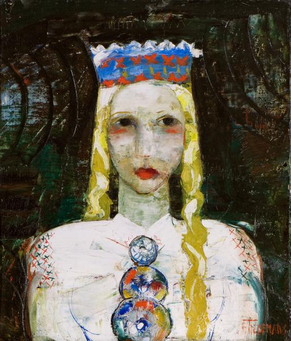
Grazina, Grażyna

Planty-Grazyna-MickiewiczaGender: Feminine
Origin: Lithuanian/Polish
Meaning: “beautiful; pretty”
Lit (grah-ZHEE-nah); Pol (grah-ZHIH-nah).

The name come directly from the Lithuanian word for beautiful. It was said to have been created by Polish-Lithuanian poet Adam Mickiewicz in 1823. Grażyna recounts the exploits 0f a Lithuanian princess who tried to defeat the Teutonic knights. The name itself is derived from the Lithuanian word grażus meaning “beautiful” “pretty.” The name was often translated to Grace by Polish and Lithuanian immigrants who settled in the United States. Common nicknames include Grazia, Grasia, Grażynka and Grażka. The name-day in Poland is July 26 while in Lithuania it takes place on September 26. The name was borne by Polish-Lithuanian composer and violinist, Grażyna Bacewicz (1909-1969)

Stella

Gender: Feminine
Origin: Latin
Meaning: “star.”

This pretty, vintagy appellation with the stellar meaning was first introduced as a given name way back in the 16th-century. Sir Philip Sidney gave this name star-power when he used it for one of his sonnets Asphodel & Stella. To further boosts the name’s popularity, it has references to the Virgin Mary, derived from one of the many epithets to the mother of Christ, Stella Maris (Star of the Sea), is a sort of poetic reference to Mary as a guiding light for lost souls. Due to these connotations, the name caught on big time in places as far south as Spain and all the way east in Poland. Despite its literary references in England, the name never really caught on, in fact, in Great Britain today, Stella is the name of a ledger, which makes the name somewhat of a turn off for British parents. While in the United States, the name has had somewhat of a history since the turn of the century. Thanks to an influx of Polish immigrants, the name became very popular in the United States, Stella being a very popular Polish given name at that time, either being an anglicization for Stela or Stanislawa. Due to its enormous popularity among the Polish community, the name became a sort of stereotype name for Polish women from the 1920s-30s. Today, the name has lost those stereotypes, but for the granddaughters and great grandaughters of those very same immigrants, the name has held a lot of charm and appeal, holding fuzzy warm memories of old world grandmas for a whole new generation of parents. This might explain its sudden resurgence in popularity. In 1999, Stella sat at a mere # 725 of the Top 1000 names in the United States. Fast forward 9 years and it nows sits at # 186 of the top 1000 female names of 2008, and will probably rise. It has the same feel as other popular vintagy names such as Ava, Grace and Sophia. So don’t be surprised to see little Stellas coming to a school near you very soon. Though the name has Polish roots for many Americans, the name is considered rather old fashioned in Poland these days, meanwhile just further north in Sweden, the name has caught on quite a bit. It came in at # 33 in 2007 among the Top 100 female names of Sweden. Down under, in Australia, the name comes in at # 99. If you are concerned about the possible future over popularity of this name, then you might like the more unusual alternatives of Estelle, Estella and the Spanish Estrella (es-STRAY-yah). There is the Portuguese elaborate form of Stelina, and there is the Romanian Steliana, though that has a completely different etymology from Stella, it is derived from the Greek Styliani which is a feminine form of Stylianos meaning “piller.”

Other pop culture references are Stella Dubois Kowalski from Tennessee Williams’ A Streetcar Called Desire. It is also borne by the daughter of Paul and Linda Macartney.
Its designated name day is July 14.