Neringa

Gender: Feminine
Origin: Lithuanian
Meaning: “to dive like a swimmer”
(ne-RIN-gah)

Beautiful Neringa is a city that lies in the Curonian Spit, a jewel on the Baltic coast. A famous resort which boasts the highest sand dunes in all of Europe, it was once the seat of the Teutonic Knights, in fact, it belonged to Germany for 700 years before being handed over to Lithuania in 1923. Though the regions inhabitants were not Germans themselves, they were a melange of various Baltic tribes comprised mostly of Latvian, Prussian and Lithuanian fishing villages. Today Neringa is renowned for its beauty and summer getaways for Lithuanian, Russian, Latvian and German tourists.

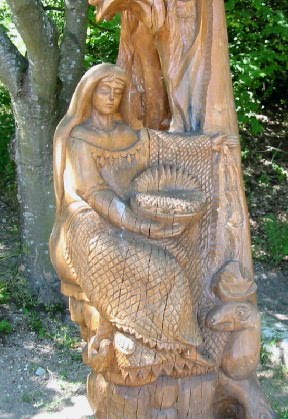
Legend has it that the city got its name from a virginal giantess. There are a few different legends of the maiden floating around, most of the legends tell of a gentle giant who built a mound of sand to keep the stormy waves of the Baltic sea at bay, but the most amusing, (made famous by a Lithuanian children’s book, written and illustrated by Domicela Tarabildienės in 1949, Naglis ir Neringa), is s quirky tale about unrequited love, which includes the love sick dragon by the name of Naglis, (also the name of a famous dune on the sands of the Curonian Spit).

Neringa lived on the Baltic coast, like the city named for her, she was renowned for her beauty, she caught the attention of a local dragon or a sea serpent by the name of Naglis, who quickly fell in love with her. When Neringa did not return his love, he started to eat the local fishermen in grief. In order to completely cut of all ties with Naglis the dragon, Neringa had to create a strip of sand between the bay and the Baltic sea, which would seperate her and her subjects from the dragon forever. This is supposedly how the spit was created.
As for the etymology of Neringa itself, many sources claim that it is derived from an ancient Latvian or Prussian word neria which means “to dive like a swimmer.” The name has been in usage as a feminine given name for awhile, it most likely caught on after 1923 when the spit was incorporated into Lithuania and the legend of the giantess revived. Its name day in Lithuania August 20.

Laima

Gender: Feminine
Origin: Lithuanian/Latvian
Meaning: “luck”
(LYE-mah)

Limey Laima! The name has a rather acidic sound, but its associations and meaning in Baltic culture is rather interesting. The name is associated with the Latvian and Lithuanian words for luck or fate, in Baltic mythology, it was borne by the goddess of childbirth and midwifery. Known as one of the three fates, her sisters were Dekla and Karta and it is often believed by scholars that Laima is related to the Hindu goddess, Lakshmi Mata, the goddess of luck and wealth. Since the Baltic languages are some of the very few European tongues that still retain a lot of ancient Indo-European roots, both linguistically and culturally, Baltic mythology had very strong similarities to modern Hindu religions. The three sisters, known as the Laimas, or the fates so to speak, were a sort of trinity that was in charge of the future and destiny of each and every individual. It is believed that they were actually one in the same being, Laima being the most powerful personification. Laima was also associated with two other goddesses, Laimė and Dalia, both of whom were considered consorts to the more powerful Laima. Laima was often associated with the cuckoo and it was believed that she was the one in charge of deciding who young maids would marry. She was also in charge of dispensing destiny to newborns. Even after the advent of Christianity, Laima still plays a significant role in Latvian and Lithuanian folklore. She is often the subject of folksongs, any song to do with a cuckoo and a lime tree are usually in reference to her (the lime tree was sacred to her). She even inspired a Latvian chocolate company to take her name. The company is such a big household name throughout the Baltic States that in Riga there is a clock commissioned by the company entitled the Laima Clock. It is one of Riga’s prized centre pieces and it is a popular meeting spot for friends, lovers and tourists. Despite its chocolatey associations, the name is still considered a rather ordinary female name in both Latvia and Lithuania. Its designated name day is August 12. Other forms include the Lithuanian forms of Laimona (lye-MOH-nah) and the male version of Laimonas.

Lada

Gender: Feminine
Origin: Czech/Polish/Croatian
Meaning: unknown.
(LAH-dah)

Lada or Lado is the name given to a folkloric Polish/Czech goddess of merriment, youth, love and beauty. During Slavic Revivalism, she was a sort of invention, a direct response to the Greco-Roman goddess Venus/Aphrodite. In reality, Lada never existed in the true pre-Christian Slavic pantheon. Often regarded as Slavic Fakelore, during the Renaissance when the rest of Europe was exploring its ancient mythologies for artistic inspiration, many Slavic writers, such as the Polish Jan Dlugosz and the Czech historian Cosmas of Prague tried to do the same, but with one obstacle: Slavic Mythology hadn’t been as well recorded as Greco-Roman. With a lack of such poets as Virgils and Ovids, Dlugosz and Cosmas had no other resort but to make up romanticised gods out of thin air. Mostly inspired by Greco-Roman myths, they came up with the idea that the ancients Slavs worshipped Mars and Jupiter. Lado and Lada were terms often heard in Polish, Croatian and Czech folk songs that retained pre-Christian elements. It was assumed by Dlugosz that Lado must have been a god, possibly Cupid or Mars and its feminine sounding element Lada must be Aphrodite or Venus. However, later historians were unable to associato “lado” or even “lada” with any sort of god. All that is known is that its a term or refrain that appears quite a bit in midsummer folk songs. One theory is that “lado” or “lada” is merely an explanation, somewhat an equivalent of “hey, hey hey” or “Ooo yeah” in many modern pop and rock songs we hear today. These expressions really have no meaning other than to add rhythm to the song being sung. In any case, Lada caught on as a popular female name, especially in the Czech Republic. It is also the name of a Russian car, no doubt, named for the fictional Slavic goddess. Its name day is Aug 7.

Sânziana

Gender: Feminine
Origin: Romanian
Meaning: “bedstraw; holy fairies”
(SUN-zee-AH-nah)

We’ve already talked about the Latvian gem Madara, and now there is this spunky Romanian equivalent. Sanziana is a traditional Romanian female name and also the Romanian word for the bedstraw or cleaver flower. But there is far more to Sanziana than just the floral connotations. In Romanian folklore Sânziene are suppose to be sweet gentle fairies. It is also a huge Romanian summer festival that usually occurs on June 24. On this day, the most beautiful maidens of the villages dress in white and go on hunts to collect all the newly bloomed bedstraw or cleaver flowers. During the day, no male is allowed to see them. The girls make wreaths from the bedstraw and at night they return to their villages. It is believed that during their daily sojourn they have been transformed into sanziene fairies. A huge bonfire is created and all the girls get together and form a dance around the fire while throwing all the remains of the previous harvest into the bonfire. No one is allowed to speak to these girls during the ceremony as it is believed that they are possessed by the sanziene and by speaking to them it will anger the spirits. The girls usually keep the wreaths for the following Sanziene. The wreaths are believed to make their land more fertile and it is also believed that by placing the wreath under their pillow, the maidens will dream of their future spouses. The Sânziana form has been long used as a female given name. It is believed that the etymology of the name comes from the Romanian elements sfânt meaning “saint” or “holy” and zână meaning “fairies.” It was first notably used as a name by the 19th century Romanian author Vasile Alecsandri when he used it for one of his title characters in the comedy Sânziana şi Pepelea. It was later adapted into an opera. The name is currently borne by Romanian pop singer Sanziana Niculae.

Lehel

Gender: Masculine
Origin: Hungarian
Meaning: unknown
(LEH-hel)

This classic Hungarian name is shrouded in mystery and legend. It was the name of a legendary Magyar prince. He was captured in battle while Hungary was engaged in war with Germany. Legend has it that Lehel carried with him a magnificent horn. When he was brought forth to the German emperor and sentenced to death, Lehel requested to play one last song on his horn. The emperor consented and when Lehel finished playing the horn he dashed for the emperor and struck him on the head with his instrument. The horn can still be seen till this day and its kept on display in the town of Jaszbereny. The name Lehel is of uncertain meaning and origins. Its designated name-day is August 2nd.

Fionntán, Fintan

Gender: Masculine
Origin: Gaelic
Meaning: “white fire.”
Ir (fin-TAHN); Eng (FIN-tun).

The name is composed of the elements fionn meaning “white; fair” and tine meaning “fire.” It has been anglicized as Fintan. In Irish legend, Fionntan Mac Bochra was a great seer and druid advisor who supposedly arrived in Ireland, along with Noah’s granddaughter, Cessair. His wives and daughters died during God’s cursed flood but he survived by transforming himself into a salmon and taking refuge in an undersea cave. He later transformed himself into an eagle, then into a hawk and then back into his true form. Supposedly, he lived 5500 years, until the arrival of Christianity into Ireland, where he was baptized and died immediately after. It has been borne by several Irish saints, and its designated name day is July 13. The name might be especially appealing to parents who are considering Connor or Aidan, but find them too popular. Finn or Finty are possible nickname options.

Årolilja

Gender: Feminine
Origin: Norwegian/Finnish
(aw-ro-LEEL-ee-yah); (aw-roh-LEEL-yah)

Some sources believe the name is either derived from a Finnish word or an Old Norwegian word for the prairie lily.

The name appears in a 700 hundred year old Norwegian ballad, entitled Bendikt og Arolilja.

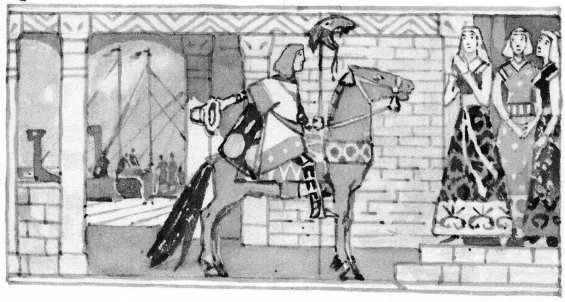
It recounts the exploits of a knight by the name of Bendikt who goes out to seek a wife.

Bendikt decides to visit the King of Soland to see what brides the king has to offer and, while at the court, Bendikt catches the eye of the beautiful princess Årolilja, but the king will not allow his daughter to marry the knight.

The king locks Arolilja away and blocks the entrance of her chamber with golden stairs. He edicts that anyone who climbs the stairs will be put to death. However, each night, Bendikt manages to visit his beloved in her little prison by dressing as a woman.

The lovers are betrayed by a servant and in some sources, by the younger son of the King, and Bendikt is punished by being tortured. The King finally has Bendikt tied up, but Benedikt somehow manages to break through the ropes.

The King then decides to chop off Årolilja’s hair and use it as the rope to bind Bendikt. The King knows that Bendikt loves Årolilja’s hair so much, that he would not have the heart to break through it.

In desperation, Årolilja begs her father for Bendikt’s life. Even the king’s wife begs for Bendikt’s life, but the king adamantly refuses to spare the knight. Finally, the whole kingdom begs the king for the life of the knight but to no avail.

Bendikt is put to death and Årolilja dies of grief at the very moment Bendikt dies, unbeknownst to the king. When the king realizes how much Årolilja loved the knight he decides to bury the two together.

Bendikt was buried to the north of the church and Årolilja to the south and from their graves grew the prairie lily. The two plants entwine, representing the everlasting love of Bendikt and Årolilja.

In recent years, the ballad has been revived by a few Norwegian Folk rock bands, bringing the name back into the spotlight. As a result, Årolilja has become more common in Norway.
The name has the possible nickname option of Lilja, Lily or even Aro.

Wanda

Gender: Feminine
Origin: Polish
Pol (VAHN-dah); Eng (WAHN-duh).

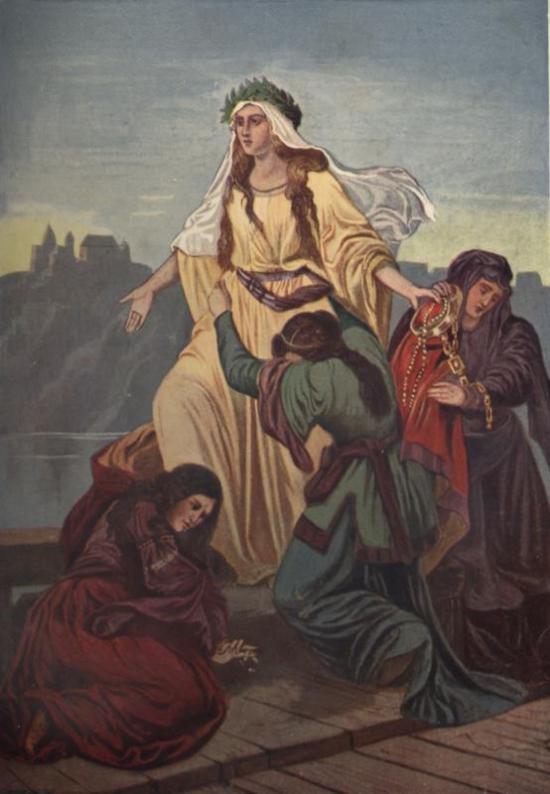
The name first appeared in a legend presented by Polish historian, Wincenty Kadlubek (12-13th century). In his version of the legend, Wanda was the daughter of a Polish king Krak, (founder of the city of Krakow), who inherited her father’s throne. An evil German prince wanted to marry her and take over the Polish lands, but the princess repelled him and drove him to suicide. The prince threw himself into the Vistula. Wanda went on to live a happy and long life, remaining a virgin and vowing to be married only to her country. The most famous account, however, is completely different. In the most beloved form of the tale, rather than have her country taken over by the German invaders, Wanda threw herself into the Vistula. In Poland, she is a symbol of the nation, representing the sacrifice and hardship of the nation of Poland throughout its history. She is a symbol of Polish independence and its victory over German imperialism.

Tradition has it that she is buried in one of the seven mounds of Krakow. Till this day, the Wanda Mound (Kopiec Wanda) rests on the outskirts of Krakow, (in what is now known as the suburb of Nowa Huta).

Wanda is probably one of the very few Polish names that became popular in the English speaking world. It was introduced via author Ouida who used it for heroine in the novel Wanda (1888). The name no longer ranks in the U.S. top 1000, but was once a fairly popular name, coming in at # 47 in 1934, the highest the name ever ranked in U.S. naming history.

Many sources list the name as being a derivative of the Ancient Germanic wend, a name for a group of people who lived near and around the Vistula, however, some Lithuanian sources have argued that it is derived from an ancient Baltic element vanduo meaning “water” while many others speculate that its true origins have been lost and that its true introduction into the world was through Kadlubek.

In Poland, a popular nickname option is Wadzia (VAHD-jah). An alternative is the Czech/Slovak, Italian and Lithuanian, Vanda. There is also the elaborated Swedish name Wendela, though it is speculated if she is truly related to Wanda or if  in fact she is a completely different name of Germanic origins. The name has experienced occasional usage in Germany, Spain, Brazil, Hungary and Russia.

Coincidentally, Vanda is the name of species of orchid indigenous to the Indian subcontinent and Indochina. In this case, Vanda is of Sanskrit origins.

Anahí

Gender: Female
Origin: debated
Meaning: debated
(ah-nah-EE)

The name, which has recently become extremely popular in South American countries, is clouded in mystery and legend.

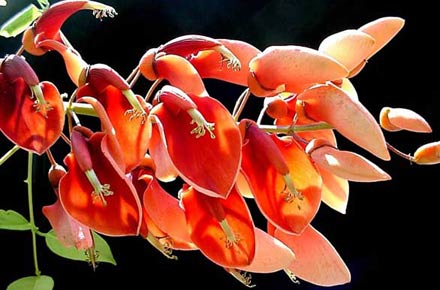
In legend, Anahí was the daughter of a Guarani chief, her and her father tried to fight the Spanish, but were finally subdued. In punishment, the Conquistador’s tied Anahí to a tree and set her on fire. Legend says that the next day, the same tree bloomed flowers, and that is supposedly how the Ceibo tree got its flowers.

The Ceibo is the national flower of Argentina.

Some sources believe that the name may be of Guarani origin and mean “flower of the sky.” Or that it is simply the Guarani word for the Ceibo tree itself. Still other sources contend that it is a derivative of the Assyrian Anahita, and that it first appeared in South America via Lebanese and Assyrian immigrants at the beginning of the 20th-century.

The name is currently borne by famous Mexican actess, Anahí Portillo (b. 1983).

In 2008, the name ranked in at 437 for the top 1000 names in the U.S.

(upper left, Ceibo tree, national flower of Argentina).