Prosdocimus, Prosdocimo

  • Origin: Greek
  • Meaning: “awaited; expected.”
  • Gender: Male
  • It pron (prose-DOH-chee-mo)

Prosdocimus is a Late Latin form of the Greek Προσδόκιμος (Prosdokimos), derived from prosdokein, meaning “the awaited; the expected,” allegedly used for a long awaited child.

The name is best known from Saint Prosdocimus, a 1st-century Christian bishop and missionary of Greek origin, who evangelized the region around Patavium (Padua) in northern Italy. He is venerated as the first bishop and patron saint of Padua, and a major church, the Basilica di San Prosdocimo, adjoining the Abbey of Santa Giustina, bears his name. His cult was established early in the Christian era and remained locally important throughout the Middle Ages.

Because of the saint’s regional veneration, the given name Prosdocimo remained rare and was used mainly in the Veneto, occasionally appearing in baptismal records in Padua and neighboring areas. Outside northern Italy it has always been exceptional, preserved chiefly in ecclesiastical or hagiographic contexts.

The designated name-day is November 7th.

International Variations

  • Būrūsdūsīmus بروسدوسيموس (Arabo-Coptic)
  • Prosdòcim (Catalan)
  • Prosdocime (French)
  • Prosdozimus (German)
  • Prosdokimos Προσδόκιμος (Greek)
  • Prosdecimus (Late Latin)
  • Prosdocym (Polish)
  • Prosdócimo (Portuguese)
  • Prosdociy, Prodocim Просдоций, Просдоцим (Russian)
  • Prosdócimo (Spanish)

Sources

Elswith, Elswyth

  • Origin: Anglo-Saxon
  • Meaning: “strong temple.”
  • Gender: Female
  • Diminutives: Elsie, Elzie, Swithie, Swithy
  • ELZ-with, ELS-with

The name is the modern English form of the Anglo-Saxon female name, Eahlswiþ, which is composed of the Anglo-Saxon elements, eahl (temple) and swiþ (strong).

The most famous historical bearer is Ealhswith (Elswith), Queen of Wessex and wife of King Alfred the Great (d. 902). She was the mother of Edward the Elder and Æthelflæd, Lady of the Mercians, and is remembered for her wisdom, learning, and piety.

Her name appears in multiple forms across medieval chronicles: Ealhswith, Ealswitha, Aelswith, Aelswitha, Alswith, Elswith, Elswitha, and Elswyth.

The name gained renewed attention through the popular Netflix/BBC historical drama The Last Kingdom (2015–2022) and its sequel film Seven Kings Must Die (2023), based on Bernard Cornwell’s The Saxon Stories series.

Since 2022, at least 11 girls have been bestowed the name Elswyth in England & Wales.

While Ealhswith fell out of use after the Norman Conquest, Elswith or Elswyth has occasionally been revived in historical fiction and modern England as a rare, archaic revival, akin to Edith and Ethel. It fits within the current trend toward names that blend mythic, Old English, and Celtic sounds, offering an even more unique alternative to trending names such as Eloise, Elowen and Ella.

Sources

Daila, Daile

  • Origin: Latvian, Lithuanian, Estonian
  • Meaning: “beauty, grace, artistic refinement.”
  • Lithuanian form: Dailė
  • Gender: Female
  • Pron: DYE-lah; DYE-leh

Derived from the Latvian poetic word daile, meaning, “beauty, grace, or artistic refinement.”
The noun daile itself was standardized by linguist and writer Atis Kronvalds in 1868, who likely modeled it on Lithuanian dailė (“art, artistic creation”). Both words share the Baltic root dail-, conveying ideas of beauty, craftsmanship, and aesthetic harmony.

As a personal name, Daila and its variant Daile first appeared in Latvian name calendars in the late 19th century, but did not come into regular use until the 1920s, during the national revival when many symbolic native words were adopted as given names.

Regional and Linguistic Variants

  • Daile – an older or alternative Latvian form, also used in Estonia.
  • Dailė – Lithuanian form (still occasionally used).
  • Dailīte – rare Latvian diminutive (dye-LEE-teh).
  • Dailis – masculine form used in both Latvian and Lithuanian (DYE-lis).
  • Dailonis – rarer Latvian masculine variant (DYE-loh-nis).

The designated name-day for Daila is February 4th (Latvia); and December 3 for Daile (Latvia).

Sources

Muizz

  • Origin: Arabic معِزّ
  • Meaning: “to give honour; to empower.”
  • Variant transcription: Muiz.
  • Gender: Male

An Arabic male name derived from the verb ʿazza (عزّ) meaning “to be mighty, strong, honored.”

In Islam, al-Muʿizz (ٱلْمُعِزّ) — “The Bestower of Honor” — is one of the 99 Names of Allah.

The most notable bearer is al-Muʿizz li-Dīn Allāh (953 – 975 CE), the fourth Fatimid caliph, renowned for founding the city of Cairo (al-Qāhira) in 969 CE.

It is used throughout the Islamic world, but is particularly common among Muslims in Nigeria.

Sources

Ladan

  • Origin: Persian لادن or Somali
  • Meaning: “nasturtium;” “healthy; lucky; blessed.”
  • Gender: Female
  • LAH-dahn

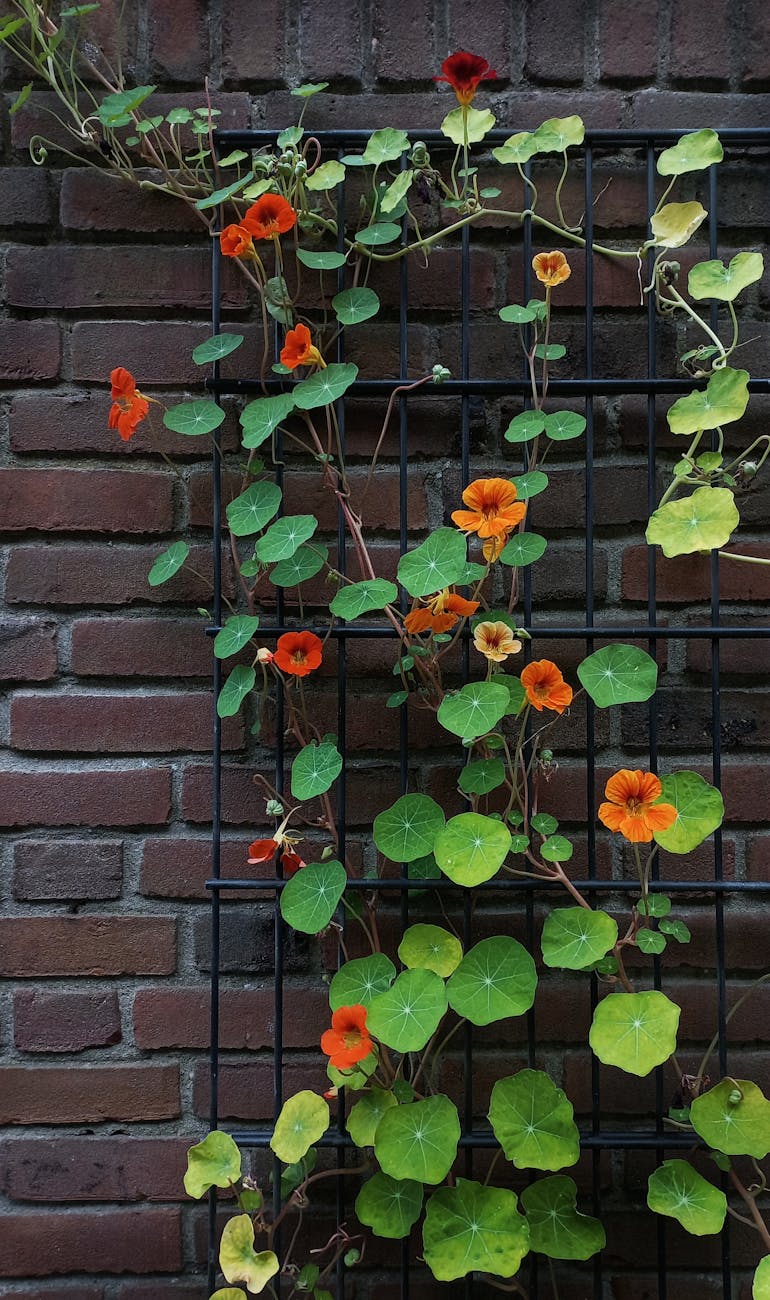
In Persian, Ladan (لادن) is a nature name meaning “nasturtium.” The term may derive from ancient Greek ládanon, the word for labdanum, a fragrant resin once used in incense and perfume.

A notable Persian bearer is Iranian actress, Ladan Mostofi (b. 1972).


In Somali, Ladan comes from the native adjective ladan, meaning “healthy,” “prosperous,” “comfortable,” or “blessed.”

A notable Somali bearer is American poet, Ladan Osman.

Sources

Sterpeta

  • Origin: Italian
  • Meaning: “brushwood; bramble; thicket.”
  • Gender: Female
  • stehr-PEY-tah

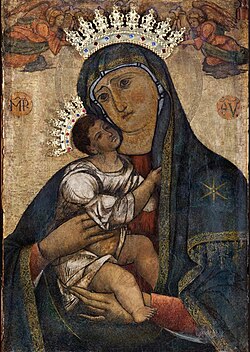
A rare vintage name from Southern Italy, Sterpeta is associated with the Virgin Mary, deriving from Madonna della Sterpeto – the name of a Marian shrine located near Barletta, in the province of Apulia (Puglia). The title Sterpeto itself comes from the Italian sterpeto, meaning “thicket,” “bramble,” or “brushwood,” referring to the rural area where the miraculous image was discovered.

According to local tradition, during a devastating plague in 16th-century Barletta, a perfectly preserved medieval icon of the Virgin Mary was found hidden in the cellar of an abandoned monastery. The townspeople carried the image in procession, and as soon as it was revealed, the plague ceased and the people were healed. In gratitude, the sanctuary of Madonna dello Sterpeto was built on the site, and devotion to the image spread throughout the region. Her feast-day is May 8th.

The personal name Sterpeta emerged as a devotional given name in honor of la Madonna dello Sterpeto, but its usage remained largely confined to Barletta, Foggia, and Bari in Puglia. The name gradually fell out of use in the 20th century and was last recorded in Italy in 2006.

With its strong regional flavor and deep Marian symbolism, Sterpeta is a distinctive relic of Southern Italian faith and folklore. It is a name that bridges miracle, memory, and devotion, and its meaning also links it to fall or autumnal themes.

Sources

Afallach, Avalloc

  • Origin: Welsh
  • Meaning: “apple.”
  • Gender: Male
  • Pron: AH-va-lok

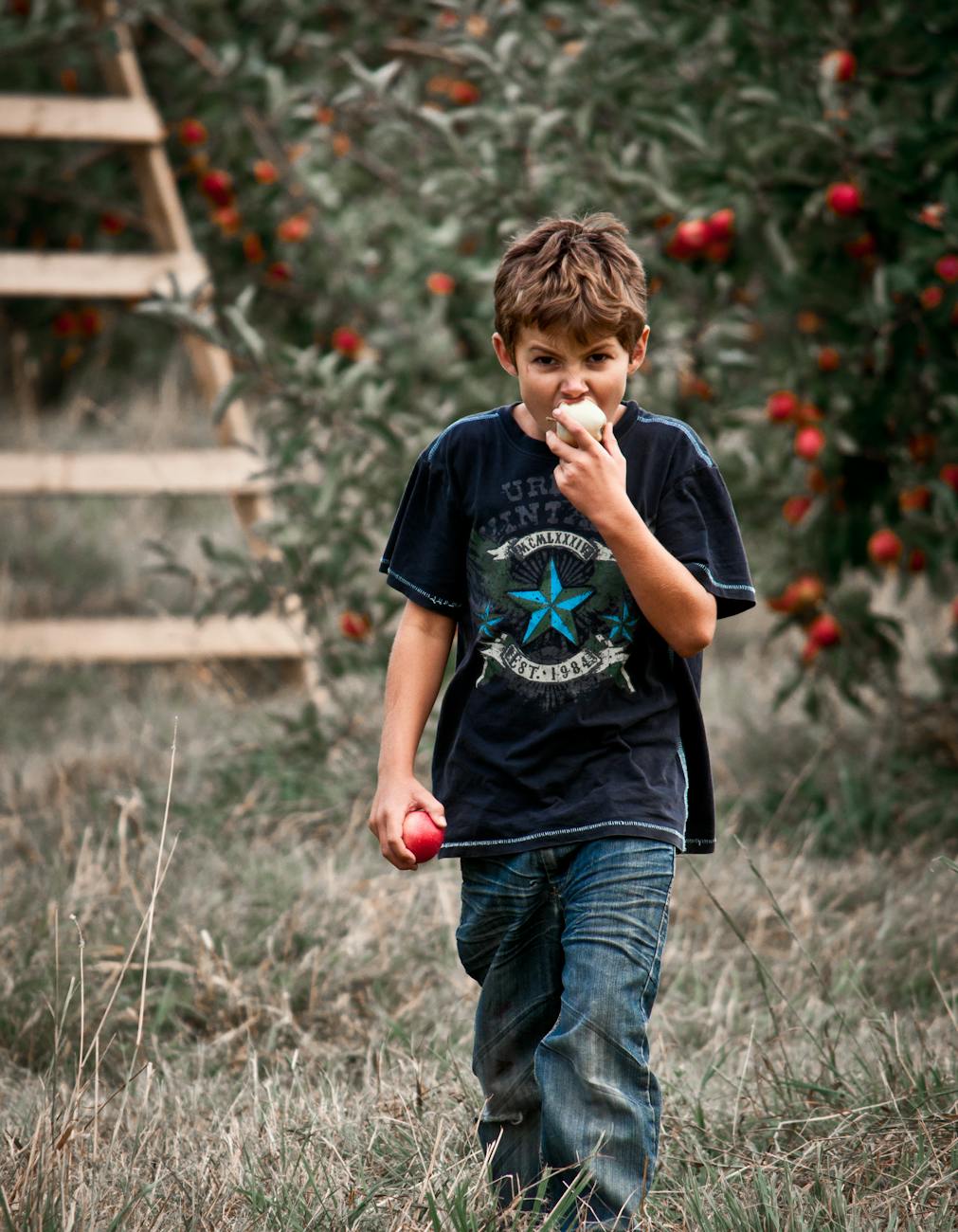
From the Welsh afal, meaning “apple,” Afallach is the name of a male deity in early Welsh mythology. He is described as a god of the Otherworld and of healing—figures sometimes link him to the Isle of Apples (Ynys Afallach), the mythic realm better known to us as Avalon. Through this association, Afallach is regarded as the mythic progenitor of the name Avalon, the legendary paradise of Arthurian lore.

Avalloc is its Anglicized form. Other Anglicized forms includem Evelake, and Aflach.

It has seldom use, if at all, as a given-name in the modern era, but it’s a bold, evocative choice pulled straight from Welsh mythology. It is ideal for those drawn to ancient, nature-infused names with literary and mystical resonance or those who want a pagan inspired name.

Sources

Mukundi

  • Origin: Shona
  • Meaning: “victor; conqueror; winner.”
  • Gender: Male
  • Pron: moo-KOON-dee

The name comes directly from the Shona word for a winner, victor or conqueror.

Mukundi can also be an alternate form for the Sanskrit male name, Mukunda, which has various meanings and is an epithet for Vishnu.

Sources

Shkëlqim

  • Origin: Albanian
  • Meaning: “brightness, radiance, splendor.”
  • Gender: Male
  • Pronunciation: /ʃkəlˈcim/ — shkuhl-CHEEM

The name is derived from the Albanian verb shkëlqej, meaning “to shine, to sparkle, to gleam.”

In Albanian, the root shkël- conveys an image of radiance and excellence. Cognate words include shkëlqyer (“excellent”) and shkëlqyeshëm (“brilliant, outstanding”). This family of words is used metaphorically for moral or intellectual brilliance as much as literal light.

In modern Albanian, the phrase Ai është një njeri me shkëlqim means “He is a man of brilliance.”

Although challenging for non-Albanian speakers to pronounce, the name has a distinctly regal and poetic aura.

Notable bearers include: Shkëlqim Cani (b. 1956), Albanian economist and politician, former Minister of Finance and Governor of the Bank of Albania.; Shkëlqim Fusha (b. 1961), Albanian architect, businessman, and philanthropist; Shkëlqim Troplini (1966–2020), Albanian Olympic Greco-Roman wrestler; and Shkëlqim Doda, Kosovar poet and essayist.

Sources

Zīle, Zīlīte

  • Origin: Latvian
  • Meaning: “acorn; titmouse; pupil of the eye.”
  • Gender: female
  • Pron: ZEE-leh; zee-LEE-teh

Zīle and Zīlīte are speculated to be ancient Latvian females names that survived Christianization.

Zīle is from the Latvian word for acorn or the name of a type of passerine bird known as the titmouse in English. It is first recorded in Riga as early as 1544 (1).

Zīlīte is also a Latvian word, derived from Zīle, with a diminutive suffix attached, also mean “titmouse” or “pupil.” Its usage is recorded as early as 1499 in Riga (2).

Sources