Ritika

ritika


  • Origin: Sanskrit
  • Meaning: “brass, bell-metal” or “stream.”
  • Gender: feminine
  • (REE-tee-kah)

The name is most likely from the Sanskrit word रीतिका (ritika) meaning “brass; bell metal,” but may also be linked to the Sanskrit रीति (riti) meaning “stream.”

A notable bearer is Indian actress, Ritika Singh (b. 1993).


Sources

Hari

200px-Kamalakara_Vishnu,


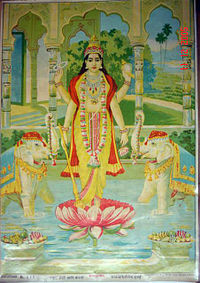
The name is derived from the Sanskrit हरि (hari), which means “brown; yellow; green; fawn-coloured.” The word itself is derived from a proto-Indo-European root word, *ǵʰel- meaning, “to shine; yellow; green.” It is linked with the Persian word zar (gold), the Greek khlores (green), Slavic zelen (green) & zolto (gold); and even shares the same root with the modern English word yellow.

In Hinduism, Hari is used interchangeably with Vishnu and sometimes Krishna.

Hari is used to refere to God or the Supreme Being in many other Southeast Asian religions, such as in Sikhism, Buddhism & Jainism.

Hari in many Indian languages is also used as a euphemism for any brown fauna, such as lions, monkeys and horses. The feminine form of Harí is the name of a mythological matriarch of the monkey species, mentioned in Sanskrit epics.

Currently, Hari is the 440th Most Popular Male Name in England & Wales, (2018).

Sources

Aya, Ayah, Aija, Aja

download (4)


Pronounced I-yah, this name has several different origins and meanings.

Aya is a popular Japanese female name, depending on the kanji used, it has several different meanings, the most popular being 彩 (aya) meaning “colour,” or 綾 (aya) meaning “design.” In the Japanese case, it is also occasionally used on males. Other meanings and kanji characters used to represent the name include:

  • 綾, “twill”
  • 理, “truth, logic”
  • 亜矢, “Asia, arrow”
  • 亜弥, “Asia, all the more”
  • 亜夜, “Asia, night”
  • 順, “order, sequence, turn”
  • 文, “writings”
  • 紗, “gauze”
  • 技, “technique”
  • 愛, “love”
  • 恵, “blessed”
  • 朱, “vermillion”
  • 藻, “algae”
  • 娃夜, “beautiful night”

It was borne by an Ancient Egyptian queen of the Thirteenth Dynasty (between 1803 and 1649 BCE). Its meaning and etymology in this case is unknown.

Aya is also an Akan name, denoting a girl born on a Thursday. Its masculine form being Yao.

In Hebrew, Aya is an acronym for ארץ ישראל היפה (the beautiful land of Israel) and allegedly from  איה, איא meaning “bird” or “to fly swiftly.” It is borne by a minor male character in the Bible but seems to exclusively be used on females in modern Israel. There is a famous Israeli pop-singer who bears this name, Aya Korem.

Ayah آية is Arabic meaning “sign; clue” and refers to Quranic verses. It is also sometimes transliterated as Aya or Aja among Bosnians, Albanian and Central Asians. Another variation is Ayat, sometimes spelled Ayaat.

In Akkadian, the name means dawn and was borne by an ancient Sumerian goddess, the consort of Shamesh. The name is still used among Assyrian Christians who trace their heritage back to the Akkadian peoples.

In Tamil, spelled ஆயா, it means “old woman,” “grandmother,” or ” caretaker” and in the Nepalese language of Raute it means “sister-in-law.”

In Scandinavia, Aija, Aja & Aya are offshoots of Maria, they started off as diminutive forms but are now used as independent names. Aya is currently the 22nd Most Popular Female Name in Denmark (2018). However, I am unable to determine if in this case, it is used by Muslim families in reference to the Arabic form or if it is used by non-Muslim families in reference to its Scandinavian form. Aija can also be a Finnish form of Eija, which is from an exclamation eijaa!

In Latvia, Aija is most likely derived from aijāt (to rock, to lull) and was popularized as a given-name at the turn of the 20th-Century when it was used by Latvian author Jānis Jaunsudrabiņš for the title character in his eponymous novel, Aija (1911).

Aja is a Bosnian, Albanian & Central Asian form of the Arabic, Ayah.

In Mongolian, it is derived from ая (aya), meaning “melody.”

In Europe, Aya appears on several popularity charts, most likely used in reference to its Arabic origins by Muslim immigrants, its rankings in other countries are as follows:

  • #46 (France, 2018)
  • #48 (Belgium, 2018)
  • #65 (Catalonia, Spain, 2018)
  • #95 (Spain, 2018)
  • #122 (Netherlands, 2018)
  • #184 (Italy, 2018)
  • #309 (Ayah, England & Wales, 2018)
  • #317 (England & Wales 2018)
  • #749 (United States, 2018)

Sources

Eva, Eve

Gender: Feminine
Origin: Hebrew
Meaning: “life.”
Eng (EEV); (EE-vuh); Germ/Sp/Pol (EV-ah)

The name is borne in the Bible and in the Quran by the first woman created by God. She and her husband were expelled from the Garden of Eden after eating from the Tree of Knowledge.

The name is believed to be derived from the Hebrew roots חַוָּה, Ḥavvāh, from the Hebrew root ḥāyâ meaning “life” and the Semitic element, ḥyw “to live.” Both the Hebrew word chavah meaning “to live” and chayah meaning “to breath” share the same root.

Despite Eve’s fall from Grace in the Bible, the name was always in usage among Jewish, Christian and Muslim communities. In England, its usage can be traced back to the 12th-century. Its Latinate form of Eva, has always been a classic in continental Europe, especially in Germany, Poland, Slovakia and the Czech Republic.

As of 2010, Eva was the most popular female name in the Faroe Islanda and in Slovenia. Eve, Eva and all her various forms’ rankings in other countries are as follows:

  • # 3 (Iceland, 2010)
  • # 4 (French-speaking, Switzerland, 2010)
  • # 5 (Netherlands, 2010)
  • # 7 (Ieva, Lithuania, 2010)
  • # 10 (Armenia, 2010)
  • # 10 (Evie, England/Wales, 2010)
  • # 14 (Northern Ireland, 2010)
  • # 15 (France, 2009)
  • # 17 (Scotland, 2010)
  • # 20 (Belgium, 2009)
  • # 24 (New Zealand, 2010)
  • # 26 (Australia, NSW, 2010)
  • # 29 (Croatia, 2010)
  • # 31 (Evie, Scotland, 2010)
  • # 33 (Evie, Australia, NSW, 2010)
  • # 37 (England/Wales, 2010)
  • # 44 (Eevi, Finland among Finnish-speakers, 2010)
  • # 44 (Ireland, 2010)
  • # 46 (Austria, 2010)
  • # 47 (Canada, BC, 2010)
  • # 48 (Spain, 2010)
  • # 55 (Catalonia, 2010)
  • # 55 (Éabha, Ireland, 2010)
  • # 56 (Eve, Northern Ireland, 2010)
  • # 59 (Eve, Ireland, 2010)
  • # 86 (Norway, 2010)
  • # 91 (United States, 2010)
  • # 92 (Eve, England/Wales, 2010)
  • # 99 (Eve, Australia, NSW, 2010)
  • # 201 (Eve, France, 2009)
  • # 589 (Eve, United States, 2010)
  • # 705 (Evie, United States, 2010)

Other forms of the name include:

  • Eva Ева ევა
    (Afrikaans/Albanian/Armenian/Basque/Belarusian/Bosnian/Catalan/Croatian/Czech/Dutch/Faroese/French/Frisian/Galician/Georgian/German/Icelandic/Italian/Portuguese/Romansch/Spanish/Scandinavian)
  • Evis (Albanian)
  • Mahalet/Mahlet (Amharic)
  • Hawa حواء Хауа (Arabic)
  • Yeva (Armenian)
  • Həvva (Azeri)
  • Yeva Ева Эва (Belarusian/Russian/Ukrainian)
  • Yevga Евга (Belarusian)
  • Hava (Bosnian)
  • Evy (Danish/Norwegian/Swedish: initially a diminutive form, occasionally used as an independent given name)
  • Eveke (Dutch: initially a diminutive form, used as an independent given name, EV-eh-ke)
  • Eve (English/Estonian/Walon)
  • Evie (English)
  • Hawat/Hewa (Egyptian/Coptic)
  • Eeva (Estonian/Finnish)
  • Eevi (Estonian/Finnish)
  • Evi (Estonian)
  • Ivi/Iivi (Estonian)
  • Iivika (Estonian)
  • Ève (French)
  • Eefje, Eefke (Frisian)
  • Hawwa ሕይዋን (Ge-ez)
  • Eua Ευα (Greek)
  • Chava חַוָה (Hebrew: Modern: KHAH-vah, gutteral CH sound)
  • Éva (Hungarian: AY-vaw, diminutive form is Évike)
  • Hawa (Indonesian/Malayalam)
  • Éabha (Irish-Gaelic)
  • Ieva (Latvian/Lithuanian: YEH-vah)
  • Evuzus (Malaysian)
  • Aaue (Manx)
  • Èva (Occitanian)
  • Ewa (Polish: EH-vah, diminutive forms are Ewka, Ewunia and Ewusia)
  • Evá (Sami)
  • Evelia (Spanish)
  • Evita (Spanish)
  • Eba (Tagalog)
  • Havva (Turkish)
  • Efa (Welsh)

Italian masculine form is Evo.

Traditionally, in most European countries, the name-day for Adam and Eve is December 24.

Leila, Layla

Gender: Feminine
Origin: Arabic לילה‎ ليلى
Meaning: “night.”
(LAY-la)

The name is derived from the Arabic and has a variety of different meanings depending on its spelling, the most popular etymology is that it is from a Semitic root, l-y-l, meaning, “night” and shares the same etymology as the name Lilith.

The name has always been popular in the Middle East and is found in the 7th-century romantic poem, Qays & Layla also known as Layla & Majnun (written by Persian poet, Nizami Ganjavi). The legend trickled down to throughout the Middle East, Near East, Central Asia and South Eastern Europe, making the name a long time classic in all those regions.

It was introduced into the English-speaking world via Lord Byron in which the name appears in two of his works, The Gaiour (1813) and Don Juan (1819). It was further popularized in the 1970s when the name was the subject of two songs, one being the famous Eric Clapton song and the other being “Layla” by Derek and the Dominos.

Her Bosnian form of Lejla is the 7th most popular female name in Bosnia & Herzegovina, (2010). Her rankings in other countries are as follows:

  • # 3 (Leyla, Azerbaijan, 2010)
  • # 36 (Layla, Australia, 2010)
  • # 37 (Layla, United States, 2010)
  • # 44 (Layla, England/Wales, 2010)
  • # 50 (Layla, Ireland, 2010)
  • # 50 (Layla, Scotland, 2010)
  • # 71 (Leila, Hungary, 2010)
  • # 76 (Layla, Canada, BC, 2010)
  • # 95 (Laila, England/Wales, 2010)
  • # 138 (Laila, United States, 2010)
  • # 143 (Leila, France, 2009)
  • # 204 (Leila, United States, 2010)
  • # 304 (Layla, Netherlands, 2010)
  • # 478 (Laila, Netherlands, 2010)
  • # 747 (Leyla, United States, 2010)

The name is also common in Iran, Israel, the Balkans and in the Turkic world.

In the Middle East, the name was popularized by a 7th-century poet by the name of Qays, whose lady love was named Layla. His story became a popular Medieval Arabic romance.

Other forms of the name include:

  • Lejla Лейла (Albanian/Bosnian/Dagestani/Kazakh/Maltese/Tatar)
  • Laïla (Algerian/Moroccan/Tunisian)
  • Leïla (Algerian/Moroccan/Tunisian)
  • Leyli Լեյլի (Armenian)
  • Leyla (Azeri/English/Kurdish/Turkish)
  • Lajla Лайла (Chechen)
  • Leila ლეილა (Circassian/English/Ethiopian/French/Georgian/Hungarian)
  • Laila (Dutch/English/Estonian/Finnish/Hindi/German/Latvian/Scandinavian/Urdu)
  • Layla (English/Italian/Uzbek)
  • Lejli Лейли (Kazakh)
  • Ljajlim Ляйлим (Kazakh)
Laila can also be a Sami form of Helga.

Bilal

Gender: Masculine
Origin: Arabic بلال
Meaning: “moistening.”
(bee-LAHL)

The name is derived from the Arabic meaning, “moistening.”

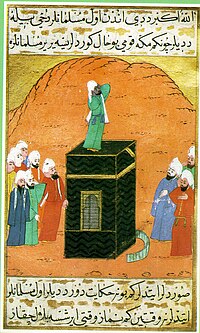
It was borne by the first Muezzin (Caller to Prayer) and a disciple of the Prophet Mohammed. He was an Ethiopian slave who had been emancipated by Mohammed.

As of 2010, Bilal was the 37th most popular male name in Bosnia & Herzegovina. His rankings in other countries are as follows:

  • # 90 (Catalonia, 2010)
  • # 147 (France, 2009)
  • # 217 (Netherlands, 2010)

The name is used throughout the Islamic world.

Another notable bearer was Bilal Xhaferri (1935–1986), an Albanian poet, novelist and political dissident against the Albanian communist regime.

Sumayya

Gender: Feminine
Origin: Arabic  سميّة Сумаыя
Meaning: “high above.”
(soo-MAY-yah)

The name was borne by Sumayya bint Khayyat (died 615 C.E.) an early convert to Islam and also considered the first Muslim Martyr.

As of 2009, Sumayya was the most popular female name in Tajikistan.

Other forms of the name include:

  • Sumejja (Albanian/Bosnian)
  • Soumaia (Algerian/Moroccan)
  • Sumayyah (Indonesian/Malaysian)
  • Sümeyye (Turkish)

Islam

Gender: Masculine
Origin: Arabic
Meaning: “voluntary submission to God.”
(IS-lahm)

The name comes from the Arabic verbal noun meaning, “obedience, subjugation of someone or something, or the voluntary submissal to the Almighty.”

The name is technically unisex, but is more often used for males throughout the Islamic world.

As of 2010, Islam was the 14th most popular male name in Kazakhstan, (2010).

It is borne by the current president of Uzbekistan, Islam Karimov (b.1938).

Amir

Gender: Masculine
Origin: Arabic أمير Амир
Meaning: “prince; commander”
(uh-MEER)
The name is derived from the Arabic word for a prince, ruler, commander or admiral. In the Islamic world, it is used as an honorific title of nobility, office or someone of high eminence. The word itself is derived from the Arabic root amr meaning, “to command.”
The early Islamic caliphs used the title Amir al-Muninin meaning, “Commander of the Faithful”, a reference of their leadership over the adherants of the Islamic faith.
The title was assumed by other Islamic rulers, including sheiks and sultans throughout Central Asia all the way into Saudi Arabic.
The leader of a group of pilgrims to Mecca is often referred to as an amir.
It is used as a given name throughout the Islamic world.
As of 2010, Amir was the 20th most popular male name in Kazakhstan, (2010). His rankings in other other countries are as follows:
  • # 13 (Emir, Bosnia & Herzegovina, 2010)
  • # 28 (Emir, Turkey, 2010)
  • # 66 (Bosnia & Herzegovina, 2010)
  • # 155 (the Netherlands, 2010)
  • # 221 (France, 2009)
  • # 278 (United States, 2010)
Other forms of the name include:
  • Emir (Albanian/Bosnian/Turkish)
  • Əmir (Azeri)
  • Amirs (Latvian)
Feminine forms include, Emira (Albanian/Bosnian/Turkish) and Amira.
Amir can also be a Hebrew male אָמִיר name meaning, “tree top.”

Fatima

Gender: Feminine
Origin: Arabic فاطمة
Meaning: “to abstain.”
Sp (FAH-tee-mah); Arab (FAH-TEE-MAH)

The name comes Arabic meaning “to abstain.”

It is an extremely popular name throughout the Islamic world, and is especially popular among Shia Muslims. It was borne by the daughter of the Prophet Mohammed, who was also known as Fatima Zahra (Fatima the Illustrious).

Among Muslims, she is revered as an exemplar among women.

The name is also used among Portuguese and Spanish-speaking Christians in reference to a shrine in Portugal in which the Virgin Mary is believed to have appeared. The name shares the same etymology as the town was named for a Moorish princess who converted to Christianity and was subsequently persecuted by her family.

Currently, its Turkic form of Fatma is the 3rd most popular female name in Azerbaijan, (2010). Her rankings in other countries are as follows:

  • # 1 (Fatemah, Iran, 2007)
  • # 1 (Morocco, 2007)
  • # 1 (Pakistan)
  • # 1 (United Arab Emirates)
  • # 8 (Libya
  • # 13 (Fatma, Turkey, 2010)
  • # 38 (Bosnia & Herzegovina, 2010)
  • # 71 (Catalonia, 2010)
  • # 87 (Spain, 2010)
  • # 92 (Belgium, 2009)
  • # 211 (Netherlands, 2010)
  • # 255 (France, 2009)
  • # 270 (United States, 2010)

Other forms of the name include:

  • Fatima (Albanian/Arabic/Bosnian/Chechen/Chuvash/Kazakh/Kyrgyz/Pashtun/Tajik/Tatar/Urdu/Uzbek)
  • Fatma (Maghrebi Arabic, Turkish/Wolof/Zazaki)
  • Fadime (Azeri/Kurdish/Tunisian/Turkish)
  • Fatimə (Azeri)
  • Faḍma (Berber/Kabyle)
  • Fadumo (Ethiopian)
  • Fatimah (Indonesian/Javanese/Malaysian/Swahili)
  • Fatemah فاطمه (Persian)
  • Fátima (Portuguese/Spanish)
  • Faduma (Somali)
  • Fátímọ̀ (Yoruban)
  • Fatıma (Zazaki)