Asher

Gender: Male
Origin: Hebrew
Meaning: “happy, blessed.”
Eng (ASH-er); Heb (ah-SHAIR)

The name is found in Genesis as the name of the son of Jacob and Zilpah. He was the founder of the tribe of Asher and had played a role in selling his brother, Joseph, into slavery. Asher had four sons and a daughter and had eventually settled in Canaan.

The name, Asher is believed to come from the Hebrew, Osher meaning “happy,” or “blessing,” though some scholars have argued that the name is actually a male counterpart of the Assyrian, Asherah: said to mean “she who walks on the sea.” Others suggest that it could be a cognate of the Assyrian, male name, Ashur.

Both Asherah and Ashur are related and were the names of an ancient Sumerian god and goddess, both of which I will go further into in another installment of Asherah in the near future.

The name has always been popular among Jewish families. Ash is usually the prefered nickname. Due to the popularity of other Ash names such as Ashton, the name is increasing in popularity in the United States, currently he comes in at # 206 in the U.S. top 1000 and seems to be rising.

Other forms include the

  • Aser (Biblical Greek/Latin/French/Spanish)
  • Asyer (Indonesian)
  • Anschell/ Anshel (Yiddish: diminutive forms)

Thoosa

Gender: Female
Origin: Greek
Meaning “swift.”
Eng (THOO-sah); Grk (thoh-OO-sah)

Rendered in Greek as Thoösa Θόωσα, it is borne by a sea nymph in Greek mythology. She was the daughter of Phorcys and Ceto and beloved by the god Poseidon. She was associated with currents and swiftness. By Poseidon she bore the cyclops, Polypemus. She was also the sister of Echidna, and Scylla and was often depicted as a mermaid-like creature.

In recent years, it is the name of an English brand of womens’ running wear, founded in 2006 by CEO Caroline MacNally.

The name is rendered in Spanish as Toosa, (not by any means a common name), and in Lithuanian as Teosa (also very obscure).

Halia, Leucothea

Gender: Female
Origin: Greek
Meaning “briny.”
(HAHL-yah; HAY-lee-ah); (loo-KO-thee-uh)

The name is found in Greek mythology as the name of a sea nymph native to the Isle of Rhodes, sometimes believed to be one of the original Telchines (indigenous Rhodian gods).

According to Olympic-Rhodian legend, Halia was the favorite of Poseidon and was believed to be the personification of sea salt. She had six sons and one daughter: Rhode.

Her six sons’ forbade the goddess, Aphrodite, from landing on their island. In retaliation, Aphrodite drove the six boys into such madness that they raped their own mother. Halia committed suicide by throwing herself into the sea. Her sons were buried in the deep sea caves beneath the island, and it was believed by the Rhodians that Halia was reincarnated as the goddess Leucothea, who they worshipped with great honour.

Leucothea means “white goddess.” It believed that Leucothea was a title given to various sea nymphs who were later transformed as goddesses.

Coincidentally, hali’a, a Hawaiian word turned given name, is from the Hawaiian verb meaning “to remember one fondly.” Or if spelled halia, it is a past imperfect verb of hali meaning “to carry”, or “to bear.”

Other forms of Leucothea include the original Greek Leukothea (Λευκοθέα), the Spanish Leucótea (very obscure) and the Lithuanian Leukotėja (also very obscure).

Psamathe

Gender: Feminine
Origin: Greek
Meaning: “sand goddess”
Ψάμαθη
(SAM-uh-THEE)

The name is derived from the Greek psammos meaning sand, and the Greek theia meaning “goddess,” hence: “sand goddess.”

The name is found in Greek mythology as the name of the goddess of sand and beaches. She was the wife of Proteius, who was the seal herder of Poseidon. Psamathe had one mortal son and a nymph for a daughter.

She was assaulted on the beach by King Aeacus. She tried to escape his advances by transforming herself into a seal, however, Aeacus was able to overcome her, and she became pregnant with a son whom she named Phocus meaning “seal.”

Psamathe is also the name of a moon.

Another form of the name that appears is Psamanthe (sah-MAN-thee).

Other forms that exists but not necessarily in usage are:

  • Psàmate (Catalan)
  • Psamathée (French: psah-mah-TAY)
  • Psamate (Italian/Spanish)
  • Psamatė (Lithuanian)

The name would make a more unique alternative to the more popular Samantha.

Possible nickname options are Sam and Sammie.

Penelope

Gender: Feminine
Origin: Greek
Eng (pen-NEL-uh-PEE)

The name is of uncertain origins, many scholars believe that the name is pre-Hellenistic and is related to an ancient word, penelops (πηνελοψ), which means “duck,” others argue that the name is Greek compound name composed of the elements, pene (πηνη) meaning “threads.”  Many scholars feel that the latter is the most appropriate since it was the name of Odysseus wife who kept her suitors at bay by pretending to weave.

The name appears in Greek mythology as the name of a wood nymph who was speculated to be the mother of the god Pan.

The name is occasionally used in German, Italian,

Other forms of the name include:

  • Penèlope (Catalan)
  • Penelopa (Croatian/Polish/Romanian/Serbian: Pela, Pelka and Pelcia are the Polish diminutives)
  • Pénélope (French)
  • Penelópē Πηνελόπεια/Πηνελόπη (Greek)
  • Pénelopé (Hungarian)
  • Penelopė (Lithuanian)
  • Penelopeia (Norwegian/Danish/Swedish)
  • Penélope (Spanish/Portuguese)

The name is currenly borne by Spanish actress Penelope Cruz.

Possible English nickname options, include, Penny, Poppy, Lola, and Nell.

Sophia, Sophie, Sofia

Gender: Female
Origin: Greek
Meaning: “wisdom.”
(so-FEE-yuh); (so-FYE-uh)

A long time Greek classic, the name suddenly appeared in the U.S top 100 circa 2000, and budged itself into the # 6 spot in 2007.

Sophia comes directly from the Greek, and was often used as a personification for Wisdom in philosophical, Christian, Jewish and Gnostic texts.

In Christian lore, Saint Sophia was the mother of three Christian martyrs, Hope (Elpida), Faith (Pisti) and Charity (Agapi). She supposedly died from grief after the death of her daughters, and is now one of the most revered saints of the Eastern Christian churches, making the name a longstanding classic throughout Eastern Europe and modern Greece.

Sophia is the Greek spelling, which seems to be the most worn form in the Western World. However, Sofia is the variation often used in continental Europe.

Sophia was not introduced into the English-speaking world until the 18-century, when it was introduced into the British Family Tree by the German Hanovers, from whose line the names Sophie and Sophia often appear.

In English, the pronunciation of so-FEE-yah, and so-FYE-uh are interchangeable. The former is more of a modern import, and the most popular. The latter is the older English pronunciation of the name, which is seldom heard in the States but is occasionally heard in Britain.

Other forms the name include:
  • Zofiya (Amharic/Ethiopian)
  • Soffi/Soffiya (Armenian)
  • Sachveja/Sofiya (Belorusian: Zosja is a diminutive form)
  • Sofija София (Bulgarian)
  • Sofia (Catalan/Finnish/German/Italian/Norwegian/Occitanian/Portuguese/Romanian/Slovak/Swedish: in 2007, this was the 59th most popular female name in Norway and the 44th most popular in Sweden)
  • Sònia (Catalan)
  • Sofija (Croatian/Serbian)
  • Sofie (Czech: SOFE-yeh)
  • Soňa (Czech/Slovak: a translation of the Russian diminutive form, Sonya)
  • Žofia/Žofie (Czech/Slovak: ZHOFE-yah, and ZHOFE-yeh. Diminutive forms are: Žofka and Žofa.)
  • Såffi (Danish: an old Danish form of Sophia)
  • Sofie (Danish/Dutch/German/Norwegian/Swedish: so-FEE Scand; zo-FEE German. In 2008, she was the 35th most popular female name in the Netherlands, and in 2007, she was the 10th most popular female name in Norway and the 85th most popular in Sweden)
  • Fie (Dutch: originally a diminutive form, now used as an independent given name, FEE-e)
  • Soovi (Estonian)
  • Sohvi (Finnish)
  • Sophie (French/English/German/Dutch. In 2008, this was the 74th most popular female name in the United States, the 12th most popular in Canada, the 7th most popular in England and Wales and the most popular female name in the Netherlands and Scotland. In 2007, it was the 8th most popular female name in Australia)
  • Sonja (German/Estonian/Finnish/Polish/Scandinavian/Serbian/Slovene/Sorbian: a translation of the Russian diminutive form, Sonya).
  • Sonje (German: ZONE-yeh)
  • Sophia Σοφία (Greek Modern/English/Estonian/Italian)
  • Suffi/Suffia (Greenlandic)
  • Szonja (Hungarian)
  • Zsófia (Hungarian: ZHOH-fee-aw. In 2005, this was the 5th most popular female name in Hungary. A common diminutive form is Zsófika)
  • Soffía (Icelandic)
  • Sonia (Italian/Romanian)
  • Sofija/Sofja (Latvian)
  • Sofija/Zofija/Zopija (Lithuanian)
  • Sofija/Sofijana (Macedonian: Sofa is a diminutive form)
  • Sofija (Maltese)
  • Sophi (Persian)
  • Sofi (Plattdeutsch)
  • Zofia (Polish: diminutive forms are: Sonka, Zochna, Zocha, Zofka, Zońka, Zosia, Zośka, Zosieńka, and Zosia (ZOH-shah)
  • Sónia (Portuguese-European)
  • Sônia (Portuguese-Brazilian)
  • Sofiya/Sofya София (Russian/Ukrainian: Russian diminutives include Sonya, which is used as an independent given name in other European countries, but seldom in Russia)
  • Zofija (Slovene)
  • Sofía (Spanish/Galician/Faroese, in 2006, she was the 17th most popular female name in Spain and the 5th most popular in Chile. Spanish diminutives include Chofa, Fifi, SoficitaSofí and Sofita)
  • Sofya (Turkish)
  • Tzofiya (Yiddish)
Masculine forms include Sofko (Bulgarian), Sofus/Sophus (Danish/Norwegian/Swedish) and Sofio (Italian).

The designated name-days are: May 15 (Austria/Germany), May 25 (France), September 17 (Greece), September 30 (Lithuania/Spain),

Lothaire

Gender: Male
Origin: French
Meaning: “famous army.”
Pronunciation (loh-TARE)

The name is comprised of the Germano-Franco elements hlud meaning “fame,” and heri meaning “army.”

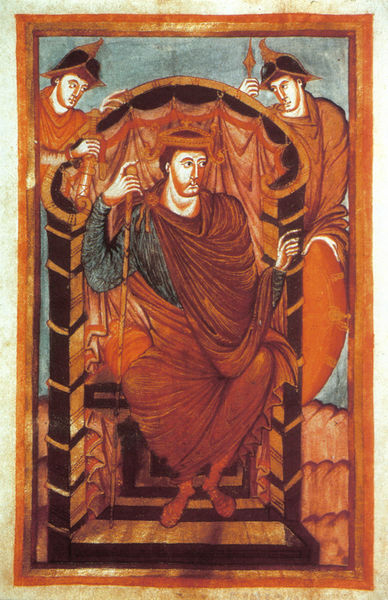
The name was borne by a two famous kings. King Lothair I of Hebaye, was crowned as Emperor of the Holy Roman Empire in the 9th-century. He was the son of Louis I also known as Louis the Pious.

Other forms of the name include:

  • Lothair (English)
  • Chlodochar/Chlothar (Frankish: obscure)
  • Lothar (German)
  • Lotario (Italian/Spanish)
  • Lotário (Portuguese)

Tiburtius

Gender: Male
Origin: Latin
Meaning: “from the Tibur”

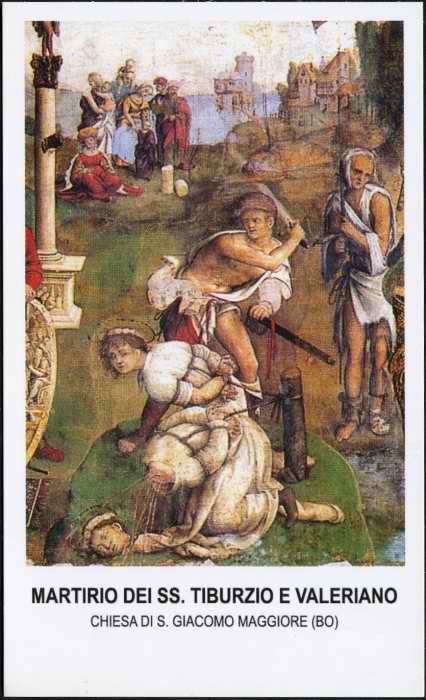
Derived from the Roman cognomen, Tiburtius, meaning “from Tibur.” Tibur is the old Latin name for Tivoli Italy. This was the name of a very late 3rd-century saint who was martyred under Diocletian. Nicknames include Tib, Tibby and Burt.

Other forms include  include:

  • Tibor (Czech/Slovak/Hungarian)
  • Tiburt (English)
  • Tiburce (French)
  • Tiborc (Hungarian)
  • Tiburzio (Italian)
  • Tiburcy (Polish)
  • Tiburcio (Spanish/Portuguese)

Parthenope

Gender: Feminine
Origin: Greek
Meaning: “maiden voice”
Pronunciation (par-THEN-uh-PEE)
Παρθενόπη

In Greek mythology, it is the name of a nymph who seduced Odysseus, as well as the daughter of King Ancaeus of Samos. It is also the name of an Ancient Greek settlement in Naples

It was borne by Frances Parthenope Verney (1819-1890), writer, journalist and elder sister of Florence Nightengale.

Other unusual forms include:

  • Parthénope/Parthénopé (French)
  • Partenope (Serbo-Croatian/Italian)
  • Parténope (Portuguese: very obscure)

Plautius, Plautia

Origin: Latin
Meaning: derived from the Latin word plaustrum meaning “wagon” or “cart.”
Pronunciation: (Plow-shus); PLOW-see-oos)

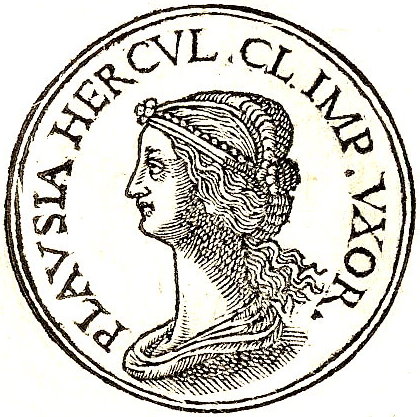
Plautius was a common Roman praenomen. It was borne by the consul Aulus Plautius and the first wife of Emperor Claudius, Plautia Urganilla.

Plautilla is a dimuntive form of the feminine Plautia.

Other forms include:

  • Plauzio (Italian)
  • Plaucjusz (Polish)
  • Plaucio (Spanish)

Feminine forms

  • Plauzia (Italian)
  • Plaucja (Polish)
  • Plaucia (Spanish)