Gender: Masculine
Origin: Saami
Meaning: “air.”
The name comes from the Saami word for air. Its designated name-day is November 29th.
Gender: Masculine
Origin: Saami
Meaning: “air.”
The name comes from the Saami word for air. Its designated name-day is November 29th.
 Gender: Feminine
Origin: Hebrew
Meaning: “God is my oath; God is abundance.”
The name is a transliterated form of the Biblical Greek Ελισβετ (Elisabet), which is a Hellenized version of the Biblical Hebrew feminine name, אֱלִישֶׁבַע (Elisheva).
Elizabeth appears twice in the Bible, once in the Old Testament as the name of Aaron’s wife and once in the New Testament as the wife of Zachariah and the mother of John the Baptist.
Elizabeth has remained fairly consistent in the U.S top 100 for over a hundred years. She currently ranks in at # 9 and the lowest she has ever come in the U.S. charts was in 1945 at # 26.
In Australia she is the 37th most popular female name (2007), in Canada, she ranks in at # 20 (2008), in England/Wales she came in at # 40 (2008), in Ireland at # 63 (2007) and in Scotland at # 68 (2008).
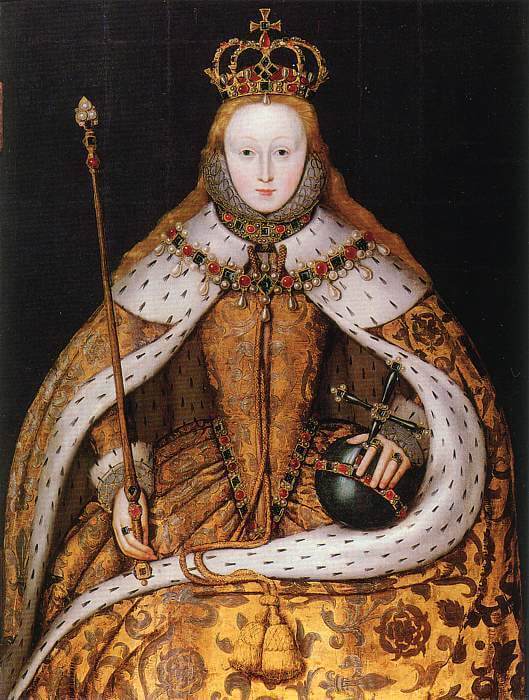
The name was borne by several saints and European royalty. Among the most notable bearers were, St. Elizabeth of Hungary, a 12th-century Hungarian princess who was known for her acts of kindness and charity toward the poor and Queen Elizabeth I of England, including the current reigning Queen, Elizabeth II.
The name Isabel/Isabella are relatives, but have becomes so far apart from its original source, that they often occur concurrently in many European countries with Elizabeth, hence is why I shall devote a different post to Isabel/Isabella, but I shall cite her several times in this article as a variation whenever needed.
I believe one of the reasons why Elizabeth has been a long time favorite, is because of her versatility. She can be shortened to a variety of different nicknames, especially in English. The most popular are: (I have cited the ones that have commonly been used as independent given name with a black club)
Bess, Bessie, Beth♣, Bets, Betsy, Bet, Bettie/Betty, Bezzy, Bit, Bitsy, Biz, Buffy, Elisa♣, Elise♣, Elle♣, Eliza♣, Ella♣, Ellie, Elsa♣, Elsie♣, Ibbie, Lib, Libby, Lilly, Lisa♣, Liz, Lizzie, Liza♣, Tetty, Tibby and Tizzy.
Other forms of the name include:
Latinate Forms
Forms found in Latinate/Romance languages
Germanic Forms
Forms used in Germanic languages
German diminutive forms are Betti, Elis, Elli, Elschen, and Lieschen.
Slavic Forms
Forms used in Slavic speaking countries
Czech diminutive forms are Běta, Bětka, Bětuška, Betynka, Bětuše, Betyna, and Líza. Slovakian diminutives include: Beta, Betka, Betuška, Betinka, Betuša and Betina. Polish diminutive forms are Bieta, Ela (the most prevalent), Elka, Elunia and Elżunia. Slovene diminutives are: Beta, Beti, Betika, Ela, Eli, Elzi, Špelca, Špelica, Špelka, Jelica, Lili, and Lizika.
Baltic Forms
Forms used in the Baltic States
Celtic Forms
Forms used in Celtic based languages
Other forms
Hungarian nicknames includes Bözsi, Erzsi (ER-zhee), and Zsóka (ZHO-kaw).
Medieval Forms
Forms no longer in usage from Medieval Europe
Name-days are: November 17 and November 19.

Soren Kierkegaard
Gender: Masculine
Origin: Latin
Meaning: “stern”
Eng(SEV-rin); Germ(Ze-ve-reen)
The name is derived from an old Roman family name which was derived from the Latin name Severus meaning “stern.” The name was borne by several saints, including a pope and a Roman theologian put to death under Theodoric 1.
The name is also borne by Danish philosopher Søren Kierkegaard (1813-1855), Søren is a fairly popular form throughout Scandinavia, especially Denmark and is even in usage in Germany.
The designated name-day is October 23.
Other forms of the name include:
Female forms include:
Gender: Feminine
Origin: Latin/Greek
(LID-dee-uh)
Lydia has a sweet feminine vibe. Its classic without sounding too stuffy. Lydia could work just as well on a five month old as it would on a 55 five year old. It has the same feel as the popular Olivia and it wouldn’t be surprising if Lydia soon took Olivia’s place. Lydia currently stands as the 120th most popular female name in the United States.
As for Lydia’s history, it first appears as a given name in the New Testament. It was the name of a woman who had converted to Christianity after befriending St. Paul. Some scholars believe that Lydia was not her actual name, rather, it was a nickname to denote her place of origins, (Lydia in Asia Minor).
Lydia is a Greek word for an ancient country, known in Assyrian as Luddu, this particular’s country’s culture and language has been lost to history and speculation. The Greeks talked quite a bit about it, and in the Bible it is often refered to as Lud.
Lydia has multiple forms, including:
In other Continental European countries, the name is usually rendered the same as it is in English. In German speaking countries its pronounced (LUY-dee-ah). Its designated name day is August 3rd.