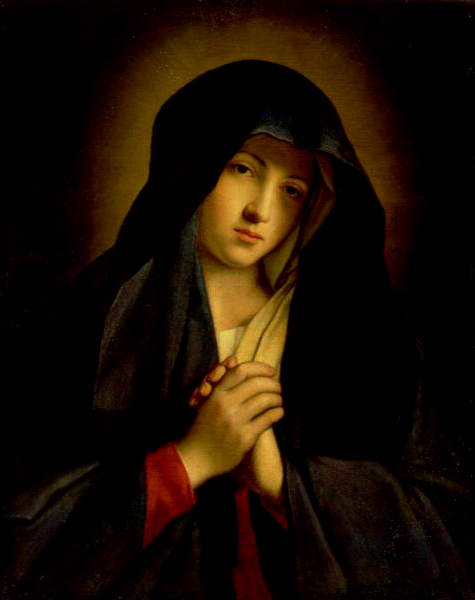
Mary and its various forms has to be one of the quintessential, classic female names of all time, she has been used in Protestant England in the form of Mary, in the Islamic world as Maryam, in Jewish communities in the form of Miriam and in the Catholic world as Maria, Marie or Mary.
In the United States, she has never quite detracted from the top 100, if Mary is not in fashion then it is usually one of her other forms that may take her place, such as Molly, Mariah, Maria or Mia, all depending on the flavor of the day.
Currently, Mary is the 97th most popular female name in the United States, (2008). Mary’s rankings in other countries are as follows:
- # 7 (Armenia, 2008)
- # 57 (Ireland, 2007)
Its French form of Marie is popular outside the Hexagon, she currently ranks in as the 546th most popular female name in the United States, but in other countries, she appears in the top 10. Her rankings are as follows:
- # 9 (Armenian, 2008)
- # 4 (Belgium, 2008)
- # 17 (Czech Republic, 2008)
- # 24 (Denmark, 2008)
- # 20 (France, 2009)
- # 9 (Germany, 2009)
- # 270 (the Netherlands, 2008)
The continental form of Maria is extremely popular across Europe and Latin America, her rankings in other countries are as follows:
- # 4 (Argentina, 2009)
- # 8 (Basque Country, Spain, 2008)
- # 3 (Belarus, 2005)
- # 3 (Bulgaria, 2008)
- # 89 (Canada, B.C., 2008)
- # 6 (Catalonia, Spain, 2008)
- # 8 (Chile, 2008)
- # 91 (England/Wales, 2008)
- # 6 (Estonia, 2007)
- # 4 (Faroe Islands, 2008)
- # 59 (Germany, 2009)
- # 1 (Greece, 2004)
- # 90 (Hungary, 2008)
- # 5 (Iceland, 2004-2007)
- # 49 (Ireland, 2008)
- # 1 (Israel, among Christian girls, 2004)
- # 9 Marija (Latvia, 2005)
- # 1 Marija (Macedonia, 2006)
- # 1 (Malta, 2008)
- # 39 (the Netherlands, 2008)
- # 14 (Norway, 2008)
- # 17 (Poland, 2009)
- # 1 (Portugal, 2008)
- # 2 (Romania, 2008)
- # 2 (Russia, 2007)
- # 99 (Scotland, 2008)
- # 1 (Slovakia, 2004)
- # 2 (Spain, 2008)
- # 96 (Sweden, 2008)
- # 7 (Ukraine, 2009)
- # 64 (United States, 2008)
Her diminutive offshoot of Mia, has also been quite trendy the last 10 years, as of 2008, she was the 14th most popular female name in the United States. In other countries, her rankings are as follows:
- # 1 (Australia, 2008)
- # 25 (Canada, B.C., 2008)
- # 44 (Chile, 2006)
- # 11 (England/Wales, 2008)
- # 1 (Germany, 2009)
- # 23 (Ireland, 2008)
- # 5 (Isle of Man, 2009)
- # 350 (the Netherlands, 2008)
- # 24 (New Zealand, 2009)
- # 12 (Norway, 2008)
- # 26 (Scotland, 2008)
- # 46 (Slovenia, 2005)
- # 3 (Switzerland, among Romansch-speakers, 2008)
Another common diminutive offshoot, is Molly, which is mostly used in the English speaking world, but has also shifted over to some of the Scandinavian countries. Her rankings in other countries are as follows:
- # 57 (Australia, 2007)
- # 84 (Canada, B.C., 2008)
- # 32 (England/Wales, 2008)
- # 25 (Ireland, 2008)
- # 33 (New Zealand, 2009)
- # 39 (Scotland, 2008)
- # 11 (Sweden, 2008)
- # 104 (United States, 2008)
Miriam is another common choice which is popular throughout Europe and the Middle East. Her rankings are as follows:
- # 1 Mariam (Georgia, 2008)
- # 6 Maryam (Iran, 2007)
- # 4 Maryam (Israel, among Muslim girls, 2004)
- # 6 Maryam (Pakistan)
- # 48 Miriam (Spain, 2008)
- # 1 Mariam (Tunisia, 2005)
- # 309 Miriam (United States, 2008)
As for its meaning and derivation, though the its origins can be traced back to the Bible, its lingustic and etymological meaning has long been debated. Many hypothesis include that the name could be a derivative of the Hebrew meri, ‘rebel’ related to the Hebrew verb MRH, mara or Marah which means’ to be “rebellious.” Or that it is related to the Hebrew word מרא (MRA, mara) which means ‘well-fed’, something which would have been considered a comely attribute in Biblical times.
One of the most popular etymological theories is its association with the Hebrew מר (MR, mar), meaning. “bitter” or “bitterness, and another very well established hypothesis suggests that it is from an Egyptian source, mry “beloved” or mr meaning “love.”
Other possible theories include:
That is it a combination of the Hebrew words מר (MR, mar), meaning “bitter” or the Hebrew (mar) meaning, “drop”; or (mor) meaning, “myrrh” or ” (mari ) meaning “mistress’.
The name is borne by several female characters in both the Old and New Testament.
Among Jews, the name was originally used in honour of the sister of Aaron, Miriam the Prophetess.
Among Muslims and Christians, (particularly Catholics and Eastern Orthodox), the name is usually used in honour of the Virgin Mary, the mother of Jesus.
However, in certain eras and cultures, Mary or Maria was considered too sacred of a name to use on a child, and in other cultures, the name Maria is so honorable to have, that it is even bestowed upon males, usually in conjunction with a male name or as a middle name. This is especially so in Spanish-speaking countries, French speaking countries and occasionally done in other predominate Catholic countries such as Ireland, Poland and in Bavaria, Germany.
The name has made is presence known in British royalty as well as in the continental ruling houses. Other forms are as follows:
Latinate Forms
Forms used in Latin-based languages
- Marieta (Catalan: originally a diminutive form, used as an independent given name in Spanish-speaking countries)
- Miryam (Catalan: archaic form from the 13th-century)
- Maria (Corsican/Italian/Occitanian/Portuguese/Romanian/Romansch/Latin)
- Manon (French: originally a diminutive form of Marie, the name has been used as an independent given name for centuries. In fact, it currently ranks in as the 7th most popular female name in Belgium (2006), the 4th most popular female name in France (2006), and the 184th most popular female name in the Netherlands (2008). Pronunciation can be heard here: http://www.forvo.com/search/Manon/)
- Marie (French: she is one of the most popular middle names in the English speaking world. In French, this form is bestowed on males in conjunction with other male names or as a middle name. There are several common French female names used in conjunction with Marie, as well. Those of which, I will save for future postings).
- Marielle (French: originally a diminutive form of Marie, now used exclusively as an independent given name)
- Mariette (French: a diminutive form of Marie, occasionally used as an independent given name, now considered dated in French-speaking countries).
- Mariolle(French: obscure, very old diminutive form of Marie, the inspiration of the Polish offshoot, Mariola).
- Marion (French: a medieval French diminutive form of Marie, now exclusively used as an independent given name, the name was borne in legend by the love interest of Robin Hood, Maid Marion, and is borne by French actress, Marion Cotillard. In France, it is the 59th most popular female name (2006)
- Myriam (French: form of the Biblical, Miriam, she ranks in as the 95th most popular female name in France (2006)
- Mariella (Italian: originally a diminutive form of Maria, now exclusively used as an independent given name)
- Marietta (Italian: a diminutive form of Maria, occasionally used as an independent given name).
- Marigia (Italian: obscure)
- Mariuzza/Maruzziella (Italian: obscure)
- Mariana (Portuguese: Mariana is usually considered a name of a seperate etymology, but is used in Portuguese and Spanish as a form of Miriam. She is the 73rd most popular female name in Chile, 2006).
- María (Spanish/Galician).
- Marita (Spanish: a diminutive form of Maria, now often used as an independent given name)
- Maritza (Spanish: a Latin American spin-off of Maria, originally a diminutive form, now a trendy given name, especially among Mexican-Americans, she is currently the 560th most popular female name in the United States).
- Mareye (Walon)
An Italian diminutive form is Mimi. A Portuguese diminutive form is Mariazinha.
Masculine forms are:
- Mari (Catalan)
- Mariu (Corsican)
- Mario (Italian/Galician)
- Marius (Latin/French/Romanian)
- Mário (Portuguese)
Germanic Forms
Forms used in Germanic-speaking countries
- Maiken/Majken (Danish/Norwegian/Swedish: originally a diminutive form of Maria, now used exclusively as an independent given name).
- Maria (Danish/Dutch/English/Faroese/Frisian/German/Norwegian/Swedish)
- Marie (Danish/German/Norwegian/Swedish: a borrowing from the French)
- Mari (Danish)
- Maaike/Maike (Dutch/Frisian/German: originally a diminutive form, used exclusively as an independent given name. In 2008, it was the 98th most popular female name in the Netherlands)
- Marieke(Dutch: originally a diminutive form, now exclusively used as an independent given name. In 2008, it was the 188th most popular female name in the Netherlands)
- Marijke (Dutch: mah-RYE-keh)
- Marike (Dutch: originally a diminutive form of Maria, now used exclusively as an independent given name, pronounced mah-REE-keh)
- Marja (Dutch/Faroese/Gothic/Limburgish: MAHR-yah).
- Meike (Dutch/German: originally a diminutive form, now used as an independent given name, it was the 53rd most popular female name in the Netherlands of 2008.)
- Mia (Dutch/German/English/Scandinavian: originally a diminutive form, now used as an independent given name)
- Mieke (Dutch/Limburgish: originally a diminutive form, used exclusively as an independent given name MEE-keh)
- Miep(Dutch: a diminutive form, but occasionally used as an independent given name MEEP).
- Miet (Dutch: originally a diminutive form, occasionally used as an independent given name MEET).
- Mirjam (Dutch/German/Swedish: form of the Biblical Miriam).
- Mariel (English: just an anglicized form of the French, Marielle).
- Mariota (English: archaic, form used in the 13th-century)
- Mary (English)
- Molly/Mollie (English: originally a diminutive form, now used more often as an independent given name)
- Polly (English: originally a diminutive form, now used more often as an independent given name)
- Marý(Faroese)
- Mareike (Frisian/German: originally a diminutive form of Maria, now used exclusively as an independent given name)
- Maja (German/Scandinavian: originally a diminutive form of Maria, used exclusively as an independent given name. It is the 2nd most popular female name in Sweden, (2008)
- Mariele(German: originally diminutive form of Maria, used exclusively as an independent given name, pronounced mah-REE-leh).
- Miriam(German/English: Biblical form, often used in German and English speaking countries)
- Mitzi (German/English: not really used as an independent given name in German speaking countries, but experienced a short usage of popularity as an independent given name in the United States).
- Ria(German/Dutch: originally diminutive forms, occasionally used as independent given names)
- Mæja (Icelandic: originally a diminutive form of Maria, used exclusively as an independent given name)
- María(Icelandic)
- Mies (Limburgish: diminutive form of Maria, used as an independent given name in the Netherlands. MEES)
- Mathie (Normand: mah-TEE)
- My(Swedish: originally a diminutive form of Maria, now used as an independent given name MEE. In 2007, it was the 79th most popular female name in Sweden).
- Mirele מִירֶעל(Yiddish: a form of Miriam. MEER-eh-leh)
Common English diminutives include May, Mayme, Mare, Mia, Molle, Molly, Moll and Polly, German diminutive forms are Mariechen and Mitzi.
Masculine forms include:
- Marius (Dutch/German/English/Norwegian/Swedish)
- Marjus (Faroese)
- Maríus (Icelandic)
Baltic Forms
Variations used in Baltic countries.
- Maaja (Estonian)
- Maare/Maari (Estonian)
- Maarika (Estonian/Finnish)
- Maaria/Maarja (Estonian)
- Maie/Maiu (Estonian: initially diminutive forms, now used as independent given names, MY-eh, MY-oo)
- Maila/Maili/Mailu (Estonian: Maili is pronounced somewhat like Miley)
- Mari (Estonian/Finnish)
- Marjam (Estonian)
- Marje/Marjen (Estonian)
- Marjette (Estonian)
- Mary (Estonian)
- Maija/Maiju (Finnish)
- Maikki (Finnish: a Finnicized form of the Sweden and Danish Majken, pronounced somewhat like Mikey)
- Maaria/Maria (Finnish)
- Marika (Finnish)
- Maritta (Finnish)
- Marjatta (Finnish: can also mean “without a berry” in Finnish, and is the name of a character in the Kalevala, but is often used as a variation of Maria; also used in Estonia)
- Marjo (Finnish)
- Marjukka (Finnish)
- Marjut (Finnish)
- Miia (Finnish)
- Mirja (Finnish: translation of Miriam)
- Mirjam/Mirjami (Finnish)
- Maija (Latvian)
- Maila (Latvian: MY-lah)
- Mairita/Mairīta/Mairīte (Latvian)
- Mairuta (Latvian)
- Mare (Latvian: final E is pronounced)
- Mareka (Latvian)
- Mareta/Māreta (Latvian)
- Marī (Latvian)
- Mārica (Latvian)
- Mariela (Latvian)
- Mārieta (Latvian)
- Marija (Latvian/Lithuanian)
- Mārika (Latvian)
- Marite/Mārita/Mārīte/Marīte (Latvian)
- Marjama (Latvian)
- Maruta/Māruta/Marute (Latvian)
- Mare (Lithuanian)
- Maryte (Lithuanian)
Masculine forms are:
- Maarius/Mairo/Mario (Estonian)
- Marijus/Marius (Lithuanian)
Slavic Forms
Forms used in Slavic countries
- Merjem (Bosnian)
- Mirjana (Bosnian/Croatian/Serbian/Slovene: translation of Miriam)
- Mariya (Bulgarian/Russian/Ukrainian)
- Marija (Croatian/Macedonian/Serbian/Slovene)
- Marie (Czech: MAHR-yeh)
- Maria (Polish)
- Marieta (Polish)
- Mariola (Polish: mahr-YOLE-ah)
- Marita (Polish)
- Maryla (Polish: mah-RIH-lah)
- Marzena (Polish: not really etymologically related, but has had a historical usage as a variation of Maria in Poland. The name is actually the name of an ancient Polish goddess and it may be linked with the either Polish word for “hope; dream” or with the Old Slavonic word for “death.” mahr-ZHEH-nah, diminutive form is Marzenka).
- Mária (Slovakian)
- Marika (Slovakian)
- Marica (Slovene: initially a diminutive form, used as an independent given name in Slovenia, but is also used as a diminutive form in Bosnian, Croatian, Serbian, Czech and Slovakian, mah-REET-sah).
- Mojca (Slovene: initially a diminutive form, now used exclusively as an independent given name in Slovenia. MOY-tsah)
- Marya Марья (Russian)
Czech and Slovak diminutive forms are: Mája, Máňa, Maruška and Maryška. Serbian and Slovene diminutives are Maša. Russian diminutives are Manya, Masha, Mashenka and Mashka. Polish diminutives are Masia, Marysia (mah-RISH-ah) and Maryska.
Masculine forms are:
- Marian (Polish)
- Mariusz (Polish)
- Marij/Mario (Slovene)
Celtic Forms
Forms used in Celtic Languages
- Mari (Breton)
- Mallaidh (Irish-Gaelic: translation of Molly)
- Maira/Máire (Irish-Gaelic)
- Mairenn/Máirín (Irish-Gaelic)
- Muire (Irish-Gaelic)
- Mariod/Mariot (Manx)
- Moirrey/Voirrey (Manx)
- Màiri (Scotch-Gaelic)
- Mhari (Scotch-Gaelic)
- Mhairi/Mhairie (Scotch-Gaelic)
- Moire (Scotch-Gaelic)
- Mair (Welsh)
Other Forms
Forms used in other languages not listed in the above
- Maria (Albanian/Kiswahili)
- Maryam مريم (Arabic)
- Mariam (Armenian)
- Məryəm (Azeri)
- Maia (Basque)
- Miren (Basque)
- Mariam (Coptic/Egyptian)
- Mariami (Georgian)
- Maria Μαρία (Greek: Modern)
- Maroula/Roula (Greek: Modern: initially diminutive forms)
- Malia (Hawaiian/Zuni)
- Mária (Hungarian)
- Maria (Indonesian)
- Meryem (Kurdish/Turkish)
- Mariam/Mariamma/Mariamme (Malayalam)
- Marija (Maltese)
- Mere (Maori)
- Miriama (Maori)
The name has several name-days.
 Origin: Finnish
 Gender: Feminine
 Gender: Masculine
 Gender: Masculine
 Gender: Masculine