Numan

  • Origin: Arabic نُعْمان
  • Meaning: “blood; red; bliss; anemone flower.”
  • Transliterations: Nu’man; Nouman (Maghrebi Arabic; Persian); Noman নোমান (Bengali, Tatar, Urdu)
  • Gender: Male
  • Pron (NOO-mahn)

The name comes directly from the Arabic word نُعْمان (nu’man), which is a poetic term describing “blood” as in a type of blood that brings vitality and beauty. It is also the word for the colour crimson and the anemone flower. It is ultimately from the root n–ʿ–m (ن ع م), which shares the same root with Naim نعم (comfort, tranquility, luxury, ease).

Numan ibn al-Munḏir (d. 602 CE) was one of the last Lakhmid kings of al-Ḥīrah, a pre-Islamic Arab Christian kingdom in southern Iraq. He is remembered in Arabic literature for his eloquence and patronage of poets.

In early Islamic history, Numan ibn Bashir al-Ansari (d. 684 CE) was a Companion of the Prophet Muḥammad and a prominent figure in the first Islamic century.

Sources

Rostam

  • Origin: Persian رستم
  • Meaning: unknown
  • Gender: Male

Rostam is an ancient Persian name that likely descends from Old Persian or Sogdian roots. Its meaning is debated, but the most popular theory is that it derives from *rautas-taxma “strong like a river.”

The name is immortalized in Ferdowsi’s 10th-century Persian epic, the Shahnameh, where Rostam is the towering national hero described as:

  • a mighty warrior of the kingdom of Zabul.
  • tamer of the legendary horse Rakhsh.
  • defender of Iran against its enemies
  • and the tragic father of Sohrab in one of the most famous father-son duels in world literature.

Because of this epic, Rostam is to Persian culture what Hercules is to the Greek tradition.

Rostam has been a popular masculine name across Iran, Afghanistan, Tajikistan, and Central Asia for over a thousand years. It also appears as Rustam in many languages of the region—Azerbaijani, Uzbek, Pashto, and even in parts of the Caucasus and South Asia.

International Variations

  • Rüstəm (Azeri)
  • Rustam Рустам, رستم (Chechen, Kazakh, Kyrgyz, Indonesian, Pashto, Tajik, Urdu, Uyghur, Uzbek)
  • Rostom როსტომ (Georgian)
  • Rustem Рустем (Russian)
  • Rustan, Rusten (Scandinavian)
  • Röstäm Рөстәм (Tatar)
  • Rüstem (Turkish)

Sources

Safin, Safana, Safina

Safin سَفِين is an Arabic male name that derives from the Arabic root, S-F-N س ف ن meaning, “ship.” Safin itself is the plural form and therefore means “ships.” The singular form of Safina سَفِينة (ship) is used as a female given-name. Another feminine form, which is Safana سَفّانة, literally meaning “boatwright” in modern Arabic derives from the same root but may have had a connotation of a precious gem or pearl in old Arabic and was also used as a term of endearment for a daughter.

The name is used in reference to “سفينة نوح” (safinat Nuh), which is Arabic for Noah’s ark.

Other forms include: Safeen (masculine), Saffanah (feminine), Safanah (feminine) & Safinah (feminine).

A Tatar form is Сәфинә” (Säfinä).

Safina is used throughout the Islamic world.

Sources

Armita

  • Origin: Persian آرمیتا
  • Meaning: “holy devotion; creative harmony.”
  • Gender: feminine
  • Pronunciation: ar-MEE-tah

The name is derived from the Avestan Ārmaiti which refers to “holy devotion” or “divine creativity.”

In Zoroastrianism, Spenta Armaiti is one of the Amesha Spentas, which emanate from the Ahura Mazda. Later, Spenta Armaiti came to be personified as a divine female being, representing motherly and wifely devotion as well as the earth, she was synchronized with the Armenian goddess Sandaramet.

In the Zoroastrian calendar, the 5th day of the 12th month, which is called Sepandārmazgān, is her holiest day and a festival in honour of women and love was held in her honour.

Armita is used as a female give-name among Persians of all faiths and has been used in India & Pakistan.

Sources

Gauri

  • Origin: Sanskrit, Hindi, Marathi गौरी
  • Meaning: “fair; light-skinned; white; brilliant.”
  • Gender: feminine
  • Pronunciation: GORE-ee

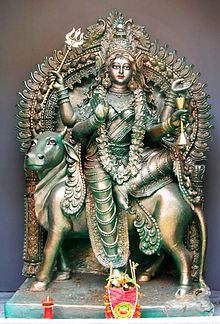
The name comes directly from the Sanskrit word meaning “fair; light-skinned; white; brilliant.” In Hinduism, this is an epithet for the goddess Parvati in her Mahagauri form.

The Kannada and Tamil form is Gowri கௌரி (Tamil) & ಗೌರಿ (Kannada).

Gauri can also be a Finnish male form of the name Gabriel.

Sources

Hansa

The name can have a few origins and meanings. It is primarily an Indian name that comes from the Sanskrit हंस (hamsa), which originally referred to an aquatic bird of passage. The hamsa is described as a mythical bird with knowledge in the Rig Veda and also as the main means of transport for the gods Brahma, Gayatri, Saraswati, and Vishvakarma in Hinduism. In the Ramayana, the hamsa was the bird that carried love letters between Damayanti and Nala. According to Indian legend, arayanna (heavenly hamsa swans) are said to live in the Himalayas where they eat pearls and are able to separate milk from water.

The hamsa bird is also associated with the concept of soham (that I am), as when it is said fast, hamsa starts to resemble soham. The latter is linked with the Brahman, and thus the bird is often associated with the cycle of samsara.

The hamsa bird has also been a popular motif in Indian art for centuries.

Over the centuries, it has interchangeably been translated as a swan, flamingo, goose or duck. It is ultimately from the Proto-Indo-European root word *ǵʰh₂éns, which is also the progenitor of the English word goose, German gans (goose), and the Latin anser (goose).

In India, as a given-name, it is used among all languages groups. The name is primarily used on females but has occasionally been given to males.

The name is also German and Scandinavian female name, being a contracted form of Johanna. Other forms are Hansina and Hansine.

Sources

Anil, Anila

Anila is from the Sanskrit आनिल (wind), in Hinduism it is an epithet for the wind God, Vayu. In contemporary India, both names are unisex.

Anıl is a Turkish unisex name meaning “the memory; to be remembered,” in Turkish. Anil is also a popular Albanian & Bosnian male name, while Anila is the feminine form that is exclusively used in Albania & Bosnia.

Anıl appeared in the Top 100 Most Popular Male Names in Turkey between 1990 and 2012, peaking at #51 in 1991.

Sources

Fuad

  • Origin: Arabic فُؤاد
  • Meaning: “heart.”
  • Gender: masculine
  • Pronunciation: foo-AD

The name comes directly from the Arabic word for heart. It is used equally among Arab- Muslims & Christians. Among Christians, particularly Palestinians, Chaldeans and Lebanese Christians who profess Roman Catholicism, it is used in reference to the Sacred Heart of Jesus or the Immaculate Heart of Mary, in the same way the Spanish name Corazón is used in the Spanish-speaking world, though in the Arabic case, the name is strictly masculine.

Among Muslims, the term fu’ad is used at least 5 times in the Quran. The name is used throughout the Islamic world.

It is even used among Non-Arab groups in the Middle East, such as Mizrachi Jews.

The name was borne by two Egyptian kings.

Other forms include:

  • Fuad (Amharic, Azeri, Bosnian, Indonesian)
  • Fouad (Maghrebi)
  • Fuat (Turkish)
  • Fawad (Urdu)

A feminine form is Fuada(h).

Sources

Zuleika, Zuleikha

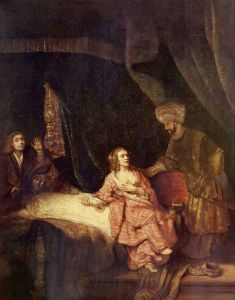
800px-Rembrandt_Harmensz._van_Rijn_065


  • Origin/Meaning: unknown زُلَيْخا זוליכה‎
  • Gender: female
  • (zoo-LAY-kah)
  • Usage: Arabic, Armenian, English, German, Italian, Ladino, Persian, Portuguese – Brazilian, Spanish

The name is of uncertain origin or meaning, since it appears in Muslim and Medieval Jewish tradition as the name of the wife of Potiphar (who is unnamed in the Old Testament), it is often suspected to be of Coptic origin, though the name is not traditionally used among contemporary Copts.

The wife of Potiphar is mentioned in the Bible as trying to seduce Joseph and later falsely claiming he tried to rape her, which leads to Joseph’s unjust imprisonment. In Medieval Islamic tradition, the story was reinterpreted as a popular love story, the subject of much poetry, she is named Zuleikha and her love for Joseph was interpreted by Sufi poets, especially Rumi and Hafez, to represent the longing the soul has for God. Zuleika is also attributed to be her name in the Sefer haYashar, also known as the Book of Jasher, a Jewish midrash of unknown authorship.

In the English-speaking world, the name first came into use in the early 19th-century, it was most likely popularized by Byron’s 1813 poem, The Bride of Abydos, in which it is the name of the heroine. It was also used by the German poet Goethe for his 1810 poem entitled, Book of Zuleika, in his collection of Eastern inspired poems called West–östlicher Divan. It is the name of the eponymous character in the 1911 novel, Zuleika Dobson by Max Beerbohn, which was later adapted into a musical.

The name is also used in Spanish-speaking countries and Brazil.


Other forms include:

  • Zulejka (Albanian, Bosnian)
  • Züleyxa (Azeri)
  • Zuleica (Catalan, Portuguese, Spanish)
  • Zulejha, Zulejka Зуле́йха, Зулейка (Chechen, Russian)
  • Zelikah (Dutch)
  • Zouleïkha (French)
  • Züleyha (Turkish)
  • Zulayho (Uzbek)

Other Arabic transliterations include: Zulaykha and Zulekha.

Spanish diminutives include: Zula & Zuzu.


Sources

Firdaus

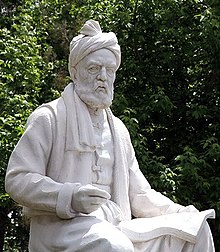
Poet, Firdowsi
  • Origin: Perso-Arabic
  • Gender: Unisex
  • Meaning: heaven; paradise; garden
  • Pronunciation: (FUR-dows)

The name comes directly from the Arabic word فردوس (firdaws), meaning “paradise,” which is ultimately from the Avestan pairidaeza “garden; enclosure.” In Islam, the term firdaws is sometimes used to refer to the highest level of Jannat or Heaven.

The name seems to be traditionally given to both males and females equally. A notable bearer was the 11th-century Persian poet, Firdowsi, who authored the historical epic, Shahnamah (Book of Kings).

Other forms of the name include:

  • Fardawəs (Abkhaz, exclusively male)
  • Firdovs (Chechen, exclusively female)
  • Fildusa (Bosnian, exclusively female)
  • Firdevsa (Bosnian, exclusively female)
  • Firdusa (Bosnian, exclusively female)
  • Firdaws/Firdaous (Maghrebin forms, exclusively female)
  • Pardis (Persian, exclusively female)
  • Fardowsa (Somali, exclusively female)
  • Firdavs (Tajik & Uzbek, exclusively male)
  • Firdausa (Tatar, exclusively female)
  • Firdaves (Tatar, unisex)
  • Firdavis (Tatar, exclusively male)
  • Firdevs (Turkish, unisex)

Sources