
- Origin: Mordvin Эйзюраль
- Meaning: “born in the season of icicles.”
- Gender: Female
A Pre-Christian Mordvin female name, meaning, “born in the season of icicles.”
Source
A Pre-Christian Mordvin female name, meaning, “born in the season of icicles.”
Source

The name is derived from the Mordvin word tele (winter).
Sources

The name is derived from the Mordvin word mijal, meaning, “beaver.”
Sources
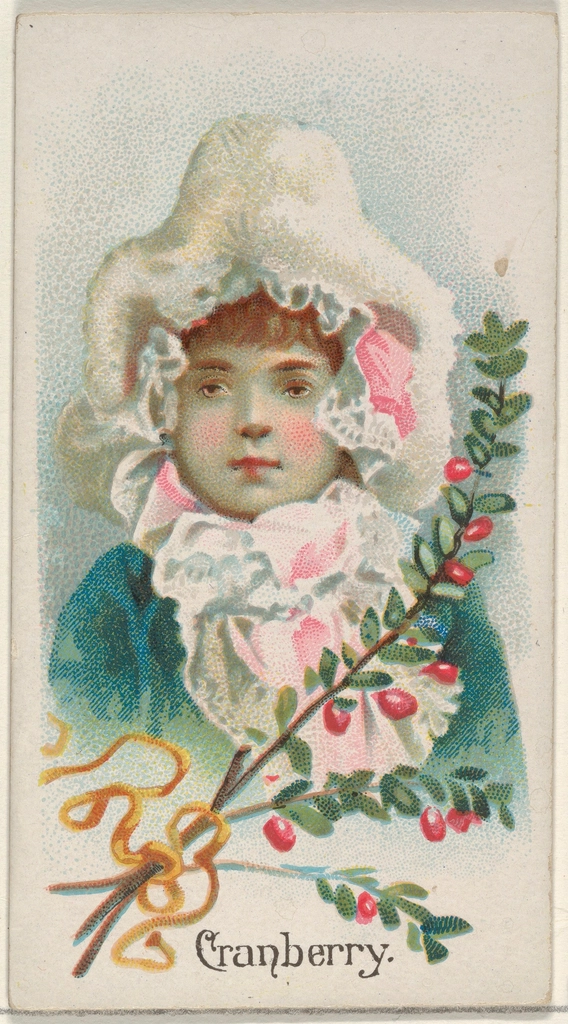
A Pre-Christian Mordvin female name meaning, “cranberry.”
Source

Nuyat is a male pre-Christian Mordvin name meaning, “harvest.”
The female form is Nuya.
Source

Derived from the ancient Greek male name Πτολεμαῖος (Ptolemaios), which in turn comes from πτόλεμος (ptólemos), meaning “war” or “battle.”
The word ptólemos is an older Aeolic dialectal form of πόλεμος (pólemos), the standard Classical Greek word for “war,” sharing the same root with the English word, “polemic.”
Ptolemy I Soter (367–283 BCE) was a general of Alexander the Great and later became Pharaoh of Egypt, founding the Ptolemaic Dynasty (323–30 BCE). This dynasty ruled Egypt for nearly three centuries and ended with Cleopatra VII, the most famous bearer of the family’s legacy.
Claudius Ptolemaeus (Ptolemy) (2nd century CE) was the famed Greek astronomer, mathematician, and geographer of Alexandria, whose Almagest shaped Western astronomy for over a millennium.
According to the Book of 1 Maccabees (135/4 BC), Ptolemy of Jericho betrayed his father-in-law, Simon the High Priest, by murdering him and his two sons while they slept as guests under his roof. This act of treachery is used in Dante Alighieri’s The Inferno, in which the ninth circle of Hell is called Ptolomea after him, a frozen realm reserved for those who betray their guests.
Ptolomy is also the name of an early Christian saint.
In the English-speaking world, Ptolomy has been used on and off since the 18th-century. It appeared in the U.K’s top 500 boys’ names in 2004, ranking in at #906.
A modern bearer is American author, Ptolemy Tompkins. Celebrity couple Gretchen Mol and Tod Williams bestowed this on their son in 2007.
Common English short forms include: Tollie, Tolly, and Tal.
International Variations
Female forms include the sensual Ptolemaïs (Πτολεμαΐς) and the Italian, Tolomea.
Sources

The name is from the classical Greek, related to Apollo. It was borne by several early Christian saints. The most notable being St. Apollinaris of Ravenna, a Syrian Christian missionary to Ravenna who was martyred there and thereafter became the city’s patron saint.
The French form Apollinaire is linked to the Franco-Polish poet, Guillaume Apollinaire. He lived from 1880 to 1918. He was born Wilhelm Albert Włodzimierz Apolinary Kostrowicki.
Apolinary was common in Poland during the late 19th-century and early 20th-centuries, it is now obsolete. Diminutives include: Apolinek, Apollinek, Apolin, Apollin, Polin, Polinary, Polinarek, Polinaruś, Poli, and Polik.
In Italy, Apollinare was mainly used in the Romagna region due to it being the name of their patrion saint, but it has since fallen out of use.
Apollinaire sporadically appeared in the French Top 1000 between 1900 and 1926 and peaked at #403 in 1923. In 2024, 5 babies were given this name.
Neither its masculine form nor its feminine form had much usage in the English-speaking world. It was mostly used in families of Greek or Eastern European background during the late 19th-century.
Designated name-days include July 20th, July 23rd, and September 12th
Other forms include
Its feminine form is Apollinaria, which is also borne by an early Christian saint.
Other feminine forms include:
A traditional feminine diminutive form in Russian is Polina. Polish diminutives include: Apollinka, Apollina, Apolinka, Apolla, Apola, Pola, Polka, Polcia, Polina, and Polinka. Modern Greek diminutives include: Nαρία (Naría), Πόλλα (Pólla), or Λίνα (Lina). Potential English short forms would include: Apple, Pollie, Polly, and Narey, or Narie.
Sources
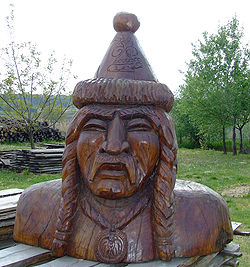
The name is derived from a Magyar clan name, Csana, with the Hungarian diminutive suffix of -d added. Csana itself is of unknown etymology.
The name was borne by an 11th-century Hungarian ruler, a nephew of Stephan I of Hungary, also known as Cenad in Romanian, who was known for defeating his former ally Ajtony, and being given the county of what is now known as Csanád County in Hungary & Cenad County in Romania. He is recorded in the 13th-century Gesta Ungarorum and the the 14th-century, Long Life of St Gerard.
In post-modern Hungary, the name had been relatively rare prior to the 1990s but exploded in popularity by the 2000s. It appeared in the Top 100 Most Popular Male Names in Hungary between 2003-2018, peaking at #53 in 2007.
The designated name-days in Hungary are April 12, May 28, September 6 & December 5.
Other Hungarian forms include: Csana, Csani & Csankó.
Other forms include:
Sources

Nectar is the English form of the Greek Nektarios Νεκτάριος, which is derived from νέκταρ (nektar), meaning “nectar, the drink of the gods. Nectar is not a name that has ever been in common use in the English-speaking world, but since it is the name of several Eastern and Western Christian saints, the proper English male translation of the name would be Nectar; or it would have appeared thus in the calendar.
It was borne by St. Nectaire of Auvergne, a 4th-century Christian missionary to the Gauls in what is now the Massif Central region of France. According to Gregory of Tours, he was sent by Pope Fabian, along with his brothers, where he transformed a temple that was dedicated to Apollo on Mont Cornadore into a cathedral that still stands, and was subsequently beheaded by the local Gaulic chieftain. The commune of Saint-Nectaire in the Puy-de-Dôme department of France gets its name from him, as does the cheese of the same name; or the latter technically comes from the Marshal of Senneterre, which is a linguistic corruption of Saint-Nectaire.
Male forms include:
Feminine forms include
A modern male Greek diminutive form is Nektary and the Russian diminutive form for both the male and female form is Nechka.
Sources

Gniewomir (male) is composed of the Polish words gniew (anger wrath) and mir (peace). Polish linguist, Witold Taszycki claimed that this is one of the oldest Polish names. Gniewomira is its feminine form.
Other masculine forms include Gniewomar, Gniewomier, Gniewomierz, Gniemir and the reverse form of Mirogniew & Mirogniewa (female).
It’s nameday is February 8th.
Diminutive forms are Gniewko & Gniewosz for males & Gniewka for females.
Sources