Wanda

Gender: Feminine
Origin: Polish
Pol (VAHN-dah); Eng (WAHN-duh).

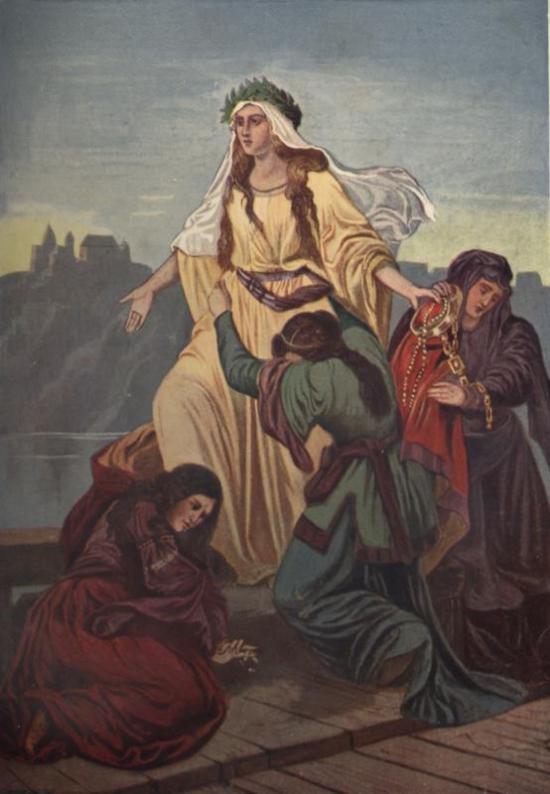
The name first appeared in a legend presented by Polish historian, Wincenty Kadlubek (12-13th century). In his version of the legend, Wanda was the daughter of a Polish king Krak, (founder of the city of Krakow), who inherited her father’s throne. An evil German prince wanted to marry her and take over the Polish lands, but the princess repelled him and drove him to suicide. The prince threw himself into the Vistula. Wanda went on to live a happy and long life, remaining a virgin and vowing to be married only to her country. The most famous account, however, is completely different. In the most beloved form of the tale, rather than have her country taken over by the German invaders, Wanda threw herself into the Vistula. In Poland, she is a symbol of the nation, representing the sacrifice and hardship of the nation of Poland throughout its history. She is a symbol of Polish independence and its victory over German imperialism.

Tradition has it that she is buried in one of the seven mounds of Krakow. Till this day, the Wanda Mound (Kopiec Wanda) rests on the outskirts of Krakow, (in what is now known as the suburb of Nowa Huta).

Wanda is probably one of the very few Polish names that became popular in the English speaking world. It was introduced via author Ouida who used it for heroine in the novel Wanda (1888). The name no longer ranks in the U.S. top 1000, but was once a fairly popular name, coming in at # 47 in 1934, the highest the name ever ranked in U.S. naming history.

Many sources list the name as being a derivative of the Ancient Germanic wend, a name for a group of people who lived near and around the Vistula, however, some Lithuanian sources have argued that it is derived from an ancient Baltic element vanduo meaning “water” while many others speculate that its true origins have been lost and that its true introduction into the world was through Kadlubek.

In Poland, a popular nickname option is Wadzia (VAHD-jah). An alternative is the Czech/Slovak, Italian and Lithuanian, Vanda. There is also the elaborated Swedish name Wendela, though it is speculated if she is truly related to Wanda or if  in fact she is a completely different name of Germanic origins. The name has experienced occasional usage in Germany, Spain, Brazil, Hungary and Russia.

Coincidentally, Vanda is the name of species of orchid indigenous to the Indian subcontinent and Indochina. In this case, Vanda is of Sanskrit origins.

Laura

Gender: Feminine
Origin: Latin
Meaning: “laurel.”
Eng (LORE-uh); It/Span (LOW-rah).

The name first came into usage during the 9th century in Spain, due to the cult of Saint Laura of Cordova, (864).

She was a widow who decided to become a nun, but was put in a vat of molten lead and was boiled to death by her Moorish captors.

Laure de Noves, was the object of the poet, Petrarch’s affection (1308-1348). The Italian poet refers to her as Laura in his writings.

Laura, illustrated by her virtues and well-celebrated in my verse, appeared to me for the first time during my youth in 1327, on April 6, in the Church of Saint Claire in Avignon, in the first hour of the day; and in the same city, in the same month, on the same sixth day at the same first hour in the year of 1348, withdrew from life, while I was at Verona, unconscious of my loss…. Her chaste and lovely body was interred on the evening of the same day in the church of the Minorites: her soul, as I believe, returned to heaven, whence it came. (Petrarch)

Laure de Noves was the wife of Hugh de Sade, (the ancestor of the Marquis de Sade in which the name Laure appears often in the Sade family tree), who ultimately dies from the plague. She was the symbol of unrequited love and was transformed into a Beatrice type character after her death in many of Petrarch’s poems.

The name has always been relatively common in the English speaking world. Laura currently comes in at # 215 of the U.S. top 1000. In other countries her rankings are as follows:

  • Australia # 78 (2007)
  • Belgium # 3 (2006)
  • Chile # 43 (2006)
  • France # 26 (2006)
  • Hungary # 12 (2005)
  • Ireland # 32 (2007)
  • the Netherlands # 31 (2008)
  • Scotland # 77 (2007)
  • Slovenia # 36 (2005)
  • Spain # 4 (2007)

Other forms include:

  • Llora (Catalan pronounced YOH-rah)
  • Laure (French, diminutive form Laurette)
  • Lára (Icelandic pronounced LOW-rah)
  • Lavra (Slovenian/Russian)

Diminutive forms of Laura include Laurie, Lori, Lorie and Lauretta (Italian); Laurita (Spanish) and Laurette (French).

Masculine forms are the Italian Lauro and the late Latin Laurus.

The Laura form is used in most Romance speaking countries including Italy, Romania and is used among Portuguese speakers. It is also used throughout Central Europe such as the German speaking countries, Poland, Slovakia, Hungary and the Czech Republic.

The name is borne by former first lady of the United States Laura Bush, children’s author Laura Ingalls Wilder, Laura Esquival author of Like Water for Chocolate. British designer and clothing brand Laura Ashley. Actress Laura Linney.

It is also the name of a river that runs through the Ukraine and Romania and the name of a village in Gliwice County, Poland.

Coincidentally, in Greek Lavra and Laura was a term used in the Eastern Orthodox church to describe a cluster of cells or caves, designed for monastic hermits. In this case, the name is derived from the Greek meaning an “alley” or “passage way.”

(Pictured above: Laure de Noves).

Chiara, Clara, Clare, Claire

Gender: Feminine
Origin: Latin
Meaning: “clear; see through”

    Chiara (kee-AH-rah), (KYAH-rah), has been in usage in Italy since the early Middle Ages. Chiara is also the Italian feminine adjective for the word, chiaro meaning, “clear” or “bright.”

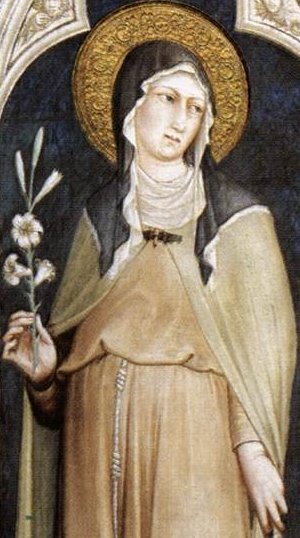
    It was borne by Saint Chiara d’Assisi. (1194-1253). She was a companion of St. Francis of Assisi, both of whom believed in self-mortification and helping the poor. Chiara decided to start an order, known as the Poor Clares, while Francis went off to start his own order known as the Franciscans.

    Chiara is still a very popular first name in Italy. In 2006, she was the 5th most popular female name.

    The French form of Claire, also came into usage during the early Middle Ages. No doubt due to the cult of the male St. Clair of Dauphine, the patron saint of tailors.

    The name came to England via the Normans in the form of Clare, and the male Latin form of Clarus was borne by a British saint of Rochester, a Benedictine monk. Both forms of Clare and Clara were very popular prior to the Reformation in England and both names were revived during the 19th century.

    In recent years, for whatever reason, the French spelling of Claire has often times been the preferred choice among American parents. In 2008, Claire came in at # 62 in the U.S  Top 1,00o Female Names, while its elder English counterpart of Clare came in at # 679. In fact, even the Latinate version of Clara is far more prevalent than Clare, coming in at # 206.

    Clara/Klara is a popular choice throughout Northern and Central Europe.

    Other forms of the name include:

    • Clarice (English/French/Italian)
    • Clarissa (English)
    • Klára (Hungarian/Czech)
    • Claritia (Latin)
    • Claritta (Romansch)
    • Bistra/Jasna (Serbo-Croatian/Slovene: both literally mean “light; clear” and are used as indigenous cognates)
    • Clarisa (Spanish)
    • Clarita (Spanish: initially a diminutive form, commonly used as an independent given name)

    Diminutive forms are the French, Clairette, the Italian, Chiaretta, Chiarina and Claretta.

    There is the masculine Latin form of Clarus and the French masculine form of Clair.

    Olivia

    Gender: Feminine
    Origin: Latin
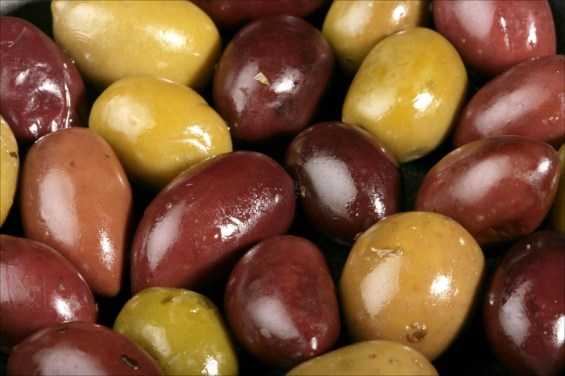
    Meaning “olive”
    (o-LIV-ee-ah)

    The name is often believed to have been an invention of William Shakspeare for his play Twelfth Night, however, the name was borne by a 9th century Sicilian saint. She is considered one of the patron saints of Palermo, and legend has it that she was kidnapped by Muslim invaders and taken into slavery to Tunisia. Her captors were so impressed with her sincerity, virtue and beauty that they permitted her to remain a Christian and to live as a hermitess in a cave.

    She was known for performing miracles among the local Tunisians, and many had converted to Christianity as a result. She was imprisoned and tortured and then burnt at the stake. Legend pertains that when they lit the fires at the stake, the flames would not touch her and she was decapitated instead. For whatever reason, she is also considered the patron saint of music.

    The name was then possibly introduced into the English speaking world through William Shakespeare in 1599 for one of his characters in the play Twelfth Night. Since then, the name has been in usage in the English speaking world. In the States, the name has been in the top 1,000 since 1880. The name has gradually climbed its way up to the top 10 the last 20 years. In 1989, Olivia came in at # 179 the following year of 1990 saw it jump all the way up to # 72, by 2001 it reached position # 1o and as of last year, 2008, it has made itself a niche at # 6. In Poland, it is at # 5 as the most popular female name, spellt Oliwia. The name is in the top in Canada and the United Kingdom.

    The name is used in virtually every European country.

    Other forms include:

    • Olivija (Croatian/Serbian/Slovene)
    • Olivie (Czech: ah-LEEV-yeh)
    • Oliva (English/Italian)
    • Olive (English)
    • Olivie/Olivia (French)
    • Olivette (French: obscure)
    • Olívia (Hungarian/Portuguese/Slovak)
    • Olivana/Oliviana (Italian: obscure)
    • Oliveira/Oliviera (Italian)
    • Olivetta (Italian: obscure)
    • Oliwia (Polish: o-LEEV-yah)

    Nicknames include: Ollie, Liv, and Livy. A German nickname is Livchen.

    A very rare Polish masculine form is Oliwjusz.

    Amerigo

    Origin: Italian
    Gender: Male
    Meaning “home ruler.”
    (ah-MARE-ee-go)

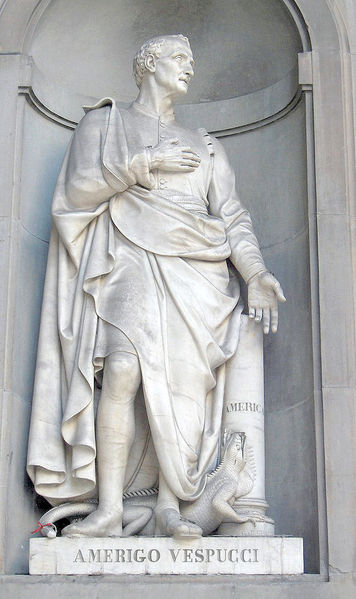
    Amerigo is an obscure Italian male name made famous by Amerigo Vespucci, an Italian explorer, navigator and cartographer.

    The continents of South and North America get their names from him. America being a feminized latinate version of Amerigo.

    Amerigo itself comes from the Germanic elements haim meaning “home” and rich meaning “power, ruler; authority.”

    Other forms of the name include:

    • Emerika (Basque)
    • Amèric/Emeric (Catalan)
    • Emmerik (Dutch)
    • Americ/Amery (English)
    • Emery (English: currently the 744th most popular male name in the United States-2008)
    • Aimeric/Aymeric/Émeric (French)
    • Aymeri/Aimery (French)
    • Emmerich (German)
    • Imre/Imrus (Hungarian)
    • Almerigo/Almerico (Italian)
    • Americo (Italian: modern form)
    • Emerico (Italian)
    • Merico/Merigo (Italian)
    • Americus (Latin)
    • Emerikas (Lithuanian)
    • Ajmeryk (P0lish)
    • Amalaryk/Amalryk (Polish)
    • Embryk/Emeryk (Polish)
    • Emmeric (Romanian)
    • Imrich (Slovak/Czech)
    • Américo (Spanish/Portuguese)
    • Emerico (Spanish)
    • Emerik (Swedish/Croatian)

    A feminine form is the Spanish, América, currently borne by Ugly Betty star, America Ferrer.

    Other feminine forms are:

    • Ameriga/Almeriga (Italian)

    Aubrey

    Gender: Masculine
    Origin: English
    (AW-bree)

    The name is a Norman French form of the Germanic, Alberich and was very common in Medieval England.

    The name Alberich itself is derived from two Germanic elements, alb meaning “elf” and rich meaning “power, authority or rule” hence the name means either “elf power” or “elf ruler.”

    Alberich appears in Germanic mythology as the name of a malevolent elf king. The same character appears in the Nibelungenlied.

    The name was borne by a 12th-century English saint. He was known for founding the Cistercian order of monks.

    It was also borne by Alberich Zwyssig a Cistercian monk, (born Johann Josef Maria Zwyssig also known as Father Alberich or Father Aleberik), he is credited for composing the Swiss Psalm or the present day, Swiss national anthem (1841).

    In recent years, in the United States, the name has been used as a female name. In 2007, the name came in at # 42 for girls. The name was last seen for males in 2002, coming in at # 937. In England, the name is still used as a masculine name.

    A more feminine alternative, is the flower name, Aubrieta.

    Other forms include:

    • Auberon (English)
    • Albéric (Flemmish)
    • Aubéron (French)
    • Aubery/Aubry (French)
    • Obéron (French)
    • Elberich/Olberich (German)
    • Alberico (Italian)
    • Albericus (Latin)
    • Alberichas (Lithuanian)
    • Alberyk (Polish)
    • Alberik (Russian)

    (Pictured at right, Alberich of the Nibelungenlied by Arthur Rackhum).

    Blaise

    Gender: Male
    Origin: Latin
    Meaning “stammerer”
    Eng (BLAZE); Fre (BLEZ)

    The name is derived from the Roman name Blasius which is derived from the Latin blaesus meaning “stammerer.”

    The name was borne by a popular early Christian martyr of Armenia. He was a bishop who was beaten to death by hot irons. In the Middle Ages, the saint’s feast day of February 3rd was designated for the blessing of the throat. It was popularly believed that the saint was responsible for curing illness of the throat. The name is also borne by French philosopher, Blaise Pascal.

    Other forms of the name include:

    • Barsegh (Armenian)
    • Blaž (Bosnian/Croatian/Serbian/Slovenian)
    • Blaes/Bleas (Breton)
    • Blazey (Cornish)
    • Biasgiu (Corsican)
    • Vlaho (Croatian)
    • Blażej (Czech)
    • Brais (Galician)
    • Vlasios/Vlasis (Greek Modern)
    • Balázs (Hungarian: buh-LAHS)
    • Biagio (Italian: diminutive form is Biagino which is occasionally used as an independent name)
    • Blasius (Latin/German)
    • Blażiejus/Blażys (Lithuanian)
    • Błażej(Polish: bWOn-ZHAY; ˈbwaʐɛj ).
    • Bras (Portuguese)
    • Blesi (Romansch)
    • Vlasi (Russian)
    • Blas (Spanish)

    Feminine forms include:

    • Biagia (Italian: diminutive form is Biagina)
    • Blasia (Late Latin and Italian: Blasiola is a diminutive form)

    Belcolore

    Gender: Feminine
    Origin: Italian
    Meaning “beautiful colour.”
    (Bel-koh-LORE-ay)

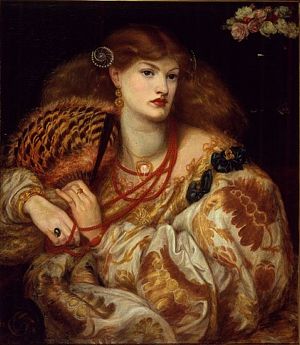
    The name seems to have been in usage in Medieval Italy. The name appears once in the Florence registar of 1427, as that of the name of a woman. It is also the name of a female character in Boccaccio’s second story of the eighth day in the Decameron. Dante Gabriel Rossetti did a portrait of a Medieval Italian lady entitled Belcolore (left). The name is made up of two elements bel meaning beautiful and colore meaning colour. Nicknames could include Belle

    Rachel

    Gender: Female
    Origin: Hebrew
    Meaning “ewe”
    (RAY-chel); (RAH-huhl)

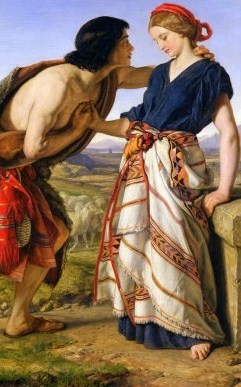
    The name is derived from the Hebrew רחל meaning “ewe”, which idiomatically, references purity. In the Bible, it was the name of the second and most favored wife of Jacob. She was the daughter of Laban, the sister of Leah and the mother of Joseph. Jacob labored for Laban for seven years in exchange for the hand of Rachel. After the seven years were up, he was duped into marrying Leah. Rachel later married Jacob and is considered a Jewish matriarch. It is said in Jewish lore that the willows of the brook represent Rachel.

    The name has been popular in Britain since the Reformation and is currently ranked in at # 38 of the US top 100 girls names.

    Rachel is used in German and French speaking countries and in the Netherlands, in French, it is pronounced hrah-SHEL, and in German, RAH-hel).

    Other forms include:
    • Rahel راحيل (Arabic)
    • Raquel (Catalan/Portuguese/Spanish: rah-KEL)
    • Ráchel (Czech: diminutive form is Ráchelka and Cheli)
    • Rakel (Danish/Estonian/Norwegian/Swedish)
    • Rachael/Rachel (English)
    • Raili (Estonian: pronounced sort of like Riley)
    • Rakul (Faroese)
    • Raakel (Finnish)
    • Rahel (German)
    • Ráhel (Hungarian)
    • Rákhel/Rákis (Hungarian)
    • Ráichéal (Irish)
    • Rachele (Italian: rah-KAY-lay)
    • Rachelina (Italian, rah-kay-LEE-nah)
    • Rachelė (Lithuanian: rah-HEL-ay)
    • Rahel (Malayalam)
    • Rachela (Polish: rah-HEH-lah, very unusual in Poland and was once common among Polish Jews).
    • Rahela (Romanian)
    • Rahil/Rakhil/Rakhila (Russian: prevalent among Jewish communities in Russia)
    • Ruchel (Yiddish)

    Rachelino is an Italian masculine form.