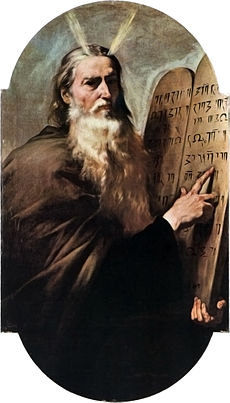
Malachi

Gender: Masculine
Origin: Hebrew  מַלְאָכִי
Meaning: “my messenger.”

The name is found in the Old Testament as the name of a prophet and the author of the Book of Malachi. He is known for his prophecies, in Christian tradition it is believed that his prophecies foretell the coming of Christ.

Its Irish form of Malachy has always been a common name in Ireland. It was borne by an early Irish saint who is also considered a prophet and a mystic. Though, it is sometimes suggested that Malachy is an anglicized form of Máel Sechlainn.

Currently, Malachi is the 163rd most popular male name in the United States, (2010).

Other forms of the name include:

  • Maleachi (Afrikaans/German)
  • Malaquies (Catalan)
  • Malachiáš (Czech/Slovak)
  • Malachias (Dutch/German/Greek)
  • Malachie (French)
  • Malachy (Irish)
  • Malachia (Italian)
  • Malachiasz (Polish)
  • Malahija Мала́хия (Russian/Serbian)
  • Malaki (Scandinavian)
  • Malaquías (Spanish)
Occasional English short forms are Mal and Chai (KYE).
Source

Virginia

Gender: Feminine
Origin: Latin
Meaning: “virgin”
(ver-JIN-yah)

Virginia is a feminine form of the Roman family name Virginius which is believed to be derived from the Latin virgo meaning “virgin; maiden.”

According to Roman legend, the name was borne by a girl who was killed by her father in order to save her from a corrupt Roman official.

The Commonwealth of Virginia was named by Sir Walter Raleigh in 1584 in part for Queen Elizabeth I of England (known as the Virgin Queen) and also in part an anglicized form of a Native American chief’s name, Wingina. 

The name was borne by Virginia Dare (1587), lauded to be the first ethnically English child to be born in the New World. The name seems to have been very popular in the United States among early settlers, either as a nod to an American birth or in honour of the first English child born in the United States.

Among Catholic immigrants, the name caught on due to its associations with the Virgin Mary.

Currently, Virginia is the 608th most popular female name in the United States, but in 1921, it ranked in as the 6th most popular female name.

Other forms of the name include:

  • Virginië (Afrikaans)
  • Virxinia (Asturian)
  • Virgínia (Catalan)
  • Vijini (Creole)
  • Verginia(Latin: early)
  • Virginie (French/Czech)
  • Firginia (Frisian)
  • Wilikinia (Hawaiian)
  • Virzsini (Hungarian)
  • Verginia(Italian)
  • Virna (Italian)
  • Virginia (Italian/Spanish/Portuguese)
  • Virdžīnija (Latvian)
  • Virdžinija (Lithuanian)
  • Virginn-a (Ligurian)
  • Wirginia (Polish)
  • Verge (Occitanian)
  • Virgínia (Occitanian)
  • Verjhini (Occitanian)
  • Virdžinėjė (Saimogaitian)

A common English short form is Ginny.

Source

  1. http://www.behindthename.com/name/virginia

Gideon

Gender: Masculine
Origin: Hebrew גִּדְעוֹן

The name name could either be Hebrew for “destroyer” or “tree feller.” It is borne in the Old Testament by one of the Hebrew Judges, (Judges 6–8). He is also mentioned in Epistle to the Hebrews: Chapter 11 as an example of a man of faith.

In the Book of Mormon, it is borne by a powerful Nephite leader.

Regarded as a saint in the Catholic Church, it was occasionally used as a given name in Medieval England, but exploded in popularity after the Protestant Reformation, especially in Germany and the Netherlands.

Currently, Gideon is the 461st most popular male name in the United States and the 496th most popular in the Netherlands, (2010).

Other forms of the name include:

  • Gideon Гидеон (Afrikaans/Dutch/English/Estonian/German/Scandinavian/Serbian)
  • Gedeó (Catalan)
  • Gédéon (French)
  • Gid’on גִּדְעוֹן (Hebrew)
  • Gedeon Гедео́н (Hungarian/Polish/Russian)
  • Gedeone (Italian)
  • Gideonas (Lithuanian)
  • Gideão (Portuguese)
  • Gedeón (Spanish)
The name was borne by the first discoverer of the dinosaur, Gideon Mantell (1790-1852).
Common English diminutives are Gid and Giddy.
Source


Solomon

Gender: Masculine
Origin: Hebrew שְׁלֹמֹה
Meaning: “peace.”

The name is borne in the Old Testament by son of David and the King of Israel. He is credited as being the author of Proverbs, the Song of Solomon and Ecclesiastes. In the Talmud he is considered one of the 48 prophets. In Jewish and Christian tradition he is viewed as a wise and holy king but had fallen from grace due to his ego and his marriage to hundreds of foreign wives who led him astray from God. In the Qu’ran, Solomon is a prophet and a messenger from Allah, he is the only one who was ever able to control the djinn with his magical incantations.

The name has always been a popular one among Jews, Muslims and Eastern Orthodox Christians, but has never really been common in the English-speaking world, even after the Protestant Reformation. Currently, Solomon is the 467th most popular male name in the United States, (2010).

Other forms include:

  • Salomo (Afrikaans/Dutch/Finnish/German/Scandinavian)
  • Salomon (Albanian/Croatian/Finnish/French/Polish/Scandinavian/Ukrainian)
  • Sulayman  سليمان (Arabic)
  • Salamon Саламон (Belarusian)
  • Sulejman (Bosnian)
  • Suljo (Bosnian)
  • Solomon Саламон (Bulgarian/English/Macedonian/Romanian/Russian/Serbian)
  • Salomó (Catalan)
  • Šalomoun (Croatian)
  • Saalomon (Estonian)
  • Sálomon (Faroese)
  • Solamh (Gaelic)
  • Solomoni სოლომონი (Georgian)
  • Shlomo שְׁלֹמֹה (Hebrew)
  • Salamon (Hungarian/Occitanian)
  • Silêman (Kurdish)
  • Salomone (Italian)
  • Shelomo (Ladino)
  • Salamans (Latvian)
  • Zālamans (Latvian)
  • Saliamonas (Lithuanian)
  • Sjelomo (Norwegian: archaic)
  • Szlomo (Polish-Yiddish)
  • Salomão (Portuguese)
  • Šalamún (Slovak)
  • Suleymaan (Somalian)
  • Salomón (Spanish)
  • Sөlәjman Сөләйман (Tatar)
  • Süleyman (Turkish)
  • Selyf (Welsh)
  • Zalman (Yiddish)

Common English diminutives are Sol and Solly.

A Russian feminine form which was common among Russian royalty is Solomonia.

Source

  1. http://www.behindthename.com/name/solomon

Cyrus

Gender: Masculine
Origin: Persian

The name is found in History and in the Old Testament as the name of one of the most powerful leaders who ever lived, Cyrus the Great (c. 600 BC or 576 BC–530 BC). He was a conqueror of the Babylonians and who, according to the Bible, freed the captive Jews, allowing them to return to their homeland. It is also borne by several other Persian kings.

Cyrus, in its Persian form, has always been a popular male name in Iran. In the English-speaking world, it did not catch on until after the Protestant Reformation. Currently, Cyrus is the 488th most popular male name in the United States, (2010). The name is commonly used among Iranian-Americans, due to it being such a classic name in Iran and the fact that it is easily translatable to English.

As for its etymology, general consensus agrees that it may derive from the ancient Persian elements khor (sun) and vash (likeness). However, the noted linguist, Karl Hoffman (1915-1996), argued that it is based on an Indo-European root meaning “to humiliate.”

Other forms of the name include:

  • Kores (Afrikaans)
  • Kyowros Կյուրոս (Armenian)
  • Ciru (Asturian)
  • Kir Кир (Azeri/Belarusian/Bosnian/Bulgarian/Croatian/Kyrgyz/Polish/Russian/Rusyn/SerbianUkrainian)
  • Kuir (Basque)
  • Ziro (Basque)
  • Kirus (Breton)
  • Cir (Catalan/Occitanian)
  • Kýros (Czech/Icelandic/Slovak/Slovene)
  • Cyrus (Dutch/English/French/Latin/Polish/Romanian)
  • Kyros Κυρος (Estonian/German/Greek/Scandinavian)
  • Kyyros (Finnish)
  • Cyr (French)
  • Syrus (Frisian)
  • Cíoras (Gaelic)
  • K’iros კიროს (Georgian)
  • Koresh כּוֹרֶשׁ (Hebrew)
  • Círus/Cýrus (Hungarian)
  • Kurus (Hungarian)
  • Cirino (Italian)
  • Ciro (Italian. CHEE-ro)
  • Cirotto (Italian)
  • Kurushi Куруши (Kyrgyz)
  • Kûruşê (Kurdish)
  • Kīrs (Latvian)
  • Kyras (Lithuanian)
  • Kurusy (Malay)
  • Kurush/Kourosh کوروش‎ (Persian)
  • Ciro (Spanish/Portuguese. SEE-ro; THEE-ro)
  • Kiros (Turkish)
The designated name-days are: January 31 (Poland) and September 12 (Poland).
The name has several feminine offshoots, including Cyra, (Eng. SY-rah), which was a popular female name during the Byzantine empire and the Russian, Kira (KEER-ah). Kira  is currently the 90th most popular female name in Hungary, (2010) and the 308th most popular in the United States, (2010). Other feminine forms include:
  • Kira Кира (Bulgarian/German/Hungarian/Latvian/Polish/Russian/Ukrainian)
  • Cyra (English/Latin/Polish)
  • Kiira (Estonian/Finnish)
  • Kyra (Greek/English)
  • Kíra (Hungarian)
  • Cira (Italian/Spanish)
  • Cirina (Italian)
The designated name-days for Kira are: March 10 (Latvia), March 12 (Russia), July 7 (Poland), October 12 (Latvia). November 7 (Estonia).
Source

Moses

Gender: Masculine
Origin: Debated
Meaning: debated

The name is borne in the Old Testament and in the Qu’ran by the a renowned prophet and law giver, who according to tradition was placed in a basket by his Hebrew mother and found by the daughter of Pharaoh (in Judeo-Christian religion) or the wife of Pharaoh (in Islamic tradition) and raised as an Egyptian prince. It is from this tradition that the name is believed to be derived from the Hebrew element משה (mšh) as stated in  Exodus 2:10:

“[…] she called his name Moses (משה): and she said, Because I drew him (משיתהו) out of the water.” (KJV).


It has been suggested that the name is in fact of Egyptian origins, being related to the Coptic elements, mo (water) and uses (saved; delivered) hence: “saved from the water.” Another suggestion is the Egyptian element, ms (child; born) as found in such ancient Egyptian male names as Tuth-Mose and Ram-messes.

The name has always been common among Jews, Muslims and Orthodox Christians, but did not catch on in the English-speaking world until after the Protestant Reformation. Medieval Jews of England used the Middle English form of Moss.

It is currently the 509th most popular male name in the United States, (2010).

Other forms of the name include:

  • Moses (Afrikaans/English/German/Scandinavian/Welsh)
  • Moisiu (Albanian)
  • Musa موسى Муса (Amharic/Arabic/Azeri/Bosnian/Kabyle/Swahili/Tatar/Turkish)
  • Moisen (Aragonese)
  • Movses Մովսես (Armenian)
  • Moises (Basque)
  • Majsjej Майсей (Belarusian)
  • Moizez (Breton)
  • Moisej Моисей (Bulgarian)
  • Moisès (Catalan)
  • Moisije Мојсије (Croatian/Serbian)
  • Moše (Croatian)
  • Mojžíš (Czech/Slovak)
  • Mozes (Dutch)
  • Mooses (Estonian/Finnish)
  • Móses (Faroese/Icelandic)
  • Moïse (French)
  • Maois (Gaelic)
  • Mose მოსე (Georgian/German/Romansch/Swedish)
  • Mouses Μωυσης (Greek)
  • Moshe מֹשֶׁה (Hebrew/Ladino)
  • Mózes (Hungarian)
  • Mosè (Italian)
  • Müsa Мұса (Kazakh)
  • Mosa (Kurdish)
  • Mûsa (Kurdish)
  • Moyses (Latin)
  • Mozus (Latvian)
  • Mozė (Lithuanian)
  • Мојсеј (Macedonian)
  • Moss (Middle English)
  • Moïses (Occitanian/Provençal)
  • Mojżesz (Polish)
  • Moisés (Portuguese/Spanish)
  • Moise (Romanian)
  • Moisej Моісей (Rusyn/Ruthenian)
  • Moiséj Моисе́й (Russian)
  • Muozė (Saimogaitian)
  • Mojzes (Slovene)
  • Muuse (Somalian)
  • Mojsej Мойсей (Ukrainian)
  • Moosõs (Voro)
  • Moishe (Yiddish)
Recently, actress Gwyneth Paltrow bestowed this name on her second child, Moses Bruce Anthony Martin (b. 2006)
Sources

Mina

The name has several origins, meanings and derivatives depending on where in the world you find the bearer of the name. In the Western world, it is a female name, a contracted form of Wilhelmina and Hermina. It was always common in Germanic and Scandinavian countries, but was first introduced into the English-speaking world through Bram Stoker’s Dracula (1897).

It is also an Indian name, derived from the Sanskrit word for fish मीना , it is sometimes transliterated as Meena. In Hinduism, it is the name of the daughter of the Goddess Usha and the God Kubera.

It is also a common Persian female name, being derived from the Farsi word for “blue glass; enamel; lapis lazuli.” It also coincides with the name of a valley near Mecca, and is therefore found as feminine given name in the Arabic-speaking world. In Arabic it means “port; harbor.”

Among Coptic Christians, it is a very popular male name. It is borne by a renowned early Christian Egyptian martyr and saint, known in the Western world as St. Menas. Mīna  مينا‎‎ is its original Coptic version and according to legend, the saint’s mother heard a voice saying “amen” while praying for a pregnancy.

Currently, Mina is 41st most popular female name in Norway (2010), the 314th most popular in France (2009) and the 961st most popular in the United States (2010).

The designated name-days are: November 24 (Poland) and December 23 (Lithuania/Poland).

Other forms its masculine Egyptian counterpart include:

Menna (Catalan)
Ménas (French)
Menas (Greek)
Mena (Italian: RARE)

Source

  1. http://www.behindthename.com/name/mina-1
  2. http://www.behindthename.com/name/mina-2


Daniel, Danielle

Gender: Masculine
Origin: Biblical Hebrew
Meaning: “God is my Judge.”

If you are like me, you probably think Daniel is dull and overused. Then there is the other camp who might think this is a wonderful classic. It has the youthful nickname options of Dan and Danny and its used in just about every European country with such variants as the Italian Daniele and the Czech and Polish diminutive forms of Danek. Another plus is that, while the name has religious connotations, its doesn’t adhere to a specific denomination. It is fair game for both Jewish and Christian parents alike, Catholic and Protestant. It is even used among Muslims.

The name Daniel is found in the Old Testament, (it has its own book), composed of the Hebrew elements dan meaning “judge” and the 1st person possessive singular suffix of i plus El which was a reference to God.

As for the Biblical Daniel himself, according to the Bible, he was a Jewish boy who was captured by the Babylonians and employed as a sort of dream-reader, (sounds like a pretty cool job). Daniel was so good at his job that he eventually became famous, even among his Persian and Babylonian captives. Due to his prestige and influence, Daniel was also able to persuade his captors to release the Jews back to their homeland. There is far more to the Biblical Daniel’s story than I will write here, but he is probably most noted for his steadfast loyalty to his faith and people as well as his miraculous survival after being thrown in a den of lions.

In the United States, Daniel has been steadfast in its popularity. He currently comes in at # 5. Meanwhile, in the United Kingdom, he comes in at # 7. In Scotland at # 3. In Ireland # 4. While in Spain he comes in at a whopping # 2.

This forms is also used in the Czech Republic, Finland, French-speaking countries, German-speaking countries, Poland, Portuguese-speaking countries, Romania,  Scandinavia, Slovakia and Spanish-speaking countries

Other forms include :

  • Dana (Afrikaans)
  • Danieli (Albanian)
  • Danyal دانيال (Arabic)
  • Taniel (Armenian)
  • Danel (Basque)
  • Danilo (Bosnian/Croatian/Serbian)
  • Deniel (Breton)
  • Danail Данаил (Bulgarian)
  • Danelu (Corsican/Sardinian/Sicilian)
  • Daan (Dutch/Limburgish)
  • Daniël (Dutch)
  • Daaniel/Taaniel (Estonian)
  • Tanel/Tani (Estonian)
  • Taano/Tanno (Estonian)
  • Taneli/Tatu (Finnish)
  • Dāniyyêl דָּנִיֵּאל (Hebrew: Modern)
  • Dániel (Hungarian)
  • Daniló (Hungarian)
  • Dános (Hungarian)
  • Daniele (Italian: dahn-YAY-lay)
  • Daniello (Italian: an archaic version which died out in the 17th-century)
  • Danilo/Danilio (Italian: obscure)
  • Danielius (Lithuanian)
  • Daniilu Данїилъ (Old Church Slavonic)
  • Dani داني (Persian)
  • Daniyal دانيال (Persian)
  • Danil/Dănuṭ (Romanian: duh-NOOTS)
  • Daniil Даниил (Russian)
  • Daniele/Danijel (Slovene)
  • Dani/Däne/Dänu/Danü (Swiss-German: Bern dialect)
  • Danyal/Danyel(Turkish)
  • Deiniol (Welsh)

Czech diminutives are: Dan, Daník, Daneček, Danoušek, Danny, Dandýsek, Dady, Danda, Dáda, Danda, Dannys, Danušík and Dandýsek, Italian diminutive forms are: Nilo, Danio, Danino and Nilio.

Danya Даня is a common Russian and Ukrainian diminutive form.

Let us not forget its feminine versions of Daniella, Daniela and Danielle. As of 2010, its Spanish and Slavic diminutive form of Dania reached the top 1000, coming in as the 999th most popular female name in the United States.

The French Danielle, does not have the same staying power as its masculine counterpart. Though always more common as a middle name, Danielle is one of the quintessential names of the 1980s. In 1987, she came close to reaching the top 10 by hitting # 14. In the last popularity census, Danielle still comes in rather high at # 144.  Its Latinate counterpart of Daniela comes in a tad bit higher at # 121, while the Italian Daniella is all the way down at # 303.

Other forms are:

  • Danijela (Bosnian/Croatian/Serbian/Slovene)
  • Danaila (Bulgarian)
  • Daniela (Czech/German/Polish/Portuguese/Romanian/Scandinavian/Slovene/Spanish)
  • Danielle (English)
  • Danièle (French)
  • Danelia (Italian: obscure)
  • Daniella (Italian)
  • Danila/Danilla (Italian: obscure)

Italian feminine diminutives are : Dana, Dania and Nila.

Designated name-days are: July 21 (Germany/Hungary/Slovakia), December 10 (Poland/Lithuanian), December 11 (Denmark, Estonia, Finland, France, Norway, Sweden), December 17 (Greec/Czech Republic)

Peter

Gender: Masculine
Origin: Greek
Meaning: “rock.”
Eng (PEE-ter)

The name is derived from the Greek Πετρος (Petros) meaning, “rock.”

The name is found in the New Testament as a vernacular translation for the Aramaic Cephas (rock) a nickname designated to the Apostle Simon Bar-Jonah by Jesus. He is known as St. Peter, and Catholics traditionally attribute him as being the first Pope.  Among other denominations, he is considered to be one of Christ’s most prominent apostles.

Due to the associations with the apostle, Peter became an extremely prevalent male name throughout the Christian world.

The name seems to have been in usage in England since early times, but became especially popular after the Norman invasion. During this period, the form of Piers was preferred, being gradually replaced in popularity by Peter over the centuries.

Currently, Peter is 191st most popular male name in the United States, (2009). He has been steadily declining in the United States for the past 10 years, in 2000 he ranked in at # 125. His rankings in other countries, however, has not faltered. His rankings including his vernacular forms are as follows:

  • # 7 Pedro (Brazil, 2009)
  • # 9 Petar (Bulgaria, 2008)
  • # 15 Petr (Czech Republic, 2009)
  • #38 Pierre (France, 2006)
  • # 3 (Greenland, 2003-2004)
  • # 8 (Hungary, 2008)
  • # 33 Petur (Iceland, 2008)
  • # 70 (Ireland, 2008)
  • # 25 Pietro (Italy, 2007)
  • # 8 Pēteris (Latvia, 2005)
  • # 9 Petar (Macedonia, 2006)
  • # 10 Piotr (Poland, 2008)
  • # 3 (Slovakia, 2004)
  • # 59 (Slovenia, 2005)
  • # 50 Pedro (Spain, 2008)

Other forms of the name include:

  • Petrus (Afrikaans/Dutch/German/Indonesian/Latin/Limburgish/Plattdeutsch/Swedish)
  • Pieter (Afrikaans)
  • Pjetër/Pjetri (Albanian)
  • Ṗeṭros ጴጥሮስ (Amharic/Ethiopian)
  • Pero (Aragonese)
  • Bedros/Pedros Պետրոս (Armenian)
  • Botros/Boutros/Butros بطرس (Arabic/Coptic)
  • Pedru (Asturian/Konkoni)
  • Pyotr (Azeri)
  • Betiri (Basque)
  • Kepa (Basque)
  • Peio (Basque)
  • Peru (Basque)
  • Petri (Basque)
  • Piatro Пятро (Belarusian)
  • Piotr Пётр (Belarusian/Polish)
  • Pêr (Breton)
  • Pierrick (Breton)
  • Penko Пенко (Bulgarian)
  • Petar Петар (Bulgarian/Croatian/Macedonian/Serbian)
  • Pere (Catalan)
  • Peder (Cornish/Danish/Lombard/Norwegian)
  • Petru (Corsican/Romanian/Sicilian)
  • Pyè (Creole)
  • Pero (Croatian/Serbian)
  • Petar Петар (Croatian/Macedonian/Serbian/Slovene)
  • Petr (Czech)
  • Pelle (Danish/Norwegian/Swedish: originally a diminutive, now occasionally used as an independent given name. PEL-le)
  • Peer (Danish/Dutch/German)
  • Per (Danish/Faroese/Norwegian/Swedish)
  • Peter (Danish/Dutch/English/German/Luxembourgish/Norwegian/Slovak/Swedish)
  • Peeter (Estonian)
  • Peiru (Extramadura)
  • Pætur/Petur (Faroese)
  • Patras پطرس (Farsi)
  • Pekka (Finnish)
  • Petteri (Finnish)
  • Petri (Finnish)
  • Pietari (Finnish)
  • Pierre (French)
  • Piter/Pier/Pit (Frisian)
  • P’et’re პეტრე (Georgian)
  • Petros Πέτρος (Greek)
  • Pathros (Hindi)
  • Péter (Hungarian)
  • Petres (Hungarian)
  • Peto (Hungarian)
  • Pétur (Icelandic)
  • Peadar (Irish-Gaelic)
  • Pietro (Italian/Albanian)
  • Petronius (Latin)
  • Pēteris (Latvian)
  • Petras (Lithuanian)
  • Pir (Luxembourgish)
  • Petre Петре (Macedonian/Romanian)
  • Pathrose (Malayalam)
  • Pietru (Maltese)
  • Peddyr (Manx)
  • Petera (Maori)
  • Petter (Norwegian/Swedish)
  • Pèir/Pèire/Pèr (Occitanian)
  • Pedro (Portuguese/Spanish)
  • Pêro (Portuguese: archaic)
  • Pidru (Quecha)
  • Peadar/Peader/Peder/Peidar/Peider (Romansch)
  • Pyotr Пётр (Russian)
  • Pedru/Perdu/Pretu (Sardinian)
  • Peadar/Peadair (Scottish-Gaelic)
  • Pyjter/Piter (Silesian)
  • Pětr (Sorbian)
  • Petero (Swahili)
  • Pär (Swedish)
  • Pethuru (Tamil)
  • Raayappar (Tamil)
  • Petro Петро (Ukrainian)
  • Piter (Uzbek)
  • Piero (Venetian)
  • Piitre (Vöro: an Eastern Estonian dialect)
  • Pedr (Welsh)

In French, Pierre is used in a number of compound names. Some of the most common include:

Some common Italian compound names include: Piergiuseppe, Pietropaolo, Pierpaolo, Pietrantonio, Pierantonio, Pierluigi , Piergiorgio , Pietrangelo, Pierangelo, Pierce, Pierfrancesco, Piermaria and Piersilvio

Its feminine form of Petra was once a very popular name in German-speaking countries, but is now considered rather dated. Throughout Central Europe, however, she is experiencing a strong trend. Her current rankings are as follows:

  • # 46 (Czech Republic, 2009)
  • # 9 (Hungary, 2008)
  • # 46(Slovenia, 2005)

Feminine forms include:

  • Peta (Afrikaans/English)
  • Penka Пенка (Bulgarian)
  • Petra(Bulgarian/Croatian/Czech/Dutch/Finnish/German/Greek/Hungarian/Scandinavian/Serbian/Slovak/Slovene/Spanish)
  • Petrina (Croatian/German)
  • Pernille (Danish/Norwegian)
  • Petrea (Danish)
  • Petrine (Danish/German/Norwegian)
  • Petronella (Danish/Norwegian/Swedish)
  • Pietronella (Dutch)
  • Parnel/Pernel (English: archaic)
  • Peronel (English: archaic)
  • Petronel (English: archaic)
  • Petriina (Finnish)
  • Pernelle (French)
  • Pernette (French)
  • Péroline (French)
  • Péronelle (French)
  • Perrenotte (French)
  • Perrette (French)
  • Perrine (French)
  • Pétronelle (French)
  • Peyronne (French)
  • Pierrine/Pierrette (French)
  • Pétronille (French)
  • Peekje (Frisian)
  • Peterke (Frisian)
  • Petje (Frisian)
  • Petke (Frisian)
  • Pierke/Pierkje (Frisian)
  • Pieterke (Frisian)
  • Pietje/Piertje (Frisian)
  • Petrónia (Hungarian)
  • Petronia (Italian/Latin/Polish)
  • Petronilla (Italian/Latin)
  • Piera/Pierina (Italian)
  • Pieretta (Italian)
  • Pieruccia (Italian)
  • Pietra/Pietrina (Italian)
  • Pietruccia (Italian)
  • Petronela (Polish/Romanian)
  • Petrona (Spanish)
  • Pernilla (Swedish)

Italian female compound forms include: Pierangela and Pieranna.

Common German pet forms are: Pedi, Petzi and Pezi

The designated name-days are: April 29 (Hungary) and June 29 (Hungary, Germany, Slovakia, Sweden).

Sources

Philip

Gender: Masculine
Origin: Greek
Meaning: “lover of horses.”
ENG (FIL-ip)

The name is derived from the Greek Philippos (Φίλιππος), which is composed of the Greek elements φιλος (philos) meaning “friend; lover” and ‘ιππος (hippos) meaning “horse.”

The name was borne by several illustrious characters throughout history, including Philip of Macedon (the father of Alexander the Great), an apostle of Jesus, several early saints and several French monarchs.

The name has been popular in England since the Middle Ages and never really went out of fashion, even after the Reformation. Though in the United States, he ranks rather low, coming in as the # 378th most popular male name, his rankings in other countries are as follows:

  • # 3 Filip (Croatia, 2009)
  • # 5 Filip (Czech Republic, 2009)
  • # 44 Philip (Denmark, 2009)
  • # 4 Filip (Faroe Islands, 2009)
  • # 18 Philip/Philipp (Germany, 2009)
  • # 95 Filip (Ireland, 2008)
  • # 18 Filippo (Italy, 2007)
  • # 42 Filip (Norway, 2009)
  • # 80 Philip (Norway, 2009)
  • # 7 Filip (Poland, 2008)
  • # 10 Filip (Serbia, 2009)
  • # 26 Filip (Slovenia, 2005)
  • # 24 Filippo (Switzerland, among Italian-speakers, 2008)
  • # 11 Filip (Sweden, 2009)

Other forms of the name include:

  • Philippus (Afrikaans/Latin)
  • Philip Філіп (Belarusian/English/Scandinavian)
  • Fulub/Fulup (Breton)
  • Filip ФилипBulgarian/Croatian/Czech/Dutch/Finnish/Hungarian/Macedonian/Polish/Russian/Romanian/Romansch/Scandinavian/Slovak/Slovene
  • Felip (Catalan)
  • Filippus (Dutch)
  • Philipp (Estonian/German)
  • Vilpas (Finnish)
  • Vilppi/Vilppo/Vilppu (Finnish)
  • Philippe (French)
  • Filipe (Galician/Portuguese)
  • P’ilip’e ფილიპე (Georgian)
  • Filippos Φιλιππος (Greek: Modern)
  • Philippos Φίλιππος (Greek: Ancient)
  • Fülöp (Hungarian)
  • Pilib (Irish-Gaelic)
  • Filippino (Italian: obscure)
  • Filippo (Italian)
  • Filips (Latvian)
  • Pilypas (Lithuanian)
  • Piripi (Maori)
  • Felip (Occitanian)
  • Filippu Фїліппъ (Old Church Slavonic)
  • Felipe (Portuguese/Spanish)
  • Flep (Romansch)
  • Filipp Филипп (Romansch/Russian)
  • Filib (Scottish-Gaelic)
  • Pylyp Пилип (Ukrainian)
  • Fiłipo (Venetian)
  • Ffilip (Welsh)

Dutch diminutives are Flip and Flupke
English short forms are Pip and Phil
French diminutives include: Flit, Flitou, Phil, Philou and Pip
German short forms are Phil and Lips
Italian short forms are: Filo, Firpo, Lippo and Pippo
Polish diminutive is Filipek

Feminine versions include:

  • Filipa Филипа (Breton/Croatian/Polish/Portuguese/Serbian/Slovene)
  • Filippa Филиппа Φιλιππα (Danish/Finnish/Greek/Hungarian/Icelandic/Italian/Russian/Norwegian/Swedish)
  • Philippa (English/German)
  • Pippa (English: originally a diminutive form now occasionally used as an independent given name)
  • Philippina (German: obscure)
  • Hilppa (Finnish)
  • Philippine (French)
  • Filippina (Italian)
  • Filipina (Polish)
  • Felipa (Spanish)

Filippa is the 51st most popular female name in Sweden, (2009)

The name is currently borne by British Monarch, Prince Philip, Duke of Edinburgh (b.1921).

The designated name-day is May 3rd.

Sources

  1. http://www.askoxford.com/firstnames/philip?view=uk
  2. http://www.behindthename.com/php/find.php?name=philipp