The name is of debated origin and meaning. It is argued to be derived from an unknown Iberic phrase indal eccius meaning, “messenger of the Gods,” though this etymology seems dubious. It has also been linked with the Basque element, inda meaning “strength.” It has been associated with the neolithic Indalo symbol found in Almería, Spain, now used as a good luck symbol and a popular motif found throughout the town. It was born by St. Indalacio of Almería of the 1st-century C.E. who was said to have evangelized the town of Almería and thus became its first bishop. He was later martyred by the pre-Christian Iberians.
The name is rare but does continue to experience usage in Almería and to a lesser extent, the rest of the Spanish-speaking world, a notable bearer was the Spanish politician, Indalacio Prieto (1833-1962).
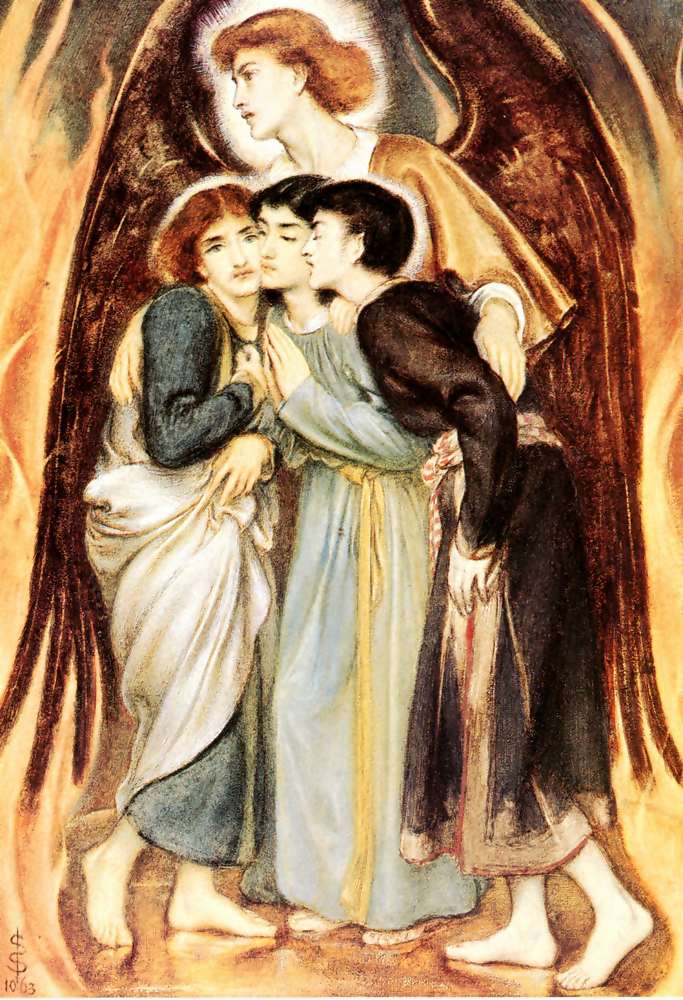
The name comes from the Hebrew meaning, “who is like God?; who is equal to God?,” “who is asked for?” and according to Hitchcock Bible names, “lent.” The name is borne by three male characters in the Bible, one mentioned in (Exodus 6:22) as one of the sons of Uzziel, the uncle of Moses and Aaron and most notably, it is the Hebrew name of Meshach (Dan. 1:11, 19) one of the three youths who refused to worship idols and were thrown in a furnace but miraculously survived.
Misael currently ranks in as the 192nd most popular male name in Mexico (2021) and the 790th most popular male name in the United States (2022).
In the Coptic Church, it is borne by St. Misael the Anchorite (7th-century CE).
Its feminine version of Mishaela is a pop song by Israeli pop singer, Achinoam Nini and has experienced sporadic usage in Israel and the English-speaking world. It is also the name of a character in Shining Force Gaiden: Final Conflict.
Drew is the modern English form of the Anglo-Norman Dreu(x) which ultimately comes from the Frankish, Drogo, which is likely derived from the Proto-Germanic, *draugaz (illusion, mirage), which later transformed into the Saxon drog (ghost, illusion), compare to the Old Norse word draugr, a type of vampiric supernatural being in Old Norse folklore. The name was introduced into England by the Normans. It has also been linked with the Slavic dragan (dear, precious) but this etymology is less likely.
Dreu(x) was borne by a son of Charlemagne (8th-century CE). It was also borne by a 12th-century saint of Flanders, who has the distinction of being the patron saint of coffee.
It is the progenitor of the French surname Drieux.
Dreux is also the name of a commune in France, but this has a different etymology, possibly related to the Latin Drocus (unknown meaning).
In the 20th-century, Drew was often listed as an offshoot of Andrew in many baby name books. It also was occasionally bestowed on females.
Drew currently ranks in as the 512th most popular male name in the United States (2022), and the 840th most popular female name. As of 2021, it was the 790th most popular male name.
Notable bearers are Drew Carey and Dr. Drew Pinsky.
Drogo is the name of several Hobbits in the Tolkien universe and of the name of the Dothraki lord in the George R.R. Martin book, A Throne of Ice and Fire.
Both come from the Greek, θεός (theos) meaning “god” and δόσις (dosis) meaning “giving.” Both the male and female form were borne by several Christian saints and Medieval rulers. In the English-speaking world, a notable bearer was Theodosia Alston Burr (1783-1813), the daughter of Aaron Burr and an American socialite who mysteriously disappeared in a ship-wreck. Her fate has been a source of speculation for two centuries, but she most likely died in the wreck. She is also the subject of the Broadway opera song from Hamilton, My Theodosia.
It’s female version has experienced usage in the English-speaking world since the 15th-century. It has spun off several diminutive off-shoots, which later became independent names, such as Docie/Dosey, Doshie, Dosha, Docia and Theda.
Theodosia appeared in the U.S. Top 1000 Most Popular Female Names between 1880-1895, it peaked at number #547 in 1880. It’s offshoot of Doshie appeared in the U.S. Top 1000 between 1880-1905 and peaked at #640 in 1884 whereas Doshia peaked at #582 in 1881 and Docia at #317 in 1880.
Theda (THEE-dah) was the name of silent film actress, Theda Bara (born Theodosia Burr Goodman, 1885-1955). Theda appeared in the U.S. Top 1000 between 1880-1948 and peaked at #350 in 1916. Theda Bara may have helped sustain the usage of the name in the United States, but it seems to have been common enough long before she graced the silver screen.
In the 1988 movie For Keeps, starring Molly Ringwald, a teen couple are faced with an unexpected pregnancy, in which they name their daughter Theodosia, short form Thea, it is a last minute decision decided by the father who gets the name from his deceased grandmother of the same name.
It is the name of the main character of the R. L. LaFevers 2007 children’s novel, Theodosia and the Serpents of Chaos, which spun off a tv series.
Its pronunciation in the English-speaking world fluctuates depending on the region and personal preference, from THEE-oh-DOH-see-uh, to THEE-oh-DOH-shuh and THEE-oh-DOH-zhuh, the sky’s the limits.
Its masculine form has always been prevalent in eastern Christian countries but did not pick up the same momentum in the English-speaking world as its feminine counterpart did.
Female forms
Tayodosiya ታዮዶሲዮስ (Amharic)
Thudusya ثيودوسيا (Arabic, used by Arab Christians)
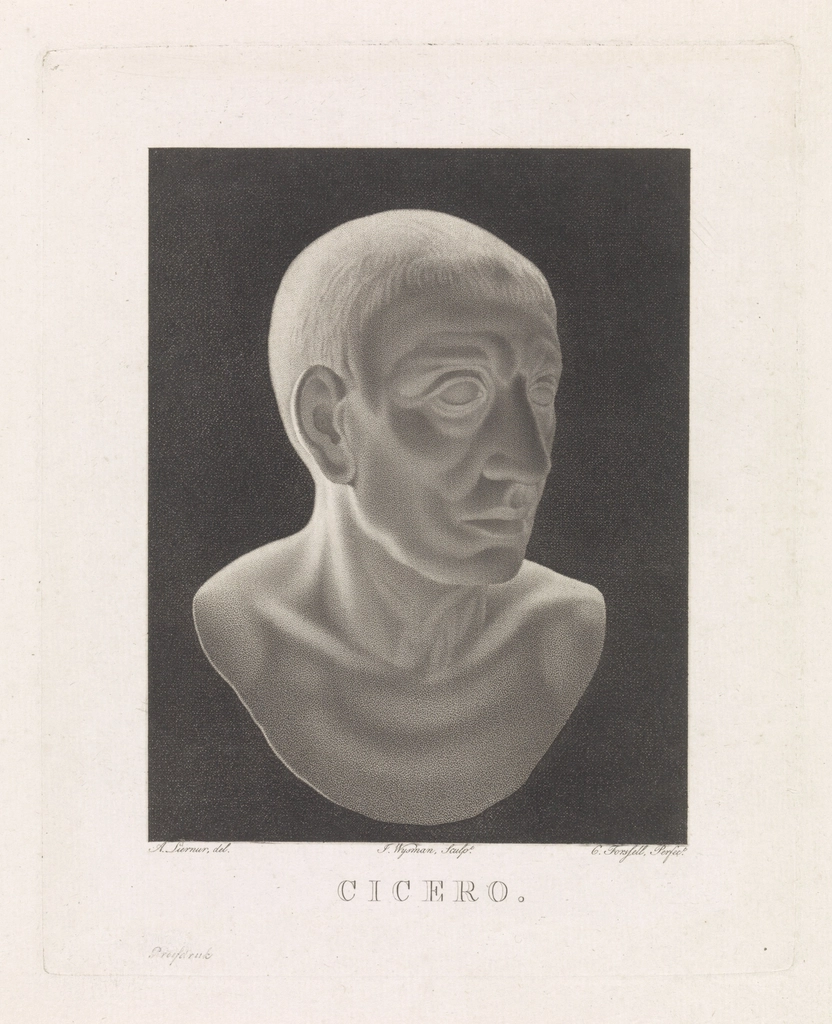
Tully is the English form of the Roman family name, Tullius, which is derived from the praenomen, Tullus, of an unknown meaning. It is likely Etruscan and its meaning has been lost. Other suggestions include that it is from the Latin, tullius (spout of water; gush of blood) or the Latin term, tollere, meaning “to lift,” allegedly referring to the act of a Roman father lifting their newborn son and claiming him.
A notable bearer is Marcus Tullius Cicero.
It was also borne by several male and female saints.
Alternately, Tully has been used on females occasionally, mainly as a diminutive form of Petula.
Male forms
Tulli (Catalan)
Tullie (French, this is a unisex name in France, though it is rare)
From the Medieval Italian term, villano, meaning a farmhand, countryman, peasant, ultimately from the Latin villanus, of the same above meaning.
Both its masculine form of Villano and its feminine form of Villana were in common use in Medieval Italy. Its masculine form was born by two 12th-century Italian bishops, and its feminine form was born by Bl. Villana de Botti (1332-1360), an Italian nun and penitent who is currently up for canonization by the Catholic Church.
Both names fell out of use in Italy due to the term later taking on the meaning of a rude or crass person. Villano is however, also an Italian surname. Its gallicized forms of Villain and Villaine appear in sporadic use in France between the 11th-17th centuries.
Villanella is a type of Italian music, which later spun off the Villanelle (derived from pluralized of the former word), which is the name of a type of pastoral poem that became popular in 19th-century England.
Villanelle was used as the name of a character in the 1987 Jeannette Winterson novel, The Passion. It was then used as the name of a character in the Luke Jennings’ thriller novel, Codename Villanelle, which later spun off the BBC series, Killing Eve (2018-2022). Since 2018, the name has appeared in sporadic use in the U.K. being given to 5 baby girls a year.
Theoretically, Villanella could have been a Medieval diminutive form of Villana, and it would then be possible to gallicize the name to Villanelle, but I cannot find any records for either name being used prior to the 21st-century, and Villana’s French form was Villaine, which would more likely to have lend itself to the diminutive form of Villainette.
From the word of the same meaning, it ultimately derives from the Anglo-Saxon lufu (love). As a female given name, it has been in use since the Anglo-Saxon period, starting off as a pre-Christian name and later used as a vernacular form of the Greek female name, Agape, being used in honour of several saints who bore the name and was later used by the Puritans.
It forms the basis of several diathematic Anglo-Saxon female names, such as Loveday and Lovewell.
It appeared in the U.S. Top 1000 Most Popular Female Names between 1880-1893 and peaked at #793 in 1885. It reappeared in 2022, coming in as the 752nd most popular female name.
If you are wondering why it also appears in the U.S. Top 1000 Most Popular Male Names, this is actually a different name, Love (pronounced LOO-veh), is the Swedish form of Louis. Its appearance in the U.S. Top 1000 Most Popular Male Names also occurs when there was a huge peak in immigration from Sweden to the United States between 1880 and trickling away by 1909.
Anglo-Saxon forms are Lufu (LOO-voo) and Lufa (LOO-vah), a modern English alternative would be Lova which is also a Swedish feminine form of Love.
Potamiana is a latinized form of the Demotic Tꜣ-pꜣ-ym, ultimately derived from the Coptic Tapiam ⲧⲁⲡⲓⲁⲙ meaning “of the sea; of the lake.” It later evolved into the Greek Taphomis Ταπιωμις, and further hellenized as Potamiana.
Butamina and Butamiyana بُوطَامِيانَا are it’s Arabized forms.
The name was borne by a 3rd-century AD Egyptian saint who was martyred for her Christianity.
Nectar is the English form of the Greek NektariosΝεκτάριος, which is derived from νέκταρ (nektar), meaning “nectar, the drink of the gods. Nectar is not a name that has ever been in common use in the English-speaking world, but since it is the name of several Eastern and Western Christian saints, the proper English male translation of the name would be Nectar; or it would have appeared thus in the calendar.
It was borne by St. Nectaire of Auvergne, a 4th-century Christian missionary to the Gauls in what is now the Massif Central region of France. According to Gregory of Tours, he was sent by Pope Fabian, along with his brothers, where he transformed a temple that was dedicated to Apollo on Mont Cornadore into a cathedral that still stands, and was subsequently beheaded by the local Gaulic chieftain. The commune of Saint-Nectaire in the Puy-de-Dôme department of France gets its name from him, as does the cheese of the same name; or the latter technically comes from the Marshal of Senneterre, which is a linguistic corruption of Saint-Nectaire.
The name is composed of the Anglo-Saxon words cuþ “famous” and beohrt “bright.” It is notably borne by St. Cuthbert of Lindisfarne, a 7th-century English saint who is revered as the patron saint of Northumbria. Even after the Protestant Reformation, he remained a popular figure in Northern England, the Cathedral of Durham is where he lies entered.
It is the progenitor of the eponymous English surname.