Lesedi

  • Origin: Tswana
  • Meaning: “light.”
  • Gender: Unisex
  • Pron: leh-SEH-dee

The name comes directly from the Tswana word for “light.”

Lesedi La Rona (our light), is the fifth largest diamond in the world.

Currently, Lesedi was the 6th most popular female name in South Africa in 2023 and was among the top 10 most popular male names in South Africa until 2022.

A notable female bearer is Namibian tennis player, Lesedi Sheya Jacobs (b. 1997) and a notable male bearer is South African soccer player, Lesedi Kapinga (b. 1995).

With its radiant meaning and musical sound, Lesedi carries a sense of warmth, dignity, and brilliance. It’s a name that feels both grounded in African linguistic heritage and luminous enough to travel globally—an embodiment of “light” in every sense.

Sources

Tvisha, Twisha

Photo by Artem Saranin on Pexels.com
  • Origin: Sanskrit त्विषा
  • Gender: feminine
  • Meaning: “splendour; light”
  • (TWEE-shah)

The name comes directly from the Sanskrit word त्विषा meaning “splendour; light.” It can be transliterated as Tvisha or Twisha.

Sources

Nuralain, Noorulain

  • Origin: Arabic نور العين
  • Meaning: “light of the eye.”
  • Gender: feminine
  • Arab pron (NOO-roo-LINE); Urdu pron (NOO-rul-en)

The name is composed of the Arabic words, nur نُور (light), ul-Ain عَين (the eye; spring, fountain), hence it could also take on the meaning of “light of the spring or fountain.”

Noorulain or Noor-ul-Ain is a common name among Indian Muslims and Pakistanis, though it is not necessarily a name with strong religious connotations in the Arabic-speaking world itself.

It is the name of the female protagonist in a popular Pakistani romantic drama series of the same name (2018).

The Noor-ul-Ain is the name of one of the largest pink diamonds in the world and the tiara it is mounted in, which was made for Empress Farah Pahlavi’s wedding in 1958.

Other forms include the Malay and Indonesian, Norain, Nurain and Noorain.

Its Maghrebi forms are Noorelein, Noureleine, Noraleine, Nureleine & Nurelène which are sometime mistranslated by onomasticians as modern French or Flemish combinations of Nora & Madeleine, which may be the case in some instances.

Other transliterations include: Noor Alain, Nur Alain, Noor-ul-Ain, Nur-ul-Ain, Noraline, Noralin, Noralyn, Nour Elain, Nurelein, Nuraline, Nurelen, Nurelayne & Nuralyn.

Sources

Phoebe

Gender: Feminine
Origin: Greek
Meaning: bright; light
(FEE-bee).

To many Americans, Phoebe brings to mind the wacky yet lovable character of Phoebe Buffay on the popular SitCom, Friends. To the British, she is of an upper crust trendy sort, to Christians, she is an admirable woman in the New Testament, and to the Greeks, she is a classic, featured in both the Greek Orthodox calendar of saints as well as in Greek myth.

The name is derived from the Greek, Phoibus, which means “bright, light.”

In Greek Mythology, Phoebe was a pre-Olympic goddess, a Titan. She was the goddess of the moon and the consort of her own brother Coeus, from him, she mothered Asteria and Leto and was believed to be the grandmother of Artemis and Apollo.

The Greeks later associated her with the goddess Artemis. Phoebe was often used as an epithet for Artemis, while the masculine form, Phoebus, was used for Apollo.

Phoebe was also associated with the Oracle of Delphi.

There are a few other Phoebes mentioned in ancient Greek religion, one was a Heliade nymph, another was the daughter of Leucippus and Philodice.

Phoebe, daughter of Leucippus, and her sister Hilaeira, were priestesses to Artemis and Athena. They were both betrothed to Idras and Lynceus. Castor and Pollux, the divine twins, were so impressed by their beauty, that they fell in love with the two maidens and carried them off for themselves. Idras and Lynceus, outraged, sought the two immortals but were both slain. Nevertheless, Phoebe married Pollux. It was also the name of a sister to Leda.

In the New Testament, the name is borne by a woman of Cenchrae, many scholars argue that she was a deaconess, the Catholic Church especially seems to support this stance. She is also believed to have brought Paul’s Epistle of the Romans to Rome. She is a canonized saint in both the Catholic and Greek Orthodox Churches, both rites hold her feast on September 3rd.

Fast forward to the 1500s and you will find the name Phebe, (an older English spelling), as the name of one of Shakespeare’s characters in his play, As You Like It. In the modern American Classic, she is the younger sister of Holden Caulfied in J.D. Salinger’s Catcher in the Rye. Polish Science Fiction writer, Jacek Duraj, uses the name as an acronym for post-human beings in his novel Perfekcyjna niedoskonałość.

Phoebe is also the name of a genus of evergreen tree, a species of bird and a moon of the planet, Saturn.

As of 2010, Phoebe was the 29th most popular female name in England/Wales. Her rankings in other countries are as follows:

  • # 56 (Australia, NSW, 2010)
  • # 90 (Northern Ireland, 2010)
  • # 93 (Scotland, 2010)
  • # 309 (United States, 2010)

Other forms of the name include:

  • Febe (Asturian/Danish/German/Italian/Norwegian/Polish/Portuguese/Spanish/Swedish)
  • Foibe (Danish)
  • Phoebe (Dutch/English/German)
  • Phœbé/Phébé (French)
  • Phoibe (German)
  • Phoebi/Phoibi (Greek)
  • Feba (Serbo-Croatian)
  • Foibe (Swedish)

Elouan


Gender: Masculine
Origin: French/Breton
Meaning: “light.”

Rising in popularity in France, this trendy male name is actually of Breton origins, meaning “light”, it was the name of an Irish hermit who took up residence in 7th century Brittany. Canonized as a saint, a small chapel is dedicated to him in St-Guen where his tomb can be found. As of 2006, the name stood as 126 in the popularity charts, but has probably since risen. I can’t find statistical data from France since after 2006, but I have noticed its frequent appearance in French birth announcements. I have also noted the feminine form of Elouane. The designated name day is August 28th.

Update: Well, I guess I called that one wrong. As of 2009, Elouan dropped down to # 447.

Photine, Fotini

Gender: Feminine
Origin: Greek
Meaning: “light.”
Φωτινη
(foh-TEEN; foh-TEE-nee)

The name is derived from the Greek φως (phos) meaning “light.”

The name is borne by a Christian saint, considered very important to the Greek Orthodox Church.

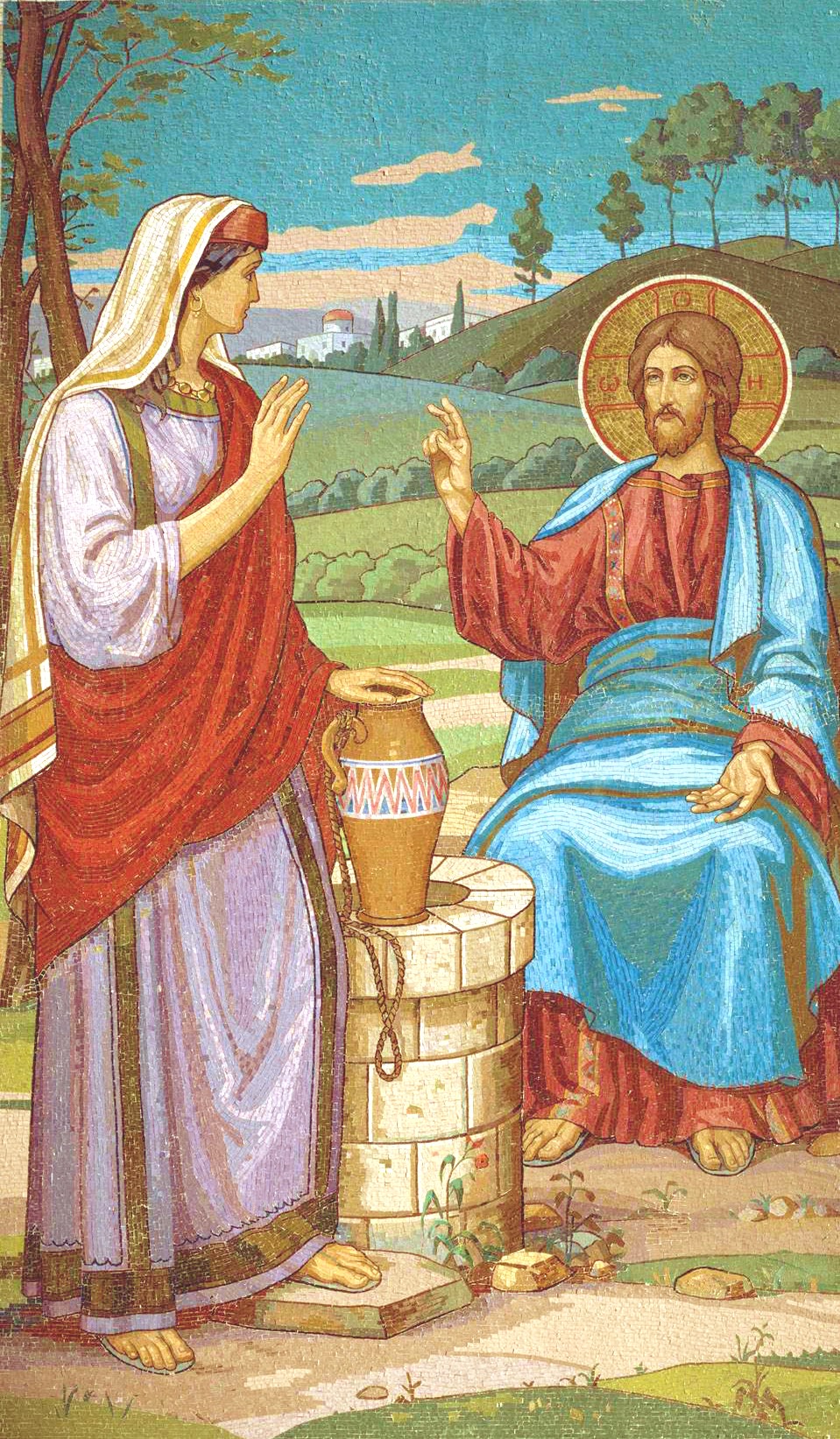
St. Photine the Samaritan woman, has been honoured as an Equal-to-the-Apostles.

A legend, which was based on the story in the New Testament when Christ met the woman at the Well, was that the woman at the well was named Photine and that, after repenting of her sins, she went on to evangelize Carthage, only to be martyred under Nero’s reign.

She had 4 sisters who were venerated as saints, one of whom was named Fotis and who shares the same name-day as her, and her son Photinos, who also shares a name-day with her.

Fotoula and Toula are modern Greek diminutives.

Another form is Fotine, and a Polish form is Fotyna.

In Russian she is referred to as St. Svetlana, (which is a literal translation of the name Photine).

The designated name-day is January 5.

Mitsuaki

bright-autumn_streetGender: Masculine
Origin: Japanese
Meaning: “bright fruit; shining autumn.”

The name has different meaning depending on the character used, which for this particular name, I will provide in the near future. In Japanese, selection of different characters are instrumental in defining a name. One name can mean a variety of different things depending on the way you write it. Japanese names are extremely complex. In this case, Mitsuaki, a fairly prevalent Japanese male name, can either be composed of the Japanese elements mitsu meaning “fruit or truth” or the honomym mitsu meaning : “shine; light.”  Aki is another element that can mean a few things, it can either mean “autumn” or “bright, light”.

The name is borne by Mitsuaki Hoshino (b. 1959) a Japanese actor and Mitsuaki Madono (b.1964) a Japanese voice actor.

Jasna

Gender: Feminine
Origin: Serbo-Croat
Meaning:”light; bright; clear.”
(YAHS-nah)

The name comes directly from the Serbo-Croatian word for light, bright or clear. Its designated name day is August 11. In other Slavic speaking countries such as Poland and the Czech Republic, this element appears in several place names, most notably the village of Jasna Gora in Czestochowa Poland. There is a famous monastery and an icon which is also a Polish national symbol attributed to the area. This could be a nice choice for Catholic or Orthodox Christian families who are looking for a way to honour the Virgin Mary but find the other Mary alternatives overused or plain. Likewise, it could also be used as an alternative for Claire or Clara. Another place which bears this appellation is a ski resort in Slovakia. Despite it being a word and place name in other Slavonic countries, it is a legitimate given name in the former Republic of Yugoslavia.