Numan

  • Origin: Arabic نُعْمان
  • Meaning: “blood; red; bliss; anemone flower.”
  • Transliterations: Nu’man; Nouman (Maghrebi Arabic; Persian); Noman নোমান (Bengali, Tatar, Urdu)
  • Gender: Male
  • Pron (NOO-mahn)

The name comes directly from the Arabic word نُعْمان (nu’man), which is a poetic term describing “blood” as in a type of blood that brings vitality and beauty. It is also the word for the colour crimson and the anemone flower. It is ultimately from the root n–ʿ–m (ن ع م), which shares the same root with Naim نعم (comfort, tranquility, luxury, ease).

Numan ibn al-Munḏir (d. 602 CE) was one of the last Lakhmid kings of al-Ḥīrah, a pre-Islamic Arab Christian kingdom in southern Iraq. He is remembered in Arabic literature for his eloquence and patronage of poets.

In early Islamic history, Numan ibn Bashir al-Ansari (d. 684 CE) was a Companion of the Prophet Muḥammad and a prominent figure in the first Islamic century.

Sources

Lilinoe

  • Origin: Hawaiian
  • Meaning: “fine mist; rain.”
  • Gender: Female
  • Pron: LEE-lee-NOH-eh

The literal meaning is “fine mist” or “gentle rain.” It comes from the Hawaiian words, lili (“to be gentle, soft, trembling”) + noe (“mist, haze”).

Lilinoe is a goddess associated with Mauna Kea, and is the goddess of fine mist.

Sources

Ziri, Taziri

  • Origin: Berber
  • Transcription: ⵣⵉⵔⵉ, زيري
  • Meaning: “moonlight.”

Ziri is an ancient masculine Berber name derived from the Tamazigt tziri, taziri, meaning, “moonlight.” Taziri or Thiziri (ⵜⵉⵣⵉⵔⵉ) is used as its female counterpart.

In history, Ziri was borne by Ziri ibn Manad, a 10th-century Berber king who founded the Zirid dynasty.

Sources

Afsoun, Füsun

Photo by Amir Abbaspoor on Pexels.com
  • Origin: Persian
  • Meaning: “charm; spell; magic; incantation.”
  • Gender: Female
  • Variant Transcriptions: Afsoon, Afsun
  • uf-SOON; feuf-SOON

The name comes directly from the Persian word, افسون (afsoun), meaning, “charm; spell; magic; incantation.”

The Turkish female name, Füsun is of the same etymology.

Sources

Swyn

  • Origin: Welsh
  • Meaning: “magic, spell, enchantment.”
  • Gender: Feminine
  • Pron: (sʊɨn /swiːn)

From the Welsh vocabulary word, swyn (magic, spell, enchantment). In the 20th-century, it has been adopted by Welsh parents as a female given name, usually 5 girls per year have been given this name in Wales. since 2001.

The perfect name for a Halloween baby.

Sources

Santos

Photo by Thgusstavo Santana on Pexels.com
  • Origin: Galician Spanish, Portuguese
  • Meaning: “saints.”
  • Gender: unisex
  • Pronunciation: SAHN-tose (Sp)

The name comes directly from the Iberian word for “saints,” since Medieval times, it was originally bestowed on children born on November 1st, the Feast of All Saints, it’s French equivalent being Toussaint. For females, the name was often used in conjunction with Maria, i.e. Maria de los Santos.

While its singular form of Santo is also used, I felt Santos deserved it’s own entry since it’s usage is specific to a Catholic Holiday.

For males, Santos has been in the U.S. Top 1000 Male Names since 1920, peaking at #539 in 1937, in 2019, he ranked in as the 966th most popular male name in the United States.

In the U.S, its use on females peaked in the 1920s, appearing in the U.S. Top 1000 Female Names between 1920-1929, peaking at #742 in 1924.

The name was borne by Confederate Colonel, Santos Benavides (1823-1891) & Mexican artist, Santos Balmori Picazo (1899-1992).

Santos is also the name of a municipality in São Paulo, Brazil.

Sources

Siddhi

  • Origin: Sanskrit सिद्धि
  • Marathi: सिद्धि
  • Meaning: “perfection, attainment, completion; accomplishment; success.”
  • Gender: feminine
  • Pronunciation: SID-dee; SIT-tee (depending on language & dialect)

The name comes from the Sanskrit noun सिद्धि (siddhi), meaning “perfection, attainment, accomplishment,” which is a concept that refers to the attainment of magical, paranormal or psychic abilities through meditation and yoga. It is a concept found in Yoga, Buddhism and Hinduism.

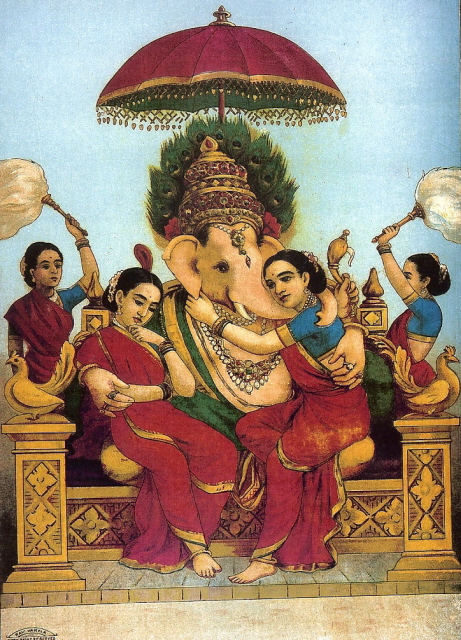
In Hinduism, it is the name of one of Lord Ganesha’s wives, the other being named Riddhi.

Sources

Sihana

  • Origin: Albanian
  • Meaning: “like the moon.”
  • Gender: feminine
  • Pronunciation: (sih-HAH-nah)

The name is composed of the Albanian elements, si (like) and hëna (moon).

The name is borne by Albanian supermodel, Sihana Shalaj.

Sources

Plamen, Plamena

Plamen Пламен (Bulgarian & Serbian) is primarily South Slavic in the contemporary world, but comes from a pan-Slavic word meaning, “flame.” The feminine form is Plamena.

It was potentially Płomień in Medieval Polish. Płamen (male) and Płamena (female) are also modern Polish transliterations of the Bulgarian.

In Bulgaria, the designated name-day is November 8th.

Sources

Miglė

  • Origin: Lithuanian
  • Meaning: “mist; fog;” also “bluegrass.”
  • Gender: feminine
  • Pronunciation: MIG-lay

The name comes directly from the Lithuanian word migla, meaning “fog; mist.” This is also the word for the plant, “bluegrass.”

It has been in the Top Most Popular Female Names in Lithuania since 1999, and peaked at #10 in 2010. As of 2019, it ranks in as the 21st most popular female name in Lithuania.

A notable bearer is Lithuanian Track Cyclist, Miglė Marozaitė (b. 1996).

The designated nameday in Lithuania is May 11th.

Other forms include: Migla, Miglena, Migleta, Miglija, Miglutė, Migle & Miglita.

Sources