Brânduşa

  • Gender: Feminine
  • Origin: Romanian
  • Meaning: “crocus.”
  • (brun-DOO-shah).

This Romanian beauty might be appealing to parents who like names like Brandy and Brandon. It may look very similar to the two above names on paper, but its pronounced very different. In Romanian phonology, the a with the little hat over it  is similar to the French u sound. That is, you round your lips and try to say ee at the same time. In order to hear how its actually pronounced you can listen to it here: http://www.forvo.com/search/Brandusa/ The name comes directly from the Romanian word for the Crocus plant.

Linnéa, Vanamo

Gender: Feminine
Origin: Finnish/Swedish
Meaning: “twinflower.”

There is the pretty, exotic and no-frills Vanamo and then there is the sweet, little Swede, Linnea. How are these two names related, you may ask? Well, Vanamo is the direct Finnish translation of Linnea. Now, you may be wondering why the Finns came up with a completely new name when they could just use Linnea itself.
To make a long story short, Finland had been under Swedish rule for a couple centuries and many Finns were forced to take Swedish names in previous eras, at the turn of the 19th century, when Finland had gained its autonomy as a Russian Duchy, there was a sudden revival of all things Finnish: including the language. Previously, Swedish was the official language of Finland and the Finnish language had almost been driven to the verge of extinction. As a result, a lot of new Finnish names cropped up, many being inspired by some common Swedish word names which had been popular in Finland under the Swedish Empire. For example the traditional feminine Swedish name of Saga, which is from the Old Norse word for a story, fairytale, legend or fable became Satu in Finnish. This is how Vanamo had come about, the name Linnea, which had already been around for quite a while was directly translated into Vanamo.

As for the history of Linnea. Linnea started off as a botanical name. It is the scientific name for the twinflower. The flower got its name from the famous Swedish botanist, Charles Linneaus (1707-1778). Linnaeus had a particular affinity to the twin flower and therefore named the flower for himself. Likewise, the twinflower is the national flower of Sweden and the name has been consistently popular in Sweden for the past few centuries. It currently comes in at # 7 in Sweden. It is also a popular name in Norway, coming in at # 1.

The story doesn’t end here. If you want to dig deeper into the etymology of the surname Linnaeus. Either way, it still comes out being a botanical name. Carl Linneaus’ father actually came up with the surname himself. It was during a time when Swedes were officially taking surnames. Before, the Swedish surname system was very much the same as the one in modern Iceland, where people were known by their first names and then their father’s name followed by the suffix of son or dotter, depending on your gender. Since the population in Sweden was getting larger, the familial system of Joe son of Joe wasn’t working so well anymore, so many Swedes were required to take official surnames that did not change with the generations. Many came up with the typical, run of the mill Olson and Larson, and others, especially the nobility, came up with more creative surnames. In the case of Linnaeus’ father, whose real names was Nils Ingmarsson, it was fashionable for academics to take on Latin based surnames, as Latin was the lingua franca of the time. He came up with Linnaeus, being a latinization of the Swedish Linnagard literally meaning “linden farm.” It was the name of the warden’s farm, and the name denoted the large linden tree that grew on the property. Later, Carl would sign his name as Carolus Linnaeus, but in everyday life, he went by the more Swedish sounding, Carl Von Linné, von was added on later after gaining distinction as a scientist. A sign of nobility.

So there you have the history of Linnea and Vanamo. The pronunciation of both names are tricky. Linnea in Swedish would be something like (lin-NEH-yah), the accented E as kinda like the e sound on yeah. It’s a short E thats very drawn out, despite the French looking accent mark, it really shouldn’t sound anything like the French accented E which is more like an ay sound. If you’d like to hear what I’m talking about, you can hear Linnea being pronounced by a native Swede here: http://www.forvo.com/word/linnéa/. As for Vanamo, remember that in Finnish, the stress is always on the first syllable, so it should sound something like (VAHN-uh-MO). The official name day for Vanamo is Aug 3rd. To hear Vanamo spoken in real life, go herehttp://www.forvo.com/search/Vanamo/.

Mádara

Gender: Feminine
Origin: Latvian
Meaning: “cleavers.”
(MAH-duh-ruh)

This sweet, exotic and uber feminine, Baltic gem, is derived from the Latvian plural word meaning, “cleavers”, a type of flowering plant indigenous to Latvia.

In ancient Baltic folk medicine, the plant was used to cure and treat skin diseases and other ailments. The name has inspired a Latvian cosmetics company. Mádara, which is an eco-based brand of cosmetics, differs from other European cosmetic chains as it claims to use 100% natural plants indigenous to the Baltic countries.

The name is also a very popular Latvian first name.

Its designated name day in Latvia is July 29.

Carmel

Gender: Feminine
Origin: Hebrew
Meaning: “garden; orchard.”
Eng; (KAHRmel); (kahr-MEL)

There’s Candy and Cinnamon, so why not this? It sounds exactly like the yummy sugary snack, but has no relation to the word whatsoever. Spelled Carmel, it is the name of a place in Israel where alleged sightings of the Virgin Mary occurred way back in the Middle Ages. The miraculous visions gave its name to the Carmelite order.

Carmel is a derivative of the Hebrew karmel כַּרְמֶל. meaning “garden; orchard.” If you find the religious connotations too strong, and you love flowers, you now have the perfect excuse to use this name. Its designated name day is July 16.

As a given name, its spread throughout the Catholic world and the only English speaking country it ever gained any ground in, was Ireland, way back in the 1950s.

There’s the popular Italian version of Carmela, (also used by Spanish-speakers), which came to everyone’s attention as the name of Carmela Soprano on the hit HBO series.

There is also the obscure French form of Carmelle. Carmelita and Carmelina are popular Spanish diminutives, often used as independent names.

Other forms include:

  • Carme (Catalan/Galician)
  • Carmel (English: commonly used in Ireland)
  • Carmèle/Carmelle (French)
  • Karmela (German: rare)
  • Karméla (Hungarian)
  • Karmelina (Hungarian)
  • Carmela (Italian/Spanish)
  • Carmelina (Italian/Spanish)
  • Carmelinda (Italian/Portuguese/Spanish)
  • Carmelita (Spanish: originally a diminutive form, used as an independent given name)
  • Karmni (Maltese)
  • Carmo (Portuguese)
  • Carmen (Spanish: actually has a different etymology, but has been used as a cognate for centuries)

Spanish masculine forms are Carmelino, Carmelito and Carmelo and an Italian male form is Carmelio.

Common compound names include: the Spanish, Maria Carmen and Maria Carmel, the Italian, Maria Carmela and the Portuguese, Maria da Carmo.


Camilla

Gender: Feminine
Origin: Latin
Meaning: Unknown
(kah-MIL-lah)

Camilla, a little stodgy, a little dramatic, and a little British nobility, most of the English speaking world would probably associate her with Camilla Parker-Bowles, now the legitimate wife to Prince Charles.

Then we have Camille, a classy French feminine name that brings to mind pastellic landscapes and Claude Monet, but wait, Camille is actually a masculine name!

The origins of Camilla goes back to the very foundations of Rome itself.

In Roman mythology, Camilla of the Volsci was a pre-Roman princess. Her father, Metabus, was deposed by his own people; running for his life, along with his infant daughter, he tied Camilla to a spear and consecrated her to the goddess Diana, in hopes that the goddess would intercede for his only child’s life. In exchange, he promised that Camilla would be Diana’s loyal servant and forever remain a virgin in the goddess’ honour. Attached to the spear, Metabus threw Camilla to the otherside of the River Amasenus, and Camilla survived unscathed.

In Virgil’s the Aeneid, it is confirmed that Camilla is the loyal servant of Diana, but also a great warrior. It is said that she is so swift, that she can run across a body of water without getting her feet wet. She allied herself with the other pre-Roman peoples in order to defeat the Trojans who had recently taken refuge in Rome and were gradually taking power.Camilla was killed by Arruns in battle, and Diana in rage had another servant of hers, Opis, kill Arruns to avenge Camilla’s death.

In later years, Camilla became a Roman cognomen being masculinized to Camillus. The exact origins and meaning of the name are unclear. It is believed that it is of Etruscan origins and that its meaning has been lost to history.

In France, Camille was a male name, (and still is considered a male name but has recently become more common on females). It wasn’t until the turn of the century that its usage on females arose. In France’s top 100 female names of 2006, Camille came in at # 7. Even so, for the sake of policy, this blog will list Camille as a masculine name.

Notable males with this include, Camille Saint-Saëns, a famous composer. Camille Nimr Chamoun, former president of Lebanon. Nicholas Camille Flammarion, a French astrononomer. Camille Desmoulins, a close associate of Georges Danton, (he was a journalist who played a role in the French Revolution), as well as French impressionist painter, Camille Passarro.

Its notable female bearers cannot go unignored. It was borne by French sculptor, Camille Claudel, and it is also borne by American feminist, Camille Paglia.

Camilla has other masculine forms. In Polish and Czech it is Kamil (kah-MEEL) and it is fairly popular name in both countries, as is its feminine counterpart, Kamila.

Lebanese Christians also favor this name because it works well in the Arabic language, yet fits into the edicts of their faith. While St. Camillus de Lellis, (whose feast day is July 14), is a popular Catholic saint, Kamil also coincides with the Arabic word meaning “whole; complete; or perfect,” so for many Middle Eastern Christians, its a 2-for-1 name.

There is also the Italian male form of Camillo and the Spanish Camilo.

Camellia is often times seen as a cognate of Camilla. Its actually a botanical name that really has no etymological relations to the ancient name. It was named for botanist Rev. George Joseph Kamel.

Other forms of the name include:

  • Kamilia (Bielorusian)
  • Kamila (Bosnian/Czech/Slovak/Polish)
  • Camilla (Danish/English/German/Italian/Latin/Norwegian/Swedish)
  • Kamilla (Finnish/Icelandic/Hungarian)
  • Kamilė (Lithuanian)
  • Kamilija (Lithuanian)
  • Kamilijana/Kamilijona (Lithuanian)
  • Camila (Spanish/Portuguese)

Masculine forms include:

  • Kamil (Czech/German/Polish)
  • Camille (French)
  • Kamill/Kamilló (Hungarian)
  • Camillo (Italian)
  • Camillus (Latin)
  • Kamilas/Kamilis (Lithuanian)
  • Kamilijus (Lithuanin)
  • Camilo (Spanish/Portuguese)

Possible nickname options are Cammie, Cam, Milla, and Millie.


Rán

Gender: Feminine
Origin: Old Norse
Meaning: “theft; robbery.”
General Scan (RAWN); Ice (ROWN) like the word Round with the d cut off

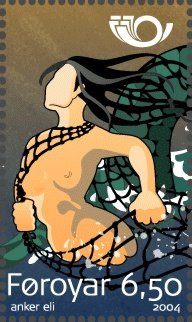
The name is borne in Norse mythology by a sea goddess.

The goddess Rán, is the subject of several Old Norse Prose Eddas, including the Skáldskaparmál, in which a poem entitled, Lokesenna, talks of her life and exploits.

According to the Lokesenna, Rán is the wife of Aegir, and with him, she has nine daughters.

Rán is also famous for capturing unsuspecting seafearers with her fish-net. In fact, her fish-net is also recorded in the Volsunga Saga.

According to some sources, she is married to the sea.

The name is still in usage in Iceland and the Faroe Islands. In Iceland, it is often used as a one syllable filler middle name.

As of July 2007, 37 women in Iceland bore this as a first name, while 325 had it as a middle name.

The name can also be a Japanese female name,  meaning “orchid”