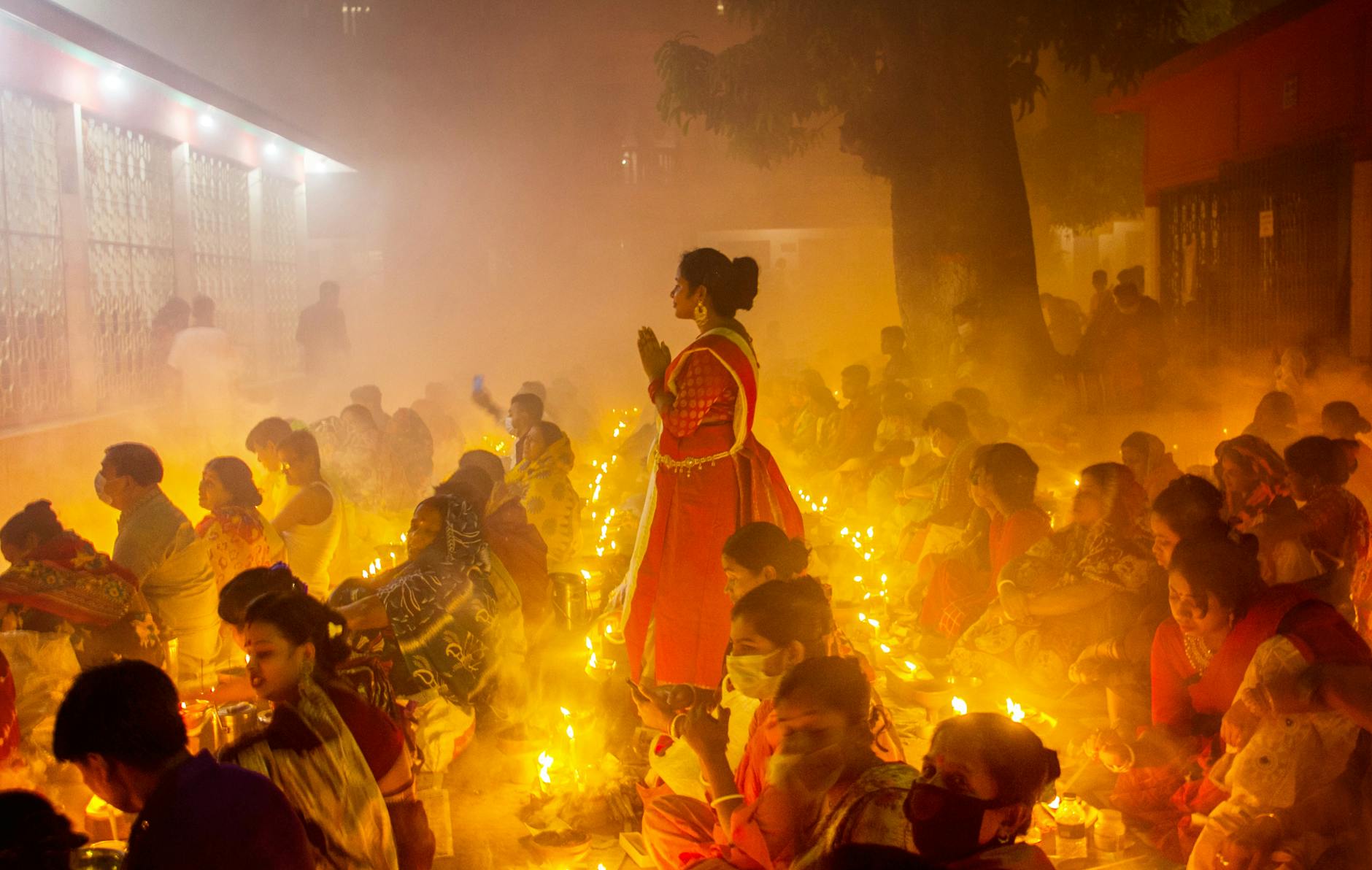
The name comes directly from the Sanskrit word for daughter, which ultimately derives from the Sanskrit word नन्दि (nandi) meaning, “joy; delight; rejoice.”
In Hinduism, it is one of the many epithets for the goddess Durga.
Pronunciation: Eng (jeh-DIAL); Port (ZHAH-dee-EL); Sp (YAH-dee-EL)
The name is composed of the Hebrew words ידע (yada’) meaning, “to know,” and אל (‘el) meaning “God.”
It is borne by three minor characters in the Old Testament, mentioned in 1 Chronicles 7:6, 1 Chronicles 11:45 and 1 Chronicles 26:2.
In recent years, its Spanish and Portuguese offshoot of Jadiel and Yadiel have been popular in Latin America. It may have been popularized by Puerto Rican reggaeton singer, Jadiel (born Ramón Alberto González Adams, 1985-2014).
Jadiel has appeared in the Brazilian Top 1000 names between 1980-2000. Jadiel has been in the U.S. Top 1000 since 2008 and currently ranks in at #878 in 2022. Yadiel appeared in the U.S. Top 1000 between 2008-2021, peaking at #850 in 2009.
The name is composed of the Germanic elements al (all) and rikr (ruler). It was most notably borne by two Gothic kings, Alaric I and Alaric II. Alaric I was known for leading a rebellion against Rome and sacking it. His Gothic name was 𐌰𐌻𐌰𐍂𐌴𐌹𐌺𐍃 (Alareiks).
An historical curiosity, Alaric has never experienced much usage, however, it has been in the U.S. Top 1000 since 2017, and currently ranks in as 915th most popular male name.
Other forms include:
Alaric (Catalan, French, English, Occitanian)
Alarich (Czech, German, Slovak)
Alareiks (Gothic)
Alarico (Italian, Portuguese, Spanish)
Alaricus (Latin)
Alariks (Latvian)
Alarikas (Lithuanian)
Alaryk (Polish)
Alarih Аларих (Russian, Ukrainian)
Alarik (Scandivanian, Slovene)
Obscure feminine forms include Alarica, Alarika and Alarice.
Both names are derived from the Old Saxon bodo (lord). It has alternately been argued to be linked with the Old German, boto (messenger). It may have also been a hypochoristic form of any older Medieval Germanic name which had the bod- element.
It was borne by a 7th-century Frankish saint, who was bishop of Toul, he founded what is now known as the Monastery of Bonmoutier.
Bodo reentered popular use in Germany in the 19th-century. In recent years, its low German form of Bode has entered the U.S. top 1000. It currently ranks in as the 960th most popular male name (2022).
The name comes directly from the Sanskrit word for faith, belief, devotion or trust. It is ultimately from the Indo-European root *ḱred-dʰeh₁ (to believe; to put one’s heart into another). It shares the same root as the word creed and the Latin credo.
In Hinduisim, shraddha is a funerary ritual that is used to honour one’s deceaded forbears, especially deceased parents.
A notable bearer is Indian actress and singer, Shraddha Kapoor (b. 1989). Other notable bearers include the Indian actresses, Shraddha Arya (b. 1987); Shraddha Sinath (b. 1990) and Shraddha Das (b. 1987)
Both come from the Greek, θεός (theos) meaning “god” and δόσις (dosis) meaning “giving.” Both the male and female form were borne by several Christian saints and Medieval rulers. In the English-speaking world, a notable bearer was Theodosia Alston Burr (1783-1813), the daughter of Aaron Burr and an American socialite who mysteriously disappeared in a ship-wreck. Her fate has been a source of speculation for two centuries, but she most likely died in the wreck. She is also the subject of the Broadway opera song from Hamilton, My Theodosia.
It’s female version has experienced usage in the English-speaking world since the 15th-century. It has spun off several diminutive off-shoots, which later became independent names, such as Docie/Dosey, Doshie, Dosha, Docia and Theda.
Theodosia appeared in the U.S. Top 1000 Most Popular Female Names between 1880-1895, it peaked at number #547 in 1880. It’s offshoot of Doshie appeared in the U.S. Top 1000 between 1880-1905 and peaked at #640 in 1884 whereas Doshia peaked at #582 in 1881 and Docia at #317 in 1880.
Theda (THEE-dah) was the name of silent film actress, Theda Bara (born Theodosia Burr Goodman, 1885-1955). Theda appeared in the U.S. Top 1000 between 1880-1948 and peaked at #350 in 1916. Theda Bara may have helped sustain the usage of the name in the United States, but it seems to have been common enough long before she graced the silver screen.
In the 1988 movie For Keeps, starring Molly Ringwald, a teen couple are faced with an unexpected pregnancy, in which they name their daughter Theodosia, short form Thea, it is a last minute decision decided by the father who gets the name from his deceased grandmother of the same name.
It is the name of the main character of the R. L. LaFevers 2007 children’s novel, Theodosia and the Serpents of Chaos, which spun off a tv series.
Its pronunciation in the English-speaking world fluctuates depending on the region and personal preference, from THEE-oh-DOH-see-uh, to THEE-oh-DOH-shuh and THEE-oh-DOH-zhuh, the sky’s the limits.
Its masculine form has always been prevalent in eastern Christian countries but did not pick up the same momentum in the English-speaking world as its feminine counterpart did.
Female forms
Tayodosiya ታዮዶሲዮስ (Amharic)
Thudusya ثيودوسيا (Arabic, used by Arab Christians)