Ptolomy

  • Origin: Greek Πτολεμαῖος
  • Meaning: “aggressive, warlike.”
  • Gender: Male
  • Eng (PTAHL-e-mee, TAHL-e-mee)

Derived from the ancient Greek male name Πτολεμαῖος (Ptolemaios), which in turn comes from πτόλεμος (ptólemos), meaning “war” or “battle.”

The word ptólemos is an older Aeolic dialectal form of πόλεμος (pólemos), the standard Classical Greek word for “war,” sharing the same root with the English word, “polemic.”

Ptolemy I Soter (367–283 BCE) was a general of Alexander the Great and later became Pharaoh of Egypt, founding the Ptolemaic Dynasty (323–30 BCE). This dynasty ruled Egypt for nearly three centuries and ended with Cleopatra VII, the most famous bearer of the family’s legacy.

Claudius Ptolemaeus (Ptolemy) (2nd century CE) was the famed Greek astronomer, mathematician, and geographer of Alexandria, whose Almagest shaped Western astronomy for over a millennium.

According to the Book of 1 Maccabees (135/4 BC), Ptolemy of Jericho betrayed his father-in-law, Simon the High Priest, by murdering him and his two sons while they slept as guests under his roof. This act of treachery is used in Dante Alighieri’s The Inferno, in which the ninth circle of Hell is called Ptolomea after him, a frozen realm reserved for those who betray their guests.

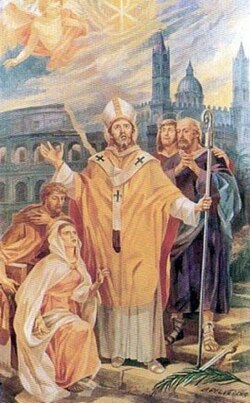
Ptolomy is also the name of an early Christian saint.

In the English-speaking world, Ptolomy has been used on and off since the 18th-century. It appeared in the U.K’s top 500 boys’ names in 2004, ranking in at #906.

A modern bearer is American author, Ptolemy Tompkins. Celebrity couple Gretchen Mol and Tod Williams bestowed this on their son in 2007.

Common English short forms include: Tollie, Tolly, and Tal.

International Variations

  • Butlimus بطليموس (Arabic)
  • Ptghomeos Պտղոմեոս (Armenian)
  • Ptaljemej Пталемей (Belarusian)
  • Ptolemej Птолемей (Bulgarian, Croatian, Serbian, Ukrainian)
  • Ptolemeu, Tolomeu (Catalan)
  • Ptolomeos ⲡⲧⲟⲗⲉⲙⲉⲟⲥ (Coptic)
  • Ptolemy (Another English form)
  • Ptolémée (French)
  • Tolomaes (Gaelic)
  • Ptolomeu (Galician, Occitanian, Romanian)
  • Ptolemäus (German)
  • Ptolemaiosz (Hungarian)
  • Ptólmæos (Icelandic)
  • Tolomeo (Italian, Spanish)
  • Tolommeo (Italian)
  • Ptolomaeus (Latin)
  • Ptolemajs (Latvian)
  • Ptolemėjus (Lithuanian)
  • Ptolomey, Ptolomej Птолемей (Macedonian, Russian)
  • Tolomé (Piedmontese)
  • Ptolomeusz (Polish)
  • Ptolomeu (Portuguese)
  • Ptolemæus (Scandinavian)
  • Ptolomaidh (Scottish-Gaelic)
  • Tulumeu (Sicilian)
  • Ptolomaj (Slovenian)
  • Ptolemeo, Ptolomeo (Spanish)
  • Batlamyus (Turkish)

Female forms include the sensual Ptolemaïs (Πτολεμαΐς) and the Italian, Tolomea.

Sources

Leontius, Léonce

  • Origin: Greek
  • Meaning: “lion-like.”
  • Gender: Male
  • Eng Pron (lee-ON-shus)

The name is derived from the Greek genitive λέοντος (leontos), meaning, “belonging to a lion; lion-like.”

It was borne by an 8th-century Byzantine emperor and several saints.

The designated name-day is January 13th.

An early English form is perhaps, Leontes, which appears in Shakespeare’s play, The Winter’s Tale (1610).

Léonce is its unisex French form. It appeared in the French Top 1000 Male Names between 1900-1969, and peaked at #95 in 1909. It simultaneously appeared in the French Top 1000 Female Names between 1900-1940 and peaked at #187 in 1915.

Léonce also appeared in the U.S. Top 1000 Male Names between 1887-1895, peaking at #819 in 1887.

Other masculine forms

  • Liyonṭiyos ܠܝܘܢܛܝܘܣ (Assyrian)
  • Leoncio (Asturian, Spanish)
  • Leontzio (Basque)
  • Leonti, Leontiy, Leonty Леонтий (Bulgarian, Russian, Ukrainian)
  • Lleonci (Catalan)
  • Leontios Ⲗⲉⲟⲛⲧⲓⲟⲥ, Λεοντιος (Coptic, Greek)
  • Leontius (Dutch, English, German, Latin)
  • Leontes (English)
  • Léonce (French)
  • Leonte ლეონტე (Georgian)
  • Leonzio (Italian)
  • Leoncjusz (Polish)
  • Leôncio (Portuguese)
  • Leontie (Romanian)
  • Leontije (Serbo-Croatian)
  • Leonziu (Sicilian)

Feminine forms include

  • Léonce (French)
  • Léoncette (French)
  • Léoncie (French)
  • Léoncine (French)
  • Léonte (French)
  • Leontia (Greek, Latin, Romanian)
  • Leonzia (Italian)
  • Leoncja (Polish)
  • Leôncia (Portuguese)

Another possible female off-shoot is Léontine – popular in France from the late 19th to early 20th centuries, it is pronounced [le.ɔ̃.tin]. It is debated whether it is a direct feminine form of Leontius or related to a Latin source meaning, “from Lentini.” A future entry will be written completely dedicated to Léontine.

Sources

Mamilian

  • Origin: Latin
  • Meaning: unknown
  • Gender: Male

The name is derived from the Roman gens name, Mamilius. Its meaning is uncertain. It may relate to the Latin mamilla meaning, “breast; nip; tit” or to mar, meaning “the shining one, splendid one.” It has also been linked with the Celtic mam (strength) and hil (seed).

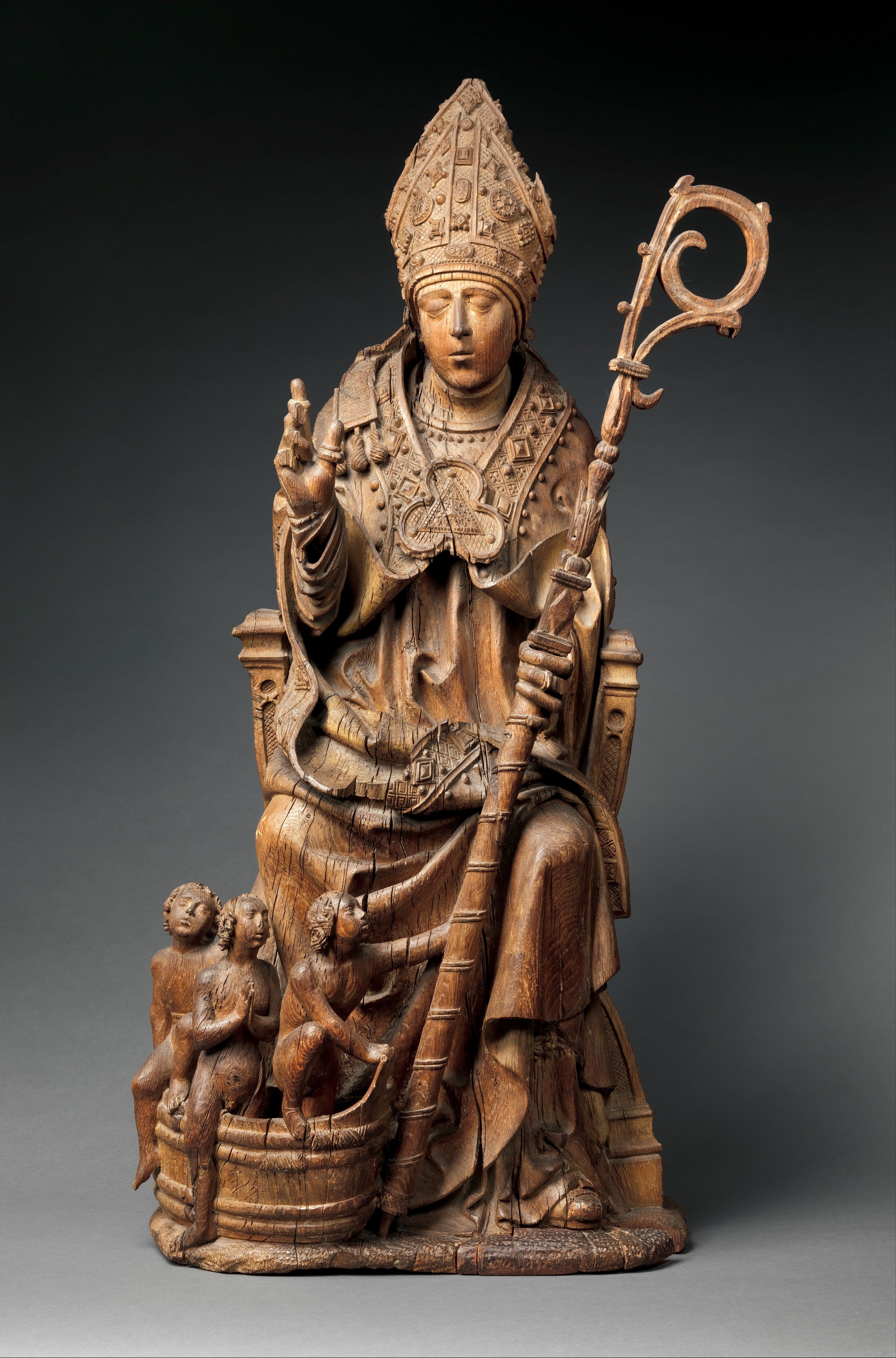
The most notable bearer is Saint Mamilian of Palermo (San Mamiliano), a 5th-century bishop and martyr venerated in Sicily. The designated name-day is September 15, which on the island of Giglio, there is a yearly festival held in the saint’s honor.

Other forms include:

  • Mamiliá (Catalan)
  • Mamilian (English, German, Polish)
  • Mamilien (French)
  • Mamiliano (Italian)
  • Mamilianus (Latin)
  • Mamilianu (Sicilian)

Feminine forms would include:

  • Mamiliana (Italian)
  • Mamilienne (French)

Sources

Ot(h)mar, Ottmar, Ottomar, Audomar, Omer

  • Origin: Germanic
  • Meaning: “wealth, fortune; fame.”
  • Gender: Masculine

The root name is the Frankish Audomar, which is composed of the elements aud (wealth, fortune), and mari (fame).

It was borne by an 8th-century saint and monk, an abbot of St. Gall, Switzerland and a 7th-century Frankish saint, after whom the French commune of St-Omer was named.

The designated name-day is September 8th.

Other forms include:

  • Otmar (Alemmanish, Catalan, Czech, German, Polish, Romansh)
  • Eadmær (Anglo-Saxon)
  • Audomarus (Dutch, Late Latin)
  • Odomar (Dutch)
  • Edmar (English, Swedish)
  • Ottomar (Estonian, German, Scandinavian)
  • Audomar (French, Frankish, Polish)
  • Adémar, Adhémar (French)
  • Audomar (French, German)
  • Omer (French)
  • Ottmar (German)
  • Otmár (Hungarian)
  • Ómar (Icelandic)
  • Ademaro (Italian)
  • Ödhmar (Old Norse)
  • Onmé (Picard)
  • Ademar, Adhemar (Portuguese)
  • Ademir (Portuguese – Brazilian)
  • Omeru (Sicilian)
  • Otmaro (Spanish)

French feminine forms which had some use in the 19th-century are Amérine, Omère and Omérine

Sources

Theodosia, Theodosius

Photo by Juliano Astc on Pexels.com
  • Origin: Greek
  • Meaning: “giving to God.”

Both come from the Greek, θεός (theos) meaning “god” and δόσις (dosis) meaning “giving.” Both the male and female form were borne by several Christian saints and Medieval rulers. In the English-speaking world, a notable bearer was Theodosia Alston Burr (1783-1813), the daughter of Aaron Burr and an American socialite who mysteriously disappeared in a ship-wreck. Her fate has been a source of speculation for two centuries, but she most likely died in the wreck. She is also the subject of the Broadway opera song from Hamilton, My Theodosia.

It’s female version has experienced usage in the English-speaking world since the 15th-century. It has spun off several diminutive off-shoots, which later became independent names, such as Docie/Dosey, Doshie, Dosha, Docia and Theda.

Theodosia appeared in the U.S. Top 1000 Most Popular Female Names between 1880-1895, it peaked at number #547 in 1880. It’s offshoot of Doshie appeared in the U.S. Top 1000 between 1880-1905 and peaked at #640 in 1884 whereas Doshia peaked at #582 in 1881 and Docia at #317 in 1880.

Theda (THEE-dah) was the name of silent film actress, Theda Bara (born Theodosia Burr Goodman, 1885-1955). Theda appeared in the U.S. Top 1000 between 1880-1948 and peaked at #350 in 1916. Theda Bara may have helped sustain the usage of the name in the United States, but it seems to have been common enough long before she graced the silver screen.

In the 1988 movie For Keeps, starring Molly Ringwald, a teen couple are faced with an unexpected pregnancy, in which they name their daughter Theodosia, short form Thea, it is a last minute decision decided by the father who gets the name from his deceased grandmother of the same name.

It is the name of the main character of the R. L. LaFevers 2007 children’s novel, Theodosia and the Serpents of Chaos, which spun off a tv series.

Its pronunciation in the English-speaking world fluctuates depending on the region and personal preference, from THEE-oh-DOH-see-uh, to THEE-oh-DOH-shuh and THEE-oh-DOH-zhuh, the sky’s the limits.

Its masculine form has always been prevalent in eastern Christian countries but did not pick up the same momentum in the English-speaking world as its feminine counterpart did.

Female forms

  • Tayodosiya ታዮዶሲዮስ (Amharic)
  • Thudusya ثيودوسيا (Arabic, used by Arab Christians)
  • T’eodosia Թեոդոսիա (Armenian)
  • Teodosija ТеодосиЯ (Bulgarian, Latvian, Lithuanian)
  • Teodosia თეოდოსია (Catalan, Corsican, Georgian, Italian, Portuguese, Romanian, Sardinian, Sicilian, Spanish)
  • Theodosia Θεοδοσια ⲑⲉⲟⲇⲟⲥⲓⲁ.(Coptic, English, German, Greek, Latin, Nordic, Romansch)
  • Teodozija Теодосија (Croatian, Macedonian, Serbian, Slovene)
  • Docia, Dosha, Doshia (English)
  • Docie, Docey (English)
  • Dosia (English, Polish)
  • Theda (English)
  • Théodosie (French)
  • Teodózia (Hungarian)
  • Teodosja (Maltese)
  • Teodozja (Polish)
  • Teodósia (Portuguese)
  • Feodosija Феодосия (Russian, Ukrainian)
  • Teudosia (Sicilian)

Male Forms

  • Teodosi (Albanian, Catalan)
  • Tayodosiyos ታዮዶሲዮስ (Amharic)
  • Thudusyus ثيودوسيوس (Arabic, used by Arab Christians)
  • T’eodosios Թեոդոսիոս (Armenian)
  • Teodosij Теодосий (Bulgarian)
  • Theodosios Θεοδόσιος ⲑⲉⲟⲇⲟⲥⲓⲟⲥ (Coptic, Greek)
  • Teodosiu (Corsican, Romanian, Sardinian)
  • Teodozije Теодосије (Croatian, Macedonian, Serbian, Slovene)
  • Theodosius (English, German, Latin, Nordic)
  • Théodose (French)
  • Theodósziosz (Hungarian)
  • Teodosio (Italian, Spanish)
  • Teodosijs (Latvian)
  • Teodosijus (Lithuanian)
  • Teodosju (Maltese)
  • Teodozy, Teodozjusz (Polish)
  • Teodósio (Portuguese)
  • Theodosi (Romansch)
  • Teodosie (Romanian)
  • Feodosij Феодосий (Russian, Ukrainian)
  • Teudosiu (Sicilian)
  • Teodóz (Slovak)

Sources

Sixtus, Sixtine, Sistine

download (2)

Sixtus is a Latin corruption of the Greek Ξυστος (Xystos) meaning “polished.” It has often been confused with the Latin, Sextus (the sixth). The name was borne by 5 Roman Catholic Popes, (3 of whom are saints), several notable bishops and most recently in history, Prince Sixtus of Bourbon-Parma (1886-1934); Prince Sixtus Henry of Bourbon-Parma (b. 1940) also bears the name.

In 2017, British Conservative Politician, Jacob Reese-Mogg chose this name for his son.

The Sistine Chapel in the Vatican gets its name from Pope Sixtus IV (1477-1480_, who was responsible for revamping the apostolic chapel.

Its female form of Sixtine has been in the French Top 500 Most Popular Female Names since 1991, which was also the same year it peaked the highest in its popularity, coming in at #286. It currently ranks in at #376 (2018).

In 1998, actor Sylvester Stallone and his wife, Jennifer Flavin bestowed this name Sistine on their daughter, which is perhaps a watered-down version of the Italian, Sistina.

Other forms of the name include

Male

  • Sistu (Asturian/Sicialian)
  • Sixt (Catalan/German)
  • Siksto (Croatian)
  • Sixtinus (Dutch/German/Latin)
  • Sixtus (Dutch/English/German/Latin/Scandinavian)
  • Sixte (French)
  • Sixtin (French)
  • Sisto (Galician/Italian/Portuguese)
  • Xykstus (German)
  • Sixtos Σίξτος (Greek)
  • Sziktusz (Hungarian)
  • Sükösd (Hungarian)
  • Sistino (Italian)
  • Siksts (Latvian)
  • Sikstas (Lithuanian)
  • Sykstus/Sykst (Polish)
  • Sixto (Spanish)

Female forms include

  • Sixta (Dutch/German/Latin/Spanish)
  • Sixtina (Dutch/German/Latin/Spanish)
  • Sista/Sistina (Italian)
  • Szixtin/Szixtina (Hungarian)
  • Sykstyna (Polish)

Sources

Hercules

Gender: Masculine
Origin: Greek Ἡρακλῆς
Meaning: “glory of Hera.”

Hercules is the Latin form of the Greek, Herakles. Herakles is composed of the Greek elements, Hera (as in the goddess) and cleos (κλεος) meaning, “glory; fame.”

The name was of course borne in Greek mythology by the divine hero, son of Zeus and Alcmene. In a rage of jealousy and to spite Zeus, Hera cursed Hercules into madness, driving him to kill his own children. In order to atone for his sins, Hercules performed twelve seemingly impossible feats, which he successfully accomplished thereafter becoming divine.

Hercules was a popular figure in Ancient Greece and later enjoyed popularity in the Roman Empire. His festival of Heraklea occurred between July and August. Thus the name may make an interesting choice for a child born during these months.

The name remained common even after the introduction of Christianity. It is especially common in Southeastern Europe and Greece.

Irakli, the Georgian form of the name, was borne by two Georgian Kings, the most notable being Irakli II (1720-1798).

As of 2011, Irakli was the 11th most popular male name in the Republic of Georgia.

In the English-speaking world, Hercules had some usage between the 16th and 19th-centuries. Notable bearers include:

  • Hercules Huncks (circ. 1600s) one of the Regicides of King Charles I of England.
  • Hercules Ross (1745-1816) a Scots tradesmen and abolitionist.
  • Hercules Brabazon Sharpe, (1821-1906) a British artist
  • Hercules Robinson, 1st Baron Rosmead, (1824-1897) the 5th governor of Hong Kong.
  • Hercules Linton (1837-1900) a famous Scottish shipbuilder and designer.

Other forms of the name include:

  • Herakliu (Albanian)
  • Gjerakl Геракл (Belarusian)
  • Herakl Херакъл (Bulgarian)
  • Hèracles (Catalan)
  • Hèrcules (Catalan)
  • Heraklo (Croatian)
  • Herkul (Croatian/Macedonian/Serbian/Slovene)
  • Héraklés (Czech)
  • Hercule (French)
  • Earcail (Gaelic)
  • Irakli ირაქლი (Georgian)
  • Herakles Ηρακλης (German/Greek/Polish/Scandinavian)
  • Eracle (Italian)
  • Ercole (Italian)
  • Hērakls (Latvian)
  • Heraklis (Lithuanian)
  • Eracles (Occitanian)
  • Éracle (Piedmontese)
  • Héracles (Portuguese)
  • Heracle (Romanian)
  • Gerakl Гера́кл (Russian)
  • Erculi (Sicilian)
  • Heraclio (Spanish)
  • Ercwlff (Welsh)

Apolena, Apolline, Appollonia

Gender: Feminine
Origin: Greek
Meaning: “belonging to Apollo.”
Fre (Pronunciation); Czech (ah-poh-LEY-nah); Pol (ah-paw-LAW-nee-ah); Germ/Hung (ah-poh-LONE-ee-ah); It (ah-poh-LONE-yah)

She is sweet, fruity and portable, with the possible nickname options of the avant-garde Apple or the more subtle, Polly, who couldn’t resist this pearl?

Appollonia is a feminine form of the Greek male name, Appollonios πολλωνιος , which means “belonging to Apollo.” It was a very common name in Ancient Greece and is fairly common in modern Greece.

Its feminine form, however, was borne by a legendary saint. St. Appollonia was an early Christian Greek martyr. According to tradition, she was a deaconess and when she left her Church she was approached by a gang looking to kill Christians. Before being killed, she was tortured by either having her teeth pulled out one by one or more likely, she took such a hard blow to the face from her attackers that her teeth were knocked out. She has been revered as the patron saint of dentists and invoked against tooth ache by both the Eastern Orthodox and Roman Catholic Churches.

There is evidence to suggest that Appollonia, or at least a form of it, was used in England before the Protestant Reformation. The cult of the saint was fairly popular in Medieval England, and though I cannot conclude that they are related for sure, I have found records of the female name Apelyn as early as the 15th-century in England. Another form of Appelin appears a few times in the mid 19th-century U.S. census records. Both Apelyn or Appelin may make interesting yet legitimate trendy alternatives to Adelyn or any name currently popular name ending in -lyn.

Appollonia is a common enough name in Greece and Southern Italy, many of you may be familiar with the name via The Godfather in which it is the name of the ill-fated Sicilian first wife of Michael Corleone.

As of 2010, its French form of Apolline was the 98th most popular female name in France. Its Polish offshoot of Pola ranked in as the 46th most popular female name in Poland in 2009. In this case, the name may be used in reference to its associations with the Polish noun, pole (field).

Another interesting Polish offshoot is Polonia, which is rare in Poland these days but might make an interesting choice for Polish-American parents who want to honour their heritage as polonia is a term used to describe the Polish diaspora in the United States. She may be the Polish-American answer to the Irish-American, Erin.

Then there is the lovely Czech variant of Apolena, which would make an interesting alternative to Elena or Magdalena.

Other forms of the name include:

  • Apollonia Απολλωνια (Albanian/Dutch/German/Greek/Italian/Romanian/Romansch/Scandinavian)
  • Ap(p)olonija Аполлония (Bulgarian/Croatian/Macedonian/Polish/Russian/Serbian/Slovene)
  • Apol·lònia (Catalan)
  • Abelone (Danish)
  • Lone (Danish)
  • Apolline (French)
  • Apollonie (French)
  • Pollonie (French)
  • Abelena (German)
  • Appolonia (German)
  • Apol (Hungarian)
  • Apolka (Hungarian)
  • Apollinária (Hungarian)
  • Apollónia (Hungarian)
  • Pólika (Hungarian)
  • Polina Полина (Hungarian/Russian/Ukrainian)
  • Polla (Hungarian)
  • Apollònia (Occitanian)
  • Apolinaria (Polish)
  • Apolla (Polish)
  • Apollina (Polish)
  • Apollona (Polish)
  • Apolonia (Polish/Serbian/Spanish)
  • Pola (Polish)
  • Polonia (Polish)
  • Apolônia (Portuguese: Brazilian)
  • Apolónia (Portuguese: European)
  • Balugna (Romansch)
  • Paluongia (Romansch)
  • Apollinárija Аполлина́рия (Russian)
  • Apolónia (Slovak)
  • Apoliena (Slovak: ah-poh-LYEH-nah)
  • Polona (Slovene)

Polish diminutives include: Pola, Polka, Polunia, Polusia, Polonka, Połonka, Lonia

Appollonia is also the name of several ancient cities throughout the former Greek colonies.

Masculine forms include:

  • Apollinarij/Apollinary Аполлинарий (Bulgarian/Russian)
  • Apol-loni (Catalan)
  • Apolinár (Czech)
  • Appollonius (Dutch/Latin/Romansch)
  • Apollinaire (French)
  • Apolonio (Galician/Spanish)
  • Apollinaris Απολλιναρις (Greek/Romansch)
  • Apollonios Απολλωνιος (Greek)
  • Apollóniosz (Hungarian)
  • Apollinare (Italian)
  • Appollonio (Italian)
  • Apolinary (Polish)
  • Apoloniusz (Polish)
  • Apolinário (Portuguese)
  • Apolônio (Portuguese: Brazilian)
  • Apolónio (Portuguese: European)
  • Apollinar (Romansch/Spanish)
  • Apollinari (Romansch)
  • Balun (Romansch)

Gabriel, Gabriella

Origin: Hebrew גַבְרִיאֵל  Γαβριηλ
Meaning: “strong man of God.”
Eng (GABE-ree-el); (gah-bree-EL-ah); Fre (gah-bree-EL); Germ (GAHP-ree-el); Pol (GAHP-ryel)

The name is derived from the Biblical Hebrew, גַבְרִיאֵל (Gavri-el) meaning, “strong man of God.”

In Judeo-Christian religions, it is the name of a powerful archangel, who is often viewed as a messenger of God. He appears several times in the Old and New Testaments.

Among Christians, one of his most important messages was relayed to the Virgin Mary that she would be the mother of Jesus. Islamic tradition also believes the same, and in Islam, it was the angel Gabriel who revealed the Qu’ran, (through God), to Mohammed.

In Mormon theology, Gabriel is believed to be the embodiment of Noah in the afterlife.

Gabriel is a fairly common name among Christians, Jews and Muslims, making him an extremely cross-cultural portable name.

Currently, in the United States, his popularity has been rising. He is the 24th most popular male name, (2011). In other countries, his rankings in all his various forms are as follows:

  • # 2 (Gabriel(e), Liechtenstein, 2010)
  • # 3 (Brazil, 2011)
  • # 4 (Romania, 2009)
  • # 6 (Gabriele, Italy, 2009)
  • # 7 (France, 2010)
  • # 9 (Quebec, Canada, 2011)
  • # 19 (Croatia, 2009)
  • # 26 (Belgium, 2008)
  • # 28 (Canada, BC, 2010)
  • # 28 (Mexico, 2010)
  • # 29 (Austria, 2010)
  • # 35 (Spain, 2010)
  • # 40 (Poland, 2009)
  • # 47 (Sweden, 2011)
  • # 48 (Norway, 2011)
  • # 52 (Catalonia, 2010)
  • # 78 (England/Wales, 2010)
  • # 95 (Australia, NSW, 2011)
  • # 124 (Scotland, 2010)
  • # 189 (Djibril, France, 2010)
  • # 313 (Jibril, France, 2010)

Other forms of the name include:

  • Jibrail/Jibrīl جبرائيل ጂብሪል (Arabic/Ethiopian)
  • Gabriel გაბრიელი ገብርኤል
    (Armenian/Catalan/Coptic/Czech/Danish/English/Ethiopian/Finnish/French/Georgian/German/Norwegian/Polish/Portuguese/Romanian/Romansch/Spanish/Swedish)
  • Gavrik (Armenian)
  • Cəbrayıl/Cibril (Azeri)
  • Gawryil Гаўрыіл (Belarusian)
  • Džibril/Džebrail (Bosnian)
  • Gavrail Гавраил (Bulgarian)
  • Zheberejil Жәбірейіл (Central Asian)
  • Gabrijel (Croatian/Maltese/Serbian)
  • Gabriël (Dutch)
  • Gaabriel (Estonian)
  • Gabrel (Ethiopian)
  • Kaapo/Kaapro (Finnish)
  • Gabriél Γαβριήλ (Greek)
  • Gavril Γαβριηλ (Greek)
  • Gavriel גַּבְרִיאֵל (Hebrew)
  • Gábriel (Hungarian)
  • Gábor (Hungarian)
  • Gabríel (Icelandic)
  • Jibril (Indonesian)
  • Gaibriéil (Irish-Gaelic)
  • Gabo/Gabbo (Italian)
  • Gabriele (Italian: more common form)
  • Gabriellino (Italian)
  • Gabriello (Italian)
  • Gabrio (Italian)
  • Cibrayîl (Kurdish)
  • Gabrielus (Latin)
  • Gabriels (Latvian)
  • Gabrielius (Lithuanian)
  • Jibrail (Malaysian)
  • Gavriilu Гаврїилъ (Old Church Slavonic)
  • Khabbriele (Puglian)
  • Gabin (Provençal)
  • Gavril Гавриил (Romanian/Russian)
  • Crabiele/Gabilele/Gabriello (Sardinian)
  • Cabbrieli (Sicilian)
  • Gabri’el ܠܒܪܝܐܝܠ (Syrian)
  • Gebrael (Syrian)
  • Cebrâîl (Turkish)
  • Gavrel גַאבְֿרֶעל (Yiddish)

English short form is Gabe.

Its feminine form of Gabriella/Gabriela is also rising in popularity. Currently, Gabriella is the 34th most popular female name in the United States, (2011). Her rankings in other countries are as follows:

  • # 3 (Gabriela, Bulgaria, 2009)
  • # 5 (Gabrielė, Lithuania, 2011)
  • # 5 (Gabrielle, Philippines, 2011)
  • # 7 (Gabriela, Columbia, 2011)
  • # 8 (Gabriela, Romania, 2009)
  • # 9 (Gabriela, Puerto Rico, 2011)
  • # 10 (Gabriela, Brazil, 2010)
  • # 13 (Gabriela, Poland, Warsaw, 2010)
  • # 19 (Gabriela, Poland, 2009)
  • # 28 (Gabrijela, Croatia, 2009)
  • # 30 (Gabriela, Mexico, 2010)
  • # 30 (Gabrielly, Brazil, 2010)
  • # 36 (Gabriela, Croatia, 2009)
  • # 38 (Gabriela, Chile, 2010)
  • # 64 (Australia, NSW, 2011)
  • # 64 (Gabriela, Spain, 2010)
  • # 67 (Gabrielle, France, 2010)
  • # 72 (Canada, BC, 2010)
  • # 94 (Gabrielle, Canada, BC, 2010)
  • # 119 (Gabrielle, United States, 2011)
  • # 466 (France, 2010)

Other feminine forms include:

  • Gebre’elwa ገብርኤሏ (Amharic/Ethiopian)
  • Gabriela (Bulgarian/Croatian/Czech/German/Polish/Portuguese/Romanian/Scandinavian/Slovak/Spanish)
  • Brielle (Cajun: abbreviated form of Gabrielle)
  • Gabrijela (Croatian/Serbian)
  • Gabriëlle (Dutch)
  • Briella/Briela (English)
  • Gabrielle (French/English)
  • Gabria (Italian)
  • Gabrielina (Italian)
  • Gabriella (Italian/English/Hungarian/Scandinavian: more common form in Italy)
  • Gabrielė (Lithuanian)
  • Gavriila Гавриила (Russian)

Czech diminutives are: Gába, Gabika, Gábina, Gabrina and Gabby.

A Polish diminutive is Gabrysia (gah-BRIH-shah).

English short forms are: Gabby and Ella.

Designated name-days are: February 10/27 (Poland), February 19 (Sweden), March 24 (Czech/Finland/Poland/Slovakia/Sweden), September 29 (France/Germany), December 12 (Hungary)

Aurelian

Gender: Masculine
Origin: Latin
Meaning: “golden one.”
Eng (aw-RIL-lee-yen) Fre (Pronunciation)

The name is derived from the Latin cognomen, Aurelianus, which means, “golden one.”

The name was borne by a 3rd-century Roman Emperor.

As of 2010, its French form of Aurélien was the 150th most popular male name in France. Other forms of the name include:

  • Aureliani (Albanian)
  • Aurelián (Aragonese/Czech)
  • Awrelijan Аўрэліян (Belarusian)
  • Avrelian Аврелиан (Bulgarian/Russian/Ukrainian)
  • Aurelià (Catalan)
  • Aurelijan Аурелијан (Croatian/Macedonian/Serbian)
  • Aurelian (English/German/Lombard/Polish/Romanian)
  • Aurélien (French)
  • Aureliano (Galician/Italian/Portuguese/Spanish)
  • Avreliane ავრელიანე (Georgian)
  • Aurelianus (Latin)
  • Aureliāns (Latvian)
  • Aurelianas (Lithuanian)
  • Aurilianu (Sicilian)
A feminine form is Aureliana (Italian/Latin/Portuguese/Spanish)