Roman

Gender: Masculine
Origin: Latin
Meaning “Roman.”
Eng Masc. (ROH-men) Eng Fem. (roh-MANE); Fre Masc. (hroh-MAHn); Fre Fem. (hroh-MEHN); Pol (ROH-mahn)

The name’s meaning is clear from its very first utterance, most renowned in the State’s through Polish director and film maker, Roman Polanski, it was the name of a Christian martyr who died under Diocletian.

In recent years, the name has had a peak in popularity, it currently ranks in as the 157th most popular male name in the United States (2011), and seems to be rising.

His rankings in other countries are as follows:

  • # 36 (Romain, Belgium, 2008)
  • # 39 (Romain, France, 2010)
  • # 228 (Roman, France, 2010)
  • # 494 (Netherlands, 2011)

Its designated name-days are: February 23 (Slovakia); February 28/29 (Poland), May 28 (Estonia), August 9 (Czech Republic/Poland), October 6/23 (Poland), November 18 (Poland).

Roman is used in Czech, Estonian, German, Polish, Slovakian and Slovenian.

Other forms of the name are:

  • Roman Роман (Croatian/English/German/Norwegian/Polish/Romansch/Russian/Slovak/Slovene/Swedish/Ukrainian)
  • Romain (French)
  • Romanos (Greek)
  • Román (Hungarian/Spanish)
  • Romano (Italian)
  • Romanello/Romanino (Italian: obscure)
  • Romanus (Latin)
  • Romanas (Lithuanian)
  • Reman (Poitvin)
  • Romans (Poitvin)
  • Rouman (Poivin)

In Polish, Romek is the diminutive form.

Feminine forms are:

  • Romana (Croatian/Czech/Italian/Lithuanian/Polish/Slovak/Slovene)
  • Romaine (English/French)
  • Romane (French)
  • Romána (Hungarian)
  • Romanella (Italian)
  • Romanina (Italian)
  • Romanita (Italian/Spanish)
  • Romina (Italian/Spanish)
  • Romanela (Polish: very obscure)

Gaétan


Gender: Masculine
Origin: German/Polish/Italian/French
Meaning: “from Caieta.”
It (guy-TAH-no); Fre (GAH-eh-TAWn); Pol/Germ (KYE-eh-TAHN)

The name is derived from the Latin place name, Caietanus, meaning,  “from Caieta”. Caieta is now known as Gaeta.

In ancient Greece, this was a town where prisoners were taken to be executed. The town probably got its name from the wet nurse of Zeus in Greek myth.

It was borne by a 16th-century Italian saint, which spurred the popularity of the name throughout Europe. It has been in usage in German speaking countries as well as in Poland in the form of Kajetan and Cajetan, the name Kaj was later spun off from this name, now being more popular than its formal form in Sweden and Denmark.

As of 2010, its French form of Gaétan was the 122nd most popular male name in France.

Other forms of the name include:

  • Caitanu (Asturian)
  • Kaitan (Basque)
  • Gaietà (Catalan)
  • Gaitanu (Corsican)
  • Kajetán (Czech/Hungarian/Slovak)
  • Cajetaan (Dutch)
  • Gaétan (French)
  • Gaëtan (French)
  • Gaetano (Galician/Italian)
  • Kayetan (German)
  • Kajetan (German/Polish/Scandinavian)
  • Gaïtános Γαϊτάνος (Greek)
  • Caietanus (Latin)
  • Kajetonas (Lithuanian)
  • Aitano (Neopolitan)
  • Gaitano (Neopolitan)
  • Caetano (Portuguese)
  • Caetan (Romanian)
  • Cajetan (Romansch)
  • Kaetan Каетан (Russian)
  • Gajetànu (Sardinian)
  • Cayetano (Spanish)

Feminine forms are:

  • Gaetana (Italian)
  • Gaétane (French)
  • Gaëtane (French)
  • Kajetana (German/Polish)
  • Kaia (German)
  • Kaja (German/Polish)
  • Caietana (Latin)

Its designated name day is August 7.

Aurelian

Gender: Masculine
Origin: Latin
Meaning: “golden one.”
Eng (aw-RIL-lee-yen) Fre (Pronunciation)

The name is derived from the Latin cognomen, Aurelianus, which means, “golden one.”

The name was borne by a 3rd-century Roman Emperor.

As of 2010, its French form of Aurélien was the 150th most popular male name in France. Other forms of the name include:

  • Aureliani (Albanian)
  • Aurelián (Aragonese/Czech)
  • Awrelijan Аўрэліян (Belarusian)
  • Avrelian Аврелиан (Bulgarian/Russian/Ukrainian)
  • Aurelià (Catalan)
  • Aurelijan Аурелијан (Croatian/Macedonian/Serbian)
  • Aurelian (English/German/Lombard/Polish/Romanian)
  • Aurélien (French)
  • Aureliano (Galician/Italian/Portuguese/Spanish)
  • Avreliane ავრელიანე (Georgian)
  • Aurelianus (Latin)
  • Aureliāns (Latvian)
  • Aurelianas (Lithuanian)
  • Aurilianu (Sicilian)
A feminine form is Aureliana (Italian/Latin/Portuguese/Spanish)

Ambrose

Gender: Masculine
Origin: Greek
Meaning: “immortal.”
Eng (AM-broze); Fre (ahm-BWAHZ)

Ambrose is an English version of the Late Latin, Ambrosius, which is a form of the Greek male name Αμβροσιος (Ambrosios), meaning, “immortal.”

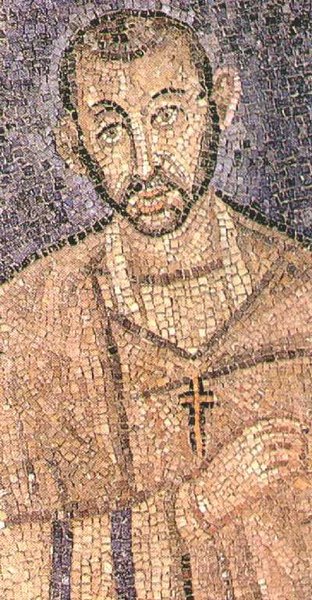
The name was borne by a 4th-century Christian saint, a contemporary of St. Augustine of Hippo. He is considered a Doctor of the Church and the patron saint of Milan.

As of 2010, its French form of Ambroise was the 391st most popular male name in France.

The designated name-day is December 7.

There is a feminine version as well, Ambrosia, and in Greek mythology, it is borne by the daughter of Atlas and Pleione. It was also the name of the food of the gods eaten on Mount Olympos.

Other forms of the name include:

  • Ambrozi (Albanian)
  • Ambrosiu (Asturian)
  • Anbortsi (Basque)
  • Ambroaz (Breton)
  • Amvrosij Амвросий (Bulgarian/Russian/Ukrainian)
  • Ambròs (Catalan)
  • Ambrosgiu (Corsican)
  • Ambrozije (Croatian)
  • Ambrož (Czech/Slovene)
  • Ambroos (Dutch)
  • Broos (Dutch/Limburgish)
  • Ambroise (French)
  • Ambros (German/Romansch)
  • Ambrosios Αμβροσιος (Greek)
  • אמברוזיוס Ambrwzyws (Hebrew)
  • Ambrus (Hungarian)
  • Ambrósíus (Icelandic)
  • Ambróis (Irish)
  • Bosone (Italian: obscure)
  • Ambrogio/Ambrogino (Italian: more common forms)
  • Ambrosino (Italian: obscure)
  • Ambrosi (Kiswahili)
  • Ambrosius (Late Latin/Danish/Dutch/Finnish/German/Estonian/Norwegian/Swedish)
  • Ambrozijs (Latvian)
  • Ambraziejus (Lithuanian)
  • Ambroeus (Lombard)
  • Ambroży (Polish)
  • Ambrósio (Portuguese)
  • Ambrozie (Romanian)
  • Ambrosi(Romansch)
  • Ambròsu (Sardinian)
  • Ambroggiu (Sicilian)
  • Ambróz (Slovakian)
  • Ambrosio (Spanish/Galician/Italian/Venetian)
  • Emrys (Welsh)

Feminine forms include:

  • Ambroisine/Ambrosine (French)
  • Ambrogia/Ambrogina (Italian)
  • Ambrosina (Italian)
  • Ambrosia (Greek/Italian)
  • Ambrozja (Polish)
  • Ambrozija (Slovene)

Celestine

Gender: Masculine (English); Feminine (French)
Origin: Latin
Meaning: ” of the sky; of the heavens.”
Eng (sel-es-TINE; SEL-es-tin); Fre Masc (say-les-TEN); Fre Fem (say-les-TEEN)

The name is derived from the Late Latin male name, Caelestinus, meaning, “of the sky; of the heavens.”

In English, the name was anglicized to Celestine while in French, Célestine was always strictly the feminine form, the French masculine form being, Célestin.

The name was borne by five popes.

In the English-speaking world, Celestine was seldom used, if it was ever used it was usually used for females being a borrowing from the French, though Celestine is a common male name among Nigerian Catholics.

As of 2010, Célestin was the 415th most popular male name in France, while its feminine form of Célestine was the 419th most popular female name in France.

Other forms of the name include:

  • Celestin Целестин Целестин (Asturian/Bulgarian/Romanian/Romansch/Russian/Scandinavian/Serbian/Ukrainian)
  • Celestí (Catalan)
  • Celestýn (Czech)
  • Celestijn (Dutch)
  • Celestinus (Dutch)
  • Celestine (English)
  • Célestin (French)
  • Celestino (Galician/Italian/Portuguese/Spanish)
  • Coelestin (German)
  • Cölestin (German)
  • Zölestin (German)
  • Kelestínos Κελεστίνος (Greek)
  • Celesztin (Hungarian)
  • Caelestinus (Late Latin)
  • Celestinas (Lithuanian)
  • Celestyn (Polish)
  • Celestìnu (Sardinian)
  • Celestín (Slovene)
A famous female bearer was Célestine Galli-Marié (1840–1905), a French mezzo-soprano who created the title role in the opera Carmen
La Celestina, a 15th-century literary piece written by Fernando de Rojas, is considered one of Spain’s greatest pieces of literature.
Celestina is also the name of an 18th-century literary piece written by poet, Charlotte Turner Smith.
Other feminine forms include:
  • Celestina Целестина (Czech/English/Italian/Lithuanian/Portuguese/Romanian/Romansch/Russian/Slovak/Spanish)
  • Célestine (French)
  • Cölestina (German)
  • Zölestina (German)
  • Celesztina (Hungarian)
  • Celestyna (Polish)
  • Kolestina Колестина (Russian)

Celestine is also the name of an order of Benedictine monks and it is also the name of a type of mineral.

Anatole

Gender: Masculine
Origin: Greek Ανατολιος
Meaning: “sunrise.”

The name is derived from the Greek, Anatolios Ανατολιος, which is derived from the word anatole ανατολη (sunrise). The name was borne by a 3rd-century Christian saint, philosopher and martyr.

The name was borne by several other saints.

An anatole is also a musical term employed in jazz.

The name was one of the most popular male names throughout the Soviet Union, before the October Revolution, the name was only used among monks and priests. The name no longer appears in Russia’s top 10.

Its French form of Anatole is 234th most popular male name in France, (2009).

Other forms of the name include:

  • Anatol Анатоль (Belarusian/Czech/German/Hungarian/Polish/Romanian)
  • Anatolij Анатолиј Анато́лий (Bulgarian/Croatian/Macedonian/Russian/Ukrainian)
  • Anatoli ანატოლი (Catalan/Georgian/Russian)
  • Anatole (French)
  • Anatolios (Greek)
  • Anatolio (Italian/Spanish)
  • Anatolijs (Latvian)
  • Anatolijus (Lithuanian)
  • Anatoliusz (Polish)
  • Anatólio (Portuguese)
  • Anatolie (Romanian)
  • Anatoliy (Russian: variant transcription)
  • Anatolije Анатолије (Serbian)
  • Anadolu (Turkish)
Common Russian diminutives are: Anatolka, Natoli, Natoha, Natosha, Tolia, Tolyunya; Tolyusya; Tolyan; Tolyaha; Tolyasha; Tosha; Tosya; Totya; Tusya 
A feminine form is Anatolia, which was also borne by an early Christian martyr. It shares its name with a region in Turkey.
Other feminine forms include:
  • Anatolija Анатолия (Bulgarian/Russian/Serbian)
  • Anatolia (Italian/Latin/Polish/Spanish)
  • Anatola (Polish)

Tiffany, Theophania

Gender: Feminine
Origin: Greek
Meaning: “God appears; manifestation of God; epiphany.”
Eng (TIFF-uh-NEE); (thee-o-FAH-nee-ah)

Tiffany, now considered a name of the 80s, is actually an early English Medieval form of the Greek female name Theophania, which means “God appears”, being composed of the Greek elements, θεος (theos), meaning, “God” and φανης (phanes), meaning “appears.”

The name was usually bestowed upon girls born on the feast of the Epiphany (January 6), which celebrates when the Three Wise Men visited the Christ Child.

The name was popular in Medieval England and fell out of usage, being introduced into England via the Normans in the form of Tiphaine.

A few English matronymic surnames developed from it, Tiffany being the most notable, becoming one of very few female given names to appear in an English surname. A few other female names being: Alice, Isemay and Maude.

At of the turn of the last century, the name came to be associated with Tiffany & Co, which was founded by Charles Lewis Tiffany in 1837.

The name may have caught the public attention via the company, but most likely, its popularity was sparked after the publication of the Truman Capote novella, Breakfast at Tiffany’s (1958), which was later made into a film, starring Audrey Hepburn, in 1961.

Tiffany appeared in the U.S. top 1000 the following year. In 1962, she was the 783rd most popular female name. The highest she peaked was in 1982, coming in as the 13th most popular female name. She peaked again in 1988, coming in at # 13.

As of 2010, she ranks in as 311th most popular female name in the United States, while in France she ranked in as the 432nd most popular (2009).

Other forms of the name include:

  • Tiffany (French/English)
  • Tiphaine (French)
  • Theophania Θεοφανια (Greek)
  • Teofánia (Hungarian)
  • Tifani (Hungarian)
  • Teofania (Italian/Polish)
  • Feofania (Russian)
  • Epifanía (Spanish)

Males forms are:

  • Theophanes/Theophanis Θεοφανης (Greek)
  • Teofan (Polish)
  • Feofan Феофан (Russian)
  • Epifanío (Spanish)

Angelica

Gender: Feminine
Origin: Latin
Meaning: “angelic.”
Eng (AN-jel-ik-ah), It/Pol (ahn-JAY-lee-kah); Germ (ahn-GAY-lee-kah); Sp (ahn-HAY-lee-lah) Swe/Nor (ahn-YAY-lee-kah); Fre (Pronunciation)

The name is derived from the Latin angelicus meaning “angelic” and is ultimately derived from the Greek, άγγελος (ángelos) meaning, “messenger.” The name was used by the 16th-century, Italian poets, Boiardo and Aristo for their Orlando poems, in which it is the name of Orlando’s love interest.

In England, Angelica has been used as a given name since the 18th-century.

Angelica is also the name of a type of herb.

As of 2010, Angelica stood as the 345th most popular female name in the United States, while the French form of Angélique came in as the 439th most popular female name in France, (2009) and the 627th most popular in the United States, (2010).

As of 2009, its Spanish form of Angélica was the 88th most popular female name in Mexico.

The name is borne by several saints, and was also borne by 18th-century Swiss painter, Angelica Kauffman (1741-1807). Other notable Angelicas include:

Italian opera singer, Angelica Catalani (1780-1849), Stand-in American First Lady, Angelica Van Buren (1818-1877), American nun and TV host, Mother Angelica (b.1923); Angelica Pickles, a popular cartoon character featured on the Rugrats; American actress, Anjelica Huston; Norwegian princess, Maud Angelica Behn (b.2003) .

The Latinate, Angelica form, is used in English speaking countries, Italy, Romania, Norway, Sweden and occasionally Poland. Other forms of the name include:

  • Angèlica (Catalan)
  • Angelika (Czech/Danish/German/Hungarian/Icelandic/Norwegian/Slovak/Swedish)
  • Angélique (French)
  • Anxélica (Galician)
  • Angeliki/Aggeliki Αγγελική (Greek: Modern)
  • Angyalka (Hungarian)
  • Angelíka (Icelandic)
  • Anjelica (Norwegian/Swedish)
  • Angelica/Angelika/Andżelika (Polish)
  • Anželika (Russian)
  • Angelìca (Sardinian)
  • Angelika Ангелика (Serbian)
  • Angélica (Spanish/Portuguese)

There is an Italian masculine form, which is Angelico, and the Late Latin masculine form, Angelicus.

Cyprian

Gender: Masculine
Origin: Latin
Meaning: “from Cyprus.”
Eng (SIP-ree-ən)

The name is derived from the Roman family name, Cyprianus, which means, “from Cyprus.”

The name was borne by a 3rd-century Christian theologian, writer, martyr and saint.

As of 2009, its French form of Cyprien was the 272nd most popular male name in France.

Other forms of the name include:

  • Çipriani (Albanian)
  • Cyprian (Albanian/English/German/Polish/Romansch)
  • Sybryan سيبريان (Arabic)
  • Kiprianos Կիպրիանոս (Armenian)
  • Zipriano (Basque)
  • Kiprijan Киприян (Bulgarian)
  • Cebrià (Catalan)
  • Ciprijan (Croatian/Macedonian/Serbian/Slovene)
  • Cyprián (Czech)
  • Cyprianus (Dutch/Latin)
  • Cyprien (French)
  • Ciprian (Fruilian/Romanian)
  • Cibrán (Galician)
  • Kvipriane კვიპრიანე (Georgian)
  • Kyprianόs Κυπριανός (Greek)
  • Cipriano (Italian/Portuguese/Spanish)
  • Kiprijonas (Lithuanian)
  • Kiprián Киприа́н (Russian)
  • Cebrián (Spanish)
  • Kypryan Кипріян (Ukrainian)
Feminine forms include:
  • Cyprienne (French)
  • Cipriana (Italian/Portuguese/Spanish)
  • Cypriana (Latin/Polish)
The name was borne by several other saints, another notable bearer is Polish romantic poet, Cyprian Kamil Norwid (1821-1883).

Hippolytus, Hippolyte

Gender: Masculine
Origin: Greek ‘Ιππολυτος
Meaning: “freer of horses.”
Eng (hip-PAHL-ih-tus); Eng Fem (HIP-poh-LY-tee; hi-PAHL-i-tah) Fre (EEP-poh-LEET)

The name is derived from the Greek, Hippolytos (‘Ιππολυτος), which is composed of the elements, hippos (‘ιππος), meaning, “horse” and lyo (λυω) meaning, “to loosen.”

The name was borne in Greek mythology by a son of Theseus, and depending on some sources either the Amazon, Hippolyte (hence the name) or Antiope. He rejected the advances of his step-mother, Phaedra, who, when spurned, complained to Theseus that his son had raped her. In anger, Theseus cursed his own son, using of the his three wishes granted by Poseidon, Hippolytus was dragged to death by his horses after being frightened by a sea-monster. The story was retold both by Euripides in his play Hippolytus and by Seneca the Younger in his play, Phaedra.

His possible birth mother of Hippolyte was an Amazonian queen who possessed a magical girdle which denoted her rank. She appears in the legend of Hercules who seeks her girdle for the princess, Admeta. Hippolyte is so impressed with the immortal’s prowess that she gives Hercules her girdle as a gift. William Shakespeare may have based his character of Hippolyta who appears in A Midsummer’s Night Dream off of Hippolyte the Amazon queen.

The male form of Hippolytus appears several more times throughout Greek mythology as the name of minor characters.

It was also borne by some early renowned Christian saints, including Hippolytus of Rome a 3rd-century Christian theologian, writer and martyr.

In English and early Greek, Hippolyte often appears as a feminine form, but in French, it is an epicène name, that is a unisex name, however, it is more often used on males than on females. As of 2009, Hippolyte was the 286th most popular male name in France.

Other forms of the name include:

  • Ipolit Иполит (Bulgarian/Serbian)
  • Hipòlit (Catalan)
  • Hipolit (Croatian/Polish/Romanian/Slovak)
  • Hippolyt (Czech/German)
  • Hippolytus (Dutch/English/Latin)
  • Hippolyte (French)
  • Ipolite იპოლიტე (Georgian)
  • Hippolütosz (Hungarian)
  • Ippolito (Italian)
  • Hipolitas (Lithuanian)
  • Hipólito (Portuguese/Spanish)
  • Ippolit Ипполит (Romansch/Russian/Ukrainian)
  • ‘Ipołito (Venetian)
Feminine forms include:
  • Hipolita Хиполита (Albanian/Bulgarian/Serbian)
  • Ipalita Іпаліта (Belarusian)
  • Hipòlita (Catalan)
  • Hippolyta ‘Ιππολυτη (English/Greek/Latin/Romanian)
  • Hippolyte ‘Ιππολυτη (English/French/Greek)
  • Hippolüté (Hungarian)
  • Ippolita Ипполи́та (Italian/Russian/Ukrainian)
  • Hipolitė (Lithuanian)
  • Hippolita (Polish)
  • Hipólita (Portuguese/Spanish)