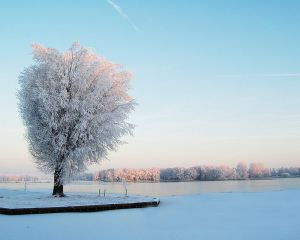
 I thought at the beginning of each month, I would post a list of names associated with the that particular month. Below is a list of names I have previously written about associated with January
Agnes: January 21st is the feast of St. Agnes and according to folklore, on January 20th, which John Keats’ was inspired to write a poem about, unmarried girls are supposed to see a future glimpse of their husband in their dreams the night before, provided they do not eat that day.
Frost: January is often associated with cold temperatures and frosty weather. Here are some name associated with frost
Sarma, Sarmite: These 2 Latvian lovelies come directly from the Latvian word for hoarfrost. The latter is pronounced sar-MEE-teh.
Kirsi: This Finnish female name is associated with the cherry fruit but also means “frost” in Finnish.
Other names that mean “frost” or words for frost from other languages include:
Male
- Antizgar (Basque)
- Dér (Hungarian)
- Hall (Estonian)
- Reif (German)
- Rijp (Dutch)
- Rio (Manx)
- Šerkšnas (Lithuanian)
- Sioc (Gaelic)
- Szron (Polish, SHRONE)
- Barrug (Welsh)
Female
- Blancada (Occitanian)
- Brina (Italian)
- Bryma (Albanian)
- Chelata (Aragonese)
- Geada (Portuguese)
- Gelada (Catalan)
- Eláda (Guarani)
- Escarcha (Spanish)
- Jinovatka (Czech)
- Pruina (Latin)
- Salna (Latvian)
- Slana (Slovenian)
Snow: Also one of the snowiest months of the year, some names that mean “snow.”
- Berfîn (Kurdish)
- Bora (Albanian)
- Edur (Basque)
- Eira, Eirwen, Gwyneira (Welsh)
- Lumi (Estonian/Finnish)
- Neige (French)
- Nieves (Spanish)
- Patil (Turkish)
- Sniedze (Lithuanian)
Other names meaning snow that I have yet to write about include
Male
- Erc’h (Breton)
- Jur (Chuvash)
- Kar (Turkish)
- Lov (Erzya)
- Nix (Latin)
- Yas (Navajo)
Female
- Dëbora (Albanian)
- Fiòca (Piedmontese)
- Kavi (Faroese)
- Neige (French)
- Neva (Neapolitan)
- Neve (Galician/Italian)
- Parsla (Latvian)
Ice, the following are names that mean “ice”
Male
- Buz (Turkish)
- Izotz (Basque)
- Jég (Hungarian)
- Led (Czech, Serbo-Croatian)
- Păr (Chuvash)
- Siku (Inupiak)
- Ledas (Lithuanian)
- Ledus (Latvian)
- Tin (Navajo)
- Xeo (Galician)
- Ysbran
Female
- Cetl (Nahuatl)
- Iâ (Welsh)
- Ma’ome (Cheyenne)
Epiphany: January 6th officially marks the end of the Christmas season, when the Magi finally were able to locate the Christ child and bestow gifts upon him.
Garnet is the birthstone of January. Below is a list of words from other languages that mean “garnet” and would make awesome names
- Gernete (Anglo-Norman)
- Granate (Asturian/Basque/Spanish)
- Grenat (French)
- Gairnéad (Gaelic)
- Granato (Italian)
- Granatas (Lithuanian)
- Granada (Portuguese)
Likewise, Carnation is the birthflower, its Latin name is Dianthus, which was a name before it was a flower. Below is a list of words from other languages that mean “carnation” and would make awesome names. Also mixed in are some names with the meaning of “carnation” or just have carnation associations
- Diantha
- Clavel (Asturian/Spanish)
- Krabelin (Basque)
- Clavellina (Catalan)
- Havenellike (Danish)
- Caraveleira (Galician)
- Landnelke (German)
- Nellika (Icelandic)
- Caxtillān (Nahuatl)
- Penigan (Welsh)
And for boys, other than Dianthus, there is the Italian Garafano
The Chinese plum is the flower emblam for Spring, in Chinese it is called Meihua and its Japanese name is Ume. In Korean it is called Maesil and Vietnamese it is called Mai.
In Japan, the flower emblem for January is the Camellia.
Another January birthflower is the snowdrop
- Çeçpĕl (Chuvash)
- Sněženka (Czech)
- Perce-Neige (French)
- Endzela (Georgian)
- Bucaneve (Italian)
- Snieguole (Lithuanian)
- Śnieżyczka (Polish)
- Sněgulka (Sorbian)
- Kardelen (Turkish)
- Eirlys (Welsh)
The Zodiac signs associated with January are Capricorn and Aquarius. Capricorn means goat and Aquarius waterbearer. Some names that mean both
The ruling planet of Capricorn and Aquarius is Saturn, so Saturnina or Saturnin/Saturnino are also names to consider.
Finally, here are names that mean “January,” some come directly from words, others are a translation of the Latin male name Januarius.
Male
- Chinero (Aragonese)
- Xineru (Asturian)
- Urtarril (Basque)
- Genver (Breton/Cornish)
- Gener (Catalan)
- Kărlach (Chuvash)
- Ghjennaghju (Corsican)
- Leden (Czech)
- Znêr (Emiliano-Romagnolo)
- Janvier (French)
- Zenâr (Friulian)
- Xaneiro (Galician)
- Gennaro (Italian)
- Jenero (Ladino)
- Januarius (Latin)
- Sausis (Latvian)
- Jannar (Maltese)
- Genièr (Occitanian)
- Yenner (Pennsylviana German)
- Janeiro (Portuguese)
- Bennàlzu (Sardinian)
- Enero (Spanish)
- Ocak (Turkish)
- Lonawr (Welsh)
Female
- Jenna (Bavarian)
- January (English)
- Tammikuu (Finnish)
- Janvière (French)
- Gennara (Italian)
- Januaria (Latin)
- Zennâ (Ligurian)
 From the name of a city mentioned in the Bible which is now located in Palestine. The meaning of the name is debated, some sources claim the name is from a Caananite word reah meaning “fragant” or the Canaanite word for moon (yareah), as the city was once the centre of worship for the Caananite moon-god Yarikh. Yarikh’s name also appears as Jarah, Jerah and Jorah. In modern times, the name is referred to as ʼArīḥā, in Arabic, meaning “fragrant.”
 Origin: Greek
 Gender: Masculine
 Gender: Feminine
 Another interesting Polish offshoot is Polonia, which is rare in Poland these days but might make an interesting choice for Polish-American parents who want to honour their heritage as polonia is a term used to describe the Polish diaspora in the United States. She may be the Polish-American answer to the Irish-American, Erin.
 Gender: Masculine
 Origin: Greek
 Gender: Feminine
 Gender: Masculine
 Gender: Masculine