Clarimond(e)

  • Origin: Occitanian
  • Meaning: uncertain
  • Gender: Female
  • Eng pron: (KLAIR-e-mund)

A Medieval Occitanian name first recorded in 12th-century French chivalric literature, Clarimond (also found as Clarimonde, Claramonde, or Claramunda) is either a diathemic compound of the Latin clārus (“bright, light, clear”) and the Old High German mund (“protection”), or derived from an Occitanian phrase meaning “bright world; clear world”

In the 12th-century chanson de geste, Huon de Bordeaux, the name appears in its earlier form as Esclarmonde borne by a Saracen princess who converts to Christianity and marries the hero Huon. Similar formations (Florimond, Rosamond, Alemond) were fashionable among the knightly and aristocratic classes of the High Middle Ages. The 1889 opera by Jules Massenet, Esclarmonde, is loosely based on the character from Huon de Bordeaux.

Historically, Esclarmonde and its variants were borne by at least four noblewomen of the House of Foix, the most famous being Esclarmonde de Foix (d. 1215), sister of Count Raymond-Roger de Foix, who was noted for her learning and association with the Cathar movement in southern France.

Though rare, Clarimond saw occasional use in 17th-century England, likely revived through renewed interest in medieval romance literature. Clarimonde was also occasionally found in 18th-19th-century Acadia, and was used by the closely related Cajuns in Louisiana.

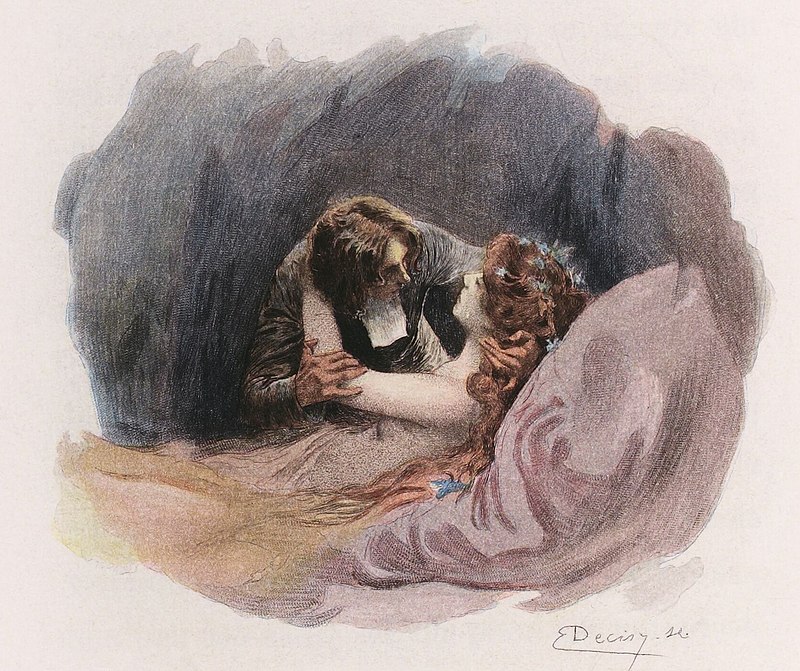
In 1836, French writer Théophile Gautier reintroduced the name in his celebrated vampire novella La Morte Amoureuse (Clarimonde in French; The Beautiful Vampire in English). Gautier’s heroine—a sensual courtesan who blurs the line between life and death—cemented Clarimonde’s association with Gothic beauty, nocturnal allure, and eternal fascination, making it an especially fitting name for Halloween

Other forms include:

  • Esclarmonda (Catalan, Occitanian)
  • Clarimond (English)
  • Clarimonde (French)
  • Clarimunda (Late Latin, Spanish)
  • Esclarmonde (Old French)
  • Clarmonda (Occitanian)
  • Clarmontina (Occitanian)
  • Mondina (Occitanian)
  • Esclaramunda (Spanish)

Sources

Ptolomy

  • Origin: Greek Πτολεμαῖος
  • Meaning: “aggressive, warlike.”
  • Gender: Male
  • Eng (PTAHL-e-mee, TAHL-e-mee)

Derived from the ancient Greek male name Πτολεμαῖος (Ptolemaios), which in turn comes from πτόλεμος (ptólemos), meaning “war” or “battle.”

The word ptólemos is an older Aeolic dialectal form of πόλεμος (pólemos), the standard Classical Greek word for “war,” sharing the same root with the English word, “polemic.”

Ptolemy I Soter (367–283 BCE) was a general of Alexander the Great and later became Pharaoh of Egypt, founding the Ptolemaic Dynasty (323–30 BCE). This dynasty ruled Egypt for nearly three centuries and ended with Cleopatra VII, the most famous bearer of the family’s legacy.

Claudius Ptolemaeus (Ptolemy) (2nd century CE) was the famed Greek astronomer, mathematician, and geographer of Alexandria, whose Almagest shaped Western astronomy for over a millennium.

According to the Book of 1 Maccabees (135/4 BC), Ptolemy of Jericho betrayed his father-in-law, Simon the High Priest, by murdering him and his two sons while they slept as guests under his roof. This act of treachery is used in Dante Alighieri’s The Inferno, in which the ninth circle of Hell is called Ptolomea after him, a frozen realm reserved for those who betray their guests.

Ptolomy is also the name of an early Christian saint.

In the English-speaking world, Ptolomy has been used on and off since the 18th-century. It appeared in the U.K’s top 500 boys’ names in 2004, ranking in at #906.

A modern bearer is American author, Ptolemy Tompkins. Celebrity couple Gretchen Mol and Tod Williams bestowed this on their son in 2007.

Common English short forms include: Tollie, Tolly, and Tal.

International Variations

  • Butlimus بطليموس (Arabic)
  • Ptghomeos Պտղոմեոս (Armenian)
  • Ptaljemej Пталемей (Belarusian)
  • Ptolemej Птолемей (Bulgarian, Croatian, Serbian, Ukrainian)
  • Ptolemeu, Tolomeu (Catalan)
  • Ptolomeos ⲡⲧⲟⲗⲉⲙⲉⲟⲥ (Coptic)
  • Ptolemy (Another English form)
  • Ptolémée (French)
  • Tolomaes (Gaelic)
  • Ptolomeu (Galician, Occitanian, Romanian)
  • Ptolemäus (German)
  • Ptolemaiosz (Hungarian)
  • Ptólmæos (Icelandic)
  • Tolomeo (Italian, Spanish)
  • Tolommeo (Italian)
  • Ptolomaeus (Latin)
  • Ptolemajs (Latvian)
  • Ptolemėjus (Lithuanian)
  • Ptolomey, Ptolomej Птолемей (Macedonian, Russian)
  • Tolomé (Piedmontese)
  • Ptolomeusz (Polish)
  • Ptolomeu (Portuguese)
  • Ptolemæus (Scandinavian)
  • Ptolomaidh (Scottish-Gaelic)
  • Tulumeu (Sicilian)
  • Ptolomaj (Slovenian)
  • Ptolemeo, Ptolomeo (Spanish)
  • Batlamyus (Turkish)

Female forms include the sensual Ptolemaïs (Πτολεμαΐς) and the Italian, Tolomea.

Sources

Apollinaris, Apollinaire

  • Origin: Greek Ἀπολλινάρις
  • Meaning: “of Apollo.”
  • Gender: Masculine

The name is from the classical Greek, related to Apollo. It was borne by several early Christian saints. The most notable being St. Apollinaris of Ravenna, a Syrian Christian missionary to Ravenna who was martyred there and thereafter became the city’s patron saint.

The French form Apollinaire is linked to the Franco-Polish poet, Guillaume Apollinaire. He lived from 1880 to 1918. He was born Wilhelm Albert Włodzimierz Apolinary Kostrowicki.

Apolinary was common in Poland during the late 19th-century and early 20th-centuries, it is now obsolete. Diminutives include: Apolinek, Apollinek, Apolin, Apollin, Polin, Polinary, Polinarek, Polinaruś, Poli, and Polik.

In Italy, Apollinare was mainly used in the Romagna region due to it being the name of their patrion saint, but it has since fallen out of use.

Apollinaire sporadically appeared in the French Top 1000 between 1900 and 1926 and peaked at #403 in 1923. In 2024, 5 babies were given this name.

Neither its masculine form nor its feminine form had much usage in the English-speaking world. It was mostly used in families of Greek or Eastern European background during the late 19th-century.

Designated name-days include July 20th, July 23rd, and September 12th

Other forms include

  • Abolinarius أبونيناريوس (Arab Christian)
  • Apolighnar Ապողլինար (Armenian)
  • Apolinar Ապոլինար (Armenian, Spanish)
  • Apolinaris ܐܦܘܠܝܢܪܝܣ (Assyrian)
  • Apoliñari (Basque)
  • Apalinariy Апалінарый (Belarusian)
  • Appolinariy Апполінарій (Bulgarian, Ukrainian, Rusyn, Russian)
  • Apol·linar, Apol·linari (Catalan)
  • Apollinaris Ⲁⲡⲟⲗⲗⲓⲛⲁⲣⲓⲥ (Coptic, Dutch, English, German, Greek, Scandinavian)
  • Apollinari (Corsican, Sardinian)
  • Apolinár (Czech, Slovak)
  • Apollinaire (French)
  • Apolinario (Galician, Spanish)
  • Apo’linar აპოლინარ (Georgian)
  • Apollinarios Ἀπολλινάριος (Greek)
  • Apollinár (Hungarian)
  • Apollinare (Italian)
  • Apolenaris (Late Latin)
  • Apolinārs (Latvian)
  • Apolinaras (Lithuanian)
  • Apollinarju (Maltese)
  • Apolinary (Polish)
  • Apolinário (Portuguese)
  • Apolinàri (Provençal)
  • Pulinéra (Romagnol)
  • Apollinari (Romansh)
  • Apolinariu (Romanian)
  • Apolinarije (Serbo-Croatian, Slovenian)
  • Apołinare (Venetian)

Its feminine form is Apollinaria, which is also borne by an early Christian saint.

Other feminine forms include:

  • Abolinarya أبوليناريا (Arab Christian)
  • Apoghlinaria Ապողլինարիա (Armenian)
  • Apolinaria Ապոլինարիա, აპოლინარია (Armenian, Galician, Georgian, Polish, Romanian, Spanish)
  • Apolinaryja, Apolinariya,ܐܦܘܠܝܢܪܝܐ, Аполлинария (Assyrian, Bulgarian, Russian, Rusyn, Ukrainian)
  • Apalinariya, Apalinaryja, Апалінарія (Belarusian)
  • Apollinaria Ⲁⲡⲟⲗⲗⲓⲛⲁⲣⲓⲁ, Ἀπολλιναρία (Coptic, Corsican, German, Greek, Lithuanian, Romansh, Sardinian)
  • Apolinária (Czech, Portuguese, Sardinian, Slovak)
  • Apollinarie (French)
  • Apollinária (Hungarian)
  • Apolinārija (Latvian)
  • Apollinarja (Maltese)
  • Apolinària (Provençal)
  • Apolinarija (Serbo-Croatian, Slovenian)

A traditional feminine diminutive form in Russian is Polina. Polish diminutives include: Apollinka, Apollina, Apolinka, Apolla, Apola, Pola, Polka, Polcia, Polina, and Polinka. Modern Greek diminutives include: Nαρία (Naría), Πόλλα (Pólla), or Λίνα (Lina). Potential English short forms would include: Apple, Pollie, Polly, and Narey, or Narie.

Sources

Zenobia

Zenobia is composed of the Greek elements, Zeus (Zeus) and bios (life). It was notably borne by a 1st-century Armenian queen of Georgian descent and later a 3rd-Century Queen of Palmyra who tried to expand into Roman territory but was defeated by Emperor Aurelian.

Zenobia of Palmyra’s name might have been a Hellenized form of her birth name, Bat-Zabbai, which is from the Aramaic meaning “daughter of Zabbai.” Zabbai itself is an Aramaic male name. It seems to be a theophoric name, meaning “gift of–.” The latter part refers to an unknown deity. It may have actually been an Aramaic form of the Hebrew female name, Bathsheba.

Speculation has also linked it with the Arabic female name Zaynab, which can either mean “father’s beauty” or be from the name of a type of flowering tree.

It was borne by the 3rd-century martyrs, Ss. Zenobia and Zenobius, two early Christians who were siblings and beheaded under Emperor Diocletian. Their feast and name-day is October 30.

In the English-speaking world, it is first recorded in Cornwall and Devon, England in the 16th-century. Early English forms of Synibie, Sinobie, Senobie, Cenobie, and Cenoby (Sen-e-bee; SIN-e-bee), would make interesting revivals in the spirit of Sydney and Willoughby. A common English diminutive was Nobby.

Zenobia appeared in the U.S. Top 1000 Most Popular Female names between 1881-1925, peaking at #669 in 1909.

Zenobia is no stranger to English literature, it is the name of a character in Nathaniel Hawthorn’s The Blithedale Romance (1852); Edith Wharton’s Ethan Frome (1911); and is even used by Anne Rice in her the eighth book of her vampire series, Blood and Gold (2001).

Zenobia “Nobby” Hawthorne appears as a character in the P.G. Wodehouse series, Jeeves.

Tina Fey used this as the middle name of daughter, Alice Zenobia.

Other forms include

  • Zenobia Զենոբիա ზენობია ܙܢܘܒܝܐ Armenian, Assyrian, Coptic, Czech, Danish, Galician, Georgian, German, Greek, Italian, Polish, Portuguese, Provencal, Romanian, Swedish, Spanish)
  • Zanubya ܙܢܘܒܝܐ (Assyrian)
  • Zinovia Зіновія Зиновия Ζηνοβία Зіновія (Belarusian, Modern Greek, Romanian, Russian, Ukrainian)
  • Zinovija Зиновия (Bulgarian, Serbian)
  • Cenobia (Catalan, English, Spanish, Swedish)
  • Anobia Ⲁⲛⲟⲃⲓⲁ (Coptic); Zanubiyah زنوبيا (Modern Arabic/Coptic)
  • Zenobie (English, archaic)
  • Senobia, Senobie, Sinobia (English)
  • Synibie, Sinobie, Cenobie, Cenoby (English)
  • Senopia (Finnish)
  • Zénobie, Zénobine (French)
  • Zenovia Ζηνοβία(Greek, modern, Romanian)
  • Zenóbia (Hungarian)
  • Zanobia (Italian, archaic)

Diminutives

  • Zinooba, Nubya (Assyrian)
  • Nobby, Zeena, Zina (English)
  • Pia, Piiu, Piu, Seno, Senu (Finnish)
  • Zena, Zenna (Hungarian)
  • Zenka, Zenobijka, Zenia, Zeba, Zebia, Zebka, Zeniulka, Zenusia, Zeniusia, Zeneczka (Polish)
  • Zina Зина (Russian)

Masculine forms include

  • Zenob Զենոբ (Armenian)
  • Zinovi Զինովի (Armenian)
  • Zenobio ܙܢܘܒܝܐ (Assyrian, Italian, Spanish)
  • Kenoba (Basque)
  • Zinovij Зиновий (Bulgarian, Serbian)
  • Cenobio, Zenobi (Catalan)
  • Zenóbe (French)
  • Zenobios Ζηνόβιος (Greek, classical)
  • Zinovios Ζηνόβιος (Greek, modern)
  • Zenóbiosz (Hungarian)
  • Zanobi (Italian, archaic)
  • Zenobiusz, Zenobi (Polish)
  • Zenovie (Romanian)
  • Zinoviy Зиновий Зіновій (Russian, Ukrainian)

Sources

Perpetua

  • Origin: Late Latin
  • Gender: Female
  • Meaning: “perpetual.”
  • Eng pron (per-PET-choo-ah)

The name is derived from the Latin perpetuus, meaning “continous; perpetual.” It was borne by a 3rd-century Christian matyr and saint, the companion of St. Felicity and it was also the name of the sister of St. Augustine of Hippo.

Perpetua and its various forms have been in sporadic use throughout the Catholic world. In Italy, it became synonymous with a priest’s housekeeper. This is due to the eponymous character in Alessandro Manzoni’s 19th-century novel, “The Betrothed.

It experienced sporadic use in England in the 1920s after the release of the now lost 1922 film, Perpetua also known as Love’s Boomerang.

It has recently appeared in English literature as the name of minor characters in Bridget Jones’s Diary (Helen Fielding), and in the Harry Potter series (J.K. Rowling).

It was borne by Scottish landscape painter, Perpetua Pope (1916-2013).

It is the name of Cape Perpetua Oregon which was named for St. Perpetua as well as a typeface.

It’s designated name-day is February 1, March 6th and March 7th.

Forms & Usages

  • Perpetua (Basque, Croatian, Dutch, Galician, German, Italian, Latvian, Lithuanian, Polish, Provençal, Romanian, Spanish)
  • Perpètua (Catalan)
  • Perpétue, Perpétué, Perpetue (French)
  • Perpétua (Hungarian, Portuguese)
  • Perpetuya Перпетуя (Russian)

English short forms include: Perp, Perpie, Perpy, and Petty.

Masculine forms include

  • Perpeta (Basque)
  • Perpetu (Catalan)
  • Perpet (French, Polish)
  • Perpetuo (Italian, Spanish)
  • Perpète (French)
  • Perpetuus (Late Latin)
  • Perpetuüs (German)

Sources

Alaric

Photo by Leandro Paes Leme on Pexels.com
  • Origin: Gothic
  • Meaning: “ruler of all.”
  • Gender: masculine
  • Pronunciation: Eng (AL-e-rik)

The name is composed of the Germanic elements al (all) and rikr (ruler). It was most notably borne by two Gothic kings, Alaric I and Alaric II. Alaric I was known for leading a rebellion against Rome and sacking it. His Gothic name was 𐌰𐌻𐌰𐍂𐌴𐌹𐌺𐍃 (Alareiks).

An historical curiosity, Alaric has never experienced much usage, however, it has been in the U.S. Top 1000 since 2017, and currently ranks in as 915th most popular male name.

Other forms include:

  • Alaric (Catalan, French, English, Occitanian)
  • Alarich (Czech, German, Slovak)
  • Alareiks (Gothic)
  • Alarico (Italian, Portuguese, Spanish)
  • Alaricus (Latin)
  • Alariks (Latvian)
  • Alarikas (Lithuanian)
  • Alaryk (Polish)
  • Alarih Аларих (Russian, Ukrainian)
  • Alarik (Scandivanian, Slovene)

Obscure feminine forms include Alarica, Alarika and Alarice.

Sources

Thisbe

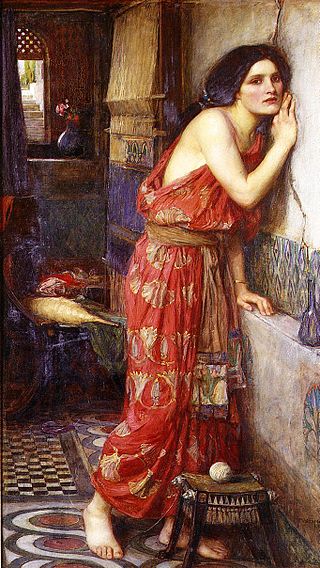
Thisbe_-_John_William_Waterhouse

Thisbe by John William Waterhouse


  • Origin: Greek, Semitic
  • Meaning: unknown
  • Gender: feminine
  • (THIZ-bee)

The name is of uncertain origin and meaning but possibly has a Semitic origin. Thisbe is the name of the lover of Pyramus in Ancient Classical literature, their story is recounted in Ovid’s Metamorphosis. Basically, they are 2 start-crossed Babylonian lovers who end up dying in a similar vein as Romeo & Juliet.

It is also the name of a city mentioned in the Bible, the birth place of the prophet Elijah and it is sometimes transliterated as Tishbe.

Thisbe is also the name of a nymph in Greek mythology who gave her the name to the town in Boeotia of the same name, it’s contemporary Greek form being Thisvi.

As for its usage, I found a record for a Thisby Gilbank born in 1604 in Suffolk, England, but became extremely widespread in England and the American colonies by the 18th-century. It may have been used in reference to both the Greek character and the place in the Bible.

Other forms include:

  • Tisbe (Catalan, Galician, Italian, Portuguese, Spanish)
  • Thisbe (Dutch, English, German, Scandinavian)
  • Thisbé (French)
  • Thiszbé (Hungarian)
  • Tisbèa (Occitanian)
  • Tysbe (Polish)
  • Fisba Фисба (Russian)
  • Tisba Тісба (Slovenian, Ukrainian)

Sources

Marcus, Mark

Il_Pordenone_-_San_Marco_-_Budapest


From one of the most common Roman praenomen, its origin and meaning is uncertain. A popular etymology is that it relates to Mars, others suggest it may be from the Etruscan Marce, which may come from mar (to harvest). It is said the name was originally bestowed on those who were born in March.

Marcellus and the name of the month of March likely shares the same etymological root.

It was borne by several notable Romans, including Mark Antony, Marcus Aurelius & Cicero.

It was the name of one of the Evangelists who authored the eponymous Gospel, known as St. Mark in the Christian world, he is revered as the founder of Christianity in Africa and is traditionally believed to have founded the Church in Alexandria. Coptic Christians hold him in high regard. His bones were smuggled out of Egypt in a barrel of pork fat by Venetian merchants from Alexandria when Egypt fell under Islamic rule and were transported back to Venice where they were eventually installed and dedicated in the Basilica of San Marco.

The name was borne by a 2nd-century pope as well.


Marcus, Mark and Marc have been quite popular in several countries. Marcus was in the U.S. Top 100 between 1970-2000, Sweden’s between 1998-2008, New Zealand’s between 2008-2014, England & Wales between 1996-2003, and in Denmark’s between 1994-2006. Currently, his rankings in other countries are as follows:

  • #54 (Canada, BC, 2018)
  • #87 (Australia, 2018)
  • #100 (Norway, 2018)
  • #209 (United States, 2018)
  • #213 (France, 2018)
  • #236 (England & Wales, 2018)
  • #406 (Netherlands, 2018)

Its latinate form of Marco, which started off as a mainly Italian form, became widespread across the continent. His rankings in the following countries are as follows:

  • #11 (Galicia, Spain, 2018)
  • #16 (Spain, 2018_
  • #23 (Italy, 2018)
  • #65 (Catalonia, Spain, 2018)
  • #81 (Portugal, 2018)
  • #358 (United States, 2018)
  • #436 (England & Wales, 2018)
  • #446 (France, 2018)

It’s English form of Mark appears in the legend of Tristan & Isolde as the name of the King of Cornwall, supposedly the name was not common in the English-speaking world until the 19th-century, but became a hit by the Mid-1900s. Mark appeared in the U.S. Top 100 between 1944-2002, which is quite a long stretch. Mark peaked the highest in popularity between 1955-1970, peaking at #6, six years in a row between 1959-1964.  Marks’s rankings in other countries are as follows:

  • #5 (Slovenia, 2018)
  • #6 (Moscow, Russia, 2018)
  • #21 (Hungary, 2018)
  • #83 (Ireland, 2018)
  • #210 (U.S., 2018)
  • #253 (England & Wales, 2018)
  • #298 (the Netherlands, 2018)

Marc is the French, Catalan & Welsh form and has been popularly used in the English-speaking world, it is currently the most popular male name in Catalonia, 2018 and between 1968-1976 it was in the U.S. Top 100. Marc’s rankings in the popularity charts are as follows

  • #26 (Spain, 2018)
  • #313 (France, 2018)
  • #825 (US, 2018)

Other forms of the name include:

  • Mark Марк (Albanian, Belarusian, Breton, Dutch, English, Maltese, Russian, Ukrainian)
  • Marḳos ማርቆስ (Amharic)
  • Marqus مَرْقُس‎ (Arabic, mainly used among Arab-Christians)
  • Marghos (Armenian)
  • Marko (Basque)
  • Marko Марко (Bosnian, Bulgarian, Croatian, Finnish, Macedonian, Serbian, Slovene, Ukrainian)
  • Markos Μαρκος Ⲙⲁⲣⲕⲟⲥ (Coptic, Greek)
  • Margh (Cornish)
  • Marcu (Corsican, Romanian)
  • Mokus (Croatian, Serbian)
  • Marek (Czech, Polish, Slovak)
  • Marco (Catalan, Dutch, Galician, German, Italian, Portuguese, Spanish)
  • Marc (Catalan, French, Occitanian, Welsh)
  • Marcus (Dutch, English, German, French, Scandinavian)
  • Markus (Dutch, Estonian, Faroese, Finnish, Frisian, German, Scandinavian)
  • Marghus (Estonian)
  • Markko, Markku (Finnish)
  • Marke (Finnish)
  • Marcas (Gaelic)
  • Marx (German, archaic)
  • Maleko (Hawaiian)
  • Márk (Hungarian)
  • Markús (Icelandic)
  • Marchino (Italian)
  • Marcolino (Italian)
  • Marcuccio (Italian)
  • Mareks (Latvian)
  • Marks (Latvian)
  • Markuss (Latvian)
  • Markas, Morkus (Lithuanian)
  • March (Lombard)
  • Markys (Manx)
  • Marquét (Poitvin, diminutive form)
  • Marcos (Portuguese, Spanish)
  • Kusi (Swiss-German diminutive form)
  • Marqōs ܡܪܩܘܣ‎ (Syriac)
  • Mår (Walloon)

It’s feminine forms include Marca but and sometimes Marcia was used as a feminine form, though it is more the feminine equivalent of Marcius.

Other feminine forms include:

  • Markusine (German, obscure)
  • Marchina (Italian)
  • Marcolina (Italian)
  • Marcuccia (Italian)

Sources

Cassius

Cassius


The name is of uncertain origin or meaning, it has been linked with the Latin cassus, meaning “hollow, empty, vain,” and the Latin cassis (metal helmet). It has also been suggested to be of Etruscan origins. It was the name of a Roman gens, which produced such Roman notables as Gaius Cassius Longinus (died 42 C.E.) who was one of the assassins of Julius Caesar; and Roman historian Cassius Dio (died 235 C.E). The Via Cassia is a namesake of the same clan.

The name was subsequently borne by several early saints, including Cassius of Clermont (3rd-Century C.E.) and Cassius of Narni (d. 558 C.E.). Its feminine forms of Cassia & Cassiana are also borne by several female saints.

A more recent notable bearer is Cassius Clay (1942-2016), which was the birth name of the American Boxer, Muhammed Ali, who was in turn named for his father who was named after the American abolitionist and politician Cassius Marcellus Clay, Sr (1810-1903).

Cassius has been in and out of the U.S. Top 1000 since 1880, between 1880-1895, it was among the Top 1000 and peaked at #425 in 1880. Between 1896-1964, the name did not appear in the U.S. Top 1000. He made a brief appearance in 1964 coming in as the 859th most popular male name. His sudden appearance in 1964 may be due to Muhammed Ali winning the world heavyweight championship of the same year. Between 1964-2008, Cassius was once again expelled from the top 1000. As of 2018, Cassius was 595th Most Popular Male Name in the United States. In England & Wales, he ranks in at #333.

Traditionally pronounced CASH-es in English, it is often shortened to Cash. Another form is Cassian (KASH-en).

Other forms include:

  • Kasi (Basque)
  • Kasian (Breton)
  • Cassi, Cássius (Catalan)
  • Kasije (Croatian, Serbian)
  • Kasián (Czech)
  • Cassianus (Dutch, Latin)
  • Cassius, Kassius (Dutch, German)
  • Cassian (German, Occitanian)
  • Kassian (German)
  • Cassie, Cassien (French)
  • Cassiano, Cassio (Italian)
  • Casiano, Casio (Spanish)
  • Kasiani (Kiswahili)
  • Kasijus (Lithuanian)
  • Kasjusz, Kasjan (Polish)
  • Cássiano, Cássio (Portuguese)
  • Kassij Кассий, Кассій (Russian, Ukrainian)

Feminine forms include:

  • Cássia, Cássiana (Catalan, Portuguese)
  • Kasija (Croatian, Lithuanian, Serbian)
  • Cassia, Cassiana (English CASH-uh, Italian, Occitanian)
  • Cassiane, Cassienne, Cassie (French)
  • Kasja, Kasjana (Polish)
  • Kassija (Russian, Ukrainian)
  • Casia, Casiana (Spanish)

Sources

Albert, Alberta

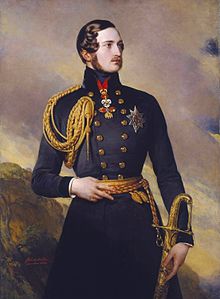
Prince_Albert_-_Franz_Xaver_Winterhalter_1842


Albert is a Norman contracted form of Adalbert that was introduced into England after the Norman Conquest of 1066. Though there is an Anglo-Saxon form of Æðelberht, it was completely usurped by its Norman version.

The name fell out of use in England by the end of the 13th-century but was revived in the 19th-century when Queen Victoria of England chose a German prince by the name of Albert to be her husband. Speaking of which, Albert was a much-loved name among German royalty.

Between 1880-1967, Albert remained in the Top 100 Most Popular Male Names. He peaked at #14 in 1910. As of 2018, he currently ranks in as the 452nd Most Popular Male Name.

Albert is currently quite popular in Europe. These are his rankings in the following countries:

  • #37 (Denmark, 2018)
  • #55 (England & Wales, 2018)
  • #84 (Norway, 2018)
  • #422 (Netherlands, 2018)

Albert is used in Albanian, Catalan, Croatian, Czech, Danish, Dutch, English, Estonian, Finnish, French, German, Hungarian, Icelandic, Polish, Romanian, Russian, Slovakian, Slovenian & Ukrainian.

Other forms include:

  • Alberzh (Breton)
  • Aalt (Dutch)
  • Aalbert (Dutch)
  • Aalbertus (Dutch)
  • Aelbrecht (Dutch)
  • Albercht (Dutch)
  • Alberd (Dutch)
  • Albertus (Dutch, Late Latin)
  • Appe (Dutch)
  • Brecht (Dutch)
  • Elbert (Dutch, German)
  • Ethelbert (English)
  • Alpertti (Finnish)
  • Albertin (French)
  • Aubert (French)
  • Aubertin (French)
  • Abbe, Abe (Frisian)
  • Ailbeart (Gaelic)
  • Alberte (Galician)
  • Albertos (Galician)
  • Alberti ალბერტი (Georgian)
  • Albrecht (German)
  • Albertinello (Italian)
  • Albertino (Italian)
  • Alberto (Italian, Portuguese, Spanish)
  • Alperto (Italian)
  • Ulberto, Ulperto (Italian)
  • Albaer (Limburgish)
  • Baer, Bèr (Limburgish)
  • Alberts (Latvian)
  • Albertas (Lithuanian)
  • Albertet (Occitanian)
  • Olbracht (Polish)

Its feminine for of Alberta was borne by Princess Louise Caroline Alberta (1848-1939), daughter of Queen Victoria & Prince Albert. The Canadian province was named in her honour.

Alberta is used in Albanian, Catalan, Croatian, Czech, Danish, Dutch, English, Estonian, Finnish, French, German, Hungarian, Icelandic, Italian, Polish, Portuguese, Romanian, Russian, Slovakian, Slovenian, Spanish & Ukrainian.

Alberte is currently the 12th Most Popular Female Name in Denmark. Alberte (ahl-BARE-teh) is also used in French, but pronounced differently from its Danish counterpart (AHL-BAIRT). Other feminine forms include:

  • Alberthe, Albertha (Danish, Swedish)
  • Albertina (Dutch, German, Hungarian, Italian, Portuguese, Spanish)
  • Brechtje (Dutch)
  • Bertina (English, Hungarian, Italian)
  • Albertine (French, German, Danish, Norwegian)
  • Auberte (French)
  • Aubertine (French)
  • Bertine (French)
  • Abelke (Frisian)
  • Albertin (Hungarian)

Sources