Ondine, Undine

Gender: Feminine
Origin: Latin
Meaning: “wave.”
(ahn-DEEN); (un-DEEN)

The name is derived from the Latin unda meaning “wave.”

In early European folklore undines were a sort of water sprite who could gain a soul if they married a mortal and bore a child, the downside was that as soon as they became mortal they would age and die.

The Swiss scientist and alchemist Paracelsus spent a considerable time writing about them.

In 1812, the German writer, Baron Friedirch de la Motte Fouque, made the legend a subject of his famous romantic novel Ondine.

In it Ondine falls in love and marries the local knight Huldebrand. She bears his child, but as soon as the baby is born, she starts to age. Huldebrand has an affair with a lowly local woman and Ondine catches her husband in the act. She lays a curse on Huldebrand that he would die in his sleep. Afterward, Ondine rushes to the town square’s fountain and disappears in the midst of the waters, never to be seen again. The same story was later adapted by E.T.A. Hoffman into an opera.

Ondine and Undine became popular first name choices in both France and Germany. Nicknames include Ondy, Ondinette and Dina.

Other forms of the name include:

  • Ondina (Asturian/Italian/Portuguese/Spanish)
  • Ondine (French)
  • Undine (German/English)
  • Undina (Icelandic)
  • Undīne (Latvian)
  • Undinė (Lithuanian)
  • Ondyna (Polish: very obscure)

Designated name-days are: April 18 (Lithuania) and November 15 (Latvia)

Adalbert, Wojciech, Vojtěch

Gender: Masculine
Origin: German/Polish/Czech/Slovak
(Adal-bert) (VOY-chehk); (VOY-tyek).

The name, Adalbert, is derived from the Germanic elements adal meaning “noble” and behrt meaning “bright; shining; illustrious.”

The name was borne by a 9th century saint, who was known as the apostle of the Slavs.

He was a German Bishop of the town of Madgeburg who was assigned under the Pope as a missionary to Russia, upon the request of Queen Olga. Olga’s son oppossed Adalbert’s visit, and had his companions slain while Adalbert himself barely escaped alive. He returned to Germany where he established several archbishopric’s and trained missionaries for the Slavic tribes.

His feast day is commemorated on June 20.

One of his students was St. Adalbert of Prague, also known as Vojtech, in Czech, (or Slovakian), and as Wojciech, in Polish.

He was born into a noble Czech family in Bohemia and studied in Madgeburg under Adalbert of Madgeburg. He returned to Prague and entered the priesthood, eventually becoming the Bishop of Prague.

He was noted for his rejection of wealth and insisted to live a life of poverty. As a result, he gave up his Bishop’s position and decided to become a hermit instead. However, the pope had other plans for him in mind. The pope talked him back into becoming a bishop and was sent on a mission to convert the neighboring Slavs and Prussians in Poland.

He was succesful in coverting the Polish King Boleslaw the Brave, but met resistance in the west of Poland.

He was beheaded by the locals when he attempted to cut down an oak tree. He was martyred in what is now Elblag, Poland.

King Boleslaw retrieved his body and consecrated a church, in his honour, in Gniezno, Poland, where his body is still interned. His cult is still very popular in Poland, where he is known as Wojchiech (VOY-chehk).

Other forms of the name include:

  • Apke (Frisian)
  • Adalberta (Basque)
  • Adalbertu (Corsican)
  • Adalbert (Czech/Catalan/English/French/German/Hungarian/Polish/Slovak/Slovene)
  • Adelbert/Edelbert (German)
  • Adelbrecht (German)
  • Adelspret (German: Austrian dialectical form)
  • Aðalbert (Icelandic)
  • Adalbertus (Latin)
  • Adalberts (Latvian)
  • Adalbertas (Lithuanian)
  • Ahlert/Alert (Plattdeutsch)
  • Adal’bert Адальберт (Russian)
  • Aebi (Swiss-German)
  • Adalberto (Spanish/Galician/Italian/Portuguese)
  • Edilberto (Spanish)

Feminine forms are Adalberta and Adalbertina.

Solveig

Gender: Feminine
Origin: Old Norse
Meaning: speculated, but most populary believed to mean “sun way; path to the sun.”
Nor (sol-VIGH;VYE); Swe (sol-VAY).

The name is of Old Norse origins, composed of the elements, sol, meaning,” sun” and veig “way”or “path.” The word veig can also mean “strength,” leading some to believe that the name might actually mean “sun strength.”

Some also believe that the name is composed of the elements solr meaning “yellow coloured” or salr meaning “house, home or hall” and that the second element of the name is either from the word, vig, meaning, “battle” or the word, vigja, meaning,  “to hollow”.

Though the name is technically used throughout Scandinavia, it has been most popular in Norway, no doubt due to the symbolic character of Solveig in Henrik Ibsen’s Peer Gynt.

In the play, Ibsen uses Solveig as a symbol of redemption for the protaganist, Peer Gynt. There is a lot of play on words used throughout the play, and since Solveig represent’s Gynt’s path to redemption and salvation, the meaning of her name as “path to the sun,” is a key factor to the plot of the story.

A popular Norwegian nickname for this is Vivi.

Solveig is currently the 76th most popular female name in Norway (2007).

  • Solvej/Solvey (Danish)
  • Solveigh (German)
  • Solveig (Icelandic)
  • Solveiga (Latvian/Russian)
  • Sølvi (Norwegian)
  • Solvig (Swedish: obscure form)
  • Sylvi (Swedish/Norwegian/Finnish)

Other forms include: The name also appears in Icelandic as Sólveig, Sólveigu and Sólveigar.

Margaret, Margarita, Marguerite, Margherita

Gender: Feminine
Origin: Greek
Meaning: ‘pearl’
Eng: (MAR-gret); Fre: (mar-GUR-eet); It/Sp (mar-gay-REE-tah).

The name is derived from the Greek word μαργαρίτης, (margarites), meaning, “pearl.” It is believed that the Greek word itself is derived from the Persian word Marg, Marq or Marka meaning bird, possibly due to the resemblance of the pearl to birds’ eggs.

The name was popularized in late antiquity due to the cult of St. Margaret of Antioch.

Legend has it that she was the daughter of a powerful Antiochian priest. Due to her Christianity, she was disowned by her father and lived as a shepherdess in the hills of Turkey. A nobleman went to her father and asked for her hand in marriage. Her father consented and sent the suitor to the Turkish hills to find Margaret. There, the suitor begged her to turn away from her religion and to marry him. When Margaret said no, the nobleman had her tortured. One legend has it, that while being tortured, she had a vision of Satan appearing to her in the form of a dragon and swallowing her whole. The beast regurgitated her back up due to the golden cross she was wearing. She was finally beheaded. Her death is set around 304 A.D. and her feast is usually held around the middle of July.

In Medieval England, Margaret’s cult became especially popular. She was considered protector of pregnant women, possibly due to her incident with the dragon. She is considered to be one of the Holy Helpers who appeared to Joan of Arc.

In the English speaking world, she has been in usage since the Middle Ages, also producing the English offshoot of Margery or Marjorie, which was popular in the early Middle Ages and was revived in the 18th-century. The last time Marjorie was seen in the U.S. top 1000 was in 1994, coming in as the # 991st most popular female name. The highest she ever ranked in U.S. naming history was between 1921 and 1924 when she came in as the 16th most popular female name.

In United States naming history, she peaked 7 years in a row coming in at as the 3rd most popular female name between 1905 and 1911. Currently, she comes in as the 180th most popular female name, and other forms have outranked her.

For instance, the Welsh form of Megan, is currently the 100th most popular female name in the United States, but in previous years, she has ranked even higher, in 1985, she was the 10th most popular female name. In other countries, Megan’s rankings are as follows:

  • # 47 (Canada, B.C., 2008)
  • # 15 (England/Wales, 2008)
  • # 30 (Ireland, 2007)
  • # 170 (the Netherlands, 2008)
  • # 31 (Scotland, 2008)

In addition to her, there are several other saints who bear this name. Throughout history the name has been borne by several English and French Monarchs.

Other forms of the name include:

  • Margarid (Armenian)
  • Maharyta/Maharèta (Belarusian)
  • Marc’harid (Breton)
  • Mégane (Breton)
  • Margarita Маргарита (Bulgarian/Late Latin/Lithuanian/Russian/Spanish)
  • Margrethe (Danish/Norwegian)
  • Margretje (Danish)
  • Merete/Meret (Danish)
  • Merit/Merrit (Danish)
  • Mette (Danish/Norwegian)
  • Margreet/Margriet (Dutch/Limburgish)
  • Margaretja (Dutch)
  • Margalida (Catalan)
  • Markéta (Czech/Slovak)
  • Markit (Czech: obscure form)
  • Muchlina (Czech: obscure form)
  • Margaret (English)
  • Margo (English)
  • Marga (Estonian/Catalan)
  • Maret/Mareta (Estonian)
  • Maarit (Finnish)
  • Margareeta/Margareetta (Finnish)
  • Margariita/Margariitta (Finnish)
  • Marjatta (Finnish)
  • Marketta (Finnish)
  • Margaux/Margot (French)
  • Maguy (French: medieval diminutive form occasionally used as an independent given name. mah-GEE)
  • Marguerite (French: also the French word for daisy)
  • Margarida (Galician/Portuguese: also coincides with the Galician and Portuguese word for daisy)
  • Margalita (Georgian)
  • Margareta (German/Dutch/Finnish/Romanian/Scandinavian/Slovene)
  • Margarete/Margret (German)
  • Margaretha (German/Dutch)
  • Margarethe (German/Danish)
  • Margrit (German)
  • Margott (German)
  • Meta (German/Scandinavian: originally a diminutive form, now used exclusively as an independent given name)
  • Margarita Μαργαρίτα (Greek: Modern)
  • Margalit (Hebrew: also the modern Hebrew word for pearl)
  • Margaréta (Hungarian)
  • Margita (Hungarian/Slovakian)
  • Margit (Hungarian/Scandinavian)
  • Margrét (Icelandic)
  • Mairéad (Irish-Gaelic)
  • Pegeen (Irish-Gaelic: Gaelicization of the English diminutive Peggy, used as an independent given name)
  • Margherita (Italian: also the Italian word for cheese pizza and the daisy)
  • Malgozata (Lithuanian)
  • Margaid (Manx)
  • Margrete (Norwegian)
  • Marit (Norwegian/Swedish)
  • Magalòna (Occitanian)
  • Małgorzata (Polish)
  • Magali (Provençal)
  • Marghareta (Romanian)
  • Marghita (Romanian)
  • Maighread (Scotch-Gaelic)
  • Maisie (Scotch-Gaelic: originally a diminutive form of Maighread and Margaret, the name has a long history of usage as an independent given name. Pronounced like (MAY-zee), rhymes with Daisy).
  • Chmarietta (Slovene)
  • Marjeta (Slovene)
  • Merit (Swedish)
  • Makalesi (Tongan)
  • Marged (Welsh)
  • Mared (Welsh)
  • Megan (Welsh)
  • Mererid (Welsh)

There is also the Germanic off spring of Greta and all her various forms, once used as a diminutive form, Greta and all her variations have a long history of being used as independent given names.

In the United States, Greta is currently the 694th most popular female name, her German sister of Gretchen currently ranks in as the 945th most popular female name.

  • Greta (Danish/German/English/Plattdeutsch/Norwegian/Romansch/Swedish)
  • Grete (Danish/German/Plattdeutsch)
  • Grethe (Danish/Norwegian)
  • Greet/Griet (Dutch/Limburgish)
  • Greetje (Dutch)
  • Gretje/Grietje (Frisian)
  • Gretta (English)
  • Gretchen (German/English)
  • Gretel/Gretl (German)
  • Gréta (Hungarian/Icelandic)
  • Ghita (Italian)
  • Grieta (Latvian)
  • Greetke (Plattdeutsch)
  • Greth (Plattdeutsch)
  • Gretje (Plattdeutsch)
  • Gretjen (Plattdeutsch)
  • Grettina (Romansch)

Another diminutive offspring that has a history as an independent name is Rita, which originated as a Spanish and Italian contracted form and is now used in English, German, Hungarian, Portuguese, and the Scandinavian languages, Reeta/Reetta are Finnish forms.

There is the Italian masculine form of Margherito.

Common English diminutives are Daisy, Madge, Mae,  Maggie, Mamie, Marge, Margie, Mayme, Meg, Meggie, Midge, Peg, Peggy, and Jorie (for Marjory).

Czech diminutives are: Gita, Gitka and Gituška, Polish diminutives are Gosia, Gośka, Małgorzatka, Małgosia and Małgośka.

A Hungarian diminutive is Manci, a Spanish pet form is Tita and a Manx diminutive is Paaie.

A Swiss-German dialectical diminutive is Gretli.

Rasa

Gender: feminine
Origin: Lithuanian/Latvian
Meaning: “dew”
(RAH-sah)

The name is an ancient Lithuanian name associated with the daughter of the goddess Kupole. She was revered as the goddess of summer greenage and summer flowers.

The name is currently very popular in Lithuania. Rasuolė is another form.

Interestingly enough, it can also be a Hindi name meaning “flavor; essence.”

In Lithuania, the designated name-day is February 25/June 20, in Latvia it is April 9.

Audra

Gender: Feminine
Origin: Lithuanian
Meaning: “storm.”
(OW-drah).

The name comes directly from the Lithuanian word for storm. It is currently fairly common in Lithuania.

Other forms include, Audrė, Audrinė, Audrona, Audronė, (ow-DROH-nay); Audronija amd Audrūnė (ow-DROO-ney).

Male forms are Audronis and Audrinas.

Audra is occasionally used in Latvia and the Latvian male forms are Audris and Audrius.

Audra also coincides with the English variation of Audrey, in which case it is pronounced (AW-druh). The latter appeared in the U.S. Top 1000 between 1966-2001, peaking at #246 in 1967.

Credit goes to Capucine for alerting me of the Latvian masculine forms.

sources

updated on 03/22/2023


Chiara, Clara, Clare, Claire

Gender: Feminine
Origin: Latin
Meaning: “clear; see through”

    Chiara (kee-AH-rah), (KYAH-rah), has been in usage in Italy since the early Middle Ages. Chiara is also the Italian feminine adjective for the word, chiaro meaning, “clear” or “bright.”

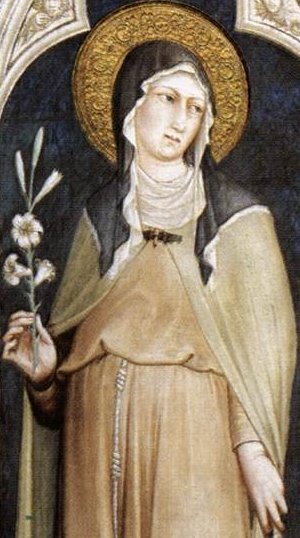
    It was borne by Saint Chiara d’Assisi. (1194-1253). She was a companion of St. Francis of Assisi, both of whom believed in self-mortification and helping the poor. Chiara decided to start an order, known as the Poor Clares, while Francis went off to start his own order known as the Franciscans.

    Chiara is still a very popular first name in Italy. In 2006, she was the 5th most popular female name.

    The French form of Claire, also came into usage during the early Middle Ages. No doubt due to the cult of the male St. Clair of Dauphine, the patron saint of tailors.

    The name came to England via the Normans in the form of Clare, and the male Latin form of Clarus was borne by a British saint of Rochester, a Benedictine monk. Both forms of Clare and Clara were very popular prior to the Reformation in England and both names were revived during the 19th century.

    In recent years, for whatever reason, the French spelling of Claire has often times been the preferred choice among American parents. In 2008, Claire came in at # 62 in the U.S  Top 1,00o Female Names, while its elder English counterpart of Clare came in at # 679. In fact, even the Latinate version of Clara is far more prevalent than Clare, coming in at # 206.

    Clara/Klara is a popular choice throughout Northern and Central Europe.

    Other forms of the name include:

    • Clarice (English/French/Italian)
    • Clarissa (English)
    • Klára (Hungarian/Czech)
    • Claritia (Latin)
    • Claritta (Romansch)
    • Bistra/Jasna (Serbo-Croatian/Slovene: both literally mean “light; clear” and are used as indigenous cognates)
    • Clarisa (Spanish)
    • Clarita (Spanish: initially a diminutive form, commonly used as an independent given name)

    Diminutive forms are the French, Clairette, the Italian, Chiaretta, Chiarina and Claretta.

    There is the masculine Latin form of Clarus and the French masculine form of Clair.

    Olivia

    Gender: Feminine
    Origin: Latin
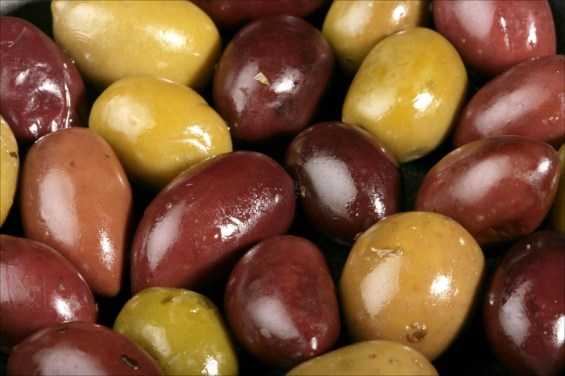
    Meaning “olive”
    (o-LIV-ee-ah)

    The name is often believed to have been an invention of William Shakspeare for his play Twelfth Night, however, the name was borne by a 9th century Sicilian saint. She is considered one of the patron saints of Palermo, and legend has it that she was kidnapped by Muslim invaders and taken into slavery to Tunisia. Her captors were so impressed with her sincerity, virtue and beauty that they permitted her to remain a Christian and to live as a hermitess in a cave.

    She was known for performing miracles among the local Tunisians, and many had converted to Christianity as a result. She was imprisoned and tortured and then burnt at the stake. Legend pertains that when they lit the fires at the stake, the flames would not touch her and she was decapitated instead. For whatever reason, she is also considered the patron saint of music.

    The name was then possibly introduced into the English speaking world through William Shakespeare in 1599 for one of his characters in the play Twelfth Night. Since then, the name has been in usage in the English speaking world. In the States, the name has been in the top 1,000 since 1880. The name has gradually climbed its way up to the top 10 the last 20 years. In 1989, Olivia came in at # 179 the following year of 1990 saw it jump all the way up to # 72, by 2001 it reached position # 1o and as of last year, 2008, it has made itself a niche at # 6. In Poland, it is at # 5 as the most popular female name, spellt Oliwia. The name is in the top in Canada and the United Kingdom.

    The name is used in virtually every European country.

    Other forms include:

    • Olivija (Croatian/Serbian/Slovene)
    • Olivie (Czech: ah-LEEV-yeh)
    • Oliva (English/Italian)
    • Olive (English)
    • Olivie/Olivia (French)
    • Olivette (French: obscure)
    • Olívia (Hungarian/Portuguese/Slovak)
    • Olivana/Oliviana (Italian: obscure)
    • Oliveira/Oliviera (Italian)
    • Olivetta (Italian: obscure)
    • Oliwia (Polish: o-LEEV-yah)

    Nicknames include: Ollie, Liv, and Livy. A German nickname is Livchen.

    A very rare Polish masculine form is Oliwjusz.

    Agnes

    Gender: Female
    Origin: Greek and Latin
    Meaning: “lamb; pure, chaste, holy.”
    (AG-nes)

      The name is of debated origin and meaning. It may be derived from the Greek hagno meaning “pure; chaste; holy.”

      Likewise, it may be derived from the Latin word for “lamb.” Since the lamb later became associated with purity and chastity, the  two above origins and meanings have become interchangeable.

      The name was borne in Greek mythology by an Oceanid nymph, who was said to have raised the god Zeus.

      On Mt. Lyceaus in Arcadia, there was a well sacred to her. When the region was suffering from drought, she prayed and fasted for several days. Afterward, she touched the surface of the well with a branch of an oak tree, inducing a huge rain storm.

      The name was borne in Christian legend by an early virgin martyr who refused to comply with the wishes of a local suitor who later denounced her as a Christian. The local prefect forced her to go through several public humiliations before beheading her.
      It was also borne by a medieval Czech princess, who was later canonized by the Catholic church as a saint. Known as St. Agnes of Bohemia, she is a minor subject in the popular English Christmas carol, Good St. Wenceslaus, and is still revered as a local heroine in her native homeland. Another saintly namesake is  Agnes of Assisi.

      The name was quite popular throughout Europe in the Middle Ages, due to its strong Christian connotations, the word agnes in Latin was also used in reference to Christ’s sacrifice, as in agnes dei, lamb of God.

      The name was prevalent in England before the Reformation, and fell somewhat out of favor, until it was revived in the late 19th-century.

      In recent years, the name has experienced a surge in popularity in a few European countries.

      In Sweden she was the 16th most popular female name of 2007.

      In Hungary, she was the 75th most popular female name of 2005.

      Other forms of the name include:

      • Agnesa/Agnesë (Albanian: the birth name of Mother Theresa of Calcutta)
      • Inas (Arabic)
      • Oanez (Breton: diminutive form of Agnes pronouned WAH-nes).
      • Agnesza Агнеса (Bulgarian)
      • Agnès (Catalan/French: pronounced like ang-YES in French).
      • Gnese (Corsican)
      • Agneza (Croatian)
      • Anežka (Czech)
      • Agnete/Agnethe (Danish)
      • Nancy (English: originally an English pet form, the name has been used as an independent name for quite awhile, its popularity spiked in the 1940s and 50s and is currently considered dated. Another nickname used as an independent form is Nan.
      • Aune (Finnish: pronounced AU-ne the first part is pronounced like how without the H)
      • Iines (Finnish)
      • Agenete/Agnet (Frisian: other forms include Anjes, Anjesse, Anyesse, Anjet and Anjette.
      • Inessa/Nessa (German)
      • Neeske (German/Frisian: initially a diminutive form, used as an independent given name)
      • Hagne (Greek: pronounced AHG-nay)
      • Agnea (Icelandic: pronounced ahg-NAY-ah).
      • Agnéis (Irish-Gaelic)
      • Agnese (Italian/Latvian: pronounced in Italian like ang-YAY-say. It could also be Latvian pronounced (ahg-NEH-seh).
      • Agnesina (Italian: obscure form)
      • Ines (Italian: a borrowing from the Spanish)
      • Ágnes (Hungarian: pronounced like AHG-nesh). Diminutive form is Ági.
      • Baranka (Hungarian: a literal translation)
      • Agnė (Lithuanian: pronounced AHG-nay).
      • Annis/Annice (Medieval English forms: both are pronounced the same ANN-nis)
      • Agnieszka (Polish: pronounced ahg-NYESH-kah, the name is extremely popular in Poland. Medieval diminutive forms include Jagienka, Jagnusia and Jagna. An older form which has fallen out of usage is the Medieval Jagnieszka. Modern diminutive forms include Aga, Agunia and Agusia.
      • Inês (Portuguese)
      • Agneza (Romanian)
      • Neisa/Nesa/Nescha/Nesina (Romansch: credit goes to Capucine)
      • Agnessa (Russianpronounced on-YEZ-ah).
      • Senga (Scottish: an anagram of Agnes, the name is also said to be from the Gaelic seang meaning “slender.”
      • Agnija Агнија (Serbian)
      • Neza (Slovene: originally a Slovenian diminutive form, it is now used as an independent given name, pronounced NEH-zhah).
      • Hańža (Sorbian)
      • Inés (Spanish/Galician: pronounced like ee-NES, the name has become prevalent in other countries, it is used in Slovenia, Croatia, Latvia, Finland and Estonia, only in Finland and Estonia it is spelled Iines pronounced the same way as in Spanish. A French borrowing is spelled Inès.)
      • Agneta/Agnetha/Agnita/Agna (Swedish/Norwegian: pronounced ung-YEH-tah, ung-NEE-tah and ANG-nah, these forms are considered dated in Sweden being replaced by the trendier Agnes. It is borne by Agnetha Fältskog of ABBA fame )
      • Nesta (Welsh)

      Nicknames include: Aggie, Nessa, Ness and Nessie

      An obscure Italian male form is Agnesio.

      Coincidentally, Agni is an Old Norse male name, also found as Ahni and Hogne. Snorre Sturlasson wrote about a legendary King of Sweden named Agni. He is known for defeating the Finnish chief Frosti and taking his daughter Skjalf hostage, who he later married and had children with. The name is believed to be derived from the Nordic agh meaning “spear point” or may possibly be derived from the word agi meaning “fear; dread.” It seems to have fallen out of usage. Maybe a you would be brave enough to use it on your own son ;).

      Beatrice, Beatrix

      Gender: Feminine
      Origin: Latin
      Meaning: “blessed; traveller, voyager.”
      Eng (BEE-uh-TRISS); (BEE-uh-TRICKS)

      The name is of somewhat debated meaning, some sources list it as a derivative of the Latin word beatus meaning “blessed” while other sources claim that it is a feminine form of the Latin name, Viator which means, “traveller” or “voyager.”

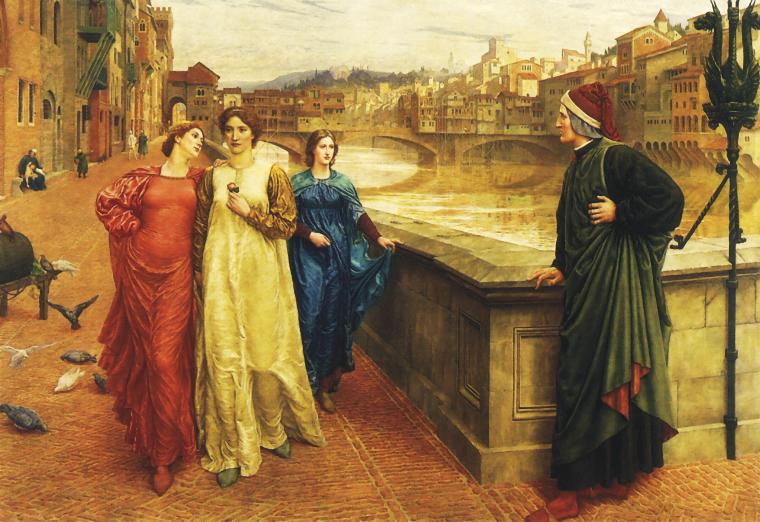
      The famous Italian poet, Dante Aligheri, author of the Inferno, and other works, used Beatrice Portinari, (a local noblewoman whom the author was in love with), as a recurrent theme in his writings. The name has been consistently popular in Italy since the Middle Ages, she was especially popular in the rest of Europe during the Middle Ages as well, but has gone in and out of fashion since, depending on the country. It was particularly popular in England before the Reformation, where it experienced a revival in the 19th-century. Peter Rabbit author, Beatrix Potter, bore the name (1866-1943).T he name is also borne by several early Christian saints, and it is currently borne by Queen Beatrix of the Netherlands.

      Beatrix has not ranked in the U.S. top 1000 since 1883! As of 2005, however, Beatrix was the 88th most popular female name in Hungary. Her counterpart of Beatrice faired much better in the U.S. statistics, though not anywhere near the top 100, Beatrice at least ranks in at # 833 (2008). In 2006, Beatriz was the 59th most popular female name in Spain.

      Other forms of the name include:
      • Batirtze (Basque)
      • Beatriu (Catalan)
      • Beatrijs (Dutch)
      • Beatrix (Dutch/English/German)
      • Béatrice/Béatrix (French: bay-ah-TREES/bay-ah-TREEKS)
      • Beke/Beeke (Frisian: diminutive forms are Bekje. Pronounced BEH-ke)
      • Beatrisa (German)
      • Beatríke Βεατρίκη (Greek: Modern)
      • Beatricse/Beatrisz/Beatrix (Hungarian: a Hungarian diminutive is Trixi)
      • Beatrice (Italian/English/Romanian/Swedish: in Italian, pronounced, bay-ah-TREE-chay. Bice is a common diminutive form, though in recent years, it is considered dated, and the diminutive form of Bea has taken its place instead)
      • Bicetta/Cettina (Italian: originally diminutive forms, now used as independent given names, though, very obscure)
      • Beatrise (Latvian)
      • Beatričė (Lithuanian)
      • Beatriċi (Maltese: the pronunciation is somewhat similar to the Italian)
      • Beatrycze (Polish: beh-ah-TRIH-cheh)
      • Beatryks (Polish: beh-ah-TRIKS)
      • Beatris (Provencal)
      • Beatrisa Беатриса (Russian)
      • Beatrìci (Sardinian)
      • Beitris (Scottish)
      • Beatrica (Slovene: beh-ah-TREET-sah)
      • Beatriz (Spanish/Portuguese: Spanish Iberian: bey-ah-TREETH, Spanish Latin American: bey-ah-TREES; Portuguese Iberian: bee-ah-TREEZH)
      • Beatrixe (Swiss-German)
      • Betrys (Welsh)

      The names, Beata and Viatrix, have also been linked with Beatrice.

      Common English diminutives are Bea, Bee, Trixie and Trissie. A Portuguese short form is Bia.

      Name-days are: January 17 (Lithuania), February 13 (France), July 29 (Lithuania/Poland), December 2 (Sweden).