Melchior

Gender: Masculine
Origin: Debated
Meaning: Debated

The name is of uncertain origin or meaning, but may be related to the Phoenician deity name, Melqart, which means “king city” or possibly even to the Hebrew components, malki (my king) and or (light), which would roughly translate as “my king is light.”

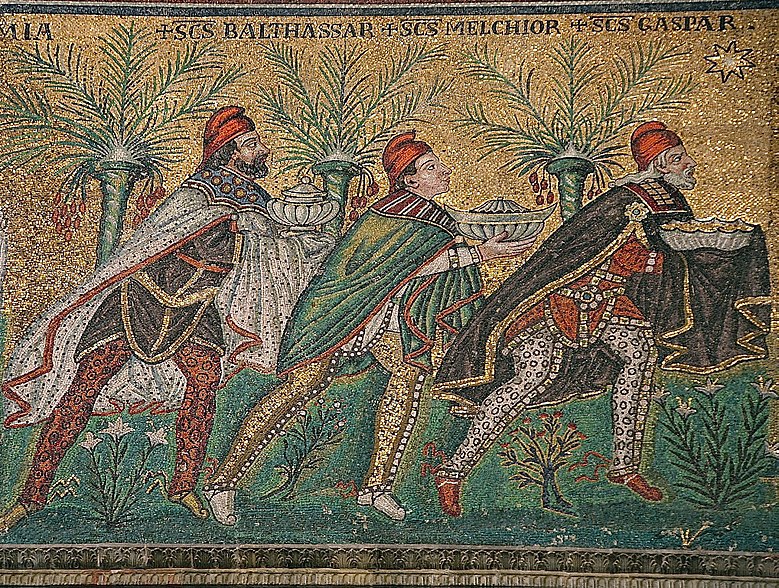
According to Christian lore, it is the name of one of the Three Wise Men (Magi) who visited Christ.

Its designated name-day is January 6th.

Other forms of the name include:

  • Meltxor (Basque)
  • Melcion/Melcior (Catalan)
  • Melchioru (Corsican)
  • Melkior (Croatian/Serbian/Slovene)
  • Melker (Danish/Norwegian/Swedish: currently very popular in Sweden, in 2007, it was the 54th most popular male name in Sweden)
  • Melchior (English/French/German/Polish/Slovak)
  • Malchior (German/Polish: older forms)
  • Marchal/Melcher (German: archaic)
  • Melchiorre (Italian)
  • Melchioras/Melkijoras (Lithuanian)
  • Merkelis (Lithuanian)
  • Melkjor (Maltese)
  • Marchion (Occitanian)
  • Melhior (Polish: very obscure)
  • Belchior (Portuguese)
  • Melkhior (Russian)
  • Melichar (Slovak)
  • Melchor (Spanish/Galician)

an obscure feminine form is Melchiora.

Balthazar

Gender: Masculine
Origin: Phoenician
Meaning: “Ba’al protects the king.”
Eng (Bel-the-Zar)

The name is believed to be a corruption of the Biblical Phoenician name, Belshazzar, which appears in the Book of Daniel as the name of a Babylonian king.

In Christian folklore, the name is attributed to one of the Three Wise Men, in both the Eastern and Western Christian Church, Balthazar is honored as a saint.

The designated name-day is January 6th.

Other forms of the name include:

  • Baltasar (Basque/Galician/Maltese/Spanish)
  • Hausl (Bavarian)
  • Balthazar (Catalan/English/French/Dutch/German)
  • Baltazaru (Corsican)
  • Baltazar (Croatian/Czech/Polish)
  • Hauser (German: Austrian dialectical form)
  • Boldizsár/Baltazár (Hungarian)
  • Baldasarre (Italian)
  • Baltazaras (Lithuanian)
  • Bautesar (Occitanian)
  • Balser/Balzer (Romansch)
  • Valtasar (Russian)
  • Baltazár (Slovak)
  • Boltežar (Slovene)
  • Baltsar (Swedish)

As for nicknames, Bolt might make an interesting choice.

Casper/Jasper

Gender: Masculine
Origin: Persian
Meaning: “treasurer; treasure bringer.”

Caspar, Casper and Jasper are Greek corruptions of an ancient Chaldean or Persian word, gizbar, which means “treasurer.” In modern Hebrew, gizbar is still the word for “treasurer.”

Traditionally, the name is attributed to one of the three Magi, or the Three Wise Men, who are noted for bearing the Christ child gifts. Gaspar is supposedly the one who brought frankincense.

The names of the Magi first appeared in Latin texts which date from the 9th-century C.E. Since then, the name has been in usage in Europe since the Middle Ages, and Gaspar/Caspar is attributed as a saint.

Currently, Jasper ranked in as the # 451st most popular male name in the United States. In Belgium, it is the 51st (2006) and in the Netherlands, the 35th (2008).

Casper did not make it into the U.S. top 1000, the name has not been in the top 1000 since 1933, when it came in as the 978th most popular male name for that year. Its disfavor may have been due to the popular children’s cartoon series, Casper the Friendly Ghost.

His rankings in other countries are as follows:

  • # 77 (the Netherlands, 2008)
  • # 86 (Norway, 2007)
  • # 46 (Sweden, 2007)

Other forms of the name include:

  • Karsudan (Amharic/Ethiopian)
  • Kagpha (Armenian)
  • Gasparu (Corsican)
  • Kašpar (Czech)
  • Jesper (Danish/Dutch/Norwegian/Swedish: YES-per. The 97th most popular male name in the Netherlands-2008, 56th most popular in Norway-2007 and the 74th most popular in Sweden-2007)
  • Kasper/Kaspar (Danish/Dutch/German/Maltese/Norwegian/Swedish)
  • Casper/Caspar (Dutch/English)
  • Jasper (Dutch/English/German: pronounced YAHS-per in Dutch and German)
  • Gaspard (French/Portuguese)
  • Jaspert (Frisian)
  • Gaspare (Italian: gahs-PAH-re)
  • Gasparo/Gaspero (Italian)
  • Gasparino/Gasperino (Italian)
  • Caspar/Gasparus (Latin)
  • Gaspars (Latvian)
  • Kasparas (Lithuanian)
  • Ġaspar (Maltese)
  • Kacper (Polish: most common form)
  • Kasper/Gaspar (Polish)
  • Gašpar (Prekmurian)
  • Chasper/Chispar (Romansch: diminutive is Chasprot)
  • Hasper (Romansch)
  • Papper (Romansch)
  • Tgasper (Romansch)
  • Aspano/Asparinu (Sicilian)
  • Gašpar (Slovene/Croatian)
  • Gaspar (Spanish/Basque/French/Occitanian)
  • Gushnasaph (Syrian)

Feminine forms are the Dutch Jasperine, the French Gasparine and the Italian Gasparina.

The designated name-day is January 6th.

Jacob, James, Jacqueline

Gender: Masculine
Origin: Hebrew
Meaning: debated
Eng: (JAKE-ub); (JAMEZ)

Since it is the beginning of the year, I thought I would start doing the most popular names of 2008.

In the United States, Jacob is currently the most popular male name, coming in at # 1 in 2008.

Actually, Jacob has held on to the number 1 spot, for the last decade, since 1999. The lowest that Jacob has ever ranked in U.S. naming history was back in 1967 ranking in at # 353.

Jacob’s rankings in other countries are as follows:

  • # 21 (Australia, 2007)
  • # 3 (Canada, B.C., 2008)
  • # 20 (England/Wales, 2008)
  • # 94 (Ireland, 2007)
  • # 122 (the Netherlands, 2008)
  • # 89 (Norway, 2007)
  • # 79 (Scotland, 2008)
  • # 29 (Sweden, 2007)

Jacob is a Biblical name of Hebrew origin, borne by an important Jewish patriarch, the meaning of the name is somewhat debated. Though many sources agree that it is derived from the Hebrew ‎עקב (aqabaqav), which means “to seize by the heel”, “to circumvent” or ” to restrain” and may possibly be a word-play of the Hebrew עקבה‎ (iqqebahiqqbah) meaning, “heel,” since in the Bible, Jacob was born holding onto the heel of his twin brother Esau. In Hebrew, the act of holding the heel was associated with deception, so the name has been suggested to take on the meaning of “deception.”

Other sources have suggested it to mean “may God protect”, being a derivative of the Hebrew יַעֲקֹבְאֵל (Ya’aqov’el).

In the Bible, Jacob was the younger twin son of Rebekah and Isaac, by deceiving his elder brother Esau into selling his birthright, Jacob received his father’s blessing before Isaac’s death.

Jacob later became the father of the twelve tribes of Israel.

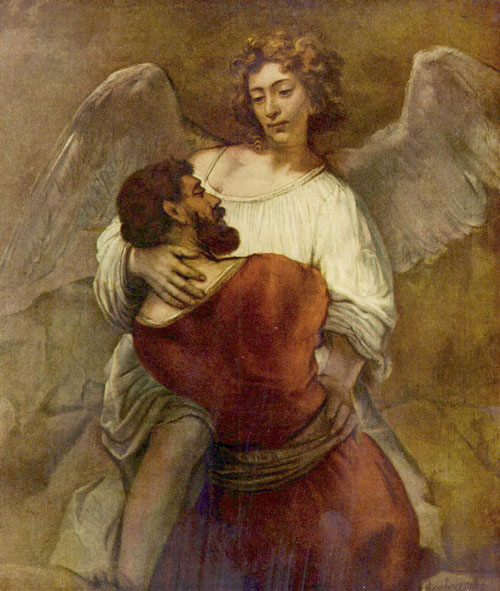
His episode of dreaming of a ladder to heaven is called “Jacob’s Ladder” and his wrestling with the angel, after which God gave Jacob the name of Israel ,meaning, “struggles with God” or “God contended.”

The name later appears in the New Testament by several other characters, one of them being the name of the Apostle James, (also known as Jacob since both names are related).

In English, both Jacob and James are derived from the Biblical Greek, Ιακωβος (Iakobos) later being latinized to Iacomus, (from which James is an anglicized a corruption).

James and Jacob have been used in England interchangeably since the Middle Ages, James became a common name in English and Scottish royalty.

Currently, James is the 17th most popular male name in the United States, the highest he has peaked was between 1940 and 1952, coming in at # 1. The lowest he has peaked was at # 19 in 1999 and then again in 2001.

James has never detracted from the U.S. top 20.

In other countries, his rankings are as follows:

  • # 8 (Australia, 2007)
  • # 10 (Canada, B.C., 2008)
  • # 9 (England/Wales, 2008)
  • # 5 (Ireland, 2007)
  • # 332 (the Netherlands, 2008)
  • # 5 (Scotland, 2008)

The designated name-days for Jacob are December 20 (France), July 25.

Other forms of both names include:

  • Jakob (Afrikaans/Danish/Dutch/German/Norwegian/Slovene/Swedish: 12th most popular male name in Slovenia-2005; 39th most popular in Norway-2007 and the 3o9th most popular in the United States-2008)
  • Japku/Jakup/Jakub/Jakob/Jakov (Albanian)
  • Ya’eqob (Amharic/Ethiopian)
  • يعقوب Yaʿqūb/Yakub (Arabic)
  • Chaime (Aragonese)
  • Ya`iqob/Ukba/Ukva ያዕቆብ (Aramaic)
  • Hagop/Hakob/Jakob Հակոբ/Յակոբ (Armenian)
  • Aqob/Jakobos (Assyrian)
  • Yəqub (Azeri)
  • Jacobe/Jagoba/Jakes/Jakoma/Yaku/Yagoba/Xanti (Basque)
  • Jåggl (Bavarian)
  • Jakub/Jakaŭ/Jakuš (Bielorusian)
  • Jakub (Bosnian/Polish/Slovak/Slovene/Sorbian: common Polish diminutive forms are Kuba and Kubuś)
  • Jacut/Jagu/Jagut/Jak/Jakez/Jakezig/Jakou (Breton)
  • Yakov/Zhekov Жеков (Bulgarian)
  • Iacovo/Iacoviello/Coviello (Calabrian: Southern Italian dialect)
  • Jacob (Catalan/Dutch/English/Lexumburgish/Limburgish/Portuguese)
  • Jaume/Jaumet (Catalan)
  • Jacca/Jago/Jamma/Jammes (Cornish)
  • Giacumu (Corsican)
  • Jakov/Jako Јаков (Croatian/Serbian/Slovene)
  • Jákob (Czech/Hungarian: Kuba and Kubík are the diminutive forms)
  • Jacobus/Jakobus (Dutch/Limburgish: Jacobus is currently the 233rd most popular male name in the Netherlands-2008)
  • Coos/Kobe/Kobus/Jaap (Dutch: initially diminutive forms, used as independent given names)
  • Coby (English: originally a diminutive form, now used as an independent given name. He currently ranks in as the 832nd most popular male name-2008)
  • Jaagup/Jaak/Jakkab/Jakkob/Jakob (Estonian)
  • Jákup (Faroese)
  • Jaakob/Jaakoppi/Jaakko (Finnish: Jaska is the diminutive form)
  • Jacopo (Florentine: Northern Italian dialectical form, Lapo and Puccio are diminutives)
  • Jacques (French)
  • Iaquet/Jaco/Jacot/Jacquot/Jacquet (French: archaic, medieval forms)
  • Jacquemin/Jacqueminot (French: archaic, medieval forms)
  • Jabbo/Coob (Frisian)
  • Jakip (Frisian)
  • Iacun (Fruilian)
  • Sacun (Fruilian: literally meaning “Saint James.”)
  • Xacobe/Xaime (Galician)
  • Iakob იაკობ (Georgian)
  • Iákovos Ιακωβος/Iakóv Ιακώβ/Yángos Γιάγκος (Greek)
  • Iakopa/Iakopo/Kimo (Hawaiian)
  • Akiba/Akiva עֲקִיבָא (Hebrew)
  • Ya’akov יעקב (Hebrew)
  • Akkoobjee (Hindi)
  • Jakab (Hungarian)
  • Yakob/Yakobus (Indonesian)
  • Seamus/Séamus (Irish-Gaelic: SHAY-mus: Séimí and Séimín are diminutive forms. Currently the 748th most popular male name in the United States)
  • Giacobbe (Italian)
  • Giacomo (Italian: more common form)
  • Jacopo (Italian: archaic form)
  • Aqo/Ya’qub (Kurd)
  • Iacobus/Iacomus/Jacobus (Latin)
  • Jēkabs (Latvian)
  • Jaokob (Limburgish)
  • Cobus/Keub/Keube/Kuub/Kuèb (Limburgish: initially diminutive forms, now used as independent given names)
  • Zjaak/Jaco (Limburgish: initially diminutive forms, now used as independent given names)
  • Jokūbas (Lithuanian)
  • Jakov/Jakle/Jako (Macedonian)
  • Chacko/Yakob (Malayalam)
  • Ġakbu (Maltese)
  • Jayms (Manx)
  • Hemi (Maori)
  • Sak (Mohawk)
  • Jacuvo/Jacuviello/Cuviello (Neopolitan: Southern Italian dialect)
  • Gemme/Gemmes/Jacque (Norman)
  • Jacme (Occitanian/Provençal)
  • Jammes/Jaume (Occitanian)
  • Iakovu Іакѡвъ (Old Church Slavonic)
  • Yaghoub (Persian)
  • Giaco (Piedmontese: Northern Italian dialect)
  • Diogo (Portuguese: variation of Tiago)
  • Iago (Portuguese)
  • Jacó (Portuguese)
  • Jácomo (Portuguese)
  • Jaime (Portuguese/Spanish: Jaime is currently the 321st most popular male name in the United States-2008. He is the 97th most popular in Chile-2006 and the 33rd most popular in Spain-2006)
  • Thiago (Portuguese-Brazilian)
  • Tiago (Portuguese-European: a contraction of the Spanish Santiago, which literally means “Saint James”)
  • Köbes (Ripoarisch)
  • Iacob (Romanian)
  • Jacomo (Romanesque: a Northern Italian dialect spoken in the region of Tuscany)
  • Giachem/Giachen/Jachen (Romansch)
  • Giacumin (Romansch)
  • Yakov Иаков/Яков (Russian: Yasha is a diminutive form)
  • Iakopo (Samoan)
  • Hamish (Scottish-Gaelic: an anglicization of Seumas)
  • Jaikie (Scottish-Gaelic)
  • Jamie (Scottish: low lands Scots contraction, currently the 669th most popular male name in the United States; the 17th most popular male name in Scotland-2008; the 51st most popular in England and Wales-2008; 17th most popular in Ireland-2007; the 12st most popular in the Netherlands and the 96th most popular in Australia)
  • Seumas (Scottish-Gaelic)
  • Simidh (Scottish-Gaelic)
  • Jaka (Slovene: this was the 10th most popular male name in Slovenia-2005)
  • Diego (Spanish: a contraction of Santiago. Diego currently ranks in as the 68th most popular male name in the United States-2008. In Belgium he is the 48th-2006; in Chile, the 7th-2006; in France the 78-2006. In the Netherlands he comes in as the 189th most popular male name-2008 and in Spain he is the 10th most popular male name-2006 )
  • Jacobo (Spanish: archaic form: Jaime or Diego are the preferred forms)
  • Santiago (Spanish: literally meaning “Saint James” the name is usually bestowed in honour of St. James the Apostle. Currently, it is the 171st most popular male name in the United States. In Chile, he is the 55th most popular-2006 and in Spain, the 66th most popular-2006)
  • Yago (Spanish: archaic form)
  • Yakubu (Swahili)
  • Köbi (Swiss-German dialectical diminutive form, occasionally used as an independent given name)
  • Yaqub ܝܰܥܩܽܘܒ (Syrian)
  • Yakup (Turkish: Yascha is a diminutive form)
  • Yakiv Яків (Ukrainian)
  • Iago/Siam (Welsh)
  • Coppel/Kapel/Koppel (Yiddish)
  • Yankev/Yankl/Yankel/Yankele (Yiddish)

Older Polish forms include: Jakub, Jakób, Jakob, Jakow, Jekub, Jokob, Jokub and Jakusz.

Less common Polish diminutive forms include: Jakuszek, Jakubek, Jakubko, Kusz, Kuszęt, Kubek, (in modern Polish this means “cup” and has fallen out of usage as a diminutive form of Jacob), and Jaksa.

English diminutives of Jacob include: Jack, Jake, Jay, Cobb, Coby and Cubby. Diminutives for James include: Jack, Jamie, Jay, Jeb, Jem, Jemmy, Jim and Jimmy.

A Danish and Dutch diminutive form is Ib and Jeppe, Sjaak and Sjakie are also Dutch diminutives.

Slovene diminutive forms include: Jak, Jakec, Jaki, Jaša, Žak and Žaki.

Jacob has spawned various feminine forms that are worth noting.

There is the French, Jacqueline, (said like JACK-eh-lin), in English, but pronounced as (ZHAHK-e-LEEN) in French.

The name has a long history of usage in the English speaking world and is also used the German-speaking world and is occasionally used in Spanish-speaking countries.

Jacqueline is currently the 152nd most popular name for females in the United States. The highest she ranked was in 1961 coming in as the 37th most popular female name.

For Americans, a notable bearer is former First Lady and fashion trend-setter, Jacqueline Bouvier Kennedy Onassis.

A common English diminutive form is Jackie.

Other feminine forms include:

  • Jakuba (Czech)
  • Bine (Danish/German)
  • Jacobine/Jakobine (Danish/Norwegian/German/Swedish)
  • Jacoba/Coba (Dutch)
  • Jacobien (Dutch)
  • Jacomina (Dutch)
  • Jacquetta (English)
  • Jacquemine (French: archaic form)
  • Jacquette (French)
  • Jakoba/Jakobe (German)
  • Yaakova (Hebrew)
  • Giachetta (Italian)
  • Giacobba (Italian)
  • Giacometta (Italian)
  • Giacoma/Giacomina (Italian)
  • Jacobella/Jacomella/Jacovella (Italian: obscure/archaic forms)
  • Iacobina (Latin)
  • Jakubina (P0lish)
  • Żaklina (Polish: corruption of the French, Jacqueline)
  • Jacobina (Romansch)
  • Jacobea (Romansch)
  • Jamesina/Jamesine (Scottish)
  • Jakoba/Jakobina (Slovene)
  • Jakica/Jakovica (Slovene: initially a diminutive forms, used as independent given names yah-KEET-sah, yah-koh-VEET-sah)
  • Žaklin/Žaklina (Slovene: corruptions of the French, Jacqueline zhahk-LEEN; zhahk-LEE-nah)
  • Jacquelina (Spanish: corruption of the French, Jacqueline)

Emma

Gender: Feminine
Origin: German
Meaning: “universal; whole.”
(EM-mah)

Currently one of the most popular female names in the English speaking world and on continental Europe, it is derived from an old Germanic element ermen/irmen meaning “whole; universal; encompassing.”

It was first introduced into England via Emma of Normandy who was the wife of King Ethelred II and then the wife of King Canute. Through Ethelred II she was the mother of Edward the Confessor.

The name was also borne by an 11th-century Austrian saint, also known as Hemma.

Emma was quite popular at the turn of the last century and then fell out of fashion, being revived in the mid 196os in England and then the late 1990s in the United States and Continental Europe.

She is currently the most popular female name in the United States (2008). The lowest she ranked in United States naming history was in 1976 at # 463. Emma was the 3rd most popular name in 1880.

In English, Em or Emmie or usually the preferred nicknames.

Her popularity elsewhere is as follows:

  • # 20 (Australia)
  • # 1 (Belgium, 2008)
  • # 2 (Canada, Alberta, 2008)
  • # 3 (Canada, B.C. 2008)
  • # 3 (Canada, Manitoba, 2008)
  • # 1 (Canada, Nova Scotia, 2008)
  • # 4 (Canada, Quebec, 2008)
  • # 2 (Canada, Saskatchewan, 2008)
  • # 1 (Denmark, 2008)
  • # 31 (England/Wales, 2008)
  • # 8 (Faroe Islands, 2008)
  • # 2 (Finland, among Finnish-speakers, 2007)
  • # 1 (Finland, among Swedish-speakers, 2007)
  • # 3 (Flemish Region, Belgium, 2008)
  • # 1 (France, 2008)
  • # 5 (Germany, 2009)
  • # 23 (Hungary, 2006)
  • # 4 (Ireland, 2008)
  • # 4 (Liechenstein, 2008)
  • # 4 (Malta, 2008)
  • # 4 (the Netherlands, 2009)
  • # 8 (New Zealand, 2009)
  • # 7 (Northern Ireland, 2008)
  • # 2 (Norway, 2008)
  • # 8 (Scotland, 2009)
  • # 54 (Spain, 2006)
  • # 3 (Sweden, 2008)
  • # 1 (Switzerland, among French-speakers, 2008)
  • # 3 (Switzerland, among Italian-speakers, 2008)
  • # 3 (Wallonia, Belgium, 2008)

Other forms of the name include:

  • Ema (Croatian/Czech/Portuguese/Slovak/Slovene/Spanish: Slovene diminutive form is Emi)
  • Emmy (Danish/Dutch/Norwegian/Swedish: originally a diminutive form, now almost exclusively used as an independent given name, especially in Sweden where it ranked in as the 62nd most popular female name of 2007. In the United States, she comes in at # 955-2008)
  • Ima (Dutch/English: EE-mah-Dutch; I-muh- English )
  • Emmie (English: used as an independent given name since the early 1800s)
  • Imma (Frisian)
  • Imke (Frisian: IM-ke: 118th most popular female name in the Netherlands-2008)
  • Emmi (Hungarian)
  • Hemma (Old German: medieval form)
  • Emma Эмма (Russian)
  • Emica/Emika (Slovene: originally diminutive forms, used as independent given names, eh-MEET-sah; eh-MEE-kah)
  • Hema (Slovene: diminutive form is Hemi)

The designated name-days are January 31st, April 19, June 27, September 9 and December 10.

The name is used in virtually every European country and language.

An Italian masculine form is Emmo, and the English male name Emmett is related, (different entry for Emmett will come in the future).

The name is borne by actresses Emma Thompson and Emma Watson. It is the name of the main character of the Jane Austen novel of the same name. It was used on the SitCom Friends as the name of the daughter of Ross and Rachel.

Angela

Gender: Feminine
Origin: Greek
Meaning: “messenger.”
Eng (AN-je-luh)

The name is a feminine form of the Greek male name, Ángelos (αγγελος), meaning, “messenger.”

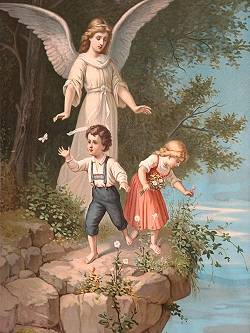
In Greek mythology, Ángelos was an epithet for the god, Hermes. In later Judeo-Christian culture, the name became associated with angels since it shares the same etymology with the word angel.

The name has been borne by several saints.

In the United States, she currently ranks in at # 133. The highest she peaked in U.S. naming history was between 1974-1976 where she was the 5th most popular female name in the United States.

Her rankings in other countries are as follows:

  • # 91 (Canada, B.C. 2008)
  • # 56 (Chile, 2006)
  • # 481 (the Netherlands, 2006)
  • # 25 (Spain, 2006)

Angela is used in Danish, Dutch, English, German, Icelandic, Italian, Norwegian, Romanian, Romansch, Slovak , Slovene and Swedish.

Its Latinate diminutive form, Angelina, has recently sparked in popularity, due to the fame of American actress, Angelina Jolie.

In the United States, she currently ranks in as the 69th most popular female name (2008). Her rankings in other countries are as follows:

  • # 54 (Australia, 2007)
  • # 91 (Canada, B.C. 2008)
  • # 72 (France, 2006)
  • # 184 (the Netherlands, 2008)
  • # 96 (Sweden, 2007).

Other feminine forms Angela include:

  • Anxhela (Albanian)
  • Anela/Aneliya (Bulgarian)
  • Àngela (Catalan)
  • Angiola (Corsican/Romansch/Sardinian)
  • Angioletta (Corsican/Romansch/Sardinian)
  • Anđela (Croatian)
  • Anděla (Czech)
  • Angèle (French: an obscure diminutive form is Angelette)
  • Anela/Ankela (Hawaiian)
  • Angéla (Hungarian)
  • Aingeal (Irish Gaelic)
  • Angeletta (Italian: obscure diminutive form which was occasionally used as an independent given name)
  • Anġla (Maltese)
  • Ainle (Manx)
  • Aniela (Polish: diminutive form is Anielka)
  • Ângela (Portuguese)
  • Anzhela ангела (Russian)
  • Andjela Анђела (Serbian)
  • Ángela (Spanish)
  • Angelia (Spanish)
  • Angelita (Spanish: a diminutive form occasionally used as an independent given name)

An English diminutive is Angie, German diminutives are Angie and Geli.

Some Italian smush names include Giovannangela, Giuliangela, Mariangela, Michelangela, and Rosangela.

Masculine forms are:

  • Angeru (Basque)
  • Angel Ангел (Bulgarian)
  • Àngel (Catalan)
  • Anđelko (Croatian)
  • Anděl (Czech)
  • Anxo (Galician)
  • Angelos Αγγελος (Greek Modern)
  • Angelo (Italian/Spanish: currently the 284th most popular male name in the United States-2008; and the 98th in Chile-2006)
  • Angelus (Latin)
  • Anġlu (Maltese)
  • Ángel (Spanish)

Other forms of Angelina include:

  • Angiolina (Corsican/Romansch/Sardinian)
  • Angelien (Dutch)
  • Angéline (French)
  • Anzhelina Анжелина (Russian)

Angelina is also used in English, French, German, Italian, Polish, Romanian and Spanish.

Angela’s designated name-day is sometimes January 4th.

Ruth

Gender: Hebrew
Origin: Hebrew
Meaning: “companion.”
Eng (ROOTH)

The name is derived from the Biblical Hebrew word רְעוּת (re’ut), which means “friend; companion.”

In the Old Testament, the name is borne by the central character of the Book of Ruth, a Moabite woman who later became a loyal and faithful Jew. She is considered the ancestress of King David, and in Christian tradition, she is also considered an ancestor of Jesus.

Since Ruth is considered an ideal heroine in Judaism, the name has always been common in the Jewish community, among Christians, the name did not catch on until after the Reformation, especially in the Anglo-phone world, where the name became especially common among Puritans.

The highest the name ever ranked in U.S. naming history was back in 1893, where she came in as the 3rd most popular female name.

Currently, she ranks in as the 362nd most popular female name.

In other countries, her rankings are as follows:

  • # 94 (Ireland, 2006)
  • # 488 (the Netherlands, 2008)

The Ruth form is also used in Catalan, Danish, Dutch, French, German, Norwegian and Swedish.

Other forms include:

  • Rut (Afrikaans/Aragonese/Catalan/German/Hungarian/Indonesian/Italian/Javanese/Maltese/Polish/Spanish/Swedish)
  • Rút (Czech)
  • Ruut (Finnish/Estonian)
  • Rutt (Estonian)
  • Routh Ρουθ (Greek)
  • Rut רות (Hebrew Modern: In Israel, Ruti is the common diminutive form)
  • Rúth (Hungarian)
  • Rǘt (Irish Gaelic)
  • Ruthu (Kiswahili)
  • Rūta (Lithuanian: also coincides with the Lithuanian word for the rue plant)
  • Rūtenė (Lithuanian)
  • Ruthi Рѹѳь (Old Church Slavonic)
  • Ruta (Polish/Croatian)
  • Rute (Portuguese)
  • Ruf Руфь (Russian)
  • Ruthven (Scottish)
  • Rutu (Yoruban)

A common English diminutive, which is also sometimes bestowed as an independent given name is Ruthie. Ruthanne/Ruth-Anne is a common English compound form.

A Lithuanian masculine form is Rūtenis.

The name was borne by former first daughter of the United States, “Baby” Ruth Cleveland, daughter of President Grover Cleveland (1891-1904)

The designated name-day is January 4.

Genevieve

Gender: Feminine
Origin: French
Meaning: debated
Eng (JEN-e-VEEV); Fre (zhe-nə-VYEV, zhawn-VYEV )

The name is of debated origin and meaning, some sources relate it to the Celtic Guinevere, which is composed of the Welsh elements gwyn meaning “white, fair” and hwyfar meaning “smooth.”

However, this theory has been strongly conjectured against, and it is more than likely related to a Frankish source, believed to be an early latinization of the Frankish feminine compound name Kenowefa or Kenuwefa, which is composed of the elements ken meaning “race; tribe” and wefa meaning “woman.”

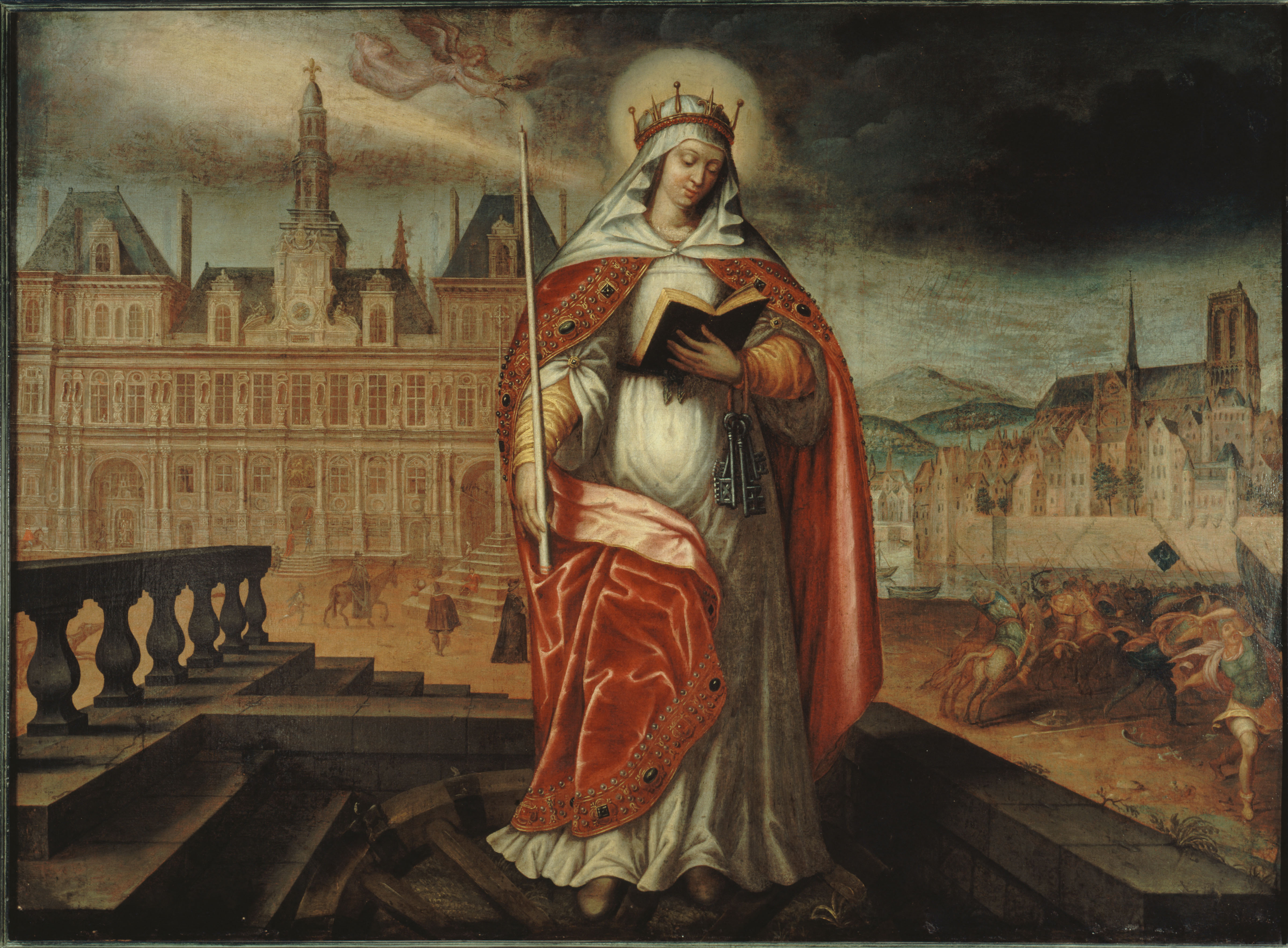
The name was popularized by an early medieval French saint who is said to have rescued Paris from the invading Huns, a pious woman in life, she is now considered the patron saint of Paris.

Her feast day, and consequently, Genevieve’s name-day, is January 3rd.

As of 2008, Genevieve ranked in as the 324 most popular female name in the United States.

Common English diminutives are Gennie and Vivi.

In French, Ginette was the most common diminutive form, breaking off as an independent given name, now considered dated in the French-speaking world.

In Spanish the nicknames are often Veva and Beba

Other forms of the name include:

  • Xenoveva (Asturian)
  • Genevisa/Bièva (Bearnais)
  • Genoveva (Catalan/Croatian/Dutch/German/Limburgish/Portuguese/Spanish)
  • Ghjenuveffa (Corsican)
  • Jenovéfa/Jenůfa (Czech: the latter is a more archaic form)
  • Geneviève (French: this form has also been used as a borrowing in Scandinavian countries as well as in German-speaking countries)
  • Genevote (French: an archaic form seldom in usage)
  • Genofeva (German)
  • Genovéva (Hungarian/Slovak)
  • Zsinett (Hungarian: corruption of Ginette)
  • Genoveffa (Italian)
  • Genoeffa (Italian: very obscure form)
  • Genovaitė (Lithuanian)
  • Genowefa (Polish: Gienia/Gienka are the common nicknames)
  • Genevivo (Provençal)
  • Genovefa (Slovene, diminutives include: Gena, Geni, Genica, Genija, Genka, Fefa and Fefi)
  • Genova (Spanish)

An obscure masculine Italian form is Genoveffo.

Basil

Gender: Masculine

The name, coincidentally, has two different origins and meanings.

It could either be from the Greek, Vassilios, which in itself is derived from the Greek Βασιλειος (Basileos), meaning “king.” The words: basilica, basilisk and the name of the herb, Basil, share the same etymology.

The name was borne by Saint Basil the Great, a 4th-century bishop of Caesarea. He is considered the father of the early Christian Church among both Eastern Orthodox and Roman Catholics.

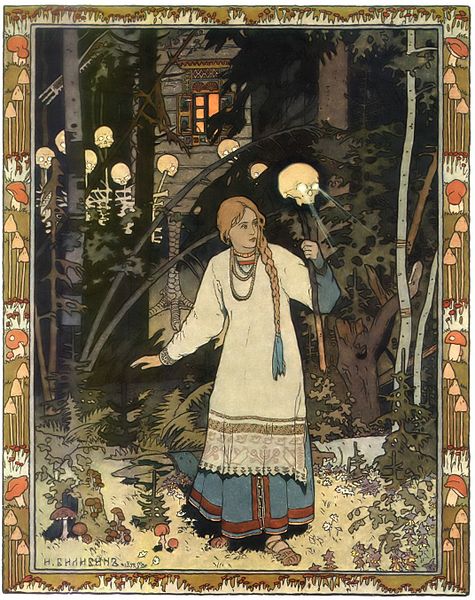
In Russian Folklore, its feminine version of Vasilisa appears in a popular Russian fairytale, entitled Vasilisa the Beautiful, the tale shares similar features to the Western European Cinderella Story.

The designated name-day is often January 2.

Another etymology of the name is the Arabic باسل (Basil), which means “valiant” or “brave.”

Other forms of the first form, include:

  • Vasil (Bulgarian/Albanian)
  • Veselin (Bulgarian)
  • Bazilije (Croatian)
  • Basil/Bazil (Czech/Slovak)
  • Vasilij (Czech)
  • Pasi (Finnish)
  • Basile (French)
  • Breasal (Gaelic/Irish)
  • Basil/Basilius (German/Dutch)
  • Wassili (German)
  • Basileios Βασιλειος (Greek Ancient)
  • Vasílios Βασίλειος/Vasílis Βασίλης (Greek Modern)
  • Bazil (Hungarian)
  • Vászoly (Hungarian)
  • Vazul (Hungarian)
  • Basile/Basileo (Italian)
  • Basilio (Italian: most common form)
  • Basilius (Latin)
  • Basilijus/Bazilijus (Lithuanian)
  • Vasilii Василии (Old Church Slavonic)
  • Bazyli (Polish)
  • Bazylid/Bazylis (Polish)
  • Bazyliusz (Polish)
  • Wasyl/Wasyli (Polish: archaic forms)
  • Basílio (Portuguese)
  • Vasile (Romanian: Vasilica is a diminutive)
  • Baseli (Romansch)
  • Vasily Василий (Russian: Vaska and Vasya are usually the diminutives)
  • Basili (Sardinian)
  • Vasilije Василије (Serbian)
  • Vasil (Slovak)
  • Bazilij (Slovene)
  • Basilio/Basiléo (Spanish)
  • Vasyl Василь (Ukrainian)

Feminine forms include:

  • Vasilka Василка (Bulgarian)
  • Vasilena/Veselina (Bulgarian)
  • Vesela (Bulgarian)
  • Veliki (Croatian)
  • Basilissa (Greek Ancient/Romansch)
  • Vasiliki Βασιλικη (Greek Modern)
  • Basilia (Italian)
  • Basilea/Basiliola (Italian)
  • Bazilė (Lithuanian)
  • Bazyla/Bazylia/Bazylisa (Polish)
  • Vasilisa Василиса (Russian)
  • Vasylyna Василина (Ukrainian)

Mieczysław

Gender: Masculine
Origin: Polish
Meaning: debated
(mye-chih-SWAHF)

The name is of debated meanings, it is obviously composed of the Slavonic element slav meaning “glory” but the prefix of mieczy has always been a subject of debate.

Some theories that have interpreted the first element are:

  • miecz from the Polish meaning “sword”
  • mieć from the Polish verb meaning “to have.”
  • miecić from the Polish verb meaning “to fling; to throw.”

The third is most likely, since Mieczysław is believed to be an erroneous corruption of the earlier Miecisław.

The designated name-day in Poland is January 1st.

Common diminutive forms are Miecio, Mieczyś, Mieteczek and Mietek.

Historically, the name was often anglicized to Mitchell by first generation Polish Americans. Mitchell has no etymological relation to Mieczysław other than sharing similar sonority.

Other, more archaic, Polish forms are MasławMiecławMiecisławMiecysław and Miesław.

Other forms of the name include:

  • Mečislav (Czech)
  • Miecislas (French: very rare)
  • Miecsiszláv/Miciszsláv (Hungarian)
  • Menceslao (Italian: very rare)
  • Mecislaus (Latin)
  • Mecislavas/Mecislovas (Lithuanian)
  • Mechyslav (Russian/Ukrainian)

A feminine forms are Masława and Mieczysława.