Śuri, Soranus

  • Origin: Etruscan 𐌉𐌛𐌖𐌑
  • Meaning: “black; from the black place.”
  • Gender: Male

Śuri is the name of an important Etruscan god, most often identified with the blazing sun and the powers of the underworld. Ancient sources connect him with fire, purification, and oracular prophecy. His cult was centered on Mount Soracte in central Italy. His sacred animal was the wolf. His name was later latinized by the Romans to Soranus.

The name is derived from the Etruscan word śur 𐌛𐌖𐌑 meaning “black; from the dark place.”

Sources

Tanwen

  • Origin: Welsh
  • Meaning: “holy fire; white fire”
  • Gender: Female

A modern Welsh girls’ name formed from tan (“fire”) + gwen (“white, fair, blessed”), often interpreted poetically as “white fire” or “holy fire.”

It is not known in medieval Welsh name lists; several modern sources suggest it was first coined or adopted around the 1960s in Wales. Its usage appears to be modest and not widespread historically. However, since it has cultural significance and is used, I consider it legitimate.

At least 5 girls were given this name in the U.K. in 2024

Sources

Santos

Photo by Thgusstavo Santana on Pexels.com
  • Origin: Galician Spanish, Portuguese
  • Meaning: “saints.”
  • Gender: unisex
  • Pronunciation: SAHN-tose (Sp)

The name comes directly from the Iberian word for “saints,” since Medieval times, it was originally bestowed on children born on November 1st, the Feast of All Saints, it’s French equivalent being Toussaint. For females, the name was often used in conjunction with Maria, i.e. Maria de los Santos.

While its singular form of Santo is also used, I felt Santos deserved it’s own entry since it’s usage is specific to a Catholic Holiday.

For males, Santos has been in the U.S. Top 1000 Male Names since 1920, peaking at #539 in 1937, in 2019, he ranked in as the 966th most popular male name in the United States.

In the U.S, its use on females peaked in the 1920s, appearing in the U.S. Top 1000 Female Names between 1920-1929, peaking at #742 in 1924.

The name was borne by Confederate Colonel, Santos Benavides (1823-1891) & Mexican artist, Santos Balmori Picazo (1899-1992).

Santos is also the name of a municipality in São Paulo, Brazil.

Sources

Siddhi

  • Origin: Sanskrit सिद्धि
  • Marathi: सिद्धि
  • Meaning: “perfection, attainment, completion; accomplishment; success.”
  • Gender: feminine
  • Pronunciation: SID-dee; SIT-tee (depending on language & dialect)

The name comes from the Sanskrit noun सिद्धि (siddhi), meaning “perfection, attainment, accomplishment,” which is a concept that refers to the attainment of magical, paranormal or psychic abilities through meditation and yoga. It is a concept found in Yoga, Buddhism and Hinduism.

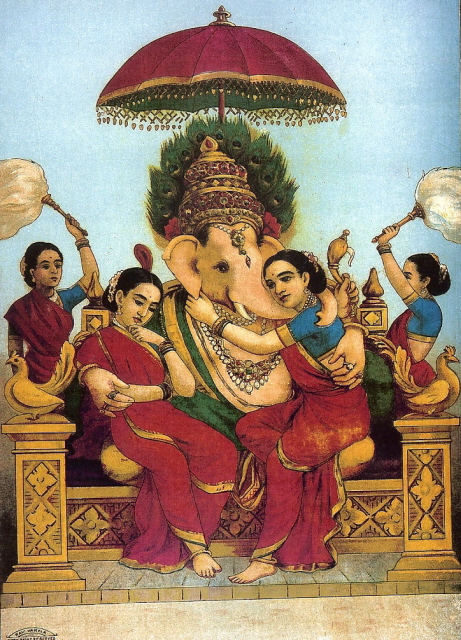
In Hinduism, it is the name of one of Lord Ganesha’s wives, the other being named Riddhi.

Sources

Sihana

  • Origin: Albanian
  • Meaning: “like the moon.”
  • Gender: feminine
  • Pronunciation: (sih-HAH-nah)

The name is composed of the Albanian elements, si (like) and hëna (moon).

The name is borne by Albanian supermodel, Sihana Shalaj.

Sources

Kimia, Kimiya

  • Origin: Persian کیمیا
  • Meaning: “alchemy; rare; unique; elixir.”
  • Gender: feminine
  • Pronunciation: KEEM-yaw

The name comes directly from the Farsi word کیمیا (kimia), which originally had a connotation of something rare or unique but later came to form the base word and concept of alchemy. It appears in Persian literature, starting in the 10th-century (CE).

Another spelling is Kimya.

Among the Persian diaspora in Western countries, the name is often shortened to Kim.

Alternately, Kimiya can also be a Japanese male name that changes meaning, depending on the kanji used.

Sources

Miglė

  • Origin: Lithuanian
  • Meaning: “mist; fog;” also “bluegrass.”
  • Gender: feminine
  • Pronunciation: MIG-lay

The name comes directly from the Lithuanian word migla, meaning “fog; mist.” This is also the word for the plant, “bluegrass.”

It has been in the Top Most Popular Female Names in Lithuania since 1999, and peaked at #10 in 2010. As of 2019, it ranks in as the 21st most popular female name in Lithuania.

A notable bearer is Lithuanian Track Cyclist, Miglė Marozaitė (b. 1996).

The designated nameday in Lithuania is May 11th.

Other forms include: Migla, Miglena, Migleta, Miglija, Miglutė, Migle & Miglita.

Sources

Lubin

Gender: Masculine
Origin: French
Meaning: “wolf-like.”
(Pronunciation)

The name is possibly derived from the Latin, Lupinus, meaning, “wolf-like.” The name was borne by a 6th-century French saint and bishop of Chartres.

It also appears in Jean-François Marmontel’s 1761 morality tale, Annette & Lubin. The story recounts the illicit affair between two orphaned cousins who subsequently bear children together and become the spectacle of their town in Belgium. The story is supposedly based on true events which occurred in Spa. The two characters have become folk heros in modern Spa and there is a local hill named for them.

Lubin is a term which also appears in French folk-lore as the name of a type of elf who appears on the road to Normandy on Christmas, screaming, “Robert the devil is dead!”. Lubin is also used to describe a type of werewolf which hangs out in graveyards and feeds off the bones of the dead. Despite these rather unsavory connotations, the name still appears in the French top 500. As of 2009, he was the 326th most popular male name.

It is also the name of a city in Poland, though this has a different etymology.


Eva, Eve

Gender: Feminine
Origin: Hebrew
Meaning: “life.”
Eng (EEV); (EE-vuh); Germ/Sp/Pol (EV-ah)

The name is borne in the Bible and in the Quran by the first woman created by God. She and her husband were expelled from the Garden of Eden after eating from the Tree of Knowledge.

The name is believed to be derived from the Hebrew roots חַוָּה, Ḥavvāh, from the Hebrew root ḥāyâ meaning “life” and the Semitic element, ḥyw “to live.” Both the Hebrew word chavah meaning “to live” and chayah meaning “to breath” share the same root.

Despite Eve’s fall from Grace in the Bible, the name was always in usage among Jewish, Christian and Muslim communities. In England, its usage can be traced back to the 12th-century. Its Latinate form of Eva, has always been a classic in continental Europe, especially in Germany, Poland, Slovakia and the Czech Republic.

As of 2010, Eva was the most popular female name in the Faroe Islanda and in Slovenia. Eve, Eva and all her various forms’ rankings in other countries are as follows:

  • # 3 (Iceland, 2010)
  • # 4 (French-speaking, Switzerland, 2010)
  • # 5 (Netherlands, 2010)
  • # 7 (Ieva, Lithuania, 2010)
  • # 10 (Armenia, 2010)
  • # 10 (Evie, England/Wales, 2010)
  • # 14 (Northern Ireland, 2010)
  • # 15 (France, 2009)
  • # 17 (Scotland, 2010)
  • # 20 (Belgium, 2009)
  • # 24 (New Zealand, 2010)
  • # 26 (Australia, NSW, 2010)
  • # 29 (Croatia, 2010)
  • # 31 (Evie, Scotland, 2010)
  • # 33 (Evie, Australia, NSW, 2010)
  • # 37 (England/Wales, 2010)
  • # 44 (Eevi, Finland among Finnish-speakers, 2010)
  • # 44 (Ireland, 2010)
  • # 46 (Austria, 2010)
  • # 47 (Canada, BC, 2010)
  • # 48 (Spain, 2010)
  • # 55 (Catalonia, 2010)
  • # 55 (Éabha, Ireland, 2010)
  • # 56 (Eve, Northern Ireland, 2010)
  • # 59 (Eve, Ireland, 2010)
  • # 86 (Norway, 2010)
  • # 91 (United States, 2010)
  • # 92 (Eve, England/Wales, 2010)
  • # 99 (Eve, Australia, NSW, 2010)
  • # 201 (Eve, France, 2009)
  • # 589 (Eve, United States, 2010)
  • # 705 (Evie, United States, 2010)

Other forms of the name include:

  • Eva Ева ევა
    (Afrikaans/Albanian/Armenian/Basque/Belarusian/Bosnian/Catalan/Croatian/Czech/Dutch/Faroese/French/Frisian/Galician/Georgian/German/Icelandic/Italian/Portuguese/Romansch/Spanish/Scandinavian)
  • Evis (Albanian)
  • Mahalet/Mahlet (Amharic)
  • Hawa حواء Хауа (Arabic)
  • Yeva (Armenian)
  • Həvva (Azeri)
  • Yeva Ева Эва (Belarusian/Russian/Ukrainian)
  • Yevga Евга (Belarusian)
  • Hava (Bosnian)
  • Evy (Danish/Norwegian/Swedish: initially a diminutive form, occasionally used as an independent given name)
  • Eveke (Dutch: initially a diminutive form, used as an independent given name, EV-eh-ke)
  • Eve (English/Estonian/Walon)
  • Evie (English)
  • Hawat/Hewa (Egyptian/Coptic)
  • Eeva (Estonian/Finnish)
  • Eevi (Estonian/Finnish)
  • Evi (Estonian)
  • Ivi/Iivi (Estonian)
  • Iivika (Estonian)
  • Ève (French)
  • Eefje, Eefke (Frisian)
  • Hawwa ሕይዋን (Ge-ez)
  • Eua Ευα (Greek)
  • Chava חַוָה (Hebrew: Modern: KHAH-vah, gutteral CH sound)
  • Éva (Hungarian: AY-vaw, diminutive form is Évike)
  • Hawa (Indonesian/Malayalam)
  • Éabha (Irish-Gaelic)
  • Ieva (Latvian/Lithuanian: YEH-vah)
  • Evuzus (Malaysian)
  • Aaue (Manx)
  • Èva (Occitanian)
  • Ewa (Polish: EH-vah, diminutive forms are Ewka, Ewunia and Ewusia)
  • Evá (Sami)
  • Evelia (Spanish)
  • Evita (Spanish)
  • Eba (Tagalog)
  • Havva (Turkish)
  • Efa (Welsh)

Italian masculine form is Evo.

Traditionally, in most European countries, the name-day for Adam and Eve is December 24.