Vaida, Vaidas, Vaidotė

At Home by Emma Florence HarrisonOrigin: Lithuanian
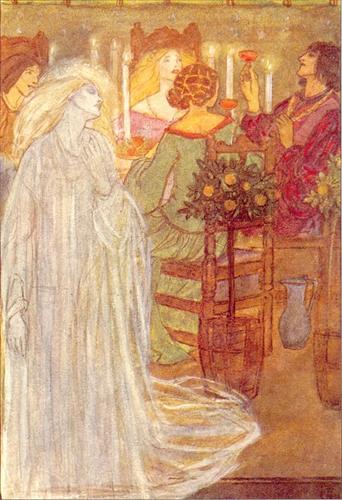
Meaning: “ghost like.”
(VYE-dah; vy-DOH-tey)

In 2016, my home state of Illinois had 5 babies named Vaida, which is not surprising as we do have a significant amount of Lithuanian immigrants, though not as large as other groups, they are still strongly represented in the Southwestern suburbs, such as Lemont and Lisle.

Vaida is derived from the Lithuanian elements, vaid- which is from (vaidytis, vaidentis), meaning “to appear, to ghost, to haunt.”

Its masculine form is Vaidas, and it is uncertain if the male or female name came first.

Alternately, Vaida may be used among English-speaking parents as an alternate spelling of Veda.

Other popular offshoots include Vaidotė, Vaidota, Vaidutė, and Vaidotas for males.

In Lithuania, the designated name-day is April 15th.

Note: This post was updated on 01/02/2018.

Sources

  1. https://en.wikipedia.org/wiki/Vaidas
  2. https://www.behindthename.com/name/vaida/submitted
  3. https://www.ssa.gov/oact/babynames/limits.html
  4. http://www.vornamen-liste.de/female-lithuanian-first-names-v.html
  5. https://www.nordicnames.de/wiki/Vaida
  6. https://www.baltictimes.com/news/articles/6062/

Ketill, Kjell

Gender: Masculine
Origin: Swedish; Norwegian
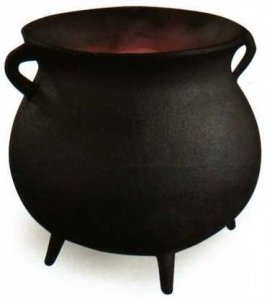
Meaning: “kettle; cauldron.”
Swe (SHELL)

The name is derived from the Old Norse Ketill, refering to a cauldron but it could also be interpreted to mean “helmut”.

Other forms of the name include:

  • Keld (Danish)
  • Kell (Danish)
  • Ketel/Ketil (Danish)
  • Kield/Kjeld (Danish)
  • Kjetil (Danish/Norwegian/Swedish)
  • Ketill (Icelandic/Old Norse)
  • Kittel/Kittil (Norwegian)
  • Kjetel (Norwegian)
  • Kettil (Swedish)
  • Käl (Swedish)

Obscure feminine forms include:

  • Katla (Faroese/Icelandic/Old Norse)
  • Kiälla (Swedish: very old and obscure)
  • Kjella (Swedish: SHEL-lah: obscure)
  • Kjellina/Kjelline (Swedish: obscure)

The designated name day in Sweden is July 8.

Sources

  1. http://www.behindthename.com/name/kjell
  2. http://www.nordicnames.de/wiki/Ketill

Tenho

Gender: Masculine
Origin: Finnish
Meaning: “enchantment; glamour; charm; spell.”

The name is possibly of ancient origins, but seems to have gone through a revival during the Finnish National Romantic period at the turn of the 20th-century. The name comes directly from a Finnish word used to describe a type of spell, equivalent to enchantment, charm or glamour, and probably refers to the ancient magical arts of the Saami. Itsdesignated name-day is November 18. The name was borne by Finnish actor, Tenho Saurén (1926-2001) pictured left.


Hedwig

Lesseur-JadwigaGender: Feminine
Origin: German
Meaning: “heathen war; battle, combat, war.”
Eng (HED-wig); Germ (HED-vig)

The name probably conjures images of Harry Potter for you, maybe you were looking for a good “Halloween” themed name for a pet, or heck, even a child, and you stumbled here.

Hedwig is an old Germanic name either composed of the elements hadu meaning “battle; combat” and wig meaning “war.” It has even been suggested to be composed of the Germanic elements hede meaning “heathen” and wig meaning “war.”

The name used to be quite prevalent in German speaking countries as well as in Scandinavia, but is now considered a dated name. Its Polish form of Jadwiga (jahd-VEE-gah) has been somewhat common in Poland for centuries.

It was borne by two Polish queens and saints. One was a German import who most likely first introduced the name into Poland. She was the Duchess of Silesia (1174-1243) and the wife of Henry I the Bearded of Silesia. She chose to enter a convent upon his death. St. Hedwig was known for her piety and charity, refusing to wear shoes as a sign of humility, and she is also known for establishing German culture in Poland, particularly in the region of Silesia.

The other Jadwiga 1373/4-1399, also a canonized saint, was proclaimed King instead of Queen to reflect her sovereignty. She was the daughter of Louis I of Hungary and Elisabeth of Bosnia. She was known for her well-rounded education, (she could speak six languages fluently), and her extreme piety. Among her contributions to Polish society was the restoration of the Krakow University (now known as Jagiellonie in her honour), and her union with Jogaila, the Lithuanian duke. Due to their marriage, Lithuania became Christian and a strong ally of Poland.

Many legends have been attributed to the female king’s sanctity, one of which was that she would smuggle food out of her comfortable surroundings and distribute it among the poor. It is even said that she miraculously brought a drowned boy back to life.

Other notable bearers of this name include Hedwig Countess of Mons (970-1013) she is also known as Avoise, Hadevide, and Haltude. Hedwige of Saxony (910-965), Jadwiga of Kalisz (1266-1339). Of course we all know that Harry Potter’s pet owl boasts this name. It was also the full name of actress Hedy Lamarr (1914-2000). It is also borne by Hedvig Raa-Winterhjelm (1838-1907) a Swedish stage actress who contributed greatly to Finnish theatre, by uttering the first lines in Finnish in theatre history.

Other forms of the name include. Divided alphabetically by nationality

  • Hedvika (Czech/Slovak: diminutives include Heda, Heddy, Hedva, Hedine and Viky)
  • Jadviga (Czech/Latvian)
  • Hedevig (Danish)
  • Hadewych (Dutch)
  • Hedvi (Estonian)
  • Heivi (Estonian)
  • Heiðvík (Faroese)
  • Helvi (Finnish)
  • Heta (Finnish)
  • Avoise/Edvige (French: Avoise is the medieval form which has gone out of usage, Edvige is the more modern French form)
  • Hedy (German/Dutch: originally a diminutive form, sometimes used as an independent name)
  • Hedí (Icelandic)
  • Heiðveig (Icelandic)
  • Edvige (Italian/Corsican)
  • Hedvigis (Late Latin)
  • Eda/Ede (Latvian/Estonian)
  • Hedija (Latvian)
  • Jadvyga (Lithuanian)
  • Hadewig (Old German)
  • Jadwiga (Polish: common diminutives include Jadzia and Iga).
  • Hedvig (Scandinavian/Hungarian)
  • Hedda (Swedish/Norwegian: currently a very popular name in Norway)
  • Hedviga (Slovak/Latvian/Croatian)

Its designated name-day is October 15.
Burvilas, Burvilė

blindfolded woman with a lit candle

Photo by cottonbro studio on Pexels.com

Origin: Lithuanian
Meaning: “charmed hope; witchcraft hope”
masc: (boor-VEE-lahs); (boor-VEE-lehy)

The name is composed of the ancient Lithuanian elements bur– meaning “charm; witchcraft” and vil-(viltis) meaning “hope.”

Its designated name-day is September 30 and its feminine version is Burvilė.

Possible Translations

  • Burville (English, French, unisex)
  • Burwyl (masc); Burwyla (fem) (Polish)

Sources

Carmenta

Gender: Feminine
Origin: Latin
Meaning: “magic spell, oracle, song.”
(kar-MEN-tah)

      In Roman Mythology, Carmenta is a pre-Latin goddess, possibly dating back to the Etruscans. She was the goddess of childbirth and prophecy. She was associated with technological innovations and was the patron of midwifery.

      She was also a member of the Carmenae goddesses: wise ancient goddesses who were associated with springs, rivers and fountains. They were somewhat the equivalent of Greek muses.

      The Ancient Romans also attributed the invention of the Latin alphabet to her. Her name is associated with the Latin word carmen meaning “magic spell, oracle or song,” though other sources suggest that the name is from a much older source and that its meaning is not clear. However, as an interesting side note, carmen is the root for the English and French word charm and the Spanish female name of Carmen shares the same etymology.

      Some legends attribute Carmenta as a Greek immigrant by the name of Nicostrata, (who fled the Trojan wars along with her son Evander). She was believed to have founded the city of Pallantium which was later absorbed into Rome, forming one of the seven hills. She was known as a great prophetess and for her wonderful singing voice, (hence the name).

      Though her festival was usually celebrated around January 11 or 15, (the Carmentalia), she was also honoured on the Feast of Expectant Mothers, which fell on July 2. After the fall of Rome and the introduction of Christianity, the feast was changed to the feast of the Visitation of the Blessed Virgin Mary.

      Another form is Carmentis