Panagiotis is masculine and derived from the Greek, panagia Παναγία (all-holy), a title used in reference to the Virgin Mary in the Greek Orthodox Church.
Its feminine form is Panagiota.
It’s name-day on August 15th, the Assumption of the Virgin Mary.
In the English-speaking world, many Greek immigrants anglicized Panagiotis to Peter even though the two names are not related.
Male Diminutives
Panagis/Panayis (Παναγής)
Panos (Πάνος)
Panikos (Πανίκος)
Pit (Πιτ)
Notis (Νότης)
Takis (Τάκης)
Female diminutives are: Giota, Yiota (Γιώτα), and Nota (Νότα).
The name is composed of the Greek words, ἱερός (holy to; sacred to) and θεός (God). It first appears as a given name in Christian tradition, being borne by the first bishop of Athens who was said to have been converted and trained by St. Paul himself.
The modern Greek form is ‘Ierotheos and the designated name-day in Greece is September 29th.
The name has also been borne by several Greek patriarchs.
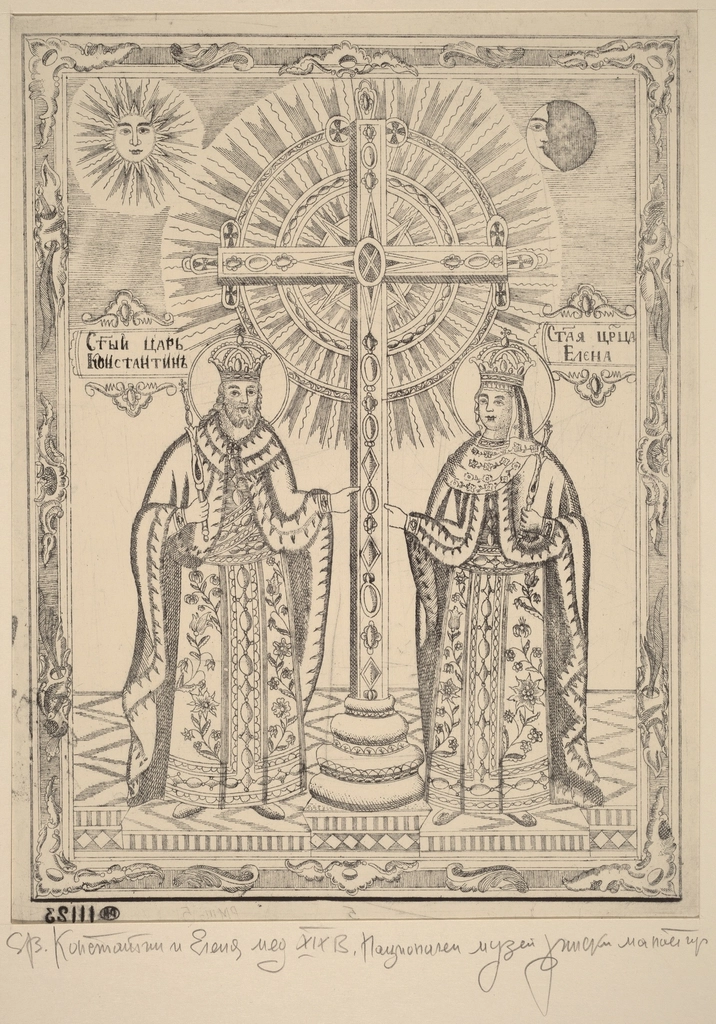
Krastyo кръст is derived from the Bulgarian krast (cross), and is a vernacular form of the Greek, Stavros.
It was borne by Krastyo Krastev (1866-1919), a Bulgarian writer, philosopher and translator known as Bulgaria’s first literary critic. It was also borne by Krastyo Hadzhiivanov, a Bulgarian poet and resistance fighter (1929-1952).
Other forms include: Krastyu, Krastan, Krustan and Krustyo.
Croatian and Serbian forms are Krst and Krstan.
Feminine forms include: Krastana, Krastina, Krustana, and Krustina.
The name comes from the Sanctuary of Arantzazu located in Oñati, Spain. According to legend, the Virgin Mary appeared to Rodrigo de Balanzategui in 1468, to which he exclaimed “Arantzan zu?!” (thou, amongst the thorns?!). It ultimately comes from the Basque meaning, “place of hawthorns.”
Our Lady of Aránzazu is the patron saint of Guipúzcoa.
Aránzazu is it’s Galician and Spanish rendition.
Arantza is a diminutive used as an independent name and may also just be used in reference to the Basque word for a hawthorn.
Arancha is its Spanish form and Aranza is its Galician form.
Arantza’s designated name-day in Spain is September 9th.
The name is derived from the Latin perpetuus, meaning “continous; perpetual.” It was borne by a 3rd-century Christian matyr and saint, the companion of St. Felicity and it was also the name of the sister of St. Augustine of Hippo.
Perpetua and its various forms have been in sporadic use throughout the Catholic world. In Italy, it became synonymous with a priest’s housekeeper. This is due to the eponymous character in Alessandro Manzoni’s 19th-century novel, “The Betrothed.“
It experienced sporadic use in England in the 1920s after the release of the now lost 1922 film, Perpetua also known as Love’s Boomerang.
It has recently appeared in English literature as the name of minor characters in Bridget Jones’s Diary (Helen Fielding), and in the Harry Potter series (J.K. Rowling).
It was borne by Scottish landscape painter, Perpetua Pope (1916-2013).
It is the name of Cape Perpetua Oregon which was named for St. Perpetua as well as a typeface.
It’s designated name-day is February 1, March 6th and March 7th.
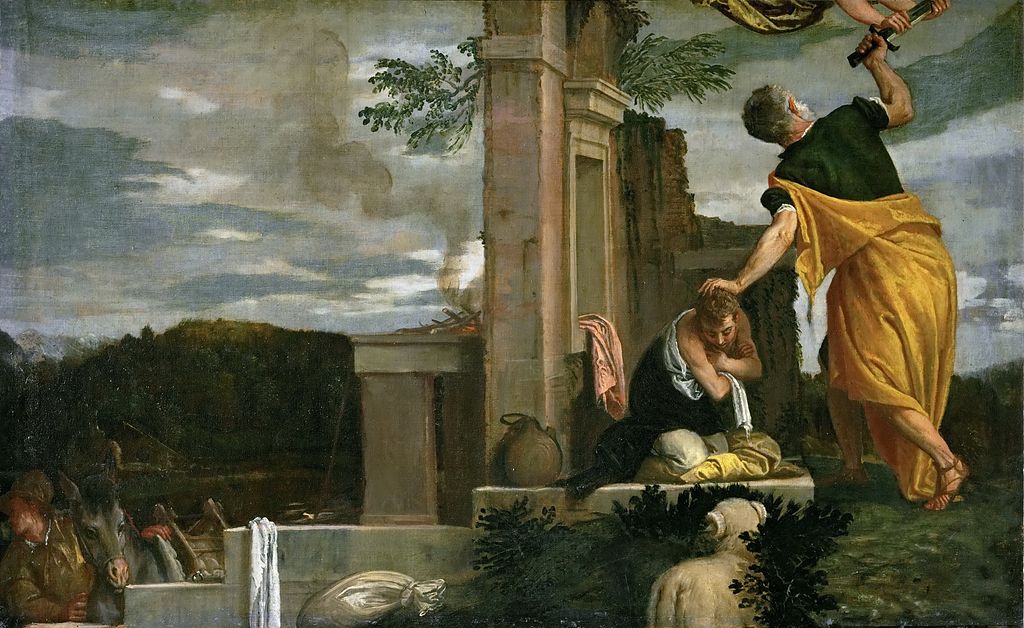
The name comes directly from the Biblical Hebrew יִרְאֶה (jireh) meaning, “to provide” or “to see.” In the Bible, it is the name of a place the where Abraham attempted to sacrifice Isaac before God intervened and provided a ram in his place. It has been in sporadic use as both a male and female given name in England and the United States since the 17th-century. It was born by a 19th-century Michigan politican, Jira Payne.
It has recently appeared in the U.S. Top 1000 Most Popular Male Names, coming in at #848 (2023). Its sudden appearance may have been popularized by the Elevation Worship and Maverick City Music song of the same name, released in 2021.
Its Spanish version of Yireh, is used as a unisex given name in Latin American countries.
Nectar is the English form of the Greek NektariosΝεκτάριος, which is derived from νέκταρ (nektar), meaning “nectar, the drink of the gods. Nectar is not a name that has ever been in common use in the English-speaking world, but since it is the name of several Eastern and Western Christian saints, the proper English male translation of the name would be Nectar; or it would have appeared thus in the calendar.
It was borne by St. Nectaire of Auvergne, a 4th-century Christian missionary to the Gauls in what is now the Massif Central region of France. According to Gregory of Tours, he was sent by Pope Fabian, along with his brothers, where he transformed a temple that was dedicated to Apollo on Mont Cornadore into a cathedral that still stands, and was subsequently beheaded by the local Gaulic chieftain. The commune of Saint-Nectaire in the Puy-de-Dôme department of France gets its name from him, as does the cheese of the same name; or the latter technically comes from the Marshal of Senneterre, which is a linguistic corruption of Saint-Nectaire.
Spyridon is a Byzantine Greek male name which comes directly from the Greek word σπυρίδιον (spyridion), meaning “basket.” Other sources suggest it is a hellenised form of the Latin Spiritus (spirit). It was popularized by a 4th-century Greek saint who played a key role in the Council of Nicaea. He is revered as the patron saint of Corfu and of potters.
His feast day is December 12.
Spiro & Spyros are its short forms, while Spyridoula is the femininine form.
Spiro was borne by the 39th vice president of the United States, Spiro Agnew (1918-1996).
It was borne by Spyridon Louis, the first modern Olympic Gold medalist in the 1896 Summer Olympics.
The name is derived from the Svan term meaning “of Mary,” referring to the Virgin Mary as in the case of the church name in Svaneti უშგულის ლამარია (Ushgulis Lamaria). Lamara is the name of a 1928 Georgian play by Grigol Robakidze.
Lamaria ლამარია is also the name of a Svan folk goddess of fertility, cattle, the hearth and women. Her name is most likely influenced by the Christian Virgin Mary and it is unknown if the goddess is a synchronized folk saint or if the name was changed after Christianity was introduced into the area.
Both names have recently become prevalent in Chechnya & Kazakhstan.
It is borne by Georgian soprano Lamara Chqonia (b. 1930).
In the United States, it is sometimes used as a feminine form of Lamar.