Pakhom, Pacôme

Gender: Masculine
Origin: Ancient Egyptian
Meaning: “he-falcon.”
Fre (PAH-kome)

The name is composed of the ancient Egyptian elements, pa (he) and akhom (falcon).

The name was later hellenized to Pachomius and franconized to Pacôme.

The name is borne by a major Coptic Christian saint (circ.3rd-century C.E), who is also revered in the Roman Catholic and Eastern Orthodox Churches. Pakhom is credited for being the founder of Coptic Monasticism.

As of 2009, its French form of Pacôme was the 412th most popular male name in France.

Other forms of the name include:

  • Bakhoum باخوم (Arabic/Assyrian/Lebanese/Syrian)
  • Pacomi (Catalan)
  • Pacumi (Catalan)
  • Pakhom (Coptic)
  • Pacôme (French)
  • Pachôme (French)
  • Pakhomios Παχώμιος (Greek)
  • Pacomio (Italian/Spanish)
  • Pachomiusz (Polish)
  • Pacômio (Portuguese-Brazilian)
  • Pacómio (Portuguese-European)
  • Pahomie (Romanian)
  • Pahomij Пахомий (Russian/Slovene)
  • Pahomije (Serbian)
  • Paho (Slovene)
  • Paxomij Пахомій (Ukrainian)
The name was also borne by a 15th-century Serbian hagiographer and two patriarchs of Constantinople.
Pachomius is also the name of a genus of spider.

Amalia, Amelia

Gender: Feminine
Origin: Germanic
Meaning: “work.”
(uh-MAHL-yah); (uh-MAHL-ee-ah); (uh-MEE-lee-yah).

Amalia, the pretty, edgy name with the stern meaning, comes from the ancient Germanic word amal, meaning “to work.” However, the name has also been linked to the Greek word amalos, meaning “soft.”

Throughout the centuries, the name has been borne by German nobility and royalty alike. Its more favored form of Amelia was introduced to the English-speaking world when the German Hanover line married into the British royal family in the 18th-century. It was borne by the daughters of George II and III of England.

The name was also borne by Amelia Earhart (1897-1937)

Other forms of the name include:

  • Amàlia (Catalan)
  • Amálie (Czech/Slovak)
  • Amelie (Danish/Finnish/German/Norwegian)
  • Amalia (Dutch/Estonian/Finnish/Galician/German/Greek/Italian/Polish/Spanish/Romanian/Romansch)
  • Amelia (Dutch/English/Estonian/Finnish/German/Polish/Spanish. Polish diminutive forms are Amelcia, Amelka, Mela, Melcia and Melcia)
  • Amaali (Estonian/Finnish)
  • Amalja (Faroese)
  • Malja (Faroese)
  • Malla (Faroese/Norwegian/Swedish: obscure)
  • Amaalia/Amaliia/Amali/Amu (Finnish)
  • Amakka (Finnish)
  • Amalkka (Finnish)
  • Maali/Maalia (Finnish)
  • Amélie (French)
  • Amke (Frisian)
  • Amalie (German/Scandinavian)
  • Amely (German)
  • Amália/Amál (Hungarian)
  • Amélia (Hungarian/Portuguese/Slovak)
  • Amalía /Amelía (Icelandic)
  • Amālija/Amēlija (Latvian)
  • Amalija (Lithuanian/Slovak/Slovene)
  • Amelija (Lithuanian)
  • Amália (Portuguese)
  • Amelita (Spanish: initially a diminutive form, occassionally used as an independent given name)
  • Amaliya (Russian)
  • Ameliya/Hamaliya (Ukrainian)

In recent years Amelia has spiked in popularity coming in as the 41st most popular female name in the United States,(2010). Amelie, which did not even appeared in the Social Security List before 2001, currently comes in at # 681st most popular female name, (2010). Amelia and her various forms’ rankings in other countries are as follows:

Amelia

  • # 5 (England/Wales, 2010)
  • # 6 (Poland, 2009)
  • # 8 (Poland, Warsaw, 2010)
  • # 12 (Australia, NSW, 2010)
  • # 13 (New Zealand, 2010)
  • # 18 (Canada, B.C., 2010)
  • # 34 (Ireland, 2010)
  • # 43 (Scotland, 2010)
  • # 132 (Norway, 2010)
  • # 200 (France, 2009)
Amelie/Amélie
  • # 25 (Austria, 2010)
  • # 32 (Belgium, 2008)
  • # 34 (German-speaking, Switerland, 2010)
  • # 55 (England/Wales, 2010)
  • # 69 (Australia, NSW, 2010)
  • # 80 (Scotland, 2010)
  • # 111 (France, 2009)
  • # 297 (Netherlands, 2010)
Amalia/Amalie
  • # 11 (Amalie, Norway, 2010)
  • # 27 (Amalie, Denmark, 2010)
  • # 42 (Amalia, Romania, 2009)

Amalia does not figure in America’s top 1000. With the spotlight of Malia Obama, and the increasingly popularity of its Amelia counterpart, this name might be a potential hit within the next few years.

Possible nickname options include Amy, Mia, Lia, Mali, Malia and Molly.

There is a Scandinavian masculine form: Melius.

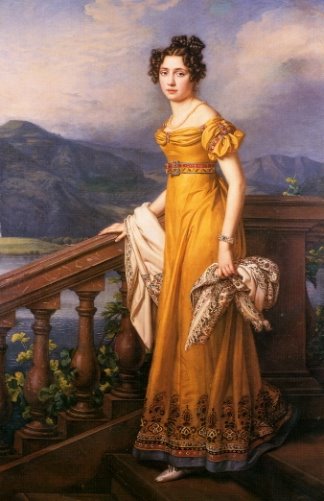
(Upper left, Amalie Auguste of Bavaria).

Jessica, Iscah

Gender: Female
Origin: Hebrew
Meaning “to behold.”
(IS-kuh); (JES-sik-kuh)

The name Jessica is an Anglicization of the Hebrew name, Iscah, which is borne in the Old Testament by a niece of Abraham.

Jessica first appeared in Shakespeare’s, the Merchant of Venice (1596), it is believed that the English author corrupted a Greek transliteration of the Hebrew Yiskah יִסְכָּה, which in the Bible of Shakespeare’s time would have been rendered as Jescha or Jesca. In the Merchant of Venice, Jessica is the name of the beautiful daughter of Shylock.

Yiskah (יסכה)  is said to come from the Hebrew root sachah (סכה), which means “to see.” Adding the yud implies future tense which makes the name imply foresight or clairvoyance.

The famous French rabbincal scholar, Rashi, claimed that Yiskah was another name for Sarah, the wife of Abraham, since she was beautiful to behold and she was known for her prophetic foresight.

The name did not get much usage until the end of the 20th-century, where it became one of the most popular female names in the United States during the 70s, 80s and 90s.

She seems to have steadily rose over a 20 year span between the 1960s and early 1970s. She jumped several places between 1969 and 1970, going from the 134th position in 1969 way up to # 98 in 1970, from thereon, the name continued to rise, peaking at # 3 in 1978. She remained in the top 10 throughout the 70s, 80s and 90s, sometimes hitting the 1st place position. In 2001, she dropped all the way down to # 11, and he has been declining since, currently, as of 2010, she is the 92nd most popular female name. In other countries, her rankings are as follows:

  • # 6 (England/Wales, 2010)
  • # 8 (Northern Ireland, 2010)
  • # 11 (Scotland, 2010)
  • # 17 (New Zealand, 2010)
  • # 20 (Australia, NSW, 2010)
  • # 29 (Ireland, 2010)
  • # 42 (Canada, B.C., 2010)
  • # 43 (German-speaking Switzerland, 2009)
  • # 71 (Mexico, 2010)
  • # 82 (Dzsesszika, Hungary, 2010)
  • # 171 (Norway, 2010)
  • # 262 (France, 2009)
  • # 304 (Netherlands, 2010)

Other forms of the name include:

  • Jèssica (Catalan)
  • Jessika/Jesika (Czech/Polish/Slovak: relatively recent in usage, and is becoming more prevalent)
  • Jessa (English: contraction of Jessica)
  • Jessica (English/Dutch/German/Finnish/French/Scandinavian/Spanish: a borrowing from the English and becoming more and more prevalent, sometimes rendered phonetically as Jessika in Germanic countries)
  • Jescha (English: archaic)
  • Iekika (Hawaiian)
  • Iscah/Yiskah יִסְכָּה (Hebrew)
  • Jiska (German: very obscure)
  • Dzsesszika (Hungarian)
  • Jiszká (Hungarian)
  • Gessica (Italian)
  • Džesika (Lithuanian)
  • Dżesika (Polish: phonetic rendition and the more popular form, becoming more common in Poland)
  • Jéssica (Portuguese-Brazilian)
  • Jesica (Spanish)

Diminutive forms are Jessie and Jessy.

The names are borne by pop singer, and actresses Jessica Tandy (b.1908), Jessica Lange (1942), Jessica Simpson (b.1980), Jessica Alba (b.1981), Jessica Biel (1982).

Eleanor

Gender: Feminine
Origin: Occitanian
Meaning: “the other Aenor”
Eng (EL-e-NOR)

The name is derived from the Latin Alia Aenor, which literally means, the “other Aenor”, according to most historical sources, the most notable bearer, Eleanor of Aquitaine, was named for her mother Aenor and as a way to distinguish her from her mother, she was dubbed Alia Aenor.

The meaning of Aenor is uncertain, but may be connected to the Latin verb ienire, meaning “to heal.”

The name was borne by Eleanor of Aquitaine, known in Old French as Aliénor d’Aquitaine, (1122-1204), the daughter of William X, Duke of Aquitaine, she grew up to be one of the most powerful people in medieval Western Europe and became Queen Consort of both France and England.

Her popularity throughout France, Spain, Italy, Portugal and England. It was also borne by two other queens, Eleanor of Provence and Eleanor of Castile, the former was canonized a saint.

Eleanor has produced several other common offshoots, such as Lenore, the name of the departed love in Edgar Allan Poe’s poem, The Raven (1845); Elnora and Nora.

In modern American history, it was borne by First Lady and humanitarian, Eleanor Roosevelt (1884-1962).

It is currently the name of the crown princess Infanta of Spain, Leonor.

Currently, Eleanor is the 61st most popular female name in England/Wales, (2010). She is currently the 165th most popular female name in the United States, (2010). Her rankings in other countries are as follows:

  • # 2 (Leonor, Portugal, 2010)
  • # 125 (Eléonore, France, 2009)

Common English diminutives include: Ella, Ellie, Nell, Nellie and Nora.

Other forms include:

  • Eleanora (Breton/Norwegian
  • Elionor (Catalan)
  • Eleonora Елеонор (Belarusian/Czech/Danish/Dutch/Faroese/Icelandic/Italian/Polish/Swedish)
  • Elenora (Danish)
  • Eleanor (English/Estonian/Romanian)
  • Elnora (English)
  • Lenora (English)
  • Leonora (English/German/Italian/Portuguese/Spanish)
  • Lenore (English/German)
  • Nell (English: originally a diminutive form, now used as an independent given name)
  • Nellie (English: originally a diminutive form, now used as an independent given name)
  • Nora (English/Italian: originally a diminutive form, now used as an independent given name)
  • Eleonoora (Finnish)
  • Noora (Finnish)
  • Éléonore (French)
  • Eleonore (German)
  • Eleōnora Ελεωνόρα (Greek: Modern)
  • Eleonóra (Hungarian/Slovak)
  • Lenóra (Hungarian)
  • Elenóra (Icelandic)
  • Nóra (Irish-Gaelic)
  • Nóirín/Noreen (Irish-Gaelic)
  • Elianora/Elinora (Italian)
  • Noretta (Italian)
  • Norina (Italian)
  • Alienora (Late Latin)
  • Léionore (Norman)
  • Ellinor/Elinor (Norwegian/Swedish)
  • Alienòr (Occitanian)
  • Leonor (Portuguese/Spanish)
  • Aliénor (Provençal)
  • Alenora Альенора (Russian)
  • Eilidh (Scots-Gaelic: originally a diminutive form, now very popular as an independent given name)
  • Eilionoir (Scots-Gaelic)
  • Elna (Swedish: contracted form).

The designated name-day is February 22.

German diminutives are: Lola, Lorle, Lore, Nora and Nordel.

A Dutch diminutive is Noortje.

Hungarian diminutives include: Ella, Leonorka, Lóra, Lórácska, Lóri, Nelli, Nóra, Norcsi, Nóri and Nórici.

Sources

  1. http://www.askoxford.com/firstnames/eleanor?view=uk
  2. http://www.behindthename.com/php/find.php?name=eleanor
  3. Alison Weir, Eleanor of Aquitaine: A Life, Ballantine Books, 2001
  4. Kálmán BélaA nevek világa
  5. Marion MeadeEleanor of Aquitaine: a biography, Hawthorn Books, 1977
  6. Régine PernoudEleanor of Aquitaine, Coward-McCann, 1968

George

Gender: Masculine
Origin: Greek Γεωργιος
Meaning: “farmer.”
Eng (JORJ)

The name is an English and Romanian form of the Greek, Georgios Γεωργιος, which is derived from the Greek γεωργος (georgos) meaning, “farmer; earth worker.”

The name was borne by a 4th-century Christian saint and martyr, a Roman soldier of Greek ancestry who refused to sacrifice to pagan gods as demanded by the Roman Emperor at the time. He was popularized in the Western Christian Church after the Crusades, when soldiers brought the story back to Western Europe. The saints’ story was embellished and his story appears in the Golden Legend.

The most famous legend was that during the saint’s life, he managed to rescue a maiden who was about to be sacrificed to a dragon by slaying it with his lance. This legend has been the subject of art for centuries.

Though revered as the patron saint of England, the name itself did not catch on in until the 18th-century, following the accession of George I of England. The name has been borne by several kings throughout Europe. It was also borne by the first president of the United States, George Washington.

In Medieval times, English troops would chant “by George“, as a invocation to the saint to protect them in battle.

Between 1880 and 1937, George remained in the U.S. top 10. As of 2010, he only ranked in as the 164th most popular male name. His rankings in other countries are as follows:

  • # 1 (Georgi, Bulgaria, 2007)
  • # 1 (Georgios, Greece, 2010)
  • # 2 (Giorgi, Georgia, 2011)
  • # 5 (Yegor, Belarus, 2011)
  • # 9 (England/Wales, 2010)
  • # 12 (Yegor, Russia, 2011)
  • # 16 (Jorge, Spain, 2010)
  • # 19 (Jiří, Czech Republic, 2010)
  • # 20 (Romania, 2009)
  • # 22 (Jordi, Catalonia, 2010)
  • # 27 (Jure, Slovenia, 2010)
  • # 42 (Jorge, Chile, 2010)
  • # 53 (Juraj, Croatia, 2010)
  • # 69 (Jure, Croatia, 2010)
  • # 73 (Australia, NSW, 2010)
  • # 75 (Jurij, Slovenia, 2010)
  • # 76 (Jørgen, Norway, 2010)
  • # 78 (Jorge, Mexico, 2010)
  • # 80 (Joris, Netherlands, 2010)
  • # 82 (Jordi, Spain, 2010)
  • # 84 (Jurica, Croatia, 2010)
  • # 100 (Scotland, 2010)
  • # 168 (Jorge, United States, 2010)
  • # 233 (Joris, France, 2009)
  • # 420 (Jordi, Netherlands, 2010)

Other forms of the name include:

  • Gjergj (Albanian)
  • Jorgo (Albanian)
  • Giorgis ጊዮርጊስ (Amharic)
  • Jurj(us)  جرج  جرجس (Arabic)
  • George  جورج (Arabic/English/Romanian)
  • Khodor  خضر (Arabic)
  • Chorche (Aragonese)
  • Gev(or) Գեվ Գեվոր (Armenian)
  • Gevorg Գեվորգ (Armenian)
  • Kevork Գեւորգ (Armenian)
  • Xurde (Asturian)
  • Gorka (Basque)
  • Jury Юры (Belarusian)
  • Yegor Егор (Belarusian/Russian)
  • Jord (Breton)
  • Jorj (Breton)
  • Georgi Георги (Bulgarian)
  • Jordi (Catalan)
  • Juraj (Croatian/Slovak/Slovene)
  • Jurica (Croatian)
  • Jure (Croatian/Slovene)
  • Jiří (Czech)
  • Jørgen (Danish/Norwegian)
  • Joris (Dutch/Frisian)
  • Sjors (Dutch)
  • Georg (Faroese/Estonian/German/Icelandic/Romansch/Scandinavian)
  • Jurjen (Frisian)
  • Jüri (Estonian/Volapuk)
  • Jørundur (Faroese)
  • Jokora (Finnish)
  • Jori (Finnish)
  • Jyr(k)i (Finnish)
  • Yrjänä (Finnish)
  • Yrjö (Finnish)
  • Georges (French)
  • Xurxo (Galician)
  • Giorgi გიორგი (Georgian/Monegasque)
  • Jörgen (German/Swedish)
  • Jörg (German/Swedish)
  • Jürgen (German)
  • Jürg (German)
  • Georgios Γεώργιος (Greek)
  • Joorut (Greenlandic)
  • Juulut (Greenlandic)
  • Keoki (Hawaiian)
  • György (Hungarian)
  • Seoirse (Irish-Gaelic)
  • Giorgio (Italian/Venetian)
  • Georgius (Latin)
  • Jur(g)is (Latvian)
  • Jurgis (Lithuanian)
  • Gjoko  Ѓок (Macedonian)
  • Gjorgje Ѓорѓе (Macedonian)
  • Gjorgji  Ѓорѓи (Macedonian)
  • Gheevargees ഗീവര്‍ഗീസ് (  (Malayalam)
  • Gheevarugees ഗീവറുഗീസ് ( (Malayalam)
  • Varghees വര്‍ഗീസ്‌ (Malayalam)
  • Verghese വെര്‍ഗീസ് (Malayalam)
  • Varughese വറുഗീസ് (Malayalam)
  • Ġorġ (Maltese)
  • Jore (Norman)
  • Jørn (Norwegian)
  • Ørjan (Norwegian)
  • Jordi (Occitanian/Provençal)
  • Jerzy (Polish)
  • Jorge (Portuguese/Spanish)
  • Gheorghe (Romanian)
  • Georgy Георгий (Russian/Ukrainian)
  • Yuri Юрий (Russian)
  • Deòrsa (Scottish)
  • Seòrsa (Scottish)
  • Đorđe Ђорђе (Serbian)
  • Đorđo Ђорђо (Serbian)
  • Đurađ Ђурађ(Serbian)
  • Jurij (Slovene)
  • Göran (Swedish)
  • Örjan (Swedish)
  • Gewarges ܓܝܘܪܓܣ(Syriac)
  • Gorges ܓܪܓܣ (Syriac)
  • Yorgo (Turkish)
  • Heorhiy Георгій (Ukrainian)
  • Yur Юр (Ukrainian)
  • Sior (Welsh)
In ancient Greece, Georgos may have also been used as an epithet for Zeus.
As for its feminine forms, I shall save that for a separate post 🙂

Joseph, Josephine

Gender: Masculine
Origin: Hebrew יוֹסֵף
Meaning: “He shall add; God shall add.”
Eng (JOH-sef)

The name is derived from the Biblical Hebrew male name, יוֹסֵף (Yosef).

In the Old Testament, the name is borne by the first son of Rachel and the eleventh son of Jacob. After being sold off as a slave by his brothers, Joseph ended up in Egypt, later becoming an important advisor to the pharoah.

In the New Testament, it is borne by the husband of the Virgin Mary. Known as St. Joseph among Catholics, he is a particularly revered saint among Italian Catholics, considered the patron saint of stepfathers and carpenters.

Another important character with this name in the New Testament, is Joseph of Arimathea, a disciple of Christ and also the man who provided a burial spot for Jesus after his death.

The name has always been very prevalent throughout Europe and the Middle East.

In the United States, its popularity can be due to several factors: it was common among both various Christian and Jewish immigrants. The name is even very common among Muslim families.

Currently, Joseph is the 20th most popular male name in the United States, (2010). In fact, Joseph has never ranked outside of the Top 20. Common English nicknames are Joe and Joey. His rankings in other countries are as follows:

  • # 1 (Yusif, Azerbaijan, 2012)
  • # 1 (Yusuf, Turkey, 2010)
  • # 2 (Yusuf, Tajikistan, 2009)
  • # 2 (Youssef, Tunisia)
  • # 3 (Yousef, Arab-World, 2011)
  • # 4 (José, Equitorial Guinea, 2011)
  • # 5 (Joosep, Estonia, 2011)
  • # 5 (Isle of Man, 2009)
  • # 5 (Yousouf, Israel, among Muslim and Christian boys, 2010)
  • # 5 (José, Philippines, 2011)
  • # 5 (Jose, Puerto Rico, 2010)
  • # 7 (Youssef, Morocco)
  • # 8 (Josip, Croatia, 2010)
  • # 8 (Yosef, Israel, among Druze boys, 2004)
  • # 9 (Yosef, Israel, among Jewish boys, 2010)
  • # 14 (Giuseppe, Italy, 2010)
  • # 15 (England/Wales, 2010)
  • # 16 (Joseph/Giuseppe, Malta, 2010)
  • # 29 (Northern Ireland, 2010)
  • # 36 (New Zealand, 2010)
  • # 37 (Ireland, 2010)
  • # 41 (Australia, NSW, 2010)
  • # 41 (József, Hungary, 2010)
  • # 43 (José, Spain, 2010)
  • # 44 (Scotland, 2010)
  • # 51 (José, United States, 2010)
  • # 62 (Josef, Sweden, 2010)
  • # 68 (Josip, Bosnia & Herzegovina, 2010)
  • # 68 (Josep, Catalonia, 2010)
  • # 71 (José, Catalonia, 2010)
  • # 74 (Canada, BC, 2010)
  • # 149 (France, 2009)

Other forms of the name include:

  • Josef (Afrikaans)
  • Isuf (Albanian)
  • Jozef/Jozif (Albanian: Zef is a diminutive form)
  • Sepp (Alsatian)
  • Hovsep Հովսեփ (Armenian)
  • Yūsuf/Youssef/Yussef يوسف, (Arabic)
  • Yusif/Yusuf/Usub (Azeri)
  • Joseba/Josepe (Basque)
  • Joseph ДЖО́ЗЕФ (Belarusian/English/German/French)
  • Josip (Bosnian/Croatian: Joso, Jozo and Joško are diminutive forms)
  • Jusuf (Bosnian)
  • Yosif Йосиф (Bulgarian)
  • Josep (Catalan, Pep is a common diminutive form)
  • Ghjaseppu (Corsican)
  • Jozèf (Creole/Haitian)
  • Josef (Czech)
  • Joep (Dutch: originally a diminutive form, now used as an independent given name)
  • Joop (Dutch: originally a diminutive form, used as an independent given name)
  • Joost (Dutch: originally a diminutive form, now used as an independent given name)
  • Jozef (Dutch)
  • Joseph (English/French/German)
  • Joséphin (French: obscure)
  • Joosep (Estonian)
  • Jósef (Faroese)
  • Jooseppi (Finnish)
  • Juuso (Finnish)
  • Bepùt/Bepi/Bepo (Fruilian)
  • Xosé (Galician)
  • Ioseb იოსებ (Georgian)
  • Ioses/Joses Ιωσης (Greek: Biblical)
  • Iōséph Ἰωσήφ/Iosepos, Iosipos Ιώσηπος (Greek: Modern)
  • Yosef יוסף (Hebrew)
  • Isuppu (Hindi)
  • József (Hungarian: Jóska is the diminutive form)
  • Yusuf/Yusup/Ucup (Indonesian)
  • Giuseppe (Italian: diminutive forms are Beppe, Peppe and Peppino)
  • Giuseppino (Italian)
  • Pino (Italian: diminutive form now used as an independent given name)
  • Seosamh (Irish-Gaelic)
  • Ujöp (Ladino)
  • Iosephus/Josephus (Latin)
  • Jāzeps (Latvian)
  • Gioxeppe (Ligurian)
  • Joep (Limburgish)
  • Juozapas (Lithuanian)
  • Juozas (Lithuanian)
  • Giüsèpp (Lombard: Pèpp and Bèpp are diminutive forms)
  • Ousep/Ousef/Yosef (Malayalam)
  • Ouseppachen/Kochaappu (Malayalam)
  • Ġużeppi (Maltese: Ġużi, Ġuż, Peppi, Pepp, Żeppi and Żepp are diminutives)
  • Hohepa (Maori)
  • Jupp (Moselfrench)
  • Josef (Norwegian)
  • Josèp (Occitanian)
  • Iosifu Іѡсифъ (Old Church Slavonic)
  • Yūsuf/Youssef/Yussef يوسف, (Persian)
  • Joosef (Plattdeutsch)
  • Józef (Polish)
  • Gèseppe (Puglian)
  • Jüppes/Jüppke (Ripoarisch)
  • Iosif (Romanian)
  • Gisep (Romansch)
  • Iosif/Osip Иосиф (Russian)
  • Jisepu (Sardinian)
  • Josif Јосиф (Serbian)
  • Seòsaidh (Scots-Gaelic)
  • Giuseppi (Sicilian)
  • U’Seppi (Sicilian)
  • Zefel/ Zeflik (Silesian)
  • Jozef (Slovakian)
  • Jožef/Jože (Slovene)
  • Sefer (Swabian)
  • José (Spanish/Portuguese: Pepe and Pepito are the diminutive forms)
  • Yusup/Usup/Ucup (Sudanese)
  • Yoseppu (Tamil)
  • Yusuf (Turkish)
  • Yosyp (Ukrainian)
  • Josep (Valencian)
  • Juxepe (Venetian: diminutives are Bepi and Bepin)
  • Joseff (Welsh)
  • Yissl/Jayzl/Yussel (Yiddish)

Bavarian diminutive forms are Pepi, Perperl, SeppSeppiSeppl and Söpp.

Other German diminutives include: Seb, Seffi and Beppal is a Swiss-German diminutive form.

A Rheinish diminutive is Jupp.

Czech diminutives are: Pepík, Pepek, Pepan and Pepin.

Dutch short forms are Jef, Zef and Jos.

A common Hebrew short form is Yosi.

Italian diminutives and its dialectical forms include: Scepp (Calabrian); Pepp’, Pè, Peppiniéllo, Peppì, Peppinié (Campanese); Gioxe, Bepi, Bepin (Ligurian); Gepe and Pinin (Piedmontese); Seppud, Bapèpp, Peppo, Peppin, G’sip, Giusè, Pinucc, Peppon, ‘Mbà Peppe and P’pen (Puglian); Peppe and Pippo (Sicilian); Bepi and Beppe (Tuscan) and  Bepìn and Bepo (Venetian).

Standard Italian diminutives are: Bepi, Beppe, Beppino, Geppetto, Geppino, Peppe, Peppenuzzo, Peppi, Peppino, Peppinello, Peppiniello, Peppinetto, Peppo, Peppuccio, Pino Pinello, Pinuccio, Peppone, Pippo Puccio and Seppe.

Portuguese diminutives include: Zé, Zézinho, Zéca and Zécinha.

Slovakian diminutives are: Jožko, Jojo and Dodo.

Slovene short forms are: Pepe, Pepi and Pepc.

A common Spanish compound name is José Maria

Its more common feminine form of Josephine became prevalent throughout Europe at the end of the 18th-century and at the beginning of the 19th-century, due to the popularity of Josephine Bonaparte, (1763-1814), the wife of Napoleon.

Originally, Joséphine was a French diminutive form of Josèphe. Joséphine became the standard form around the same time Josephine Bonaparte became famous and has remained the more common French feminine form of Joseph, since.

Currently, in the United States, she is the 186th most popular female name, (2010). In the Netherlands, she was the 153rd most popular female name, (2010).

Other feminine forms include:

  • Jozefina (Albanian)
  • Josepa (Catalan: diminutive is Pepa)
  • Josipa (Croatian)
  • Josefa (Czech/Portuguese/Spanish)
  • Josefina (Czech)
  • Jozefien (Dutch)
  • Joetta (English)
  • Josephina/Josephine (English)
  • Josefiina (Finnish)
  • Josée (French)
  • Josèphe (French)
  • Joséphine (French)
  • Josette (French)
  • Josefine (German/Danish)
  • Josepha (German)
  • Iosiphina Ιωσηφίνα (Greek: Modern)
  • Jozefa (Hungarian/Slovene)
  • Jósefína (Icelandic)
  • Seosaimhín (Irish-Gaelic)
  • Giosetta (Italian)
  • Giuseppa/Giuseppina (Italian)
  • Iosephina (Latin)
  • Ġużeppa (Maltese: Ġuża is the diminutive form)
  • Józefa (Polish)
  • Józefina (Polish)
  • Jožefina/Jožefa/Joža (Slovene)
  • Jožica (Slovene: originally a diminutive form, now used as an independent given name)
  • Josefa/Josefina (Spanish)
  • Josefin/Josefine (Swedish)
  • Yosipa/Osipa/Yuzefa (Ukrainian)

Croatian diminutive form is Pepica.

Czech diminutives are: Pepa, Pepca, Pepicka, Pepina, Pepka, Jóža, Jožka and Jóžin.

Common English short forms for Josephine include: Fifi, Jo, Jody, Jojo, Josie and Posey.

Common French diminutive forms are Fifi and Fifette.

German diminutives are Pepa.

Italian diminutives are: Giusy, Pina, Pinuccia, Pinella and Pippa.

Slovene diminutive form is Pepca

Marie-Josée is a common French compound form.

Designated name-days are March 19 and May 1.

Edward

Gender: Masculine
Origin: Anglo-Saxon
Meaning: “wealthy guardian.”
Eng (ED-werd; ED-word)

The name is composed of the Anglo-Saxon elements, ead (rich; waelthy) and weard (guard). Due to the popularity of St. Edward the Confessor, the name was one of the few Anglo-Saxon names to have survived the Norman Conquest and to have spread to non-Anglo-Saxon countries.

The name has remained common in the British Royal Family.

As of 2010, Edward was the 43rd most popular male name in England/Wales. His rankings in other countries, in his various forms, are as follows:

  • # 3 (Eetu, Finland, 2011)
  • # 20 (Duarte, Portugal, 2010)
  • # 21 (Eduard, Romania, 2009)
  • # 28 (Edoardo, Italy, 2010)
  • # 61 (Australia, NSW, 2010)
  • # 72 (New Zealand, 2010)
  • # 79 (Eduardo, Spain, 2010)
  • # 94 (Eduard, Catalonia, 2010)
  • # 97 (Edvard, Norway, 2010)
  • # 136 (United States, 2010)
  • # 153 (Eduardo, United States, 2010)
  • # 169 (Scotland, 2010)
  • # 226 (Édouard, France, 2009)

Other forms of the name include:

  • Eduard Էդվարդ Эдуард ედუარდ Эдуард Едуард (Afrikaans/Albanian/Armenian/Belarusian/Bosnian/Catalan/Croatian/Czech/Dutch/Estonian/Georgian/German/Romanian/Romansch/Russian/Slovak/Ukrainian)
  • Ēadƿeard (Anglo-Saxon)
  • Idward إدوارد (Arabic: used primarily among Christians)
  • Edorta (Basque)
  • Edvard Эдвард Эдвард Едвард (Belarusian/Czech/Faroese/Finnish/Russian/Scandinavian/Serbian/Slovene)
  • Edouarzh (Breton)
  • Eduardu (Corsican/Sardinian)
  • Edward (English/German/Polish)
  • Eetu (Finnish)
  • Eetvartti (Finnish)
  • Etuate (Fijian)
  • Édouard (French)
  • Edo (Frisian)
  • Edzard (Frisian)
  • Eide (Frisian/Plattdeutsch)
  • Eido (Frisian)
  • Eduardos Εδουάρδος (Greek)
  • Ekewaka (Hawaiian)
  • Eduárd (Hungarian)
  • Edvárd (Hungarian)
  • Eðvarð(ur) (Icelandic)
  • Játvarður (Icelandic)
  • Éadbhard (Irish)
  • Éamonn (Irish)
  • Edoardo (Italian)
  • Eduardo (Italian/Spanish/Portuguese)
  • Odoardo (Italian: Tuscan)
  • Eduards (Latvian)
  • Edvards (Latvian)
  • Eduardas (Lithuanian)
  • Edvardas (Lithuanian)
  • Eruera (Maori)
  • Dwardu (Maltese)
  • Duarte (Portuguese)
  • Eideard (Scottish)
  • Eudard (Scottish)
Common diminutives include:
  • Edi (Albanian/Bosnian/Croatian/Slovene/Spanish)
  • Ed (Dutch/English/German/Scandinavian)
  • Eddie (English/German/Scandinavian)
  • Ned (English)
  • Ted (English)
  • Teddy (English)
  • Edek (Polish)
  • Dadu (Portuguese)
  • Du (Portuguese)
  • Edu (Portuguese)
  • Lalo (Spanish)
In recent years, especially in the United States, the name has possibly risen in popularity due to the Twilight Series, in which one of the protagonists is named Edward.
There are a few feminine forms, namely the Spanish and Italian, Eduarda, which I shall save for another post.

Zechariah, Zachary

St. Zachary Gender: Masculine
Origin: Hebrew  זְכַרְיָה
Meaning: “God remembers.”
Eng (zek-e-RIE-ah); (ZACK-e-REE)

Zachary is an English form of the Hebrew Zechariah, a theophoric name that means “God remembers; Yahweh remembers.”

The name is borne by several characters in both the Old and New Testament. In the Old Testament, it was borne by a prophet who authored the Book of Zechariah and in the New Testament, it was borne by the father of John the Baptist.

In the Qu’ran, the father of John the Baptist is viewed as a prophet and also as the protector of Mary, the mother of Jesus.

The name also appears as Zacharias, a Greek rendition, in some versions of the New Testament.

In the English speaking world, the name has been in usage since Medieval times. In Eastern Europe, especially in Orthodox dominated countries, it has always been a common name.

Currently, Zachary is the 61st most popular male name in the United States, (2010). In 1994, he ranked as high as # 12.

In other countries, his popularity is as follows:

  • # 51 (Australia, NSW, 2010)
  • # 51 (England/Wales, 2010)
  • # 55 (Canada, BC, 2010)
  • # 331 (Zacharie, France, 2009)
  • # 446 (France, 2009)

Other forms of the name include:

  • Sagarias (Afrikaans)
  • Zakariyya زكرياء (Arabic/Assyrian/Circassian/Coptic/Ethiopian/Lebanese/Syrian)
  • Zacharij/Zachari Захари (Bulgarian)
  • Zacaries (Catalan)
  • Zekarija Закария (Chechen/Kazakh)
  • Zakaria ზაქარია (Coptic/Ethiopian/Georgian/Kurdish)
  • Zaharije Зaxapиje (Croatian/Serbian)
  • Zachariáš (Czech/Slovak)
  • Zachary (Czech/English/French/Polish)
  • Zacharias (German/Scandinavian)
  • Sakarias (Faroese/Norwegian/Swedish)
  • Sakari (Finnish: Sakke is a diminutive form)
  • Saku (Finnish)
  • Zacharie (French)
  • Sagaire/Sagairi (Gaelic)
  • Zacharias Zαχαριας (Greek)
  • Zakariás (Hungarian)
  • Zakeus (Hungarian)
  • Zekarja (Hungarian)
  • Zaccaria (Italian)
  • Zaccheo (Italian)
  • Cherian (Malayalam)
  • Sakaria (Malayalam)
  • Scaria (Malayalam)
  • Zaxaria Захарїа (Old Church Slavonic)
  • Zachariasz (Polish)
  • Zacarias (Portuguese)
  • Zaharia (Romanian)
  • Zaccaria(s) (Romansch)
  • Zachar Захар (Russian)
  • Sachairi (Scottish-Gaelic)
  • Zacarías (Spanish)
  • Zakarya (Swahili)
  • Zekeriya (Turkish)

The name is also borne by several saints as well as by one Roman Catholic pope and a Coptic pope.

Zaharina Захарина is a Bulgarian feminine form and Zara is its pet form.

Other notable bearers include an 8th-century Nubian king, a 9th-century Khazar king, and American president, Zachary Taylor (1784-1850)

Sources

  1. http://www.askoxford.com/firstnames/zachary?view=uk
  2. http://www.behindthename.com/php/find.php?name=zachary
  3. http://www.svenskanamn.se/
  4. http://bibref.hebtools.com/?book=%20Matthew&verse=23:35&src=!

Otto

Gender: Masculine
Origin: German
Meaning: “wealth; riches.”
(OT-to)

The name is derived from the early Germanic Audo. It seems like the quintessential German name, but has been out of favor in German speaking countries until recently, where it seems to be experiencing a revival. The name was borne by four Germanic kings. The first being Otto I, (also known as Otto the Great), the first Holy Roman Emperor. It was also borne by German Chancellor Otto von Bismarck (1815-1898).

To American ears, it might sound a bit quirky, but to hipsters, he might just make the perfect brother to little Gunnar or Atticus. Otto exhibits a certain quality of strength. It wouldn’t be bad to give him a chance, at least as a middle name. Otto has not ranked in the US top 1000 since 1974, when he came in at a measly #969. The highest he has seemed to rank in American history was in 1909, when he came in at a decently high #144. No doubt due to a large influx of German and Swedish immigrants at the time.

In Germany, he hasn’t made it to the top 500 as of yet, but I am happily able to report that, recently, while browing through some German birth announcement from Berlin, I was happy to see a few newborn Ottos, either as their first name or middle name.

Update: As of 2011, Otto was the 30th most popular male name in Finland and in 2010, he was the 92nd most popular male name in Sweden.

In Germany and Austria, his designated name day is September 7th. Similar variations include Otmar which means “possesing of fame” and Ottokar meaning “wealthy and vigilant.” If Otto feels too short for you, then you might want to consider Otmar or Ottokar as a formal version.

Other forms of the name include:

  • Ot (Catalan)
  • Ota (Czech)
  • Oto (Czech/Slovak)
  • Otto (Dutch/Estonian/Faroese/Finnish/Frisian/German/Polish/Romansch/Sami/Scandinavian)
  • Ode (English)
  • Eudes (French)
  • Odilon (French/Portuguese)
  • Odon (French/German)
  • Odo (German)
  • Udo (German)
  • Ortu (Greenlandic)
  • Ottó (Hungarian/Icelandic)
  • Oddo (Italian)
  • Ottone (Italian)
  • Ottorino (Italian)
  • Rino (Italian)
  • Audo (Old High German)
  • Odo (Old High German)
  • Otton (Polish)
  • Otte (Scandinavian)
  • Oton (Slovene/Spanish)

A common Czech diminutive form is Otik.

Feminine forms are so numerous that I shall save those for a separate entry, stay tuned 🙂

Amanda, Amandus

Origin: Latin
Meaning: “must be loved.”

If you are an 80s baby like myself, Amanda is just another run-of-the-mill, female name that was ever-present throughout high school and college.

Amanda is the name of your lab partner in chemistry, she is the head cheerleader, she might even be your best friend, or maybe its your own name.

In the United States, the name is ubiquitous among females between the ages of 35 and 16. Between 1976 and 1992, she ranked in the top 10. Today, her popularity has gone down to # 188, (2010). She is borne by a variety of young female celebrities. There is Mandy Moore (b.1984) and Amanda Bynes (b.1986) just to name a few. While I personally never got the chance to appreciate this name, I understand the appeal for the parent of the 1970s and 80s. She has a romantic quality about her, the same appeal as the Shakespearean Miranda, and while the latter often gets shortened to the tom-boyish Randy, Amanda is easily shortened to the more girlish Mandy. Poor Amanda has also spun off her own teasable play on words from “I need Amanda Love”  to “it’s a man, duh!”

Amanda is a Latin female gerundive verb meaning “to be loved”, the female form seems to have first appeared on a birth record from Warwickshire England in 1212.  Other than that, she was seldom heard of other than in plays and poems till the end of the 20th-century. It is the name of a character in Colley Cibber’s play Love’s Last Shift (1696).

There is a masculine form, Amandus, which is the name of two saints and is currently rising in popularity in Scandinavia. Amandus might make an interesting choice for the hipster parent looking to such names as Augustus and Atticus for inspiration.

As of 2011, Amanda was the 21st most popular female name in Finland. Her rankings in other countries are as follows:

  • # 18 (Chile, 2010)
  • # 25 (Sweden, 2010)
  • # 32 (Brazil, 2010)
  • # 52 (Norway, 2010)
  • # 53 (Hungary, 2010)

Other forms of the name include:

  • Amanta (Catalan)
  • Amandina (Corsican/Italian)
  • Amanda (Czech/Dutch/English/Estonian/Finnish/German/Hungarian/Icelandic/Italian/Latvian/Polish/Portuguese/Romanian/Scandinavian/Slovene/Spanish)
  • Manda (Estonian/Finnish/German/Hungarian/Scandinavian)
  • Mandy (English: occasionally used as an independent given name)
  • Manja (Finnish)
  • Manta (Finnish)
  • Amande (French: also the French word for almond)
  • Amandine (French)
  • Mendi (Hungarian)
  • Amândia (Portuguese: obscure)

Male forms are:

  • Amand (German/Czech/Polish/Slovak)
  • Amandino (Italian)
  • Amando (Spanish/Italian)
  • Amândio (Portuguese: obscure)

Its designated name day in most countries is October 26. Common English nickname is Mandy. The nickname has been the subject of such songs as Barry Manilow’s Mandy and the 1919 rag-time by Irving Berlin.

Czech diminutives forms are Ama, Amka and Amaduška.