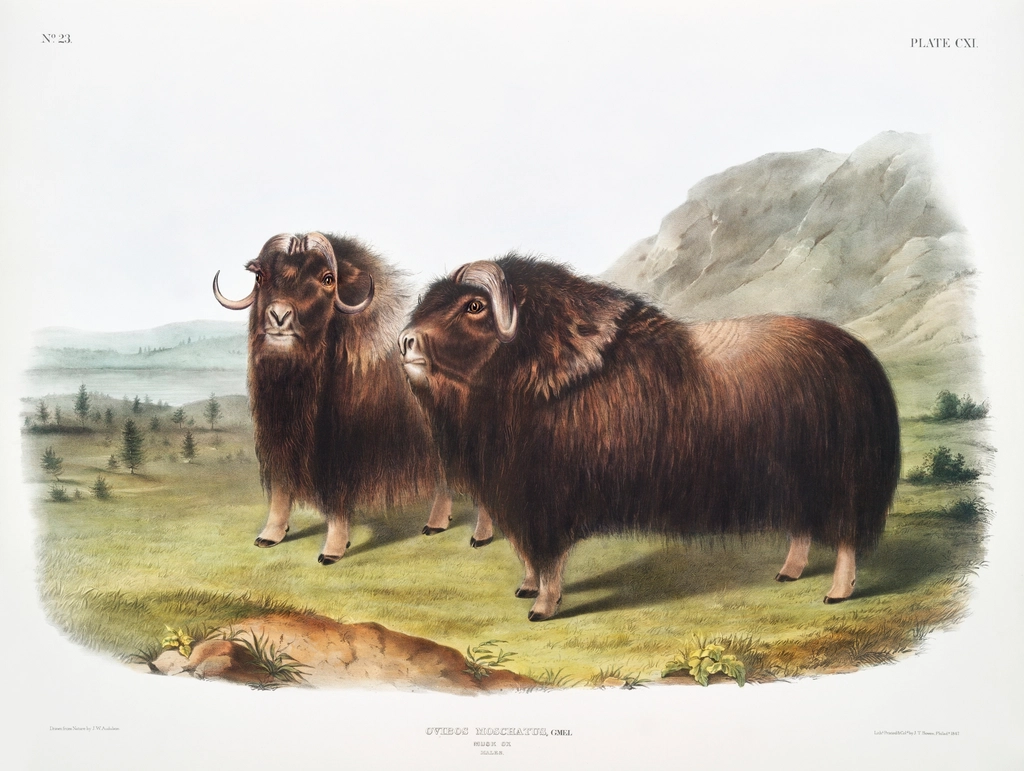
The name is derived from the Arabic لأًى (laʾan) “wild ox,” which can also have the euphemism of a shield or protector. Interestingly enough, it may share the same etymological root as the Hebrew female name, Leah.
The name is borne by Lu’ayy ibn Ghalib (3rd-century C.E.) who was the ancestor of the Islamic prophet Muhammed.
A 19th-century gem and late 20th-century vampiric monikor, the name is of uncertain meaning but has its origins in Medieval Spain. It is likely of Visigothic origins, possibly derived from Gailawera or Geloyra, which stem from gails (happy) or (spear); and wers (friendly, agreeable, true).
It should be noted that Elvira (Latin: Iliberri or Iliberis) was an ancient Iberian and later Roman city located near present-day Granada, in Andalusia, southern Spain. However, in this case, it is likely derived from an Iberian source, meaning “new town.”
It was a popular female name among the royal family of Castille & León, producing two queens who bore this name, Elvira of Castile, Queen of León (965–1017) and Elvira of Castile, Queen of Sicily (c. 1100–1135).
It was later used in Mozart’s 1787 opera Don Giovanni (libretto by Lorenzo Da Ponte), in which Donna Elvira is one of Don Giovanni’s former lovers. This likely popularized the name outside of the Iberian peninsula.
By the turn of the 20th-century, Elvira was not unknown in the United States, though never overly popular, it peaked at #254 in 1914, but fell out the Top 1000 by 1981, the same year Elvira, Mistress of the Dark came on the scene.
The real Halloween link began in 1981, when actress Cassandra Peterson created the camp-horror TV hostess Elvira, Mistress of the Dark for a Los Angeles late-night show (Movie Macabre).
Dressed in a plunging black gown with a beehive of jet hair, Elvira presented old horror movies with sardonic humor — blending Gothic sex appeal, irony, and B-movie kitsch.
The character became a pop-culture icon: Halloween TV specials, films, pinball machines, comic books, and even perfume lines immortalized her as the Queen of Halloween.
Outside the United States, this name does not have such associations. In Sweden, it has been among the top 100 girls’ since 1998 and peaked at #25 in 2014. As of 2024, it came in at #40.
It’s a popular name in the Balkans, even spinning off a male form of Elvir (Bosnian and Albanian).
Other forms include:
Elbire (Basque)
Elvíra (Czech/Slovakian)
Elviira (Estonian, Finnish)
Elvire (French)
Elwira (Polish, also an alternate Swedish spelling, Sorbian)
Elvīra (Latvian)
Elvyra (Lithuanian)
Obscure Lithuanian male forms are the Lithuanian, Elvyras; the Polish, Elwir(o), and the Italian Elviro.
Name days: August 25 (Austria), July 16 (Croatia), February 10 (Hungary), January 25 (Spain), March 1 (Sweden), November 21 (Slovakia), August 13 (Latvia).
Sources
Withycombe, E. G. The Oxford Dictionary of English Christian Names. Oxford: Clarendon Press, 1950.
The name comes directly from the Arabic word نُعْمان (nu’man), which is a poetic term describing “blood” as in a type of blood that brings vitality and beauty. It is also the word for the colour crimson and the anemone flower. It is ultimately from the root n–ʿ–m (ن ع م), which shares the same root with Naim نعم (comfort, tranquility, luxury, ease).
Numan ibn al-Munḏir (d. 602 CE) was one of the last Lakhmid kings of al-Ḥīrah, a pre-Islamic Arab Christian kingdom in southern Iraq. He is remembered in Arabic literature for his eloquence and patronage of poets.
In early Islamic history, Numan ibn Bashir al-Ansari (d. 684 CE) was a Companion of the Prophet Muḥammad and a prominent figure in the first Islamic century.
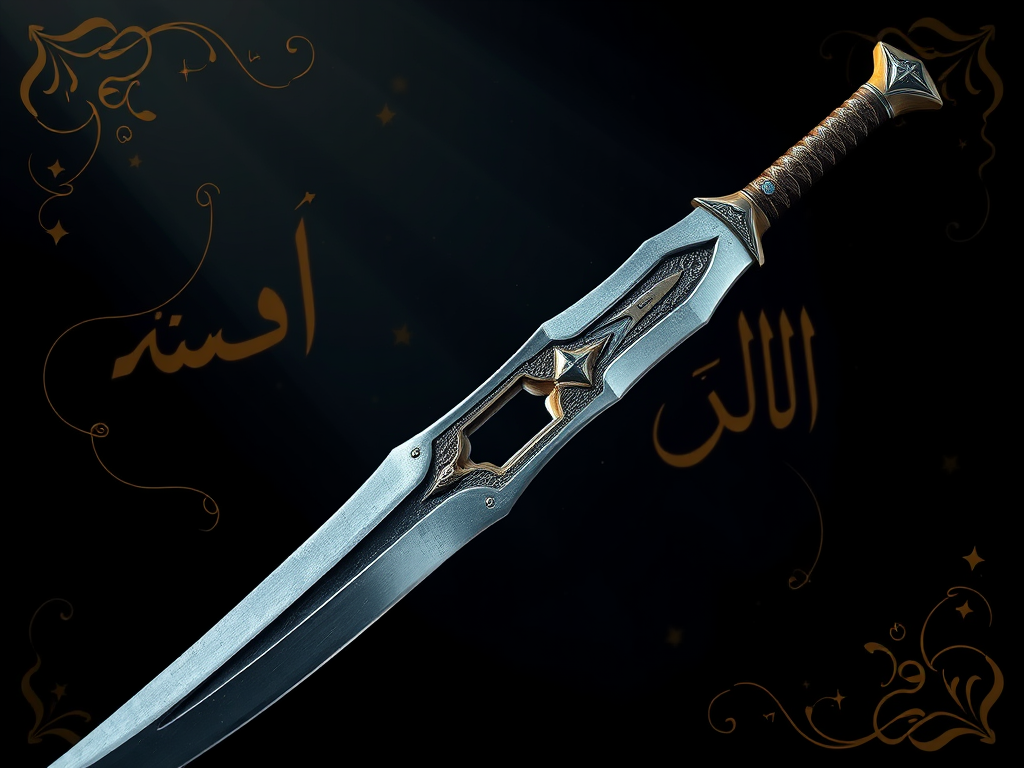
In Islamic tradition it specifically refers to a sword with a split or notched blade—the legendary weapon given by the Prophet Muhammad to his cousin and son-in-law ʿAlī ibn Abī Ṭālib.
It possibly comes from classical Arabic compound dhū / dhu (ذو) (possessor of; one who has), and fiqār / fiqar (فقار) (spine; vertebrae). Other sources suggest the second element may relate to the stars of Orion’s belt.
The phrase literally means “the one with the notches” or “owner of the notched spine.”
Sabih صبيح is a masculine Arabic name which comes directly from the Arabic word, صَبيح (ṣabīḥ), meaning, “comely; beautiful; handsome; graceful.” It is ultimately derived from the Arabic root word, صبح (ṣabuḥa) “to be beautiful; to be radiant; to beam.”
Sabiha صبيحة is its feminine form. It’s feminine form was borne by Sabiha Sultan (1894-1971) an Ottoman princess, the third and last daughter of Sultan Mehmed VI; the first Turkish female sculptor, Sabiha Bengütaş (1904-1992); and Turkish combat pilot, Sabiha Gökçen (1913-2001).
Suhail or sometimes transliterated as Suhayl, is derived from the Arabic word سَھْل (sahl) meaning “level; even; smooth, easy.” It is the Arabic name of the second brightest star known in the western world as Canopus. It’s appearance in the skies have traditionally been linked with the end of summer in the Arab world. It is the name of a few other stars.
It was also borne by one of the contemporaries of the Prophet Mohammed, known as Suhayl ibn ʿAmr (6th-century C.E).
Suhail appeared in the U.K. Top 1000 between 1996-2002, peaking at #694 in 1997. Its Urdu form of Sohail appeared in the U.K. Top 1000 between 1996-2007 and peaked at #305 in 1997.
Usage: Arabic-speaking world, most of the Islamic world
Gender: Female
Meaning: “little butterball.”
The name is derived from the Arabic rootز-ب- د (z-b-d), which pertains to “cream, foam, butter,” along with the Arabic feminine diminutive suffix, roughly translating to “little cream” or “little butter,” having the same sense as “cream of the crop.”
This was the sobriquet of Zubaidah bint Ja’far (766–831), the wife of Harun al-Rashid. Borne as Sukhainah or Amat al-‘Aziz, she was known for her construction of wells and reservoirs along the pilgramage routes to Mecca and is featured in The Thousand and One Nights. Her life was later the inspiration behind the character of Zobeide in the German opera Abu Hassan by Carl Maria von Weber.
The Turkish form of the name, Zübeyde, was borne by an Ottoman princess, the daughter of Sultan Ahmed II, who lived from 1728 to 1756. It was also carried by Zübeyde Hanım (1856–1923), the mother of Mustafa Kemal Atatürk. The name appeared in the Top 100 most popular female names in Turkey between 1980 and 1986, peaking at #70 in 1981
Ayman is derived from the Arabic word يمين (yamin) meaning “right,” referring to the right hand. The word is ultimately derived from a Semitic root ي م ن (right). The Arabic root word is y-m-n (ي-م-ن), which can mean “right hand,” “right side,” “favor,” “blessing,” “prosperity,” “ease,” or “success.” It shares the same root as the Hebrew מִין (yamin) meaning, “right hand; south,” which forms a basis of the name Benjamin. The country of Yemen also gets its name from the same root word.
The name was borne by a companion of the Prophet Mohammed, known as Ayman Ibn Abayd.
Ayman is a traditional male name in the Arabic-speaking world, but has been commonly used on females in Pakistan, possibly in reference to the kunya of Umm Ayman (meaning “mother of Ayman”, the mother of Ayman Ibn Abayd, or perhaps due to it sounding more feminine in the Urdu language.
Its traditional Arabic feminine form is Yamina يمينة which is a popular female name in Maghrebi countries but is used in other predominate Islamic countries. Another feminine form is Yumna يُمْنَى, which is currently the 983rd most popular female name in the United States (2021).
A more unusual feminine form is Yumnaat يُمْنَات.
Ayamin أَيامِن which is a plural form يمين (yamin) is occasionally used as a unisex name.
Ayman currently ranks as the 96th most popular male name in Catalonia, Spain (2021).
Its current rankings in other countries are as follows:
#407 (England & Wales, 2021).
#477 (France)
Its Turkish form of Eymen is the 5th most popular male name in Turkey (2021). In the Netherlands it ranks in at #344 (2022) and in France at #440 (2021).