Tugomil

  • Origin: Croatian
  • Meaning: “beloved in grief.”
  • Gender: Masculine

The name is a rare Croatian masculine name, composed of the Old Slavonic elements, tuga (sorrow, grief) and mil (dear, beloved).

Its designated name-day is September 15th and is mainly used in Northern Croatia.

A feminine form is Tugomila

Other potential forms include:

  • Tihomil (Czech, Slovak)
  • Tęgomil (Polish)

Source

Strachomir, Strahomir

  • Origin: Slavic
  • Meaning: “fear of peace.”
  • Gender: Male
  • Pol pron (STRAH-ho-MEER)

The name is composed of the Old Slavonic elements, stracho (fear) and mir (peace). Strachomir is the Polish form, it is first recorded in Poland in 1386 but has since fallen out of use.

It spun off the Medieval Czech and Polish male name, Strachota, which was used as a vernacular form of the Greek name, Methodius which also means “fear.” A hypothetical female form would be Strachomira.

Hypothetical Polish diminutive forms would be, Stracha, Strachot, Strasz, Straszech, Straszek, and Straszko.

The South Slavic forms are Strahimir Страхомир, Strahomir Страхимир, and Strashimir Страшимир.

Strashimirite is a type of mineral which was discovered by Bulgarian minereologist Jordanka Minčeva-Stefanova who named it after Bulgarian minerologist, Strashimir Dimitrov (1892–1960).

Strashimira Страшимирa is a Bulgarian feminine form and it is borne by Bulgarian volleyball player, Strashmira Filipova (b. 1985).

The designated name day in Croatia is September 9.

Sources

Lubomir, Lubomira

  • Origin: Slavic
  • Gender: masculine
  • Meaning: “love & peace.”

Lubomir is composed of the Slavic elements, lubo (love) & mir (peace).

Its Czech form of Lubomír was one of the most popular male names in the Czech Republic between 1935-2006, it peaked at #16 in 1959.

Other forms include:

  • Ljubomir Љубомир Љубомир (Bosnian, Macedonian, Serbo-Croatian, Slovene)
  • Lubomir Любомир (Bulgarian, Polish)
  • Lyubomir Лыѹбомир (Old Church Slavonic, Russian)
  • Lubomierz (Polish)
  • Ľubomír (Slovakian)
  • Lyubomyr (Ukrainian)

Diminutives & Short Forms

  • Ljubiša, Ljubo (Bosnian, Bulgarian, Serbo-Croatian, Slovene)
  • Luboš (Czech)
  • Ljube, Ljupcho, Ljupčo (Macedonian)
  • Ľuboš (Slovakian)

Feminine forms are

  • Ljubomira (Bosnian, Bulgarian, Macedonian, Serbo-Croatian, Slovene)
  • Lubomíra (Czech)
  • Lubomira (Medieval Slavic, Polish)
  • L’ubomíra (Slovak)
  • Lyubomyra (Ukrainian)

Sources

Plamen, Plamena

Plamen Пламен (Bulgarian & Serbian) is primarily South Slavic in the contemporary world, but comes from a pan-Slavic word meaning, “flame.” The feminine form is Plamena.

It was potentially Płomień in Medieval Polish. Płamen (male) and Płamena (female) are also modern Polish transliterations of the Bulgarian.

In Bulgaria, the designated name-day is November 8th.

Sources

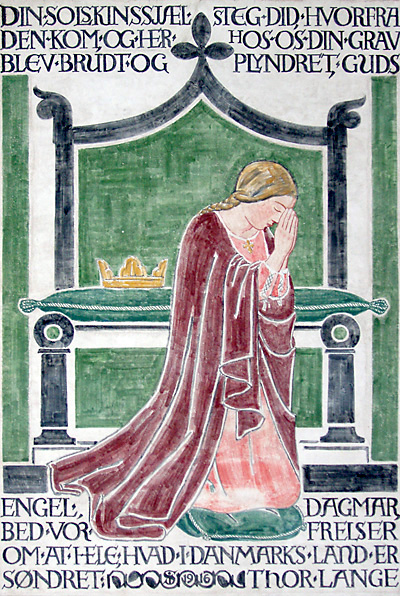
Dagmar

Gender: Feminine
Origin: Old Norse
Meaning: “day maiden; bright day.”

Dagmar is from the Old Norse elements dag meaning “day” and maer meaning “maid.” Some modern Danish folk etymology link the name to dag meaning day and meri meaning “bright.” It has also been linked to the old Slavonic name, Dragomir meaning “dear peace, beloved peace.”

The name was borne by Dagmar of Denmark (1186-1212), also known as Markéta of Bohemia, Princess Dagmar of Denmark (1890-1961), Maria Federovna, also known as Dagmar of Denmark (1847-1928), Empress Consort of Russia.

Dagmar is also used in Iceland, Finland, Estonia, the Netherlands, Sweden, Norway, Germany and the Czech Republic.

Other forms of the name include:

  • Dagmara (Czech/Lithuanian/Polish/Slovak/Slovene)
  • Dakmari/Dakmar (Finnish)
  • Takmar/Takmari (Finnish)
  • Dagmár (Old Norse)
  • Dagmey (Old Norse)
  • Dagmor (Old Norse)
  • Dammei (Norwegian: dialectical form from Austlandt)
  • Dargmara (Vendish)

Diminutive forms are Dagmaruška, Dáša, Daška, Dašenka, Dašička (Czech), Dagmarka (Czech/Polish), Didi (Scandinavian), Dada and Dadka (Slovakian).

Designated name-days are:

May 24 (Germany), September 27 (Denmark, Norway and Sweden), November 26 (Estonia), December 12 (Poland), December 20 (Czech Republic),

Engelbert

Origin: German
Gender: Masculine
Meaning: “bright angel; bright Angle.”

The name is either derived from the ancient Germanic elements engel meaning “angel” or angil meaning “Angil”, (an ancient Germanic tribe later known as the Anglos,) and the Germanic beraht meaning “bright.” The name was borne by a medieval German saint, an archbishop of cologne, who was martyred. Other famous bearers of the name include: Count Engelbert 1 of Berg (1160-1189), Engelbert Humberdinck (1892-1934) a German composer best known for his opera Hänsel und Gretel. Engelbert Humberdinck (b.1936) is a British pop singer born Gerry Dorsey, who took the stage name of Engelbert Humberdinck in honour of the German composer.

The name has experienced usage in Slovakia, the Czech Republic, Poland, (particularly in the region of Silesia), and Hungary. However, today, the name is extremely rare in all the above mentioned countries, especially in Germany where the name is considered very dated.

Other forms include the older German forms of Angilberct and Engelbrecht.

The designate name-day is November 7.


Liběna

Gender: Feminine
Origin: Czech
Meaning: “love”
(lee-BYEH-nah).

The name is derived from the Slavic element ljub meaning “love.” Its designated name-day in the Czech Republic is November 6th. Other forms of the name include the Bulgarian Lyubina and the Serbo-Croat Ljubina. Czech diminutive forms are Líba, Libuška and Libby.