August

It’s the beginning of August and summer is almost over. Hence is why I have decided to write about the August names.

The root of these names is the Latin verb augere meaning “to increase.” Augustus was a title given to Octavian, the first Emperor of the Roman Empire.

Augustus as a title implied a person with great reverence and awe, usually suggesting “venerated” or “exhalted.” The name eventually spun off as a first name, and even left an impact on our month names. In the Roman Empire, the month of Sexitilis’ name was changed to August in honour of the Emperor Octavian. Its feminine version is the austere and rather severe, version of Augusta. Both Augustus and Augusta have a lot of potential. Augustus fits right in with the other “old man” dramatic chic names that seem to be rising up the charts. Think Jasper, Atticus and Leo. There is a certain nobility and sophistication to the name. Its feminine version has the same vibe, fitting right in with other current trends, such as Sophia, Matilda and Eleanor.

We also have the much shorter version of August, which has been used across central Europe for centuries. August seems to be climbing up the American charts, he currently comes in at # 482, while the more formal version of Augustus has ways to go, coming in at # 795. If August still feels too wordy to you, then you might like August with an e, Auguste is the French form.

Of course, how could we ever forget the saintly and scholarly Augustine. The name Augustine is a derivative of the Latin, Augustinus. It has the same meaning as Augustus.

The name was borne by the renowned Catholic Theologian and Doctor of the Church, Augustine of Hippo. Either pronounced (uh-GUS-tin) or (AW-guh-STEEN) the name does not even appear in the top 1000. Parents may find the –stine ending too feminine. It would make a great middle name, or a great alternative to the more common Austin.

Other forms of the name include:

Augustus Forms

  • Augustu (Asturian/Sicilian)
  • Avqust (Azeri)
  • Aogust (Breton)
  • August (Catalan)
  • August (Croatian/English/German/Letzeburgish/Occitanian/Polish/Romanian)
  • Augustus(Czech/Danish/Dutch/English/Finnish/Frisian/Estonian/German/Latin/Norwegian/Swedish)
  • Guus (Dutch: originally a diminutive form, now used as an independent given name)
  • Aukusti/Aku/Aki (Finnish)
  • Auguste (French)
  • Ágost (Hungarian)
  • Ágústus (Icelandic)
  • Augustale (Italian: obscure)
  • Ágastas (Irish/Gaelic)
  • Augusts (Latvian)
  • Ësti (Letzebergish: initially a diminutive form)
  • Gust/Gusti (Letzebergish: initially diminutive forms)
  • Augustas (Lithuanian)
  • Ágošt (Prekmurian)
  • Aujußß (Ripoarisch)
  • Aokuso (Samoan)
  • Augosts (Samogaitian)
  • Austu (Sardinian)
  • Avgust (Slovene)
  • Augusto (Spanish/Italian/Portuguese/Aragonese/Basque)
  • Awgust (Sorbian/Turkmen)
  • Ågusse (Walon)

German diminutives are Gustel, Gustl, Gusti and Augi. Slovenian diminutives are: Gustek, Gustel, Gustelj and Gusti

Feminine forms include:

  • Augusta (Czech/Danish/Dutch/English/German/Italian/Portuguese/Spanish)
  • Gusta/Guusje/Guuske (Dutch: initially diminutive forms, used as independent given names)
  • Auguste (German: final E is pronounced)
  • Auguszta/Ágosta (Hungarian)
  • Ágústa (Icelandic)
  • Avgusta (Slovene)

Augustine Forms

  • Augustini (Albanian)
  • Agostín (Aragonese)
  • Avqustin (Azeri)
  • Aogustin (Breton)
  • Agustí (Catalan)
  • Augustín (Czech/Slovak)
  • Augustijn (Dutch)
  • Augustine (English)
  • Austin (English: a medieval contracted form of Austin, in the United States, this is the most prevalent form of the August names, in 2008, he was the 55th most popular male name, between 1997-1998, he was the 9th most popular male name)
  • Gus (English: sometimes used as an independent given name)
  • Augustin (French/Basque/Croatian/Danish/Norwegian/Romanian)
  • Agostiño (Galician)
  • Ágoston (Hungarian)
  • Ágústínus (Icelandic)
  • Agaistín (Irish/Gaelic)
  • Agostino (Italian)
  • Augustinus (Latin/Dutch/Frisian/Estonian/Finnish/German/Swedish)
  • Augustīns (Latvian)
  • Augustinas (Lithuanian)
  • Wistin (Maltese)
  • Agustin (Piedmontese)
  • Augustyn (Polish)
  • Agostinho (Portuguese)
  • Aujustin (Ripoarisch)
  • Augostėns (Samogaitian)
  • Austinu (Sardinian)
  • Avguštin (Slovene)
  • Agustín (Spanish/Asturian)
  • Awstin (Welsh)

Feminine forms include

  • Austine (English)
  • Augustine (French/German)
  • Agostina (Italian)
  • Augustina (Latin)
  • Augustyna (Polish)
  • Austina (Sardinian)
  • Agustina (Spanish)

Camilla

Gender: Feminine
Origin: Latin
Meaning: Unknown
(kah-MIL-lah)

Camilla, a little stodgy, a little dramatic, and a little British nobility, most of the English speaking world would probably associate her with Camilla Parker-Bowles, now the legitimate wife to Prince Charles.

Then we have Camille, a classy French feminine name that brings to mind pastellic landscapes and Claude Monet, but wait, Camille is actually a masculine name!

The origins of Camilla goes back to the very foundations of Rome itself.

In Roman mythology, Camilla of the Volsci was a pre-Roman princess. Her father, Metabus, was deposed by his own people; running for his life, along with his infant daughter, he tied Camilla to a spear and consecrated her to the goddess Diana, in hopes that the goddess would intercede for his only child’s life. In exchange, he promised that Camilla would be Diana’s loyal servant and forever remain a virgin in the goddess’ honour. Attached to the spear, Metabus threw Camilla to the otherside of the River Amasenus, and Camilla survived unscathed.

In Virgil’s the Aeneid, it is confirmed that Camilla is the loyal servant of Diana, but also a great warrior. It is said that she is so swift, that she can run across a body of water without getting her feet wet. She allied herself with the other pre-Roman peoples in order to defeat the Trojans who had recently taken refuge in Rome and were gradually taking power.Camilla was killed by Arruns in battle, and Diana in rage had another servant of hers, Opis, kill Arruns to avenge Camilla’s death.

In later years, Camilla became a Roman cognomen being masculinized to Camillus. The exact origins and meaning of the name are unclear. It is believed that it is of Etruscan origins and that its meaning has been lost to history.

In France, Camille was a male name, (and still is considered a male name but has recently become more common on females). It wasn’t until the turn of the century that its usage on females arose. In France’s top 100 female names of 2006, Camille came in at # 7. Even so, for the sake of policy, this blog will list Camille as a masculine name.

Notable males with this include, Camille Saint-Saëns, a famous composer. Camille Nimr Chamoun, former president of Lebanon. Nicholas Camille Flammarion, a French astrononomer. Camille Desmoulins, a close associate of Georges Danton, (he was a journalist who played a role in the French Revolution), as well as French impressionist painter, Camille Passarro.

Its notable female bearers cannot go unignored. It was borne by French sculptor, Camille Claudel, and it is also borne by American feminist, Camille Paglia.

Camilla has other masculine forms. In Polish and Czech it is Kamil (kah-MEEL) and it is fairly popular name in both countries, as is its feminine counterpart, Kamila.

Lebanese Christians also favor this name because it works well in the Arabic language, yet fits into the edicts of their faith. While St. Camillus de Lellis, (whose feast day is July 14), is a popular Catholic saint, Kamil also coincides with the Arabic word meaning “whole; complete; or perfect,” so for many Middle Eastern Christians, its a 2-for-1 name.

There is also the Italian male form of Camillo and the Spanish Camilo.

Camellia is often times seen as a cognate of Camilla. Its actually a botanical name that really has no etymological relations to the ancient name. It was named for botanist Rev. George Joseph Kamel.

Other forms of the name include:

  • Kamilia (Bielorusian)
  • Kamila (Bosnian/Czech/Slovak/Polish)
  • Camilla (Danish/English/German/Italian/Latin/Norwegian/Swedish)
  • Kamilla (Finnish/Icelandic/Hungarian)
  • Kamilė (Lithuanian)
  • Kamilija (Lithuanian)
  • Kamilijana/Kamilijona (Lithuanian)
  • Camila (Spanish/Portuguese)

Masculine forms include:

  • Kamil (Czech/German/Polish)
  • Camille (French)
  • Kamill/Kamilló (Hungarian)
  • Camillo (Italian)
  • Camillus (Latin)
  • Kamilas/Kamilis (Lithuanian)
  • Kamilijus (Lithuanin)
  • Camilo (Spanish/Portuguese)

Possible nickname options are Cammie, Cam, Milla, and Millie.


Calidia

Gender: Feminine
Origin: Latin
Meaning: debated
(kuh-LID-dee-uh)

The name is from an old Romen nomen, a feminine form of Calidius. Its either possibly derived from calidi, the name of a hot Roman winter drink, or it may be derived from calidus, meaning “warm; hot; fiery” or “having a warm climate.”

Bellona

Gender: Feminine
Origin: Latin
Meaning: “war.”
(bell-LONE-uh)

    The name is derived from the Latin word bellum meaning “war.”

    In ancient Rome, Bellona was an ancient war-goddess who was possibly leftover from the Etruscan era, in fact she is sometimes believed to have predated the Roman war god, Mars. Earlier sources have her listed as Duellona, which is derived from an even older word for war. She was considered a numinous god, that is god who is present in all places and objects. In later eras of Rome, Bellona was considered to be the consort and sister to Mars. In antiquated Rome, all things pertaining to political war endeavors were held at the Temple of Bellona.

    Her festival was celebrated on June 3rd.

    In modern culture, she is often used as a representation for military virtue. The name might make an interesting and more refreshing alternative to Bella and Isabella, both of which have become exceedingly popular.

    Other forms include:

    • Bellone (French)
    • Belona (Spanish)

    Atticus

    Gender: Male
    Origin: Greek
    Meaning: “from Athens.”
    (AT-tik-kus)

      The name has its origins in an ancient Roman cognamen, in addition to it being a popular Greek name, used in reference to someone who hailed from the Greek region of Attica, where Athens is situated.

      It was borne by Titus Pomponius Atticus, (35 BC). Saint Atticus of Constantinople (a.d. 425); Herodes Atticus, a Greek rhetorician (101-177) B.C.; Atticus the Philosopher, a companion to Plato (175 B.C.)

      In modern popular culture, it was the name of Atticus Finch, in (To Kill a Mockingbird), and the main title character of the novel by Ron Hansen, Atticus.

      The feminine form is Attica which was a common female name in Ancient Rome.

      During the last five years, the name has become increasingly more common in the United States, it currently ranks in # 689 and seems to be rising.

      Atticus is also a brand of clothing, founded in 2001, by Blink-182 band members Tom DeLonge and Mark Hoppus.

      Another form is the Serbo-Croatian, Atik.

      Tiburtius

      Gender: Male
      Origin: Latin
      Meaning: “from the Tibur”

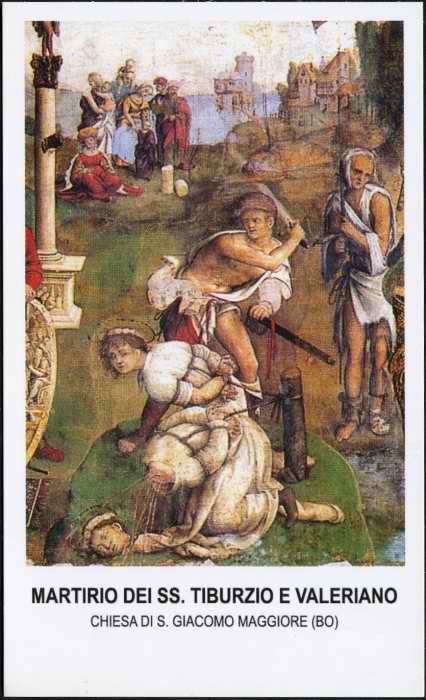
      Derived from the Roman cognomen, Tiburtius, meaning “from Tibur.” Tibur is the old Latin name for Tivoli Italy. This was the name of a very late 3rd-century saint who was martyred under Diocletian. Nicknames include Tib, Tibby and Burt.

      Other forms include  include:

      • Tibor (Czech/Slovak/Hungarian)
      • Tiburt (English)
      • Tiburce (French)
      • Tiborc (Hungarian)
      • Tiburzio (Italian)
      • Tiburcy (Polish)
      • Tiburcio (Spanish/Portuguese)

      Plautius, Plautia

      Origin: Latin
      Meaning: derived from the Latin word plaustrum meaning “wagon” or “cart.”
      Pronunciation: (Plow-shus); PLOW-see-oos)

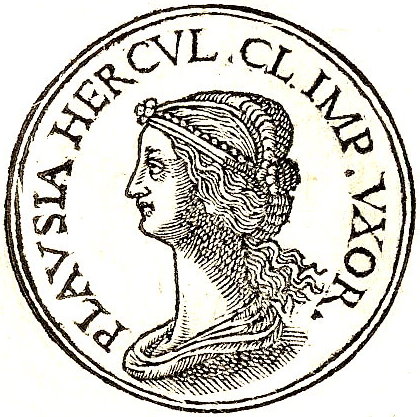
      Plautius was a common Roman praenomen. It was borne by the consul Aulus Plautius and the first wife of Emperor Claudius, Plautia Urganilla.

      Plautilla is a dimuntive form of the feminine Plautia.

      Other forms include:

      • Plauzio (Italian)
      • Plaucjusz (Polish)
      • Plaucio (Spanish)

      Feminine forms

      • Plauzia (Italian)
      • Plaucja (Polish)
      • Plaucia (Spanish)