Pakhom, Pacôme

Gender: Masculine
Origin: Ancient Egyptian
Meaning: “he-falcon.”
Fre (PAH-kome)

The name is composed of the ancient Egyptian elements, pa (he) and akhom (falcon).

The name was later hellenized to Pachomius and franconized to Pacôme.

The name is borne by a major Coptic Christian saint (circ.3rd-century C.E), who is also revered in the Roman Catholic and Eastern Orthodox Churches. Pakhom is credited for being the founder of Coptic Monasticism.

As of 2009, its French form of Pacôme was the 412th most popular male name in France.

Other forms of the name include:

  • Bakhoum باخوم (Arabic/Assyrian/Lebanese/Syrian)
  • Pacomi (Catalan)
  • Pacumi (Catalan)
  • Pakhom (Coptic)
  • Pacôme (French)
  • Pachôme (French)
  • Pakhomios Παχώμιος (Greek)
  • Pacomio (Italian/Spanish)
  • Pachomiusz (Polish)
  • Pacômio (Portuguese-Brazilian)
  • Pacómio (Portuguese-European)
  • Pahomie (Romanian)
  • Pahomij Пахомий (Russian/Slovene)
  • Pahomije (Serbian)
  • Paho (Slovene)
  • Paxomij Пахомій (Ukrainian)
The name was also borne by a 15th-century Serbian hagiographer and two patriarchs of Constantinople.
Pachomius is also the name of a genus of spider.

Amalia, Amelia

Gender: Feminine
Origin: Germanic
Meaning: “work.”
(uh-MAHL-yah); (uh-MAHL-ee-ah); (uh-MEE-lee-yah).

Amalia, the pretty, edgy name with the stern meaning, comes from the ancient Germanic word amal, meaning “to work.” However, the name has also been linked to the Greek word amalos, meaning “soft.”

Throughout the centuries, the name has been borne by German nobility and royalty alike. Its more favored form of Amelia was introduced to the English-speaking world when the German Hanover line married into the British royal family in the 18th-century. It was borne by the daughters of George II and III of England.

The name was also borne by Amelia Earhart (1897-1937)

Other forms of the name include:

  • Amàlia (Catalan)
  • Amálie (Czech/Slovak)
  • Amelie (Danish/Finnish/German/Norwegian)
  • Amalia (Dutch/Estonian/Finnish/Galician/German/Greek/Italian/Polish/Spanish/Romanian/Romansch)
  • Amelia (Dutch/English/Estonian/Finnish/German/Polish/Spanish. Polish diminutive forms are Amelcia, Amelka, Mela, Melcia and Melcia)
  • Amaali (Estonian/Finnish)
  • Amalja (Faroese)
  • Malja (Faroese)
  • Malla (Faroese/Norwegian/Swedish: obscure)
  • Amaalia/Amaliia/Amali/Amu (Finnish)
  • Amakka (Finnish)
  • Amalkka (Finnish)
  • Maali/Maalia (Finnish)
  • Amélie (French)
  • Amke (Frisian)
  • Amalie (German/Scandinavian)
  • Amely (German)
  • Amália/Amál (Hungarian)
  • Amélia (Hungarian/Portuguese/Slovak)
  • Amalía /Amelía (Icelandic)
  • Amālija/Amēlija (Latvian)
  • Amalija (Lithuanian/Slovak/Slovene)
  • Amelija (Lithuanian)
  • Amália (Portuguese)
  • Amelita (Spanish: initially a diminutive form, occassionally used as an independent given name)
  • Amaliya (Russian)
  • Ameliya/Hamaliya (Ukrainian)

In recent years Amelia has spiked in popularity coming in as the 41st most popular female name in the United States,(2010). Amelie, which did not even appeared in the Social Security List before 2001, currently comes in at # 681st most popular female name, (2010). Amelia and her various forms’ rankings in other countries are as follows:

Amelia

  • # 5 (England/Wales, 2010)
  • # 6 (Poland, 2009)
  • # 8 (Poland, Warsaw, 2010)
  • # 12 (Australia, NSW, 2010)
  • # 13 (New Zealand, 2010)
  • # 18 (Canada, B.C., 2010)
  • # 34 (Ireland, 2010)
  • # 43 (Scotland, 2010)
  • # 132 (Norway, 2010)
  • # 200 (France, 2009)
Amelie/Amélie
  • # 25 (Austria, 2010)
  • # 32 (Belgium, 2008)
  • # 34 (German-speaking, Switerland, 2010)
  • # 55 (England/Wales, 2010)
  • # 69 (Australia, NSW, 2010)
  • # 80 (Scotland, 2010)
  • # 111 (France, 2009)
  • # 297 (Netherlands, 2010)
Amalia/Amalie
  • # 11 (Amalie, Norway, 2010)
  • # 27 (Amalie, Denmark, 2010)
  • # 42 (Amalia, Romania, 2009)

Amalia does not figure in America’s top 1000. With the spotlight of Malia Obama, and the increasingly popularity of its Amelia counterpart, this name might be a potential hit within the next few years.

Possible nickname options include Amy, Mia, Lia, Mali, Malia and Molly.

There is a Scandinavian masculine form: Melius.

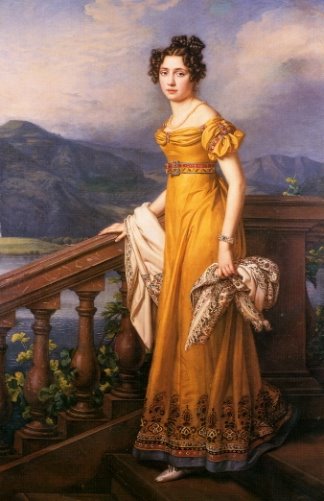
(Upper left, Amalie Auguste of Bavaria).

Jessica, Iscah

Gender: Female
Origin: Hebrew
Meaning “to behold.”
(IS-kuh); (JES-sik-kuh)

The name Jessica is an Anglicization of the Hebrew name, Iscah, which is borne in the Old Testament by a niece of Abraham.

Jessica first appeared in Shakespeare’s, the Merchant of Venice (1596), it is believed that the English author corrupted a Greek transliteration of the Hebrew Yiskah יִסְכָּה, which in the Bible of Shakespeare’s time would have been rendered as Jescha or Jesca. In the Merchant of Venice, Jessica is the name of the beautiful daughter of Shylock.

Yiskah (יסכה)  is said to come from the Hebrew root sachah (סכה), which means “to see.” Adding the yud implies future tense which makes the name imply foresight or clairvoyance.

The famous French rabbincal scholar, Rashi, claimed that Yiskah was another name for Sarah, the wife of Abraham, since she was beautiful to behold and she was known for her prophetic foresight.

The name did not get much usage until the end of the 20th-century, where it became one of the most popular female names in the United States during the 70s, 80s and 90s.

She seems to have steadily rose over a 20 year span between the 1960s and early 1970s. She jumped several places between 1969 and 1970, going from the 134th position in 1969 way up to # 98 in 1970, from thereon, the name continued to rise, peaking at # 3 in 1978. She remained in the top 10 throughout the 70s, 80s and 90s, sometimes hitting the 1st place position. In 2001, she dropped all the way down to # 11, and he has been declining since, currently, as of 2010, she is the 92nd most popular female name. In other countries, her rankings are as follows:

  • # 6 (England/Wales, 2010)
  • # 8 (Northern Ireland, 2010)
  • # 11 (Scotland, 2010)
  • # 17 (New Zealand, 2010)
  • # 20 (Australia, NSW, 2010)
  • # 29 (Ireland, 2010)
  • # 42 (Canada, B.C., 2010)
  • # 43 (German-speaking Switzerland, 2009)
  • # 71 (Mexico, 2010)
  • # 82 (Dzsesszika, Hungary, 2010)
  • # 171 (Norway, 2010)
  • # 262 (France, 2009)
  • # 304 (Netherlands, 2010)

Other forms of the name include:

  • Jèssica (Catalan)
  • Jessika/Jesika (Czech/Polish/Slovak: relatively recent in usage, and is becoming more prevalent)
  • Jessa (English: contraction of Jessica)
  • Jessica (English/Dutch/German/Finnish/French/Scandinavian/Spanish: a borrowing from the English and becoming more and more prevalent, sometimes rendered phonetically as Jessika in Germanic countries)
  • Jescha (English: archaic)
  • Iekika (Hawaiian)
  • Iscah/Yiskah יִסְכָּה (Hebrew)
  • Jiska (German: very obscure)
  • Dzsesszika (Hungarian)
  • Jiszká (Hungarian)
  • Gessica (Italian)
  • Džesika (Lithuanian)
  • Dżesika (Polish: phonetic rendition and the more popular form, becoming more common in Poland)
  • Jéssica (Portuguese-Brazilian)
  • Jesica (Spanish)

Diminutive forms are Jessie and Jessy.

The names are borne by pop singer, and actresses Jessica Tandy (b.1908), Jessica Lange (1942), Jessica Simpson (b.1980), Jessica Alba (b.1981), Jessica Biel (1982).

Daisy

Gender: Feminine
Origin: English
Meaning: “day’s eye, name of the flower.”
(DAY-zee)

The name has been used as a diminutive form of Margaret in England since the Middle Ages, but did not catch on as an independent given name till the Victorian Era, when other floral names came into fashion.

Its usage as a diminutive form of Margaret has to do with the fact that in French the word for daisy is marguerite. Margherita and Margarita is the word for daisy in their own respective languages.

In the Colonial period, when the name Candace was often pronounced as (kan-DAY-see) vs (CAN-das), Daisy was sometimes used as a diminutive form.

The etymology of Daisy itself is from the Anglo-Saxon, dægeseage, meaning, “day’s eye.”

Since the 19th-century, its usage has been borrowed by non English-speaking countries, such as Sweden, the Netherlands, Germany and some of the Latin American countries.

As of 2010, Daisy was the 15th most popular female name in England/Wales. Her rankings in other countries are as follows:

  • # 44 (Scotland, 2010)
  • # 59 (Northern Ireland, 2010)
  • # 71 (Ireland, 2010)
  • # 85 (New Zealand, 2010)
  • # 151 (United States, 2010)
  • # 250 (Netherlands, 2010)

The name is borne by the Disney Character and girlfriend of Donald Duck, Daisy Duck. Daisy Duke of The Dukes of Hazard and by Cuban-American model, Daisy Fuentes (b.1966).

Poppy

Gender: Feminine
Origin: English

Are you loving Lily? Maybe the popularity has gotten to you. There is this spunky floral moniker that has already reached outrageous popularity in Great Britain. Poppy is a sweet little floral that has been in usage since at least the 19th century. The name may seem a bit too insubstantial for some, hence is why it is sometimes listed as a nickname for such names as Parthenope, Penelope, Persephone, Pippilotta, Philippa, Pomeline and Perpetua.

The associations with the flower are beautiful! Who wouldn’t want to be named for a deep red, eye popping flower (no pun intended). Then again, its symbolisms with death and sleep can be a bit of a turn off for others.

In Ancient Rome and Greece, the poppy was a funerary flower, they were usually placed on graves. The poppy got the association of death and sleep, since opium, (which is extracted from poppy seeds), was such a strong barbiturate. In fact, it was so strong, that the ancients used it as an anesthetic while conducting surgeries. However, Poppy does have the redeeming qualities of being associated with resurrection, since after being put under a death like sleep from opium during an operation, the patients always seemed to awaken as if they had come back to life. Its symbolism for dead soldiers comes from a poem written by John McCrae, entitled in Flanders Fields (1915). McCrae writes how he witnessed his friend perish amidst a field of poppies during WWI, and he compares the field of poppies to all the fallen dead soldiers. The name could be a nice way to honour a relative that has perished in a war.

As of 2010, Poppy was the 16th most popular female name in England/Wales. Her rankings in other countries are as follows:
  • # 47 (Scotland, 2010)
  • # 52 (Northern Ireland, 2010)
  • # 66 (Australia, NSW, 2010)
In the United States, it doesn’t even rank in the top 1000. However, with its growing popularity in Britain along with its similar appeal to other red hot climbers such as Scarlett and Ruby, she just might be making her way into the top 1000 by next year.
Another interesting side note is that Poppy is the flower of the month of August. Not a bad choice for an August baby.
A famous American bearer is CNN news anchor and reporter, Poppy Harlow (née Katharine) b.1982

Freya

Gender: Feminine
Origin: Old Norse
Meaning “lady; mistress”
(FRAY-yah)

The name is derived from the proto-Germanic word, *frawjōn, which designates a woman of noble birth. The modern German word of Frau is a modern cognate. Many scholars argue whether Freya was originally the name of the goddess or a title used in reference to her; it has even been suggested that the goddess had an actual given that has been lost to history.

In Norse mythology, Freya was believed to be the most beautiful goddesses ever created. Scholars believe that Freya was essentially a fertility goddess who assisted in the growth of wildlife, agriculture and human reproduction; along with birth and life, she was also associated with death. In Norse legend, it was Freya who received half the slain warriors into her heavenly hall.

She is often times the subject of the poetic eddas along with her numerous epithets, which are as follows:

  • Vanadis (beautiful goddess)
  • Mardoll (sea bright)
  • Horn (flaxen)
  • Gefn (the giver)
  • Syr (sow) which illustrates Freya’s association with pigs and fertility.

Today the name has survived in modern Germanic lexicons; the English word Friday means “Freya’s day” likewise the same in German with Freitag; the Danish/Swedish/Norwegian Fredag and the Dutch Vrijdag.

There are a few plants named for the goddess, such as Freyja‘ Hair and Freyja’s Tears, and the chemical Vanadium is derived from her epithet, Vanadis.

Today, Freya, and its alternate forms are still very common throughout Scandinavia and she even appears in the British top 100. Her rankings are as follows:

  • # 8 (Freja, Denmark, 2010)
  • # 19 (England/Wales, 2010)
  • # 19 (Scotland, 2010)
  • # 41 (Freja, Sweden, 2010)
  • # 53 (Northern Ireland, 2010)
  • # 61 (Ireland, 2010)

Other forms include:

  • Frea (Anglo-Saxon/Lombard)
  • Fröe (Danish: obscure form)
  • Freya (English/Modern German/Dutch)
  • Froya (Faroese)
  • Freija (Finnish)
  • Frya/Frija (Frisian)
  • Freja (German/Scandinavian)
  • Fráujo (Gothic)
  • Frėja (Lithuanian)
  • Frieja (Low Saxon)
  • Frøya (Norwegian)
  • Freyja (Old Norse/Icelandic)
  • Frīa/Frija (Old High German)
  • Frowa (Old High German)
  • Fröa (Swedish: very obscure form)
  • Fröja (Swedish: very obscure form)
The designated name-day in Sweden is January 23rd.

Imogen

Gender: Feminine
Origin: English
Meaning: “maiden; girl.”
(IM-ə-jən)

The name was popularized through Shakespeare’s play, Cymbeline (1609), in which it is the name of the wife of Posthumus.

According to most sources, in particular the 1986 Oxford Edition, Imogen was either an intentional or accidental misprint of the Celtic, Innogen, which was derived from the Celtic word, inghean, meaning, “girl; maiden.”

As of 2010, Imogen was the 26th most popular female name in England/Wales. Her rankings in other countries are as follows:

  • # 50 (Australia, NSW, 2010)
  • # 77 (Scotland, 2010)
Imogen has never ranked in the U.S. top 1000, its Italian form of Imogene, however, was in the top 1000 between 1880 and 1955. The highest she ever ranked was in 1927, coming in as the 158th most popular female name.

Other forms of the name include:

  • Imogene (English/Italian: Eng IM-ə-jeen; It ee-moh-JEY-ney)
  • Imogène (French: e-moh-ZHEHN)
  • Imogena (Polish/Spanish)

Common nickname options are Immy and Genny (pronounced like Jenny).

Notable bearers include American actress and comedienne, Imogene Coca (1908-2001), Australian model and actress, Imogen Bailey (b. 1977), American photographer, Imogen Cunningham (1883-1976) and British singer-songwriter Imogen Heap (b.1977).

Sources

Phoebe

Gender: Feminine
Origin: Greek
Meaning: bright; light
(FEE-bee).

To many Americans, Phoebe brings to mind the wacky yet lovable character of Phoebe Buffay on the popular SitCom, Friends. To the British, she is of an upper crust trendy sort, to Christians, she is an admirable woman in the New Testament, and to the Greeks, she is a classic, featured in both the Greek Orthodox calendar of saints as well as in Greek myth.

The name is derived from the Greek, Phoibus, which means “bright, light.”

In Greek Mythology, Phoebe was a pre-Olympic goddess, a Titan. She was the goddess of the moon and the consort of her own brother Coeus, from him, she mothered Asteria and Leto and was believed to be the grandmother of Artemis and Apollo.

The Greeks later associated her with the goddess Artemis. Phoebe was often used as an epithet for Artemis, while the masculine form, Phoebus, was used for Apollo.

Phoebe was also associated with the Oracle of Delphi.

There are a few other Phoebes mentioned in ancient Greek religion, one was a Heliade nymph, another was the daughter of Leucippus and Philodice.

Phoebe, daughter of Leucippus, and her sister Hilaeira, were priestesses to Artemis and Athena. They were both betrothed to Idras and Lynceus. Castor and Pollux, the divine twins, were so impressed by their beauty, that they fell in love with the two maidens and carried them off for themselves. Idras and Lynceus, outraged, sought the two immortals but were both slain. Nevertheless, Phoebe married Pollux. It was also the name of a sister to Leda.

In the New Testament, the name is borne by a woman of Cenchrae, many scholars argue that she was a deaconess, the Catholic Church especially seems to support this stance. She is also believed to have brought Paul’s Epistle of the Romans to Rome. She is a canonized saint in both the Catholic and Greek Orthodox Churches, both rites hold her feast on September 3rd.

Fast forward to the 1500s and you will find the name Phebe, (an older English spelling), as the name of one of Shakespeare’s characters in his play, As You Like It. In the modern American Classic, she is the younger sister of Holden Caulfied in J.D. Salinger’s Catcher in the Rye. Polish Science Fiction writer, Jacek Duraj, uses the name as an acronym for post-human beings in his novel Perfekcyjna niedoskonałość.

Phoebe is also the name of a genus of evergreen tree, a species of bird and a moon of the planet, Saturn.

As of 2010, Phoebe was the 29th most popular female name in England/Wales. Her rankings in other countries are as follows:

  • # 56 (Australia, NSW, 2010)
  • # 90 (Northern Ireland, 2010)
  • # 93 (Scotland, 2010)
  • # 309 (United States, 2010)

Other forms of the name include:

  • Febe (Asturian/Danish/German/Italian/Norwegian/Polish/Portuguese/Spanish/Swedish)
  • Foibe (Danish)
  • Phoebe (Dutch/English/German)
  • Phœbé/Phébé (French)
  • Phoibe (German)
  • Phoebi/Phoibi (Greek)
  • Feba (Serbo-Croatian)
  • Foibe (Swedish)

Summer

Gender: Feminine
Origin: English
(SUM-mer)

The name comes directly from the English word for the season. Though a more modern introduction into the lexicon of English given names, the word summer in various languages has been used as a traditional female name for centuries in other cultures. Examples include Vasare, Verë, Suvi and a host of other names.

Summer seems to have first appeared in 1949, albeit rare, it was given to at least 5 girls born in the United States that year. She really started to soar in 1971, the year she first entered the top 1000 coming in as the 869th most popular female name and she has remained in the U.S. top 1000 since.

As of 2010, Summer was the 30th most popular female name in England/Wales. Her rankings in other countries are as follows:

  • # 36 (Scotland, 2010)
  • # 37 (Australia, 2010)
  • # 51 (Canada, B.C., 2010)
  • # 82 (Northern Ireland, 2010)
  • # 164 (United States, 2010)

Its German form of Sommer just recently came into usage in German-speaking countries.