Anglo-Norman Word Names

I thought I would do a list each week of names inspired by words from endangered or extinct languages. Here is a list of Anglo-Norman words that would make great names. These are hypothetical, not necessarily legitimate, (there are legitimate names mixed in) but what a great way to revive a dead language by using one of its words as a name.

If you are unfamiliar as to what Anglo-Norman is, here is a brief explanation: https://en.wikipedia.org/wiki/Anglo-Norman_language

Male

  • Adamant “diamond”
  • Archal “copper”
  • Arsun “cinder; ash”
  • Aust “late summer”
  • Aver “bird”
  • Baudie “joy”
  • Baron “man”
  • Baume “balm”
  • Boi “wisp of hay”
  • Brander “to brighten; to become light”
  • Burgeon “shoot; bud”
  • Cane “duck”
  • Cauber “to be to defend oneself”
  • Chrestien “Christian”
  • Clou “clove”
  • Colum “dove”
  • Corbin “raven”
  • Devin “divine”
  • Don “gift”
  • Doinus “dun color”
  • Dorer “golden”
  • Glauc “greyish-yellow; yellow; orange”
  • Gort “river”
  • Guitun “young lad”
  • Hanetun “drone bee”
  • Herbe “grass”
  • Hobyn “pony”
  • Jouo “day”
  • Lettrel “learned man”
  • Mes “angel”
  • Mortun, name of a type of bird that inhabited moorlands
  • Mund “world”
  • Munter “to rise into the sky”
  • Neir “black”
  • Orin “made of gold”
  • Oscur “dark”
  • Remis “pale”
  • Sauz “willow”
  • Sort “fate; destiny”
  • Sunger “to dream”
  • Tensor “treasure”
  • Traire “to shoot an arrow”
  • Trembler “aspen”
  • Vereder “robin”
  • Verdur “green”
  • Versant “heavy rain”
  • Vif “alive”

Female

  • Adamantine “diamond”
  • Agace “magpie”
  • Aignelet “little lamb”
  • Aingrele “St. Lucy Cherry tree”
  • Alaute “lark”
  • Alcanne “alkanet”
  • Aleine “breath”
  • Ameroke “mayweed”
  • Amisté “affection; love”
  • Amur/Amurette “love”
  • Ancele “maiden”
  • Anete/Anatin “duck”
  • Angelot “cherub”
  • Argentine “argentine lily”
  • Aristologie “black briony”
  • Aubespine “hawthorn”
  • Aumone “charity”
  • Avellane “hazelnut”
  • Assida “ostrich”
  • Aube “dawn”
  • Avette “bee”
  • Baette “little berry”
  • Baie “berry”
  • Bai “bay laurel”
  • Balaustie “wild pomegrante flower”
  • Bederne “wren”
  • Belendin, name of a type of ginger
  • Berbeiete “young lamb”
  • Bliaine “briony”
  • Blowet “hyacinth”
  • Brin “small diamond”
  • Brunet “brown”
  • Burnette “hedge sparrow”
  • Cabaline “ivy”
  • Caladre, name of a type of bird that has been lost to translation
  • Carole “song; to dance”
  • Cendre “cinder; ash; Ash Wednesday”
  • Cercele “teal duck”
  • Chalandre, name of a type of lark
  • Chançonele “little song”
  • Chançunette “song”
  • Chantelette “ditty”
  • Chastein “chestnut color”
  • Chele “bell”
  • Cimbra “amber”
  • Cirevere “service-tree”
  • Clincel “river”
  • Conchete “little sea shell”
  • Coudraie “hazel thicket”
  • Creance “belief”
  • Cressant “waxing of the moon”
  • Creterel “starling”
  • Delice “delight”
  • Denree “penny”
  • Dité “song; melody”
  • Do “doe”
  • Doneison “gift”
  • Dru “beloved; dear”
  • Druerie “love”
  • Dulcel/Ducet “sweet”
  • Duz “pleasant; charming”
  • Empenné “winged creature”
  • Eruce “eglantine”
  • Escarlaté “scarlet”
  • Esmeraude/Meraude “emerald”
  • Esté “summer”
  • Esturial “north star”
  • Fei “faith”
  • Fenette “hay; straw”
  • Flamesche “ember”
  • Flamme “flame”
  • Fresnele “ashweed”
  • Fressun “knee holly”
  • Fullica “coot”
  • Garenne “game bird”
  • Garinade “garnet; red crystal”
  • Gemme “gemstone”
  • Gernete “garnet”
  • Gingembre “ginger”
  • Gladene “iris”
  • Glai “sword-grass”
  • Glaiol “iris”
  • Gaudine “ground ivy”
  • Golde “marigold”
  • Gramine “couch grass”
  • Grue “bird”
  • Gutiere “rain shower”
  • Havene “haven; refuge”
  • Helzan “sorrel brown”
  • Ipia “scarlet pimpernel”
  • Illirica “Illyrican iris”
  • Ireos “fleur-de-lis”
  • Jaglel “florentine iris”
  • Jolivet “pretty”
  • Jonet “St. John’s pear”
  • Kendale, name of a green woollen cloth from Kendal (Cumbria)
  • Kyriele “song of praise”
  • Laurin “oil of bay laurel”
  • Lavendule “lavender”
  • Lazule “lapis lazuli”
  • Lei “faith; religion”
  • Letanie “April 25th, Letania Major”
  • Leune “lioness”
  • Levé “resurrection”
  • Leveret “young hare”
  • Liricam “pine resin”
  • Loriole “golden oriol”
  • Lumine “light”
  • Lune “moon”
  • Luur “light of heaven”
  • Margerie “pearl”
  • Marin “of the sea”
  • Martagon, name of a type of lily
  • Matiste “amethyst”
  • Matutin/Matutinel “morning star”
  • Mauve “sea-gull”
  • Mauviz “songthrush”
  • Mayyen “maythe camomile”
  • Mede, name of a type of green precious stone
  • Merlet “martlet”
  • Mé “sea”
  • Mespili “medlar fruit”
  • Mestrie “wisdom”
  • Milelott “sweet clover”
  • Mirabille “miracle”
  • Mirabolan “mirabelle tree”
  • Mirtin “of myrtle”
  • Morele “belladonna; deadly nightshade”
  • Muget “nutmeg”
  • Naisel “young pearl”
  • Neif “snow”
  • Nettesse “purity”
  • Niule “cloud”
  • Noiselle “hazelnut”
  • Noué “Christmas”
  • Nue “firmament; sky”
  • Nuette “small cloud”
  • Orchel “violet”
  • Ortolane “garden mallow”
  • Palea “camel-hay”
  • Papirun, name of a red gemstone
  • Pauline “climbing evergreen ivy”
  • Pédeleun “lady’s mantle”
  • Peluette “mouse ear hawkweed”
  • Penne “feather”
  • Peperonge “briar fruit”
  • Perdrice “female partrige”
  • Perdrizel “young partrige”
  • Pere “jewel”
  • Persan “purple; dark blue”
  • Persica “peach”
  • Pica “woodpecker”
  • Plovel “southwest wind”
  • Pomice/Poncete “pumice”
  • Prael “small meadow”
  • Prasie “green quartz”
  • Primerole “primrose”
  • Prunele “sloe; small plum”
  • Prunette “plum”
  • Pume “apple”
  • Purprine “purple dye, purple”
  • Raînotte “frog”
  • Reial “royal”
  • Reverie “dream”
  • Reyel “sconce”
  • Rikelot “magpie”
  • Roele “wheel of fortune”
  • Rosemarin “rosemary”
  • Rugerole “red poppy”
  • Runce “bramble”
  • Russelet “brook”
  • Russignole “nightingale”
  • Sephoine “Christmas rose”
  • Serein “night air”
  • Seri “agreeable”
  • Silenite “moonstone”
  • Solé “sun”
  • Sussie “marigold”
  • Tempré “serene”
  • Tiphanie “Epiphany”
  • Tresbel “very beautiful”
  • Urmel “young elm”
  • Varole “catterpiller of the cabbage butterfuly”
  • Veire “Springtime”
  • Verglace “black ice”
  • Yarou “yarrow”

Ziv, Ziva, Zivit

800px-Cloud_in_the_sunlightZiv is a male Hebrew name which comes directly from the Hebrew word זִיו (ziv) meaning, “brightness, radiance, splendor. In the Bible, this was the name of second month of the Jewish Calendar  (1 Kings 6:1, 6:37), which in modern times is known as Iyar.
Ziva and Zivit are its feminine forms, though Ziv has also been occasionally used on girls.

Alternately, Ziva is can be a latinate form of the Slavic Živa

Sources

Zabdiel

zabdielOrigin: Biblical Hebrew
Meaning: bestowed by God; gift of God
Gender: Masculine
(ZAB-dee-el)

The name is composed of the Hebrew elements, zeved זבד (gift, bestowal) and el אל (elohim; God).

The name is borne in the Old Testament by 2 very minor characters.

  • In (1 Chronicles 27:2) Zabdiel is mentioned as the father of Jeshobeam and one of the 12 commanders of the subdivisions in Israel.
  • In (Nehemiah 11:14), Zabdiel is the son of Heggedolim.

In the English-speaking world, the name came into sporadic use in the 16th-century, around the time of the Protestant Reformation. Notable bearers include early American physician Zabdiel Boylston 1679-1766 (who is noted as the first person to perform a surgical operation in the U.S.), and Massachusetts representative, Zabdiel Sampson (1781-1828).

Sources

Cvijeta

cvijeta_zuzori_Origin: Serbo-Croatian
Meaning: “flower”
Gender: feminine
(TVEE-yet-tah)

The name comes directly from the Serbo-Croatian word for flower and was used as a vernacular form of the Latin Flora.

The name was born by Cvijeta Zuzorić (1552-1648), a Croatian lyric poetess who was able to write in Croatian, Latin and Italian.

The designated name day is January 3rd.

Sources


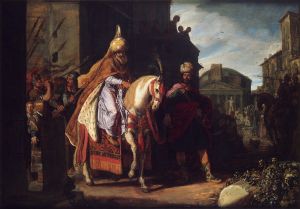
Mordecai

MordecaiOrigin: Biblical
Meaning: debated
Gender: Masculine

The name is of debated origin and meaning. It is found in the Book of Esther as the name of the adopted father of Esther, the son of Jair of the tribe of Benjamin. Mordecai was a Persian subject of Jewish extraction who refused to bow down before Haman, who as a result, proclaimed an edict to kill all Jews. Through the successful plotting of Mordecai and his adopted daughter Esther, they were both able to entrust themselves to the Persian king who upon marrying Esther, foiled Haman’s plot to annihilate the Jews.

The meaning and origin of the name itself seems to be debated. A popular theory is that it is from a Persian name, Marduku, which simply means “servant of Marduk” or “belonging to Marduk.” Marduk was the name of the supreme Sumerian creator diety who had been worshipped in Ancient Persia and Babylon. According to scholars, it would not have been unlikely for Jews to bear the name of a pagan diety as many exiled Jews took the names of their captors; among ancient Persian Jews, Marduk would have just been a general translation of “God.”

Other theories propound that it comes from various Hebrew root words, such as

  • מַר, מָרִיר (mar) “bitter”
  • from a Hebrew source r-d-d “bruising”
  • from a Hebrew source m-r-d “contrition”

According to rabbinic literature, a Midrashic interpretation of Mordecai is that the name is from the Hebrew words, mara dochi, meaning “pure myrrh.” It is also suggested that  Mordecai’s name was actually Mordecai Bilshan, based on Ezra 2:2 and Nehemiah 7:7, and thus the name has also been interpreted as meaning “master of many languages” due to the latter element, reminding readers that Mordecai was highly learned.

In the English-speaking world, Mordecai has been in use since at least the 16th-century, and seems to come into popular use after the Protestant Reformation.

Other forms of the name include:

  • Mardec’hai (Breton)
  • Mordechai (German/Dutch)
  • Mardoqueo (Spanish)
  • Mardochée (French)
  • Mardocheo (Italian)
  • Mordekai (Norwegian/Swedish)
  • Mardocheusz (Polish)
  • Mordecai (Portuguese)
  • Mardohej Мардохей (Russian)
  • Mordekaj (Serbo-Croatian)
  • Mordokai (Finnish)
  • Mardohaj Мордехай (Ukrainian)

Mordecai has not appeared in the U.S. top 1000, but Mordechai has. The latter entered the U.S. top 1000 in 2003 when it came in as the 963rd most popular male name. Mordechai disappeared and reentered in 2016 as the 998th most popular male name.

Nicknames include:

  • Mordy
  • Chai/Kai

Sources

Colette

Colette.jpgOrigin: French
Meaning: a contraction of Nicolette
Gender: Feminine
Pronunciation: ko-LET

The name is a contraction of the French, Nicolette, which is a feminine form of Nicolas.

As an independent given name, it has been in use since Medieval times. A notable Medieval bearer is St. Colette of Corbie (1381-1447). According to legend, St. Colette’s mother gave birth to her at the age of 60, after praying to St. Nicolas after years of infertility. The happy parents of the saint named her Nicole, in honour of St. Nicolas and she was known as Colette thereafter.

St. Colette lived a great deal of her life as an ascetic hermit, until she was inspired to join the Poor Clares, and eventually founded her own religious order known as the Colettines.

St. Colette was known for performing miracles on women who were experiencing difficult childbirths and as a result, is venerated as the patron saint of women trying to conceive, expectant mothers, and sick infants.

A more recent famous bearer was French novelist, Colette, however, in her case, Colette was her surname, her true name being Sidonie-Gabrielle Colette (1873-1954). Colette did go on to bestow this name on her own daughter, Colette de Juvenal (1913-1981).

And it is perhaps due to the latter illustrious figure that Colette took off in the English-speaking world. Among those of non-Frankish roots, whether in the U.K. or North America, Colette did not come into use until the 1920s. Her world famous novella, Gigi however, did not come into the spotlight until the 1940s, so there may have actually been a different source that propelled its use.

Currently, Colette is 468th most popular female name in the United States (2016). It first entered the U.S. Top 1000 in 1928. Colette peaked in 1966, ranking in as the 372nd most popular female name.

In France, the name was in the top 10 between 1934-1942. She was the 6th most popular female name in France between 1936-1937. Colette fell out of the charts in 1977 and has not been seen since.

Other forms of the name include:

  • Coleta (Catalan/Spanish)
  • Koleta (Czech/Polish/Slovakian)
  • Collette (English)
  • Coletta (Italian)

Sources

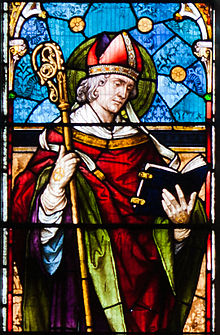
Colman, Colmán, Coleman

St. Colman.jpgOrigin: Gaelic
Meaning: “dove”
Gender: masculine
Ir. (kole-MAHN); Eng. (KOLE-men)

The name comes directly from the Gaelic word colmán (dove). The name was borne by numerous early Irish saints and several Irish kings.

Colman has never appeared in the U.S Top 1000, but its English offshoot, Coleman, has. Coleman has been in the U.S. Top 1000 Most Popular Male Names since 1900. It peaked in 1903, coming in as 360th most popular male name. In 2016, it was the 963rd most popular male name.

Other forms of the name include:

  • Coleman (English)
  • Colman (French/English/Hungarian)
  • Colmano (Italian/Spanish)
  • Colomà (Catalan)
  • Coloman/Koloman (Dutch/German)
  • Colomano (Italian)
  • Kolman/Koloman (Polish)
  • Kolonat (German)

Sources

Mercy

Mrs_James_Warren_(Mercy_Otis),_by_John_Singleton_Copley

Mercy Otis Warren

The name comes directly from the English word and has been in use as a given name since the 16th-century. The name became even more popular in the 17th-century among the Puritans.

The name has only been in the U.S. Top 1000 since 2012. In 2016, it was the 791st most popular female name in the United States.

The name was borne by an early American female political writer, Mercy Otis Warren (1728-1814). She was a staunch patriot who supported American Independence from England.

Its Spanish form is Mercedes

Sources


January Names

JanuaryI thought at the beginning of each month, I would post a list of names associated with the that particular month. Below is a list of names I have previously written about associated with January


Agnes: January 21st is the feast of St. Agnes and according to folklore, on January 20th, which John Keats’ was inspired to write a poem about, unmarried girls are supposed to see a future glimpse of their husband in their dreams the night before, provided they do not eat that day.

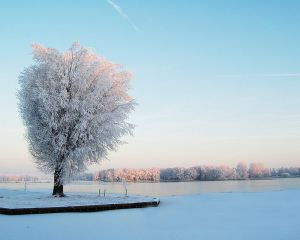
Frost: January is often associated with cold temperatures and frosty weather. Here are some name associated with frost

Sarma, Sarmite: These 2 Latvian lovelies come directly from the Latvian word for hoarfrost. The latter is pronounced sar-MEE-teh.

Kirsi: This Finnish female name is associated with the cherry fruit but also means “frost” in Finnish.

Other names that mean “frost” or words for frost from other languages include:

Male

  • Antizgar (Basque)
  • Dér (Hungarian)
  • Hall (Estonian)
  • Reif (German)
  • Rijp (Dutch)
  • Rio (Manx)
  • Šerkšnas (Lithuanian)
  • Sioc (Gaelic)
  • Szron (Polish, SHRONE)
  • Barrug (Welsh)

Female

  • Blancada (Occitanian)
  • Brina (Italian)
  • Bryma (Albanian)
  • Chelata (Aragonese)
  • Geada (Portuguese)
  • Gelada (Catalan)
  • Eláda (Guarani)
  • Escarcha (Spanish)
  • Jinovatka (Czech)
  • Pruina (Latin)
  • Salna (Latvian)
  • Slana (Slovenian)

Snow: Also one of the snowiest months of the year, some names that mean “snow.”

Other names meaning snow that I have yet to write about include

Male

  • Erc’h (Breton)
  • Jur (Chuvash)
  • Kar (Turkish)
  • Lov (Erzya)
  • Nix (Latin)
  • Yas (Navajo)

Female

  • Dëbora (Albanian)
  • Fiòca (Piedmontese)
  • Kavi (Faroese)
  • Neige (French)
  • Neva (Neapolitan)
  • Neve (Galician/Italian)
  • Parsla (Latvian)

Ice, the following are names that mean “ice”

Male

  • Buz (Turkish)
  • Izotz (Basque)
  • Jég (Hungarian)
  • Led (Czech, Serbo-Croatian)
  • Păr (Chuvash)
  • Siku (Inupiak)
  • Ledas (Lithuanian)
  • Ledus (Latvian)
  • Tin (Navajo)
  • Xeo (Galician)
  • Ysbran

Female

  • Cetl (Nahuatl)
  • (Welsh)
  • Ma’ome (Cheyenne)

Epiphany: January 6th officially marks the end of the Christmas season, when the Magi finally were able to locate the Christ child and bestow gifts upon him.

Garnet is the birthstone of January. Below is a list of words from other languages that mean “garnet” and would make awesome names

  • Gernete (Anglo-Norman)
  • Granate (Asturian/Basque/Spanish)
  • Grenat (French)
  • Gairnéad (Gaelic)
  • Granato (Italian)
  • Granatas (Lithuanian)
  • Granada (Portuguese)

Likewise, Carnation is the birthflower, its Latin name is Dianthus, which was a name before it was a flower. Below is a list of words from other languages that mean “carnation” and would make awesome names. Also mixed in are some names with the meaning of “carnation” or just have carnation associations

  • Diantha
  • Clavel (Asturian/Spanish)
  • Krabelin (Basque)
  • Clavellina (Catalan)
  • Havenellike (Danish)
  • Caraveleira (Galician)
  • Landnelke (German)
  • Nellika (Icelandic)
  • Caxtillān (Nahuatl)
  • Penigan (Welsh)

And for boys, other than Dianthus, there is the Italian Garafano

The Chinese plum is the flower emblam for Spring, in Chinese it is called Meihua and its Japanese name is Ume. In Korean it is called Maesil and Vietnamese it is called Mai.

In Japan, the flower emblem for January is the Camellia

Another January birthflower is the snowdrop

  1. Çeçpĕl (Chuvash)
  2. Sněženka (Czech)
  3. Perce-Neige (French)
  4. Endzela (Georgian)
  5. Bucaneve (Italian)
  6. Snieguole (Lithuanian)
  7. Śnieżyczka (Polish)
  8. Sněgulka (Sorbian)
  9. Kardelen (Turkish)
  10. Eirlys (Welsh)

The Zodiac signs associated with January are Capricorn and Aquarius. Capricorn means goat and Aquarius waterbearer. Some names that mean both

The ruling planet of Capricorn and Aquarius is Saturn, so Saturnina or Saturnin/Saturnino are also names to consider.

Finally, here are names that mean “January,” some come directly from words, others are a translation of the Latin male name Januarius.

Male

  • Chinero (Aragonese)
  • Xineru (Asturian)
  • Urtarril (Basque)
  • Genver (Breton/Cornish)
  • Gener (Catalan)
  • Kărlach (Chuvash)
  • Ghjennaghju (Corsican)
  • Leden (Czech)
  • Znêr (Emiliano-Romagnolo)
  • Janvier (French)
  • Zenâr (Friulian)
  • Xaneiro (Galician)
  • Gennaro (Italian)
  • Jenero (Ladino)
  • Januarius (Latin)
  • Sausis (Latvian)
  • Jannar (Maltese)
  • Genièr (Occitanian)
  • Yenner (Pennsylviana German)
  • Janeiro (Portuguese)
  • Bennàlzu (Sardinian)
  • Enero (Spanish)
  • Ocak (Turkish)
  • Lonawr (Welsh)

Female

  • Jenna (Bavarian)
  • January (English)
  • Tammikuu (Finnish)
  • Janvière (French)
  • Gennara (Italian)
  • Januaria (Latin)
  • Zennâ (Ligurian)