Darian, Dariana

DarianOrigin: various
(Eng. DARE-ee-en; Slov/Bul. DAR-yahn)

Darian is of several different origins and meanings.

The most solid source is that is an Eastern Slavic form of Darij (Darius) or based on the Slavic element, dar (gift).

Its use in the English-speaking world is far more convoluted.

Many sources believe this name is just an elaborate form of Darren, which itself is a name of uncertain origins. Sources indicate this name has been in use since at least the 16th-century in England. Variations that appear in 16th-century records include Darens and Doran in Cornwall. The latter may be from the Cornish element, dor (ground, earth), however, it is unknown if Darian is linked with Doran. The earliest use of Darian as a given name is from Spain (circ. 1572).

Darin appears a few times in 16th-century German and Swiss records. Darin is a another South Slavic name that shares the same element as Darian, but it is doubtful that this is the same source that appears in German and Swiss records. In what is now Croatia, Darian appears in records as early as the 17th-century.

Its feminine form of Dariana is used in all South Slavic countries and Romania and has also been in occasional use among English-speakers of non-Eastern European roots. Dariana appeared in the U.S. Top 1000 Female Names one time in 2000, ranking in as the 837th most popular female name.

In the U.S., Darian has also been in occasional use as a female name. It even appeared in the U.S. Top 1000 Female Names between 1992 and 2002 and peaked at #313 in 1994. For males, the name has been in the U.S. Top 1000 since 1965. Darian currently ranks in as the 846th most popular male name. It peaked at #358 in 1994.

Another English form of Darian is Darien.

Sources


Tanvi

TanviOrigin: Sanskrit
Meaning: slender woman
Gender: Feminine
(TUN-vee)

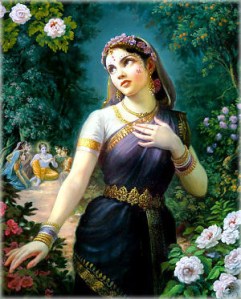
The name comes directly from a Sanskrit term तन्वी meaning “slender woman.”

A notable bearer is Indian actress, Tanvi Ganesh Lonkar (b. 1995).

Another form is Tanu, which simply means “slender.”

Sources

Winifred, Winnie, Gwenffrewi

Hollywell.jpgOrigin: Welsh
Meaning: uncertain
Gender: Feminine
(WIN-e-fred; WIN-nee; gwen-VROO-wee)

Winifred is an anglicized from of the Welsh female name, Gwenfrewi, the first element, gwen meaning “white; holy,” while the second element is uncertain but is suggested to mean “reconciliation” or “peace.” Many sources have confused this with the Anglo-Saxon male name, Winfred which actually means “friend of peace” or “peaceful friend,” but the names are actually unrelated.

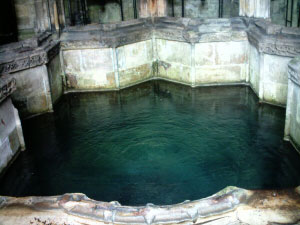
In Medieval England, the name was popularized by the cult of a 7th-century Welsh saint. According to legend, Winifred wanted to be a nun, which enraged a jealous suitor by the name of Caradog who decapitated her. Her uncle, St. Beuno, was able to place her head back on her shoulders and she was miraculously restored back to life. St. Winifred was able to live the rest of her life in holiness and died at a ripe old age, while her brother killed Caradog in revenge for her decapitation. A spring miraculously rose up from the site of her decapitation and for centuries, this was a site of pilgrimage for healing. While her story of being decapitated and brought back to life cannot be verified, historians do believe St. Winifred was a real person and that something definitely happened to her neck at some point in her life, as old Latin records always refer to a strange scar. Who knows….

To this day, Winifred’s Well in Holywell in Shrewsbury, England remains a popular site of pilgrimage, despite Henry VIII’s destruction of the shrine in the 16th-century, it seems to have been rebuilt.

St. Winifred has been referenced in English literature throughout the centuries. Her well is mentioned in the Medieval poem, Sir Gawain and the Green Knight. Her life story was dramatized as a play by William Rowley in A Shoemaker a Gentleman (1637), which was based on an earlier work by Thomas Deloney, The Gentle Craft (1584). In the 19th-century, St Winifred’s Well was written by Gerard Manley Hopkins.

Winifred was in the U.S. Top 1000 Female names between 1900 and 1965. The name was never too popular however, the highest Winifred ever ranked was at #141 in 1917.

Its diminutive offshoot of Winnie established itself as an independent given name by the 16th-century. There are a few records of “just Winnies” going as far back as the 1500s. Other interesting variations that appear in old English records include Wenefrett, Wenneffred, Winefrute, and Winnifruite.

Winnie appeared in the U.S. Top 1000 between 1900 and 1957 and peaked at #190 between 1900 and 1901.

Its original Welsh form doesn’t seem to have ever been in popular use outside of Wales, and while other Welsh names have established themselves in regular use across the anglosphere, Gwenffrewi was never one of them.

Other forms of the name include:

  • Gwenfrewi (Breton, Welsh)
  • Winefride (French)
  • Vinfreda (Italian/Latin)
  • Wenefryda (Polish)
  • Wenfryda (Polish)
  • Winifreda (Polish)
  • Wenifreda (Polish)
  • Winfryda (Polish)
  • Gwenffrwd (Welsh)

Sources

Finnian

St. Finian.jpgOrigin: Irish, Gaelic
Meaning: “white”
Gender: masculine
(FIN-nee-en)

Finnian is an anglicized form of the Gaelic, Fionán or Fionnán, which is derived from the Celtic element, fionn (white).

The name is borne by 2 early Irish saints:

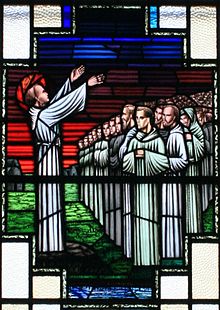
  • St. Finnian of Clonard, an Irish saint who is considered one of the founders of Irish monasticism and tutor of many his contemporary saints (470-549).
  • St. Finnian of Moville, another Irish monastic who brought back St. Jerome’s Vulgate from Rome to Ireland, started a monastary and eventually became the tutor of St. Columba (495-589).

Other forms of the name include:

  • Finnien (French)
  • Finnan/Finnén (Irish)
  • Fionán/Fionnán (Irish)
  • Vennianus (Latin)
  • Vinniaus (Latin)
  • Finian (Polish, appears on the Polish name-day calendar, but is seldom used)
  • Ffinan (Welsh)

A short form is Finn or Finny.

Sources

Tala

Follow my blog with Bloglovin

This name is one of the ultimate cross-cultural names, it has various meanings and legitimate origins from Europe, to Asia and to the Middle East.

The name has been recorded in use in Northern Europe since Medieval Times, possibly being a contracted form of Adalheidis, its offshoots of Talea and Talina have experienced minor recent resurgence in Germany. Tala also been used in most Scandinavian countries, though today, it is considered very archaic.

Tala appears in a 14th-century Swedish folk ballad Herr Holger (which is the subject of a 1996 song by the Swedish band, Gamarna). The ballad recounts the exploits of a greedy tax official who steals tax money for himself. He is caught by King Christian and beheaded. He is condemned to hell, but is able to return to warn his wife, Fru Tala (Lady Tala). He pleads with Tala to return all the wealth she inherited from him, (which in turn was the result of his stolen money), to its rightful owner or else she will experience a similar fate. Tala refuses, as she would rather condemn herself to hell than give up her wealth.

Its Finnish and Estonian form is Taala and Taali, and a Scandinavian  masculine version is Tale.

Tala is also the name of a Tagalog goddess of the morning and evening star. In one legend, she is the daughter of the sun god Arao and the moon goddess, Buan. Arao and Buan had a large number of star-children, the eldest being Tala. Arao was afraid his heat would burn up his star-children, so he and Buan decided to destroy them, but Buan reneged on her promise and hid her children behind clouds. Arao got wind of Buan’s secret and, according to legend, continues to try and destroy her, which explains the phenomenon of eclipses. Each morning, Buan runs to hide her children behind the clouds, her eldest Tala being the lookout before dawn, being the personification of the morning star.

In another Tagalog legend, Tala is the daughter of the god Bathala. She is the sister of Hanan (the goddess of the morning) and Mayari, another moon goddess.

In Tagalog, tala means “star; planet; celestial body.”

Tala was recently a hit song by Filipina singer, Sarah Geronimo (2016).

In Indian classical music, Tala is the term used to describe musical meter and rhythm. It literally means “clapping; tapping.”

Tala can also be Arabic تالة (Tala) meaning “Turmeric tree; turmeric spice” or a “small potted palm.”

In Amazigh, one of the languages of the Berber people, Tala means “source; spring or fountain.”

Tala is also Farsi and means “gold.”

In Italy and Romania, Tala is used as a diminutive form of Natalia, a la Romanian actress, Tala Birell (1907-1958).

Tala is the name of a type of decidous tree native to tropical and subtropical South America. Its scientific name is celtis tala.

Other meanings include:

  • It is the Azeri word for “glade.”
  • tālā is the Samoan currency and is believed to be a phonetic corruption of the English word dollar.
  • In Polish, it is a feminine form of the Greek, Thales, though it is seldom used, it does appear on the nameday calendar.
  • In Pashtun, Təla/Tala means “weighing scale” and is the name of the seventh month of the Afghan Calendar, its meaning referring to the Zodiac sign of Libra.
  • It is the name of a minor Chadic language in Nigeria.

What the name is not:

Many baby name sources have dubiously listed this name as meaning “wolf” in “Native American,” (which is not a language by the way), while other sources have listed this as being Cherokee or Iroquois for “wolf hunter,” but there are no legitimate Cherokee or Iroquois sources collaborating this information. In fact, Native Languages of the Americas has written a fabulous list pertaining to faux Native American baby names and Tala made the list.

As a closing to this post, I recommend this blog post written by a mother explaining the reason why she chose this name for her daughter. It is from 2006, but still a wonderful read D-Log: The Many Meanings of Tala.

Sources

Lucinda

LucindaOrigin: Spanish Literature
Meaning: “light”
Gender: Feminine
(loo-SIN-dah)

It is believed Lucinda was created by Miguel de Cervantes for his character in Don Quixote of La Mancha (1605). It is believed Cervantes may have been inspired by the Spanish luz (light). The name was later used by Molière in the form of Lucinde for his 1666 play The Doctor in Spite of Himself.

The name subsequently became popular in the English-speaking world starting in the 18th-century.

The name is also used in Portuguese-Speaking countries and Hungary.

Common short forms include: Cinda, Cindy, Lucie, and Lucy.

Sources

Shai

Shai.jpgOrigin: Hebrew שַׁי
Meaning: “gift”
Gender: masculine
(SHY)

The name comes directly from the Hebrew word for “gift,” but is often used as a diminutive form of Isaiah (Hebrew Yeshayah/Yeshaiah). Sometimes the name is transliterated as Shay. In recent years, the name has occasionally been given to females.

Alternately, in Egyptian mythology, Shai was the name of the personification of fate. Shai was a sort of deity who was believed to decide the span of man’s life at birth and is one of the dieties present upon judgment of the deceased’s soul.

Sources

Yannick, Yanig

t-shirt-le-petit-bretonOrigin: French, Breton
Meaning: a diminutive form of Yann (Breton form of John)
Gender: masculine, sometimes used as a unisex name outside Brittany
(yah-NEEK)

Yannick is a franconisation of the Breton male Yanig, which is a diminutive form of Yann (John).

Due to the –ick, ique suffix which is traditionally found in French unisex names, it was sometimes bestowed on females. In Bretagne (Brittany) however, the name was always strictly masculine. There is an almost identical Breton female name, Janig (Jeannette) which is sometimes franconized to Jeannick/Jeannique, and this is where the confusion among French-speakers lie, as Janig was also sometimes franconized to Yannick.

The name first entered the Francophone mainstream in the 1920s, and by the 1970s, became an extremely popular male name in France and outside the Hexagone. He was the Jason of France and is now considered a name dated to the 1970s-90s. Thereafter, the name trickled into use in Dutch-speaking, German-speaking, and Portuguese-speaking countries

Yannick was in the French top 100 between 1946-1991. It peaked in popularity 3 years in a row between 1972-1974, coming in as the 31st most popular male name. In 2008, Yannick had burned himself out and disappeared from the popularity charts altogether, and has yet to be seen.

In Belgium, Yannick was in the Top 100 between 2000 and 2001 and peaked at #73 in 2000. In French-speaking Switzerland, he peaked at #34 between 1995-1996. He has made his appearance in Austria, coming and going from the Top 100 between 2005 and 2010 and peaked at #57 in 2006 and 2010. In the Netherlands, he remains in the Top 1000, though not popular, he comes in at a meagre #369.

In Germany, the name appears in the form of Jannik and became wildly popular starting in the mid-80s. In this case, however, the name may be used in reference to a Dutch or Frisian diminutive form of Jan (john), but German parents have occasionally opted for the Yannick spelling if they wanted to be a bit different, and have sometimes even confused the Polish diminutive form Janek as a nice alternative, though in Poland, Janek is never used as an independent given name. An interesting side note, in France and Quebec, Yannick did become slightly popular among Polish immigrant parents due to its similarity to Janek. A notable Franco-Polish bearer is football player, Yannick Stopyra (b. 1961).

Through the years, the name has been borne by several notable personalities, some of the most notable being French tennis player, Yannick Noah (b. 1960), Canadian actor, Yannich Bisson (b.1969), Portuguese football player, Yannick dos Santos Djaló (b. 1986); French olympic Swimmer, Yannick Aignel (b. 1992), and Belgian football player, Yannick Ferreira Carrasco (b. 1993).

Other spellings include: Yannig, Yanik, Yanick, Yannik and the particular favorite among Quebecois, Yanic.

Sources


Temperance

Temperance

The name comes directly from the English virtue word pertaining to the idea of self-control and self-constraint.

The name is often associated as a Puritan name, and it did become popular in 16th-century England around the time of the Protestant Reformation, as well as in France, perhaps among Huguenot families, in the form of Tempérance.

In recent years, the name has come back into the spotlight due to the TV series Bones, which is based on the books written by Kathy Reichs.

Common short forms are Tempe, Tempie, Pency.

A Latin form, which was often referenced by St. Augustine in his works is Temperantia.

Sources

Breton Word Names

I thought I would do a list each week of names inspired by words from endangered or extinct languages. Here is a list of Breton words that would make great names. These are hypothetical, not necessarily legitimate, (there are legitimate names mixed in) but what a great way to keep a minority language alive by using one of its words as a name, especially if you have heritage from that culture. I took inspiration from the French top 1000 and translated the meaning of some names.

If you are unfamiliar as to what Breton is, here is a brief explanation: https://en.wikipedia.org/wiki/Breton_language

Male

  • Ael “angel”
  • Aerouant “dragon”
  • Alarc’h “swan”
  • Alc’hweder “lark”
  • Avank “beaver”
  • Arc’hantel “silver”
  • Arem “bronze”
  • Arnev “storm”
  • Arzh “bear”
  • Arzhig “bear cub”
  • Avel “wind”
  • Aviel “gospel”
  • Barged “black kite”
  • Barzh “bard”
  • Bennigañ “to bless”
  • Bennozh “blessing”
  • Beuz “boxwood”
  • Bir “arrow”
  • Bleiz “wolf”
  • Boc’hruz “robin”
  • Bran “raven”
  • Brank “branch”
  • Brav “beautiful; nice”
  • Breou “magic”
  • Brezel “battle”
  • Broc’h “badger”
  • Brokus “generous”
  • Brug “heather”
  • Burzhud “miracle”
  • C’hoant “wish”
  • Dazont “future”
  • Degemer “acceptance”
  • Den “man”
  • Dero “oak”
  • Diridig “kingfisher”
  • Dir “steel”
  • Dizaon “fearless”
  • Douar “earth”
  • Dourgon “otter”
  • Dred “starling”
  • Du “November”
  • Ebeul “foal”
  • Emgann “fight”
  • Endro “nature”
  • Eostig “nightengale”
  • Erc’h “snow”
  • Eurvad “luck”
  • Flamm “fire”
  • Frankiz “liberty”
  • Glav “rain”
  • Glaou “coal”
  • Gloan “wool”
  • Goaf “lance”
  • Golvan “sparrow”
  • Gremm “energy”
  • Gwengolo “September”
  • Gwer “green”
  • Gwerz “song”
  • Gwir “true”
  • Heiz “barley”
  • Heol “sun”
  • Herlegon “egret”
  • Houad “drake”
  • Hollsent “all saint’s, Toussaint”
  • Houarn “iron”
  • Kalir “chalice”
  • Kalon “boldness; heart”
  • Kalonek “bold”
  • Karg “responsibility”
  • Karv “deer”
  • Kedez “equinox”
  • Kened “beauty”
  • Kentañ “first”
  • Kerzu “December”
  • Koad “wood”
  • Koulm “dove”
  • Korwentenn “hurricane”
  • Kurun “thunder”
  • Lann “heath”
  • Lid “celebration”
  • Loar “moon”
  • Louarn “fox”
  • Luc’hed “flash of lightning”
  • Ludu “ash”
  • Mab “son”
  • Maen “stone”
  • Marc’hvran “raven”
  • Mintin “morning”
  • Moged “smoke”
  • Pabor “goldfinch”
  • Padout “to endure”
  • Padus “evergreen; enduring”
  • Pint “chaffinch”
  • Renad “kingdom”
  • Reunig “seal”
  • Rev “frost”
  • Roue “King”
  • Sadorn “Saturn”
  • Spered “mind”
  • Skeud “shadow”
  • Skorn “ice”
  • Skrid “lyrics”
  • Tan “fire”
  • Tantad “bonfire”
  • Tevenn “dune”
  • Tonkadur “destiny”
  • Toud “long-eared owl”
  • Traezh “sand”
  • Tro “chance”
  • Yaou “Jupiter”
  • Yourc’h “roe deer”

Female

  • Adren “nightjar”
  • Aezhenn “steam”
  • Aluzen “charity”
  • Anella “breath”
  • Arzhez “female bear”
  • Avalenn “apple tree”
  • Avaloù “apple”
  • Avon “river”
  • Balafenn “butterfly”
  • Baradoz “heaven”
  • Barzhoniezh “poetry”
  • Begar “lemon balm”
  • Benede “belladonna; nightshade”
  • Beva “to be alive”
  • Bisig “catkin”
  • Bleizez “female wolf”
  • Bleunienn “flower”
  • Bodenn “shrub”
  • Breizh “Brittany”
  • Briata “to embrace; to hug”
  • Brozenn “fairy tale”
  • Brudet “high, lofty; towering; prominent”
  • Brumenn “mist”
  • Buhez “life”
  • Damez “queen”
  • Dañvadez “ewe”
  • Delienn “leaf”
  • Dousezig “rampion”
  • Dreogenn “ryegrass”
  • Dubet “rock dove”
  • Ebrel “April”
  • Ebrenn “falling star”
  • Eilenn “image”
  • Elestr “gladiola”
  • Ene “soul”
  • Euflenn “spark”
  • Falaenn “eclipse”
  • Feiz “faith”
  • Geotenn “grass”
  • Glazaour “oriole”
  • Glizh “dew”
  • Glizinenn “cornflower”
  • Goularz “amber, Ambre”
  • Gouelle “annunciation”
  • Greunaval “pomegranate”
  • Gwagenn “wave”
  • Gwaz “tansy”
  • Gwenn “white; holy”
  • Gwenanenn/Gwenan “bee”
  • Gwennel/Gwennol/Gwennili “sparrow”
  • Gwennerc’h “snow white”
  • Gwernenn “alder tree”
  • Gwezenn “tree”
  • Hogan “dog rose”
  • Hugenn “berry”
  • Iliz “temple”
  • Itron “lady”
  • Istrenn “oyster”
  • Jenevreg “Juniper”
  • Jenoflenn “clove”
  • Jesemi “jasmine”
  • Kana “to sing”
  • Kanaouenn “music with words”
  • Kanell “cinnamon”
  • Kanevedenn “rainbow”
  • Kaniri “hymn”
  • Karantez “love”
  • Karo “diamond”
  • Kasiaenn “acacia”
  • Kegin “jaybird”
  • Kelenn “holly”
  • Kerezenn “cherry”
  • Kevelzenn “hazelnut tree”
  • Kestenn “beehive”
  • Kinvi “moss”
  • Kistin “chestnuts”
  • Klujar “partridge”
  • Koabrenn “cloud”
  • Koloenn “beehive”
  • Kornalin “carnelian”
  • Kouldri “dovecot”
  • Koulourdrenn “pumpkin”
  • Koumoulenn “cloud”
  • Lagad “carnation”
  • Lavnenn “blade”
  • Lenn “lake”
  • Liavenn “ivy”
  • Limestra “purple”
  • Lireu “lilac”
  • Liv “colour”
  • Loarenn “moon”
  • Loargann “moonlight”
  • Loreenn “laurel”
  • Louet “grey”
  • Louzoù “remedy”
  • Luc’hedenn “lightning”
  • Luduennig “Cinderella”
  • Lusenn “fog; mist; bilberry”
  • Madig “candy”
  • Maelle “princess”
  • Maenfin “gemstone”
  • Melchon “clover”
  • Melen “yellow; fair”
  • Melezenn “larch”
  • Mezenn “acorn”
  • Meurgan “epic poetry”
  • Mojenn “fable”
  • Morbreizh “English channel”
  • Morenn “fog; mist”
  • Morganez “mermaid”
  • Mouarenn “blackberry”
  • Nadoezioù “geranium”
  • Nivlenn “fog; mist”
  • Oanez “lamb”
  • Onn “ash tree”
  • Opalenn “opal”
  • Oulmenn “elm tree”
  • Ourmelenn “abalone”
  • Pechezenn “peach”
  • Pedenn “prayer”
  • Perlezenn “pearl”
  • Perenn “pear”
  • Plezhenn “braid”
  • Pluenn “feather”
  • Prunenn “plum”
  • Purpli “poplar”
  • Radenenn “fern”
  • Raounez “queen”
  • Richennoù “legend”
  • Rozenn “rose”
  • Rozera “rosary”
  • Ruskenn “tree bark”
  • Ruzvaen “ruby”
  • Santel “holy”
  • Saprenn “fir tree”
  • Sardonenn “bumblebee”
  • Sedrezenn “cedar”
  • Segal “rye”
  • Sikramorenn “maple”
  • Sivienn “strawberry”
  • Sklêrijenn “light, Luce/Claire”
  • Sonedenn “sonnet”
  • Steredenn/Steren “star”
  • Stivell “spring”
  • Telenn “harp”
  • Traezhenn “beach”
  • Treinded “Trinity”
  • Triñchon “sorrel”
  • Truez “mercy”