George

Gender: Masculine
Origin: Greek Γεωργιος
Meaning: “farmer.”
Eng (JORJ)

The name is an English and Romanian form of the Greek, Georgios Γεωργιος, which is derived from the Greek γεωργος (georgos) meaning, “farmer; earth worker.”

The name was borne by a 4th-century Christian saint and martyr, a Roman soldier of Greek ancestry who refused to sacrifice to pagan gods as demanded by the Roman Emperor at the time. He was popularized in the Western Christian Church after the Crusades, when soldiers brought the story back to Western Europe. The saints’ story was embellished and his story appears in the Golden Legend.

The most famous legend was that during the saint’s life, he managed to rescue a maiden who was about to be sacrificed to a dragon by slaying it with his lance. This legend has been the subject of art for centuries.

Though revered as the patron saint of England, the name itself did not catch on in until the 18th-century, following the accession of George I of England. The name has been borne by several kings throughout Europe. It was also borne by the first president of the United States, George Washington.

In Medieval times, English troops would chant “by George“, as a invocation to the saint to protect them in battle.

Between 1880 and 1937, George remained in the U.S. top 10. As of 2010, he only ranked in as the 164th most popular male name. His rankings in other countries are as follows:

  • # 1 (Georgi, Bulgaria, 2007)
  • # 1 (Georgios, Greece, 2010)
  • # 2 (Giorgi, Georgia, 2011)
  • # 5 (Yegor, Belarus, 2011)
  • # 9 (England/Wales, 2010)
  • # 12 (Yegor, Russia, 2011)
  • # 16 (Jorge, Spain, 2010)
  • # 19 (Jiří, Czech Republic, 2010)
  • # 20 (Romania, 2009)
  • # 22 (Jordi, Catalonia, 2010)
  • # 27 (Jure, Slovenia, 2010)
  • # 42 (Jorge, Chile, 2010)
  • # 53 (Juraj, Croatia, 2010)
  • # 69 (Jure, Croatia, 2010)
  • # 73 (Australia, NSW, 2010)
  • # 75 (Jurij, Slovenia, 2010)
  • # 76 (Jørgen, Norway, 2010)
  • # 78 (Jorge, Mexico, 2010)
  • # 80 (Joris, Netherlands, 2010)
  • # 82 (Jordi, Spain, 2010)
  • # 84 (Jurica, Croatia, 2010)
  • # 100 (Scotland, 2010)
  • # 168 (Jorge, United States, 2010)
  • # 233 (Joris, France, 2009)
  • # 420 (Jordi, Netherlands, 2010)

Other forms of the name include:

  • Gjergj (Albanian)
  • Jorgo (Albanian)
  • Giorgis ጊዮርጊስ (Amharic)
  • Jurj(us)  جرج  جرجس (Arabic)
  • George  جورج (Arabic/English/Romanian)
  • Khodor  خضر (Arabic)
  • Chorche (Aragonese)
  • Gev(or) Գեվ Գեվոր (Armenian)
  • Gevorg Գեվորգ (Armenian)
  • Kevork Գեւորգ (Armenian)
  • Xurde (Asturian)
  • Gorka (Basque)
  • Jury Юры (Belarusian)
  • Yegor Егор (Belarusian/Russian)
  • Jord (Breton)
  • Jorj (Breton)
  • Georgi Георги (Bulgarian)
  • Jordi (Catalan)
  • Juraj (Croatian/Slovak/Slovene)
  • Jurica (Croatian)
  • Jure (Croatian/Slovene)
  • Jiří (Czech)
  • Jørgen (Danish/Norwegian)
  • Joris (Dutch/Frisian)
  • Sjors (Dutch)
  • Georg (Faroese/Estonian/German/Icelandic/Romansch/Scandinavian)
  • Jurjen (Frisian)
  • Jüri (Estonian/Volapuk)
  • Jørundur (Faroese)
  • Jokora (Finnish)
  • Jori (Finnish)
  • Jyr(k)i (Finnish)
  • Yrjänä (Finnish)
  • Yrjö (Finnish)
  • Georges (French)
  • Xurxo (Galician)
  • Giorgi გიორგი (Georgian/Monegasque)
  • Jörgen (German/Swedish)
  • Jörg (German/Swedish)
  • Jürgen (German)
  • Jürg (German)
  • Georgios Γεώργιος (Greek)
  • Joorut (Greenlandic)
  • Juulut (Greenlandic)
  • Keoki (Hawaiian)
  • György (Hungarian)
  • Seoirse (Irish-Gaelic)
  • Giorgio (Italian/Venetian)
  • Georgius (Latin)
  • Jur(g)is (Latvian)
  • Jurgis (Lithuanian)
  • Gjoko  Ѓок (Macedonian)
  • Gjorgje Ѓорѓе (Macedonian)
  • Gjorgji  Ѓорѓи (Macedonian)
  • Gheevargees ഗീവര്‍ഗീസ് (  (Malayalam)
  • Gheevarugees ഗീവറുഗീസ് ( (Malayalam)
  • Varghees വര്‍ഗീസ്‌ (Malayalam)
  • Verghese വെര്‍ഗീസ് (Malayalam)
  • Varughese വറുഗീസ് (Malayalam)
  • Ġorġ (Maltese)
  • Jore (Norman)
  • Jørn (Norwegian)
  • Ørjan (Norwegian)
  • Jordi (Occitanian/Provençal)
  • Jerzy (Polish)
  • Jorge (Portuguese/Spanish)
  • Gheorghe (Romanian)
  • Georgy Георгий (Russian/Ukrainian)
  • Yuri Юрий (Russian)
  • Deòrsa (Scottish)
  • Seòrsa (Scottish)
  • Đorđe Ђорђе (Serbian)
  • Đorđo Ђорђо (Serbian)
  • Đurađ Ђурађ(Serbian)
  • Jurij (Slovene)
  • Göran (Swedish)
  • Örjan (Swedish)
  • Gewarges ܓܝܘܪܓܣ(Syriac)
  • Gorges ܓܪܓܣ (Syriac)
  • Yorgo (Turkish)
  • Heorhiy Георгій (Ukrainian)
  • Yur Юр (Ukrainian)
  • Sior (Welsh)
In ancient Greece, Georgos may have also been used as an epithet for Zeus.
As for its feminine forms, I shall save that for a separate post 🙂

Edward

Gender: Masculine
Origin: Anglo-Saxon
Meaning: “wealthy guardian.”
Eng (ED-werd; ED-word)

The name is composed of the Anglo-Saxon elements, ead (rich; waelthy) and weard (guard). Due to the popularity of St. Edward the Confessor, the name was one of the few Anglo-Saxon names to have survived the Norman Conquest and to have spread to non-Anglo-Saxon countries.

The name has remained common in the British Royal Family.

As of 2010, Edward was the 43rd most popular male name in England/Wales. His rankings in other countries, in his various forms, are as follows:

  • # 3 (Eetu, Finland, 2011)
  • # 20 (Duarte, Portugal, 2010)
  • # 21 (Eduard, Romania, 2009)
  • # 28 (Edoardo, Italy, 2010)
  • # 61 (Australia, NSW, 2010)
  • # 72 (New Zealand, 2010)
  • # 79 (Eduardo, Spain, 2010)
  • # 94 (Eduard, Catalonia, 2010)
  • # 97 (Edvard, Norway, 2010)
  • # 136 (United States, 2010)
  • # 153 (Eduardo, United States, 2010)
  • # 169 (Scotland, 2010)
  • # 226 (Édouard, France, 2009)

Other forms of the name include:

  • Eduard Էդվարդ Эдуард ედუარდ Эдуард Едуард (Afrikaans/Albanian/Armenian/Belarusian/Bosnian/Catalan/Croatian/Czech/Dutch/Estonian/Georgian/German/Romanian/Romansch/Russian/Slovak/Ukrainian)
  • Ēadƿeard (Anglo-Saxon)
  • Idward إدوارد (Arabic: used primarily among Christians)
  • Edorta (Basque)
  • Edvard Эдвард Эдвард Едвард (Belarusian/Czech/Faroese/Finnish/Russian/Scandinavian/Serbian/Slovene)
  • Edouarzh (Breton)
  • Eduardu (Corsican/Sardinian)
  • Edward (English/German/Polish)
  • Eetu (Finnish)
  • Eetvartti (Finnish)
  • Etuate (Fijian)
  • Édouard (French)
  • Edo (Frisian)
  • Edzard (Frisian)
  • Eide (Frisian/Plattdeutsch)
  • Eido (Frisian)
  • Eduardos Εδουάρδος (Greek)
  • Ekewaka (Hawaiian)
  • Eduárd (Hungarian)
  • Edvárd (Hungarian)
  • Eðvarð(ur) (Icelandic)
  • Játvarður (Icelandic)
  • Éadbhard (Irish)
  • Éamonn (Irish)
  • Edoardo (Italian)
  • Eduardo (Italian/Spanish/Portuguese)
  • Odoardo (Italian: Tuscan)
  • Eduards (Latvian)
  • Edvards (Latvian)
  • Eduardas (Lithuanian)
  • Edvardas (Lithuanian)
  • Eruera (Maori)
  • Dwardu (Maltese)
  • Duarte (Portuguese)
  • Eideard (Scottish)
  • Eudard (Scottish)
Common diminutives include:
  • Edi (Albanian/Bosnian/Croatian/Slovene/Spanish)
  • Ed (Dutch/English/German/Scandinavian)
  • Eddie (English/German/Scandinavian)
  • Ned (English)
  • Ted (English)
  • Teddy (English)
  • Edek (Polish)
  • Dadu (Portuguese)
  • Du (Portuguese)
  • Edu (Portuguese)
  • Lalo (Spanish)
In recent years, especially in the United States, the name has possibly risen in popularity due to the Twilight Series, in which one of the protagonists is named Edward.
There are a few feminine forms, namely the Spanish and Italian, Eduarda, which I shall save for another post.

Nea

Gender: Feminine
Origin: Scandinavian
Fin/Swe (NAY-ah)

The name is a Swedish contracted form of Linnea, now popularly used as an independent given name. However, the name has also been linked with the Greek word for new and with the name of a river in Norway.

As of 2011, Nea was the 39th most popular female name in Finland, while its more finnicized form of Neea came in as the 48th most popular female name.

Milla

Gender: Feminine
Origin: Finnish/Scandinavian
(MEEL-lah)

The name could either be a contracted form of Camilla or it could be taken from the name of a genus of plant.

As of 2011, Milla was the 32nd most popular female name in Finland. Her rankings in other countries are as follows:

  • # 71 (Norway, 2010)
  • # 424 (France, 2009)

The name is borne by Ukrainian-born American actress, Milla Jovovich (b.1975), in her case, the name is an anglicized form of her true name, Milica.

Otto

Gender: Masculine
Origin: German
Meaning: “wealth; riches.”
(OT-to)

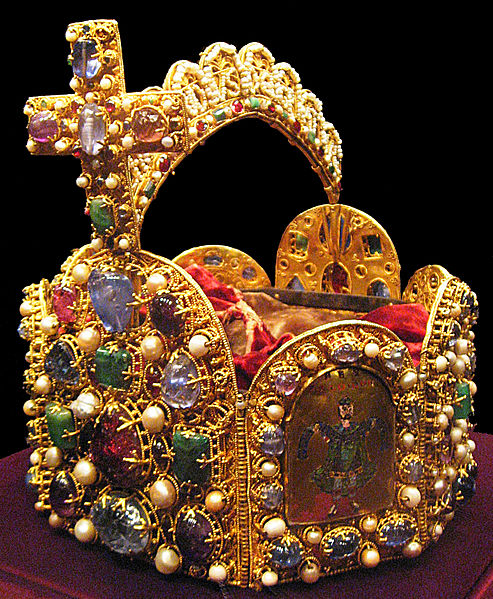
The name is derived from the early Germanic Audo. It seems like the quintessential German name, but has been out of favor in German speaking countries until recently, where it seems to be experiencing a revival. The name was borne by four Germanic kings. The first being Otto I, (also known as Otto the Great), the first Holy Roman Emperor. It was also borne by German Chancellor Otto von Bismarck (1815-1898).

To American ears, it might sound a bit quirky, but to hipsters, he might just make the perfect brother to little Gunnar or Atticus. Otto exhibits a certain quality of strength. It wouldn’t be bad to give him a chance, at least as a middle name. Otto has not ranked in the US top 1000 since 1974, when he came in at a measly #969. The highest he has seemed to rank in American history was in 1909, when he came in at a decently high #144. No doubt due to a large influx of German and Swedish immigrants at the time.

In Germany, he hasn’t made it to the top 500 as of yet, but I am happily able to report that, recently, while browing through some German birth announcement from Berlin, I was happy to see a few newborn Ottos, either as their first name or middle name.

Update: As of 2011, Otto was the 30th most popular male name in Finland and in 2010, he was the 92nd most popular male name in Sweden.

In Germany and Austria, his designated name day is September 7th. Similar variations include Otmar which means “possesing of fame” and Ottokar meaning “wealthy and vigilant.” If Otto feels too short for you, then you might want to consider Otmar or Ottokar as a formal version.

Other forms of the name include:

  • Ot (Catalan)
  • Ota (Czech)
  • Oto (Czech/Slovak)
  • Otto (Dutch/Estonian/Faroese/Finnish/Frisian/German/Polish/Romansch/Sami/Scandinavian)
  • Ode (English)
  • Eudes (French)
  • Odilon (French/Portuguese)
  • Odon (French/German)
  • Odo (German)
  • Udo (German)
  • Ortu (Greenlandic)
  • Ottó (Hungarian/Icelandic)
  • Oddo (Italian)
  • Ottone (Italian)
  • Ottorino (Italian)
  • Rino (Italian)
  • Audo (Old High German)
  • Odo (Old High German)
  • Otton (Polish)
  • Otte (Scandinavian)
  • Oton (Slovene/Spanish)

A common Czech diminutive form is Otik.

Feminine forms are so numerous that I shall save those for a separate entry, stay tuned 🙂

Eino

Gender: Masculine
Origin: Finnish
(AY-noh)

The name is a contracted from of any name beginning with, ein.

As of 2011, this was the 12th most popular male name in Finland.

Other forms of the name include:

  • Eeno (Finnish)
  • Eitsu (Finnish)
  • Ejno (Finnish)
  • Eine (Norwegian/Swedish)
  • Eidno (Sami)

Feminine forms include Eini and Einikki.

Gertrude

James C. Christensen

Gender: Feminine
Origin: German
Meaning: “spear strength.”
Eng (GER-trood); Ger (ger-TROO-də)

She has adorable nickname options; Trudy, among others. She has a similar feel to other current vintage trend-setters such as Matilda and Eleanor, yet Gertrude, for the most part remains unloved. Like Hildegard and Brynhild, this is one of those names where I often ask myself: why not?

She is strong, vintagy and no-frills, as mentioned before, she has tons of adorable nickname options. Is she really anymore grandmotherly or old sounding than Emma, Eleanor, Matilda or even Abigail? We have gotten used to hearing these names but I remember a time when the above names were considered “too old” until it took one famous person to use them and voila, they are automatically endearing and trendy.

Ok, I’ll get off my high horse and get onto the what the name is really all about.

Portrait of Gurtruydt van Leyden.
by James C. Christensen via http://www.greenwichworkshop.com/saintsandangels/17.htm

Gertrude is composed of the Germanic roots, ger (spear) and þruþ (strength).

The name was borne by several illustrious medieval women, two of whom are saints. Gertrude of Nivelles (626-659) is revered as the patron saint of cats! I am not quite sure how she came to be known as a feline patron, but she was the daughter of Pepin I and was supposed to be married off at the age of ten, but steadfastly refused, insisting that she would only marry Christ. After the death of her father, her wealthy mother constructed Gertrude her very own convent, making her the abbess. She is also invoked against mice and rat infestations.

Another Gertrude is Gertrude the Great (1256-1302) a German nun, mystic and great theologian of her time.

The name has been borne by German and Dutch royalty alike.

Gertrude is pretty well-known in the English-speaking world, but actually never experienced much usage. It was introduced into England in the 15th-century by Dutch settlers, where it was ocassionally used. It appears in Shakespeare’s Hamlet (1600) as the name of the hero’s mother.  It was used sparingly in the United States at the beginning of the 20th-century, possibly being introduced by German immigrants. The highest it ever ranked was in 1898 coming in as the 573rd most popular female name.

In the United States, its most famous bearer is Gertrude Stein (1874-1946), famous writer and poet.

As of 2011, her Finnish form of Kerttu was the 20th most popular female name in Finland and Geertruida came in as the 491st most popular female name in the Netherlands, (2010). Meanwhile, its Dutch diminutive offshoot of Geertje is the 368th most popular female name in the Netherlands, (2010).

Other forms of the name include:

  • Gartred (Cornish)
  • Gertruda (Croatian/Czech/Lithuanian/Polish/Romansch/Slovene)
  • Geerdina (Dutch)
  • Geertje (Dutch)
  • Ge(e)rtruida (Dutch)
  • Geertrui (Dutch)
  • Gertrude (Dutch/English/French/German/Italian/Platdeutch)
  • Trudy (Dutch/English/German)
  • Truus (Dutch)
  • Kelli (Estonian)
  • Kertu (Estonian)
  • Kärt (Estonian)
  • Ge(i)rtrúð (Faroese)
  • Gortra (Faroese)
  • Jertru (Finnish)
  • Jerttu (Finnish)
  • Järtty (Finnish)
  • Kerttu (Finnish)
  • Kerttuli (Finnish)
  • Gesa (Frisian)
  • Gesche (Frisian/Platdeutsch)
  • Geesche (Frisian)
  • Gesina (Frisian)
  • Gerta (German)
  • Gertraud (German)
  • Gertrud (German/Scandinavian/Romansch)
  • Gertrúd (Hungarian)
  • Jerta (Hungarian)
  • Geirþrúður (Icelandic)
  • Jarþrúður (Icelandic)
  • Geltrude (Italian)
  • Gertrūda (Latvian)
  • Gjertrud (Norwegian)
  • Jartrud (Norwegian)
  • Geretrudis (Old High German)
  • Geirþrúðr (Old Norse)
  • Jarþrúðr (Old Norse)
  • Gertrudes (Portuguese)
  • Gearte (Sami)
  • Kearte (Sami)
  • Gertrúda (Slovak)
  • Trudla (Sorbian)
  • Gertrudis (Spanish)
  • Gardrud (Swedish)
  • Gertru(n) (Swedish)
  • Hjertrud (Swedish)

Common German and English short forms are Gertie and Trudi/Trudy.

Artwork

Vera

Gender: Feminine
Origin: Slavic Вера
Meaning: “faith.”
Eng (VARE-uh; VEER-uh); Rus (VYEH-rah)

The name is most likely a borrowing from the Russian female name, Vera, which comes directly from the Slavic meaning, “faith.” Initially, it was a Russian-Orthodox cognate of the Greek female name, Pistis (Faith), the name of an early Christian saint and martyr.

The name has been used outside of Eastern Europe since at least the 19th-century. It is unclear how the name caught on in the English-speaking world, but by the time of its popularity the name was usually associated with the Latin, verus, (true), verses, the Slavic, (hope).

Its usage in Albania may also be connected with the Albanian word, verë, (Summer).

The name is borne by several famous Russian women, including silent film actress, Vera Kholodnaya (1893-1919) and theatre actress, Vera Komissarzhevskaya (1864-1910); Chemist, Vera Popova (1867-1896).

Other notable bearers include: English writer and feminist, Vera Brittain (1893-1970); Ukrainian-American actress, Vera Farmiga (b.1973); American actress, Vera Miles (b.1929); American fashion designer, Vera Neumann (b.1907) and American fashion designer, Vera Wang (b.1949).

The highest the name ranked in the United States was in 1919 when she came in as the 65th most popular female name; its popularity may have had something to do with Vera Kholodnaya who died the same year, but this is only my personal conjecture.

As of 2010, Vera is the 675th most popular female name in the United States. Her rankings in other countries are as follows:

  • # 13 (Veera, Finland, 2011)
  • # 39 (Sweden, 2010)
  • # 45 (the Netherlands)

Other forms of the name include:

  • Vera Вера (Albanian/Bulgarian/Croatian/Dutch/English/Faroese/German/Hungarian/Icelandic/Italian/Latvian/Lithuanian/Macedonian/Portuguese/Russian/Scandinavian/Serbian/Slovene)
  • Věra (Czech)
  • Veera (Estonian/Finnish)
  • Véra (French)
  • Verina (Italian)
  • Verutė (Lithuanian)
  • Wiara (Polish)
  • Wiera (Polish)
  • Verá (Sami)
  • Viera (Slovak)
  • Wera (Swedish)
  • Vira Віра (Ukrainian)

Diminutive forms include:

  • Verica (Czech/Serbian)
  • Verika (Czech)
  • Verochka (Russian)
  • Verunka (Czech)
  • Verusha (Russian)
  • Vierunka (Czech)
  • Vieruška (Czech)
  • Věrka (Czech)
  • Věruna (Czech)
An obscure Latin masculine form is Verus.

Siri

Gender: Feminine
Origin: Norwegian
(SEE-ree)

The name is a contracted form of the Old Norse, Sigrid.

The name has been used as an independent given name since at least the 18th-century. As of 2011, its Finnish form of Siiri 9th most popular female name in Finland. While in 2010, she was the 57th most popular female name in Sweden.

Other forms of the name include:

  • Siria (Danish/Swedish)
  • Siiri (Estonian/Finnish)
  • Siru (Finnish/Sami)
  • Sire (Sami)
  • Siri (Scandinavian)
The name was borne by Swedish theatre actress, Siri von Essen (1850-1912)

Aino

Gender: Feminine
Origin: Finnish/Estonian
Meaning: “only; the one.”
(I-no)

The name is found in the national Finnish epic, the Kalevala, as the name of the “only sister” of Joukahainen.

Joukahainen promised his sister’s hand marriage to the very old Väinämöinen, after losing a singing contest.

When Aino finds out she must marry the old man, she drowns herself, and returns as a sort of water spirit, appearing in the form of a salmon to haunt the grieving Väinämöinen.

It is believed by many Finnish linguist that Aino was not actually her name because in the Kalevala she is referred to as ainoa tytär, (only daughter), and it is believed that this designation was confused for her actual name.

At the end of the 19th-century, the name was introduced by Fennoman activists.

The first to bear the name was Aino Järnefelt Sibelius (1871-1969), the first wife of famous Finnish composer, Jean Sibelius. It was also borne by Aino Krohn Kallas (1878-1956), and Estonian-Finnish author.

As of 2011, Aino was the 5th most popular female name in Finland.

Other forms of the name include:

  • Aija (Finnish)
  • Aina (Finnish/Scandinavian)
  • Ainamo (Finnish)
  • Aini (Finnish)
  • Ainikki (Finnish)
  • Áidná (Sami)
  • Áidnu (Sami)

The designated name-days are:

May 10 (Estonia/Finland) and June 13 (Sweden).

Sources

  1. http://www.behindthename.com/namedays/lists/fin.php
  2. http://www.nordicnames.de/wiki/Finnish_Name_Days#May
  3. http://en.wiktionary.org/wiki/Aino