Frida

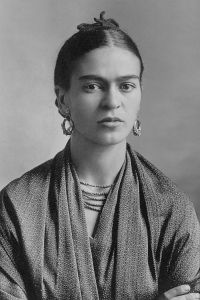
Frida_Kahlo,_by_Guillermo_Kahlo


The name is either derived from the Old Norse fríðr (beautiful; loved) or the German fried (peace, joy), (which is also the same case in Yiddish). In modern Swedish, Danish & Norwegian, the name may also be associated with the word frid, which also means peace.

The name has been imported into several cultures. It is not only used in Northern Europe, but has experienced usage in Anglophone, Francophone & Hispanophone countries. A notable bearer from the latter was Mexican artist, Frida Kahlo (1907-1954).

It is currently the 7th Most Popular Female Name in Norway & the 19th Most Popular in Denmark (2018).

In the United States, it currently comes in as the 693rd Most Popular Female Name.

The Frida form is used in the following languages: Danish, Dutch, Czech/Slovak, Estonian, Faroese, Finnish, Hungarian, German, Italian, Latvian, Lithuanian, Norwegian, Portuguese, Slovenian, Spanish, Swedish, Yiddish

Other forms include:

  • Fritha (Anglo-Saxon)
  • Fryd (Danish, Norwegian, Swedish)
  • Freda (English, German, Spanish)
  • Frieda (Estonian, German)
  • Friida (Finnish)
  • Riitu (Finnish)
  • Friede (German)
  • Friedel, Friedl (German, Yiddish)
  • Fríða FREE-thah (Icelandic, Old Norse)
  • Fríður FREE-thoor (Icelandic)
  • Frid (Norwegian, Swedish)
  • Fryda (Polish, Norwegian, Swedish)
  • Freyda, Frejda (Yiddish)

Sources


Aya, Ayah, Aija, Aja

download (4)


Pronounced I-yah, this name has several different origins and meanings.

Aya is a popular Japanese female name, depending on the kanji used, it has several different meanings, the most popular being 彩 (aya) meaning “colour,” or 綾 (aya) meaning “design.” In the Japanese case, it is also occasionally used on males. Other meanings and kanji characters used to represent the name include:

  • 綾, “twill”
  • 理, “truth, logic”
  • 亜矢, “Asia, arrow”
  • 亜弥, “Asia, all the more”
  • 亜夜, “Asia, night”
  • 順, “order, sequence, turn”
  • 文, “writings”
  • 紗, “gauze”
  • 技, “technique”
  • 愛, “love”
  • 恵, “blessed”
  • 朱, “vermillion”
  • 藻, “algae”
  • 娃夜, “beautiful night”

It was borne by an Ancient Egyptian queen of the Thirteenth Dynasty (between 1803 and 1649 BCE). Its meaning and etymology in this case is unknown.

Aya is also an Akan name, denoting a girl born on a Thursday. Its masculine form being Yao.

In Hebrew, Aya is an acronym for ארץ ישראל היפה (the beautiful land of Israel) and allegedly from  איה, איא meaning “bird” or “to fly swiftly.” It is borne by a minor male character in the Bible but seems to exclusively be used on females in modern Israel. There is a famous Israeli pop-singer who bears this name, Aya Korem.

Ayah آية is Arabic meaning “sign; clue” and refers to Quranic verses. It is also sometimes transliterated as Aya or Aja among Bosnians, Albanian and Central Asians. Another variation is Ayat, sometimes spelled Ayaat.

In Akkadian, the name means dawn and was borne by an ancient Sumerian goddess, the consort of Shamesh. The name is still used among Assyrian Christians who trace their heritage back to the Akkadian peoples.

In Tamil, spelled ஆயா, it means “old woman,” “grandmother,” or ” caretaker” and in the Nepalese language of Raute it means “sister-in-law.”

In Scandinavia, Aija, Aja & Aya are offshoots of Maria, they started off as diminutive forms but are now used as independent names. Aya is currently the 22nd Most Popular Female Name in Denmark (2018). However, I am unable to determine if in this case, it is used by Muslim families in reference to the Arabic form or if it is used by non-Muslim families in reference to its Scandinavian form. Aija can also be a Finnish form of Eija, which is from an exclamation eijaa!

In Latvia, Aija is most likely derived from aijāt (to rock, to lull) and was popularized as a given-name at the turn of the 20th-Century when it was used by Latvian author Jānis Jaunsudrabiņš for the title character in his eponymous novel, Aija (1911).

Aja is a Bosnian, Albanian & Central Asian form of the Arabic, Ayah.

In Mongolian, it is derived from ая (aya), meaning “melody.”

In Europe, Aya appears on several popularity charts, most likely used in reference to its Arabic origins by Muslim immigrants, its rankings in other countries are as follows:

  • #46 (France, 2018)
  • #48 (Belgium, 2018)
  • #65 (Catalonia, Spain, 2018)
  • #95 (Spain, 2018)
  • #122 (Netherlands, 2018)
  • #184 (Italy, 2018)
  • #309 (Ayah, England & Wales, 2018)
  • #317 (England & Wales 2018)
  • #749 (United States, 2018)

Sources

Magnus

250px-Saint_Magnus_of_Füssen


The name is from the Latin cognomen meaning “great,” and by the 11th-century, was imported to Scandinavia as a synchronized name, likely being used as a latinized form of the Old Norse Magni (power; strength).

The name was especially common among Norwegian and Swedish royalty. King Magnus I is the first bearer of the name in the Norwegian line, who was said to be named for King Charlemagne (Carolus Magnus).

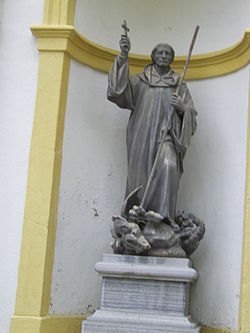
It was also borne by several saints, including St. Magnus of Füssen, a 6th-century saint who is credited for converting the Germanic tribes to Christianity in what is now Bavaria.

It has remained a staple in Scandinavia, it currently ranks in as the 15th Most Popular Male Name in Denmark (2018) & the 9th Most Popular Male Name in Norway (2018). His rankings in other countries are as follows:

  • #414 (England & Wales, 2018)
  • #781 (United States, 2018)

Other forms of the name include:

  • Mang (Alemmanish)
  • Mogens (Danish)
  • Magnuz (Danish, Swedish)
  • Mack (English)
  • Manu (Finnish)
  • Mauno/Maunu (Finnish)
  • Magne (French, Norwegian)
  • Mânuse (Greenlandic)
  • Mághnus, Manus (Irish-Gaelic)
  • Magnús (Icelandic)
  • Magno (Italian)
  • Magnuss (Latvian)
  • Magnar (Norwegian)
  • Maghons (Old Swedish)
  • Mávdnos (Sami)
  • Mankan (Swedish)
  • Måns (Swedish)

Magna is a feminine form and Magnúsína is an Icelandic feminine form.

Sources

Viggo, Vigga

Viggo is a popular Scandinavian male name with a long history of use. It may be a diminutive offshoot of Victor, or be related to an Old Norse element, vígr (to fight). Another theory links it to the Icelandic Vöggur, which is derived from the Old Norse element vöggr, “one who lies in a cradle.” It has also been linked with the Swedish word vigg “lightning.”

A notable bearer is Danish-American actor, Viggo Mortensen (b. 1958).

Viggo is currently the 24th Most Popular Male Name in Denmark (2018), the 48th Most Popular Male Name in Sweden (2018); and the 352nd Most Popular Male Name in the Netherlands.

Other forms include:

  • Vigge (Danish, Swedish)
  • Wigand, Wiegand (German)
  • Wiggo (German, Swedish)
  • Viggó (Icelandic)
  • Vygantas (Lithuanian)
  • Vígi (Old Norse)
  • Viggu (Sami)
  • Vigg/Wigg (Swedish)
  • Wigge (Swedish)

Its feminine form of Vigga has also made its appearance in the Nordic charts, which is currently the 48th Most Popular Female Name in Denmark (2018).

An obscure Danish feminine form is Viggoline.

Sources

Albert, Alberta

Prince_Albert_-_Franz_Xaver_Winterhalter_1842


Albert is a Norman contracted form of Adalbert that was introduced into England after the Norman Conquest of 1066. Though there is an Anglo-Saxon form of Æðelberht, it was completely usurped by its Norman version.

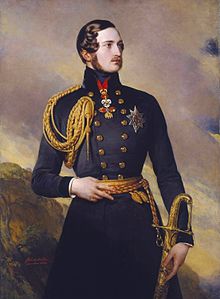
The name fell out of use in England by the end of the 13th-century but was revived in the 19th-century when Queen Victoria of England chose a German prince by the name of Albert to be her husband. Speaking of which, Albert was a much-loved name among German royalty.

Between 1880-1967, Albert remained in the Top 100 Most Popular Male Names. He peaked at #14 in 1910. As of 2018, he currently ranks in as the 452nd Most Popular Male Name.

Albert is currently quite popular in Europe. These are his rankings in the following countries:

  • #37 (Denmark, 2018)
  • #55 (England & Wales, 2018)
  • #84 (Norway, 2018)
  • #422 (Netherlands, 2018)

Albert is used in Albanian, Catalan, Croatian, Czech, Danish, Dutch, English, Estonian, Finnish, French, German, Hungarian, Icelandic, Polish, Romanian, Russian, Slovakian, Slovenian & Ukrainian.

Other forms include:

  • Alberzh (Breton)
  • Aalt (Dutch)
  • Aalbert (Dutch)
  • Aalbertus (Dutch)
  • Aelbrecht (Dutch)
  • Albercht (Dutch)
  • Alberd (Dutch)
  • Albertus (Dutch, Late Latin)
  • Appe (Dutch)
  • Brecht (Dutch)
  • Elbert (Dutch, German)
  • Ethelbert (English)
  • Alpertti (Finnish)
  • Albertin (French)
  • Aubert (French)
  • Aubertin (French)
  • Abbe, Abe (Frisian)
  • Ailbeart (Gaelic)
  • Alberte (Galician)
  • Albertos (Galician)
  • Alberti ალბერტი (Georgian)
  • Albrecht (German)
  • Albertinello (Italian)
  • Albertino (Italian)
  • Alberto (Italian, Portuguese, Spanish)
  • Alperto (Italian)
  • Ulberto, Ulperto (Italian)
  • Albaer (Limburgish)
  • Baer, Bèr (Limburgish)
  • Alberts (Latvian)
  • Albertas (Lithuanian)
  • Albertet (Occitanian)
  • Olbracht (Polish)

Its feminine for of Alberta was borne by Princess Louise Caroline Alberta (1848-1939), daughter of Queen Victoria & Prince Albert. The Canadian province was named in her honour.

Alberta is used in Albanian, Catalan, Croatian, Czech, Danish, Dutch, English, Estonian, Finnish, French, German, Hungarian, Icelandic, Italian, Polish, Portuguese, Romanian, Russian, Slovakian, Slovenian, Spanish & Ukrainian.

Alberte is currently the 12th Most Popular Female Name in Denmark. Alberte (ahl-BARE-teh) is also used in French, but pronounced differently from its Danish counterpart (AHL-BAIRT). Other feminine forms include:

  • Alberthe, Albertha (Danish, Swedish)
  • Albertina (Dutch, German, Hungarian, Italian, Portuguese, Spanish)
  • Brechtje (Dutch)
  • Bertina (English, Hungarian, Italian)
  • Albertine (French, German, Danish, Norwegian)
  • Auberte (French)
  • Aubertine (French)
  • Bertine (French)
  • Abelke (Frisian)
  • Albertin (Hungarian)

Sources

Loki

LokiOrigin: Old Norse
Meaning: debated
Gender: Masculine
(LOH-kee)

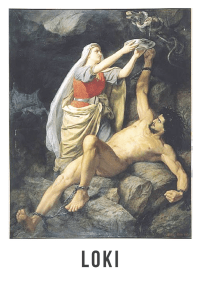
From the name of the trickster god in Norse mythology, Loki was the ultimate pranksters whose pranks always ended up going terribly awry, his biggest blunder being the death of the god Baldur. In Norse legend, Loki’s associations were sometimes neutral to downright evil. Despite this, Loki never had a bad enough connotation to deter Nordic parents, medieval and modern, from using his name on their offspring.

The meaning of the name itself is rather contested. The following possibilities in a nutshell include:

  • from the Old Norse Logi (flame)
  • from an Old Germanic root word *luk, which denotes anything related to knots, locks and anything enclosed/compare to the Old Norse verb loka (to lock; to close; to end”; and the Old Norse verb loki (to loop onthe end).
  • There may be a link with the Old Norse loptr (air).
  • from the Old Norse lok (cover, lid; end)

Loki has made it into the UK’s Top 500 male names, while its modern Scandinavian form of Loke is still a popular choice in Nordic countries.

In 2016, Loki was the 452nd most popular male name in England/Wales, while Loke is the 58th most popular name in Sweden (2017).

Other forms include:

  • Loke (Danish/Norwegian/Swedish)
  • Loki (English/Faroese/Finnish/German/Icelandic/Old Norse)

It should be noted that this was the name of the wife of German Chancelor, Helmut Schmidt, Loki Schmidt (borne Hannelore Schmidt (1919-2010). In this case, Loki seems to have been a childhood nickname that developed from a child’s mispronunciation of Hannelore.

Sources

Raphael

Gender: Masculine
Origin: Hebrew רָפָאֵל Ραφαηλ
Meaning: “God is healer.”
Fre (ra-fa-EL); Eng (RAF-ee-el; RAY-fee-əl)

The name is found in Judeo-Christian and Islamic legend as the name of a major archangel. In the Bible, he is mentioned in the Book of Tobit, which is considered canonical in the Roman Catholic, Orthodox and Anglican tradition. Due to Raphael’s deliverance of Sarah from the demon Asmodeus (who killed every husband she married before consumation), Raphael has been invoked as a matchmaker by Catholics.

Raphael also appears in the non-canonical Book of Enoch in which he is responsible for binding the fallen angel Azazel

In Islamic tradition, he is known as Israfel/Israfil and it is believed that he will blow the trumpet on Judgement Day.

It is interesting to note that the modern Hebrew word for a medical doctor is  דוֹקטוֹר (rophe), compare to the first element of Raphael.

Raphael is currently a trend across Europe, in France, Raphaël is the 11th most popular male name, (2010). His rankings in his various forms are as follows:

  • # 3 (Liechtenstein, 2010)
  • # 11 (Rafael, Brazil, 2010)
  • # 17 (Austria, 2010)
  • # 40 (Rafał, Warsaw, Poland, 2010)
  • # 48 (Rafał, Poland, 2009)
  • # 50 (German-speaking, Switzerland, 2010)
  • # 54 (Raphaël, Belgium, 2008)
  • # 55 (Rafael, Spain, 2010)
  • # 56 (Rafael, Croatia, 2009)
  • # 63 (Rafael, France, 2010)
  • # 189 (Rafaël, Netherlands, 2011)
  • # 274 (Rafael, United States, 2011)
  • # 668 (United States, 2011)

Its feminine form of Rafaela is currently the 8th most popular female name in Brazil, (2010), while the French form of Raphaëlle ranked in as the 273rd most popular female name in France, (2010).

Other forms of the masculine include:

  • Rafael (Albanian/Armenian/Catalan/Croatian/Czech/Finnish/Hungarian/Portuguese/Romanian/Romansch/Scandinavian/Slovene/Spanish)
  • Raphel ሩፋኤል (Amharic/Ethiopian)
  • Rupha(e)l ራፋኤል (Amharic/Ethiopian)
  • Israfil اسرافيل, Исрафил (Arabic/Central Asian: used among Muslims)
  • Rapael რაფაელ (Armenian/Georgian)
  • Rafail Рафаил Ραφαήλ (Bulgarian/Greek/Macedonian/RomanianRussian/Serbian)
  • Rafel (Catalan)
  • Raphael (Coptic/English/German)
  • Rafaël (Dutch)
  • Raafael (Estonian)
  • Raphaël (French)
  • Raiféal (Gaelic)
  • Raffaele (Italian)
  • Raffaello (Italian)
  • Raffaelino (Italian)
  • Îsrafîl (Kurdish)
  • Rafla (Lebanese/Syrian: used among Christians)
  • Rafaelis (Lithuanian)
  • Rapolas (Lithuanian)
  • Rafel (Maltese)
  • Rafał (Polish)
  • Arrafieli (Sardinian)
  • Rafiele (Sardinian)
  • İsrafil (Turkish)
  • Rafayil Рафаї́л (Ukrainian)
Common diminiutives are: Raf (Dutch); Rafe (English); Ralph (English); Rafinha (Brazilian-Portuguese); Rafa (Spanish).
Feminine forms include:
  • Rafaela (Croatian/Macedonian/Portuguese/Romansch/Slovene/Spanish)
  • Raphaëlle (French)
  • Raphaela (German)
  • Raphaele (German)
  • Raffaella (Italian)
  • Raffaellina (Italian)
The name was also notably borne by Raphael, or Raffaello Sanzio (1483–1520), an Italian master painter.

Theophilus

Gender: Masculine
Origin: Greek Θεοφιλος
Meaning: “love of God.”
Eng (thee-AHF-ə-ləs); Fre (TAY-o-FEEL); Grk (THAY-oh-FEE-lose)

The name is derived from a theophoric Greek name composed of the elements, theos θεος (god) and philos φιλος (love), hence: “love of God.” It is the Greek cognate to the Latin, Amadeus.

It was a common name in pre-Christian Greece and appears in the New Testament as the name of a person that the Gospel of Luke and the Acts of the Apostles address. It is argued that this was actually a title used to refer to Christian followers in general, others argue that it was indeed the name of one actual person. As to who exactly Theophilus was is shrouded in mystery. Many different Biblical scholars have their own ideas and common theories include that he was either a Roman official, or Theophilus ben Ananus, who was the High Priest at the Temple of Jerusalem during that time, or even the lawyer of St. Paul.

The name was borne by several Byzantine personages, including an Emperor, a famous astrologer and a scientist.

In the English-speaking world, the name was used in Medieval England, it was borne by Theophilus Presbyter (1072-1125), a Benedictine monk a wrote a medieval guide to several medias of art. Theophilus also experienced a vogue among the Puritans of the 17th-century.

As of 2009, its French form of Théophile was the 343rd most popular male name.

Other forms of the name include:

  • Teofil Теофил (Bulgarian/Hungarian/Polish/Russian)
  • Theophilus (Dutch/English/Latin)
  • Théophile (French)
  • Theofil (German)
  • Theophilos (Greek)
  • Teofilo (Italian)
  • Teófilo (Portuguese)
  • Teofilus (Scandinavian)
  • Teófilo (Spanish)
  • Feófil Фео́філ (Russian/Ukrainian)
Feminine forms are Theophila and Teofila.

Jessica, Iscah

Gender: Female
Origin: Hebrew
Meaning “to behold.”
(IS-kuh); (JES-sik-kuh)

The name Jessica is an Anglicization of the Hebrew name, Iscah, which is borne in the Old Testament by a niece of Abraham.

Jessica first appeared in Shakespeare’s, the Merchant of Venice (1596), it is believed that the English author corrupted a Greek transliteration of the Hebrew Yiskah יִסְכָּה, which in the Bible of Shakespeare’s time would have been rendered as Jescha or Jesca. In the Merchant of Venice, Jessica is the name of the beautiful daughter of Shylock.

Yiskah (יסכה)  is said to come from the Hebrew root sachah (סכה), which means “to see.” Adding the yud implies future tense which makes the name imply foresight or clairvoyance.

The famous French rabbincal scholar, Rashi, claimed that Yiskah was another name for Sarah, the wife of Abraham, since she was beautiful to behold and she was known for her prophetic foresight.

The name did not get much usage until the end of the 20th-century, where it became one of the most popular female names in the United States during the 70s, 80s and 90s.

She seems to have steadily rose over a 20 year span between the 1960s and early 1970s. She jumped several places between 1969 and 1970, going from the 134th position in 1969 way up to # 98 in 1970, from thereon, the name continued to rise, peaking at # 3 in 1978. She remained in the top 10 throughout the 70s, 80s and 90s, sometimes hitting the 1st place position. In 2001, she dropped all the way down to # 11, and he has been declining since, currently, as of 2010, she is the 92nd most popular female name. In other countries, her rankings are as follows:

  • # 6 (England/Wales, 2010)
  • # 8 (Northern Ireland, 2010)
  • # 11 (Scotland, 2010)
  • # 17 (New Zealand, 2010)
  • # 20 (Australia, NSW, 2010)
  • # 29 (Ireland, 2010)
  • # 42 (Canada, B.C., 2010)
  • # 43 (German-speaking Switzerland, 2009)
  • # 71 (Mexico, 2010)
  • # 82 (Dzsesszika, Hungary, 2010)
  • # 171 (Norway, 2010)
  • # 262 (France, 2009)
  • # 304 (Netherlands, 2010)

Other forms of the name include:

  • Jèssica (Catalan)
  • Jessika/Jesika (Czech/Polish/Slovak: relatively recent in usage, and is becoming more prevalent)
  • Jessa (English: contraction of Jessica)
  • Jessica (English/Dutch/German/Finnish/French/Scandinavian/Spanish: a borrowing from the English and becoming more and more prevalent, sometimes rendered phonetically as Jessika in Germanic countries)
  • Jescha (English: archaic)
  • Iekika (Hawaiian)
  • Iscah/Yiskah יִסְכָּה (Hebrew)
  • Jiska (German: very obscure)
  • Dzsesszika (Hungarian)
  • Jiszká (Hungarian)
  • Gessica (Italian)
  • Džesika (Lithuanian)
  • Dżesika (Polish: phonetic rendition and the more popular form, becoming more common in Poland)
  • Jéssica (Portuguese-Brazilian)
  • Jesica (Spanish)

Diminutive forms are Jessie and Jessy.

The names are borne by pop singer, and actresses Jessica Tandy (b.1908), Jessica Lange (1942), Jessica Simpson (b.1980), Jessica Alba (b.1981), Jessica Biel (1982).

Oliver, Olivier

Gender: Masculine
Origin: debated
Meaning: debated
Eng (AHL-ih-VER); Fre (oh-LEE-vyay)

This name has a very interesting past. Its origins and meaning are debated, despite its obvious similarity with the word “olive”, many sources believe that is is either derived from one or two Old Norse names, Alfihar or OleifrAlfihar meaning “elf army” or Oleifr meaning “ancestral relic,” while other sources argue that it is indeed related to the Latin word oliverus meaning “olive tree.”

The name first appears in the French epic poem, Le Chanson de Roland. Olivier is the one of the better retainers of Roland. The name was introduced into England by the Normans and was consequently anglicized as Oliver.

The name has been in and out of usage in the English-speaking world since the Middle Ages. There was a time in England when the name went out of favor due to the bloody exploits of Oliver Cromwell. It was revived in the 19th-century due to Dicken’s lovable orphaned character of Oliver Twist.

In recent years, the name has seemed to go through a revival in both the United States and the United Kingdom. In 1979, Oliver ranked in at # 396 for the most popular male names in the United States, in 2010, however, he cracked into the top 100, making it all the way up to # 88. No doubt thanks to the popularity of its seemingly feminine form of Olivia.

As of 2010, he was the most popular male name in England/Wales. His rankings in other countries are as follows:

  • # 3 (Australia, NSW, 2010)
  • # 3 (New Zealand, 2010)
  • # 6 (Norway, 2010)
  • # 7 (Sweden, 2010)
  • # 8 (Scotland, 2010)
  • # 9 (Denmark, 2010)
  • # 10 (Finland, 2011)
  • # 12 (Ólafur, Iceland, 2010)
  • # 16 (Northern Ireland, 2010)
  • # 23 (Canada, BC, 2010)
  • # 25 (Oliwier, Poland, 2009)
  • # 38 (Olivér, Hungary, 2010)
  • # 48 (Óliver, Iceland, 2010)
  • # 51 (Austria, 2010)
  • # 52 (Ireland, 2010)
  • # 55 (Olivier, Netherlands, 2010)
  • # 86 (Spain, 2010)
  • # 269 (Netherlands, 2010)
  • # 305 (Olivier, France, 2009)

The name is used throughout continental Europe. Its French form of Olivier is still fairly common in France and it is occassionally found in the Bayous of Louisiana among Cajun families, along with its lovely accented drawled out pronunciation of (oh-LIV-ee-AY).

In Poland it is rendered as Oliwer pronounced the same way as in English though the final R is rolled. In Iceland the popular male name of Olafur may be related. Pronounced (OH-lahf-ER), it has a feminine form of Olafia (OH-lah-FEE-ah).

Popular English nicknames are Ollie and the less common Noll.

Its designated name day is July 12.

Other forms include:

  • Olivier (Afrikaans/Dutch/French/Frisian)
  • Oliver Оливер (Croatian/Czech/Dutch/English/Estonian/Finnish/German/Hungarian/Macedonian/Portuguese/Russian/Serbian/Slovak/Spanish)
  • Fier (Dutch: originally a diminutive form, used as an independent given name)
  • Oluvier (Dutch)
  • Olivur (Faroese)
  • Ólivar (Faroese)
  • Olivér (Hungarian)
  • Ólafur (Icelandic)
  • Óliver (Icelandic)
  • Ólíver (Icelandic)
  • Oilibhéar (Irish)
  • Oliviero (Italian)
  • Olivarius/Oliverus (Latin)
  • Alfher (Old High German)
  • Áleifr (Old Norse)
  • Oliwer/Oliwier (Polish)
  • Oliwir/Olwer/Olwir (Polish: obscure)
  • Oliveiros (Portuguese)
  • Olaghair (Scottish)
  • Oilbhreis (Scottish)