Lucas, Luke

Gender: Masculine
Origin: Greek
Meaning: “from Lucania.”
Eng (LOOK); Fre IPA (LUYK)

Both names are derived from the Greek, Λουκας (Loucas), which means, “from Lucania”, the name of a region in Italy.

The name was popularized throughout the Christian world due to the fame and renown of St. Luke, a Christian convert, gentile and doctor. He is credited as being the author of the Acts and the third Gospel in the New Testament.

In the English speaking world, Luke has been in usage since the 12th-century, he is currently the 39th most popular male name in the United States, (2011). His latinate form of Lucas is the 29th most popular male name. Their rankings in other countries are as follows:

For Luke/Luc

  • # 1 (Luke, Malta, 2010)
  • # 5 (Luuk, Netherlands, 2011)
  • # 9 (Ireland, 2010)
  • # 17 (Northern Ireland, 2010)
  • # 24 (New Zealand, 2010)
  • # 33 (Australia, NSW, 2011)
  • # 38 (England/Wales, 2010)
  • # 50 (Lluc, Catalonia, 2010)
  • # 56 (Canada, BC, 2010)
  • # 45 (Scotland, 2010)
  • # 99 (Luc, Netherlands, 2011)
  • # 249 (Netherlands, 2011)
  • # 253 (Luc, France, 2010)

For Luca(s)

  • # 1 (Luka, Croatia, 2009)
  • # 1 (Luca, Malta, 2010)
  • # 1 (Luka, Serbia, 2011)
  • # 1 (Luka, Slovenia, 2010)
  • # 2 (Australia, NSW, 2011)
  • # 2 (France, 2010)
  • # 2 (Luca, German-speaking, Switzerland, 2010)
  • # 2 (Monaco, 2009)
  • # 2 (Sweden, 2011)
  • # 3 (Belgium, 2008)
  • # 3 (Denmark, 2011)
  • # 3 (Faroe Islands, 2010)
  • # 3 (Luca, French-speaking, Switzerland, 2010)
  • # 3 (Luka, Georgia, 2011)
  • # 3 (Lucas/Lukas, Germany, 2011)
  • # 3 (Luca(s), Liechtenstein, 2010)
  • # 3 (Lukas, Lithuania, 2011)
  • # 4 (Canada, BC, 2010)
  • # 4 (Lukáš, Czech Republic, 2010)
  • # 4 (Luca, Luxembourg, 2010)
  • # 5 (Lucas, Brazil, 2011)
  • # 5 (Lucas, French-speaking, Switzerland, 2010)
  • # 5 (Lukáš, Slovakia, 2011)
  • # 6 (Netherlands, 2011)
  • # 9 (Luca, Italian-speaking, Switerland, 2010)
  • # 12 (Luca, Italy, 2009)
  • # 13 (Scotland, 2010)
  • # 17 (Norway, 2011)
  • # 19 (England/Wales, 2010)
  • # 21 (Spain, 2010)
  • # 22 (Luca, Austria, 2010)
  • # 22 (Luca, Belgium, 2008)
  • # 28 (Northern Ireland, 2010)
  • # 32 (Luca, Netherlands, 2011)
  • # 36 (Catalonia, 2010)
  • # 38 (Luka, Bosnia & Herzegovina, 2010)
  • # 38 (Łukasz, Poland, 2009)
  • # 70 (Luca, England/Wales, 2010)
  • # 79 (Luca, Australia, NSW, 2011)
  • # 79 (Ireland, 2010)
  • # 95 (Luka, Belgium, 2008)
  • # 96 (Luca, Scotland, 2010)
  • # 100 (Luca, France, 2010)
  • # 112 (Luka, France, 2010)
  • # 182 (Luka, Netherlands, 2011)
  • # 260 (Luca, United States, 2011)
  • # 743 (Luka, United States, 2011)

Other forms of the name include:

  • Luka Лука ლუკა (Albanian/Belarusian/Croatian/Georgian/Macedonian/Old Church Slavonic/Russian/Serbian/Slovene/Ukrainian)
  • GhukasՂուկաս (Armenian)
  • Lucas Лукас لوکا (Belarusian/Dutch/English/Farsi/French/German/Portuguese/Romansch/Scandinavian/Spanish)
  • Lukaz (Breton)
  • Lluc (Catalan)
  • Lukáš (Czech/Slovak)
  • Luuk (Dutch)
  • Luke (English/Dutch)
  • Luuka(s) (Finnish)
  • Luc (French/Galician)
  • Lukas (German/Latvian/Lithuanian/Scandinavian)
  • Loukas Λουκάς (Greek)
  • Lukács (Hungarian)
  • Lúkas (Icelandic)
  • Luca (Italian/Maltese/Romanian/Sardinian)
  • Lucano (Italian: obscure)
  • Luchino (Italian: obscure)
  • Luchetto (Italian: obscure)
  • Lucone (Italian: obscure)
  • Lúcás (Irish-Gaelic)
  • Luch (Piedmontese)
  • Łukasz (Polish)
  • Lücha (Romansch)
  • Łuca (Venetian)
  • Luk (Walon)

An Italian feminine form is Luchina.

In English, Lucky is occasionally used as a pet form.

Sources

  1. http://dictionary.reference.com/browse/Luke
  2. http://www.behindthename.com/php/find.php?name=luke
  3. http://www.askoxford.com/firstnames/luke?view=uk
  4. http://www.etymonline.com/index.php?term=Luke
  5. http://www.statistics.gov.uk/specials/babiesnames_boys.asp
  6. http://www.catholic.org/saints/saint.php?saint_id=76
Melanie

Gender: Feminine
Origin: Greek μελαινα
Meaning: “black, dark.”
Brit/Amer Eng (MEL-ah-NEE); Aus Eng (meh-LAH-nee); Fre (may-lah-NEE); Germ (MEL-ah-nee)

The name is derived from the Latin, Melania, which is derived from the Greek, μελαινα (melaina), meaning, “dark; black.”

In Greek Mythology, Melaina was the name of a nymph.

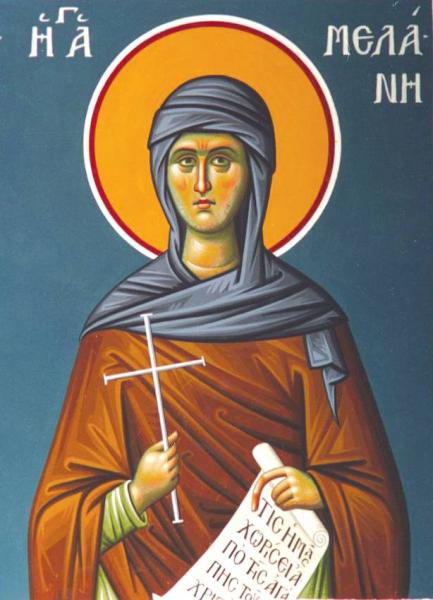
In the early Christian Church, the name was popularized by two 5th-century Roman saints, a grandmother and her granddaughter. Melanie the Younger is known for giving all her wealth to charity.

The name was introduced into England by the conquering Normans, but was never really common. The name became rather common in both the United States and in Britain starting in the early 20th-century, whether it was a French import, or if the character of Melanie Wilkes in Margaret Mitchell’s novel, Gone with the Wind (1936), are attributable to its popularity is up to conjecture.

Currently, Melanie is 89th most popular female name in the United States, (2011). Her rankings in other countries are as follows:

  • # 54 (Austria, 2010)
  • # 60 (Argentina, 2009)
  • # 237 (France, 2010)
  • # 376 (Netherlands, 2011)

Other forms of the name include:

  • Melanya (Armenian)
  • Melanija Меланија Мелания (Croatian/Macedonian/Russian/Serbian/Slovene)
  • Melánie (Czech: meh-LAHN-ye)
  • Melanie (Dutch/English/German)
  • Mélanie (French)
  • Melaina Μελαινα (Greek)
  • Melánia (Hungarian/Slovak)
  • Melani (Hungarian)
  • Melania (Italian/Late Latin/Polish/Spanish)
A common German short form is Mellie.

Italian masculine forms are: Melanio and Melaneo.

Polish diminutives are: Melanka, Melcia and Melusia.

The name is also borne by:

British pop singer, Melanie Brown, (former Spice Girl) b.1975. Melanie Chrisholm, aka Sporty Spice, b. 1974. American actress, Melanie Griffith (b.1957) and French actress and star of Inglorious Bastards, Mélanie Laurent (b. 1983).

The designated name-days are: January 10 (Hungary), January 13 (Poland), June 30 (Slovakia) and December 31 (France/Germany/Poland).

Sources

  1. http://www.behindthename.com/top/search.php?terms=melanie
  2. http://www.askoxford.com/firstnames/melanie?view=uk
  3. http://www.newadvent.org/cathen/10154a.htm
  4. http://ocafs.oca.org/FeastSaintsLife.asp?FSID=103701

Gabriel, Gabriella

Origin: Hebrew גַבְרִיאֵל  Γαβριηλ
Meaning: “strong man of God.”
Eng (GABE-ree-el); (gah-bree-EL-ah); Fre (gah-bree-EL); Germ (GAHP-ree-el); Pol (GAHP-ryel)

The name is derived from the Biblical Hebrew, גַבְרִיאֵל (Gavri-el) meaning, “strong man of God.”

In Judeo-Christian religions, it is the name of a powerful archangel, who is often viewed as a messenger of God. He appears several times in the Old and New Testaments.

Among Christians, one of his most important messages was relayed to the Virgin Mary that she would be the mother of Jesus. Islamic tradition also believes the same, and in Islam, it was the angel Gabriel who revealed the Qu’ran, (through God), to Mohammed.

In Mormon theology, Gabriel is believed to be the embodiment of Noah in the afterlife.

Gabriel is a fairly common name among Christians, Jews and Muslims, making him an extremely cross-cultural portable name.

Currently, in the United States, his popularity has been rising. He is the 24th most popular male name, (2011). In other countries, his rankings in all his various forms are as follows:

  • # 2 (Gabriel(e), Liechtenstein, 2010)
  • # 3 (Brazil, 2011)
  • # 4 (Romania, 2009)
  • # 6 (Gabriele, Italy, 2009)
  • # 7 (France, 2010)
  • # 9 (Quebec, Canada, 2011)
  • # 19 (Croatia, 2009)
  • # 26 (Belgium, 2008)
  • # 28 (Canada, BC, 2010)
  • # 28 (Mexico, 2010)
  • # 29 (Austria, 2010)
  • # 35 (Spain, 2010)
  • # 40 (Poland, 2009)
  • # 47 (Sweden, 2011)
  • # 48 (Norway, 2011)
  • # 52 (Catalonia, 2010)
  • # 78 (England/Wales, 2010)
  • # 95 (Australia, NSW, 2011)
  • # 124 (Scotland, 2010)
  • # 189 (Djibril, France, 2010)
  • # 313 (Jibril, France, 2010)

Other forms of the name include:

  • Jibrail/Jibrīl جبرائيل ጂብሪል (Arabic/Ethiopian)
  • Gabriel გაბრიელი ገብርኤል
    (Armenian/Catalan/Coptic/Czech/Danish/English/Ethiopian/Finnish/French/Georgian/German/Norwegian/Polish/Portuguese/Romanian/Romansch/Spanish/Swedish)
  • Gavrik (Armenian)
  • Cəbrayıl/Cibril (Azeri)
  • Gawryil Гаўрыіл (Belarusian)
  • Džibril/Džebrail (Bosnian)
  • Gavrail Гавраил (Bulgarian)
  • Zheberejil Жәбірейіл (Central Asian)
  • Gabrijel (Croatian/Maltese/Serbian)
  • Gabriël (Dutch)
  • Gaabriel (Estonian)
  • Gabrel (Ethiopian)
  • Kaapo/Kaapro (Finnish)
  • Gabriél Γαβριήλ (Greek)
  • Gavril Γαβριηλ (Greek)
  • Gavriel גַּבְרִיאֵל (Hebrew)
  • Gábriel (Hungarian)
  • Gábor (Hungarian)
  • Gabríel (Icelandic)
  • Jibril (Indonesian)
  • Gaibriéil (Irish-Gaelic)
  • Gabo/Gabbo (Italian)
  • Gabriele (Italian: more common form)
  • Gabriellino (Italian)
  • Gabriello (Italian)
  • Gabrio (Italian)
  • Cibrayîl (Kurdish)
  • Gabrielus (Latin)
  • Gabriels (Latvian)
  • Gabrielius (Lithuanian)
  • Jibrail (Malaysian)
  • Gavriilu Гаврїилъ (Old Church Slavonic)
  • Khabbriele (Puglian)
  • Gabin (Provençal)
  • Gavril Гавриил (Romanian/Russian)
  • Crabiele/Gabilele/Gabriello (Sardinian)
  • Cabbrieli (Sicilian)
  • Gabri’el ܠܒܪܝܐܝܠ (Syrian)
  • Gebrael (Syrian)
  • Cebrâîl (Turkish)
  • Gavrel גַאבְֿרֶעל (Yiddish)

English short form is Gabe.

Its feminine form of Gabriella/Gabriela is also rising in popularity. Currently, Gabriella is the 34th most popular female name in the United States, (2011). Her rankings in other countries are as follows:

  • # 3 (Gabriela, Bulgaria, 2009)
  • # 5 (Gabrielė, Lithuania, 2011)
  • # 5 (Gabrielle, Philippines, 2011)
  • # 7 (Gabriela, Columbia, 2011)
  • # 8 (Gabriela, Romania, 2009)
  • # 9 (Gabriela, Puerto Rico, 2011)
  • # 10 (Gabriela, Brazil, 2010)
  • # 13 (Gabriela, Poland, Warsaw, 2010)
  • # 19 (Gabriela, Poland, 2009)
  • # 28 (Gabrijela, Croatia, 2009)
  • # 30 (Gabriela, Mexico, 2010)
  • # 30 (Gabrielly, Brazil, 2010)
  • # 36 (Gabriela, Croatia, 2009)
  • # 38 (Gabriela, Chile, 2010)
  • # 64 (Australia, NSW, 2011)
  • # 64 (Gabriela, Spain, 2010)
  • # 67 (Gabrielle, France, 2010)
  • # 72 (Canada, BC, 2010)
  • # 94 (Gabrielle, Canada, BC, 2010)
  • # 119 (Gabrielle, United States, 2011)
  • # 466 (France, 2010)

Other feminine forms include:

  • Gebre’elwa ገብርኤሏ (Amharic/Ethiopian)
  • Gabriela (Bulgarian/Croatian/Czech/German/Polish/Portuguese/Romanian/Scandinavian/Slovak/Spanish)
  • Brielle (Cajun: abbreviated form of Gabrielle)
  • Gabrijela (Croatian/Serbian)
  • Gabriëlle (Dutch)
  • Briella/Briela (English)
  • Gabrielle (French/English)
  • Gabria (Italian)
  • Gabrielina (Italian)
  • Gabriella (Italian/English/Hungarian/Scandinavian: more common form in Italy)
  • Gabrielė (Lithuanian)
  • Gavriila Гавриила (Russian)

Czech diminutives are: Gába, Gabika, Gábina, Gabrina and Gabby.

A Polish diminutive is Gabrysia (gah-BRIH-shah).

English short forms are: Gabby and Ella.

Designated name-days are: February 10/27 (Poland), February 19 (Sweden), March 24 (Czech/Finland/Poland/Slovakia/Sweden), September 29 (France/Germany), December 12 (Hungary)

Raphael

Gender: Masculine
Origin: Hebrew רָפָאֵל Ραφαηλ
Meaning: “God is healer.”
Fre (ra-fa-EL); Eng (RAF-ee-el; RAY-fee-əl)

The name is found in Judeo-Christian and Islamic legend as the name of a major archangel. In the Bible, he is mentioned in the Book of Tobit, which is considered canonical in the Roman Catholic, Orthodox and Anglican tradition. Due to Raphael’s deliverance of Sarah from the demon Asmodeus (who killed every husband she married before consumation), Raphael has been invoked as a matchmaker by Catholics.

Raphael also appears in the non-canonical Book of Enoch in which he is responsible for binding the fallen angel Azazel

In Islamic tradition, he is known as Israfel/Israfil and it is believed that he will blow the trumpet on Judgement Day.

It is interesting to note that the modern Hebrew word for a medical doctor is  דוֹקטוֹר (rophe), compare to the first element of Raphael.

Raphael is currently a trend across Europe, in France, Raphaël is the 11th most popular male name, (2010). His rankings in his various forms are as follows:

  • # 3 (Liechtenstein, 2010)
  • # 11 (Rafael, Brazil, 2010)
  • # 17 (Austria, 2010)
  • # 40 (Rafał, Warsaw, Poland, 2010)
  • # 48 (Rafał, Poland, 2009)
  • # 50 (German-speaking, Switzerland, 2010)
  • # 54 (Raphaël, Belgium, 2008)
  • # 55 (Rafael, Spain, 2010)
  • # 56 (Rafael, Croatia, 2009)
  • # 63 (Rafael, France, 2010)
  • # 189 (Rafaël, Netherlands, 2011)
  • # 274 (Rafael, United States, 2011)
  • # 668 (United States, 2011)

Its feminine form of Rafaela is currently the 8th most popular female name in Brazil, (2010), while the French form of Raphaëlle ranked in as the 273rd most popular female name in France, (2010).

Other forms of the masculine include:

  • Rafael (Albanian/Armenian/Catalan/Croatian/Czech/Finnish/Hungarian/Portuguese/Romanian/Romansch/Scandinavian/Slovene/Spanish)
  • Raphel ሩፋኤል (Amharic/Ethiopian)
  • Rupha(e)l ራፋኤል (Amharic/Ethiopian)
  • Israfil اسرافيل, Исрафил (Arabic/Central Asian: used among Muslims)
  • Rapael რაფაელ (Armenian/Georgian)
  • Rafail Рафаил Ραφαήλ (Bulgarian/Greek/Macedonian/RomanianRussian/Serbian)
  • Rafel (Catalan)
  • Raphael (Coptic/English/German)
  • Rafaël (Dutch)
  • Raafael (Estonian)
  • Raphaël (French)
  • Raiféal (Gaelic)
  • Raffaele (Italian)
  • Raffaello (Italian)
  • Raffaelino (Italian)
  • Îsrafîl (Kurdish)
  • Rafla (Lebanese/Syrian: used among Christians)
  • Rafaelis (Lithuanian)
  • Rapolas (Lithuanian)
  • Rafel (Maltese)
  • Rafał (Polish)
  • Arrafieli (Sardinian)
  • Rafiele (Sardinian)
  • İsrafil (Turkish)
  • Rafayil Рафаї́л (Ukrainian)
Common diminiutives are: Raf (Dutch); Rafe (English); Ralph (English); Rafinha (Brazilian-Portuguese); Rafa (Spanish).
Feminine forms include:
  • Rafaela (Croatian/Macedonian/Portuguese/Romansch/Slovene/Spanish)
  • Raphaëlle (French)
  • Raphaela (German)
  • Raphaele (German)
  • Raffaella (Italian)
  • Raffaellina (Italian)
The name was also notably borne by Raphael, or Raffaello Sanzio (1483–1520), an Italian master painter.

Berenice, Bernice

Gender: Feminine
Origin: Greek Βερενικη
Meaning: “bringer of victory.”
Eng (ber-ə-NIE-see; ber-NEES); Fre (beh-hreh-NEES); It (bey-rey-NEE-cheh)

The name is an ancient Macedonian form of the Attic Greek, Pherenikë (Φερενίκη), which is composed of the Greek elements, phero (φέρω), “to bear” and nike (νίκη), “victory.” The earliest attestation of the name is a 3rd-century priestess of Demeter.

The name has often been associated with Veronica, but there is still debate as to whether these two names are actually related.

Berenice was a common one among the Ptolomy dynasty of Egypt, being borne by at least 9 Ptolomaic women. It also seems to have been common among the late Judaean Kingdom royalty, being born by 3 Jewish princesses, one of whom appears briefly in the New Testament as the name King Herod’s sister.

It was later borne by an early Christian Greek martyr, making the name remain common after the debut of Christianity.

In the English-speaking world, she has appeared interchangeably as Berenice and Bernice. In the United States, Bernice seems to have been the more common form, the highest she ever ranked was in 1921, coming in as the 39th most popular female name.

As of 2011, neither Berenice or Bernice appear in the U.S. top 1000, but Bérénice was the 279th most popular female name in France, (2010).

Other forms of the name include:

  • Bjeranika Бераніка (Belarusian)
  • Berenice (Catalan/Dutch/English/Italian/Portuguese/Spanish)
  • Berenika Береника (Czech/Polish/Russian/Slovak)
  • Bernice (English)
  • Bérénice (French)
  • Berenike (German)
  • Bereníkē Βερενίκη (Greek: modern)
  • Bereniké (Hungarian)

Alexis, Alexa, Alexia, Alessia

Gender: Masculine
Origin: Greek
Meaning: “defender; helper.”
(uh-LEK-sis)

The name is derived from the Greek male name, Αλεξις (Alexis), which is derived from the Greek element, αλεξω (alexo), meaning, “defender; helper.”

The name was borne by a 3rd-century Greek comic and poet, and by several male saints and five Byzantine emperors.

In its Russian incarnation of Aleksei, it was fairly common among Russian royalty. It was borne by two Russian tsars and by the last Russian crown-prince, Aleksei Romanov.

Currently, in the United States, Alexis ranks in as the 242nd most popular male name, despite this, the name is far more common for females, (even though Alexis is not a legitimate feminine name and should not be considered as such), in fact, it is currently the 26th most popular female name, (2011). In the United States, its usage as a female given name can be traced all the way to the 1940s, when it first entered the U.S. top 1000. Its usage among females is most likely attributed to Canadian actress, Alexis Smith (1921-1993) who was born as Gladys. Its popularity on females, however, might mostly be influenced by the 1980 drama series, Dynasty, in which one of the female leads, played by Joan Collins, was named Alexis.

In other countries, Alexis as a male name is ranked as follows:

  • # 28 (France, 2010)
  • # 38 (Alejo, Argentina, 2009)
  • # 83 (Belgium, 2008)
  • # 90 (Aleix, Spain, 2010)

Other forms of the name include:

  • Ales (Basque)
  • Aleksei/Alexei Алексей (Bulgarian/Russian)
  • Aleix (Catalan)
  • Alesiu (Corsican)
  • Aleksej/Alexej (Czech/Slovak)
  • Alexis (Danish/English/German/French/Norwegian/Spanish/Swedish)
  • Aleksi (Finnish)
  • Aleksis (Finnish)
  • Aleixo (Galician/Portuguese)
  • Alexei (German)
  • Alexios Αλεξιος (Greek)
  • Elek (Hungarian)
  • Alessi (Italian: obscure)
  • Alessio (Italian)
  • Alexius (Latin/German)
  • Aleksas (Lithuanian)
  • Aleksy (Polish)
  • Alexie (Romanian)
  • Alexi (Romansch)
  • Aliesch (Romansch)
  • Alessiu (Sicilian)
  • Lezziu (Sicilian)
  • Alejo (Spanish)
  • Aleksej (Slovene)
  • Aleš (Slovene)
  • Oleksiy Олексій (Ukrainian)

Alyosha and Lyosha are common Russian diminutive forms.

Its feminine forms of Alexa and Alexia are also rising in popularity, Alexia is currently the 275th most popular feminine name in the United States, (2011), while Alexa comes in as the 55th most popular female name. I shall go into more details in another post. In the meantime, here are other feminine forms

  • Alexa (English/Hungarian)
  • Alexia (English/German/Greek/French)
  • Alessa (Italian)
  • Alessia (Italian)
  • Alessina (Italian)
  • Aleksja (Polish)
  • Aléxia (Portuguese)
  • Alexina/Alexine (Scottish)

Common short forms are Alex, Lex and Lexie.

Designated name-days are: February 17 (France), March 17 (Greece), July 17 (Germany) and December 12 (Sweden).

Sources

  1. http://www.behindthename.com/name/alexis
  2. http://www.askoxford.com/firstnames/alexis?view=uk
  3. http://www.askoxford.com/firstnames/alexa?view=uk
  4. http://www.askoxford.com/firstnames/alexia?view=uk
  5. Bengt af Klintberg: Namnen i almanackan, 2001
  6. Yáñez Solana, Manuel (1995). El gran libro de los Nombres. M. E. Editores, Madrid
  7. Montes Vicente, José María (2001). El libro de los Santos. Alianza, Madrid
  8. Kustaa Vilkuna: Etunimet, 3. painos 2001, s. 30,

Roman

Gender: Masculine
Origin: Latin
Meaning “Roman.”
Eng Masc. (ROH-men) Eng Fem. (roh-MANE); Fre Masc. (hroh-MAHn); Fre Fem. (hroh-MEHN); Pol (ROH-mahn)

The name’s meaning is clear from its very first utterance, most renowned in the State’s through Polish director and film maker, Roman Polanski, it was the name of a Christian martyr who died under Diocletian.

In recent years, the name has had a peak in popularity, it currently ranks in as the 157th most popular male name in the United States (2011), and seems to be rising.

His rankings in other countries are as follows:

  • # 36 (Romain, Belgium, 2008)
  • # 39 (Romain, France, 2010)
  • # 228 (Roman, France, 2010)
  • # 494 (Netherlands, 2011)

Its designated name-days are: February 23 (Slovakia); February 28/29 (Poland), May 28 (Estonia), August 9 (Czech Republic/Poland), October 6/23 (Poland), November 18 (Poland).

Roman is used in Czech, Estonian, German, Polish, Slovakian and Slovenian.

Other forms of the name are:

  • Roman Роман (Croatian/English/German/Norwegian/Polish/Romansch/Russian/Slovak/Slovene/Swedish/Ukrainian)
  • Romain (French)
  • Romanos (Greek)
  • Román (Hungarian/Spanish)
  • Romano (Italian)
  • Romanello/Romanino (Italian: obscure)
  • Romanus (Latin)
  • Romanas (Lithuanian)
  • Reman (Poitvin)
  • Romans (Poitvin)
  • Rouman (Poivin)

In Polish, Romek is the diminutive form.

Feminine forms are:

  • Romana (Croatian/Czech/Italian/Lithuanian/Polish/Slovak/Slovene)
  • Romaine (English/French)
  • Romane (French)
  • Romána (Hungarian)
  • Romanella (Italian)
  • Romanina (Italian)
  • Romanita (Italian/Spanish)
  • Romina (Italian/Spanish)
  • Romanela (Polish: very obscure)

Hortense

Gender: Feminine
Origin: Latin
Meaning: “garden.”
Eng (HORE-tense); Fre (or-TAWNS)

In the English-speaking world, she is considered being one of the most hated baby names, on par with Bertha and Beulah; but at one time, Hortense was very much-loved in the United States, and she is still favored abroad.

Hortense appeared in the U.S. top 1000 between 1880 and 1941. The highest she ranked within those years was at # 375 in 1903. By 1942, she disappeared from the U.S. top 1000 never to be seen again.

Though the sound in contemporary English may not be so pleasant, Hortense has many redeemable qualities. She is derived from the Roman family name, Hortensius, which is derived from the Latin, hortus, meaning, “garden.” Hence horticulture! Her Latin derivative shares its name with the scientific designation of the hydrangea plant. Hortensia is also the name of a type of pear.

Hortense sounds completely different in French, in fact, it sounds rather pleasant. She appears in the French top 500 coming in as the 335th most popular female name in 2010.

Other forms of the name include:

  • Hortenzie (Czech)
  • Hortense (French/English)
  • Hortensia (German/Latin/Romansch/Portuguese/Spanish)
  • Hortenzia (Hungarian/Romanian/Slovak)
  • Ortensia (Italian)
  • Ortenzia (Italian)
  • Ourtense (Poitvin)
  • Hortensja (Polish)

Notable bearers include:

  • Hortensia (circ. 4th-century BCE) the daughter of Quintus Hortensius Hortalus she is known for her gifted speech which she gave before the Roman Triumvirate regarding  the taxation of wealthy Roman women.
  • Hortensia von Moos (1659-1715) a Swiss female doctor known for her early philosophical writings on women. Today she is a symbol of the modern Swiss Women’s Movement.
  • Hortense Mancini (1646-1649), a mistress of King Charles II of England .
  • Hortense de Beauharnais (1783-1837), daughter of Josephine Bonaparte and step-daughter of Napoleon Bonaparte.
  • Hortense Haudebourt-Lescot (1784-1845) a French painter.
  • Hortense Schneider (1833-1920), a famous French soprano.

Nathanael, Nathaniel

Gender: Masculine
Origin: Hebrew, Biblical
Meaning: “God has given.”
Eng (nay-THAN-yel; nah-THAN-yel)

The name is derived from the Hebrew male name, Netan’el (נְתַנְאֵל), meaning, “God has given.”

In the New Testament, the name is often attributed as being the true name of St. Bartholomew, one of the twelve Apostles.

In the English-speaking world, the name was not very common until after the Protestant Reformation, where the name seems to have been particularly common among the early Protestant settlers of North America. It was borne by famous American novelist, Nathaniel Hawthorne, (1804-1864).

Currently, Nathaniel is the 84th most popular name given to boys in the United States, (2011). His rankings in other countries are as follows:

  • # 86 (Canada, BC, 2010)
  • # 103 (Nathanaël, France, 2010)
  • # 580 (Nathanael, United States, 2011)

Other forms of the name include:

  • Natanail Натанаил (Bulgarian)
  • Natanael Натанаило (Croatian/Polish/Portuguese/Serbian/Slovak/Spanish)
  • Nathanael (Czech/Dutch/English/German/Scandinavian)
  • Nathanaël (French)
  • Natanaele/Nataniele (Italian)

An obscure French feminine form is Nathanaëlle.

Common English short forms are Nat, Nate and occasionally Thaniel.

Sources

  1. http://www.behindthename.com/php/find.php?name=nathaniel
  2. http://www.askoxford.com/firstnames/nathaniel?view=uk

Gaétan


Gender: Masculine
Origin: German/Polish/Italian/French
Meaning: “from Caieta.”
It (guy-TAH-no); Fre (GAH-eh-TAWn); Pol/Germ (KYE-eh-TAHN)

The name is derived from the Latin place name, Caietanus, meaning,  “from Caieta”. Caieta is now known as Gaeta.

In ancient Greece, this was a town where prisoners were taken to be executed. The town probably got its name from the wet nurse of Zeus in Greek myth.

It was borne by a 16th-century Italian saint, which spurred the popularity of the name throughout Europe. It has been in usage in German speaking countries as well as in Poland in the form of Kajetan and Cajetan, the name Kaj was later spun off from this name, now being more popular than its formal form in Sweden and Denmark.

As of 2010, its French form of Gaétan was the 122nd most popular male name in France.

Other forms of the name include:

  • Caitanu (Asturian)
  • Kaitan (Basque)
  • Gaietà (Catalan)
  • Gaitanu (Corsican)
  • Kajetán (Czech/Hungarian/Slovak)
  • Cajetaan (Dutch)
  • Gaétan (French)
  • Gaëtan (French)
  • Gaetano (Galician/Italian)
  • Kayetan (German)
  • Kajetan (German/Polish/Scandinavian)
  • Gaïtános Γαϊτάνος (Greek)
  • Caietanus (Latin)
  • Kajetonas (Lithuanian)
  • Aitano (Neopolitan)
  • Gaitano (Neopolitan)
  • Caetano (Portuguese)
  • Caetan (Romanian)
  • Cajetan (Romansch)
  • Kaetan Каетан (Russian)
  • Gajetànu (Sardinian)
  • Cayetano (Spanish)

Feminine forms are:

  • Gaetana (Italian)
  • Gaétane (French)
  • Gaëtane (French)
  • Kajetana (German/Polish)
  • Kaia (German)
  • Kaja (German/Polish)
  • Caietana (Latin)

Its designated name day is August 7.