Paul

Gender: Masculine
Origin: Latin
Meaning: “short; small; humble; few.”
Eng (PAWL)

The name is derived from the Latin Roman family name, Paulus, which could translate as meaning, “small, short; humble; few.”

Paul and his various forms has to be one of the most common male names used throughout the Christian world. It has been used equally among Orthodox Christians, Roman Catholics and Protestants.

Its most famous bearer was Paul of Tarsus, whose real name was Saul. St. Paul, as referred to by the Roman Catholic and Eastern Orthodox Churches, is attributed as being the author of much of the New Testament.

The name was borne by several popes, royals and saints thereafter.

Currently, its Germanic form of Paul is the 8th most popular male name in Germany, (2011). His rankings in other countries are as follows:

  • # 13 (Austria, 2010)
  • # 22 (France, 2009)
  • # 41 (Romania, 2009)
  • # 90 (Ireland, 2010)
  • # 130 (Scotland, 2010)
  • # 178 (United States, 2010)
  • # 485 (Netherlands, 2010)
His foreign equivalents rankings are as follows:
  • # 3 (Pablo, Spain, 2010)
  • # 4 (Páll, Faroe Island, 2010)
  • # 4 (Pau, Catalonia, 2010)
  • # 17 (Paweł, Poland, 2010)
  • # 26 (Pablo, Chile, 2010)
  • # 29 (Pavel, Czech Republic, 2010)
  • # 31 (Pablo, Catalonia, 2010)
  • # 44 (Pau, Spain, 2010)
  • # 91 (Pál, Hungary, 2010)
  • # 144 (Pablo, France, 2009)
  • # 202 (Paolo, France, 2009)
  • # 361 (Pablo, United States, 2010)

Other forms of the name include:

  • Pali (Albanian)
  • Paulë (Albanian)
  • Boulos/Bulos بولس (Arabic)
  • Faulus (Aramaic)
  • Boghos Պողոս (Armenian)
  • Poghos Պողոս (Armenian)
  • Paul (Basque/Dutch/English/Estonian/German/French/Romanian/Scandinavian/Silesian)
  • Paweł Павeл (Belarusian/Polish)
  • Polus (Berber)
  • Paol (Breton)
  • Pavel Павел (Bulgarian/Czech/Russian/Slovene)
  • Pavolo (Calabrian)
  • Pavulu (Calabrian)
  • Pau (Catalan/Occitanian)
  • Pawl (Cornish/Welsh)
  • Paulu (Corsican/Sardinian/Sicilian)
  • Pavao (Croatian)
  • Pavle პავლე Павле (Croatian/Georgian/Macedonian/Serbian)
  • Pavo (Croatian)
  • Palle (Danish)
  • Poul (Danish)
  • Pauwel (Dutch)
  • Paavel (Estonian)
  • Paavo (Estonian/Finnish)
  • Páll (Faroese/Icelandic)
  • Paavali (Finnish)
  • Pauli (Finnish)
  • Pol (Flemmish/Romansch)
  • Paale (Frisian)
  • Pals (Frisian)
  • Paulus पौलुस (Frisian/Hindi/Latin)
  • Pay (Frisian)
  • Powles (Frisian)
  • Pouw (Frisian)
  • Pauli (Fruilian)
  • Pódhl (Gaelic)
  • Pól (Gaelic)
  • Paulo (Galician)
  • Pavlos Παυλος (Greek)
  • Pāl पॉल (Hindi)
  • Pál (Hungarian)
  • Pósa (Hungarian)
  • Paolo (Italian/Portuguese)
  • Paolino (Italian/Portuguese)
  • Paulinus (Latin)
  • Pāvils (Latvian)
  • Paulius (Lithuanian)
  • Povilas (Lithuanian)
  • Paol (Lombard)
  • Paulose (Malayalam)
  • Pawl (Maltese)
  • Pawlu (Maltese)
  • Payl (Manx)
  • Paora (Maori)
  • Pål (Norwegian/Swedish)
  • Pavel (Romanian)
  • Paulin (Romansch)
  • Polet (Romansch)
  • Polin (Romansch)
  • Pulegn (Romansch)
  • Pàl (Scots-Gaelic)
  • Pawůł (Silesian)
  • Pavol (Slovak)
  • Pawoł (Sorbian)
  • Pablo (Spanish)
  • Paoro (Tahitian)
  • Pàul (Tuscan)
  • Pavlo Павло (Ukrainian)

For a Reference a Female forms See Paula and Paulina (soon to come)

Benedict, Benedikt

Gender: Masculine
Origin: Latin
Meaning: “blessed.”

The name comes directly from the Late Latin name Benedictus meaning “blessed.” The name was borne by a 6th-centuy Italian monk and saint who credited for being the founder of the Order of the Benedictines.

The name was very common throughout Medieval Europe, being borne by 16 popes, it was fairly popular in England, in the form of Bennett.

The name was also commonly used among German-Jews, being used as a cognate of the Hebrew male name Baruch בָּרוּךְ (blessed).

In the United States, the name became taboo to use due to its associations with Benedict Arnold (1741-1801) a famous American deserter and traitor to the British.

The name recently skyrocketed in Germany after the succession of the German born Pope Benedict XVI. It is currently the 93rd most popular male name in Germany, (2011). It is especially popular in Bavaria.

His rankings in other countries are as follows:

  • # 1 (Bence, Hungary, 2010)
  • # 32 (Benedek, Hungary, 2010)
  • # 294 (Benoît, France, 2009)

Other forms of the name include:

  • Benedikti (Albanian)
  • Benedet (Aragonese)
  • Benedictu (Asturian)
  • Benedita (Basque)
  • Beñat (Basque)
  • Benead (Breton)
  • Benet (Catalan)
  • Benedettu (Corsican/Maltese/Sardinian)
  • Benedikt Венедикт (Croatian/Czech/German/Icelandic/Norwegian/Russian/Serbian/Scandinavian/Ukrainian)
  • Ben(d)t (Danish/Norwegian)
  • Benedictus (Dutch/Late Latin)
  • Benedict (English/German/Romanian/Scandinavian)
  • Bennett (English)
  • Pentti (Finnish)
  • Bénédict (French)
  • Benoît (French)
  • Beinidict (Gaelic)
  • Bieito (Galician)
  • Benedikhti ბენედიქტე (Georgian)
  • Bendix (German/Norwegian)
  • Bennet (German)
  • Benz (German)
  • Venediktos Βενέδικτος (Greek)
  • Bence (Hungarian)
  • Benedek (Hungarian)
  • Benett (Hungarian)
  • Benedetto (Italian)
  • Benito (Italian/Spanish)
  • Bettino (Italian)
  • Bendiks (Latvian)
  • Benediktas (Lithuanian)
  • Bendik (Norwegian)
  • Benedix (Plattdeutsch)
  • Benedykt (Polish)
  • Benedito (Portuguese)
  • Bento (Portuguese)
  • Benezet (Provençal)
  • Banadet (Romansch)
  • Banadegt (Romansch)
  • Bandet (Romansch)
  • Benedegt (Romansch)
  • Binidittu (Sicilian)
  • Beňadik (Slovak)
  • Bengt (Swedish)
  • Bened (Welsh)
  • Benesh (Yiddish)

Feminine forms include:

  • Benedetta (Corsican/Maltese/Italian/Sardinian)
  • Benedikta (Czech/German)
  • Benedikte (Danish/Norwegian)
  • Bénédicte (French)
  • Benoîte (French)
  • Benita (Italian/Spanish)
  • Bettina (Italian)
  • Benedicta (Latin/Romansch)
  • Benedykta (Polish)
  • Benedita (Portuguese)
  • Bengta (Swedish)

Jerome

Gender: Masculine
Origin: Greek ‘Ιερωνυμος
Meaning: “sacred name.”
Eng (jə-ROM), Fre (zheh-HROME)

The name is derived from the Greek male name, Hieronymus (‘Ιερωνυμος).

It was borne by a 5th-century saint who is responsible for creating the Vulgate Bible. He is revered as a Doctor of the Church.

The name was common in England during the 12th-century, but fell out of usage after the Protestant Reformation, only to be reintroduced again in 19th-century America via Catholic immigrants from Germany, Ireland and Italy.

Currently, Jerome is the 208th most popular male name in Germany, (2011).

Other forms of the name include:

  • Jeronimi (Albanian)
  • Hieronimos Հիերոնիմոս (Armenian)
  • Jerolin (Basque)
  • Gerasim Герасім (Belarusian)
  • Jeronim Йероним (Bulgarian)
  • Jeroni (Catalan)
  • Jeronim Јероним (Croatian/Serbian)
  • Jeroným (Czech)
  • Hero (Dutch)
  • Hiëronymus (Dutch)
  • Jeroen (Dutch)
  • Jero(o)m (Dutch)
  • Jerome (English/German)
  • Jérôme (French)
  • Iaróm (Gaelic)
  • Ieróim (Gaelic)
  • Xerome (Galician)
  • Jeromos (Hungarian)
  • Geronimo (Italian)
  • Girolamo (Italian)
  • Jeronimas (Lithuanian)
  • Ġlormu (Maltese)
  • Jiròni (Occitanian)
  • Hieronim (Polish/Slovene)
  • Jerônimo (Portuguese: Brazilian)
  • Jerónimo (Portuguese/Spanish)
  • Ieronim Иерони́м Ієронім (Romanian/Russian/Ukrainian)
  • Jaronas (Romansch)
  • Jerun (Romansch)
  • Giron(n)as (Romansch)
  • Jerone (Sardinian)
  • Zirominu (Sardinian)
  • Giròlamu (Sicilian)
  • Hieronym (Slovak)
  • Jarolím (Slovak)
  • Hierónimo (Spanish)
  • Sierôm (Welsh)


Clement

Gender: Masculine
Origin: Latin
Meaning: “merciful, mild.”

The name is an anglicized form of the Late Latin, Clemens, which is derived from Clementius, meaning, “merciful; gentle.”

The name was extremely popular throughout Medieval Europe as it was borne by several saints and Popes, most notably St. Clement I, the third Pope and St. Clement of Alexandria, an Eastern Christian theologian who reconciled Christian and Platonic philosophies.

In England, the name fell out of usage after the Protestant Reformation, but was revived in the 19th-century.

Currently, Clement is the 20th most popular male name in Belgium, (2009) and the 40th most popular in France, (2009).

Its Latin form of Clemens is the 45th most popular male name in Austria, (2010).

Other forms of the name include:

  • Kelmen (Basque)
  • Klemañs (Breton)
  • Kliment Климентკლემენტ Κλήμης (Bulgarian/Czech/Georgian/Greek/Macedonian/Russian/Serbian/Slovak)
  • Climent (Catalan)
  • Klement (Croatian/Czech/German/Slovak)
  • Clement (English/Romanian)
  • Klemens (Finnish/German/Polish/Scandinavian)
  • Clément (French)
  • Clemens (German)
  • Klemenz (German)
  • Kelemen (Hungarian)
  • Kelen (Hungarian)
  • Clemente (Italian/Spanish)
  • Clementino (Italian)
  • Clemenzio (Italian)
  • Clementius (Late Latin)
  • Klements (Latvian)
  • Klemensas (Lithuanian)
  • Clementi (Sardinian)
  • Klemen (Slovene)
  • Klimant (Sorbian)

Feminine forms include:

  • Clementine (English)
  • Clemence (English)
  • Clemency (English)
  • Clémence (French)
  • Clémentine (French)
  • Klemencia (Hungarian)
  • Clementa (Italian)
  • Clementina (Italian/Portuguese/Spanish)
  • Clemenza (Italian)
  • Clemenzia (Italian)
  • Mentina (Italian)
  • Clementia (Latin)
  • Klimentina Климентина (Macedonian)
  • Klemencja (Polish)
  • Klementyna (Polish)
  • Klementina (Slovene)


Constantine

Gender: Masculine
Origin: Latin

The name was originally a diminutive form of the Latin male name Constans, but due to the fame and notoriety of Constantine the Great, the name exclusively became an independent given name in the beginning of the Middle Ages.

Currently, its German form of Konstantin is the 39th most popular male name in Austria, (2010) and the 60th most popular in Germany, (2011).

Other forms of the name include:

  • Kosta (Albanian)
  • Kostandin (Albanian/Basque)
  • Kostandini (Albanian)
  • Kostandianos Կոստանդիանոս (Armenian)
  • Kustentin (Breton)
  • Konstantin Константин (Bulgarian/Croatian/Czech/Finnish/German/Hungarian/Macedonian/Plattdeutsch/Russian/Scandinavian/Serbian/Slovene)
  • Constantí (Catalan)
  • Constantijn (Dutch)
  • Stijn (Dutch)
  • Constantine (English)
  • Kuestantinos (Ethiopian)
  • Konsta (Finnish)
  • Constantin (French/German/Romanian)
  • Konstantine კონსტანტინე (Georgian)
  • Constantinos Κωνσταντινος (Greek)
  • Costas Κώστας (Greek)
  • Dinos Ντίνος (Greek)
  • Konstantínus (Icelandic)
  • Costantino (Italian)
  • Costanzo (Italian)
  • Konstantīns (Latvian)
  • Konstantinas (Lithuanian)
  • Konstantyn (Polish)
  • Konstanty (Polish)
  • Constantim (Portuguese)
  • Constantino (Portuguese/Spanish)
  • Costel (Romanian)
  • Costin (Romanian)
  • Dinu (Romanian)
  • Kuonstantėns (Saimogaitian)
  • Antine (Sardinian)
  • Costantìnu (Sardinian)
  • Custantino (Sicilian)
  • Konštantín (Slovakian)
  • Kostyantyn остянтин (Ukrainian)
  • Cystennin (Welsh)
Common Russian diminutives are Kosta and Kostya.

Feminine forms include:

  • Konstandina (Albanian/Greek/Slovene)
  • Konstantina Константина Κωνσταντίνα (Bulgarian/Croatian/Czech/Greek/Macedonian/Hungarian/Russian/Serbian/Slovene)
  • Dina (Greek)
  • Konstantyna (Polish)
  • Costantina (Italian)
  • Constantina (Latin/Portuguese/Romanian/Spanish)
  • Costela (Romanian)

Adrian

Gender: Masculine
Origin: Latin
Meaning: “from Hadria”

The name is derived from the Latin Hadrianus, a Roman cognomen meaning, “from Hadria.” Hadria was a small town in the North of Italy. It gave its name to the Adriatic Sea.
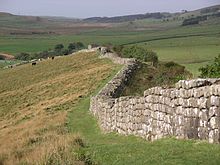
The name was borne by Publius Aelius Hadrianus (76-138 CE), known in the modern world as Emperor Hadrian, he is most famous for the wall he built across Great Britain, known as Hadrian’s Wall.
The name remained common throughout Europe, and is fairly popular across the Western World till this day. It was borne by several saints and popes, including the first and only English pope, Adrian IV, as well as the only Dutch pope, Adrian VI.
Currently, Adrian is the 6th most popular male name in Spain, (2010) and the 7th most popular in Norway, (2010). His rankings in other countries are as follows:
  • # 29 (Catalonia, 2009)
  • # 33 (Poland, 2010)
  • # 43 (Germany, 2011)
  • # 48 (Austria, 2010)
  • # 49 (Croatia, 2010)
  • # 51 (France, Adrien, 2010)
  • # 56 (United States, 2010)
  • # 60 (Sweden, 2010)
  • # 63 (Hungary, 2010)
  • # 81 (Belgium, Adrien, 2009)
  • # 455 (France, Adrian, 2009)

Other forms of the name include:

  • Ad (Afrikaans/Limbergish)
  • Adriaan (Afrikaans/Dutch)
  • Adrianus (Afrikaans/Latin)
  • Arrie (Afrikaans)
  • At (Afrikaans)
  • Daan (Afrikaans)
  • Jaans (Afrikaans)
  • Adrian Адриан (Albanian/Bulgarian/Croatian/Dutch/English/Finnish/Polish/Romanian/Russian/Scandinavian/Ukrainian)
  • Ardian (Albanian)
  • Adrianu (Asturian/Corsican/Sicilian)
  • Adiran (Basque)
  • Adrijan (Bosnian/Croatian/Serbian/Slovene)
  • Hadrijan (Bosnian)
  • Adrià (Catalan)
  • Jadran(ko) (Croatian)
  • Adrián (Czech/Hungarian/Slovak/Spanish)
  • Arie (Dutch)
  • Arjan (Dutch)
  • Hadrian(us) (Dutch/German/Latin)
  • Adrien (French)
  • Hadrien (French)
  • Aidrean (Gaelic)
  • Adrán (Galician)
  • Adrao (Galician)
  • Hadrán (Galician)
  • Hadrao (Galician)
  • Hádrian (Galician)
  • Adrianos Αδριανός (Greek)
  • Adorján (Hungarian)
  • Adrían (Icelandic)
  • Adriano (Italian/Portuguese)
  • Adrio (Italian)
  • Adriāns (Latvian)
  • Adrianas (Lithuanian)
  • Adrijonas (Lithuanian)
  • Adrião (Portuguese)
  • Adriànu (Sardinian)

Feminine forms include:

  • Adriana  (Albanian/Bulgarian/Catalan/Czech/Galician/German/Greek/Italian/Latin/Lithuanian/Polish/Romanian/Russian/Slovak/Spanish)
  • Adrijana (Bosnian/Croatian/Serbian)
  • Hadrijana (Bosnian/Croatian/Serbian)
  • Jadranka (Croatian)
  • Adriána (Czech/Hungarian/Slovak)
  • Ariane (Dutch)
  • Hadriana (Galician/Latin)
  • Adria (German/Italian)
  • Adriane (German)
  • Adrienne (French)
  • Adrienn (Hungarian)
  • Adrianna (Polish)
  • Drina (Spanish)

Polish feminine diminutives are Ada and Adi.

Alphonse, Alonso

Gender: Masculine
Origin: German
Meaning: “noble and ready.”

The name is believed to be derived from a Visigothic male name Adalfuns which is composed of the elements adal (noble) and funs (ready). It has also been associated with another Visigothic name Hildefuns meaning (battle ready). The name has always been popular in its various forms throughout Southern Europe, especially in the Iberian Peninsula where it was borne by several kings.

In its French form of Alphonse, it is the name the title character in Alexander Dumas’ 1873 book Monsieur Alphonse, which recounts the exploits of a pimp. Due to this literary association the name has come to mean “pimp” in several languages, most notably in Danish and in Polish.

Its Spanish form of Alonso, however, remains a very common name throughout the Spanish-speaking world. It is currently the 16th most popular male name in Chile (2010). It is also the 84th most popular in Spain (2010) and the 637th most popular in the United States (2010).

The more archaic Italian and Spanish form of Alfonso appears in the U.S. top 1000, coming in as the 742nd most popular male name (2010).

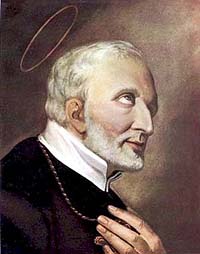
The name was most famously borne by St. Alphonsus Liguori, an Italian saint who founded the order of the Redemptorists and is considered a Doctor of the Church by the Catholic Church.

Other forms of the name include:

  • Adalfuns (German: archaic)
  • Alifonso (Aragonese)
  • Alfonsu (Asturian/Sardinian/Sicilian)
  • Fonsu (Cantabrian)
  • Alfontso (Basque)
  • Alfoñs (Breton)
  • Alfons (Catalan/Czech/Dutch/Finnish/German/Maltese/Polish/Romanian/Scandinavian: also the word for pimp in Polish and Danish)
  • Fons (Dutch)
  • Funs (Dutch)
  • Alfo (Finnish)
  • Alhvo (Finnish)
  • Altto (Finnish)
  • Alphonse (French)
  • Afonso (Galician/Portuguese)
  • Alphons (German)
  • Alfonz (Hungarian)
  • Alfonzino (Italian)
  • Alfonso (Italian/Portuguese/Spanish)
  • Alfonzo (Italian)
  • Alonzo (Italian)
  • Alphonsus (Late Latin)
  • Alfonss (Latvian)
  • Funske (Limbergish)
  • Alfonsas (Lithuanian)
  • Alonso (Portuguese/Spanish)
  • Affonzu (Sicilian)
  • Arfansu/Arfanzu (Sicilian)
  • Alfonz (Slovak/Slovene)

Feminine forms include:

  • Alphonsine (French)
  • Alfonza (Hungarian)
  • Alfonzin (Hungarian) 
  • Alfonzina (Hungarian)
  • Alfonsa (Italian/Portuguese/Spanish)
  • Alfonsina (Italian/Portuguese/Spanish)
  • Alfonza (Italian)
  • Alfonzina (Italian)

Fabrice

Gender: Masculine
Origin: Latin
Meaning: “craftsman.”

A French form of the Latin cognomen Fabricius, it is derived from faber (craftsman, smith). It was borne by Roman general and statesman Gaius Fabricius Luscinus (3rd-century).

Currently, Fabrice is the 433rd most popular male name in Quebec, Canada (2010).

Other forms of the name include:

  • Fabrice (French)
  • Fabricien (French)
  • Fabríciusz (Hungarian)
  • Brizio (Italian)
  • Fabrizio (Italian)
  • Fabricius (Latin)
  • Fabrycy (Polish)
  • Fabricio (Portuguese/Spanish)
  • Fabritziu (Sardinian)
Feminine forms include:
  • Fabricienne (French)
  • Brizia (Italian)
  • Fabrizia (Italian)
  • Fabricia (Portuguese/Spanish)
Source

Rita

The name is a contraction of Margaret but seems to have been used as an independent given name since the Middle Ages.

It was borne by Rita of Armenia (1278-1333) a Byzantine Empress. The name was further popularized in Europe due to the cult of St. Rita of Cascia (1381-1457) a Medieval Italian saint.

The name is used across Europe, including Armenia. Currently, Rita is the 461st most popular female name in Quebec, Canada (2010).

In more recent history it was borne by actress Rita Hayworthe (1918-1987).

Other forms of the name include:

  • Riet (Dutch)
  • Reeta (Finnish)
  • Reetta (Finnish)
  • Riitta (Finnish)
  • Ryta (Polish)

A common Sicilian diminutive is Rituzza.

Source

  1. http://www.behindthename.com/name/rita

Raymond

Gender: Masculine
Origin: German
Meaning: “advice protector.”
(RAY-mund)

The name is composed of the Germanic elements ragin (advice) and mund (protector). It was introduced to England via the Normans. It was borne by several saints.

Currently, Raymond is the 225th most popular male name in the United States, (2010).

Other forms of the name include:

  • Remund (Aragonese)
  • Erramun (Basque)
  • Raimon (Catalan)
  • Raimondu (Corsican)
  • Rejmond Рејмонд (Croatian/Serbian)
  • Rajmund (Czech/Hungarian)
  • Raimund (Danish/Finnish/Norwegian/Romanian/Swedish)
  • Ramund (Danish)
  • Raymundus (Dutch/Latin)
  • Raymond (Dutch/English/French)
  • Raimo (Finnish)
  • Reima (Finnish)
  • Reemt (Frisian)
  • Réamann (Gaelic)
  • Redmund/Redmond (Irish)
  • Raimund (German)
  • Reimund (German)
  • Raimundur (Icelandic)
  • Raimondo (Italian)
  • Raimonds (Latvian)
  • Remao (Limburgish)
  • Mao (Limburgish)
  • Raimondas (Lithuanian)
  • Reimund (Norman)
  • Raginmund (Old German)
  • Rajmund (Polish/Slovene)
  • Ramun (Romansch)
  • Arrammundu (Sardinian)
  • Ramundu (Sardinian)
  • Rámon (Spanish)
  • Raimundo (Spanish/Portuguese)
  • Raymundo (Spanish/Brazilian Portuguese)
A common English short form is Ray.

Feminine forms include:

  • Ramona (English/Hungarian/Portuguese/Romanian/Spanish)
  • Raymonde (French)
  • Raimunde (German)
  • Raimonda (Italian)
  • Raimondina (Italian)
  • Rajmunda (Polish)
  • Ramuna (Romansch)
Source