Serena

Gender: Feminine
Origin: Latin
Meaning: “clear; serene; calm; dry.”
Eng (sə-REEN-ə); It (se-RE-nah)

The name is derived from the Late Latin male name, Serenus, which comes directly from the Latin word meaning “serene, calm, clear, tranquil” and is related to the Greek word  ξηρός (xeros) meaning “dry”, a term used to describe clear weather.

The name was borne by several early Roman martyrs, including the legendary wife of Diocletian, who was murdered by her own husband after defending two Christians her husband had condemned. She is venerated as the patron saint of Lazio in Italy.

It was also borne by the niece of the Emperor Theodosius I, (b.365).

Currently, it is the 398th most popular female name in the United States, (2018).

It’s rankings in other countries are as follows:

  • #58 (Italy, 2018)
  • #325 (France, 2018)
  • #386 Séréna (France, 2018)
  • #458 (England & Wales, 2018)

Other forms of the name include:

  • Serina (English/Norwegian/Romansch)
  • Séréna (French)
  • Szeréna (Hungarian)
  • Szerénke (Hungarian)
  • Serenetta (Italian)
  • Serenilla (Italian)
  • Serine (French/Nowergian)
  • Seraine/Sereine (Old French)
  • Seraina (Romansch)
  • Sereina (Romansch)
Masculine forms include:
  • Seré (Catalan)
  • Sérène (French)
  • Szerénusz (Hungarian)
  • Sereno (Italian/Spanish)
  • Serenillo (Italian)
  • Serenus (Latin)
  • Seren (Polish, rare)

The name is borne by tennis player, Serena Williams (b.1981).

Source

Moses

Gender: Masculine
Origin: Debated
Meaning: debated

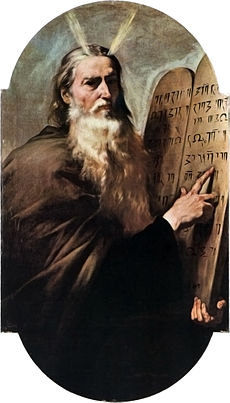
The name is borne in the Old Testament and in the Qu’ran by the a renowned prophet and law giver, who according to tradition was placed in a basket by his Hebrew mother and found by the daughter of Pharaoh (in Judeo-Christian religion) or the wife of Pharaoh (in Islamic tradition) and raised as an Egyptian prince. It is from this tradition that the name is believed to be derived from the Hebrew element משה (mšh) as stated in  Exodus 2:10:

“[…] she called his name Moses (משה): and she said, Because I drew him (משיתהו) out of the water.” (KJV).


It has been suggested that the name is in fact of Egyptian origins, being related to the Coptic elements, mo (water) and uses (saved; delivered) hence: “saved from the water.” Another suggestion is the Egyptian element, ms (child; born) as found in such ancient Egyptian male names as Tuth-Mose and Ram-messes.

The name has always been common among Jews, Muslims and Orthodox Christians, but did not catch on in the English-speaking world until after the Protestant Reformation. Medieval Jews of England used the Middle English form of Moss.

It is currently the 509th most popular male name in the United States, (2010).

Other forms of the name include:

  • Moses (Afrikaans/English/German/Scandinavian/Welsh)
  • Moisiu (Albanian)
  • Musa موسى Муса (Amharic/Arabic/Azeri/Bosnian/Kabyle/Swahili/Tatar/Turkish)
  • Moisen (Aragonese)
  • Movses Մովսես (Armenian)
  • Moises (Basque)
  • Majsjej Майсей (Belarusian)
  • Moizez (Breton)
  • Moisej Моисей (Bulgarian)
  • Moisès (Catalan)
  • Moisije Мојсије (Croatian/Serbian)
  • Moše (Croatian)
  • Mojžíš (Czech/Slovak)
  • Mozes (Dutch)
  • Mooses (Estonian/Finnish)
  • Móses (Faroese/Icelandic)
  • Moïse (French)
  • Maois (Gaelic)
  • Mose მოსე (Georgian/German/Romansch/Swedish)
  • Mouses Μωυσης (Greek)
  • Moshe מֹשֶׁה (Hebrew/Ladino)
  • Mózes (Hungarian)
  • Mosè (Italian)
  • Müsa Мұса (Kazakh)
  • Mosa (Kurdish)
  • Mûsa (Kurdish)
  • Moyses (Latin)
  • Mozus (Latvian)
  • Mozė (Lithuanian)
  • Мојсеј (Macedonian)
  • Moss (Middle English)
  • Moïses (Occitanian/Provençal)
  • Mojżesz (Polish)
  • Moisés (Portuguese/Spanish)
  • Moise (Romanian)
  • Moisej Моісей (Rusyn/Ruthenian)
  • Moiséj Моисе́й (Russian)
  • Muozė (Saimogaitian)
  • Mojzes (Slovene)
  • Muuse (Somalian)
  • Mojsej Мойсей (Ukrainian)
  • Moosõs (Voro)
  • Moishe (Yiddish)
Recently, actress Gwyneth Paltrow bestowed this name on her second child, Moses Bruce Anthony Martin (b. 2006)
Sources

Mina

The name has several origins, meanings and derivatives depending on where in the world you find the bearer of the name. In the Western world, it is a female name, a contracted form of Wilhelmina and Hermina. It was always common in Germanic and Scandinavian countries, but was first introduced into the English-speaking world through Bram Stoker’s Dracula (1897).

It is also an Indian name, derived from the Sanskrit word for fish मीना , it is sometimes transliterated as Meena. In Hinduism, it is the name of the daughter of the Goddess Usha and the God Kubera.

It is also a common Persian female name, being derived from the Farsi word for “blue glass; enamel; lapis lazuli.” It also coincides with the name of a valley near Mecca, and is therefore found as feminine given name in the Arabic-speaking world. In Arabic it means “port; harbor.”

Among Coptic Christians, it is a very popular male name. It is borne by a renowned early Christian Egyptian martyr and saint, known in the Western world as St. Menas. Mīna  مينا‎‎ is its original Coptic version and according to legend, the saint’s mother heard a voice saying “amen” while praying for a pregnancy.

Currently, Mina is 41st most popular female name in Norway (2010), the 314th most popular in France (2009) and the 961st most popular in the United States (2010).

The designated name-days are: November 24 (Poland) and December 23 (Lithuania/Poland).

Other forms its masculine Egyptian counterpart include:

Menna (Catalan)
Ménas (French)
Menas (Greek)
Mena (Italian: RARE)

Source

  1. http://www.behindthename.com/name/mina-1
  2. http://www.behindthename.com/name/mina-2


Beata

Gender: Feminine
Origin: Latin
Meaning: “blessed”
Eng (bee-AH-tah); Pol (beh-AH-tah).

The name is derived from the Latin word, beatus, meaning “blessed.”

The name was borne by an early Christian martyr from Spain.

It has been a very popular name in Central Europe, particularly in Poland, the Czech Republic, Slovakia, and to a certain extent, Germany.

The name is/was also borne by Beata Kościeleckich Łaska, a 16th-century Polish noblewoman, mother of Halszka Ostrogska, and speculated to be the first tourist to the Tatry Mountains in Poland; first professional Swedish actress, Beata Sabina Straas (d.1773); Beata Artemska, a famous Polish cabaret dancer (1918-1985); early German feminist, Beate Sirota Gordon (b.1923); Polish pop songstress, Beata Kozidrak (b.1960).

Other forms of the name include:

Beáta Беа́та (Czech/Hungarian/Russian/Slovak)
Beate (Danish/German/Norwegian)
Beata (Italian/Lithuanian/Polish/Romansch/Spanish/Swedish)
Béate (French)
Bietta (Romansch)

A Polish diminutive is Beatka.

Masculine forms include

Béat (French)
Beato (Italian)
Beatus (Late Latin)
Beata (Lithuanian)
Biet (Romansch)
Beat (Romansch/Swiss-German)

The designated name-days are: March 8 (Poland/Lithuania); March 22 (Hungary); June 28 (Slovakia); September 6 (Poland); October 25 (Czech Republic); December 2 (Sweden); December 22 (Poland).

Source

  1. http://www.behindthename.com/php/find.php?name=beata

Gregory

Gender: Masculine
Origin: Greek
Meaning:”watchful; alert.”
(GREG-eh-ree)

The name is derived from the Late Latin male name, Gregorius, which is derived from the Greek, Gregorios Γρηγόριος, meaning, “watchful; vigilant; alert.”

The name was borne by several saints in the early church, including, St. Gregory Thaumaturgus (3rd-century), St. Gregory of Nyssa (4th-century), St. Gregory of Nazianus (4th-century) and St. Gregory of Tours (6th-century).

It was also borne by St. Gregory 1 the Great, a 6th-century pope and Doctor of the Church. Due to his notoriety, the name became a popular one chosen among popes thereafter.

Currently, Gregory ranks in as the 248th most popular male name in the United States. The highest he has ranked in U.S. naming history was in 1963 coming in as the 21st most popular male name. This may have been in part, due to the fame of American actor, Gregory Peck.

The designated name-days in the West are March 11 and September 3rd.

In the Eastern calendar, the designated name-days are: January 1, January 14, January 18, January 21, January 23, February 1, February 7, February 12, February 23, March 17, March 25, April 15, April 19, April 23, June 6, June 28, August 1, August 21, August 22, August 25, September 10, September 12, October 11, October 13, October 14, November 18, November 20, November 27, November 30, December 3, December 6, December 7, December 11 and December 20.

Other forms of the name include:

Jerjer جريجوري (Arabic)
Krikor/Grigor Գրիգոր (Armenian)
Ryhor Рыгор (Belarusian)
Grigor Григор (Bulgarian/Macedonian/Welsh)
Gregori (Catalan/Romansch)
Grgur (Croatian)
Řehoř (Czech)
Gregers (Danish/Norwegian)
Gregorius (Dutch/Latin)
Gregory (Dutch/English)
Graekaris (Faroese)
Reijo (Finnish)
Reko (Finnish)
Grégory/Grégoire (French)
Joris (Frisian)
Grigol/Grigoli გრიგოლი (Georgian)
Gregor (German/Hungarian/Icelandic/Romansch/Scottish/Slovak/Slovene)
Gergely (Hungarian)
Gréagóir (Irish-Gaelic)
Gregorio (Italian/Spanish)
Goretto (Italian: obscure)
Goriano (Italian: obscure)
Gorino (Italian: obscure)
Grigorijs (Latvian)
Gregoras/Gregorijus/Grigalius (Lithuanian)
Grigorii Григории, Григоріи (Old Church Slavonic)
Grzegosz (Polish)
Gregório (Portuguese)
Gligor/Grigore (Romanian)
Grigoriy Григорий (Russian)
Griogair (Scottish-Gaelic)
Grigoriye Григорије; Gligoriye Глигорије; Grgur Гргур (Serbian)
Grega/Gregori (Slovene)
Greger (Swedish)
Hryhoriy Григорій (Ukrainian)

Diminutives

Greg/Gregg (Dutch/English)
Gregie (Dutch)
Gergõ (Hungarian)
Gorio/Goro (Italian)
Grzeszek (Polish)
Grisha (Russian)
Greig (Scottish)
Goyo (Spanish)

Feminine forms include:

Jorina/Jorinna (Frisian)
Gregoria (Italian/Spanish)
Gregorina (Italian)
Goretta (Italian)
Gorina (Italian)

Source

  1. http://www.behindthename.com/name/gregory
Bernard, Bernadette

Gender: Masculine
Origin: Old German
Meaning: “brave as a bear; hardy as a bear.”
(Am. Eng) (ber-NARD); (Brit. Eng) (BER-nerd)

The name is composed of the Old High Germanic elements, bern (bear) and hard (brave; hardy).

The name was introduced into England by the conquering Normans in the 10th-century, replacing the more Anglo-Saxon version of Beornheard.

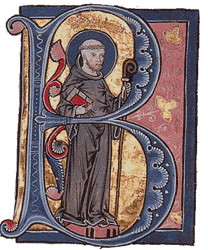
It became quite prevalent throughout Western Europe during the middle ages due to the associations with St. Bernard of Menthon, a Swiss monastic credited to building hospices in the Alps, (it is from him that the breed of dog, the St. Bernard, takes its name) and St. Bernard of Clairvaux, an influential 12th-century French theologian who is revered as both a saint and Doctor of the Church by the Catholic Church.

As of 2009, the name fell out of the U.S. top 1000 most popular male names. The highest he ever ranked in U.S. naming history was at # 45 in 1919 and again in 1921.

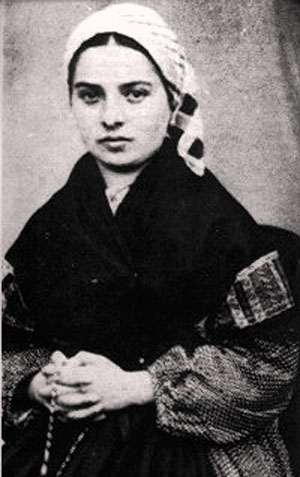
Its more popular feminine version of Bernadette became prevalent, especially among Catholics throughout the Western World, after the Canonization of St. Bernadette Soubirous (née Marie-Bernarde Soubirous). St. Bernadette was a 19th-century French peasant girl credited to seeing visions of the Virgin Mary in Lourdes, France.

Before her recognition throughout the world, Bernadette was primarily a diminutive, used as an affectionate form of the French feminine name, Bernarde.

The last time Bernadette ranked in the U.S. top 1000 was in 1993, coming in at # 891. The highest she ever ranked in U.S. naming history was in 1946, coming in as the 188th most popular female name. Its Hungarian cognate of Bernadett currently ranks in as the 76th most popular female name in Hungary (2009).

Variations

Bernard

Bernardi (Albanian)
Bernal (Aragonese/Galician)
Beñat (Basque)
Bernarta (Basque)
Bernez (Breton)
Bernat (Catalan)
Bernardu (Corsican/Sardinian)
Bernard (Croatian/Czech/English/French/German/Polish/Romanian/Romansch/Slovenian/Swedish)
Bernhardt/Bernhart (Danish/Finnish/German/Norwegian/Swedish)
Berend (Dutch)
Bernaard (Dutch)
Bernhard (Dutch/Estonian/German)
Päärn/Pärn/Pärno (Estonian)
Pääro (Estonian)
Pearn/Pearu (Estonian)
Bernardin (French/Romansch)
Bent (Frisian)
Bernaldo (Galician)
Bernaldino (Galician)
Berendt (German)
Berinhard (German: archaic)
Bernd/Berndt (German/Swedish)
Bernárd (Hungarian)
Bernát (Hungarian)
Bennardo/Bennardino (Italian)
Berardo (Italian)
Bernadetto (Italian)
Bernardino (Italian)
Bernardo (Italian/Portuguese/Spanish)
Bernoardo (Italian)
Bearnárd (Irish-Gaelic)
Bernardus (Late Latin)
Bernards (Latvian)
Bierants (Latvian)
Biernis (Latvian)
Bernardas (Lithuanian)
Beurnard (Poitevin)

Bernadette

Bernardete (Albanian/Portuguese)
Bernada (Catalan/Occitanian)
Bernadeta (Catalan/Occitanian/Polish)
Bernarda (Croatian/German/Italian/Slovene/Spanish/Polish/Portuguese)
Bernadette (English/French)
Bernarde (French)
Bernardine (French)
Bernadett (Hungarian)
Bernadetta/Bernardetta (Italian)
Bernardina (Italian)
Bernadetė (Lithuanian)
Bernardka (Slovenian)
Bernardita (Spanish)

Common English diminutives for both names are Bernie & Benny.

In French it is Bébère, Nanard and Bernie for males.

A Polish female diminutive is Bernardetka.

The designated name-day is August 20.

Source

  1. http://www.behindthename.com/name/bernard

Ulrich

Gender: Masculine
Origin: German
Meaning: “power and prosperity.”
Germ (OOL-hreeh); Eng (UL-rick); Swe (OOL-reek)

The name is derived from the Germanic elements, uodal, meaning “heritage” and ric meaning, “power.”

Both the feminine and masculine form have been fairly common in Germanic countries for centuries. It was borne by two German saints and it was also the name of the Swiss Protestant Reformor, Ulrich Zwingli (1484-1431).

Other forms of the name include:

Ulric (Catalan/French)
Oldřich (Czech)
Ulrik (Danish/Dutch/Hungarian/Norwegian/Swedish)
Oldrik (Dutch)
Olerik (Dutch)
Ulric (English)
Ulrich (French/German/Icelandic)
Huldrych/Huldreich (German)
Ódor (Hungarian)
Olderico/Olderigi/Olderigo (Italian)
Udalrico/Udalrigo (Italian)
Uldarico/Ulderico (Italian)
Ulderigo (Italian)
Ullrico (Italian)
Uldis (Latvian)
Ulriks (Latvian)
Odalrich (Old High German)
Ulryk (Polish)
Ulrico (Portuguese/Spanish)
Oldrich (Slovak)
Urh (Slovene)
Uldarico (Spanish)

Uli is a common diminutive form used in Germany, while Ueli is the preferred form used in Switzerland.

Feminine forms include:

Ulrika (Czech/German/Norwegian/Slovak/Swedish)
Ulrike (Danish/German/Norwegian)
Ulrikke (Danish/Norwegian)
Ulla (Finnish/German)
Ulrique (French)
Ulrieke (German)
Ulrira (German)
Ulschke (German)
Ulrica (Italian/Romansch/Spanish)
Ulryka (Polish)

Common German feminine diminutive forms include: Ike, Rieke, Rika, Rike, Riken, Rikerl, Riki, Ule, Uli, Ulla, Ulle, Ulli, Ullie, Ully and Uri.

Its feminine counterpart has been borne by at least one Swedish princess, a fictional character in Walter Scott’s 1819 novel, Ivanhoe and Ulrika Pasch, an 18th-century female Swedish painter.

The designated name-day July 4 in most countries and July 10 in France.

Sources

  1. http://www.behindthename.com/name/ulrich
  2. http://www.behindthename.com/namedays/lists/7.php

Guy

Gender: Masculine
Origin: French
Meaning: “wood; wide.”
Eng (GIE); Fre (GEE)

The name is derived from the early Germanic name Wido which is possibly derived from the Germanic element, widu, either meaning, “wood” or “wide.”

The name was introduced into England after the Norman Conquest, but after the infamy of 16th-century Guy Fawkes the name went out fashion. It was, however, always a very common name among French-Americans, especially among the French Acadians of Louisiana.

The Italian form is Guido, which has been a fairly common name among Italian-Americans but is now associated with a controversial term describing a middle class Italian-American from the East Coast of the United States. This was especially brought to attention after the 2009 reality tv show, Jersey Shore. However, it is uncertain if the term used to describe a particular class of people within the Italian community is related to the given name or to a different etymological source.

The name was borne by a Sicilian saint and martyr.

The designated name-day in France is June 12.

Other forms of the name include:

  • Guiu (Catalan)
  • Vid (Croatian/Hungarian/Slovene)
  • Vít (Czech/Slovak)
  • Vitus (Danish/Dutch/German/Hungarian)
  • Gwijde (Dutch)
  • Guy (English/French)
  • Guidon (French)
  • Gui (French)
  • Wide (Frisian)
  • Guido (German/Italian)
  • Veit (German)
  • Wido/Wito (German)
  • Cino (Italian)
  • Guidarello (Italian)
  • Guidino (Italian)
  • Guidolino (Italian)
  • Guidone/Guittone (Italian)
  • Guidotto (Italian)
  • Guiduccio (Italian)
  • Guittoncino (Italian)
  • Gvidas/Gvidonas (Lithuanian)
  • Gwido (Polish)
  • Wit (Polish)
  • Guidas (Romansch)
  • Guidi (Slovene)
  • Gvido/Gvidon (Slovene)
  • Vito (Spanish)

French masculine diminutives include: Guitou, Guiton, GuiGui & Guy-Guy

Feminine offshoots include:

  • Vita (Danish)
  • Guyenne (French)
  • Guyette (French)
  • Guyonne (French)
  • Vida (Hungarian/Slovene)
  • Guida (Italian/Romansch)
  • Guidetta (Italian)
  • Gvida (Slovene)
  • Gvidica (Slovene)

Sources

  1. http://www.behindthename.com/php/related.php?name=guy
  2. http://www.askoxford.com/firstnames/guy?view=uk

Monica

Gender: Feminine
Origin: unknown
Meaning: unknown
Eng (MAHN-ih-kuh)

The name is of uncertain origin or derivation, but some have connected it with the Latin monere meaning “to advise” or the Greek monos meaning, “one.”

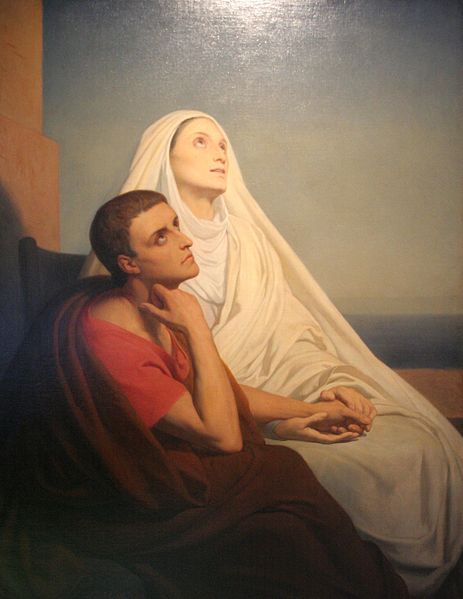
The name was popularized by St. Monica of Hippo (the mother of St. Augustine) who was believed to have been of Berber extraction but was also a citizen of Carthage. For these reasons, many have suggested that the name is actually a name of North African or Phoenician origins and its meaning has been lost to history.

Monica has been a very popular saint amongst Catholics since the early Middle Ages, so the name has always been in usage in Catholic countries. In the English-speaking world, the name did not really catch on until the 18th-century. In 1977, she peaked in the U.S. popularity charts, coming in as the 39th most popular female name. Currently, she is the 34oth most popular female name (2009). Her rankings in other countries are as follows:

  • # 72 (Slovenia, 2005)
  • # 10 (Slovakia, 2004)
  • # 94 (Spain, 2008)

Other forms of the name include:

  • Mònica (Catalan)
  • Monika (Amazigh/Croatian/Czech/Estonian/German/Kabyle/Latvian/Lithuanian/Maltese/Norwegian/Polish/Slovak/Slovene/Swedish)
  • Monica (Danish/Dutch/English/Italian/Romanian/Romansch/Swedish)
  • Moonika (Estonian)
  • Mooni (Estonian)
  • Monique (French)
  • Mónika (Hungarian)
  • Mônica (Portuguese)
  • Mónica (Spanish)

German short forms are Mona and Moni and a Polish diminutive is Monia.

The designated name-days are: May 4 (Hungary/Lithuania/Poland/Sweden), May 7 (Slovakia), May 21 (Czech Republic), June 13 (Estonia), August 27 (Germany), October 6 (Latvia).

Sources

  1. http://www.askoxford.com/firstnames/monica?view=uk
  2. http://www.behindthename.com/name/monica

Peter

Gender: Masculine
Origin: Greek
Meaning: “rock.”
Eng (PEE-ter)

The name is derived from the Greek Πετρος (Petros) meaning, “rock.”

The name is found in the New Testament as a vernacular translation for the Aramaic Cephas (rock) a nickname designated to the Apostle Simon Bar-Jonah by Jesus. He is known as St. Peter, and Catholics traditionally attribute him as being the first Pope.  Among other denominations, he is considered to be one of Christ’s most prominent apostles.

Due to the associations with the apostle, Peter became an extremely prevalent male name throughout the Christian world.

The name seems to have been in usage in England since early times, but became especially popular after the Norman invasion. During this period, the form of Piers was preferred, being gradually replaced in popularity by Peter over the centuries.

Currently, Peter is 191st most popular male name in the United States, (2009). He has been steadily declining in the United States for the past 10 years, in 2000 he ranked in at # 125. His rankings in other countries, however, has not faltered. His rankings including his vernacular forms are as follows:

  • # 7 Pedro (Brazil, 2009)
  • # 9 Petar (Bulgaria, 2008)
  • # 15 Petr (Czech Republic, 2009)
  • #38 Pierre (France, 2006)
  • # 3 (Greenland, 2003-2004)
  • # 8 (Hungary, 2008)
  • # 33 Petur (Iceland, 2008)
  • # 70 (Ireland, 2008)
  • # 25 Pietro (Italy, 2007)
  • # 8 Pēteris (Latvia, 2005)
  • # 9 Petar (Macedonia, 2006)
  • # 10 Piotr (Poland, 2008)
  • # 3 (Slovakia, 2004)
  • # 59 (Slovenia, 2005)
  • # 50 Pedro (Spain, 2008)

Other forms of the name include:

  • Petrus (Afrikaans/Dutch/German/Indonesian/Latin/Limburgish/Plattdeutsch/Swedish)
  • Pieter (Afrikaans)
  • Pjetër/Pjetri (Albanian)
  • Ṗeṭros ጴጥሮስ (Amharic/Ethiopian)
  • Pero (Aragonese)
  • Bedros/Pedros Պետրոս (Armenian)
  • Botros/Boutros/Butros بطرس (Arabic/Coptic)
  • Pedru (Asturian/Konkoni)
  • Pyotr (Azeri)
  • Betiri (Basque)
  • Kepa (Basque)
  • Peio (Basque)
  • Peru (Basque)
  • Petri (Basque)
  • Piatro Пятро (Belarusian)
  • Piotr Пётр (Belarusian/Polish)
  • Pêr (Breton)
  • Pierrick (Breton)
  • Penko Пенко (Bulgarian)
  • Petar Петар (Bulgarian/Croatian/Macedonian/Serbian)
  • Pere (Catalan)
  • Peder (Cornish/Danish/Lombard/Norwegian)
  • Petru (Corsican/Romanian/Sicilian)
  • Pyè (Creole)
  • Pero (Croatian/Serbian)
  • Petar Петар (Croatian/Macedonian/Serbian/Slovene)
  • Petr (Czech)
  • Pelle (Danish/Norwegian/Swedish: originally a diminutive, now occasionally used as an independent given name. PEL-le)
  • Peer (Danish/Dutch/German)
  • Per (Danish/Faroese/Norwegian/Swedish)
  • Peter (Danish/Dutch/English/German/Luxembourgish/Norwegian/Slovak/Swedish)
  • Peeter (Estonian)
  • Peiru (Extramadura)
  • Pætur/Petur (Faroese)
  • Patras پطرس (Farsi)
  • Pekka (Finnish)
  • Petteri (Finnish)
  • Petri (Finnish)
  • Pietari (Finnish)
  • Pierre (French)
  • Piter/Pier/Pit (Frisian)
  • P’et’re პეტრე (Georgian)
  • Petros Πέτρος (Greek)
  • Pathros (Hindi)
  • Péter (Hungarian)
  • Petres (Hungarian)
  • Peto (Hungarian)
  • Pétur (Icelandic)
  • Peadar (Irish-Gaelic)
  • Pietro (Italian/Albanian)
  • Petronius (Latin)
  • Pēteris (Latvian)
  • Petras (Lithuanian)
  • Pir (Luxembourgish)
  • Petre Петре (Macedonian/Romanian)
  • Pathrose (Malayalam)
  • Pietru (Maltese)
  • Peddyr (Manx)
  • Petera (Maori)
  • Petter (Norwegian/Swedish)
  • Pèir/Pèire/Pèr (Occitanian)
  • Pedro (Portuguese/Spanish)
  • Pêro (Portuguese: archaic)
  • Pidru (Quecha)
  • Peadar/Peader/Peder/Peidar/Peider (Romansch)
  • Pyotr Пётр (Russian)
  • Pedru/Perdu/Pretu (Sardinian)
  • Peadar/Peadair (Scottish-Gaelic)
  • Pyjter/Piter (Silesian)
  • Pětr (Sorbian)
  • Petero (Swahili)
  • Pär (Swedish)
  • Pethuru (Tamil)
  • Raayappar (Tamil)
  • Petro Петро (Ukrainian)
  • Piter (Uzbek)
  • Piero (Venetian)
  • Piitre (Vöro: an Eastern Estonian dialect)
  • Pedr (Welsh)

In French, Pierre is used in a number of compound names. Some of the most common include:

Some common Italian compound names include: Piergiuseppe, Pietropaolo, Pierpaolo, Pietrantonio, Pierantonio, Pierluigi , Piergiorgio , Pietrangelo, Pierangelo, Pierce, Pierfrancesco, Piermaria and Piersilvio

Its feminine form of Petra was once a very popular name in German-speaking countries, but is now considered rather dated. Throughout Central Europe, however, she is experiencing a strong trend. Her current rankings are as follows:

  • # 46 (Czech Republic, 2009)
  • # 9 (Hungary, 2008)
  • # 46(Slovenia, 2005)

Feminine forms include:

  • Peta (Afrikaans/English)
  • Penka Пенка (Bulgarian)
  • Petra(Bulgarian/Croatian/Czech/Dutch/Finnish/German/Greek/Hungarian/Scandinavian/Serbian/Slovak/Slovene/Spanish)
  • Petrina (Croatian/German)
  • Pernille (Danish/Norwegian)
  • Petrea (Danish)
  • Petrine (Danish/German/Norwegian)
  • Petronella (Danish/Norwegian/Swedish)
  • Pietronella (Dutch)
  • Parnel/Pernel (English: archaic)
  • Peronel (English: archaic)
  • Petronel (English: archaic)
  • Petriina (Finnish)
  • Pernelle (French)
  • Pernette (French)
  • Péroline (French)
  • Péronelle (French)
  • Perrenotte (French)
  • Perrette (French)
  • Perrine (French)
  • Pétronelle (French)
  • Peyronne (French)
  • Pierrine/Pierrette (French)
  • Pétronille (French)
  • Peekje (Frisian)
  • Peterke (Frisian)
  • Petje (Frisian)
  • Petke (Frisian)
  • Pierke/Pierkje (Frisian)
  • Pieterke (Frisian)
  • Pietje/Piertje (Frisian)
  • Petrónia (Hungarian)
  • Petronia (Italian/Latin/Polish)
  • Petronilla (Italian/Latin)
  • Piera/Pierina (Italian)
  • Pieretta (Italian)
  • Pieruccia (Italian)
  • Pietra/Pietrina (Italian)
  • Pietruccia (Italian)
  • Petronela (Polish/Romanian)
  • Petrona (Spanish)
  • Pernilla (Swedish)

Italian female compound forms include: Pierangela and Pieranna.

Common German pet forms are: Pedi, Petzi and Pezi

The designated name-days are: April 29 (Hungary) and June 29 (Hungary, Germany, Slovakia, Sweden).

Sources